The Tiger: A True Story of Vengeance and Survival

Author: John Vaillant
Rating: 8/10
Last Read: September 2016

Quick Summary:  This book has been on my reading list for years – and I’m sorry that I put it off so long.  I needed an enjoyable book to read while I was flying to China and back, and the Tiger definitely kept me occupied.

On the surface, this book is about a man-eating tiger in the Primorye region of Russia (near China).  However, Vaillant goes into great detail to describe the region, characters, and conflicts that lead each of the participants to the Primorye and into contact with this killer tiger.  I know nothing of Russia’s far east, so the book was enlightening on these accounts. I did find myself skipping ahead at times to get back to the Tiger itself.  Vaillant’s star of the book is definitely this tiger, and his writing is most captivating when he’s discussing the beautiful death machines.

My Highlights

“He realized that in a town a man cannot live as he wishes, but as other people wish. Strangers surrounded him on every side and hampered him at every step.” –loc 465

“In situations like this, my rule is from the Bible,” Trush explains: “ ‘First, there was the word and then a deed.’ It is always better to warn a person first; if he does not understand that warning, take action. That’s the principle that I follow. Not for everyone, though.” –loc 734

“The most terrifying and important test for a human being is to be in absolute isolation,” he explained. “A human being is a very social creature, and ninety percent of what he does is done only because other people are watching. Alone, with no witnesses, he starts to learn about himself—who is he really? Sometimes, this brings staggering discoveries. Because nobody’s watching, you can easily become an animal: it is not necessary to shave, or to wash, or to keep your winter quarters clean—you can live in shit and no one will see. You can shoot tigers, or choose not to shoot. You can run in fear and nobody will know. You have to have something—some force, which allows and helps you to survive without witnesses. Markov had it. –loc 1313

Many people reach a point where they realize that the shape their life has taken does not square with the ambitions they once had for it. –loc 1355

Men carry their superiority inside; animals outside. Russian Proverb –loc 1643

Based on the observations of hunters and biologists, it appears that Amur tigers will occasionally kill bears solely on something that we might recognize as principle. –loc 2234

Due to the extraordinary circumstances, an exhaustive necropsy was done and, in the end, it confirmed that West had indeed crushed the bear’s skull. “In that sort of situation, you only have one choice,” West said later. “It’s live or die. Most people are too scared to think about living.” –loc 2439

“There are two categories of people when it comes to extreme situations,” said the leopard specialist Vasily Solkin. “One gets scared first and then starts thinking; the other starts thinking first and gets scared after the fact. Only the latter survive in the taiga.” –loc 2444

A new model had been created; whatever bonds had held this tiger in relationship to his human neighbors, indeed, to his own nature, were broken. Now, anything was possible. When a domestic animal goes wild—a sheep-killing dog, for example—it is referred to as feral, but there is no name for what happens when a wild animal goes in the other direction and becomes dangerously familiar with the world of domesticated creatures. What should one call it when a tiger starts eating people and shit, and injures itself demolishing man-made things? Is it rage? A loss of bearing? Or simply adaptation to a new order? Perhaps some things are best left unnamed. –loc 2551

“To do so,” wrote Uexküll in “A Stroll Through the Worlds of Animals and Men,” “we must first blow, in fancy, a soap bubble around each creature to represent its own world, filled with the perceptions which it alone knows. When we ourselves then step into one of these bubbles, the familiar … is transformed.” Uexküll called this bubble the umwelt, a German word that he applied to a given animal’s subjective or “self-centered” world. An individual’s umwelt exists side by side with the Umgebung—the term Uexküll used to describe the objective environment, a place that exists in theory but that none of us can truly know given the inherent limitations of our respective umwelten. In addition to being delightful words to say, umwelt and umgebung offer a framework for exploring and describing the experience of other creatures. –loc 2581

Ultimately, the problem comes down to umwelt; we are such prisoners of our subjective experience that it is only by force of will and imagination that we are able to take leave of it at all and consider the experience and essence of another creature—or even another person. –loc 2616

In fact, the ability to step inside the umwelt “bubble” of another creature is not so much a newfound skill as it is a lost art. Successful hunting, it could be said, is an act of terminal empathy: the kill depends on how successfully a hunter inserts himself into the umwelt of his prey—even to the point of disguising himself as that animal and mimicking its behavior. –loc 2618

“A hunter can only rely on himself,” he said. “If anything happens, there is no one to help him, and all of us who live this way have a very advanced intuition. We also carry the experience of our ancestors in our heads: that’s how a man functions in taiga. The tiger is a hunter, just the same as a man is a hunter. A hunter has to think about how to get his prey. It is different for boar and deer: if leaves or cones fall down from a tree, that’s what they eat; there is no need to think. Tigers think.” –loc 2636

Anthropologists who write about indigenous peoples often note their tendency to anthropomorphize the animals around them. Even though !Kung and Nanai hunters (among countless others) have used this approach to great effect while hunting, the ascription of recognizable emotions and motives to animals causes problems for Western scholars, not least because they are awfully hard to prove in a lab or defend in a dissertation. Such claims are what lawyers and philosophers refer to as “arguments from inference”: anecdotal and unprovable. Under these circumstances, the potential for hair-splitting, semantic quibbling, and “definition objection” is endless, but it also misses the point: these feelings of trans-species understanding and communication have less to do with animals being humanized, or humans being “animalized,” than with all parties simply being sensitized to nuances of the other’s presence and behavior. –loc 2797

The colonel might as well have been describing peasants falling before berserkers. The most painful detail in this anecdote is the baboons’ resignation: with no hope of escape, they fashioned a refuge of last resort from the darkness in their own hands. The image is so poignant, in part, because those hands could so easily be ours. Perhaps it was the possibility of such catastrophes that kept the Sterkfontein baboons from fleeing that night when Brain frightened them so badly: better to lose one or two than risk the whole troop. –loc 2976

In terms of my feelings toward this tiger, I have only feelings of gratitude, and I will explain why: if a person goes through a tough ordeal in his life, he either breaks down or becomes stronger than he used to be. In my case, it was the latter. After this incident, I became stronger—not physically, of course, but spiritually. Maybe it will sound funny, but, possibly, some strength from this tiger was transferred to me.” –loc 3352

The horror in a thing is usually derived from its presence, however distorted or fragmentary, but here in the scrub and snow by the Takhalo was a broken frame with no picture in it. Had there been no tracks and no story, one could have thought these things had simply been abandoned—as if, a year or two earlier, some hunter had come down to the river for a swim, left his belongings in a heap, and simply never returned. Over the intervening seasons, animals, weather, and rot would have shredded and stained them, leaving the ruins that lay there now. But these clothes were only a few days old, and their owner had ceased to exist. –loc 3675

Smirnov may as well have been quoting Henry V:
But when the blast of war blows in our ears,
Then imitate the action of the tiger;
Stiffen the sinews,
summon up the blood,
Disguise fair nature with hard-favoured rage.
Then lend the eye a terrible aspect.
–loc 3914

The impact of an attacking tiger can be compared to that of a piano falling on you from a second-story window. But unlike the piano, the tiger is designed to do this, and the impact is only the beginning. –loc 4252

The difference between the extinctions at the close of the Pleistocene and the bulk of those taking place today is one of consciousness: this time, however passively they may occur, they still amount to voluntary acts. Simply put: we know better. This is not an opinion, or a moral judgment; it is a fact. –loc 4747

Ready Player One

Author: Ernest Cline
Rating: 7/10
Last Read: August 2015

Quick Summary:  The book takes place in a dystopian future and follows a group of teens on their adventures through a virtual reality world (you see, there was a theme when I was reading Snow Crash). A gazillionaire dies and leaves his fortune to the person who can complete his crazy VR puzzle involving 80s games and other fun nerd-culture references.  The young mighty fat VR-addicted hero takes on a big corporation to win the prize.

My Highlights

To quote the Almanac: “People who live in glass houses should shut the fuck up.”

I’m not crazy about reality, but it’s still the only place to get a decent meal.
—Groucho Marx

No one in the world ever gets what they want and that is beautiful.

Snow Crash

Author: Cheryl Strayed
Rating: 7/10
Last Read: August 2015

Quick Summary:  The book takes place in a dystopian future and follows two hackers in their adventures in virtual reality and real life as they try to crack the mystery of “snow crash”, a new drug being sold in the virtual world.  Along the way, a variety of themes are hit upon: religion, memetics, linguistics, and computer sciencey stuff.  Definitely a good read for the tech crowd, even if it’s a bit long winded.

My Highlights

But if life were a mellow elementary school run by well-meaning education Ph.D.s, the Deliverator’s report card would say: “Hiro is so bright and creative but needs to work harder on his cooperation skills.”

Pooning a bimbo box takes more skill than a ped would ever imagine

I don’t know how my face conveyed that information, or what kind of internal wiring in my grandmother’s mind enabled her to accomplish this incredible feat. To condense fact from the vapor of nuance.”

class is more than income—it has to do with knowing where you stand in a web of social relationships.

They pay attention to the facial expressions and body language of the people they are talking to. And that’s how they know what’s going on inside a person’s head—by condensing fact from the vapor of nuance.

it’s the first function of any organization to control its own sphincters.

I used to read that story when I was a kid and wonder who the hell these guys were, on Crete, that everyone else was so scared of them that they would just meekly give up their children to be eaten, every year. They must have been some mean sons of bitches.

Besides, interesting things happen along borders—transitions—not in the middle where everything is the same.

“Ever think of introducing yourself?” Y.T. says.
“Nah,” he says, “people always forget names. You can just think of me as that one guy, y’know?”

“Wait a minute, Juanita. Make up your mind. This Snow Crash thing—is it a virus, a drug, or a religion?”
Juanita shrugs. “What’s the difference?”

In many Creation myths, to name a thing is to create it.

“See, the world is full of things more powerful than us. But if you know how to catch a ride, you can go places,” Raven says.

Assassin’s Apprentice

Author: Robin Hobb
Rating: 6/10
Last Read: August 2010

Quick Summary: An outcast bastard son of a prince is secretly trained to be an assassin from a young age.  The book follows him though his childhood and training, culminating in his first mission. The book is a pretty good fantasy read: interesting characters, internal struggles, and political scheming abound.  A book for those who like Arya’s character in A Song of Ice and Fire

I did not continue on with the series.

My Highlights

The group of onlookers was growing. A few showed pity in their eyes, but none interfered. Some of what I was feeling passed to Nosy, who dropped over onto his side and showed his belly in supplication while thumping his tail in that ancient canine signal that always means, “I’m only a puppy. I cannot defend myself. Have mercy.” Had they been dogs, they would have sniffed me over and then drawn back. But humans have no such inbred courtesies.

“There is this, boy. And you should remember it in every situation, not just this one. Learning is never wrong. Even learning how to kill isn’t wrong. Or right. It’s just a thing to learn, a thing I can teach you.

“I’m not a real prince. I’m a bastard.” It came oddly from my mouth, that word I heard so often and so seldom said. Burrich sighed softly.
“Be your blood, boy, and ignore what anyone else thinks of you.”
“Sometimes I get tired of doing the hard things.”
“So do I.”

“You don’t know that. You only hear what the gossips say. You aren’t old enough to understand some things. You’ve never seen a wild bird lure predators away from its young by pretending to be injured.”
“I don’t believe that,” I said, but I suddenly felt less confident saying it. “He never did anything to make me think he cared about me.”
Chade turned to look at me and his eyes were older, sunken and red.
“If you had known he’d cared, so would others. When you are a man, maybe you’ll understand just how much that cost him. To not know you in order to keep you safe. To make his enemies ignore you.”
“Well, I’ll “not know’ him to the end of my days, now,” I said sulkily.

Tiny Beautiful Things

Author: Cheryl Strayed
Rating: 9/10
Last Read: January 2015

Quick Summary: Cheryl Strayed wrote for an anonymous advice column titled “Dear Sugar” for many years.  This is a collection of letters from that column – and in their pages are found many tales of human sadness, joy, love, and loss.  There are terribly tragic aspects of humanity revealed to you, and people write about their problems with honesty.  Dear Sugar seems to always have the magical words we need to hear, and many good life lessons can be pulled out of these works.

I never thought I would be calling a book of letters from an advice column one of my favorite books…

I think the answer to most problems is more often than not outside of the right/wrong binary that we tend to cling to when we’re angry or scared or in pain. We are complicated people. Our lives do not play out in absolutes.

My Highlights

Inexplicable sorrows await all of us. –loc 116

Life isn’t some narcissistic game you play online. It all matters—every sin, every regret, every affliction. –loc 116

I happen to believe that America is dying of loneliness, that we, as a people, have bought into the false dream of convenience, and turned away from a deep engagement with our internal lives—those fountains of inconvenient feeling—and toward the frantic enticements of what our friends in the Greed Business call the Free Market. –loc 122

We’re hurtling through time and space and information faster and faster, seeking that network connection. But at the same time we’re falling away from our families and our neighbors and ourselves. We ego-surf and update our status and brush up on which celebrities are ruining themselves, and how. But the cure won’t stick. –loc 125

With great patience, and eloquence, she assures her readers that within the chaos of our shame and disappointment and rage there is meaning, and within that meaning is the possibility of rescue. –loc 135

She understands that attention is the first and final act of love, and that the ultimate dwindling resource in the human arrangement isn’t cheap oil or potable water or even common sense, but mercy. –loc 144

She also recognizes that there’s another, truer story beneath the one we generally offer the world, the stuff we can’t or won’t see, the evasions and delusions, the places where we’re simply stuck. –loc 147

We are obligated to the people we care about and who we allow to care about us, whether we say we love them or not. Our main obligation is to be forthright—to elucidate the nature of our affection when such elucidation would be meaningful or clarifying. –loc 229

I encourage you to do more than throw up your hands in your examination of “whose fault” it was that your twenty-year marriage fell apart. It was no one’s fault, darling, but it’s still all on you. –loc 234

A proclamation of love is not inherently “loaded with promises and commitments that are highly fragile and easily broken.” The terms you agree to in any given relationship are connected to, but not defined by, whether you’ve said “I love you” or not. “I love you” can mean I think you’re groovy and beautiful and I’m going to do everything in my power to be your partner for the rest of my life. It can mean I think you’re groovy and beautiful but I’m in transition right now, so let’s go easy on the promises and take it as it comes. It can mean I think you’re groovy and beautiful but I’m not interested in a commitment with you, now or probably ever, no matter how groovy or beautiful you continue to be. –loc 245

Withholding distorts reality. It makes the people who do the withholding ugly and small-hearted. It makes the people from whom things are withheld crazy and desperate and incapable of knowing what they actually feel. –loc 252

We’re all going to die, Johnny. –loc 255

Though we live in a time and place and culture that tries to tell us otherwise, suffering is what happens when truly horrible things happen to us. –loc 285

I think I cry because it always strikes me as sacred, all those people going by. People who decided simply to live their truth, even when doing so wasn’t simple. Each and every one of them had the courage to say, This is who I am even if you’ll crucify me for it. –loc 489

Trust yourself. It’s Sugar’s golden rule. Trusting yourself means living out what you already know to be true. –loc 681

The unifying theme is resilience and faith. The unifying theme is being a warrior and a motherfucker. It is not fragility. It’s strength. It’s nerve. And “if your Nerve, deny you—,” as Emily Dickinson wrote, “go above your Nerve.” Writing is hard for every last one of us—straight white men included. Coal mining is harder. Do you think miners stand around all day talking about how hard it is to mine for coal? They do not. They simply dig. –loc 782

Good people do all sorts of idiotic stuff when it comes to sex and love. –loc 807

The story of human intimacy is one of constantly allowing ourselves to see those we love most deeply in a new, more fractured light. Look hard. Risk that. –loc 821

A healthy way is rooted in respect and love. In this case, we make critical assessments and uncomplimentary observations entirely within the context of our affection and concern for the individual in question. Sometimes we talk behind a friend’s back in order to grapple with our doubts about or disapproval of the choices he or she has made. Sometimes we do it because our friends possess qualities that confound, confuse, or annoy the shit out of us, though we love them anyway. Sometimes we discuss our friends with others because we had a weird or rude or dumb interaction with one of them and we simply need to blow off steam. The baseline of these discussions is a grounded knowledge that we love and care for the friend—regardless of the things that irk, confuse, or disappoint us about him or her. The negative thoughts we express about this friend are outweighed by the many positive thoughts we have. –loc 865

Who does what a friend tells her to do? I can’t say I ever have, even when later I fully recognized that I should have. –loc 910

There aren’t three options. There is only one. As Rilke says, “You must change your life.” –loc 1020

Our minds are small, but our hearts are big. –loc 1035

Humans are beautifully imperfect and complex. We’re horny, ass-saving, ego-driven drug fiends, among other, more noble things. –loc 1038

To hold the truth within me that some things are so sad and wrong and unanswerable that the question must simply stand alone like a spear in the mud. –loc 1134

Worry stones my mother had called them, the sort so pleasing against the palm she claimed they had the power to soothe the mind if you rubbed them right. –loc 1194

But compassion isn’t about solutions. It’s about giving all the love that you’ve got. –loc 1237

Jean-Paul Sartre famously said that “hell is other people,” which is true enough, but truer still is hell is other people’s boyfriends (or girlfriends, as the case may be). –loc 1261

cultivate an understanding of a bunch of the other things that the best, sanest people on the planet know: that life is long, that people both change and remain the same, that every last one of us will need to fuck up and be forgiven, that we’re all just walking and walking and walking and trying to find our way, that all roads lead eventually to the mountaintop. –loc 1288

I have breathed my way through so many people who I felt wronged by; through so many situations I couldn’t change. Sometimes while doing this I have breathed in acceptance and breathed out love. Sometimes I’ve breathed in gratitude and out forgiveness. Sometimes I haven’t been able to muster anything beyond the breath itself, my mind forced blank with nothing but the desire to be free of sorrow and rage. –loc 1418

There’s a line by the Italian writer Carlo Levi that I think is apt here: “The future has an ancient heart.” I love it because it expresses with such grace and economy what is certainly true—that who we become is born of who we most primitively are; that we both know and cannot possibly know what it is we’ve yet to make manifest in our lives. –loc 1595

You don’t have to get a job that makes others feel comfortable about what they perceive as your success. You don’t have to explain what you plan to do with your life. You don’t have to justify your education by demonstrating its financial rewards. You don’t have to maintain an impeccable credit score. Anyone who expects you to do any of those things has no sense of history or economics or science or the arts. –loc 1619

You have to pay your own electric bill. You have to be kind. You have to give it all you got. You have to find people who love you truly and love them back with the same truth. But that’s all. –loc 1622

Whatever happens to you belongs to you. Make it yours. Feed it to yourself even if it feels impossible to swallow. Let it nurture you, because it will. –loc 1648

I hope when people ask what you’re going to do with your English and/or creative writing degree you’ll say: Continue my bookish examination of the contradictions and complexities of human motivation and desire; or maybe just: Carry it with me, as I do everything that matters. –loc 1665

I’d revealed a truth they were ready to know. Not about Christianity, but about the human condition: that suffering is part of life. –loc 1775

What if you allowed your God to exist in the simple words of compassion others offer to you? What if faith is the way it feels to lay your hand on your daughter’s sacred body? What if the greatest beauty of the day is the shaft of sunlight through your window? What if the worst thing happened and you rose anyway? What if you trusted in the human scale? What if you listened harder to the story of the man on the cross who found a way to endure his suffering than to the one about the impossible magic of the Messiah? Would you see the miracle in that? –loc 1810

If you had to give one piece of advice to people in their twenties, what would it be? To go to a bookstore and buy ten books of poetry and read them each five times. Why? Because the truth is inside. –loc 1816

“Naked and smiling” is one male friend’s only requirement for a lover. –loc 2270

No is golden. No is the kind of power the good witch wields. It’s the way whole, healthy, emotionally evolved people manage to have relationships with jackasses while limiting the amount of jackass in their lives. –loc 2341

I’m going to address you bluntly, but it’s a directness that rises from my compassion for you, not my judgment of you. –loc 2480

So here’s the long and short of it, Wearing Thin: There is no why. You don’t have a right to the cards you believe you should have been dealt. You have an obligation to play the hell out of the ones you’re holding. And, dear one, you and I both were granted a mighty generous hand. –loc 2522

“Don’t get me wrong. I want to hear everything about your life. But I want you to know that you don’t need to tell me this to get me to love you. You don’t have to be broken for me.” –loc 2699

Boundaries teach people how to treat you, and they teach you how to respect yourself. –loc 2777

Would the temporary loss of a considerable portion of your personal freedom in middle age be significantly neutralized by the experience of loving someone more powerfully than you ever have? Would the achy uncertainty of never having been anyone’s father be defused by the glorious reality that you got to live your life relatively unconstrained by the needs of another? –loc 3003

What is a good life? Write “good life” and list everything that you associate with a good life, then rank that list in order of importance. Have the most meaningful things in your life come to you as a result of ease or struggle? What scares you about sacrifice? What scares you about not sacrificing? –loc 3005

Many days I have to silently say to myself: It’s okay. You are loved. You are loved even if some people don’t love you. Even if some people hate you. You are okay even if sometimes you feel slighted by your friends –loc 3056

Forgiveness doesn’t just sit there like a pretty boy in a bar. Forgiveness is the old fat guy you have to haul up the hill. –loc 3335

You don’t need me to tell you how to be human again. You are there, in all of your humanity, shining unimpeachably before every person reading these words right now. –loc 3408

You have the power to withstand this sorrow. We all do, though we all claim not to. We say, “I couldn’t go on,” instead of saying we hope we won’t have to. That’s what you’re saying in your letter to me, Living Dead Dad. You’ve made it so long without your sweet boy and now you can’t take it anymore. But you can. You must. –loc 3433

When my son was six he said, “We don’t know how many years we have for our lives. People die at all ages.” He said it without anguish or remorse, without fear or desire. It has been healing to me to accept in a very simple way that my mother’s life was forty-five years long, that there was nothing beyond that. There was only my expectation that there would be—my mother at eighty-nine, my mother at sixty-three, my mother at forty-six. Those things don’t exist. They never did. –loc 3439

Your grief has taught you too, Living Dead Dad. Your son was your greatest gift in his life and he is your greatest gift in his death too. Receive it. Let your dead boy be your most profound revelation. Create something of him. Make it beautiful. –loc 3458

Don’t do what you know on a gut level to be the wrong thing to do. Don’t stay when you know you should go or go when you know you should stay. Don’t fight when you should hold steady or hold steady when you should fight. Don’t focus on the short-term fun instead of the long-term fallout. Don’t surrender all your joy for an idea you used to have about yourself that isn’t true anymore. Don’t seek joy at all costs. I know it’s hard to know what to do when you have a conflicting set of emotions and desires, but it’s not as hard as we pretend it is. Saying it’s hard is ultimately a justification to do whatever seems like the easiest thing to do—have the affair, stay at that horrible job, end a friendship over a slight, keep loving someone who treats you terribly. –loc 3463

I think the answer to most problems is more often than not outside of the right/wrong binary that we tend to cling to when we’re angry or scared or in pain. We are complicated people. Our lives do not play out in absolutes. –loc 3478

I teach memoir writing occasionally. I always ask my students to answer two questions about the work they and their peers have written: What happened in this story? and What is this story about? It’s a useful way to see what’s there. A lot of times, it isn’t much. Or rather, it’s a bunch of what happened that ends up being about nothing at all. You get no points for the living, I tell my students. It isn’t enough to have had an interesting or hilarious or tragic life. Art isn’t anecdote. It’s the consciousness we bring to bear on our lives. For what happened in the story to transcend the limits of the personal, it must be driven by the engine of what the story means. –loc 3788

This is also true in life. Or at least it’s true when one wishes to live an ever-evolving life, such as you and I do, sweet pea. What this requires of us is that we don’t get tangled up in the living, even when we in fact feel woefully tangled up. It demands that we focus not only on what’s happening in our stories, but also what our stories are about. –loc 3795

It’s so simple it breaks my heart. How unspecial that fact is to so many, how ordinary for a child to wear a dress her grandmother bought her, but how very extraordinary it was to me. –loc 3909

Everything about that boy pacing the hallway tells me a story I need to know: that we do not have the right to feel helpless, Helpless Mom. That we must help ourselves. That after destiny has delivered what it delivers, we are responsible for our lives. –loc 4231

You are not a terrible person for wanting to break up with someone you love. You don’t need a reason to leave. Wanting to leave is enough. Leaving doesn’t mean you’re incapable of real love or that you’ll never love anyone else again. It doesn’t mean you’re morally bankrupt or psychologically demented or a nymphomaniac. It means you wish to change the terms of one particular relationship. That’s all. Be brave enough to break your own heart. –loc 4258

You cannot convince people to love you. This is an absolute rule. No one will ever give you love because you want him or her to give it. Real love moves freely in both directions. Don’t waste your time on anything else. –loc 4270

Your assumptions about the lives of others are in direct relation to your naïve pomposity. Many people you believe to be rich are not rich. Many people you think have it easy worked hard for what they got. Many people who seem to be gliding right along have suffered and are suffering. Many people who appear to you to be old and stupidly saddled down with kids and cars and houses were once every bit as hip and pompous as you. –loc 4277

The War that Killed Achilles

Author: Caroline Alexander
Rating: 6/10 (better for casual readers interested in the Iliad)
Last Read: August 2010

Quick Summary: When I originally picked up this book, I thought it was going to be a historical retelling of the Trojan War – however, I quickly realized this was meant to be an accessible interpretation to the story of the Iliad, drawing forth lessons and themes for the modern reader.  I studied the classics pretty deeply, so I was a bit disappointed in this fact.  

I recommend this book to anyone who is not familiar with the classic story of the Iliad – this is a highly accessible introduction to the themes that run throughout this ancient work, and perhaps after reading it you will decide to tackle the real thing.

Death: the Iliad is ever mindful that war is about men killing or men killed. In the entire epic, no warrior, whether hero or obscure man of the ranks, dies happily or well. No reward awaits the soldier’s valor; no heaven will receive him.

Further Reading: lliad, Odyssey, Aeneid

My Highlights

Remarkably, there are no accounts, in Greek epic or mythology, of the fall of any of the Greek cities; all emotional pathos was invested in the loss of the Asiatic settlement of Troy. –loc 347

Thus, drawing on its long tradition, the Iliad used conventional epic events and heroes to challenge the heroic view of war. Is a warrior ever justified in challenging his commander? Must he sacrifice his life for someone else’s cause? How is a catastrophic war ever allowed to start— and why, if all parties wish it over, can it not be ended? Giving his life for his country, does a man betray his family? Do the gods countenance war’s slaughter? Is a warrior’s death compensated by his glory? These are the questions that pervade the Iliad. –loc 379

Muhammad Ali’s famous refusal to fight in Vietnam: I ain’t got no quarrel with the Viet Cong. . . . No Viet Cong ever called me nigger. . . . I am not going 10,000 miles to help murder, kill and burn other people to simply help continue the domination of white slavemasters over dark people. –loc 467

Although the winning of glory in combat is the aim of the conventional hero of combat poetry, in the Iliad glory is usurped by sympathy for the human being, possessed of a family and life story, who has been extinguished. –loc 1189

His descendants, so the ancient prophecy runs, will inherit the Troad; it was in deference to this tradition that the Romans claimed Trojan Aineias as their founder—a tradition that has recently received new consideration in view of DNA findings that indicate that the Etruscans, the first rulers of Rome, originated from Anatolia. –loc 1212

Death: the Iliad is ever mindful that war is about men killing or men killed. In the entire epic, no warrior, whether hero or obscure man of the ranks, dies happily or well. No reward awaits the soldier’s valor; no heaven will receive him. The Iliad’s words and phrases for the process of death make clear that this is something baneful: dark night covers the dying warrior, hateful darkness claims him; he is robbed of sweet life, his soul goes down to Hades bewailing its fate. Again and again, relentlessly, the Iliad hammers this fact: The death of any warrior is tragic and full of horror. Even in war, death is regrettable. –loc 1279

“Man’s days are like grass, like the blossom of the field, so he blooms. For the wind passes over it and it is not there.” –loc 1322

As with the leafage flourishing on a dense tree—it drops, and puts forth others—so with the generation of flesh and blood. –loc 1324

Life is more precious than glory; this is the unheroic truth disclosed by the greatest warrior at Troy. –loc 1721

Life is more precious even than glory. Achilles never wavers in this judgment. It is not, after all, for glory that he sacrifices his life, but for Patroklos. –loc 3719

The recent DNA discoveries are reported in John Hooper, “Etruscan Mystery Solved,” Guardian, June 18, 2007, 23. –loc 4210

On Killing: The Psychological Cost of Learning to Kill in War and Society

Author: Lt. Col. Dave Grossman
Rating: 6/10
Last Read: August 2010

Quick Summary: Lt. Col. Grossman gives an overview of the psychological costs humans incur when they take a life and how societies are able to condition soldiers to get through these mental barriers. 

This is an interesting introduction to the subject, though I felt like Grossman does take too many opportunities to let his personal opinion through, rather than providing a well-cited academic work. He selects statistical sources that assist his claim, even though many of them have been shown to be sensationalized or discredited (trends of increasing violence, video games helping increase violent behavior, SLA Marshal’s study).  

The review of our barriers against killing and structures to overcome those barriers are still interesting even with this serious flaw.

My Highlights

The potential of close-up, inescapable, interpersonal hatred and aggression is more effective and has greater impact on the morale of the soldier than the presence of inescapable, impersonal death and destruction.

there is within most men an intense resistance to killing their fellow man. A resistance so strong that, in many circumstances, soldiers on the battlefield will die before they can overcome it

When a man is frightened, he literally stops thinking with his forebrain (that is, with the mind of a human being) and begins to think with the midbrain (that is, with the portion of his brain that is essentially indistinguishable from that of an animal), and in the mind of an animal it is the one who makes the loudest noise or puffs himself up the largest who will win.

when someone withholds something traumatic it can cause great damage. When you share something with someone it helps to place it in perspective, but when you hold it inside, as one of my psychology students once put it, “it eats you alive from the inside out.” Furthermore, there is great therapeutic value in the catharsis that comes with lancing these emotional boils. The essence of counseling is that pain shared is pain divided, and there was much pain shared during these periods.

“The soldier above all other people,” said MacArthur, “prays for peace, for they must suffer and bear the deepest wounds and scars of war.”

Robert Heinlein once wrote that fulfillment in life involved “loving a good woman and killing a bad man.”

Winston Churchill said that “it is the primary right of men to die and kill for the land they live in, and to punish with exceptional severity all members of their own race who have warmed their hands at the invader’s hearth.”

It’s Too Late to Stop Now, Vol. 1

I was never really a hardcore Van Morisson fan, but this album may have changed all of that for me. Initially recorded in 1973 and 1974, thanks to Vinyl Me Please, I know own my own copy on vinyl.

A few important notes on my feelings about music:

  • A good cover is like a hit of a good drug.
  • Albums (and playlists) are the proper way to experience music. Somebody has put work into crafting a whole experience.
  • Excellent live music will always be better than the studio version – imperfection, feeling, and experimentation often come out during live performances, while the recorded version is often the “gold master”.

Van Morrison knocks out all three with this release, especially in the cover department. I mean, look at this list:

  • I Believe to my Soul
  • Bring it on Home
  • I Just Want to Make Love to You
  • Help Me
  • Take Your Hands Out of My Pockets

Do yourself a favor and check this thing out.

Why Don’t We Learn From History?

Author: B. H. Liddell Hart
Rating: 10/10
Last Read: June 2014

Quick Summary: This short read covers Hart’s opinion of how much we tend to misread history and how many lessons we fail to take away from it. The study of history provides experiences and lessons that an individual may not normally be able to draw from otherwise in life.  Hart shares some of the lessons he has learned, as well as provides his thoughts on the mindset needed to get the most out of historical lessons.

“Fools,” said Bismarck, “say they learn by experience. I prefer to profit by other people’s experience.”

My Highlights

Man seems to come into the this world with an inalterable belief that he knows best and that he can make others think as he does by force. –loc 87

People live by comfortable habit, we think and act more from habit than we do from reflection. Those who read history tend to look for what proves them right and confirms their personal opinions. –loc 115

Any successful institution, bureaucracy, bank, business, medical, legal protects itself from change to it own eventual destruction. ‘For where unification has been able to establish unity of ideas it has usually ended in uniformity, paralysing the growth of new ideas.’ It keeps doing what may or may not have at one time worked until it no longer works. –loc 120

“Fools,” said Bismarck, “say they learn by experience. I prefer to profit by other people’s experience.” –loc 136

Polybius. “There are two roads to the reformation for mankind, one through misfortunes of their own, the other through the misfortunes of others; the former is the most unmistakable, the latter the less painful . . . we should always look out for the latter, for thereby we can, without hurt to ourselves, gain a clearer view of the best course to pursue –loc 142

It helps us to realize that there are two forms of practical experience, direct and indirect and that, of the two, indirect practical experience may be the more valuable because infinitely wider. –loc 181

“History is universal experience,” the experience not of another but of many others under manifold conditions. –loc 187

And from all that the historian is led to realize how greatly the causation of events on which the fate of nations depends is ruled not by balanced judgment but by momentary currents of feeling, as well as by personal considerations of a low kind. –loc 223

Many documents are written to deceive or conceal. Moreover, the struggles that go on behind the scenes, and largely determine the issue, are rarely recorded in documents. –loc 227

Exploration should be objective, but selection is subjective. Its subjectiveness can, and should be, controlled by scientific method and objectiveness. Too many people go to history merely in search of texts for their sermons instead of facts for analysis. But after analysis comes art, to bring out the meaning and to ensure it becomes known. –loc 274

Adaptation to changing conditions is the condition of survival. –loc 283

The path of truth is paved with critical doubt and lighted by the spirit of objective inquiry. To view any question subjectively is self-blinding. –loc 297

Faith matters so much to a soldier, in the stress of war, that military training inculcates a habit of unquestioning obedience which in turn fosters an unquestioning acceptance of the prevailing doctrine. –loc 305

While fighting is a most practical test of theory, it is a small part of soldiering; and there is far more in soldiering that tends to make men the slaves of a theory. –loc 306

Doubt is unnerving save to philosophic minds, and armies are not composed of philosophers, either at the top or at the bottom. –loc 309

Lung Ming Academy, a motto that headed each page of the books used there: “The student must first learn to approach the subject in a spirit of doubt.” –loc 312

expressed in the eleventh-century teaching of Chang-Tsai: “If you can doubt at points where other people feel no impulse to doubt, then you are making progress.” –loc 314

We learn from history that in every age and every clime the majority of people have resented what seems in retrospect to have been purely matter-of-fact comment on their institutions. –loc 316

Always the tendency continues to be shocked by natural comment and to hold certain things too “sacred” to think about. –loc 319

I can conceive of no finer ideal of a man’s life than to face life with clear eyes instead of stumbling through it like a blind man, an imbecile, or a drunkard, which, in a thinking sense, is the common preference. –loc 320

How rarely does one meet anyone whose first reaction to anything is to ask “Is it true?” Yet unless that is a man’s natural reaction it shows that truth is not uppermost in his mind, and, unless it is, true progress is unlikely. –loc 321

‘Wahr ist was wirkt.’ (Anything that works is true.) –loc 331

History that bears the qualification “official” carries with it a natural reservation; and the additional prefix “military” is apt to imply a double reservation. –loc 332

Yet the longer I watch current events, the more I have come to see how many of our troubles arise from the habit, on all sides, of suppressing or distorting what we know quite well is the truth, out of devotion to a cause, an ambition, or an institution; at bottom, this devotion being inspired by our own interest. –loc 341

We learn from history that those who are disloyal to their own superiors are most prone to preach loyalty to their subordinates. Not many years ago there was a man who preached it so continually when in high position as to make it a catchword; that same man had been privately characterized by his chief, his colleague, and his assistant in earlier years as one who would swallow anything in order to get on. –loc 389

Loyalty is a noble quality, so long as it is not blind and does not exclude the higher loyalty to truth and decency. –loc 392

They are in a false relation to each other, and the loyalty which is then so much prized can be traced, if we probe deep enough, to an ultimate selfishness on either side. –loc 395

Truth may not be absolute, but it is certain that we are likely to come nearest to it if we search for it in a purely scientific spirit and analyse the facts with a complete detachment from all loyalties save that to truth itself. –loc 420

All of us do foolish things, but the wiser realize what they do. The most dangerous error is failure to recognize our own tendency to error. That failure is a common affliction of authority. –loc 432

the tendency of all “governments” is to infringe the standards of decency and truth; this is inherent in their nature and hardly avoidable in their practice. –loc 446

We learn from history that democracy has commonly put a premium on conventionality. By its nature, it prefers those who keep step with the slowest march of thought and frowns on those who may disturb the “conspiracy for mutual inefficiency.” –loc 450

There is always an “Inner Cabinet,” but usually it has no official constitution and might be more aptly described as an “Intimate Cabinet.” It is a fluid body. It may comprise those members of the actual Cabinet on whom the Prime Minister mainly relies or considers it essential to consult. But it may include men who have no ministerial position. For its constituent elements depend on the Prime Minister’s judgment, and choice, of the men whose opinions are most helpful and stimulating to him. The essential condition of membership is intimacy, not status. –loc 499

“Once you’ve behaved like a knave, you must never behave like a fool.” –loc 607

It is man’s power of thought which has generated the current of human progress through the ages. –loc 628

the thinking man must be against authoritarianism in any form, because it shows its fear of thoughts which do not suit momentary authority. –loc 629

Efficiency springs from enthusiasm, because this alone can develop a dynamic impulse. Enthusiasm is incompatible with compulsion, because it is essentially spontaneous. Compulsion is thus bound to deaden enthusiasm, because it dries up the source. The more an individual, or a nation, has been accustomed to freedom, the more deadening will be the effect of a change to compulsion. –loc 656

Moreover, every unwilling man is a germ carrier, spreading infection to an extent altogether disproportionate to the value of the service he is forced to contribute. –loc 665

As defined by Lord Lothian, in a letter to The Times in March 1938, it embodied the “allocation of every individual” to a particular form of service “whether in peace or in emergency.” It is being freshly urged now as an “educational” measure. –loc 697

Such a system entails the suppression of individual judgment. It violates the cardinal principle of a free community: that there should be no restriction of individual freedom save where this is used for active interference with others’ freedom. Our tradition of individual freedom is the slow-ripening fruit of centuries of effort. To surrender it within after fighting to defend it against dangers without would be a supremely ironical turn of our history. In respect of personal service, freedom means the right to be true to your convictions, to choose your course, and decide whether the cause is worth service and sacrifice. That is the difference between the free man and the state slave. –loc 699

Another false argument is that since conscription has long been the rule in the Continental countries, including those which remain democracies, we need not fear the effect of adopting –loc 714

Civilization is built on the practice of keeping promises. –loc 788

Any constructive effort and all human relations, personal, political, and commercial, depend on being able to depend on promises. –loc 789

I have come to think that accuracy, in the deepest sense, is the basic virtue, the foundation of understanding, supporting the promise of progress. The cause of most troubles can be traced to excess; the failure to check them to deficiency; their prevention lies in moderation. So in the case of troubles that develop from spoken or written communication, their cause can be traced to overstatement, their maintenance to understatement, while their prevention lies in exact statement. –loc 830

Sweeping judgments, malicious gossip, inaccurate statements which spread a misleading impression; these are symptoms of the moral and mental recklessness that gives rise to war. Studying their effect, one is led to see that the germs of war lie within ourselves, not in economics, politics, or religion as such. How can we hope to rid the world of war until we have cured ourselves of the originating causes? –loc 834

Where the two sides are too evenly matched to offer a reasonable chance of early success to either, the statesman is wise who can learn something from the psychology of strategy. It is an elementary principle of strategy that, if you find your opponent in a strong position costly to force, you should leave him a line of retreat as the quickest way of loosening his resistance. It should, equally, be a principle of policy, especially in war, to provide your opponent with a ladder by which he can climb down. –loc 917

War is only profitable if victory is quickly gained. Only an aggressor can hope to gain a quick victory. If he is frustrated, the war is bound to be long, and mutually ruinous, unless it is brought to an end by mutual agreement. –loc 923

Since an aggressor goes to war for gain, he is apt to be the more ready of the two sides to seek peace by agreement. The aggressed side is usually more inclined to seek vengeance through the pursuit of victory; even though all experience has shown that victory is a mirage in the desert created by a long war. –loc 925

The side that has suffered aggression would be unwise to bid for peace lest its bid be taken as a sign of weakness or fear. But it would be wise to listen to any bid that the enemy makes. –loc 929

The history of ancient Greece showed that, in a democracy, emotion dominates reason to a greater extent than in any other political system, thus giving freer rein to the passions which sweep a state into war and prevent it getting out at any point short of the exhaustion and destruction of one or other of the opposing sides. Democracy is a system which puts a break on preparation for war, aggressive or defensive, but it is not one that conduces to the limitation of warfare or the prospects of a good peace. No political system more easily becomes out of control when passions are aroused. These defects have been multiplied in modern democracies, since their great extension of size and their vast electorate produce a much larger volume of emotional pressure. –loc 935

It was because he really understood war that he became so good at securing peace. He was the least militaristic of soldiers and free from the lust of glory. It was because he saw the value of peace that he became so unbeatable in war. For he kept the end in view, instead of falling in love with the means. Unlike Napoleon, he was not infected by the romance of war, which generates illusions and self-deceptions. That was how Napoleon had failed and Wellington prevailed. –loc 951

Like most planning, unless of a mainly material kind, it breaks down through disregard of human nature. Worse still, the higher the hopes that are built on such a plan, the more likely that their collapse may precipitate war. –loc 984

There is no panacea for peace that can be written out in a formula like a doctor’s prescription. But one can set down a series of practical points; elementary principles drawn from the sum of human experience in all times. Study war and learn from its history. Keep strong, if possible. In any case, keep cool. Have unlimited patience. Never corner an opponent and always assist him to save his face. Put yourself in his shoes so as to see things through his eyes. Avoid self-righteousness like the devil; nothing is so self-blinding. Cure yourself of two commonly fatal delusions: the idea of victory and the idea that war cannot be limited. –loc 986

An intellectual ought to realize the extent to which the world is shaped by human emotions, emotions uncontrolled by reason; his thinking must have been shallow, and his observation narrow, if he fails to realize that. –loc 997

History bears witness to the vital part that the “prophets” have played in human progress, which is evidence of the ultimate practical value of expressing unreservedly the truth as one sees it. Yet it also becomes clear that the acceptance and spreading of their vision has always depended on another class of men, “leaders” who had to be philosophical strategists, striking a compromise between truth and men’s receptivity to it. Their effect has often depended as much on their own limitations in perceiving the truth as on their practical wisdom in proclaiming it. –loc 1015

The prophets must be stoned; that is their lot and the test of their self fulfilment. A leader who is stoned, however, may merely prove that he has failed in his function through a deficiency of wisdom or through confusing his function with that of a prophet. –loc 1019

Even among great scholars there is no more unhistorical fallacy than that, in order to command, you must learn to obey. A more temperamentally insubordinate lot than the outstanding soldiers and sailors of the past could scarcely be found in England one has only to think of Wolfe and Wellington, Nelson and Dundonald; in France, Napoleon’s marshals in this respect at least were worthy of their master. –loc 1037

Robert E. Lee’s conduct at West Point was so immaculate that he had not a single offence recorded against him, while he became known among his fellows as the “Marble Model.” What a contrast this offers to the experience of Sherman and Grant, who were both often unbearably irked by the petty restrictions and often kicked over the traces. –loc 1040

For Sherman, even when looking back upon it when he had risen to be commanding general of the United States Army, sarcastically wrote: “Then, as now, neatness in dress and form, with a strict conformity to the rules, were the qualifications for office, and I suppose I was not found to excel in any of these.” –loc 1043

A model boy rarely goes far, and even when he does he is apt to falter when severely tested. A boy who conforms immaculately to school rules is not likely to grow into a man who will conquer by breaking the stereotyped professional rules of his time, as conquest has most often been achieved. Still less does it imply the development of the wide views necessary in a man who is not merely a troop commander but the strategic adviser of his Government. The wonderful thing about Lee’s generalship is not his legendary genius but the way he rose above his handicaps, handicaps that were internal even more than external. –loc 1049

Beyond this is the doubt whether we should be able to eliminate it even if we had the strength of mind to take such a risk. For weaker minds will cling to this protection and by so doing spoil the possible effectiveness of non-resistance. Is there any way out of the dilemma? There is at least one solution that has yet to be tried; that the masters of force should be those who have mastered all desire to employ it. –loc 1057

That solution is an extension of what Bernard Shaw expressed in Major Barbara: that wars would continue until the makers of gunpowder became professors of Greek, and he here had Gilbert Murray in mind, or the professors of Greek became the makers of gunpowder. And this, in turn, was derived from Plato’s conclusion that the affairs of mankind would never go right until either the rulers became philosophers or the philosophers became the rulers. –loc 1060

Can war be limited? Logic says, “No. War is the sphere of violence, and it would be illogical to hesitate in using any extreme of violence that can help you to win the war.” History replies, “Such logic makes nonsense. You go to war to win the peace, not just for the sake of fighting. Extremes of violence may frustrate your purpose, so that victory becomes a boomerang. Moreover, it is a matter of historical fact that war has been limited in many ways.” –loc 1068

Contact with the East, however, helped to foster the growth of chivalry in the West. That code, for all its faults, helped to humanise warfare by formalising it. –loc 1085

Another important influence was the growth of more formal and courteous manners in social life. This code of manners spread into the field of international relations. These two factors, reason and manners, saved civilization when it was on the verge of collapse. Men came to feel that behaviour mattered more than belief, and customs more than creeds, in making earthly life tolerable and human relations workable. –loc 1099

Sherman saw very clearly that the resisting power of a democracy depends even more on the strength of the people’s will than on the strength of its armies. His strategy was ably fitted to fulfil the primary aim of his grand strategy. His unchecked march through the heart of the South, destroying its resources, was the most effective way to create and spread a sense of helplessness that would undermine the will to continue the war. –loc 1119

Another was the growth of a new theory of war which embodied all the most dangerous features of revolutionary and Napoleonic practice. That theory was evolved in Prussia by Clausewitz. Pursuing logic to the extreme, he argued that moderation had no place in war: “War is an act of violence pursued to the utmost.” As his thinking proceeded he came to realize the fallacy of such logic. Unfortunately, he died before he could revise his writings and his disciples remembered only his extreme starting point. A further dangerous factor was also developing, the terrific scientific improvement in the weapons of war. –loc 1129

Indeed, in the destruction of cities, the record of World War II exceeds anything since the campaigns of Genghis Khan and Tamerlane. –loc 1146

A wider and more profound treatment of the subject came, a century later, in T. E. Lawrence’s Seven Pillars of Wisdom. His masterly formulation of the theory of guerrilla warfare focused on its offensive value and was the product of his combined experience and reflection during the Arab Revolt against the Turks, both as a struggle for independence and as part of the Allied campaign against Turkey. –loc 1194

Ascending the spiral, it can be seen that individual security increases with the growth of society, that local security increases when linked to a wider organization, that national security increases when nationalism decreases and would become much greater if each nation’s claim to sovereignty were merged in a super-national body. Every step that science achieves in reducing space and time emphasizes the necessity of political integration and a common morality. The advent of the atomic era makes that development more vitally urgent. A movement of the spirit as well as of the mind is needed to attain –loc 1384

To face life with clear eyes, desirous to see the truth, and to come through it with clean hands, behaving with consideration for others, while achieving such conditions as enable a man to get the best out of life, is enough for ambition: and a high ambition. Only as a man progresses toward it does he realize what effort it entails and how large is the distance to go. –loc 1407

He may realize that the world is a jungle. But if he has seen that it could be better for anyone if the simple principles of decency and kindliness were generally applied, then he must in honesty try to practice these consistently and to live, personally, as if they were general. In other words, he must follow the light he has seen. –loc 1416

“Behold, I send you forth as sheep in the midst of wolves: be ye therefore wise as serpents, and harmless as doves.” –loc 1419

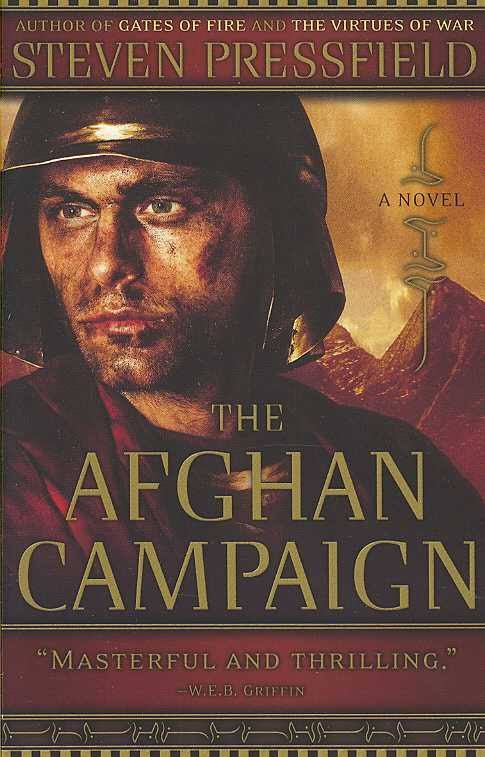
One Bullet Away: The Making of a Marine Officer

Author: Nathaniel C. Fink
Rating: 9/10
Last Read: June 2014

Quick Summary: This book recounts Fink’s journey through Marine Corps officer training and his experiences with war in Afghanistan and Iraq.  Fink shares some of the leadership training that he gained during his schooling and leadership roles in the USMC.  

While I don’t normally recommend books about war for those who are not interested, in this case I will do the opposite.  It takes me back to the years I spent in ROTC receiving similar training (with much lower stakes) – many people in leadership roles do not carry the same ideals or perspectives that the USMC instills in its leaders. There is much wisdom to be gained in the USMC leadership principles, and I think this book showcases some practical examples of their application.

My Highlights

We should remember that one man is much the same as another, and that he is best who is trained in the severest school.
—THUCYDIDES

“I saw a bumper sticker in the parking lot that said ‘Nobody ever drowned in sweat.’” –loc 127

Olds explained that orders slowly executed meant advantages lost. –loc 200

I wanted to be there, and I tried hard. For the first time in my life, desire and effort wouldn’t be enough. I was learning that in the Marines, the only easy day was yesterday. Success the day before meant nothing, and tomorrow might never happen. I woke up each morning at Quantico wondering whether I’d still be there that night. –loc 285

But in combat, we were told, there’s rarely time for discussion and debate. Complex ideas must be made simple, or they’ll remain ideas and never be put into action. –loc 308

We drilled them, and every other list, over and over again. I memorized them in the classroom, in line at the chow hall, and in my rack at night. The purpose, we were promised, was to make them instinctive. They would become innate to our decision-making process and infuse everything we did without even a conscious thought. –loc 310

“First,” he counseled, “you must be technically and tactically proficient.” There was no excuse for not knowing everything about the weapon, radio, aircraft, or whatever else it was you were trying to use. “Being a nice guy is great, but plenty of nice guys have gotten half their Marines killed because they didn’t know their jobs. –loc 355

A good plan violently executed now, he urged, was better than a great plan later. Be decisive, act, and be ready to adapt. –loc 359

“Fourth, know your men and look out for their welfare.” Fanning smiled as he remembered Marines he’d served with. They will, he said, follow you through the gates of hell if they trust you truly care about them. “This is not about you.” Fanning spoke the sentence slowly, emphasizing each word. He explained that the Corps existed for the enlisted infantryman. “Everyone else—you aspiring infantry officers included—is only support. –loc 364

From that afternoon on, I accepted the rules and lived by them. When getting dressed by the numbers, I tried to move faster and yell louder than anyone else. When Olds made me call cadence, I did it with heart and never backed down. He stopped caring that my calls confused the platoon. Marching didn’t matter. It was about cool under pressure. It was about detachment. We had to retain our ability to think when the world was crumbling around us. Not for ourselves, but for our Marines. –loc 374

His message was clear: you need discipline most when it’s hardest to muster—when you’re tired, hungry, outside your comfort zone. –loc 456

Being a Marine was not about money for graduate school or learning a skill; it was a rite of passage in a society becoming so soft and homogenized that the very concept was often sneered at. –loc 549

The Corps teaches three fundamentals of marksmanship: sight picture, bone support, and natural point of aim. –loc 571

The third element, natural point of aim, is the most important. With each of the shooter’s breaths, the rifle muzzle rises. It settles with exhalation back to a natural resting point between breaths—the natural point of aim. Make the bull’s-eye your natural point of aim, squeeze the trigger near the bottom of your breath, and you’ll hit the target. –loc 573

We learned the six troop-leading procedures by the acronym BAMCIS. Begin planning. Arrange for reconnaissance. Make reconnaissance. Complete the plan. Issue the order. Supervise. –loc 605

SMEAC: situation, mission, execution, administration and logistics, command and signal. –loc 608

Speed, we were taught, is a weapon. Be aggressive. Keep the tempo high. –loc 616

We learned that indecision is a decision, that inaction has a cost all its own. Good commanders act and create opportunities. Great commanders ruthlessly exploit those opportunities and throw the enemy into disarray. –loc 617

We learned that the Corps relies on mission-type orders: “Tell me what to do, not how to do it.” –loc 621

Decentralize command and allow subordinates to operate freely within the framework of the commander’s intent. –loc 621

I remembered the “80 percent solution”—a good plan now was better than a perfect plan later. We had crossed the threshold of action. This was enough information to do the job; now the task was to do it. –loc 684

Leaders have an ethical responsibility to serve as buffers, protecting their subordinates, and a moral obligation to act from the courage of their own convictions. The moral courage of their leaders is what separates combat units from armed mobs. –loc 765

He explained that Americans, especially young American men, exhibit posturing behavior. Two guys in a bar bump chests, get up in each other’s faces, and yell. If a fight follows, it’s about honor, saving face. That’s posturing. Marines on the battlefield must exhibit predatory behavior. In that bar, a predator would smile politely at his opponent, wait for him to turn around, and then cave in the back of his skull with a barstool. –loc 786

He identified five things an infantry leader can do to help maintain the psychiatric effectiveness of his men in combat: minimize fatigue by sleeping whenever possible, build confidence as a team, encourage communication, use spare time to practice emergency medical training, and do after-action critiques to address the shock of combat and killing. –loc 807

Your Marines will expect four things from you: competence, courage, consistency, and compassion.” –loc 879

The last thing they needed was a Pattonesque monologue from a newborn lieutenant, so I introduced myself and said I was happy to be the newest member of the platoon. I told them I wanted to meet with each man individually over the coming week and asked if they had any questions for me. There were none. Staff Sergeant Marine dismissed them, and they headed back to the armory. I thought I heard approval in his voice as we walked back to the office. “No bullshit, sir. Marines appreciate that.” –loc 993

“If safety were paramount,” Whitmer declared, “we’d stay in the barracks and play pickup basketball. Good training is paramount.” Whitmer’s idea of good training reminded me of something I’d read about the Roman legions—their exercises were bloodless battles so that their battles were bloody exercises. –loc 1002

Captain Whitmer replied that we, as infantry officers, had been trained to be aggressive. Nods all around. “But there’s a fine line between aggressive and foolish.” Good commanders, he explained, could operate right at that line, without crossing it. We had to know the difference between a risk and a gamble. All commanders take risks. They are calculated decisions to make gains in a dangerous environment. Gambles are pure chance—closing your eyes and running the gauntlet. –loc 1024

even if they had a low CDI factor. I took the bait. “What’s CDI?” “Chicks dig it, sir. Football team: high CDI. Chess club: low CDI. Platoon sergeant: high CDI. Mortar section: low CDI. Doesn’t matter that mortars have all the firepower. Life’s unfair. Didn’t they teach you that in college?” –loc 1078

‘Never regret not doing a real mission. Now you can have all golden memories and no ghosts.’ I –loc 1096

“The world breaks everyone and afterward many are strong at the broken places,” Hemingway wrote. –loc 1151

“But those that will not break it kills. It kills the very good and the very gentle and the very brave impartially. If you are none of these you can be sure that it will kill you too but there will be no special hurry.” –loc 1152

Past deeds are a young Marine’s source of pride, inspiration to face danger, and reassurance that death in battle isn’t consignment to oblivion. His buddies and all future Marines will keep the faith. Some people in my life would call that naivete, but I was coming to know it as esprit de corps. –loc 1164

I climbed up to Captain Whitmer’s cabin, to let him know his officers were all aboard. I found him sitting at his desk, wearing sweatpants and looking relaxed. His incense burner smoldered, and acoustic guitar played softly in the background. This was Captain Whitmer at his best, embodying the line from Rudyard Kipling’s poem about keeping your head when all around you are losing theirs. Yes, he knew about the attacks. Yes, he expected we’d be sailing earlier than planned. No, he saw no need for concern. –loc 1201

Captain Whitmer was too self-effacing to say it, but I knew the answer. Among the battalion’s company commanders, he was the iconoclast, the outcast stepchild who trained his Marines to be good instead of look good. He pushed us hard, questioned authority, and couldn’t even feign obsequiousness. –loc 1343

It is a central tenet of the Marines’ war-fighting philosophy that each subordinate must provide options to his boss—tell him what you can do, rather than what you can’t. Depending on the situation, two or three or four courses of action would be developed and then roughed out into basic operational plans. –loc 1361

Hardness was the ability to face an overwhelming situation with aplomb, smile calmly at it, and then triumph through sheer professional pride. –loc 2327

The pilot had requested the most favored method for guiding a helicopter into a landing zone in the dark. The NATO-Y, standard throughout the Western militaries, is four chem lights tied to premeasured lengths of parachute cord. When laid on the ground and pulled taut, they form a Y. One of the Marines pulled it out, already tied, and cracked the four chem lights. He laid them across the landing zone, with the base pointing into the wind and the two legs marking touchdown points for the helicopter’s main landing gear. –loc 2581

I remembered a story I’d heard from General Jones, the commandant who’d eaten dinner with us on the Peleliu. He’d quoted a former Marine officer who went on to be a Fortune 500 CEO. When asked for his guiding principle, the CEO replied, “Officers eat last.” The philosophy is simple, and it goes a long way. –loc 2907

Winning a firefight requires quick action by leaders. The key is to make decisions about your enemy and act on them faster than he is acting on decisions made about you. –loc 2917

In training, I was taught the OODA loop, a four-stage decision-making process described by Air Force fighter pilot Colonel John Boyd: observe, orient, decide, act. –loc 2918

Engage your brain before you engage your weapon. –loc 3082

“Well, sir,” Person said, turning in the seat to face me, oblivious to the fight all around him, “I guess I’m fighting for cheap gas and a world without ragheads blowing up our fucking buildings.”
“Good to know you’re such an idealist.”
“That world sounds pretty ideal to me right about now.”
–loc 4051

I remembered General Conway’s instruction back in Kuwait: “Your first obligation as an officer is the defense of your men.” –loc 4238

“Howdy, sir. How you doin’ this evening?” Espera said.
“Never better. Tired, cold, wet, hungry. I feel like a Marine.”
–loc 4274

“Last time I saw you in a cold hole, LT, was in Afghanistan. Makes me feel like an old campaigner.”
“Regular warhorse, Espera. Just wait. Next year it’ll be Syria, then North Korea, and who knows where after that. We’ll never have to train again. Just war, war, war.”
–loc 4276

I ached for him. No one knows the costs of war better than the grunts. I guessed the television news that night was full of reports of collateral damage and civilian casualties. I wished people could see how much we agonized over our decisions and prayed they were the right ones. These choices didn’t always translate into hesitation on the trigger or racking self-doubt, but sometimes it was enough to sit awake in the cold rain just thinking about them. –loc 4282

“Never pet a burning dog.” –loc 4335

Gunny Wynn’s priority as platoon sergeant, first and always, was the safety of his men. Mine, as platoon commander, was accomplishing our mission. –loc 4341

Gunny Wynn and the team leaders systematically strengthened the plan, pointing out weaknesses and suggesting improvements. It is a simple fact of human nature that people will more willingly go into danger when they have a say in crafting their fate. –loc 4347

Ironically, I remembered Colonel Ferrando’s words from a briefing the day before: “You can’t volunteer to go to war and then bitch about getting shot at.” –loc 4406

Strong combat leadership is never by committee. Platoon commanders must command, and command in battle isn’t based on consensus. It’s based on consent. –loc 4538

Any leader wields only as much authority and influence as is conferred by the consent of those he leads. –loc 4539

What’s past is past, but the present and future will kill you. –loc 4560

I finally understood why Whitmer had threatened us that night. Commanders always bear the heaviest responsibility. When you’re tired and under stress, your efforts to convey that gravitas can come out all wrong. –loc 4568

“The sacred geometry of chance, sir.”
“I like that.”
“Espera and I talked about it earlier. We can do a lot to influence the outcome, but sometimes it’s out of our hands,” Rudy said, then mimed firing a rifle. “A running man shoots a burst into a moving Humvee. Why do some miss? Why do some hit? Why a flesh wound and not a femoral artery? Aim and skill have nothing to do with it. The difference between life and death out here is seconds and millimeters—the sacred geometry of chance.” –loc 4599

After all, I would be right there at the front, in as much danger as anyone, sometimes more. An instructor at Quantico had told me that officers got paid to be gophers: when all the sane people were burrowing in the dirt, it was an officer’s job to poke his head up and see what was happening. –loc 5368

Anyone who looks with anguish on evils so great must acknowledge the tragedy of it all; and if anyone experiences them without anguish, his condition is even more tragic, since he remains serene by losing his humanity. —AUGUSTINE OF HIPPO –loc 5870

I left the Corps because I had become a reluctant warrior. Many Marines reminded me of gladiators. They had that mysterious quality that allows some men to strap on greaves and a breastplate and wade into the gore. I respected, admired, and emulated them, but I could never be like them. I could kill when killing was called for, and I got hooked on the rush of combat as much as any man did. But I couldn’t make the conscious choice to put myself in that position again and again throughout my professional life. –loc 5923

Great Marine commanders, like all great warriors, are able to kill that which they love most—their men. It’s a fundamental law of warfare. Twice I had cheated it. I couldn’t tempt fate again. –loc 5926