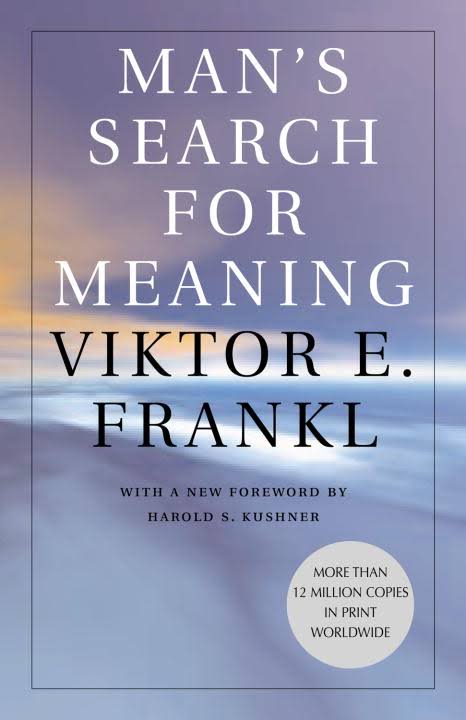
The Fall

Author: Albert Camus
Rating: 4/5
Last Read: August 2018
Who Should Read: Anyone interested in The Mind, philosophy, psychology, or religion

I’ve read a few of Camus’s essays, but The Fall was my first major foray into his work.

The Fall is a short novel. The book is presented as a confessional monologue given by a lawyer to a compatriot in a bar. The lawyer, Jean-Baptiste Clamence, recounts the events of his life which led to his fall from a fully-absorbed and selfish love of life to one of dark depression and guilt. Clamence’s evolution in The Fall seems to purposefully mirror the themes presented in the book of Genesis, where man is kicked out of the garden of Eden and Wakes Up to a world of work, pain, and knowledge of evil.

How does Clamence’s Fall occur? While walking through Paris one night, Clamence fails to save a woman whom (he assumes) is pushed into in the river and drowns. His inaction that night drives him further and further into madness and guilt. Camus seems to emphasize a point frequently repeated by Jordan Peterson throughout his biblical lecture series: Nobody gets away with anything, ever.

Clamence’s self-judgment leads him down the road to an existential nightmare. He’s quite an interesting and disturbing character, especially for someone so introspective. He posits that we can never improve ourselves, because our own consciences will eternally condemn us as guilty. This is an amusing stance for a character who admits that he is morally bankrupt, but continues to act the same way that he did before “The Fall”. He seems to think that his admission of guilt and cowardice makes him noble, or at least no longer a hypocritical liar. Even after the self-torment, he says that given a second chance to save the woman, he knows that he would still fail to act.

It is this final admission of Clamence’s that leaves me the most disturbed – his attitude feels evil and sickening to me. Perhaps I find myself so disturbed because this attitude is more common than I would like to think.

If you are a student of the human condition, The Fall is a book for you. This novel is extremely philosophical and touches on many points which are still relevant in our society today. Perhaps the points discussed in the novel have always been relevant to humanity. I’m still chewing on many internal questions and uncomfortable Truths raised by this book.

This is so true that we rarely confide in those who are better than we. Rather, we are more inclined to flee their society. Most often, on the other hand, we confess to those who are like us and who share our weaknesses. Hence we don’t want to improve ourselves or be bettered, for we should first have to be judged in default. We merely wish to be pitied and encouraged in the course we have chosen. In short, we should like, at the same time, to cease being guilty and yet not to make the effort of cleansing ourselves. Not enough cynicism and not enough virtue.

My Highlights

I enjoyed my own nature to the fullest, and we all know that there lies happiness, although, to soothe one another mutually, we occasionally pretend to condemn such joys as selfishness.

I could readily understand why sermons, decisive preachings, and fire miracles took place on accessible heights. In my opinion no one meditated in cellars or prison cells (unless they were situated in a tower with a broad view); one just became moldy.

After all, living aloft is still the only way of being seen and hailed by the largest number.

Indeed, wasn’t that Eden, cher monsieur: no intermediary between life and me? Such was my life. I never had to learn how to live. In that regard, I already knew everything at birth. Some people’s problem is to protect themselves from men or at least to come to terms with them. In my case, the understanding was already established. Familiar when it was appropriate, silent when necessary, capable of a free and easy manner as readily as of dignity, I was always in harmony. Hence my popularity was great and my successes in society innumerable.

Yes, few creatures were more natural than I. I was altogether in harmony with life, fitting into it from top to bottom without rejecting any of its ironies, its grandeur, or its servitude. In particular the flesh, matter, the physical in short, which disconcerts or discourages so many men in love or in solitude, without enslaving me, brought me steady joys. I was made to have a body. Whence that harmony in me, that relaxed mastery that people felt, even to telling me sometimes that it helped them in life. Hence my company was in demand. Often, for instance, people thought they had met me before. Life, its creatures and its gifts, offered themselves to me, and I accepted such marks of homage with a kindly pride. To tell the truth, just from being so fully and simply a man, I looked upon myself as something of a superman.

Have you never suddenly needed understanding, help, friendship? Yes, of course. I have learned to be satisfied with understanding. It is found more readily and, besides, it’s not binding. “I beg you to believe in my sympathetic understanding” in the inner discourse always precedes immediately “and now, let’s turn to other matters.”

Friendship is less simple. It is long and hard to obtain, but when one has it there’s no getting rid of it; one simply has to cope with it. Don’t think for a minute that your friends will telephone you every evening, as they ought to, in order to find out if this doesn’t happen to be the evening when you are deciding to commit suicide, or simply whether you don’t need company, whether you are not in a mood to go out. No, don’t worry, they’ll ring up the evening you are not alone, when life is beautiful.

May heaven protect us, cher monsieur, from being set on a pedestal by our friends!

But it’s not easy, for friendship is absent-minded or at least unavailing. It is incapable of achieving what it wants. Maybe, after all, it doesn’t want it enough? Maybe we don’t love life enough? Have you noticed that death alone awakens our feelings? How we love the friends who have just left us? How we admire those of our teachers who have ceased to speak, their mouths filled with earth! Then the expression of admiration springs forth naturally, that admiration they were perhaps expecting from us all their lives.

But do you know why we are always more just and more generous toward the dead? The reason is simple. With them there is no obligation. They leave us free and we can take our time, fit the testimonial in between a cocktail party and a nice little mistress, in our spare time, in short. If they forced us to anything, it would be to remembering, and we have a short memory. No, it is the recently dead we love among our friends, the painful dead, our emotion, ourselves after all!

That’s the way man is, cher monsieur. He has two faces: he can’t love without self-love.

Death certainly has this affect on me:

Notice your neighbors if perchance a death takes place in the building. They were asleep in their little routine and suddenly, for example, the concierge dies. At once they awake, bestir themselves, get the details, commiserate. A newly dead man and the show begins at last. They need tragedy, don’t you know; it’s their little transcendence, their apéritif.

Camus isn’t pulling any punches, and he hits the nail on the head:

I knew a man who gave twenty years of his life to a scatterbrained woman, sacrificing everything to her, his friendships, his work, the very respectability of his life, and who one evening recognized that he had never loved her. He had been bored, that’s all, bored like most people. Hence he had made himself out of whole cloth a life full of complications and drama. Something must happen—and that explains most human commitments. Something must happen, even loveless slavery, even war or death. Hurray then for funerals!

Life became less easy for me: when the body is sad the heart languishes.

Humans need slaves (or at least domination), Clamence says:

I am well aware that one can’t get along without domineering or being served. Every man needs slaves as he needs fresh air. Commanding is breathing—you agree with me? And even the most destitute manage to breathe. The lowest man in the social scale still has his wife or his child. If he’s unmarried, a dog. The essential thing, after all, is being able to get angry with someone who has no right to talk back.

Still happening:

Power, on the other hand, settles everything. It took time, but we finally realized that. For instance, you must have noticed that our old Europe at last philosophizes in the right way. We no longer say as in simple times: “This is the way I think. What are your objections?” We have become lucid. For the dialogue we have substituted the communiqué: “This is the truth,” we say. “You can discuss it as much as you want; we aren’t interested. But in a few years there’ll be the police who will show you we are right.”

To me, this seems to be how the rich currently think of the masses:

Just between us, slavery, preferably with a smile, is inevitable then. But we must not admit it. Isn’t it better that whoever cannot do without having slaves should call them free men? For the principle to begin with, and, secondly, not to drive them to despair. We owe them that compensation, don’t we? In that way, they will continue to smile and we shall maintain our good conscience.

I have to admit it humbly, mon cher compatriote, I was always bursting with vanity. I, I, I is the refrain of my whole life, which could be heard in everything I said. I could never talk without boasting, especially if I did so with that shattering discretion that was my specialty. It is quite true that I always lived free and powerful. I simply felt released in regard to all for the excellent reason that I recognized no equals. I always considered myself more intelligent than everyone else, as I’ve told you, but also more sensitive and more skillful, a crack shot, an incomparable driver, a better lover. Even in the fields in which it was easy for me to verify my inferiority—like tennis, for instance, in which I was but a passable partner—it was hard for me not to think that, with a little time for practice, I would surpass the best players. I admitted only superiorities in me and this explained my good will and serenity. When I was concerned with others, I was so out of pure condescension, in utter freedom, and all the credit went to me: my self-esteem would go up a degree.

By gradual degrees I saw more clearly, I learned a little of what I knew. Until then I had always been aided by an extraordinary ability to forget. I used to forget everything, beginning with my resolutions. Fundamentally, nothing mattered.

Thus I progressed on the surface of life, in the realm of words as it were, never in reality. All those books barely read, those friends barely loved, those cities barely visited, those women barely possessed! I went through the gestures out of boredom or absent-mindedness. Then came human beings; they wanted to cling, but there was nothing to cling to, and that was unfortunate—for them. As for me, I forgot. I never remembered anything but myself.

As I passed, the idiot greeted me with a “poor dope” that I still recall. A totally insignificant story, in your opinion? Probably. Still it took me some time to forget it, and that’s what counts.

I am guilty of this – the monkey mind at play.

As an afterthought I clearly saw what I should have done. I saw myself felling d’Artagnan with a good hook to the jaw, getting back into my car, pursuing the monkey who had struck me, overtaking him, jamming his machine against the curb, taking him aside, and giving him the licking he had fully deserved. With a few variants, I ran off this little film a hundred times in my imagination. But it was too late, and for several days I chewed a bitter resentment.

Is this how my own anger serves me – simply wanting to dominate and have others listen?

I had dreamed—this was now clear—of being a complete man who managed to make himself respected in his person as well as in his profession. Half Cerdan, half de Gaulle, if you will. In short, I wanted to dominate in all things. This is why I assumed the manner, made a particular point of displaying my physical skill rather than my intellectual gifts. But after having been struck in public without reacting, it was no longer possible for me to cherish that fine picture of myself. If I had been the friend of truth and intelligence I claimed to be, what would that episode have mattered to me? It was already forgotten by those who had witnessed it. I’d have barely accused myself of having got angry over nothing and also, having got angry, of not having managed to face up to the consequences of my anger, for want of presence of mind. Instead of that, I was eager to get my revenge, to strike and conquer. As if my true desire were not to be the most intelligent or most generous creature on earth, but only to beat anyone I wanted, to be the stronger, in short, and in the most elementary way.

The truth is that every intelligent man, as you know, dreams of being a gangster and of ruling over society by force alone.

What does it matter, after all, if by humiliating one’s mind one succeeds in dominating everyone?

Everyone has a shadow. Is yours properly integrated, or do you let it run free?

When I was threatened, I became not only a judge in turn but even more: an irascible master who wanted, regardless of all laws, to strike down the offender and get him on his knees. After that, mon cher compatriote, it is very hard to continue seriously believing one has a vocation for justice and is the predestined defender of the widow and orphan.

You know what charm is: a way of getting the answer yes without having asked any clear question.

Of course, true love is exceptional—two or three times a century, more or less. The rest of the time there is vanity or boredom.

The mind’s scheming, exposed by Camus:

I had principles, to be sure, such as that the wife of a friend is sacred. But I simply ceased quite sincerely, a few days before, to feel any friendship for the husband.

Our feminine friends have in common with Bonaparte the belief that they can succeed where everyone else has failed.

How many people must this way:

I was never concerned with the major problems except in the intervals between my little excesses.

In short, for me to live happily it was essential for the creatures I chose not to live at all. They must receive their life, sporadically, only at my bidding.

How do I know I have no friends? It’s very easy: I discovered it the day I thought of killing myself to play a trick on them, to punish them, in a way. But punish whom? Some would be surprised, and no one would feel punished. I realized I had no friends. Besides, even if I had had, I shouldn’t be any better off. If I had been able to commit suicide and then see their reaction, why, then the game would have been worth the candle. But the earth is dark, cher ami, the coffin thick, and the shroud opaque.

Men are never convinced of your reasons, of your sincerity, of the seriousness of your sufferings, except by your death. So long as you are alive, your case is doubtful; you have a right only to their skepticism.

In order to cease being a doubtful case, one has to cease being, that’s all.

You think you are dying to punish your wife and actually you are freeing her. It’s better not to see that.

So what’s the good of dying intentionally, of sacrificing yourself to the idea you want people to have of you? Once you are dead, they will take advantage of it to attribute idiotic or vulgar motives to your action. Martyrs, cher ami, must choose between being forgotten, mocked, or made use of. As for being understood—never!

I’m not saying to avoid punishment, for punishment without judgment is bearable. It has a name, besides, that guarantees our innocence: it is called misfortune.

Today we are always ready to judge as we are to fornicate. With this difference, that there are no inadequacies to fear. If you doubt this, just listen to the table conversation during August in those summer hotels where our charitable fellow citizens take the boredom cure. If you still hesitate to conclude, read the writings of our great men of the moment. Or else observe your own family and you will be edified. Mon cher ami, let’s not give them any pretext, no matter how small, for judging us! Otherwise, we’ll be left in shreds.

In short, the moment I grasped that there was something to judge in me, I realized that there was in them an irresistible vocation for judgment.

Your successes and happiness are forgiven you only if you generously consent to share them. But to be happy it is essential not to be too concerned with others. Consequently, there is no escape. Happy and judged, or absolved and wretched.

As for me, the injustice was even greater: I was condemned for past successes.

People hasten to judge in order not to be judged themselves. What do you expect? The idea that comes most naturally to man, as if from his very nature, is the idea of his innocence.

We are all exceptional cases. We all want to appeal against something! Each of us insists on being innocent at all cost, even if he has to accuse the whole human race and heaven itself.

You won’t delight a man by complimenting him on the efforts by which he has become intelligent or generous. On the other hand, he will beam if you admire his natural generosity. Inversely, if you tell a criminal that his crime is not due to his nature or his character but to unfortunate circumstances, he will be extravagantly grateful to you.

But those rascals want grace, that is irresponsibility, and they shamelessly allege the justifications of nature or the excuses of circumstances, even if they are contradictory. The essential thing is that they should be innocent, that their virtues, by grace of birth, should not be questioned and that their misdeeds, born of a momentary misfortune, should never be more than provisional.

As I told you, it’s a matter of dodging judgment. Since it is hard to dodge it, tricky to get one’s nature simultaneously admired and excused, they all strive to be rich. Why? Did you ever ask yourself? For power, of course. But especially because wealth shields from immediate judgment, takes you out of the subway crowd to enclose you in a chromium-plated automobile, isolates you in huge protected lawns, Pullmans, first-class cabins. Wealth, cher ami, is not quite acquittal, but reprieve, and that’s always worth taking.

Above all, don’t believe your friends when they ask you to be sincere with them. They merely hope you will encourage them in the good opinion they have of themselves by providing them with the additional assurance they will find in your promise of sincerity. How could sincerity be a condition of friendship? A liking for truth at any cost is a passion that spares nothing and that nothing resists. It’s a vice, at times a comfort, or a selfishness. Therefore, if you are in that situation, don’t hesitate: promise to tell the truth and then lie as best you can. You will satisfy their hidden desire and doubly prove your affection.

This is so true that we rarely confide in those who are better than we. Rather, we are more inclined to flee their society. Most often, on the other hand, we confess to those who are like us and who share our weaknesses. Hence we don’t want to improve ourselves or be bettered, for we should first have to be judged in default. We merely wish to be pitied and encouraged in the course we have chosen. In short, we should like, at the same time, to cease being guilty and yet not to make the effort of cleansing ourselves. Not enough cynicism and not enough virtue.

Don’t smile; that truth is not so basic as it seems. What we call basic truths are simply the ones we discover after all the others.

However that may be, after prolonged research on myself, I brought out the fundamental duplicity of the human being. Then I realized, as a result of delving in my memory, that modesty helped me to shine, humility to conquer, and virtue to oppress. I used to wage war by peaceful means and eventually used to achieve, through disinterested means, everything I desired.

For instance, I never complained that my birthday was overlooked; people were even surprised, with a touch of admiration, by my discretion on this subject. But the reason for my disinterestedness was even more discreet: I longed to be forgotten in order to be able to complain to myself. Several days before the famous date (which I knew very well) I was on the alert, eager to let nothing slip that might arouse the attention and memory of those on whose lapse I was counting (didn’t I once go so far as to contemplate falsifying a friend’s calendar?). Once my solitude was thoroughly proved, I could surrender to the charms of a virile self-pity.

I have never been really able to believe that human affairs were serious matters. I had no idea where the serious might lie, except that it was not in all this I saw around me—which seemed to me merely an amusing game, or tiresome. There are really efforts and convictions I have never been able to understand. I always looked with amazement, and a certain suspicion, on those strange creatures who died for money, fell into despair over the loss of a “position,” or sacrificed themselves with a high and mighty manner for the prosperity of their family. I could better understand that friend who had made up his mind to stop smoking and through sheer will power had succeeded. One morning he opened the paper, read that the first H-bomb had been exploded, learned about its wonderful effects, and hastened to a tobacco shop.

You remember the remark: “Woe to you when all men speak well of you!” Ah, the one who said that spoke words of wisdom!

Then it was that the thought of death burst into my daily life. I would measure the years separating me from my end. I would look for examples of men of my age who were already dead. And I was tormented by the thought that I might not have time to accomplish my task. What task? I had no idea. Frankly, was what I was doing worth continuing?

You see, it is not enough to accuse yourself in order to clear yourself; otherwise, I’d be as innocent as a lamb. One must accuse oneself in a certain way, which it took me considerable time to perfect.

The greater the threat to the feeling in which I had hoped to find calm, the more I demanded that feeling of my partner.

I tried accordingly to give up women, in a certain way, and to live in a state of chastity. After all, their friendship ought to satisfy me. But this was tantamount to giving up gambling. Without desire, women bored me beyond all expectation, and obviously I bored them too. No more gambling and no more theater—I was probably in the realm of truth. But truth, cher ami, is a colossal bore.

Despairing of love and of chastity, I at last bethought myself of debauchery, a substitute for love, which quiets the laughter, restores silence, and above all, confers immortality.

One plays at being immortal and after a few weeks one doesn’t even know whether or not one can hang on till the next day.

There is nothing frenzied about debauchery, contrary to what is thought. It is but a long sleep.

Physical jealousy is a result of the imagination at the same time that it is a self-judgment.

Believe me, religions are on the wrong track the moment they moralize and fulminate commandments. God is not needed to create guilt or to punish. Our fellow men suffice, aided by ourselves.

Hell is a real place, and I see people living there every day:

I’ll tell you a big secret, mon cher. Don’t wait for the Last Judgment. It takes place every day.

Say, do you know why he was crucified—the one you are perhaps thinking of at this moment? Well, there were heaps of reasons for that. There are always reasons for murdering a man. On the contrary, it is impossible to justify his living. That’s why crime always finds lawyers, and innocence only rarely. But, beside the reasons that have been very well explained to us for the past two thousand years, there was a major one for that terrible agony, and I don’t know why it has been so carefully hidden. The real reason is that he knew he was not altogether innocent. If he did not bear the weight of the crime he was accused of, he had committed others—even though he didn’t know which ones.

There was a time when I didn’t at any minute have the slightest idea how I could reach the next one. Yes, one can wage war in this world, ape love, torture one’s fellow man, or merely say evil of one’s neighbor while knitting. But, in certain cases, carrying on, merely continuing, is superhuman.

In solitude and when fatigued, one is after all inclined to take oneself for a prophet.

You see, a person I knew used to divide human beings into three categories: those who prefer having nothing to hide rather than being obliged to lie, those who prefer lying to having nothing to hide, and finally those who like both lying and the hidden.

I didn’t know that freedom is not a reward or a decoration that is celebrated with champagne. Nor yet a gift, a box of dainties designed to make you lick your chops. Oh, no! It’s a chore, on the contrary, and a long-distance race, quite solitary and very exhausting. No champagne, no friends raising their glasses as they look at you affectionately. Alone in a forbidding room, alone in the prisoner’s box before the judges, and alone to decide in face of oneself or in the face of others’ judgment. At the end of all freedom is a court sentence; that’s why freedom is too heavy to bear, especially when you’re down with a fever, or are distressed, or love nobody.

Ah, mon cher, for anyone who is alone, without God and without a master, the weight of days is dreadful. Hence one must choose a master, God being out of style.

However, I have a superiority in that I know it and this gives me the right to speak. You see the advantage, I am sure. The more I accuse myself, the more I have a right to judge you. Even better, I provoke you into judging yourself, and this relieves me of that much of the burden. Ah, mon cher, we are odd, wretched creatures, and if we merely look back over our lives, there’s no lack of occasions to amaze and horrify ourselves.

Buy the Book

If you are interested in purchasing this book, you can support the website by using our Amazon affiliate link.


The Fall

By Albert Camus


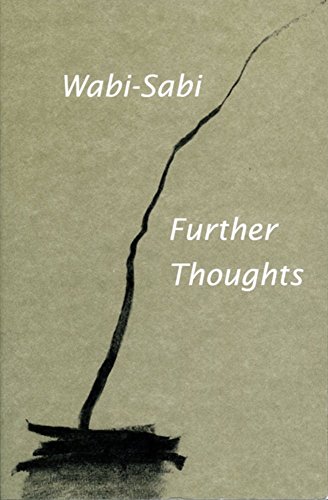
Wabi-Sabi: Further Thoughts

Author: Leonard Koren
Rating: 9/10
Last Read: 11/2017

Wabi-Sabi: Further Thoughts seeks to expand upon Koren’s previous work Wabi-Sabi: For Artists, Designers, Poets & Philosophers. Koren seeks to clarify some of the concepts that were introduced in his first work, and provide more context to the interested mind. He also discusses some interesting topics, such as whether digital art can ever express wabi-sabi.

If you liked the first book and want to further refine your understanding of wabi-sabi, read Wabi-Sabi: Further Thoughts.

My Highlights

wabi-sabi =

The aesthetic other.

  • a contrast/differentiation from the dominant aesthetic convention.
  • bulwark against sameness
  • rejection of the Chinese-derived taste for smooth, symmetrical perfection
  • Wabi taste: irregular and rough-textured objects, aka the aesthetic other in that historical context

The transfiguration of the commonplace.

  • Beauty of wabi-sabi is a perpetual event; it is not an inherent property of things
  • Wabi-sabi “happens” when conditioned and habituated ways of looking at things fall away, when things are defamiliarized
  • The beauty of wabi-sabi involves perceiving something extraordinary in something that might otherwise be regarded as quite ordinary, undistinguished or barely there.

Beauty at the edge of nothingness

  • Infinite potentiality of nothingness
  • Distinctiveness comes from something which is so faint, tentative, delicate, and subtle that it may be overlooked – or mistaken as trivial or insignificant.

Elegant Poverty

  • “Poverty” in this meaning as the mindset of non-attachment, I.e. not holding onto fixed ideas or material things.
  • “Elegant” refers to a graceful acceptance of restraint, inconvenience, and uncertainty.

Imperfection

  • Represented by entropic processes of nature made visible
  • Chaos and unpredictability, producing variety and interest
  • Under the right conditions, imperfection-embodied things can arouse a sense of empathy.

In the era of wabi-tea, the Japanese telling of the creation process: “things spontaneously appear beyond the technical and conceptual intervention” of artists or designers. An egoless point of view. wabi-sabi “occurs”, it is not “created” or “made”

Reluctance to make wabi-ness a mode of agency

Anonymously made objects taken from other contexts and used in new ways. Broken things, both common and special, are fixed, leaving scars of repair, and put back into service.

Never up to the fabricator to decide whether or not something is wabi: it’s up to the individual beholder.

“According to Rikyu, a preoccupation with things in and of themselves is tantamount to a spiritual failing”

“Sloppiness, whether by design or accident, is the result of thoughtlessness. Thoughtlessness has no place in the wabi-sabi concept.”

The modern project:

  • Reason is superior to all other forms of cognition
  • Science offers the ultimate solutions to mankind’s problems
  • The world is “broken”, but in the future things will be better.
  • It is necessary for humans to master nature
  • Look for universal solutions to fit all instances and circumstances

Wabi-sabi:

  • Reason is only one of many equally important modes of cognition
  • Science can only solve a limited range of mankind’s problems
  • The world simply “is”, and always will be so
  • Humans and nature are one; there is no master, there is no slave
  • Look for specific solutions for particular instances and circumstances

“Wabi-sabi is based on effortless, uninterrupted interactions with real (actual) things in the real (actual) world. The real world is dependent only on a consciousness to perceive it.”

“Digital reality, on the other hand, requires the effort of someone (the encoder, the device maker) to exist, and is dependent upon machinery and an external power source. When either the will of the maker, the machinery, or the power fails, digital reality ceases to be.”

Buy the Book

If you are interested in purchasing this book, you can support the website by using our Amazon affiliate link:


Wabi-Sabi: For Artists, Designers, Poets & Philosophers

Author: Leonard Koren
Rating: 10/10
Last Read: 11/2017

I’ve recently found myself immersed in Japanese topics. I have been listening to Zen lectures by Alan Watts, working at the Japanese Tea Garden, and learning more about bonsai. I’ve also recently read Shogun, Samurai William, and Taiko, each focused on the end of the Sengoku period.

Wabi-Sabi: For Artists, Designers, Poets & Philosophers also fits into the same Japanese theme. Wabi-sabi is an aesthetic aspect that permeates much of Japanese culture. Leonard Koren has created a beautiful (and short) work that seeks to demystify wabi-sabi so it can be more accessible to interested minds. Koren avoids using absolute terms to describe wabi-sabi, instead giving us a general picture of the feelings, attitudes, and qualities that imbune wabi-sabi. The books is designed, printed, and arranged in such a way to highlight these same characteristics. I appreciate Koren’s thoughtfulness in creating this work, and I find myself reviewing it on a regular basis.

If you’re looking for some artistic inspiration, have a fond love of natural processes, or are just curious about an essential element of Japanese culture, check out Wabi-Sabi: For Artists, Designers, Poets & Philosophers.

My Highlights

wabi refers to:

  • a way of life, a spiritual path
  • the inward, the subjective
  • a philosophical construct
  • spacial events

sabi refers to:

  • material objects, art and literature
  • the outward, the objective
  • an aesthetic ideal
  • temporal events

Similarities between modernism and wabi-sabi:

  • Both apply to all manner of manmade objects, spaces, and designs.
  • Botha re strong reactions against the dominant, established sensibilities of their time. Modernism was a radical departure from 19th-century classicism and eclecticism. Wabi-sabi was a radical departure from the Chinese perfection and gorgeousness of the 16h-century and earlier.
  • Both eschew any decoration that is not integral to structure.
  • Both are abstract, nonrepresentational ideals of beauty.
  • Both have readily identifiable surface characteristics. Modernism is seamless, polished, and smooth. Wabi-sabi is earthy, imperfect, and variegated.

Differences between the Modernism and wabi-sabi

Modernism:

  • Primarily expressed in the public domain
  • implies a logical, rational worldview
  • absolute
  • looks for universal, prototypical solutions
  • Mass-produced/modular
  • Expresses faith in progress
  • Future-oriented
  • Believes in the control of nature
  • Romanticizes technology
  • People adapting to machines
  • Geometric organization of form (sharp, precise, definite shapes and edges)
  • The box as metaphor (rectilinear, precise, contained)
  • Manmade materials
  • Ostensibly slick
  • needs to be well-maintained
  • purity makes its expression richer
  • solicits the reduction of sensory information
  • Is intolerant of ambiguity and contradiction
  • Cool
  • Generally light and bright
  • Function and utility are primary values
  • Perfect materiality is an ideal
  • Everlasting

wabi-sabi:

  • Primarily expressed in the private domain
  • Implies an intuitive worldview
  • Relative
  • Looks for personal, idiosyncratic solutions
  • One-of-a-kind/variable
  • There is no progress
  • Present-oriented
  • Believes in the fundamental uncontrollability of nature
  • Romanticizes nature
  • People adapting to nature
  • Organic organization of form (soft, vague shapes and edges)
  • The bowl as a metaphor (free shape, open at top)
  • Natural materials
  • Ostensibly crude
  • Accomodates to degradation and attrition
  • Corrosion and contamination make its expression richer
  • Solicits the expansion of sensory information
  • Is comfortable with ambiguity and contradiction
  • Warm
  • Generally dark and dim
  • Function and utility are not so important
  • Perfect immateriality is an ideal
  • To every thing there is a season

The Wabi-Sabi Universe

Metaphysical basis: Things are either devolving toward, or evolving from, nothingness

Spiritual Values:

  • Truth comes from the observation of nature
  • “Greatness” exists in the inconspicuous and overlooked details
  • Beauty can be coaxed out of ugliness

State of mind:

  • Acceptance of the inevitable
  • Appreciation of the cosmic order

Moral Precepts:

  • Get rid of all that is unnecessary
  • Focus on the intrinsic and ignore material hierarchy

Material Qualities:

  • The suggestion of natural process
  • Irregular
  • Intimate
  • Unpretentious
  • Earthy
  • Murky
  • Simple

What are the lessons of the universe?

  1. All things are impermanent
  2. All things are imperfect
  3. All things are incomplete

The simplicity of wabi-sabi is probably best described as the state of grace arrived at by a sober, modest, heartfelt intelligence. The main strategy of this intelligence is economy of means. Pare down to the essence, but don’t remove the poetry. Keep things clean and unencumbered, but don’t sterilize. (Things wabi-sabi are emotionally warm, never cold.) Usually this implies a limited palette of materials. It also means keeping conspicuous features to a minimum. But it doesn’t mean removing the invisible connective tissue that somehow binds the elements into meaningful whole. It also doesn’t mean in any way diminishing something’s “interestingness,” the quality that compels us to look at that something over, and over, and over again.

Buy the Book

If you are interested in purchasing this book, you can support the website by using our Amazon affiliate link:


The Book: On the Taboo Against Knowing Who You Are

Author: Alan Watts
Rating: 9/10
Last Read: April 2017

Quick Summary:  In The Book, Alan Watts seeks out to provide his children (and other learners) with a “Bible-like” replacement. The Book draws heavily from the Taoist writings and lectures that Watts gave in his later years – if you are familiar with other works where he discusses Taoism, much of this material will be familiar to you. 

Watts writes this book to fill a void, one left by the lack of wonder in our lives. Even our religions no longer align with the modern human experience:

The standard-brand religions, whether Jewish, Christian, Mohammedan, Hindu, or Buddhist, are—as now practiced—like exhausted mines: very hard to dig. With some exceptions not too easily found, their ideas about man and the world, their imagery, their rites, and their notions of the good life don’t seem to fit in with the universe as we now know it, or with a human world that is changing so rapidly that much of what one learns in school is already obsolete on graduation day.

Instead, Watts seeks to fill us with the spirit of the Tao and the interconnectedness of our experience. He seeks to correct us of the common illusion:

This feeling of being lonely and very temporary visitors in the universe is in flat contradiction to everything known about man (and all other living organisms) in the sciences. We do not “come into” this world; we come out of it, as leaves from a tree. As the ocean “waves,” the universe “peoples.” Every individual is an expression of the whole realm of nature, a unique action of the total universe. This fact is rarely, if ever, experienced by most individuals. Even those who know it to be true in theory do not sense or feel it, but continue to be aware of themselves as isolated “egos” inside bags of skin.

I for one would say he makes a great case. Read The Book and rediscover the wonder of being alive.

My Highlights

Nevertheless, wonder is not a disease. Wonder, and its expression in poetry and the arts, are among the most important things which seem to distinguish men from other animals, and intelligent and sensitive people from morons. –loc 88

The root of the matter is the way in which we feel and conceive ourselves as human beings, our sensation of being alive, of individual existence and identity. We suffer from a hallucination, from a false and distorted sensation of our own existence as living organisms. Most of us have the sensation that “I myself” is a separate center of feeling and action, living inside and bounded by the physical body—a center which “confronts” an “external” world of people and things, making contact through the senses with a universe both alien and strange. Everyday figures of speech reflect this illusion. “I came into this world.” “You must face reality.” “The conquest of nature.” –loc 104

This feeling of being lonely and very temporary visitors in the universe is in flat contradiction to everything known about man (and all other living organisms) in the sciences. We do not “come into” this world; we come out of it, as leaves from a tree. As the ocean “waves,” the universe “peoples.” Every individual is an expression of the whole realm of nature, a unique action of the total universe. This fact is rarely, if ever, experienced by most individuals. Even those who know it to be true in theory do not sense or feel it, but continue to be aware of themselves as isolated “egos” inside bags of skin. –loc 109

The first result of this illusion is that our attitude to the world “outside” us is largely hostile. We are forever “conquering” nature, space, mountains, deserts, bacteria, and insects instead of learning to cooperate with them in a harmonious order. –loc 114

The second result of feeling that we are separate minds in an alien, and mostly stupid, universe is that we have no common sense, no way of making sense of the world upon which we are agreed in common. It’s just my opinion against yours, and therefore the most aggressive and violent (and thus insensitive) propagandist makes the decisions. A muddle of conflicting opinions united by force of propaganda is the worst possible source of control for a powerful technology. –loc 123

Furthermore, as systems of doctrine, symbolism, and behavior, religions harden into institutions that must command loyalty, be defended and kept “pure,” and—because all belief is fervent hope, and thus a cover-up for doubt and uncertainty—religions must make converts. The more people who agree with us, the less nagging insecurity about our position. –loc 131

Irrevocable commitment to any religion is not only intellectual suicide; it is positive unfaith because it closes the mind to any new vision of the world. Faith is, above all, open-ness—an act of trust in the unknown. –loc 136

An ardent Jehovah’s Witness once tried to convince me that if there were a God of love, he would certainly provide mankind with a reliable and infallible textbook for the guidance of conduct. I replied that no considerate God would destroy the human mind by making it so rigid and unadaptable as to depend upon one book, the Bible, for all the answers. For the use of words, and thus of a book, is to point beyond themselves to a world of life and experience that is not mere words or even ideas. Just as money is not real, consumable wealth, books are not life. To idolize scriptures is like eating paper currency. –loc 138

The most strongly enforced of all known taboos is the taboo against knowing who or what you really are behind the mask of your apparently separate, independent, and isolated ego. –loc 148

As is so often the way, what we have suppressed and overlooked is something startlingly obvious. The difficulty is that it is so obvious and basic that one can hardly find the words for it. –loc 153

The sensation of “I” as a lonely and isolated center of being is so powerful and commonsensical, and so fundamental to our modes of speech and thought, to our laws and social institutions, that we cannot experience selfhood except as something superficial in the scheme of the universe. I seem to be a brief light that flashes but once in all the aeons of time—a rare, complicated, and all-too-delicate organism on the fringe of biological evolution, where the wave of life bursts into individual, sparkling, and multicolored drops that gleam for a moment only to vanish forever. Under such conditioning it seems impossible and even absurd to realize that myself does not reside in the drop alone, but in the whole surge of energy which ranges from the galaxies to the nuclear fields in my body. –loc 155

Myth, then, is the form in which I try to answer when children ask me those fundamental metaphysical questions which come so readily to their minds: “Where did the world come from?” “Why did God make the world?” “Where was I before I was born?” “Where do people go when they die?” Again and again I have found that they seem to be satisfied with a simple and very ancient story, –loc 171

The social hierarchies of the past, where some boss above you always punished any error, conditioned men to feel a chain of harsh authority reaching all the way “up there.” We don’t feel this bond in today’s egalitarian freedom. We don’t even have, since Dr. Spock, many Jehovah-like fathers in the human family. So the average unconscious no longer learns to seek forgiveness from a wrathful God above. –loc 213

Our generation knows a cold hell, solitary confinement in this life, without a God to damn or save it. Until man figures out the trap and hunts … “the Ultimate Ground of Being,” he has no reason at all for his existence. Empty, finite, he knows only that he will soon die. Since this life has no meaning, and he sees no future life, he is not really a person but a victim of self-extinction. –loc 217

In the Vedanta philosophy, nothing exists except God. There seem to be other things than God, but only because he is dreaming them up and making them his disguises to play hide-and-seek with himself. The universe of seemingly separate things is therefore real only for a while, not eternally real, for it comes and goes as the Self hides and seeks itself. –loc 239

Genuine love comes from knowledge, not from a sense of duty or guilt. –loc 265

You cannot teach an ego to be anything but egotistic, even though egos have the subtlest ways of pretending to be reformed. –loc 268

The basic thing is therefore to dispel, by experiment and experience, the illusion of oneself as a separate ego. The consequences may not be behavior along the lines of conventional morality. –loc 268

Furthermore, on seeing through the illusion of the ego, it is impossible to think of oneself as better than, or superior to, others for having done so. In every direction there is just the one Self playing its myriad games of hide-and-seek. –loc 271

Birds are not better than the eggs from which they have broken. Indeed, it could be said that a bird is one egg’s way of becoming other eggs. Egg is ego, and bird is the liberated Self. There is a Hindu myth of the Self as a divine swan which laid the egg from which the world was hatched. Thus I am not even saying that you ought to break out of your shell. Sometime, somehow, you (the real you, the Self) will do it anyhow, but it is not impossible that the play of the Self will be to remain unawakened in most of its human disguises, and so bring the drama of life on earth to its close in a vast explosion. –loc 273

Because of this habit of ignoring space-intervals, we do not realize that just a sound is a vibration of sound/silence, the whole universe (that is, existence) is a vibration of solid/space. For solids and spaces go together as inseparably as insides and outsides. Space is the relationship between bodies, and without it there can be neither energy nor motion. –loc 328

The narrow slit in the fence is much like the way in which we look at life by conscious attention, for when we attend to something we ignore everything else. Attention is narrowed perception. It is a way of looking at life bit by bit, using memory to string the bits together—as when examining a dark room with a flashlight having a very narrow beam. Perception thus narrowed has the advantage of being sharp and bright, but it has to focus on one area of the world after another, and one feature after another. And where there are no features, only space or uniform surfaces, it somehow gets bored and searches about for more features. Attention is therefore something like a scanning mechanism in radar or television, and Norbert Wiener and his colleagues found some evidence that there is a similar process in the brain. –loc 372

But a scanning process that observes the world bit by bit soon persuades its user that the world is a great collection of bits, and these he calls separate things or events. We often say that you can only think of one thing at a time. The truth is that in looking at the world bit by bit we convince ourselves that it consists of separate things, and so give ourselves the problem of how these things are connected and how they cause and effect each other. The problem would never have arisen if we had been aware that it was just our way of looking at the world which had chopped it up into separate bits, things, events, causes, and effects. We do not see that the world is all of a piece like the head-tailed cat. –loc 378

We also speak of attention as noticing. To notice is to select, to regard some bits of perception, or some features of the world, as more noteworthy, more significant, than others. To these we attend, and the rest we ignore—for which reason conscious attention is at the same time ignore-ance (i.e., ignorance) despite the fact that it gives us a vividly clear picture of whatever we choose to notice. Physically, we see, hear, smell, taste, and touch innumerable features that we never notice. You can drive thirty miles, talking all the time to a friend. What you noticed, and remembered, was the conversation, but somehow you responded to the road, the other cars, the traffic lights, and heaven knows what else, without really noticing, or focussing your mental spotlight upon them. So too, you can talk to someone at a party without remembering, for immediate recall, what clothes he or she was wearing, because they were not noteworthy or significant to you. Yet certainly your eyes and nerves responded to those clothes. You saw, but did not really look. –loc 383

What governs what we choose to notice? The first (which we shall have to qualify later) is whatever seems advantageous or disadvantageous for our survival, our social status, and the security of our egos. The second, again working simultaneously with the first, is the pattern and the logic of all the notation symbols which we have learned from others, from our society and our culture. –loc 397

It is hard indeed to notice anything for which the languages available to us (whether verbal, mathematical, or musical) have no description. This is why we borrow words from foreign languages. There is no English word for a type of feeling which the Japanese call yugen, and we can only understand by opening our minds to situations in which Japanese people use the word. –loc 399

We must, however, be careful of taking animals as models of “perfectly natural” behavior. If “natural” means “good” or “wise,” human beings can improve on animals, though they do not always do so. –loc 425

(Perpetual leaves are, as we know, made of plastic, and there may come a time when surgeons will be able to replace all our organs with plastic substitutes, so that you will achieve immortality by becoming a plastic model of yourself.) –loc 454

The sole means now for the saving of the beings of the planet Earth would be to implant again into their presences a new organ … of such properties that every one of these unfortunates during the process of existence should constantly sense and be cognizant of the inevitability of his own death as well as the death of everyone upon whom his eyes or attention rests. Only such a sensation and such a cognizance can now destroy the egoism completely crystallized in them. –loc 469

the constant awareness of death shows the world to be as flowing and diaphanous as the filmy patterns of blue smoke in the air—that there really is nothing to clutch and no one to clutch it. This is depressing only so long as there remains a notion that there might be some way of fixing it, of putting it off just once more, or hoping that one has, or is, some kind of ego-soul that will survive bodily dissolution. –loc 474

Suppressing the fear of death makes it all the stronger. The point is only to know, beyond any shadow of doubt, that “I” and all other “things” now present will vanish, until this knowledge compels you to release them—to know it now as surely as if you had just fallen off the rim of the Grand Canyon. –loc 478

Just try taking a stroll after dark in a nice American residential area. If you can penetrate the wire fences along the highways, and then wander along a pleasant lane, you may well be challenged from a police car: “Where are you going?” Aimless strolling is suspicious and irrational. You are probably a vagrant or burglar. You are not even walking the dog! “How much money are you carrying?” Surely, you could have afforded to take the bus and if you have little or no cash, you are clearly a bum and a nuisance. –loc 520

Orderly travel now means going at the maximum speed for safety from point to point, but most reachable points are increasingly cluttered with people and parked cars, and so less worth going to see, and for similar reasons it is ever more inconvenient to do business in the centers of our great cities. Real travel requires a maximum of unscheduled wandering, for there is no other way of discovering surprises and marvels, which, as I see it, is the only good reason for not staying at home. As already suggested, fast intercommunication between points is making all points the same point. –loc 524

Despite the fact that more accidents happen in the home than elsewhere, increasing efficiency of communication and of controlling human behavior can, instead of liberating us into the air like birds, fix us to the ground like toadstools. All information will come in by super-realistic television and other electronic devices as yet in the planning stage or barely imagined. In one way this will enable the individual to extend himself anywhere without moving his body—even to distant regions of space. But this will be a new kind of individual—an individual with a colossal external nervous system reaching out and out into infinity. And this electronic nervous system will be so interconnected that all individuals plugged in will tend to share the same thoughts, the same feelings, and the same experiences. There may be specialized types, just as there are specialized cells and organs in our bodies. For the tendency will be for all individuals to coalesce into a single bio-electronic body. –loc 529

Consider the astonishing means now being made for snooping, the devices already used in offices, factories, stores, and on various lines of communication such as the mail and the telephone. Through the transistor and miniaturization techniques, these devices become ever more invisible and ever more sensitive to faint electrical impulses. The trend of all this is towards the end of individual privacy, to an extent where it may even be impossible to conceal one’s thoughts. At the end of the line, no one is left with a mind of his own: there is just a vast and complex community-mind, endowed, perhaps, with such fantastic powers of control and prediction that it will already know its own future for years and years to come. –loc 536

The science-fiction in which we have just been indulging has, then, two important morals. The first is that if the game of order-versus-chance is to continue as a game, order must not win. As prediction and control increase, so, in proportion, the game ceases to be worth the candle. We look for a new game with an uncertain result. In other words, we have to hide again, perhaps in a new way, and then seek in new ways, since the two together make up the dance and the wonder of existence. Contrariwise, chance must not win, and probably cannot, because the order/chance polarity appears to be of the same kind as the on/off and up/down. –loc 561

In solving problems, technology creates new problems, and we seem, as in Through the Looking-Glass, to have to keep running faster and faster to stay where we are. The question is then whether technical progress actually “gets anywhere” in the sense of increasing the delight and happiness of life. –loc 599

We seem to use “I” for something in the body but not really of the body, for much of what goes on in the body seems to happen to “I” in the same way as external events. “I” is used as the center of voluntary behavior and conscious attention, but not consistently. Breathing is only partially voluntary, and we say “I was sick” or “I dreamed” or “I fell asleep” as if the verbs were not passive but active. –loc 642

This controlling officer “sees” sights, “hears” sounds, “feels” feelings, and “has” experiences. These are common but redundant ways of talking, for seeing a sight is just seeing, hearing a sound is just hearing, feeling a feeling is just feeling, and having an experience is just experiencing. But that these redundant phrases are so commonly used shows that most people think of themselves as separate from their thoughts and experiences. All this can get marvelously complicated when we begin to wonder whether our officer has another officer inside his head, and so ad infinitum! –loc 651

There was a young man who said, “Though It seems that I know that I know, What I would like to see Is the ‘I’ that knows ‘me’ When I know that I know that I know.” –loc 656

However much we divide, count, sort, or classify this wiggling into particular things and events, this is no more than a way of thinking about the world: it is never actually divided. –loc 705

Problems that remain persistently insoluble should always be suspected as questions asked in the wrong way, like the problem of cause and effect. –loc 711

According to the deists, the Lord had made this machine and set it going, but then went to sleep or off on a vacation. But according to the atheists, naturalists, and agnostics, the world was fully automatic. –loc 753

In one form or another, the myth of the Fully Automatic Model has become extremely plausible, and in some scientific and academic disciplines it is as much a sacrosanct dogma as any theological doctrine of the past—despite contrary trends in physics and biology. For there are fashions in myth, and the world-conquering West of the nineteenth century needed a philosophy of life in which realpolitik—victory for the tough people who face the bleak facts—was the guiding principle. Thus the bleaker the facts you face, the tougher you seem to be. So we vied with each other to make the Fully Automatic Model of the universe as bleak as possible. –loc 768

If, then, the definition of a thing or event must include definition of its environment, we realize that any given thing goes with a given environment so intimately and inseparably that it is more difficult to draw a clear boundary between the thing and its surroundings. –loc 809

Thus the soul is not in the body, but the body in the soul, and the soul is the entire network of relationships and processes which make up your environment, and apart from which you are nothing. –loc 815

the individual is separate from his universal environment only in name. When this is not recognized, you have been fooled by your name. Confusing names with nature, you come to believe that having a separate name makes you a separate being. This is—rather literally—to be spellbound. –loc 826

Other people teach us who we are. Their attitudes to us are the mirror in which we learn to see ourselves, but the mirror is distorted. We are, perhaps, rather dimly aware of the immense power of our social environment. We seldom realize, for example, that our most private thoughts and emotions are not actually our own. For we think in terms of languages and images which we did not invent, but which were given to us by our society. We copy emotional reactions from our parents, learning from them that excrement is supposed to have a disgusting smell and that vomiting is supposed to be an unpleasant sensation. The dread of death is also learned from their anxieties about sickness and from their attitudes to funerals and corpses. Our social environment has this power just because we do not exist apart from a society. Society is our extended mind and body. –loc 830

Children are in no position to see the contradictions in these demands, and even if some prodigy were to point them out, he would be told summarily not to “answer back,” and that he lacked respect for his “elders and betters.” Instead of giving our children clear and explicit explanations of the game-rules of the community, we befuddle them hopelessly because we—as adults—were once so befuddled, and, remaining so, do not understand the game we are playing. –loc 864

The social double-bind game can be phrased in several ways: The first rule of this game is that it is not a game. Everyone must play. You must love us. You must go on living. Be yourself, but play a consistent and acceptable role. Control yourself and be natural. Try to be sincere. –loc 870

Life and love generate effort, but effort will not generate them. –loc 878

Faith—in life, in other people, and in oneself—is the attitude of allowing the spontaneous to be spontaneous, in its own way and in its own time. This is, of course, risky because life and other people do not always respond to faith as we might wish. Faith is always a gamble because life itself is a gambling game with what must appear, in the hiding aspect of the game, to be colossal stakes. But to take the gamble out of the game, to try to make winning a dead certainty, is to achieve a certainty which is indeed dead. –loc 879

The Arthashastra does not forget to warn the tyrant that he can never win. He may rise to eminence through ambition or the call of duty, but the more absolute his power, the more he is hated, and the more he is the prisoner of his own trap. The web catches the spider. He cannot wander at leisure in the streets and parks of his own capital, or sit on a lonely beach listening to the waves and watching the gulls. Through enslaving others he himself becomes the most miserable of slaves. –loc 895

We must learn to include ourselves in the round of cooperations and conflicts, of symbiosis and preying, which constitutes the balance of nature, for a permanently victorious species destroys, not only itself, but all other life in its environment. –loc 914

We do not realize that our so-called love and concern for the individual is simply the other face of our own fear of death or rejection. In his exaggerated valuation of separate identity, the personal ego is sawing off the branch on which he is sitting, and then getting more and more anxious about the coming crash! –loc 940

The point, which can hardly be repeated too often, is that differentiation is not separation. The head and the feet are different, but not separate, and though man is not connected to the universe by exactly the same physical relation as branch to tree or feet to head, he is nonetheless connected—and by physical relations of fascinating complexity. –loc 946

Thus bamboozled, the individual—instead of fulfilling his unique function in the world—is exhausted and frustrated in efforts to accomplish self-contradictory goals. Because he is now so largely defined as a separate person caught up in a mindless and alien universe, his principal task is to get one-up on the universe and to conquer nature. This is palpably absurd, and since the task is never achieved, the individual is taught to live and work for some future in which the impossible will at last happen, if not for him, then at least for his children. –loc 954

For unless one is able to live fully in the present, the future is a hoax. There is no point whatever in making plans for a future which you will never be able to enjoy. When your plans mature, you will still be living for some other future beyond. You will never, never be able to sit back with full contentment and say, “Now, I’ve arrived!” Your entire education has deprived you of this capacity because it was preparing you for the future, instead of showing you how to be alive now. –loc 958

Money alone cannot buy pleasure, though it can help. For enjoyment is an art and a skill for which we have little talent or energy. –loc 977

We have untold stacks of recorded music from every age and culture, and the most superb means of playing it. But who actually listens? Maybe a few pot-smokers. –loc 986

we are superb materialists when it comes to the construction of jet aircraft, but when we decorate the inside of these magnificent monsters for the comfort of passengers it is nothing but frippery. High-heeled, narrow-hipped, doll-type girls serving imitation, warmed-over meals. For our pleasures are not material pleasures but symbols of pleasure—attractively packaged but inferior in content. The explanation is simple: most of our products are being made by people who do not enjoy making them, whether as owners or workers. Their aim in the enterprise is not the product but money, and therefore every trick is used to cut the cost of production and hoodwink the buyer, by coloring and packaging chicanery, into the belief that the product is well and truly made. The only exceptions are those products which simply must be excellent for reasons of safety or high cost of purchase—aircraft, computers, space-rockets, scientific instruments, and so forth. –loc 989

when you have made the money what will you buy with it? Other pretentious fakes made by other money-mad manufacturers. The few real luxuries on the market are imports from “backward” countries where peasants and craftsmen still take pride in their work. –loc 997

The poets and sages have, indeed, been saying for centuries that success in this world is vanity. “The worldly hope men set their hearts upon turns ashes,” or, as we might put it in a more up-to-date idiom, just when our mouth was watering for the ultimate goodies, it turns out to be a mixture of plaster-of-paris, papier-mâché, and plastic glue. Comes in any flavor. I have thought of putting this on the market as a universal substance, a prima materia, for making anything and everything—houses, furniture, flowers, bread (they use it already), apples, and even people. –loc 1003

We have now found out that many things which we felt to be basic realities of nature are social fictions, arising from commonly accepted or traditional ways of thinking about the world. These fictions have included: 1. The notion that the world is made up or composed of separate bits or things. 2. That things are differing forms of some basic stuff. 3. That individual organisms are such things, and that they are inhabited and partially controlled by independent egos. 4. That the opposite poles of relationships, such as light/darkness and solid/space, are in actual conflict which may result in the permanent victory of one of the poles. 5. That death is evil, and that life must be a constant war against it. 6. That man, individually and collectively, should aspire to be top species and put himself in control of nature. –loc 1036

Remember that Aristotle’s and Newton’s preoccupation with causal determinism was that they were trying to explain how one thing or event was influenced by others, forgetting that the division of the world into separate things and events was a fiction. To say that certain events are causally connected is only a clumsy way of saying that they are features of the same event, like the head and tail of the cat. –loc 1058

Our practical projects have run into confusion again and again through failure to see that individual people, nations, animals, insects, and plants do not exist in or by themselves. This is not to say only that things exist in relation to one another, but that what we call “things” are no more than glimpses of a unified process. Certainly, this process has distinct features which catch our attention, but we must remember that distinction is not separation. –loc 1063

the movement of any feature of the world cannot be ascribed to the outside alone or to the inside alone. Both move together. –loc 1081

Everything labeled with a noun is demonstrably a process or action, but language is full of spooks, like the “it” in “It is raining,” which are the supposed causes of action. –loc 1128

As the Chinese say, the various features of a situation “arise mutually” or imply one another as back implies front, and as chickens imply eggs—and vice versa. They exist in relation to each other like the poles of the magnet, only more complexly patterned. –loc 1139

We can never, never describe all features of the total situation, not only because every situation is infinitely complex, but also because the total situation is the universe. –loc 1152

Fortunately, we do not have to describe any situation exhaustively, because some of its features appear to be much more important than others for understanding the behavior of the various organisms within it. We never get more than a sketch of the situation, yet this is enough to show that actions (or processes) must be understood, or explained, in terms of situations just as words must be understood in the context of sentences, paragraphs, chapters, books, libraries, and … life itself. –loc 1154

To sum up: just as no thing or organism exists on its own, it does not act on its own. Furthermore, every organism is a process: thus the organism is not other than its actions. To put it clumsily: it is what it does. More precisely, the organism, including its behavior, is a process which is to be understood only in relation to the larger and longer process of its environment. For what we mean by “understanding” or “comprehension” is seeing how parts fit into a whole, and then realizing that they don’t compose the whole, as one assembles a jigsaw puzzle, but that the whole is a pattern, a complex wiggliness, which has no separate parts. Parts are fictions of language, of the calculus of looking at the world through a net which seems to chop it up into bits. Parts exist only for purposes of figuring and describing, and as we figure the world out we become confused if we do not remember this all the time. –loc 1157

It is easy enough to see that an intelligent human being implies an intelligent human society, for thinking is a social activity—a mutual interchange of messages and ideas based on such social institutions as languages, sciences, libraries, universities, and museums. But what about the non-human environment in which human society flourishes? –loc 1167

Somehow the first set of conditions seems to preserve the reality of the rainbow apart from an observer. But the second set, by eliminating a good, solid “external reality,” seems to make it an indisputable fact that, under such conditions, there is no rainbow. The reason is only that it supports our current mythology to assert that things exist on their own, whether there is an observer or not. It supports the fantasy that man is not really involved in the world, that he makes no real difference to it, and that he can observe reality independently without changing it. –loc 1223

Is it possible that all geological and astronomical history is a mere extrapolation—that it is talking about what would have happened if it had been observed? Perhaps. But I will venture a more cautious idea. The fact that every organism evokes its own environment must be corrected with the polar or opposite fact that the total environment evokes the organism. Furthermore, the total environment (or situation) is both spatial and temporal—both larger and longer than the organisms contained in its field. The organism evokes knowledge of a past before it began, and of a future beyond its death. At the other pole, the universe would not have started, or manifested itself, unless it was at some time going to include organisms—just as current will not begin to flow from the positive end of a wire until the negative terminal is secure. –loc 1240

In the same measure, we have lacked the proper self-respect of recognizing that I, the individual organism, am a structure of such fabulous ingenuity that it calls the whole universe into being. In the act of putting everything at a distance so as to describe and control it, we have orphaned ourselves both from the surrounding world and from our own bodies—leaving “I” as a discontented and alienated spook, anxious, guilty, unrelated, and alone. –loc 1252

Erwin Schrödinger: It is not possible that this unity of knowledge, feeling and choice which you call your own should have sprung into being from nothingness at a given moment not so long ago; rather this knowledge, feeling and choice are essentially eternal and unchangeable and numerically one in all men, nay in all sensitive beings. But not in this sense—that you are a part, a piece, of an eternal, infinite being, an aspect or modification of it, as in Spinoza’s pantheism. For we should have the same baffling question: which part, which aspect are you? What, objectively, differentiates it from the others? No, but inconceivable as it seems to ordinary reason, you—and all other conscious beings as such—are all in all. Hence this life of yours which you are living is not merely a piece of the entire existence, but is in a certain sense the whole; only this whole is not so constituted that it can be surveyed in one single glance. –loc 1275

Schrödinger goes on to suggest: Thus you can throw yourself flat on the ground, stretched out upon Mother Earth, with the certain conviction that you are one with her and she with you. You are as firmly established, as invulnerable as she, indeed a thousand times firmer and more invulnerable. As surely as she will engulf you tomorrow, so surely will she bring you forth anew to new striving and suffering. And not merely ‘some day’: now, today, every day she is bringing you forth, not once but thousands upon thousands of times, just as every day she engulfs you a thousand times over. For eternally and always there is only now, one and the same now; the present is the only thing that has no end.4 1For this illustration I am indebted to Owen Barfield, Saving the Appearances. –loc 1285

For if you know what you want, and will be content with it, you can be trusted. But if you do not know, your desires are limitless and no one can tell how to deal with you. Nothing satisfies an individual incapable of enjoyment. –loc 1324

But peace can be made only by those who are peaceful, and love can be shown only by those who love. No work of love will flourish out of guilt, fear, or hollowness of heart, just as no valid plans for the future can be made by those who have no capacity for living now. –loc 1339

The separate person is without content, in both senses of the word. He lives perpetually on hope, on looking forward to tomorrow, having been brought up this way from childhood, when his uncomprehending rage at double-binds was propitiated with toys. –loc 1341

The reason is not just that we are too much in a hurry and have no sense of the present; not just that we cannot afford the type of labor that such things would now involve, nor just that we prefer money to materials. The reason is that we have scrubbed the world clean of magic. We have lost even the vision of paradise, so that our artists and craftsmen can no longer discern its forms. This is the price that must be paid for attempting to control the world from the standpoint of an “I” for whom everything that can be experienced is a foreign object and a nothing-but. –loc 1371

If, then, after understanding, at least in theory, that the ego-trick is a hoax and that, beneath everything, “I” and “universe” are one, you ask, “So what? What is the next step, the practical application?”—I will answer that the absolutely vital thing is to consolidate your understanding, to become capable of enjoyment, of living in the present, and of the discipline which this involves. Without this you have nothing to give—to the cause of peace or of racial integration, to starving Hindus and Chinese, or even to your closest friends. Without this, all social concern will be muddlesome meddling, and all work for the future will be planned disaster. –loc 1377

But as I pursue these games—as I become more conscious of being conscious, more aware that I am unable to define myself as being up without you (or something other than myself) being down—I see vividly that I depend on your being down for my being up. I would never be able to know that I belong to the in-group of “nice” or “saved” people without the assistance of an out-group of “nasty” or “damned” people. –loc 1398

How can any in-group maintain its collective ego without relishing dinner-table discussions about the ghastly conduct of outsiders? –loc 1402

All winners need losers; all saints need sinners; all sages need fools—that is, so long as the major kick in life is to “amount to something” or to “be someone” as a particular and separate godlet. –loc 1407

There it is, a theoretically undeniable fact. But the question is how to get over the sensation of being locked out from everything “other,” of being only oneself—an organism flung into unavoidable competition and conflict with almost every “object” in its experience. There are innumerable recipes for this project, almost all of which have something to recommend them. There are the practices of yoga meditation, dervish dancing, psychotherapy, Zen Buddhism, Ignatian, Salesian, and Hesychast methods of “prayer,” the use of consciousness-changing chemicals such as LSD and mescaline, psychodrama, group dynamics, sensory-awareness techniques, Quakerism, Gurdjieff exercises, relaxation therapies, the Alexander method, autogenic training, and self-hypnosis. The difficulty with every one of these disciplines is that the moment you are seriously involved, you find yourself boxed in some special in-group which defines itself, often with the most elegant subtlety, by the exclusion of an out-group. –loc 1413

In the same way, the more resolutely you plumb the question “Who or what am I?”—the more unavoidable is the realization that you are nothing at all apart from everything else. Yet again, the more you strive for some kind of perfection or mastery—in morals, in art, or in spirituality—the more you see that you are playing a rarified and lofty form of the old ego-game, and that your attainment of any height is apparent to yourself and to others only by contrast with someone else’s depth or failure. –loc 1434

Don’t try to get rid of the ego-sensation. Take it, so long as it lasts, as a feature or play of the total process—like a cloud or wave, or like feeling warm or cold, or anything else that happens of itself. Getting rid of one’s ego is the last resort of invincible egoism! It simply confirms and strengthens the reality of the feeling. But when this feeling of separateness is approached and accepted like any other sensation, it evaporates like the mirage that it is. –loc 1455

This is why I am not overly enthusiastic about the various “spiritual exercises” in meditation or yoga which some consider essential for release from the ego. For when practiced in order to “get” some kind of spiritual illumination or awakening, they strengthen the fallacy that the ego can toss itself away by a tug at its own bootstraps. But there is nothing wrong with meditating just to meditate, in the same way that you listen to music just for the music. If you go to concerts to “get culture” or to improve your mind, you will sit there as deaf as a doorpost. –loc 1459

Understanding this, you will see that the ego is exactly what it pretends it isn’t. Far from being the free center of personality, it is an automatic mechanism implanted since childhood by social authority, with—perhaps—a touch of heredity thrown in. This may give you the temporary feeling of being a zombie or a puppet dancing irresponsibly on strings that lead away to unknown forces. At this point, the ego may reassert itself with the insidious “I-can’t-help-myself” play in which the ego splits itself in two and pretends that it is its own victim. “See, I’m only a bundle of conditioned reflexes, so you mustn’t get angry with me for acting just as I feel.” (To which the answer could be, “Well, we’re just zombies too, so you shouldn’t complain if we get angry.”) –loc 1468

What happens is neither automatic nor arbitrary: it just happens, and all happenings are mutually interdependent in a way that seems unbelievably harmonious. Every this goes with every that. Without others there is no self, and without somewhere else there is no here, so that—in this sense—self is other and here is there. –loc 1489

Yet you soon discover that you are able to go ahead with ordinary activities—to work and make decisions as ever, though somehow this is less of a drag. Your body is no longer a corpse which the ego has to animate and lug around. There is a feeling of the ground holding you up, and of hills lifting you when you climb them. Air breathes itself in and out of your lungs, and instead of looking and listening, light and sound come to you on their own. Eyes see and ears hear as wind blows and water flows. All space becomes your mind. Time carries you along like a river, but never flows out of the present: the more it goes, the more it stays, and you no longer have to fight or kill it. –loc 1497

A Chinese philosophical work called The Secret of the Golden Flower says that “when purpose has been used to achieve purposelessness, the thing has been grasped.” –loc 1512

To play so as to be relaxed and refreshed for work is not to play, and no work is well and finely done unless it, too, is a form of play. –loc 1516

The point is that “spectacle is so fascinating.” For the world is a spell (in Latin, fascinum), an enchantment (being thrilled by a chant), an amazement (being lost in a maze), an arabesque of such stunning rhythm and a plot so intriguing that we are drawn by its web into a state of involvement where we forget that it is a game. –loc 1552

The only real “you” is the one that comes and goes, manifests and withdraws itself eternally in and as every conscious being. For “you” is the universe looking at itself from billions of points of view, points that come and go so that the vision is forever new. What we see as death, empty space, or nothingness is only the trough between the crests of this endlessly waving ocean. It is all part of the illusion that there should seem to be something to be gained in the future, and that there is an urgent necessity to go on and on until we get it. Yet just as there is no time but the present, and no one except the all-and-everything, there is never anything to be gained—though the zest of the game is to pretend that there is. –loc 1568

And do not suppose that this understanding will transform you all at once into a model of virtue. I have never yet met a saint or sage who did not have some human frailties. For so long as you manifest yourself in human or animal form, you must eat at the expense of other life and accept the limitations of your particular organism, which fire will still burn and wherein danger will still secrete adrenalin. –loc 1580

The morality that goes with this understanding is, above all, the frank recognition of your dependence upon enemies, underlings, out-groups, and, indeed, upon all other forms of life whatsoever. Involved as you may be in the conflicts and competitive games of practical life, you will never again be able to indulge in the illusion that the “offensive other” is all in the wrong, and could or should be wiped out. This will give you the priceless ability of being able to contain conflicts so that they do not get out-of-hand, of being willing to compromise and adapt, of playing, yes, but playing it cool. –loc 1582

If we want justice for minorities and cooled wars with our natural enemies, whether human or nonhuman, we must first come to terms with the minority and the enemy in ourselves and in our own hearts, for the rascal is there as much as anywhere in the “external” world—especially when you realize that the world outside your skin is as much yourself as the world inside. –loc 1604

If this is cynicism, it is at least loving cynicism—an attitude and an atmosphere that cools off human conflicts more effectively than any amount of physical or moral violence. For it recognizes that the real goodness of human nature is its peculiar balance of love and selfishness, reason and passion, spirituality and sensuality, mysticism and materialism, in which the positive pole has always a slight edge over the negative. –loc 1617

It comes, then, to this: that to be “viable,” livable, or merely practical, life must be lived as a game—and the “must” here expresses a condition, not a commandment. It must be lived in the spirit of play rather than work, and the conflicts which it involves must be carried on in the realization that no species, or party to a game, can survive without its natural antagonists, its beloved enemies, its indispensable opponents. –loc 1624

Finally, the game of life as Western man has been “playing” it for the past century needs less emphasis on practicality, results, progress, and aggression. –loc 1645

Whatever may be true for the Chinese and the Hindus, it is timely for us to recognize that the future is an ever-retreating mirage, and to switch our immense energy and technical skill to contemplation instead of action. However much we may now disagree with Aristotle’s logic and his metaphors, he must still be respected for reminding us that the goal of action is always contemplation—knowing and being rather than seeking and becoming. –loc 1647

The people we are tempted to call clods and boors are just those who seem to find nothing fascinating in being human; their humanity is incomplete, for it has never astonished them. There is also something incomplete about those who find nothing fascinating in being. –loc 1674

Frankly, the image of God the Father has become ridiculous—that is, unless you read Saint Thomas Aquinas or Martin Buber or Paul Tillich, and realize that you can be a devout Jew or Christian without having to believe, literally, in the Cosmic Male Parent. –loc 1813

In the words of a Chinese Zen master, “Nothing is left to you at this moment but to have a good laugh!” –loc 1858

Thus we do not trust the universe to repeat what it has already done—to “I” itself again and again. We see it as an eternal arena in which the individual is no more than a temporary stranger—a visitor who hardly belongs—for the thin ray of consciousness does not shine upon its own source. In looking out upon the world, we forget that the world is looking at itself—through our eyes and IT’s. –loc 1893

Tao Te Ching: A New English Version

Author: Lao Tzu, Trans. Stephen Mitchell
Rating: 10/10
Last Read: May 2017

Quick Summary:  Following What is Tao? by Alan Watts, I picked up the Tao Te Ching. The version I read was a newer translation by Stephen Mitchell. Mitchell focused on a poetic translation of the Tao Te Ching. He mentions that his translation strategy was to focus on direct translation where possible, and when not possible sticking to the spirit of Lao Tzu’s message. I’d say Mitchell was very successful, as he presented the wisdom of the Tao in an absolutely beautiful way. I thoroughly enjoyed this translation of the Tao Te Ching and look forward to revisiting it frequently.

I cannot summarize the words of the Tao Te Ching better than the document itself, so I leave you with my favorite passages.

My Highlights

Regarding Lao Tzu, from the introduction:

Like an Iroquois woodsman, he left no traces. All he left us is his book: the classic manual on the art of living, written in style of gemlike lucidity, radiant with humor and grace and largeheartedness and deep wisdom: one of the wonders of the world. –loc 179

But it’s clear from his teachings that he deeply cared about society, if society means the welfare of one’s fellow human beings; his book is, among other things, a treatise on the art of government, whether of a country or of a child. –loc 183

A note on the concept of wu wei:

A good athlete can enter a state of body-awareness in which the right stroke or the right movement happens by itself, effortlessly, without any interference of the conscious will. This is a paradigm for non-action: the purest and most effective form of action. The game plays the game; the poem writes the poem; we can’t tell the dancer from the dance. –loc 186

Continued notes from the introduction:

The Master has mastered Nature; not in the sense of conquering it, but of becoming it. In surrendering to the Tao, in giving up all concepts, judgments, and desires, her mind has grown naturally compassionate. She finds deep in her own experience the central truths of the art of living, which are paradoxical only on the surface: that the more truly solitary we are, the more compassionate we can be; the more we let go of what we love, the more present our love becomes; the clearer our insight into what is beyond good and evil, the more we can embody the good. –loc 198

Unencumbered by any concept of sin, the Master doesn’t see evil as a force to resist, but simply as an opaqueness, a state of self-absorption which is in disharmony with the universal process, so that, as with a dirty window, the light can’t shine through. This freedom from moral categories allows him his great compassion for the wicked and the selfish. –loc 203

Now we enter into the Tao itself

Free from desire, you realize the mystery. Caught in desire, you see only the manifestations. Yet mystery and manifestations arise from the same source. –loc 233

When people see some things as beautiful, other things become ugly. When people see some things as good, other things become bad. Being and non-being create each other. Difficult and easy support each other. Long and short define each other. High and low depend on each other. Before and after follow each other. –loc 240

Things arise and she lets them come; things disappear and she lets them go. She has but doesn’t possess, acts but doesn’t expect. When her work is done, she forgets it. That is why it lasts forever. –loc 247

The Master leads by emptying people’s minds and filling their cores, by weakening their ambition and toughening their resolve. –loc 255

The Tao is like a bellows: it is empty yet infinitely capable. The more you use it, the more it produces; the more you talk of it, the less you understand. –loc 271

The Master stays behind; that is why she is ahead. She is detached from all things; that is why she is one with them. Because she has let go of herself, she is perfectly fulfilled. –loc 284

In dwelling, live close to the ground. In thinking, keep to the simple. In conflict, be fair and generous. In governing, don’t try to control. In work, do what you enjoy. In family life, be completely present. When you are content to be simply yourself and don’t compare or compete, everybody will respect you. –loc 292

Care about people’s approval and you will be their prisoner. –loc 303

Do your work, then step back. The only path to serenity. –loc 304

Can you love people and lead them without imposing your will? –loc 311

What does it mean that success is as dangerous as failure? Whether you go up the ladder or down it, your position is shaky. When you stand with your two feet on the ground, you will always keep your balance. –loc 336

What does it mean that hope is as hollow as fear? Hope and fear are both phantoms that arise from thinking of the self. When we don’t see the self as self, what do we have to fear? See the world as your self. Have faith in the way things are. Love the world as your self; then you can care for all things. –loc 340

If you don’t trust the people, you make them untrustworthy. –loc 388

The Master doesn’t talk, he acts. When his work is done, the people say, “Amazing: we did it, all by ourselves!” –loc 390

Throw away holiness and wisdom, and people will be a hundred times happier. Throw away morality and justice, and people will do the right thing. Throw away industry and profit, and there won’t be any thieves. If these three aren’t enough, just stay at the center of the circle and let all things take their course. –loc 401

Stop thinking, and end your problems. –loc 408

What difference between yes and no? What difference between success and failure? Must you value what others value, avoid what others avoid? How ridiculous! –loc 409

I am like an idiot, my mind is so empty. –loc 417

Express yourself completely, then keep quiet. Be like the forces of nature: when it blows, there is only wind; when it rains, there is only rain; when the clouds pass, the sun shines through. –loc 454

Open yourself to the Tao, then trust your natural responses; and everything will fall into place. –loc 463

He who stands on tiptoe doesn’t stand firm. He who rushes ahead doesn’t go far. He who tries to shine dims his own light. He who defines himself can’t know who he really is. –loc 467

He who clings to his work will create nothing that endures. If you want to accord with the Tao, just do your job, then let go. –loc 472

If you let yourself be blown to and fro, you lose touch with your root. –loc 495

A good traveler has no fixed plans and is not intent upon arriving. A good artist lets his intuition lead him wherever it wants. A good scientist has freed himself of concepts and keeps his mind open to what is. –loc 499

What is a good man but a bad man’s teacher? What is a bad man but a good man’s job? If you don’t understand this, you will get lost, however intelligent you are. –loc 506

There is a time for being ahead, a time for being behind; a time for being in motion, a time for being at rest; a time for being vigorous, a time for being exhausted; a time for being safe, a time for being in danger. –loc 531

Whoever relies on the Tao in governing men doesn’t try to force issues or defeat enemies by force of arms. For every force there is a counterforce. Violence, even well intentioned, always rebounds upon oneself. –loc 540

The Master does his job and then stops. He understands that the universe is forever out of control, and that trying to dominate events goes against the current of the Tao. Because he believes in himself, he doesn’t try to convince others. Because he is content with himself, he doesn’t need others’ approval. Because he accepts himself, the whole world accepts him. –loc 544

Knowing others is intelligence; knowing yourself is true wisdom. Mastering others is strength; mastering yourself is true power. If you realize that you have enough, you are truly rich. If you stay in the center and embrace death with your whole heart, you will endure forever. –loc 579

The soft overcomes the hard. The slow overcomes the fast. Let your workings remain a mystery. Just show people the results.

The Master doesn’t try to be powerful; thus he is truly powerful. The ordinary man keeps reaching for power; thus he never has enough. –loc 623

The Master does nothing, yet he leaves nothing undone. The ordinary man is always doing things, yet many more are left to be done. –loc 626

Therefore the Master concerns himself with the depths and not the surface, with the fruit and not the flower. He has no will of his own. He dwells in reality, and lets all illusions go. –loc 636

Ordinary men hate solitude. But the Master makes use of it, embracing his aloneness, realizing he is one with the whole universe. –loc 679

If you look to others for fulfillment, you will never truly be fulfilled. If your happiness depends on money, you will never be happy with yourself. Be content with what you have; rejoice in the way things are. When you realize there is nothing lacking, the whole world belongs to you. –loc 692

There is no greater illusion than fear, no greater wrong than preparing to defend yourself, no greater misfortune than having an enemy. Whoever can see through all fear will always be safe. –loc 710

In the pursuit of knowledge, every day something is added. In the practice of the Tao, every day something is dropped. Less and less do you need to force things, until finally you arrive at non-action. When nothing is done, nothing is left undone. True mastery can be gained by letting things go their own way. It can’t be gained by interfering. –loc 723

She is good to people who are good. She is also good to people who aren’t good. This is true goodness. –loc 733

If you want to be a great leader, you must learn to follow the Tao. Stop trying to control. Let go of fixed plans and concepts, and the world will govern itself. –loc 820

Try to make people happy, and you lay the groundwork for misery. –loc 837

Thus the Master is content to serve as an example and not to impose her will. She is pointed, but doesn’t pierce. Straightforward, but supple. Radiant, but easy on the eyes. –loc 840

The Tao is the center of the universe, the good man’s treasure, the bad man’s refuge. Honors can be bought with fine words, respect can be won with good deeds; but the Tao is beyond all value, and no one can achieve it. –loc 878

Confront the difficult while it is still easy; accomplish the great task by a series of small acts. –loc 892

Forcing a project to completion, you ruin what was almost ripe. –loc 908

Therefore the Master takes action by letting things take their course. He remains as calm at the end as at the beginning. He has nothing, thus has nothing to lose. –loc 909

When they think that they know the answers, people are difficult to guide. When they know that they don’t know, people can find their own way. –loc 920

If you want to learn how to govern, avoid being clever or rich. The simplest pattern is the clearest. –loc 923

I have just three things to teach: simplicity, patience, compassion. These three are your greatest treasures. –loc 943

The best athlete wants his opponent at his best. The best general enters the mind of his enemy. The best businessman serves the communal good. The best leader follows the will of the people. All of them embody the virtue of non-competition. Not that they don’t love to compete, but they do it in the spirit of play. In this they are like children and in harmony with the Tao. –loc 950

Not-knowing is true knowledge. Presuming to know is a disease. First realize that you are sick; then you can move toward health. –loc 979

When they lose their sense of awe, people turn to religion. When they no longer trust themselves, they begin to depend upon authority. –loc 985

If you realize that all things change, there is nothing you will try to hold on to. If you aren’t afraid of dying, there is nothing you can’t achieve. –loc 999

Failure is an opportunity. If you blame someone else, there is no end to the blame. Therefore the Master fulfills her own obligations and corrects her own mistakes. She does what she needs to do and demands nothing of others. –loc 1044

What is Tao?

Author: Alan Watts
Rating: 9/10
Last Read: April 2017

Quick Summary:  Alan Watts’s short book What is Tao? is an excellent (and quick!) introduction to Taoism and its core philosophies. I immediately followed What is Tao? with the Tao Te Ching and started exploring the I Ching. I find that Taoism and Stoicism are very interesting to study together, and I’m excited to dive further into this new area.

My Highlights

As I sat working on this manuscript my eight-year-old son came up to me and asked, “Papa, what are you working on?” I told him it was a book on the Tao, and began to explain a little bit about it, but without a moment’s hesitation he said, “Oh, you mean what’s behind everything” — and then he headed off. Intuitively and experientially we know what it is, but for most of us the problem arises when we try to explain it. –loc 118

Living close to the earth one sees the wisdom of not interfering with the course of life, and of letting things go their way. This is the wisdom that also tells us not to get in our own way, and to paddle with the current, split wood along the grain, and seek to understand the inner workings of our nature instead of trying to change it. –loc 183

In the West our attitude is strangely different, and we constantly use a phrase that sounds peculiar indeed in the ears of a Chinese person: We speak of “the conquest of nature” or “the conquest of space,” and of the “conquest” of great mountains like Everest. And one might very well ask us, “What on Earth is the matter with you? Why must you feel as if you are in a fight with your environment all the time? –loc 235

They would say of a person who cannot trust his own basic nature, “If you cannot trust your own nature, how can you trust your own mistrusting of it? How do you know that your mistrust is not wrong as well?” –loc 267

Once Buddhism was imported to China, Taoism so completely permeated Mahayana Buddhism in general and Zen Buddhism in particular that the philosophies of these schools are often indistinguishable. –loc 278

Confucius was the first to say that he would rather trust human passions and instincts than trust human ideas about what is right, for like the Taoists he realized that we have to allow all living things to look after themselves. –loc 303

The core of Lao-tzu’s written philosophy deals with the art of getting out of one’s own way, learning how to act without forcing conclusions, and living in skillful harmony with the processes of nature instead of trying to push them around. –loc 336

Because of the inseparability of opposites, therefore, you realize that they always go together, and this hints at some kind of unity that underlies them. –loc 358

There is always something that we don’t know. This is well illustrated by the elusive qualities of energy in physics: We cannot really define energy, but we can work with it, and this is the case with the Tao. The Tao works by itself. Its nature is to be, as is said in Chinese, tzu-jan, that which is “of itself,” “by itself,” or “itself so.” –loc 411

The fundamental sense of it is that the Tao operates of itself. All that is natural operates of itself, and there is nothing standing over it and making it goon. In the same way one’s own body operates of itself. You don’t have to decide when and how you’re going to beat your heart; it just happens. You don’t decide exactly how you are going to breathe; your lungs fill and empty themselves without effort. You don’t determine the structure of your own nervous system or of your bones; they grow all by themselves. –loc 417

Lao-tzu would go on to say that since man is an integral part of the natural universe, he cannot hope to control it as if it were an object quite separate from himself. You can’t get outside of nature to be the master of nature. –loc 423

Remember that your heart beats “self-so” — and, if you give it a chance, your mind can function “self-so,” although most of us are afraid to give it a chance. –loc 425

Whenever we have the feeling of being able to dominate ourselves, master ourselves, or become the lords of nature, what happens is that we do not really succeed in getting outside of nature or of ourselves at all. Instead we have forced our way of seeing these things to conform to an illusion that makes us think they are controlled objects, and in doing this we invariably set up a conflict inside the system. –loc 430

We soon find that the tension between our idea of things and things as they are puts us out of accord with the way of things. –loc 433

In Chinese the second principle is called wu wei, and it means literally “not doing,” but would be much better translated to give it the spirit of “not forcing” or “not obstructing.” In reference to the Tao it is the sense that the activity of nature is not self-obstructive. It all works together as a unity and does not, as it were, split apart from itself to do something to itself. –loc 436

Wu wei is also applied to human activity, and refers to a person who does not get in his or her own way. One does not stand in one’s own light while working, and so the way of wu wei (this sounds like a pun but it isn’t) is the way of non-obstruction or noninterference. This is the preeminently practical Taoist principleof life. –loc 439

But what happens was expressed very well in a cartoon I saw the other day: A small boy is standing and looking at his teacher and saying, “I’m sorry, I didn’t hear what you were saying because I was listening so hard.” In other words, when we try to be loving, or to be virtuous, or to be sincere, we actually think about trying to do it in the same way the child was trying to listen, tightening up his muscles and trying to look intelligent as he thought about paying attention. But he wasn’t thinking about what the teacher is saying, and therefore he wasn’t really listening at all. This is a perfect example of what is meant by blocking yourself or getting in your own light. –loc 445

As our own proverb says, “Easy does it.” And wu wei means easy does it. Look out for the grain of things, the way of things. Move in accord with it and work is thereby made simple. –loc 457

The truly virtuous person is unobtrusive. It is not that they are affectedly modest; instead they are what they are quite naturally. –loc 475

This is the thing we all admire and envy so much about children. We say that they are naive, that they are unspoiled, that they are artless, and that they are unself-conscious. When you see a little child dancing who has not yet learned to dance before an audience, you can see the child dancing all by itself, and there is a kind of completeness and genuine integrity to their motion. –loc 479

In all this you will see that there are three stages. There is first what we mightwhat we migh call the natural or the childlike stage of life in which self-consciousness has not yet arisen. Then there comes a middle stage, which we might call one’s awkward age, in which one learns to become self-conscious. And finally the two are integrated in the rediscovered innocence of a liberated person. –loc 488

And so, the secret in Taoism is to get out of one’s own way, and to learn that this pushing ourselves, instead of making us more efficient, actually interferes with everything we set about to do. –loc 503

The ideal of the hundred-percent tough guy, the rigid, rugged fellow with muscles like steel, is really a model for weakness. We probably assume this sort of tough exterior will work as a hard shell to protect ourselves — but so much of what we fear from the outside gets to us because we fear our own weakness on the inside. –loc 529

The philosophy of the Tao has a basic respect for the balance of nature, and if you are sensitive you don’t upset that balance. Instead you try to find out what it is doing, and go along with it. –loc 544

The second principle, beyond understanding and keeping balance, is not to oppose strength with strength. When you are attacked by the enemy, you do not oppose him. Instead you yield to him, just like the matador yields to the bull, and you use his strength and the principle of balance to bring about his downfall. –loc 556

One reason life seems problematic to us, and one reason why we look to philosophy to try to clear it all up, is that we have been trying to fit the order of the universe to the order of words. And it simply does not work. –loc 577

I have often said that the real basis of Buddhism is not a set of ideas but an experience. This of course is equally true of Taoism as well, which like Buddhism recognizes that experience is altogether something different from words. If you have tasted a certain taste, even the taste of water, you know what it is. But to someone who has not tasted it, it can never be explained in words because it goes far beyond words. –loc 579

The order of the world is very different from the order we create with the rules of our syntax and grammar. The order of the world is extraordinarily complex, while the order of words is relatively simple, and to use the order of words to try to explain life is really as clumsy an operation as trying to drink water with a fork. Our confusion of the order of logic and of words with the order of nature is what makes everything seem so problematic to us. –loc 583

In the process of our upbringing, however, and particularly in our education, our parents and teachers are very careful to teach us not to rely on our spontaneous abilities. We are taught to figure things out, and our first task is to learn the different names for everything. In this way we learn to treat all of the things of the world as separate objects. –loc 613

The sociologist George Herbert Meade called this “the interiorized other.” That is to say, we have a kind of interior picture, a vague sense of who we are, and of what the reaction of other people to us says about who we are. That reaction is almost invariably communicated to us through what other people say and think, but soon we learn to maintain the commentary on our own, and each thought or observation is then compared to the idea we have formed. Therefore this image becomes interiorized — a second self who is commenting all the time upon what the first one is doing — and in any given situation we must either rationalize why a certain behavior is consistent with that image, or forceourselves to change that behavior, or fail to change it and feel guilty for failing. The difficulty with this is that although it is exceedingly important for all purposes of civilized intercourse and personal relationships to be able to make sense of what we are doing, and of what other people are doing, and to be able to talk about it all in words, this nevertheless warps –loc 625

We have all admired the spontaneity and freshness of children, and it is regrettable that as children are brought up they become more and more self-conscious. In this way people often lose their freshness, and more and more human beings seem to be turned into creatures calculated to get in their own way. –loc 633

The kind of question to ask the Book of Changes that would be appropriateunder most circumstances is something like this: “What is the best thing for me in my present state?” We phrase a clear question, and then take the coins and shake them and drop them; according to the way they fall on each toss — heads or tails — we construct a six-line hexagram consisting of a pair of three-line trigrams. –loc 654

THE IMAGE Mountains standing close together: The image of keeping still. Thus the superior man Does not permit his thoughts To go beyond his situation. –loc 725

The heart thinks constantly. This cannot be changed. But the movements of the heart — that is, a man’s thoughts — should restrict themselves to the immediate situation. All thinking that goes beyond this only makes the heart sore. –loc 732

But the symbolism of this answer is simply that sitting so as to keep one’s back still, so that one’s back is not noticed, is self-forgetfulness. And keeping one’s thoughts to the immediate situation suggests the practice of meditation or calmness or quietness. That’s what we’re advised to do. It’s good advice. –loc 738

To someone who believes in this system, however, perhaps a traditional Chinese or Japanese person, it does not seem farfetched at all. They might say to us, “First of all, when you consider the facts that are involved in any particular decision, and calculate all the data, how do you select which facts are most relevant?
“If you are going to enter into a business contract, for instance, perhaps the facts you believe pertain to this contract are the state of your own business, the state of the other person’s business, and the prospects of the market, but you probably would not think about many of the personal matters that might affect the plan. And nevertheless, something that you may never have considered at all may enter into the situation and change it completely. The person you’re going into business with may slip on a banana peel and get seriously injured and become inefficient or even detrimental in the business. How could anyone ever predict such an eventuality by taking a sane and rational assessment of the situation?”
–loc 755

Or perhaps they might say to us, “How do you know when you have collected enough data? After all, the data and the potential problems involved in any particular situation are virtually infinite. What causes you to stop collecting data, or stop gathering information about how to solve a problem? I think you just collect information until you are either tired of collecting it, or until the time comes to act and you have run out of time to collect more data.” –loc 764

And one could present a very convincing argument that because you decide when to stop investigating in a very arbitrary way, this method is just as arbitrary as flipping coins. –loc 767

the same is probably true if we look at any given decision that we may make: The probability is that we will weigh all the information, and in the final moment make our decision based upon our “hunch,” which is really a gut feeling about the situation that has little to do with rational thought. –loc 775

The point of view that underlies the Book of Changes is that instead of trying to understand events as relationships to past causes, it understands events by relation to their present pattern. –loc 811

In the same way, the fundamental philosophy of the Book of Changes and of the Chinese idea of the relationship between events is to understand every event in its present context. We do not understand something by what went before so much as we do by understanding it in terms of what goes with it. So the idea of the Book of Changes is to review through its symbols the total pattern of the moment when the question is asked, and the supposition is that the pattern of this moment governs even the tossing of the coins. –loc 824

In our restlessness we are always tempted to climb every hill and cross every skyline to find out what lies beyond, yet as you get older and wiser it is not just flagging energy but wisdom that teaches you to look at mountains from below, or perhaps just climb them a little way. For at the top you can no longer see the mountain. And beyond, on the other side, there is, perhaps, just another valley like this. –loc 853

Every stream, every road, if followed persistently and meticulously to its end, leads nowhere at all. –loc 868

Any place where we are may be considered the center of the universe. Anywhere that we stand can be considered the destination of our journey. –loc 880

In the end, we must decide what we really want to know about. Do we trust nature, or would we rather try to manage the whole thing? Do we want to be some kind of omnipotent god, in control of it all, or do we want to enjoy it instead? After all, we can’t enjoy what we are anxiously trying to control. –loc 895

Letters from the Earth

Author: Mark Twain
Rating: 7/10
Last Read: April 2017

Quick Summary:  Letters from the Earth is a set of “essays” or short letters written from the perspective of the angel Lucifer while he spends a “timeout” of sorts on Earth. Lucifer writes to his fellow archangels Gabriel and Michael and shares his observations about mankind, God’s most recent creation. Lucifer is relentless is his mockery of the human religion, especially focusing on mankind’s inability to recognize that the God they worship and heaven they seek is n’t what they want at all.

This is an amusing and quick read, focusing on some idiosyncrasies of Christianity and the biblical stories we are familiar with. The Lucifer portrayed in the books is an amused observer rather than a silver-tongued trickster, and the tone of much of the work is what I would call “sarcastic astonishment”.

My Highlights

He prays for help, and favor, and protection, every day; and does it with hopefulness and confidence, too, although no prayer of his has ever been answered. The daily affront, the daily defeat, do not discourage him, he goes on praying just the same. There is something almost fine about this perseverance. I must put one more strain upon you: he thinks he is going to heaven! –loc 82

For instance, take this sample: he has imagined a heaven, and has left entirely out of it the supremest of all his delights, the one ecstasy that stands first and foremost in the heart of every individual of his race — and of ours — sexual intercourse! –loc 93

His heaven is like himself: strange, interesting, astonishing, grotesque. I give you my word, it has not a single feature in it that he actually values. It consists — utterly and entirely — of diversions which he cares next to nothing about, here in the earth, yet is quite sure he will like them in heaven. Isn’t it curious? Isn’t it interesting? –loc 96

Every man, according to the mental equipment that has fallen to his share, exercises his intellect constantly, ceaselessly, and this exercise makes up a vast and valued and essential part of his life. The lowest intellect, like the highest, possesses a skill of some kind and takes a keen pleasure in testing it, proving it, perfecting it. The urchin who is his comrade’s superior in games is as diligent and as enthusiastic in his practice as are the sculptor, the painter, the pianist, the mathematician and the rest. Not one of them could be happy if his talent were put under an interdict. –loc 112

It is because they do not think at all; they only think they think. Whereas they can’t think; not two human beings in ten thousand have anything to think with. And as to imagination — oh, well, look at their heaven! They accept it, they approve it, they admire it. That gives you their intellectual measure. –loc 153

Every man in the earth possesses some share of intellect, large or small; and be it large or be it small he takes pride in it. –loc 160

By this time you will have noticed that the human being’s heaven has been thought out and constructed upon an absolute definite plan; and that this plan is, that it shall contain, in labored detail, each and every imaginable thing that is repulsive to a man, and not a single thing he likes! –loc 170

This Bible is built mainly out of the fragments of older Bibles that had their day and crumbled to ruin. So it noticeably lacks in originality, necessarily. Its three or four most imposing and impressive events all happened in earlier Bibles; all its best precepts and rules of conduct came also from those Bibles; there are only two new things in it: hell, for one, and that singular heaven I have told you about. –loc 181

A Christian mother’s first duty is to soil her child’s mind, and she does not neglect it. –loc 237

Then at last, Noah sailed; and none too soon, for the Ark was only just sinking out of sight on the horizon when the monsters arrived, and added their lamentations to those of the multitude of weeping fathers and mothers and frightened little children who were clinging to the wave-washed rocks in the pouring rain and lifting imploring prayers to an All-Just and All-Forgiving and All-Pitying Being who had never answered a prayer since those crags were builded, grain by grain, out of the sands, and would still not have answered one when the ages should have crumbled them to sand again. –loc 339

Do you think he was able to stick to that upright and creditable position? No. He could keep to a bad resolution forever, but he couldn’t keep to a good one a month. By and by he threw aside and calmly claimed to be the only God in the entire universe. –loc 380

He equips the Creator with every trait that goes to the making of a fiend, and then arrives at the conclusion that a fiend and a father are the same thing! Yet he would deny that a malevolent lunatic and a Sunday school superintendent are essentially the same. What do you think of the human mind? I mean, in case you think there is a human mind. –loc 410

The poor’s most implacable and unwearying enemy is their Father in Heaven. The poor’s only real friend is their fellow man. He is sorry for them, he pities them, and he shows it by his deeds. He does much to relieve their distresses; and in every case their Father in Heaven gets the credit of it. –loc 451

For instance, he concedes that God made man. Made him without man’s desire of privity. This seems to plainly and indisputably make God, and God alone, responsible for man’s acts. But man denies this. –loc 520

He concedes that God has made the angels perfect, without blemish, and immune from pain and death, and that he could have been similarly kind to man if he had wanted to, but denies that he was under any moral obligation to do it. –loc 521

But man is only briefly competent; and only then in the moderate measure applicable to the word in his sex’s case. He is competent from the age of sixteen or seventeen thence-forward for thirty-five years. After fifty his performance is of poor quality, the intervals between are wide, and its satisfactions of no great value to either party; whereas his great-grandmother is as good as new. There is nothing the matter with her plant. Her candlestick is as firm as ever, whereas his candle is increasingly softened and weakened by the weather of age, as the years go by, until at last it can no longer stand, and is mournfully laid to rest in the hope of a blessed resurrection which is never to come. –loc 566

The first time the Deity came down to earth, he brought life and death; when he came the second time, he brought hell. –loc 619

He killed all those people — every male. They had offended the Deity in some way. We know what the offense was, without looking; that is to say, we know it was a trifle; some small thing that no one but a god would attach any importance to. –loc 689

For that had always been his idea of fair dealing. If he had had a motto, it would have read, “Let no innocent person escape.” –loc 695

Some Midianite must have repeated Onan’s act, and brought that dire disaster upon his nation. If that was not the indelicacy that outraged the feelings of the Deity, then I know what it was: some Midianite had been pissing against the wall. I am sure of it, for that was an impropriety which the Source of all Etiquette never could stand. A person could piss against a tree, he could piss on his mother, he could piss on his own breeches, and get off, but he must not piss against the wall — that would be going quite too far. The origin of the divine prejudice against this humble crime is not stated; but we know that the prejudice was very strong — so strong that nothing but a wholesale massacre of the people inhabiting the region where the wall was defiled could satisfy the Deity. –loc 701

The Meaning of It All: Thoughts of a Citizen Scientist

Author: Richard Feynman
Rating: 7/10
Last Read: Jan 2017

Quick Summary: I love Richard Feynman, so I was especially glad to discover one of his books on my bookshelf that I hadn’t read before!  The Meaning of It All is a collection of three lectures musing on some of the more philosophical aspects of science.  Feynman examines religion, politics, science, and the unscientific trends of the modern age.  I must say – while I enjoyed reading the thoughts of this great man, I don’t know that this provided a novel view on any of these ideas to me. 

My Highlights

Is Science of any value? I think a power to do something is of value. Whether the result is a good thing or a bad thing depends on how it is used, but the power is a value.
–pg 6

Once in Hawaii I was taken to see a Buddhist temple. In the temple a man said, “I am going to tell you something that you will never forget.” And then he said, “To every man is given the key to the gates of heaven. The same key opens the gates of hell.”
And so it is with science.
–pg 6

Why do we grapple with problems? We are only in the beginning. We have plenty of time to solve the problems. THe only way that we will make a mistake is that in the impetuous youth of humanity we will decide we know the answer. This is it. No one else can think of anything else. And we will jam. We will confine man to the limited imagination of today’s human beings.
We are not so smart. We are dumb. We are ignorant. We must maintain an open channel.
–pg 57

The first one has to do with whether a man knows what he is talking about, whether what he says has some basis or not. And my trick that I use is very easy. If you ask him intelligent questiosn — that is, penetrating, interested, honest, frank, direct questions on the subject, and no trick questions — then he quickly gets stuck. It is like a child asking naive questions. If you ask naive but relevant questions, then almost immediately the person doesn’t know the answer, if he is an honest man. It is important to appreciate that.
— pg 65

I would like to remind you that you can be pretty sure of things even though you are uncertain, that you don’t have to be so in-the-middle, in fact not at all in-the-middle. People say to me, “Well, how can you teach your children what is right and wrong if you don’t know?” Because I’m pretty sure of what’s right and wrong. I’m not absolutely sure; some experiences may change my mind. But I know what I would expect to teach them. But, of course, a child won’t learn what you teach him.
–pg 67

What I’m asking for in many directions is abject honesty. I think that we should have a more abject honesty in political matters. And I think we’ll be freer that way.
I woudl like to point out that people are not honest. Scientists are not honest at all, either. It’s useless. Nobody’s honest. Scientists are not honest. And people usually believe that they are. That makes it worse. By honest I don’t mean that you only tell what’s true. But you make clear the entire situation. You make clear all the information that is required for somebody else who is intelligent to make up their mind.
–pg 106

Man’s Search for Meaning

Author: Viktor E. Frankl
Rating: 9/10
Last Read: May 2014

Quick Summary: Viktor Frankl was sent to a concentration camp during WWII.  He discusses his own experiences and those of fellow prisoners, and tries to find the reason that some were able to survive the harsh concentration camps, while others simply gave up and died.  This book is an excellent read and will shift your perspective on the value of having a purpose and a good mental attitude.  

Terrible as it was, his experience in Auschwitz reinforced what was already one of his key ideas: Life is not primarily a quest for pleasure, as Freud believed, or a quest for power, as Alfred Adler taught, but a quest for meaning.

One thing to note: I remember reading this in China while riding on the bus to Foxconn.  It’s incredibly hard to do work after reading Frankl’s descriptions of being in concentration camps and differentiating those who survived and those who didn’t.  Be aware of the material, and perhaps find a suitable time to read.  This is not bedtime reading material.

There is value is looking into the dark parts of the human condition.  In those parts one can truly find the appreciation for the positive aspects of life, the strength of the will, and the generosity of those whose spirit will not be bent and broken by the dark aspects of the world.

We who lived in concentration camps can remember the men who walked through the huts comforting others, giving away their last piece of bread. They may have been few in number, but they offer sufficient proof that everything can be taken from a man but one thing: the last of the human freedoms—to choose one’s attitude in any given set of circumstances, to choose one’s own way.

My Highlights

The forward echoes my own sentiments on the value of a good book:

Typically, if a book has one passage, one idea with the power to change a person’s life, that alone justifies reading it, rereading it, and finding room for it on one’s shelves. –loc 16

Nietzsche: “He who has a Why to live for can bear almost any How.” –loc 21

Frankl saw three possible sources for meaning: in work (doing something significant), in love (caring for another person), and in courage during difficult times. –loc 29

Suffering in and of itself is meaningless; we give our suffering meaning by the way in which we respond to it. –loc 30

Forces beyond your control can take away everything you possess except one thing, your freedom to choose how you will respond to the situation. You cannot control what happens to you in life, but you can always control what you will feel and do about what happens to you. –loc 35

Frankl would have argued that we are never left with nothing as long as we retain the freedom to choose how we will respond. –loc 41

We have come to know Man as he really is. After all, man is that being who invented the gas chambers of Auschwitz; however, he is also that being who entered those gas chambers upright, with the Lord’s Prayer or the Shema Yisrael on his lips.
HAROLD S. KUSHNER
–loc 55

And now, to Frankl’s own words…

Whereupon I react by reporting that in the first place I do not at all see in the bestseller status of my book an achievement and accomplishment on my part but rather an expression of the misery of our time: if hundreds of thousands of people reach out for a book whose very title promises to deal with the question of a meaning to life, it must be a question that burns under their fingernails. –loc 65

“Don’t aim at success—the more you aim at it and make it a target, the more you are going to miss it. For success, like happiness, cannot be pursued; it must ensue, and it only does so as the unintended side-effect of one’s dedication to a cause greater than oneself or as the by-product of one’s surrender to a person other than oneself. Happiness must happen, and the same holds for success: you have to let it happen by not caring about it. I want you to listen to what your conscience commands you to do and go on to carry it out to the best of your knowledge. Then you will live to see that in the long run—in the long run, I say!—success will follow you precisely because you had forgotten to think of it.” –loc 81

it will try to answer this question: How was everyday life in a concentration camp reflected in the mind of the average prisoner? –loc 104

It is easy for the outsider to get the wrong conception of camp life, a conception mingled with sentiment and pity. Little does he know of the hard fight for existence which raged among the prisoners. This was an unrelenting struggle for daily bread and for life itself, for one’s own sake or for that of a good friend. –loc 114

Every man was controlled by one thought only: to keep himself alive for the family waiting for him at home, and to save his friends. With no hesitation, therefore, he would arrange for another prisoner, another “number,” to take his place in the transport. –loc 127

These former prisoners often say, “We dislike talking about our experiences. No explanations are needed for those who have been inside, and the others will understand neither how we felt then nor how we feel now.” –loc 139

In psychiatry there is a certain condition known as “delusion of reprieve.” The condemned man, immediately before his execution, gets the illusion that he might be reprieved at the very last minute. –loc 187

At that moment I saw the plain truth and did what marked the culminating point of the first phase of my psychological reaction: I struck out my whole former life. –loc 240

Apart from that strange kind of humor, another sensation seized us: curiosity. I have experienced this kind of curiosity before, as a fundamental reaction toward certain strange circumstances. When my life was once endangered by a climbing accident, I felt only one sensation at the critical moment: curiosity, curiosity as to whether I should come out of it alive or with a fractured skull or some other injuries. –loc 264

The prisoner of Auschwitz, in the first phase of shock, did not fear death. Even the gas chambers lost their horrors for him after the first few days—after all, they spared him the act of committing suicide. –loc 292

I grasped the meaning of the greatest secret that human poetry and human thought and belief have to impart: The salvation of man is through love and in love. I understood how a man who has nothing left in this world still may know bliss, be it only for a brief moment, in the contemplation of his beloved. In a position of utter desolation, when man cannot express himself in positive action, when his only achievement may consist in enduring his sufferings in the right way —an honorable way—in such a position man can, through loving contemplation of the image he carries of his beloved, achieve fulfillment. –loc 528

I knew only one thing—which I have learned well by now: Love goes very far beyond the physical person of the beloved. It finds its deepest meaning in his spiritual being, his inner self. Whether or not he is actually present, whether or not he is still alive at all, ceases somehow to be of importance. –loc 541

The attempt to develop a sense of humor and to see things in a humorous light is some kind of a trick learned while mastering the art of living. –loc 610

To draw an analogy: a man’s suffering is similar to the behavior of gas. If a certain quantity of gas is pumped into an empty chamber, it will fill the chamber completely and evenly, no matter how big the chamber. Thus suffering completely fills the human soul and conscious mind, no matter whether the suffering is great or little. Therefore the “size” of human suffering is absolutely relative. –loc 611

(The consciousness of one’s inner value is anchored in higher, more spiritual things, and cannot be shaken by camp life. But how many free men, let alone prisoners, possess it?) –loc 839

Man can preserve a vestige of spiritual freedom, of independence of mind, even in such terrible conditions of psychic and physical stress. –loc 874

We who lived in concentration camps can remember the men who walked through the huts comforting others, giving away their last piece of bread. They may have been few in number, but they offer sufficient proof that everything can be taken from a man but one thing: the last of the human freedoms—to choose one’s attitude in any given set of circumstances, to choose one’s own way. –loc 875

Dostoevski said once, “There is only one thing that I dread: not to be worthy of my sufferings.” –loc 886

It can be said that they were worthy of their sufferings; the way they bore their suffering was a genuine inner achievement. It is this spiritual freedom—which cannot be taken away—that makes life meaningful and purposeful. –loc 888

An active life serves the purpose of giving man the opportunity to realize values in creative work, while a passive life of enjoyment affords him the opportunity to obtain fulfillment in experiencing beauty, art, or nature. But there is also purpose in that life which is almost barren of both creation and enjoyment and which admits of but one possibility of high moral behavior: namely, in man’s attitude to his existence, an existence restricted by external forces. A creative life and a life of enjoyment are banned to him. But not only creativeness and enjoyment are meaningful. If there is a meaning in life at all, then there must be a meaning in suffering. Suffering is an ineradicable part of life, even as fate and death. Without suffering and death human life cannot be complete. –loc 889

Everywhere man is confronted with fate, with the chance of achieving something through his own suffering. –loc 902

Take the fate of the sick—especially those who are incurable. I once read a letter written by a young invalid, in which he told a friend that he had just found out he would not live for long, that even an operation would be of no help. He wrote further that he remembered a film he had seen in which a man was portrayed who waited for death in a courageous and dignified way. The boy had thought it a great accomplishment to meet death so well. Now—he wrote—fate was offering him a similar chance. –loc 903

This young woman knew that she would die in the next few days. But when I talked to her she was cheerful in spite of this knowledge. “I am grateful that fate has hit me so hard,” she told me. “In my former life I was spoiled and did not take spiritual accomplishments seriously.” Pointing through the window of the hut, she said, “This tree here is the only friend I have in my loneliness.” Through that window she could see just one branch of a chestnut tree, and on the branch were two blossoms. “I often talk to this tree,” she said to me. I was startled and didn’t quite know how to take her words. Was she delirious? Did she have occasional hallucinations? Anxiously I asked her if the tree replied. “Yes.” What did it say to her? She answered, “It said to me, ‘I am here—I am here—I am life, eternal life.’” –loc 916

The unemployed worker, for example, is in a similar position. His existence has become provisional and in a certain sense he cannot live for the future or aim at a goal. –loc 936

Instead of taking the camp’s difficulties as a test of their inner strength, they did not take their life seriously and despised it as something of no consequence. They preferred to close their eyes and to live in the past. Life for such people became meaningless. –loc 955

What does Spinoza say in his Ethics? —“Affectus, qui passio est, desinit esse passio simulatque eius claram et distinctam formamus ideam.” Emotion, which is suffering, ceases to be suffering as soon as we form a clear and precise picture of it. –loc 978

Life ultimately means taking the responsibility to find the right answer to its problems and to fulfill the tasks which it constantly sets for each individual. –loc 1018

When a man finds that it is his destiny to suffer, he will have to accept his suffering as his task; his single and unique task. He will have to acknowledge the fact that even in suffering he is unique and alone in the universe. No one can relieve him of his suffering or suffer in his place. His unique opportunity lies in the way in which he bears his burden. –loc 1026

Long ago we had passed the stage of asking what was the meaning of life, a naïve query which understands life as the attaining of some aim through the active creation of something of value. For us, the meaning of life embraced the wider cycles of life and death, of suffering and of dying. –loc 1031

“Was Du erlebst, kann keine Macht der Welt Dir rauben.” (What you have experienced, no power on earth can take from –loc 1086

The body has fewer inhibitions than the mind. –loc 1156

Logotherapy focuses rather on the future, that is to say, on the meanings to be fulfilled by the patient in his future. (Logotherapy, indeed, is a meaning-centered psychotherapy.) –loc 1236

According to logotherapy, this striving to find a meaning in one’s life is the primary motivational force in man. –loc 1244

Man’s search for meaning is the primary motivation in his life and not a “secondary rationalization” of instinctual drives. This meaning is unique and specific in that it must and can be fulfilled by him alone; only then does it achieve a significance which will satisfy his own will to meaning. –loc 1248

The term “existential” may be used in three ways: to refer to (1) existence itself, i.e., the specifically human mode of being; (2) the meaning of existence; and (3) the striving to find a concrete meaning in personal existence, that is to say, the will to meaning. –loc 1268

A man’s concern, even his despair, over the worthwhileness of life is an existential distress but by no means a mental disease. –loc 1292

Thus it can be seen that mental health is based on a certain degree of tension, the tension between what one has already achieved and what one still ought to accomplish, or the gap between what one is and what one should become. –loc 1315

No instinct tells him what he has to do, and no tradition tells him what he ought to do; sometimes he does not even know what he wishes to do. Instead, he either wishes to do what other people do (conformism) or he does what other people wish him to do (totalitarianism). –loc 1335

The existential vacuum manifests itself mainly in a state of boredom. Now we can understand Schopenhauer when he said that mankind was apparently doomed to vacillate eternally between the two extremes of distress and boredom. –loc 1339

Let us consider, for instance, “Sunday neurosis,” that kind of depression which afflicts people who become aware of the lack of content in their lives when the rush of the busy week is over and the void within themselves becomes manifest. –loc 1343

This emphasis on responsibleness is reflected in the categorical imperative of logotherapy, which is: “Live as if you were living already for the second time and as if you had acted the first time as wrongly as you are about to act now!” –loc 1371

Such a precept confronts him with life’s finiteness as well as the finality of what he makes out of both his life and himself. –loc 1374

By declaring that man is responsible and must actualize the potential meaning of his life, I wish to stress that the true meaning of life is to be discovered in the world rather than within man or his own psyche, as though it were a closed system. –loc 1385

It denotes the fact that being human always points, and is directed, to something, or someone, other than oneself—be it a meaning to fulfill or another human being to encounter. –loc 1387

The more one forgets himself—by giving himself to a cause to serve or another person to love—the more human he is and the more he actualizes himself. –loc 1388

Thus far we have shown that the meaning of life always changes, but that it never ceases to be. According to logotherapy, we can discover this meaning in life in three different ways: (1) by creating a work or doing a deed; (2) by experiencing something or encountering someone; and (3) by the attitude we take toward unavoidable suffering. –loc 1391

The second way of finding a meaning in life is by experiencing something—such as goodness, truth and beauty—by experiencing nature and culture or, last but not least, by experiencing another human being in his very uniqueness—by loving him. –loc 1394

Thus love is not understood as a mere side-effect of sex; rather, sex is a way of expressing the experience of that ultimate togetherness which is called love. –loc 1404

For what then matters is to bear witness to the uniquely human potential at its best, which is to transform a personal tragedy into a triumph, to turn one’s predicament into a human achievement. –loc 1408

When we are no longer able to change a situation—just think of an incurable disease such as inoperable cancer—we are challenged to change ourselves. –loc 1409

suffering ceases to be suffering at the moment it finds a meaning, such as the meaning of a sacrifice. –loc 1416

“our current mental-hygiene philosophy stresses the idea that people ought to be happy, that unhappiness is a symptom of maladjustment. Such a value system might be responsible for the fact that the burden of unavoidable unhappiness is increased by unhappiness about being unhappy.” –loc 1425

I observed that procreation is not the only meaning of life, for then life in itself would become meaningless, and something which in itself is meaningless cannot be rendered meaningful merely by its perpetuation. –loc 1491

Logotherapy bases its technique called “paradoxical intention” on the twofold fact that fear brings about that which one is afraid of, and that hyper-intention makes impossible what one wishes. –loc 1544

Our generation is realistic, for we have come to know man as he really is. After all, man is that being who invented the gas chambers of Auschwitz; however, he is also that being who entered those gas chambers upright, with the Lord’s Prayer or the Shema Yisrael on his lips. –loc 1664

To the European, it is a characteristic of the American culture that, again and again, one is commanded and ordered to “be happy.” –loc 1714

One must have a reason to “be happy.” Once the reason is found, however, one becomes happy automatically. –loc 1716

Once an individual’s search for a meaning is successful, it not only renders him happy but also gives him the capability to cope with suffering. –loc 1725

Live as if you were living for the second time and had acted as wrongly the first time as you are about to act now. –loc 1857

From this one may see that there is no reason to pity old people. Instead, young people should envy them. It is true that the old have no opportunities, no possibilities in the future. But they have more than that. Instead of possibilities in the future, they have realities in the past—the potentialities they have actualized, the meanings they have fulfilled, the values they have realized—and nothing and nobody can ever remove these assets from the past. –loc 1864

Frankl was once asked to express in one sentence the meaning of his own life. He wrote the response on paper and asked his students to guess what he had written. After some moments of quiet reflection, a student surprised Frankl by saying, “The meaning of your life is to help others find the meaning of theirs.”
“That was it, exactly,” Frankl said. “Those are the very words I had written.” –loc 2057

First Grade

Until then, every forest
had wolves in it, we thought
it would be fun to wear snowshoes
all the time, and we could talk to water.

So who is this woman with the gray
breath calling out names and pointing
to the little desks we will occupy
for the rest of our lives?

Ron Koertge