a single dog
walking alone on a hot sidewalk of
summer
appears to have the power
of ten thousand gods.
why is this?
Charles Bukowski
Source


May you find something to help you on your journey.
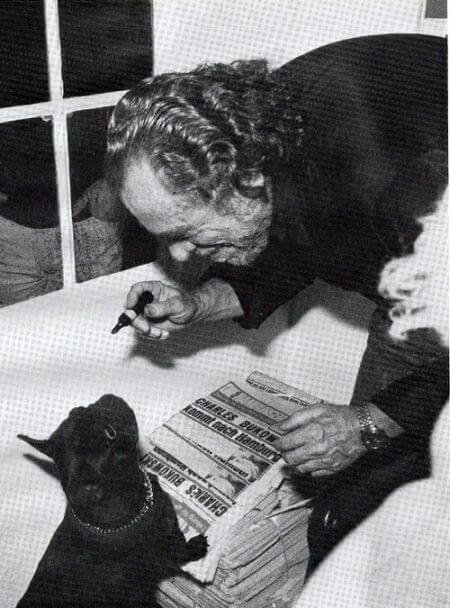
a single dog
walking alone on a hot sidewalk of
summer
appears to have the power
of ten thousand gods.
why is this?
Charles Bukowski
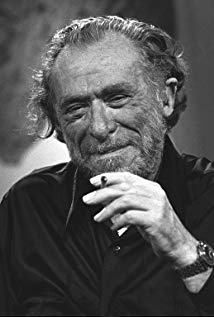
style is the answer to everything —
a fresh way to approach a dull or a
dangerous thing.
to do a dull thing with style
is preferable to doing a dangerous thing
without it.
Joan of Arc had style
John the Baptist
Christ
Socrates
Caesar,
Garcia Lorca.
style is the difference,
a way of doing,
a way of being done.
6 herons standing quietly in a pool of water
or you walking out of the bathroom naked
without seeing
me.
Charles Bukowski
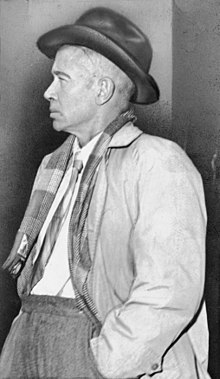
since feeling is first
who pays any attention
to the syntax of things
will never wholly kiss you;
wholly to be a fool
while Spring is in the world
my blood approves,
and kisses are better fate
than wisdom
lady i swear by all flowers. Don’t cry
—the best gesture of my brain is less than
your eyelids’ flutter which says
we are for each other: then
laugh, leaning back in my arms
for life’s not a paragraph
And death i think is no parenthesis
ee cummings
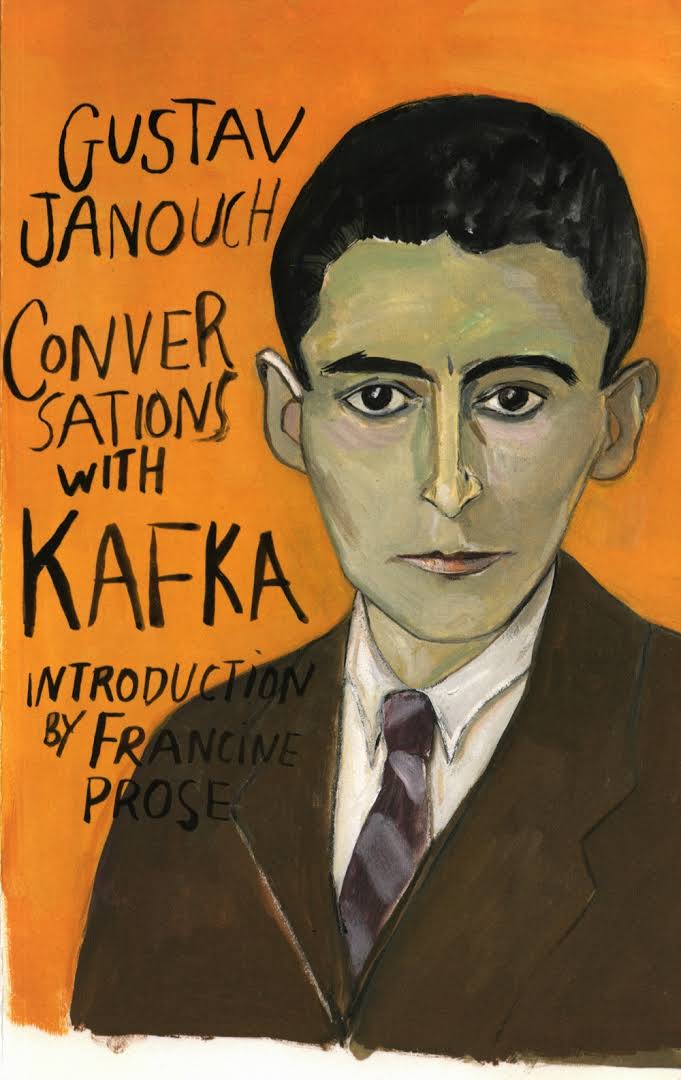
Author: Gustav Janouch
Rating: 8/10
Last Read: August 2016
Quick Summary:
Conversations with Kafka has been recommended to me numerous times. The Kafka presented here is thoughtful, troubled, and philosophical. The young narrator has many wide-ranging conversations with Kafka, covering topics such as religion, politics, communism, photography, and Chinese philosophy. There are many beautiful phrases and chunks of wisdom to be found in this book.
As the forward says:
Rereading Janouch, I thought: If Kafka didn’t say all these things, he said some of them and should have said the rest.
Favorite Quotes:
Life is as infinitely great and profound as the immensity of the stars above us. One can only look at it through the narrow keyhole of one’s personal existence. But through it one perceives more than one can see. So above all one must keep the keyhole clean.
One cannot break one’s chains when there are no chains to be seen. One’s imprisonment is therefore organized as a perfectly ordinary, not over-comfortable form of daily life. Everything looks as if it were made of solid, lasting stuff. But on the contrary it is a life in which one is falling towards an abyss. It isn’t visible. But if one closes one’s eyes, one can hear its rush and roar.’
Joy is food to the human soul. Without it, life is only a form of dying.
“Art like prayer is a hand outstretched in the darkness, seeking for some touch of grace which will transform it into a hand that bestows gifts. Prayer means casting oneself into the miraculous rainbow that stretches between becoming and dying, to be utterly consumed in it, in order to bring its infinite radiance to bed in the frail little cradle of one’s own existence.” –loc 45
Rereading Janouch, I thought: If Kafka didn’t say all these things, he said some of them and should have said the rest. –loc 70
There is nothing more beautiful than some straightforward, concrete, generally useful trade. –loc 151
Apart from carpentry, I have also worked at farming and gardening. It was all much better and worth more than forced labour in the office. There one appears to be something superior, better; but it is only appearance. In reality one is only lonelier and therefore unhappier. That is all. Intellectual labour tears a man out of human society. A craft, on the other hand, leads him towards men. What a pity I can no longer work in the workshop or in the garden.’ –loc 152
‘You would leave everything here behind?’
‘Everything, if I could make a life that had meaning, stability, and beauty.’ –loc 157His entire figure seemed to say, ‘I am, forgive me, quite unimportant. You do me a great pleasure, if you overlook me.’ –loc 186
He gave me the book and said: ‘Every man lives behind bars, which he carries within him. That is why people write so much about animals now. It’s an expression of longing for a free natural life. But for human beings the natural life is a human life. But men don’t always realize that. They refuse to realize it. Human existence is a burden to them, so they dispose of it in fantasies.’ –loc 273
It’s like the narrowly confined life of the office. There are no longer any marvels, only regulations, prescriptions, directives. Men are afraid of freedom and responsibility. So they prefer to hide behind the prison bars which they build around themselves. –loc 279
Fundamentally, it is only a special situation. Wealth implies dependence on things which one possesses and which have to be safeguarded from dwindling away by new possessions and a further dependence. It is merely materialized insecurity. –loc 295
Love often wears the face of violence. –loc 301
‘So you too are a lunatic about books, with a head that wags from too much reading?’
‘That’s right. I don’t think I could exist without books. To me, they’re the whole world.’
Kafka’s eyebrows narrowed. ‘That’s a mistake. A book cannot take the place of the world. –loc 308That is impossible. In life, everything has its own meaning and its own purpose, for which there cannot be any permanent substitute. A man can’t, for instance, master his own experience through the medium of another personality. That is how the world is in relation to books. One tries to imprison life in a book, like a songbird in a cage, but It’s no good. On the contrary! Out of the abstractions one finds in books, one can only construct systems that are cages for oneself. Philosophers are only brightly clad Papagenos with their own different cages.’ –loc 311
‘Work is a release from the longings of our dreams, which often only blind us and flatter us to death.’ –loc 385
‘Youth is full of sunshine and love. Youth is happy, because it has the ability to see beauty. When this ability is lost, wretched old age begins, decay, unhappiness.’
‘So age excludes the possibility of happiness?’
‘No, happiness excludes age.’ Smiling, he bent his head forward, as if to hide it between his hunched shoulders. ‘Anyone who keeps the ability to see beauty never grows old.’ –loc 390One reads in order to ask questions. –loc 414
‘From life one can extract comparatively so many books, but from books so little, so very little, life.’
‘So literature is a bad preservative?’
He laughed and nodded.
–loc 435‘The false illusion of a freedom achieved by external means is an error, a confusion, a desert in which nothing flourishes except the two herbs of fear and despair. That is inevitable, because anything which has a real and lasting value is always a gift from within. Man doesn’t grow from below upwards but from within outwards. That is the fundamental condition of all freedom in life. It is not an artificially constructed social environment but an attitude to oneself and to the world which it is a perpetual struggle to maintain. It’s the condition of man’s freedom.’ –loc 485
‘What is the matter? Your face is quite grey.’
‘That will soon be over,’ I managed to say, and tried to smile. ‘People think I’m something that I’m not.’
‘That’s not unusual,’ declared Kafka, with a slightly contemptuous curl of the lip. ‘It’s an old failing of human communication. The only thing that’s always new about it is the pain it causes.’ –loc 510‘Don’t say that! You don’t realize how much strength there is in silence. Aggression is usually only a disguise which conceals one’s weakness from oneself and from the world. Genuine and lasting strength consists in bearing things. Only weaklings react quickly and brutally. And in doing so, they sacrifice their manhood.’ –loc 528
‘the road from appearance to reality is often very hard and long, and many people make only very poor travellers. We must forgive them when they stagger against us as if against a brick wall.’ –loc 546
The majority of modern books are merely wavering reflections of the present. They disappear very quickly. You should read more old books. The classics. Goethe. What is old reveals its deepest value – lastingness. What is merely new is the most transitory of all things. It is beautiful today, and tomorrow merely ludicrous. That is the way of literature.’ –loc 564
‘To be disturbed by an unexpected visit is a weakness, an avoidance of the unexpected. One huddles into one’s so-called private life, because one lacks the strength to master the world. One flies from the miraculous into one’s own limited self. That is a withdrawal. Being is most of all a being-with-things, a dialogue. One mustn’t shrink from that. You can always call on me as and when you please.’ –loc 574
The suicide only kills himself out of impotence. Because he cannot do anything else. So he takes the last course left open to him. For this, he does not require any strength. All that’s required is despair, the abandonment of all hope. No risk is involved. To dare is to endure, to give oneself to life, to carry on as if untroubled from one day to another.’ –loc 637
But – these are only words. Art is always a matter of the entire personality. For that reason it is fundamentally tragic.’ –loc 651
‘It is literature,’ said Kafka smiling. ‘Flight from reality.’
‘So poetry is lies?’
‘No. Poetry is a condensate, an essence. Literature, on the other hand, is a relaxation, a means of pleasure which alleviates the unconscious life, a narcotic.’
‘And poetry?’
‘Poetry is exactly the opposite. Poetry is an awakening.’
‘So poetry tends towards religion.’
‘I would not say that. But certainly to prayer.’ –loc 675One cannot break one’s chains when there are no chains to be seen. One’s imprisonment is therefore organized as a perfectly ordinary, not over-comfortable form of daily life. Everything looks as if it were made of solid, lasting stuff. But on the contrary it is a life in which one is falling towards an abyss. It isn’t visible. But if one closes one’s eyes, one can hear its rush and roar.’ –loc 777
Literature strives to present things in pleasing, attractive light. But the poet is forced to elevate things into the realm of truth, clarity, and permanence. Literature aims at comfort. But the poet is a seeker after happiness, and that is everything rather than comfortable.’ –loc 794
‘It’s a betrayal,’ I burst out. ‘These people pretend to be something that they’re not.’
‘And so? What’s unusual in that?’ – His face had a fascinating look of pity, patience and forgiveness. – ‘How often is injustice committed in the name of justice? How often does damnation fly the flag of enlightenment? How often does a fall disguise itself as a rise? We can see it all now quite properly. The war didn’t only burn and tear the world, but also lit it up. We can see that it is a labyrinth built by men themselves, an icy machine world, whose comforts and apparent purposefulness increasingly emasculate and dishonour us. –loc 814Yet this particularly is the most striking expression of the hunger for truth. Men only discover themselves in the dark mirror of tragedy. But by then It’s already over.’ –loc 834
‘How could that be? Dying is an exclusively human affair. For that reason, all men die. But the monkey continues to live on in the whole human race. The “I” is nothing else except a cage from the past, its bars entwined with perpetual dreams of the future.’ –loc 836
‘What impertinence!’ I said angrily.
‘He’s not impertinent,’ Kafka said gently, and looked at me with dark, sad eyes. ‘He’s only afraid. So he’s unjust. Fear for one’s daily bread destroys one’s character. That’s what life is like.’ –loc 883‘Most men indeed don’t really live at all,’ said Kafka, in a strangely soft voice. ‘They cling to life like little polyps to a coral reef. But in doing so men are far worse off than those primitive organisms. For them, there’s no firm barrier reef to ward off the breakers. They haven’t even a shell of their own to live in. All they can do is to emit an acid stream of bile, which leaves them even weaker and more helpless, because it divides them from their fellows. But what can they do about it?’ –loc 886
‘By the rubbish of worn-out words and ideas. They’re stronger than thick armour plate. Men hide behind them from Time’s whirligigs. For that reason, words are evil’s strongest buttress. They are the most reliable preservatives of every passion and every stupidity.’ –loc 922
A young man who doesn’t believe in tomorrow morning is a traitor to himself. If one wishes to live, one must believe.’
‘In what?’
‘In the significant interrelation of all things and all moments, in the external existence of life as a single whole, in what is nearest and what is farthest.’
–loc 1001‘For me you are a young man,’ said Franz Kafka. ‘You have future possibilities which others have already lost. People mean so much to you that you have to watch yourself very closely, in order not to lose yourself. Certainly I am more friendly to you than to Klaus. After all, I speak to my own past when I speak to you. One cannot help being friendly. And then; you are younger than Klaus, and so you need more understanding and love.’ –loc 1229
you know him well?’ ‘Well?’ said Kafka, and shrugged his shoulders in denial. ‘One never knows the living. The present is change and transformation. Albert Ehrenstein is one of today’s generation. He is a child lost and crying in the night.’ –loc 1255
‘On the contrary I’ Kafka gave a painful smile. ‘Nothing sticks so fast in the mind as a groundless sense of guilt, because – since it has no real foundation – one cannot eliminate it by any form of repentance or redemption. –loc 1359
‘So you are disappointed in Döblin?’
‘As a matter of fact, I am only disappointed in myself. I expected from him something different from what he perhaps wished to give. But the stubbornness of my expectation blinded me so that I skipped pages and sentences and finally the whole book.
–loc 1404‘Most men are not wicked,’ said Franz Kafka, talking of Leonhard Frank’s book Man is Good. ‘Men become bad and guilty because they speak and act without foreseeing the results of their words and their deeds. They are sleepwalkers, not evildoers.’ –loc 1486
Kafka interrupted me. ‘The factories are merely organizations for increasing financial profit. In such a matter, we all have a merely subordinate function. Man is today only an old-fashioned instrument of economic growth, a hangover from history, whose economically inadequate skills will soon be displaced by frictionless thinking machines.’
I sighed disdainfully: ‘Oh yes, that’s a favourite Utopia of H. G. Wells.’
‘No,’ said Kafka in a hard voice, ‘that’s no Utopia, but only the future which already looms before us.’
–loc 1581To impose an armistice on the enemy is the greatest victory one can achieve. But the final destruction of evil? One can’t expect that. That’s a lunatic dream by which evil is not weakened but – quite the contrary – is strengthened and its effect accelerated, because one overlooks its real nature and distorts reality into an illusion founded on one’s own misleading wishes.’ –loc 1623
he studied the picture of the seated Moses. ‘That is not a leader,’ he said. ‘He is a judge, a stern judge. In the end men can only lead by means of harsh, inexorable judgement.’ –loc 1674
‘You are undisciplined,’ he said reproachfully after we had exchanged greetings. ‘Your illness was a warning. You must take better care of yourself. Good health is not a personal possession, to do what one likes with. It is property on loan, a grace. Most people do not realize this. So they have no hygienic economy.’ –loc 1678
‘As a flood spreads wider and wider, the water becomes shallower and dirtier. The Revolution evaporates, and leaves behind only the slime of a new bureaucracy. The chains of tormented mankind are made out of red tape.’ –loc 1847
Lying is an act and – like every other act – demands all a man’s skill. One must give up everything to it, one must first believe in the lie oneself, because only then can one convince other people. Lying demands the heat of passion. For that reason, it reveals more than it conceals. I am not capable of that. So for me there is only one hiding-place – the truth.’ –loc 1860
I no longer know how I stammered my way out of my shameful confusion, I only know that from then on I took greater care of what I was saying. Not only in conversation with Kafka, but in my contacts with everyone. That heightened my powers of perception. I learned to observe and to listen better. Thereby my life became deeper and more complicated but without becoming more cold and detached. On the contrary; the almost infinite complexity of things and people, which never failed to astonish me, made my existence richer and more meaningful. I was carried through time on a wave of feeling that was bliss. I was no longer a bureaucrat’s small, insignificant son, but one who struggled to take the measure of the world and of himself, a little champion of God and man. And all this I owed to Kafka. –loc 1866
‘Joy is food to the human soul. Without it, life is only a form of dying.’ –loc 1889
Happiness does not depend on possessions. Happiness is a matter of attitude. That is to say: a happy man does not see the dark side of reality. His sense of life suppresses the gnawing woodworm of the consciousness of death. One forgets that instead of walking, one is falling. It’s as if one were drugged. So It’s a direct offence to be asked after one’s health. It’s as if one apple asked another apple: “How are the worms which the insect bites gave you?” Or as if one blade of grass asked another: “How are you withering? How goes your esteemed decomposition?” What would you think of that?’ –loc 1919
Anyone who grasps life completely has no fear of dying. The fear of death is merely the result of an unfulfilled life. It is a symptom of betrayal. –loc 1975
‘Truth, which is one of the few really great and precious things in life, cannot be bought. Man receives it as a gift, like love or beauty. But a newspaper is a commodity, which is bought and sold.’ –loc 1981
‘In the end the problem is quite simple. The only really difficult and insoluble problems are those which we cannot formulate, because they have the difficulties of life itself as their content.’ –loc 2020
History is made out of the failures and heroism of each insignificant moment. If one throws a stone into a river, it produces a succession of ripples. But most men live without being conscious of a responsibility which extends beyond themselves. And that – I think – is at the root of our misery.’ –loc 2025
the luxury of the rich is paid for by the misery of the poor.’ –loc 2034
How can one find outside oneself something which ought to come from within?’ –loc 2143
Kafka said, ‘that is perfectly reasonable. Poets try to give men a different vision, in order to change reality. For that reason they are politically dangerous elements, because they want to make a change. For the state, and all its devoted servants, want only one thing, to persist.’ –loc 2181
Deceivers always try to solve difficult problems on the cheap. –loc 2201
Goethe’s view is the right one. One must, with quiet respect for the unknowable, accept the order of everything that is knowable. The smallest thing, like the greatest, must be close and precious to one.’ –loc 2203
‘All my friends have wonderful eyes,’ he said. ‘The light of their eyes is the only illumination of the dark dungeon in which I live. And even that is only artificial light.’ –loc 2220
‘Perhaps my insomnia only conceals a great fear of death. Perhaps I am afraid that the soul – which in sleep leaves me – will never return. Perhaps insomnia is only an all too vivid sense of sin, which is afraid of the possibility of a sudden judgement. Perhaps insomnia is itself a sin. Perhaps it is a rejection of the natural.’ –loc 2224
‘Photography concentrates one’s eye on the superficial. For that reason it obscures the hidden life which glimmers through the outlines of things like a play of light and shade. One can’t catch that even with the sharpest lens. One has to grope for it by feeling. Or do you think that one can successfully apprehend the profound depths of this ever-returning reality, before which, through all former ages, whole legions of poets, artists, scientists and other miracle workers have stood in trembling longing and hope, by pressing the knob of a cheap machine? – I doubt it. This automatic camera doesn’t multiply men’s eyes but only gives a fantastically simplified fly’s eye view.’ –loc 2237
For instance: Death is not brought to life by life; Life is not killed by dying. Life and death are conditioned; they are contained within a great coherence. This is, I think, the fundamental and central problem of all religions and of wisdom about life. It’s a question of grasping the coherence of things and time, of deciphering oneself, and of penetrating one’s own becoming and dying. –loc 2398
There’s only one thing certain. That is one’s own inadequacy. One must start from that.’ –loc 2436
Truth is what every man needs in order to live, but can obtain or purchase from no one. Each man must reproduce it for himself from within, otherwise he must perish. Life without truth is not possible. Truth is perhaps life itself.’ –loc 2608
Yet Walt Whitman’s significance lies elsewhere. He combined the contemplation of nature and of civilization, which are apparently entirely contradictory, into a single intoxicating vision of life, because he always had sight of the transitoriness of all phenomena. –loc 2617
‘A lie is often an expression of the fear that one may be crushed by the truth. It is a projection of one’s own littleness, of the sin of which one is afraid.’ –loc 2633
The masses hurry, run, march in thunder through our era. Where to? Where have they come from? No one knows. The more they march, the less they achieve their goal. They use their strength to no purpose. They think they are on the move. And thus, marking time, they fall into the void. That is all. Mankind has lost its home.’ –loc 2710
‘One cannot escape oneself. That is fate. The only possibility is to look on and forget that a game is being played with us.’ –loc 2738
But Kafka gives, really gives, in such a way that It’s a pleasure. For instance, a bunch of grapes which he has not eaten that morning. They are left-overs. You know what they usually look like – with most people. But Kafka never leaves them looking like a tasteless lump. He leaves the grapes or the fruit nicely arranged on the plate. –loc 2744
Wherever one goes, one only travels towards one’s own misunderstood nature. –loc 2763
‘That is precisely what is irritating and difficult. Life has so many possibilities, and each one only mirrors the inescapable impossibility of one’s own existence.’ His voice broke into a dry convulsive cough, which he quickly mastered. We smiled at each other. ‘Look,’ I said, ‘everything will soon be all right.’ ‘It is already all right,’ Franz Kafka said slowly. ‘I have said yes to everything. In that way suffering becomes an enchantment, and death – it is only an ingredient in the sweetness of life.’ –loc 2771
But so called reasonable people are usually those who have been disabled by life. And they are the dominant majority, and do not tolerate examples which reflect unfavourably on themselves.’ –loc 2866
‘Do not excite yourself. Be calm. Quietness is indeed a sign of strength. But quietness may also help one to achieve strength. That is the law of opposites. So be quiet. Calmness and quietness make one free – even on the scaffold.’ –loc 2869
‘Life is as infinitely great and profound as the immensity of the stars above us. One can only look at it through the narrow keyhole of one’s own personal existence. But through it one perceives more than one can see. So above all one must keep the keyhole clean.’ –loc 2985
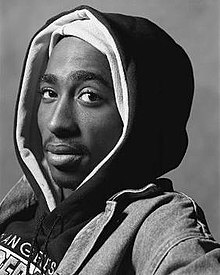
Did you hear about the rose that grew
from a crack in the concrete?
Proving nature’s law is wrong it
learned to walk with out having feet.
Funny it seems, but by keeping it’s dreams,
it learned to breathe fresh air.
Long live the rose that grew from concrete
when no one else ever cared.
Tupac Shakur
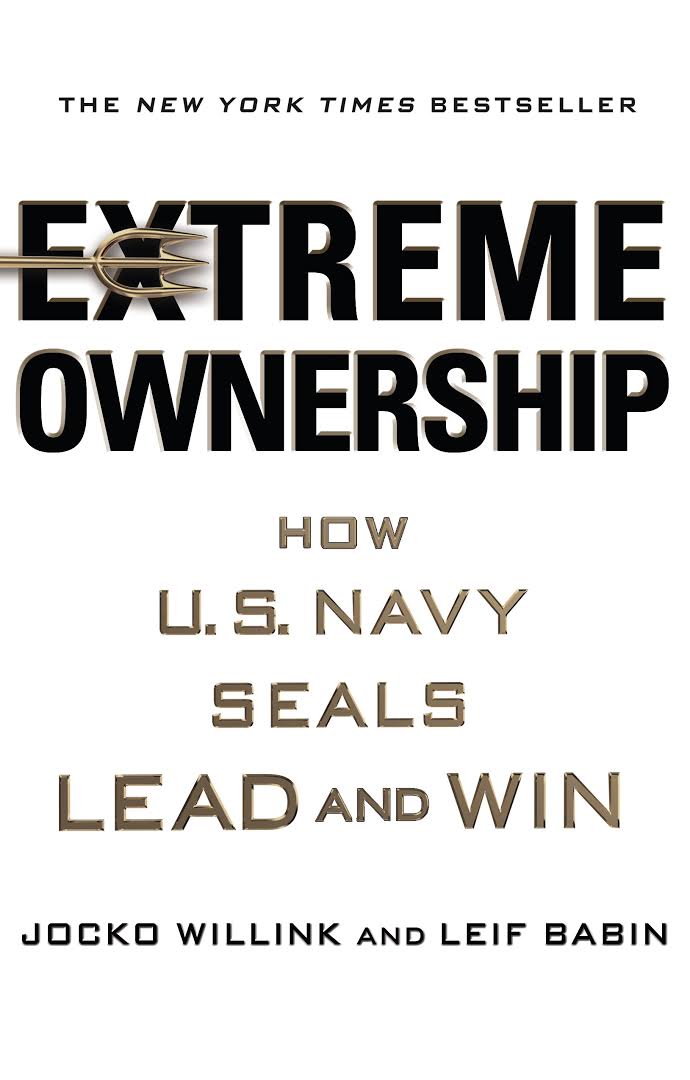
Author: Jocko Willink, Leif Babin
Rating: 9/10
Last Read: September 2016
Quick Summary: This book is absolutely packed with actionable advice for leading teams and improving yourself. While the book does include war stories to illustrate the authors’ points, the principles are timeless and worth reading even for those who aren’t interested in military subject matters.
The core of the book: take ownership of yourself and the success of your team. Detach, kill your ego, and don’t blame others for failure. Instead, look at how you can improve the situation, communicate better, and clearly prioritize goals so your team members up and down the chain of command fully understand the situation.
This book made me take a hard look at myself and identified ways that I need to improve, especially in communicating up the chain to make sure my leaders understand the situation on the ground. I will be revisiting this book again and again.
Also, I highly recommend checking out the Jocko Podcast, as well as the Tim Ferris Interview with Jocko.
Extreme Ownership. Leaders must own everything in their world. There is no one else to blame.
Who are we to write such a book? It may seem that anyone who believes they can write a book on leadership must think themselves the epitome of what every leader should aspire to be. But we are far from perfect. We continue to learn and grow as leaders every day, just as any leaders who are truly honest with themselves must. We were simply fortunate enough to experience an array of leadership challenges that taught us valuable lessons. This book is our best effort to pass those lessons on, not from a pedestal or a position of superiority, but from a humble place, where the scars of our failings still show. –loc 73
We learned that leadership requires belief in the mission and unyielding perseverance to achieve victory, particularly when doubters question whether victory is even possible. –loc 81
“Relax. Look around. Make a call.” –loc 164
Cover and Move, Simple, Prioritize and Execute, and Decentralized Command. –loc 166
The only meaningful measure for a leader is whether the team succeeds or fails. For all the definitions, descriptions, and characterizations of leaders, there are only two that matter: effective and ineffective. Effective leaders lead successful teams that accomplish their mission and win. Ineffective leaders do not. –loc 213
The best leaders are not driven by ego or personal agendas. They are simply focused on the mission and how best to accomplish it. –loc 220
The greatest of these was the recognition that leadership is the most important factor on the battlefield, the single greatest reason behind the success of any team. –loc 256
We encourage leaders to do the things they know they probably should be doing but aren’t. By not doing those things, they are failing as leaders and failing their teams. –loc 288
Extreme Ownership. Leaders must own everything in their world. There is no one else to blame. –loc 298
These weaker commanders would get a solid explanation about the burden of command and the deep meaning of responsibility: the leader is truly and ultimately responsible for everything. –loc 496
On any team, in any organization, all responsibility for success and failure rests with the leader. The leader must own everything in his or her world. There is no one else to blame. The leader must acknowledge mistakes and admit failures, take ownership of them, and develop a plan to win. –loc 499
When subordinates aren’t doing what they should, leaders that exercise Extreme Ownership cannot blame the subordinates. They must first look in the mirror at themselves. The leader bears full responsibility for explaining the strategic mission, developing the tactics, and securing the training and resources to enable the team to properly and successfully execute. –loc 505
If an individual on the team is not performing at the level required for the team to succeed, the leader must train and mentor that underperformer. But if the underperformer continually fails to meet standards, then a leader who exercises Extreme Ownership must be loyal to the team and the mission above any individual. If underperformers cannot improve, the leader must make the tough call to terminate them and hire others who can get the job done. It is all on the leader. –loc 508
Total responsibility for failure is a difficult thing to accept, and taking ownership when things go wrong requires extraordinary humility and courage. But doing just that is an absolute necessity to learning, growing as a leader, and improving a team’s performance. –loc 513
“So, you’re here to help me, right?” the VP inquired. Knowing that, due to ego, some people bristle at the idea of criticism and coaching no matter how constructive, I chose to take a more indirect approach. “Maybe not so much here to help you, but here to help the situation,” –loc 533
When a bad SEAL leader walked into a debrief and blamed everyone else, that attitude was picked up by subordinates and team members, who then followed suit. They all blamed everyone else, and inevitably the team was ineffective and unable to properly execute a plan. –loc 610
The answer: leadership is the single greatest factor in any team’s performance. Whether a team succeeds or fails is all up to the leader. The leader’s attitude sets the tone for the entire team. The leader drives performance—or doesn’t. And this applies not just to the most senior leader of an overall team, but to the junior leaders of teams within the team. –loc 758
When leaders who epitomize Extreme Ownership drive their teams to achieve a higher standard of performance, they must recognize that when it comes to standards, as a leader, it’s not what you preach, it’s what you tolerate. –loc 833
Leaders should never be satisfied. They must always strive to improve, and they must build that mind-set into the team. –loc 847
If I expressed doubts or openly questioned the wisdom of this plan in front of the troops, their derision toward the mission would increase exponentially. They would never believe in it. As a result, they would never commit to it, and it would fail. But once I understood and believed, I then passed that understanding and belief on, clearly and succinctly, to my troops so that they believed in it themselves. When they understood why, they would commit to the mission, persevere through the inevitable challenges in store, and accomplish the task set before us. –loc 1096
In order to convince and inspire others to follow and accomplish a mission, a leader must be a true believer in the mission. Even when others doubt and question the amount of risk, asking, “Is it worth it?” the leader must believe in the greater cause. If a leader does not believe, he or she will not take the risks required to overcome the inevitable challenges necessary to win. –loc 1127
Leaders must always operate with the understanding that they are part of something greater than themselves and their own personal interests. –loc 1131
Every leader must be able to detach from the immediate tactical mission and understand how it fits into strategic goals. –loc 1138
When leaders receive an order that they themselves question and do not understand, they must ask the question: why? Why are we being asked to do this? Those leaders must take a step back, deconstruct the situation, analyze the strategic picture, and then come to a conclusion. If they cannot determine a satisfactory answer themselves, they must ask questions up the chain of command until they understand why. –loc 1138
In business just as in the military, no senior executive team would knowingly choose a course of action or issue an order that would purposely result in failure. But a subordinate may not understand a certain strategy and thus not believe in it. Junior leaders must ask questions and also provide feedback up the chain so that senior leaders can fully understand the ramifications of how strategic plans affect execution on the ground. –loc 1147
A common misperception among military leaders or corporate senior executives, this was an example of a boss who didn’t fully comprehend the weight of her position. In her mind, she was fairly laid back, open to questions, comments, and suggestions from people. She talked about maintaining an “open-door policy.” But in the minds of her sales managers, she was still The Boss: experienced, smart, and most important, powerful. That position demanded a high level of reverence—so high, in fact, that for an employee to question her ideas seemed disrespectful. None of them were comfortable questioning her, even though none of the midlevel managers actually worried about losing their jobs because they asked a question. But they were certainly worried about looking bad in front of The Boss. –loc 1193
Often, my subordinate leadership would pick up the slack for me. And they wouldn’t hold it against me, nor did I think they were infringing on my ‘leadership turf.’ On the contrary, I would thank them for covering for me. Leadership isn’t one person leading a team. It is a group of leaders working together, up and down the chain of command, to lead. If you are on your own, I don’t care how good you are, you won’t be able to handle it.” –loc 1253
Ego clouds and disrupts everything: the planning process, the ability to take good advice, and the ability to accept constructive criticism. It can even stifle someone’s sense of self-preservation. Often, the most difficult ego to deal with is your own. –loc 1453
“If you approached it as he did something wrong, and he needs to fix something, and he is at fault, it becomes a clash of egos and you two will be at odds. That’s human nature. But, if you put your own ego in check, meaning you take the blame, that will allow him to actually see the problem without his vision clouded by ego. Then you both can make sure that your team’s standard operating procedures—when to communicate, what is and isn’t within his decision-making authority—are clearly understood. –loc 1520
We utilized the principle of Cover and Move on every operation: all teams working together in support of one another. –loc 1716
“The enemy is out there,” I said, pointing out the window to the world beyond. “The enemy is all the other competing companies in your industry that are vying for your customers. The enemy is not in here, inside the walls of this corporation. The departments within and the subsidiary companies that all fall under the same leadership structure—you are all on the same team. You have to overcome the ‘us versus them’ mentality and work together, mutually supporting one another. –loc 1761
Simplifying as much as possible is crucial to success. When plans and orders are too complicated, people may not understand them. And when things go wrong, and they inevitably do go wrong, complexity compounds issues that can spiral out of control into total disaster. Plans and orders must be communicated in a manner that is simple, clear, and concise. Everyone that is part of the mission must know and understand his or her role in the mission and what to do in the event of likely contingencies. As a leader, it doesn’t matter how well you feel you have presented the information or communicated an order, plan, tactic, or strategy. If your team doesn’t get it, you have not kept things simple and you have failed. You must brief to ensure the lowest common denominator on the team understands. –loc 1951
the enemy gets a vote.–loc 2033
“The enemy gets a vote?” the plant manager repeated, questioning what that meant. “Yes. Regardless of how you think an operation is going to unfold,” I answered, “the enemy gets their say as well—and they are going to do something to disrupt it. When something goes wrong—and it eventually does—complex plans add to confusion, which can compound into disaster. Almost no mission ever goes according to plan. There are simply too many variables to deal with. This is where simplicity is key. If the plan is simple enough, everyone understands it, which means each person can rapidly adjust and modify what he or she is doing. If the plan is too complex, the team can’t make rapid adjustments to it, because there is no baseline understanding of it.” –loc 2034
Prioritize and Execute. Even the greatest of battlefield leaders could not handle an array of challenges simultaneously without being overwhelmed. That risked failing at them all. I had to remain calm, step back from my immediate emotional reaction, and determine the greatest priority for the team. Then, rapidly direct the team to attack that priority. Once the wheels were in motion and the full resources of the team were engaged in that highest priority effort, I could then determine the next priority, focus the team’s effort there, and then move on to the next priority. I could not allow myself to be overwhelmed. I had to relax, look around, and make a call. –loc 2197
Even the most competent of leaders can be overwhelmed if they try to tackle multiple problems or a number of tasks simultaneously. The team will likely fail at each of those tasks. Instead, leaders must determine the highest priority task and execute. When overwhelmed, fall back upon this principle: Prioritize and Execute. –loc 2240
Just as in combat, priorities can rapidly shift and change. When this happens, communication of that shift to the rest of the team, both up and down the chain of command, is critical. Teams must be careful to avoid target fixation on a single issue. They cannot fail to recognize when the highest priority task shifts to something else. The team must maintain the ability to quickly reprioritize efforts and rapidly adapt to a constantly changing battlefield. –loc 2258
To implement Prioritize and Execute in any business, team, or organization, a leader must:
• evaluate the highest priority problem.
• lay out in simple, clear, and concise terms the highest priority effort for your team.
• develop and determine a solution, seek input from key leaders and from the team where possible.
• direct the execution of that solution, focusing all efforts and resources toward this priority task.
• move on to the next highest priority problem. Repeat.
• when priorities shift within the team, pass situational awareness both up and down the chain.
• don’t let the focus on one priority cause target fixation. Maintain the ability to see other problems developing and rapidly shift as needed. –loc 2261Human beings are generally not capable of managing more than six to ten people, particularly when things go sideways and inevitable contingencies arise. No one senior leader can be expected to manage dozens of individuals, much less hundreds. –loc 2529
Decentralized Command does not mean junior leaders or team members operate on their own program; that results in chaos. Instead, junior leaders must fully understand what is within their decision-making authority—the “left and right limits” of their responsibility. Additionally, they must communicate with senior leaders to recommend decisions outside their authority and pass critical information up the chain so the senior leadership can make informed strategic decisions. –loc 2536
Junior leaders must be proactive rather than reactive. –loc 2540
Tactical leaders must be confident that they clearly understand the strategic mission and Commander’s Intent. They must have implicit trust that their senior leaders will back their decisions. Without this trust, junior leaders cannot confidently execute, which means they cannot exercise effective Decentralized Command. To ensure this is the case, senior leaders must constantly communicate and push information—what we call in the military “situational awareness”—to their subordinate leaders. Likewise, junior leaders must push situational awareness up the chain to their senior leaders to keep them informed, particularly of crucial information that affects strategic decision making. –loc 2542
Contrary to a common misconception, leaders are not stuck in any particular position. Leaders must be free to move to where they are most needed, which changes throughout the course of an operation. Understanding proper positioning as a leader is a key component of effective Decentralized Command, not just on the battlefield. –loc 2564
“Junior leaders must know that the boss will back them up even if they make a decision that may not result in the best outcome, as long as the decision was made in an effort to achieve the strategic objective” –loc 2645
The mission must explain the overall purpose and desired result, or “end state,” of the operation. The frontline troops tasked with executing the mission must understand the deeper purpose behind the mission. –loc 2784
Leaders must delegate the planning process down the chain as much as possible to key subordinate leaders. Team leaders within the greater team and frontline, tactical-level leaders must have ownership of their tasks within the overall plan and mission. Team participation—even from the most junior personnel—is critical in developing bold, innovative solutions to problem sets. –loc 2791
The test for a successful brief is simple: Do the team and the supporting elements understand it? –loc 2807
The plan must mitigate identified risks where possible. SEALs are known for taking significant risk, but in reality SEALs calculate risk very carefully. A good plan must enable the highest chance of mission success while mitigating as much risk as possible. –loc 2808
The best teams employ constant analysis of their tactics and measure their effectiveness so that they can adapt their methods and implement lessons learned for future missions. Often business teams claim there isn’t time for such analysis. But one must make time. –loc 2815
A post-operational debrief examines all phases of an operation from planning through execution, in a concise format. It addresses the following for the combat mission just completed: What went right? What went wrong? How can we adapt our tactics to make us even more effective and increase our advantage over the enemy? –loc 2818
If your boss isn’t making a decision in a timely manner or providing necessary support for you and your team, don’t blame the boss. First, blame yourself. Examine what you can do to better convey the critical information for decisions to be made and support allocated. –loc 3226
Leading up the chain takes much more savvy and skill than leading down the chain. Leading up, the leader cannot fall back on his or her positional authority. Instead, the subordinate leader must use influence, experience, knowledge, communication, and maintain the highest professionalism. –loc 3230
While pushing to make your superior understand what you need, you must also realize that your boss must allocate limited assets and make decisions with the bigger picture in mind. You and your team may not represent the priority effort at that particular time. Or perhaps the senior leadership has chosen a different direction. Have the humility to understand and accept this. –loc 3233
A public display of discontent or disagreement with the chain of command undermines the authority of leaders at all levels. This is catastrophic to the performance of any organization. –loc 3237
But at the end of the day, once the debate on a particular course of action is over and the boss has made a decision—even if that decision is one you argued against—you must execute the plan as if it were your own. –loc 3240
The major factors to be aware of when leading up and down the chain of command are these:
• Take responsibility for leading everyone in your world, subordinates and superiors alike.
• If someone isn’t doing what you want or need them to do, look in the mirror first and determine what you can do to better enable this.
• Don’t ask your leader what you should do, tell them what you are going to do.
–loc 3244They just don’t get what we are dealing with, and their questions and second-guessing prevents me and my team from getting the job done.” The infamous they. –loc 3251
Intelligence gathering and research are important, but they must be employed with realistic expectations and must not impede swift decision making that is often the difference between victory and defeat. Waiting for the 100 percent right and certain solution leads to delay, indecision, and an inability to execute. Leaders must be prepared to make an educated guess based on previous experience, knowledge of how the enemy operates, likely outcomes, and whatever intelligence is available in the immediate moment. –loc 3452
In the SEAL Teams, we taught our leaders to act decisively amid chaos. Jocko had taught me that, as a leader, my default setting should be aggressive—proactive rather than reactive. This was critical to the success of any team. Instead of letting the situation dictate our decisions, we must dictate the situation. But for many leaders, this mind-set was not intuitive. Many operated with a “wait and see” approach. But experience had taught me that the picture could never be complete. There was always some element of risk. There was no 100-percent right solution. –loc 3506
The moment the alarm goes off is the first test; it sets the tone for the rest of the day. The test is not a complex one: when the alarm goes off, do you get up out of bed, or do you lie there in comfort and fall back to sleep? If you have the discipline to get out of bed, you win—you pass the test. If you are mentally weak for that moment and you let that weakness keep you in bed, you fail. Though it seems small, that weakness translates to more significant decisions. But if you exercise discipline, that too translates to more substantial elements of your life. –loc 3648
The temptation to take the easy road is always there. It is as easy as staying in bed in the morning and sleeping in. But discipline is paramount to ultimate success and victory for any leader and any team. –loc 3668
Although discipline demands control and asceticism, it actually results in freedom. When you have the discipline to get up early, you are rewarded with more free time. When you have the discipline to keep your helmet and body armor on in the field, you become accustomed to it and can move freely in it. The more discipline you have to work out, train your body physically and become stronger, the lighter your gear feels and the easier you can move around in it. –loc 3669
A leader must be calm but not robotic. It is normal—and necessary—to show emotion. The team must understand that their leader cares about them and their well-being. But, a leader must control his or her emotions. If not, how can they expect to control anything else? Leaders who lose their temper also lose respect. But, at the same time, to never show any sense of anger, sadness, or frustration would make that leader appear void of any emotion at all—a robot. People do not follow robots. –loc 3714
a leader must be confident but never cocky. Confidence is contagious, a great attribute for a leader and a team. But when it goes too far, overconfidence causes complacency and arrogance, which ultimately set the team up for failure. –loc 3716
A leader must be brave but not foolhardy. He or she must be willing to accept risk and act courageously, but must never be reckless. It is a leader’s job to always mitigate as much as possible those risks that can be controlled to accomplish the mission without sacrificing the team or excessively expending critical resources. –loc 3718
Leaders must have a competitive spirit but also be gracious losers. They must drive competition and push themselves and their teams to perform at the highest level. But they must never put their own drive for personal success ahead of overall mission success for the greater team. Leaders must act with professionalism and recognize others for their contributions. –loc 3720
A leader must be attentive to details but not obsessed by them. A good leader does not get bogged down in the minutia of a tactical problem at the expense of strategic success. He or she must monitor and check the team’s progress in the most critical tasks. But that leader cannot get sucked into the details and lose track of the bigger picture. –loc 3723
A leader must be strong but likewise have endurance, not only physically but mentally. He or she must maintain the ability to perform at the highest level and sustain that level for the long term. Leaders must recognize limitations and know to pace themselves and their teams so that they can maintain a solid performance indefinitely. –loc 3725
Leaders must be humble but not passive; quiet but not silent. They must possess humility and the ability to control their ego and listen to others. They must admit mistakes and failures, take ownership of them, and figure out a way to prevent them from happening again. But a leader must be able to speak up when it matters. They must be able to stand up for the team and respectfully push back against a decision, order, or direction that could negatively impact overall mission success. –loc 3728
A leader must be close with subordinates but not too close. The best leaders understand the motivations of their team members and know their people—their lives and their families. But a leader must never grow so close to subordinates that one member of the team becomes more important than another, or more important than the mission itself. Leaders must never get so close that the team forgets who is in charge. –loc 3731
A good leader does not gloat or revel in his or her position. To take charge of minute details just to demonstrate and reinforce to the team a leader’s authority is the mark of poor, inexperienced leadership lacking in confidence. –loc 3737
Generally, when a leader struggles, the root cause behind the problem is that the leader has leaned too far in one direction and steered off course. Awareness of the dichotomies in leadership allows this discovery, and thereby enables the correction. –loc 3743

