Silencing the Noise

Earlier this week, I deleted my personal Twitter account. This marks a further step on my fight to retrain my mind.

I’ve been without Facebook and Instagram for a few years now, and Twitter was the last major holdout. I justified keeping it because the quality of posts seemed to be higher than on the other platforms. I followed and interacted with interesting people and encountered plenty of new ideas.

But, there was still a cost. I noticed the addiction creeping in again. We cannot escape our programming – the red notification badges and slot machine effect will always capture us. The outrage that is so prevalent online creeped into my life. My mind and attention were being taken away from me.

Even the continual flow of ideas started getting to me. All Twitter thoughts are brief, without justification or explanation. Everything is spoken as a strong truth. There is no room for in depth discussion. For me, this is a non-starter: it’s just noise. I seek out quality information that I can dive into and incorporate into my life. I don’t need a sea of ideas from other people. I’d rather read a twenty-five page paper about a single point, rather than 180 characters which summarize a pithy complaint about human nature.

We take in too much information. We are always hungry for new ideas. But when I crowded my brain with everyone else’s ideas, I noticed that I no longer had room for my own.

So, I’m silencing the noise and continuing to reduce my media consumption. I need space for my own ideas to grow, develop, and integrate. I prefer the slow, high, winding mountain path to the veritable flood of never-ending information.

You will still find me in two places on the social interwebs: for now, I am keeping a LinkedIn Profile and Twitter account for my business. Both of those accounts are core marketing components. I feel much less temptation for checking these accounts, and much of my posting is automated through a third-party service.

But if these accounts continue to draw me away from useful work, they will have to go too. The best way to prevent addiction is to avoid the addictive substance entirely.
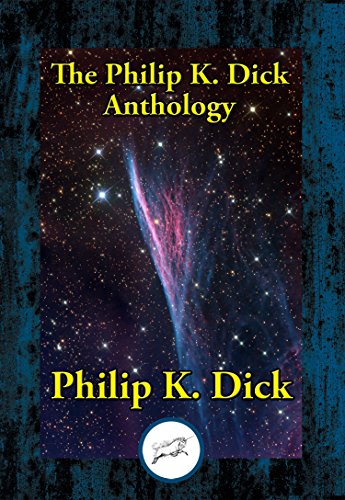
The Philip K Dick Anthology

Author: Philip K. Dick
Rating: 4/5
Last Read: December 2014
Who Should Read: Sci-fi fans, short story fans

The Philip K. Dick Anthology is a collection of thirteen short stories by the famed sci-fi writer Philip K. Dick. Many of his stories have been turned into movies such as Total Recall, Minority Report, and Blade Runner.

This collection contains a different list of stories than those in the Selected Stories of Philip K. Dick. The thirteen included stories are:

  • “The Eyes Have It”
  • “Beyond the Door”
  • “Beyond Lies the Wub”
  • “Mr. Spaceship”
  • “The Skull”
  • “The Crystal Crypt”
  • “The Defenders”
  • “The Hanging Stranger”
  • “The Gun”
  • “Tony and the Beetles”
  • “The Variable Man”
  • “Piper in the Woods”
  • “Second Variety”

My Highlights

Apparently in my first pass through I was only struck by a single passage, but it is a beautiful one:

find in your Odysseus a figure common to the mythology of most self-conscious races. As I interpret it, Odysseus wanders as an individual, aware of himself as such. This is the idea of separation, of separation from family and country. The process of individuation.”
“But Odysseus returns to his home.” Peterson looked out the port window, at the stars, endless stars, burning intently in the empty universe. “Finally he goes home.”
“As must all creatures. The moment of separation is a temporary period, a brief journey of the soul. It begins, it ends. The wanderer returns to land and race….”

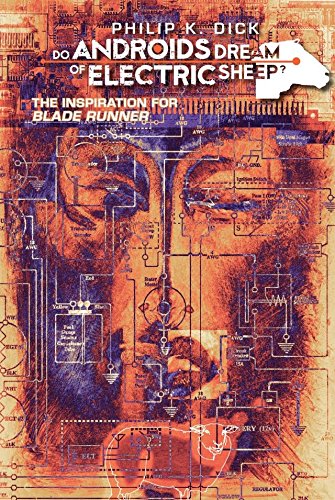
Do Androids Dream of Electric Sheep?

Author: Philip K. Dick
Rating: 4/5
Last Read: November 2014
Who Should Read: Sci-fi fans, people who liked the movie Blade Runner

Do Androids Dream of Electric Sheep?, like many other Philip K. Dick stories, inspired the movie Blade Runner. Unlike the other movies-inspired-by-stories, Do Androids Dream of Electric Sheep? is a full novel, though you might find yourself finishing it in a single sitting as if it were a short story.

The novel and the movie are markedly different, but do share similarities. The main plot still follows a bounty hunter, Rick Deckard, who is tasked with retiring escaped androids. As with most Philip K. Dick stories, there is an exploration of an underlying theme about what it means to be human.

Do Androids Dream of Electric Sheep? is an excellent entry point into the work of Philip K. Dick. You won’t be disappointed.

It is no good. I can’t do it. I can play the Thirteen Ways of Looking at a Trash Compactor Repairman Game, but I cannot turn it into a story at once puzzling, poignant, grotesque, philosophical, satirical, and fun. There is a very special way of doing this and the first step in its mastery involves being Philip K. Dick.

My Highlights

Empathy, evidently, existed only within the human community, whereas intelligence to some degree could be found throughout every phylum and order including the arachnida.

Because, ultimately, the empathic gift blurred the boundaries between hunter and victim, between the successful and the defeated. As in the fusion with Mercer, everyone ascended together

The tyranny of an object, he thought. It doesn’t know I exist. Like the androids, it had no ability to appreciate the existence of another.

But maybe she doesn’t know how to cook, he thought suddenly. Okay, I can do it; I’ll fix dinner for both of us. And I’ll show her how so she can do it in the future if she wants. She’ll probably want to, once I show her how; as near as I can make out, most women, even young ones like her, like to cook: it’s an instinct.

“I am your friend,” the old man said. “But you must go on as if I did not exist. Can you understand that?” He spread empty hands.
“No,” Rick said. “I can’t understand that. I need help.”
“How can I save you,” the old man said, “if I can’t save myself?” He smiled. “Don’t you see? There is no salvation.”

“You will be required to do wrong no matter where you go. It is the basic condition of life, to be required to violate your own identity. At some time, every creature which lives must do so. It is the ultimate shadow, the defeat of creation; this is the curse at work, the curse that feeds on all life. Everywhere in the universe.”

Do androids dream? Rick asked himself. Evidently; that’s why they occasionally kill their employers and flee here. A better life, without servitude.

Time and tide, he thought. The cycle of life. Ending in this, the last twilight. Before the silence of death. He perceived in this a micro-universe, complete.

She seemed more externally composed now. But still fundamentally frantic and tense. Yet, the dark fire waned; the life force oozed out of her, as he had so often witnessed before with other androids. The classic resignation. Mechanical, intellectual acceptance of that which a genuine organism—with two billion years of the pressure to live and evolve hagriding it—could never have reconciled itself to.

You have to be with other people, he thought. In order to live at all.

You can’t go back, he thought. You can’t go from people to nonpeople. In panic he thought, I’m dependent on them. Thank god they stayed.

“That’s because you’re a highly moral person. I’m not. I don’t judge, not even myself.”

Buy the Book

If you are interested in purchasing this book, you can support the website by using our Amazon affiliate link.