Rules for a Knight

Author: Ethan Hawke (yes, the actor)
Rating: 7/10
Last Read: September 2016

Quick Summary:  Rules for a Knight is a short book is a collection of “knightly wisdom” told in short stories.  The overall book is framed as a letter from a knight to his children, sent on the eve of a battle from which he expects not to return.  The book is full of lessons from the Buddhist cannon – if you are familiar with other philosophical works, the stories will likely be very familiar to you.

When I re-read the passages I have highlighted, I realize that Rules for a Knight repeatedly speaks to the very things I am seeking.  There is much wisdom contained in these pages – it is a shame to realize I have blown through this book and have not spent time to reflect upon it.  How many other lessons have been ignored?

Pay attention: what you need to know is usually in front of you. There are no secrets, just things people choose not to notice.

My Highlights

For this I am most sad, but none of you children yet know me as anything but the tall person who scolds or encourages you, or as a voice talking to your mother as you fall asleep. I have worked too hard in the last ten years and traveled too much, and now it seems I may miss your childhoods entirely. This comes as a blow. I have been looking forward to your growing up and hoped that we could, over time, know one another in a more meaningful way. –loc 100

My grandfather set down two blue cups and poured some tea into the first, but he did not stop when the cup was full. He kept pouring and pouring until the hot tea spilled all over the table and splattered onto the floor.
“What are you doing?” I shouted, jumping up, hot tea scalding my legs.
“You are like that cup spilling over,” said my grandfather. “You cannot retain anything. There is too much going on and you are splashing everywhere, burning what you touch.”
–loc 125

Answers to your questions will come, but if you are not still and empty, you will never be able to retain anything. –loc 132

But the first thing you must understand is that you need not have gone anywhere. You are always in the right place at exactly the right time, and you always have been.” –loc 138

CREATE time alone with yourself. When seeking the wisdom and clarity of your own mind, silence is a helpful tool. The voice of our spirit is gentle and cannot be heard when it has to compete with others. Just as it is impossible to see your reflection in troubled water, so too is it with the soul. In silence, we can sense eternity sleeping inside us. –loc 151

Humility is the ability to see yourself in the context of a much larger world. –loc 184

The stars are magnificent. They are always there whether you see them or not. –loc 185

Aspire to be like the soil after the March rains, wet, open, and receptive. –loc 185

“When people speak, listen.” This was a point he would consistently stress. “As much as you like to be heard and understood, so does everyone else.” –loc 188

THE only intelligent response to the ongoing gift of life is gratitude. For all that has been, a knight says, “Thank you.” For all that is to come, a knight says, “Yes!” –loc 229

The quiet of each morning, the tangible bond of friendship, a snowball fight, warm water on your skin, laughing until your stomach hurts, a job well done, a shooting star that you witness alone; the simple joys are the great ones. Pleasure is not complicated. –loc 243

Constant awareness of even the smallest detail trains your mind to be observant and conscientious. –loc 264

Responsibility, awareness, and self-knowledge are his allies. Forgetfulness is his enemy. His mind is not in the future. He is fully engaged in what he is doing. –loc 265

I learned that evening that rain falls equally on all things. Jealousy, fear, and anger are obstacles to a knight’s first goal: a clear mind. Through his practice a knight should cultivate an open, unclouded mind, so that his instincts will guide him and he is free to act spontaneously. Understanding that our “talents” are simply gifts we have received brings humility to our actions. It also allows us to appreciate the “talents” we see in others as expressions from the same universal source. There are only two possible outcomes whenever you compare yourself to another, vanity or bitterness, and both are without value. –loc 310

THE quality of your life will, to a large extent, be decided by with whom you elect to spend your time. –loc 330

The skeptic shouted out, mocking the knight for believing that his ancient whispers and primitive style of healing could have any power. In front of all the townspeople, Sir Richard answered, “You are an ignorant fool.” The skeptic’s derision became angry. His face reddened, and his hands began to shake with humiliation and rage. Before the skeptic could gather himself to shout back or raise his fist in violence, Sir Richard spoke again. “When a few words have the power to make you so angry, why would others not have the power to heal?” –loc 342

Remember, a friend does not need you to impress him. A friend loves you because you are true to yourself, not because you agree with him. Beware of grand gestures; the real mettle of friendship is forged in life’s daily workings. –loc 350

A DISHONEST tongue and a dishonest mind waste time, and therefore waste our lives. We are here to grow, and the truth is the water, the light, and the soil from which we rise. The armor of falsehood is subtly wrought out of the darkness and hides us not only from others but from our own soul. –loc 389

Don’t fear suffering. The strongest steel is forged in the hottest fire. The facts are always friendly. Without a little agony, none of us would bother to learn a thing. The earth has to be tilled before the seeds can be planted. In much the same way, sometimes we have to be stirred and ripped apart so that the seeds of compassion, wisdom, and understanding can be firmly planted in us. –loc 407

Pay attention: what you need to know is usually in front of you. There are no secrets, just things people choose not to notice. –loc 427

Later he told me when he was younger he learned the secret to performing under pressure: don’t do it for yourself. Do it for someone else. “I know your grandfather always tells us to think of nothing. But when I get scared I just think of someone I love.” –loc 460

GRACE is the ability to accept change. Be open and supple; the brittle break. –loc 482

Young people, women and men, often use the possession of beauty or wealth as permission to be uninteresting, undisciplined, and ill-informed. If they are fortunate enough to reach the age of twenty-eight or so, they become like coddled coyotes. Cute when little, but, upon adulthood, nasty, fearful, and living off the scraps of others. –loc 497

All of us are asked to surrender the superficial beauty of youth and step towards something greater. We are being made ready for the spirit world. Each wrinkle is a crack in the shell of our conceit. Our conceit must be pulverized for the soul to fly. –loc 511

YOU were born owning nothing and with nothing you will pass out of this life. Be frugal and you can be generous. –loc 586

There have always been two ways to be rich: by accumulating vast sums or by needing very little. –loc 591

Often we imagine that we will work hard until we arrive at some distant goal, and then we will be happy. This is a delusion. Happiness is the result of a life lived with purpose. Happiness is not an objective. It is the movement of life itself, a process, and an activity. It arises from curiosity and discovery. Seek pleasure and you will quickly discover the shortest path to suffering. Other people, friends, brothers, sisters, neighbors, spouses, even your mother and I are not responsible for your happiness. Your life is your responsibility, and you always have the choice to do your best. Doing your best will bring happiness. Do not be overconcerned with avoiding pain or seeking pleasure. If you are concentrating on the results of your actions, you are not dedicated to your task. –loc 645

Be resolute in your beliefs, my children. Your friendship cannot be bought. –loc 673

Be cautious when anyone, even family, has too extreme an expectation from your behavior. Under the guise of love or loyalty, people can use guilt or fear to manipulate. A healthy conscience should be used like an internal compass: it is yours, not an instrument for others to play. –loc 673

A knight does not whine. He concerns himself with affecting change, not burdening the world with his grievances. –loc 716

In courtship, honesty is the first requisite. To achieve honesty, a knight must first be intimate with his own soul. This is difficult and takes time. Just as we all have secret thoughts and concerns inside ourselves, which we would share only with a person we value, respect, and trust, so too is it with the body. There are secret places that we need not share, which need not to be shared. –loc 866

Buy the Book

If you are interested in reading Rules for a Knight, you can support the website by using our Amazon affiliate link:


 

Rules for a Knight

By Ethan Hawke


Enchiridion

Author: Epictetus
Rating: 9/10
Last Read: August 2016

Quick Summary:  This book has been on my reading list for years – and I’m sorry that I put it off so long.  I love the stoics, and have read Meditations and Seneca multiple times.  The Enchiridion is a short work, mostly full of short precepts instructing readers in the stoic style.  This book contains lots of useful thoughts to mull over and revisit throughout your life.

No man is free who is not master of himself.


Fortify yourself with contentment, for this is an impregnable fortress.

My Highlights

In the Stoic view, our capacity to be happy is completely dependent on ourselves—how we treat ourselves, how we relate to others, and how we react to events in general. Events are good or bad only in terms of our reaction to them. –loc 30

The only thing we control is our will, and God has given us a will that cannot be influenced or thwarted by external events—unless we allow it. We are not responsible for the ideas or events that present themselves to us, but only for the ways in which we act on them. –loc 32

Of things some are in our power, and others are not. In our power are opinion, movement toward a thing, desire, aversion (turning from a thing); and in a word, whatever are our own acts: not in our power are the body, property, reputation, offices (magisterial power), and in a word, whatever are not our own acts. –loc 45

Straightway then practice saying to every harsh appearance,1 You are an appearance, and in no manner what you appear to be. –loc 56

But destroy desire completely for the present. For if you desire anything which is not in our power, you must be unfortunate: but of the things in our power, and which it would be good to desire, nothing yet is before you. –loc 64

Men are disturbed not by the things which happen, but by the opinions about the things –loc 77

When then we are impeded or disturbed or grieved, let us never blame others, but ourselves, that is, our opinions. –loc 78

It is the act of an ill-instructed man to blame others for his own bad condition; it is the act of one who has begun to be instructed, to lay the blame on himself; and of one whose instruction is completed, neither to blame another, nor himself. –loc 79

Seek not that the things which happen should happen as you wish; but wish the things which happen to be as they are, and you will have a tranquil flow of life. –loc 91

Disease is an impediment to the body, but not to the will, unless the will itself chooses. Lameness is an impediment to the leg, but not to the will. And add this reflection on the occasion of everything that happens; for you will find it an impediment to something else, but not to yourself. –loc 93

On the occasion of every accident (event) that befalls you, remember to turn to yourself and inquire what power you have for turning it to use. –loc 95

For it is better to die of hunger and so to be released from grief and fear than to live in abundance with perturbation; and it is better for your slave to be bad than for you to be unhappy. –loc 104

If you would have your children and your wife and your friends to live forever, you are silly; for you would have the things which are not in your power to be in your power, and the things which belong to others to be yours. –loc 114

He is the master of every man who has the power over the things, which another person wishes or does not wish, the power to confer them on him or to take them away. Whoever then wishes to be free, let him neither wish for anything nor avoid anything which depends on others: if he does not observe this rule, he must be a slave. –loc 117

Remember that in life you ought to behave as at a banquet. Suppose that something is carried round and is opposite to you. Stretch out your hand and take a portion with decency. Suppose that it passes by you. Do not detain it. Suppose that it is not yet come to you. Do not send your desire forward to it, but wait till it is opposite to you. –loc 120

But you yourself will not wish to be a general or senator or consul, but a free man: and there is only one way to this, to despise (care not for) the things which are not in our power. –loc 141

Remember that it is not he who reviles you or strikes you, who insults you, but it is your opinion about these things as being insulting. When then a man irritates you, you must know that it is your own opinion which has irritated you. Therefore especially try not to be carried away by the appearance. For if you once gain time and delay, you will more easily master yourself. –loc 143

Let death and exile and every other thing which appears dreadful be daily before your eyes; but most of all death: and you will never think of anything mean nor will you desire anything extravagantly. –loc 147

If it should ever happen to you to be turned to externals in order to please some person, you must know that you have lost your purpose in life. Be satisfied then in everything with being a philosopher; and if you wish to seem also to any person to be a philosopher, appear so to yourself, and you will be able to do this. –loc 153

how will you be nobody nowhere, when you ought to be somebody in those things only which are in your power, in which indeed it is permitted to you to be a man of the greatest worth? –loc 159

If I can acquire money and also keep myself modest, and faithful and magnanimous, point out the way, and I will acquire it. But if you ask me to lose the things which are good and my own, in order that you may gain the things which are not good, see how unfair and silly you are. –loc 163

Besides, which would you rather have, money or a faithful and modest friend? For this end then rather help me to be such a man, and do not ask me to do this by which I shall lose that character. –loc 165

You must be one man, either good or bad. You must either cultivate your own ruling faculty, or external things; you must either exercise your skill on internal things or on external things; that is you must either maintain the position of a philosopher or that of a common person. –loc 213

Immediately prescribe some character and some form to yourself, which you shall observe both when you are alone and when you meet with –loc 250

And let silence be the general rule, or let only what is necessary be said, and in few words. And rarely and when the occasion calls we shall say something; but about none of the common subjects, nor about gladiators, nor horse-races, nor about athletes, nor about eating or drinking, which are the usual subjects; and especially not about men, as blaming them or praising them, or comparing them. If then you are able, bring over by your conversation the conversation of your associates to that which is proper; but if you should happen to be confined to the company of strangers, be silent. –loc 251

a man has reported to you, that a certain person speaks ill of you, do not make any defense (answer) to what has been told you: but reply, The man did not know the rest of my faults, for he would not have mentioned these only. –loc 263

When you have decided that a thing ought to be done and are doing it, never avoid being seen doing it, though the many shall form an unfavorable opinion about it. For if it is not right to do it, avoid doing the thing; but if it is right, why are you afraid of those who shall find fault wrongly? –loc 288

In walking about as you take care not to step on a nail or to sprain your foot, so take care not to damage your own ruling faculty: and if we observe this rule in every act, we shall undertake the act with more security. –loc 297

When any person treats you ill or speaks ill of you, remember that he does this or says this because he thinks that it is his duty. It is not possible then for him to follow that which seems right to you, but that which seems right to himself. Accordingly if he is wrong in his opinion, he is the person who is hurt, for he is the person who has been deceived; for if a man shall suppose the true conjunction to be false, it is not the conjunction which is hindered, but the man who has been deceived about it. If you proceed then from these opinions, you will be mild in temper to him who reviles you: for say on each occasion, It seemed so to him. –loc 309

These reasonings do not cohere: I am richer than you, therefore I am better than you; I am more eloquent than you, therefore I am better than you. On the contrary these rather cohere, I am richer than you, therefore my possessions are greater than yours: I am more eloquent than you, therefore my speech is superior to yours. But you are neither possession nor speech. –loc 317

For even sheep do not vomit up their grass and show to the shepherds how much they have eaten; but when they have internally digested the pasture, they produce externally wool and milk. Do you also show not your theorems to the uninstructed, but show the acts which come from their digestion. –loc 330

But when I shall have found the interpreter, the thing that remains is to use the precepts (the lessons). This itself is the only thing to be proud of. –loc 349

If you wish to be well spoken of, learn to speak well (of others): and when you have learned to speak well of them, try to act well, and so you will reap the fruit of being well spoken of. –loc 396

For no man is a slave who is free in his will. –loc 400

If you wish to live without perturbation and with pleasure, try to have all who dwell with you good. And you will have them good, if you instruct the willing, and dismiss those who are unwilling (to be taught): for there will fly away together with those who have fled away both wickedness and slavery; and there will be left with those who remain with you goodness and liberty. –loc 406

No man who loves money, and loves pleasure, and loves fame, also loves mankind, but only he who loves virtue. –loc 410

Examine yourself whether you wish to be rich or to be happy. If you wish to be rich, you should know that it is neither a good thing nor at all in your power: but if you wish to be happy, you should know that it is both a good thing and in your power, for the one is a temporary loan of fortune, and happiness comes from the will. –loc 427

It is not poverty which produces sorrow, but desire; nor does wealth release from fear, but reason (the power of reasoning). If then you acquire this power of reasoning, you will neither desire wealth nor complain of poverty. –loc 445

In banquets remember that you entertain two guests, body and soul: and whatever you shall have given to the body you soon eject: but what you shall have given to the soul, you keep always. –loc 463

It is better to live with one free man and to be without fear and free, than to be a slave with many. –loc 491

What you avoid suffering, do not attempt to make others suffer. You avoid slavery: take care that others are not your slaves. For if you endure to have a slave, you appear to be a slave yourself first. For vice has no community with virtue, nor freedom with slavery. –loc 492

As he who is in health would not choose to be served (ministered to) by the sick, nor for those who dwell with him to be sick, so neither would a free man endure to be served by slaves, or for those who live with him to be slaves. –loc 494

Instead of a herd of oxen, endeavor to assemble herds of friends in your house. –loc 506

As a wolf resembles a dog, so both a flatterer, and an adulterer and a parasite, resemble a friend. Take care then that instead of watch-dogs you do not without knowing it let in mischievous wolves. –loc 508

Do not give judgment in one court (of justice) before you have been tried yourself before justice. –loc 538

A man ought to know that it is not easy for him to have an opinion (or fixed principle), if he does not daily say the same things, and hear the same things, and at the same time apply them to life. –loc 562

Neither should a ship rely on one small anchor, nor should life rest on a single hope. –loc 601

When Thales was asked what is most universal, he answered, Hope, for hope stays with those who have nothing else. –loc 603

It is more necessary to heal the soul than the body, for to die is better than to live a bad life. –loc 605

When a man dies young, he blames the gods. When he is old and does not die, he blames the gods because he suffers when he ought to have already ceased from suffering. And nevertheless, when death approaches, he wishes to live, and sends to the physician and entreats him to omit no care or trouble. Wonderful, he said, are men, who are neither willing to live nor to die. –loc 616

Listen to those who wish to advise what is useful, but not to those who are eager to flatter on all occasions; for the first really see what is useful, but the second look to that which agrees with the opinion of those who possess power, and imitating the shadows of bodies they assent to what is said by the powerful. –loc 634

To admonish is better than to reproach: for admonition is mild and friendly, but reproach is harsh and insulting; and admonition corrects those who are doing wrong, but reproach only convicts them. –loc 639

A pirate had been cast on the land and was perishing through the tempest. A man took clothing and gave it to him, and brought the pirate into his house, and supplied him with everything else that was necessary. When the man was reproached by a person for doing kindness to the bad, he replied, I have shown this regard not to the man, but to mankind.43 –loc 642

No man is free who is not master of himself. –loc 651

As it is pleasant to see the sea from the land, so it is pleasant for him who has escaped from troubles to think of them. –loc 661

In prosperity it is very easy to find a friend; but in adversity it is most difficult of all things. –loc 669

Epictetus being asked how a man should give pain to his enemy answered, By preparing himself to live the best life that he can. –loc 673

Fortify yourself with contentment, for this is an impregnable fortress. –loc 699

Be careful to leave your sons well instructed rather than rich, for the hopes of the instructed are better than the wealth of the ignorant. –loc 710

You ought to choose both physician and friend not the most agreeable, but the most useful. –loc 725

If you wish to live a life free from sorrow, think of what is going to happen as if it had already happened. –loc 727

When a young man was boasting in the theater and saying, I am wise, for I have conversed with many wise men; Epictetus said, I also have conversed with many rich men, but I am not rich. –loc 749

Epictetus being asked, What man is rich, answered, He who is content (who has enough). –loc 753

Xanthippe was blaming Socrates, because he was making small preparation for receiving his friends: but Socrates said, If they are our friends, they will not care about it; and if they are not, we shall care nothing about them. –loc 754

air and light and time and space

“–you know, I’ve either had a family, a job,
something has always been in the
way
but now
I’ve sold my house, I’ve found this
place, a large studio, you should see the space and
the light.
for the first time in my life I’m going to have
a place and the time to
create.”

no baby, if you’re going to create
you’re going to create whether you work
16 hours a day in a coal mine
or
you’re going to create in a small room with 3 children
while you’re on
welfare,
you’re going to create with part of your mind and your body blown
away,
you’re going to create blind
crippled
demented,
you’re going to create with a cat crawling up your
back while
the whole city trembles in earthquake, bombardment,
flood and fire.

baby, air and light and time and space
have nothing to do with it
and don’t create anything
except maybe a longer life to find
new excuses
for.

© Charles Bukowski, Black Sparrow Press

Source


How To Meditate (Kerouac Style)

HOW TO MEDITATE

— lights out —

fall, hands a-clasped, into instantaneous
ecstasy like a shot of heroin or morphine,
the gland inside of my brain discharging
the good glad fluid (Holy Fluid) as
I hap-down and hold all my body parts
down to a deadstop trance — Healing
all my sicknesses — erasing all — not
even the shred of a “I-hope-you” or a
Loony Balloon left in it, but the mind
blank, serene, thoughtless. When a thought
comes a-springing from afar with its held-
forth figure of image, you spoof it out,
you spuff it out, you fake it, and
it fades, and thought never comes — and
with joy you realize for the first time
“Thinking’s just like not thinking —
So I don’t have to think
any
more”

Jack Kerouac

Source


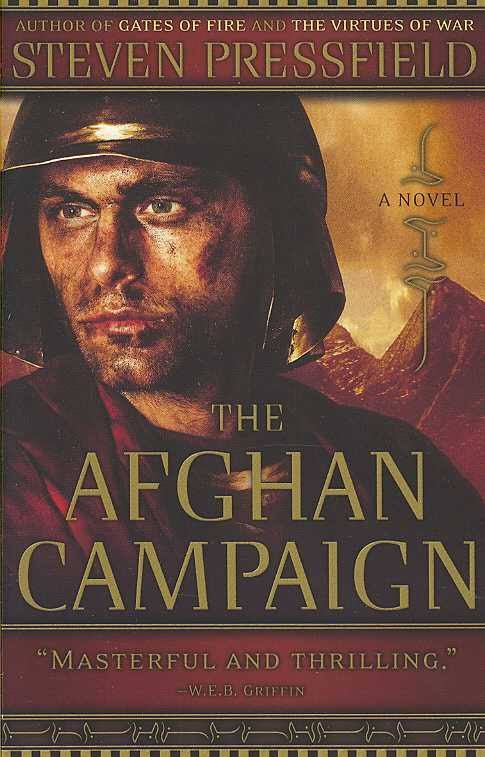
The Afghan Campaign: A Novel


Author: Steven Pressfield
Rating: 8/10
Last Read: August 2016

Quick Summary:  This novel lies in the same vein as Pressfield’s other historical novels – the narrator is a minor character following a famous historical figure.  The narrator joins up with a band of mercenaries who are leaving to fight alongside Alexander in Afghanistan.  However, this novel spends significantly more time focusing on the horror of war and the acts of atrocities enacted by Alexander’s troops.  It is a stark picture of human nature, but the descriptions ring true to the stories of war shared by my friends.  

I think it is an important thing to remember that war is not full of glory – only death, loss, and destruction.

“What’s wrong, you fuck,” answers Lucas, “is that words have meanings. People believe the bucketwash you put out. They think that’s how it is, particularly young men, who are suckers for tales of glamour and glory. You have an obligation to tell them the truth.”

My Highlights

Why do soldiers drink? To keep from thinking, says Flag. If you think, you start to fear. –loc 505

It is simultaneously extraordinary and appalling to see how efficiently our Macks work this. They slaughter an entire male household with barely a sound, so swiftly that the wives and infants are cast into dumbstruck shock. It is the kill of wolves or lions, the cold kill of predation. It is work. –loc 575

A soldier who cannot be counted on by his mates is more dangerous than an enemy. –loc 601

When a new man is initiated into the confederacy of murderers, his seniors make him commit the same crime they have. Now he is as guilty as they. He cannot turn on them. He is one of them. –loc 659

Fear, men say, is the most primal emotion. I don’t believe it. Shame is. My feeling as Tollo bolts past after the foe is one of joy and relief, that my senior sergeant has seen me take down my man, however clumsily, and profound release that my humiliation from the village has been at least partly effaced. –loc 687

“Perhaps, Matthias,” Stephanos says, “you and I might profit, in an alien land, by suspension of judgment.” –loc 1157

“Each precept of wisdom you gain,” says Ash, “bears you farther from God.” –loc 1163

“Take a war-name, Matthias. It solves a lot of problems.” –loc 1180

“You know,” Stephanos says, “I’ve taken to you from the start, Matthias. Shall I tell you why?”
“Because,” says Flag, “he never shuts up.”
“Because he asks questions.”
“That’s his problem.”
“And one day he might get answers.”
–loc 1203

The view of life is that of a noble resignation to fate. God determines all, the Afghan believes. One can do nothing except be a man and bear up. –loc 1354

Stephanos cheers the men by predicting victory in Bactria. We’ll catch Bessus and Spitamenes, he swears, with their bollocks in the breeze. Why? “Because they’re men of intelligence. It’s beyond their imagination to believe that anyone in their right salt-sucking mind would cross these mountains at this season.” –loc 1409

We hear no more talk of mutiny. Porters trek tight beside us. We will live or die together. This is the way peril overhauls you. One hand’s-breadth at a time. Suddenly you’re in it. –loc 1447

It takes Flag pummeling me with both elbows (he can no longer feel his hands) before I understand our Color Sergeant is dead. “He was croaked at the bottom,” Flag declares. I’m furious. Why didn’t Flag tell me? He has made us break our backs. But I am in awe of him too. My God, what a soldier! What a friend. –loc 1569

The crime I have committed, Elihu explains, is called in Dari al satwa. The Hebrews have a term for it, too—tol davi. It means to bring shame upon someone by performing an act of responsibility that they have failed to perform themselves. –loc 1703

“Why can’t you tell it straight?” Lucas demands.
Costas replies that the public only wants certain kinds of stories. There’s no demand for the other kind.
“You mean the true kind,” says Lucas.
–loc 1904

Costas defends himself. What does he, or any correspondent, want? “Just to acquire a modest name, sail home bearing tales of distant lands, and offer them for readings and recitals. What’s wrong with that?”
“What’s wrong, you fuck,” answers Lucas, “is that words have meanings. People believe the bucketwash you put out. They think that’s how it is, particularly young men, who are suckers for tales of glamour and glory. You have an obligation to tell them the truth.” –loc 1908

God, what a stench when a man’s guts are opened to the air. That doesn’t go into your dispatches, does it? We read nothing about the sound the ‘follow-on’ makes, going down the line of throat-slit men with a club, bashing skulls like walnuts, while the still-living men pray without voices or curse us in gurgling blood or plead for their lives. The silent ones are the scariest. Men with guts. Better men than we are.” –loc 1926

Can you defend the massacres we enact, Flag? Is this Macedonian honor?”
Our sergeant’s lips decline into a dark smile. “There is no honor in war, my friend. Only in poems of war.
–loc 1933

“Does a lion hesitate? Does an eagle hold back? What is the call of a gallant heart, except to aspire to mighty deeds? –loc 1946

The fellow possessed that quality, innate to all born commanders, of focused and dominating intention. –loc 2245

And, for both of us, the terror of death. “If I die,” he tells me when we stop the first night, “don’t let the army cook up some phony story. Tell my people what really happened.”
As for my own end, I make no such scruple. “Tell ’em the biggest-balled lie you can think of.”
–loc 2305

hear that the solitudes of the Scythians are made fun of in Greek proverbs, but we seek after places that are desert rather than cities and rich fields. Why? For freedom! Rather would we dine on coarse meal at liberty than feast on honeyed cakes in chains.” –loc 2457

“Great trees are long in growing but fall in a single hour. Even the lion has been made food for the smallest of birds, and rust consumes iron. Therefore tell your king to hold his fortune with tight hands; she is slippery and cannot be confined against her will. –loc 2469

But if he is a mortal man, let him remember his place in the scheme of the Almighty. For what indeed is madness, save to recall those things that make one forget himself?” –loc 2472

“I always imagined that hard experience would make you stronger and less afraid. But it’s the opposite. It undermines you because you know how vulnerable you are and how bad things can get.” –loc 2617

The instrument of counterguerrilla warfare is the massacre. Its object is terror, to make oneself an object of such dread that the foe fears to face you ever. This practice has worked for the army of Macedon across all Asia. It does not work here. The Afghan is so proud, so inured to privation, and so in love with liberty that he prefers death to capitulation. –loc 2943

“They say a man becomes old,” he says, “when more of his friends reside beneath the earth than above it.” –loc 3175

“To be a soldier,” he says, “is no lofty calling. Who acts as a brute is a brute.” –loc 3179

“This is what war is,” says Alexander. “Glory has fled. One searches in vain for honor. We’ve all done things we’re ashamed of. Even victory, as Aeschylus says, in whose august glow all felonies are effaced, is not the same in this war. What remains? To prevent the needless waste of lives. Too many good men have perished without cause. More will join them if we don’t make this peace now.” –loc 3661

“I know, dear child, that you believe heaven has turned its back on you. Perhaps that was so, once. But all things turn in their season. Not even as cruel a deity as that of this pitiless land can remain unmoved forever by his people’s affliction. The proof grows now in your belly. Your suffering has redeemed you, Shinar. God holds out his hand. Take it, I beg you. Can any act be more impious than to spurn the clemency of heaven?” –loc 3854

What is money for anyway? Only to get what you need—or keep away what you dread. –loc 4004

The Tiger: A True Story of Vengeance and Survival

Author: John Vaillant
Rating: 8/10
Last Read: September 2016

Quick Summary:  This book has been on my reading list for years – and I’m sorry that I put it off so long.  I needed an enjoyable book to read while I was flying to China and back, and the Tiger definitely kept me occupied.

On the surface, this book is about a man-eating tiger in the Primorye region of Russia (near China).  However, Vaillant goes into great detail to describe the region, characters, and conflicts that lead each of the participants to the Primorye and into contact with this killer tiger.  I know nothing of Russia’s far east, so the book was enlightening on these accounts. I did find myself skipping ahead at times to get back to the Tiger itself.  Vaillant’s star of the book is definitely this tiger, and his writing is most captivating when he’s discussing the beautiful death machines.

My Highlights

“He realized that in a town a man cannot live as he wishes, but as other people wish. Strangers surrounded him on every side and hampered him at every step.” –loc 465

“In situations like this, my rule is from the Bible,” Trush explains: “ ‘First, there was the word and then a deed.’ It is always better to warn a person first; if he does not understand that warning, take action. That’s the principle that I follow. Not for everyone, though.” –loc 734

“The most terrifying and important test for a human being is to be in absolute isolation,” he explained. “A human being is a very social creature, and ninety percent of what he does is done only because other people are watching. Alone, with no witnesses, he starts to learn about himself—who is he really? Sometimes, this brings staggering discoveries. Because nobody’s watching, you can easily become an animal: it is not necessary to shave, or to wash, or to keep your winter quarters clean—you can live in shit and no one will see. You can shoot tigers, or choose not to shoot. You can run in fear and nobody will know. You have to have something—some force, which allows and helps you to survive without witnesses. Markov had it. –loc 1313

Many people reach a point where they realize that the shape their life has taken does not square with the ambitions they once had for it. –loc 1355

Men carry their superiority inside; animals outside. Russian Proverb –loc 1643

Based on the observations of hunters and biologists, it appears that Amur tigers will occasionally kill bears solely on something that we might recognize as principle. –loc 2234

Due to the extraordinary circumstances, an exhaustive necropsy was done and, in the end, it confirmed that West had indeed crushed the bear’s skull. “In that sort of situation, you only have one choice,” West said later. “It’s live or die. Most people are too scared to think about living.” –loc 2439

“There are two categories of people when it comes to extreme situations,” said the leopard specialist Vasily Solkin. “One gets scared first and then starts thinking; the other starts thinking first and gets scared after the fact. Only the latter survive in the taiga.” –loc 2444

A new model had been created; whatever bonds had held this tiger in relationship to his human neighbors, indeed, to his own nature, were broken. Now, anything was possible. When a domestic animal goes wild—a sheep-killing dog, for example—it is referred to as feral, but there is no name for what happens when a wild animal goes in the other direction and becomes dangerously familiar with the world of domesticated creatures. What should one call it when a tiger starts eating people and shit, and injures itself demolishing man-made things? Is it rage? A loss of bearing? Or simply adaptation to a new order? Perhaps some things are best left unnamed. –loc 2551

“To do so,” wrote Uexküll in “A Stroll Through the Worlds of Animals and Men,” “we must first blow, in fancy, a soap bubble around each creature to represent its own world, filled with the perceptions which it alone knows. When we ourselves then step into one of these bubbles, the familiar … is transformed.” Uexküll called this bubble the umwelt, a German word that he applied to a given animal’s subjective or “self-centered” world. An individual’s umwelt exists side by side with the Umgebung—the term Uexküll used to describe the objective environment, a place that exists in theory but that none of us can truly know given the inherent limitations of our respective umwelten. In addition to being delightful words to say, umwelt and umgebung offer a framework for exploring and describing the experience of other creatures. –loc 2581

Ultimately, the problem comes down to umwelt; we are such prisoners of our subjective experience that it is only by force of will and imagination that we are able to take leave of it at all and consider the experience and essence of another creature—or even another person. –loc 2616

In fact, the ability to step inside the umwelt “bubble” of another creature is not so much a newfound skill as it is a lost art. Successful hunting, it could be said, is an act of terminal empathy: the kill depends on how successfully a hunter inserts himself into the umwelt of his prey—even to the point of disguising himself as that animal and mimicking its behavior. –loc 2618

“A hunter can only rely on himself,” he said. “If anything happens, there is no one to help him, and all of us who live this way have a very advanced intuition. We also carry the experience of our ancestors in our heads: that’s how a man functions in taiga. The tiger is a hunter, just the same as a man is a hunter. A hunter has to think about how to get his prey. It is different for boar and deer: if leaves or cones fall down from a tree, that’s what they eat; there is no need to think. Tigers think.” –loc 2636

Anthropologists who write about indigenous peoples often note their tendency to anthropomorphize the animals around them. Even though !Kung and Nanai hunters (among countless others) have used this approach to great effect while hunting, the ascription of recognizable emotions and motives to animals causes problems for Western scholars, not least because they are awfully hard to prove in a lab or defend in a dissertation. Such claims are what lawyers and philosophers refer to as “arguments from inference”: anecdotal and unprovable. Under these circumstances, the potential for hair-splitting, semantic quibbling, and “definition objection” is endless, but it also misses the point: these feelings of trans-species understanding and communication have less to do with animals being humanized, or humans being “animalized,” than with all parties simply being sensitized to nuances of the other’s presence and behavior. –loc 2797

The colonel might as well have been describing peasants falling before berserkers. The most painful detail in this anecdote is the baboons’ resignation: with no hope of escape, they fashioned a refuge of last resort from the darkness in their own hands. The image is so poignant, in part, because those hands could so easily be ours. Perhaps it was the possibility of such catastrophes that kept the Sterkfontein baboons from fleeing that night when Brain frightened them so badly: better to lose one or two than risk the whole troop. –loc 2976

In terms of my feelings toward this tiger, I have only feelings of gratitude, and I will explain why: if a person goes through a tough ordeal in his life, he either breaks down or becomes stronger than he used to be. In my case, it was the latter. After this incident, I became stronger—not physically, of course, but spiritually. Maybe it will sound funny, but, possibly, some strength from this tiger was transferred to me.” –loc 3352

The horror in a thing is usually derived from its presence, however distorted or fragmentary, but here in the scrub and snow by the Takhalo was a broken frame with no picture in it. Had there been no tracks and no story, one could have thought these things had simply been abandoned—as if, a year or two earlier, some hunter had come down to the river for a swim, left his belongings in a heap, and simply never returned. Over the intervening seasons, animals, weather, and rot would have shredded and stained them, leaving the ruins that lay there now. But these clothes were only a few days old, and their owner had ceased to exist. –loc 3675

Smirnov may as well have been quoting Henry V:
But when the blast of war blows in our ears,
Then imitate the action of the tiger;
Stiffen the sinews,
summon up the blood,
Disguise fair nature with hard-favoured rage.
Then lend the eye a terrible aspect.
–loc 3914

The impact of an attacking tiger can be compared to that of a piano falling on you from a second-story window. But unlike the piano, the tiger is designed to do this, and the impact is only the beginning. –loc 4252

The difference between the extinctions at the close of the Pleistocene and the bulk of those taking place today is one of consciousness: this time, however passively they may occur, they still amount to voluntary acts. Simply put: we know better. This is not an opinion, or a moral judgment; it is a fact. –loc 4747