Do Androids Dream of Electric Sheep?

Author: Philip K. Dick
Rating: 4/5
Last Read: November 2014
Who Should Read: Sci-fi fans, people who liked the movie Blade Runner

Do Androids Dream of Electric Sheep?, like many other Philip K. Dick stories, inspired the movie Blade Runner. Unlike the other movies-inspired-by-stories, Do Androids Dream of Electric Sheep? is a full novel, though you might find yourself finishing it in a single sitting as if it were a short story.

The novel and the movie are markedly different, but do share similarities. The main plot still follows a bounty hunter, Rick Deckard, who is tasked with retiring escaped androids. As with most Philip K. Dick stories, there is an exploration of an underlying theme about what it means to be human.

Do Androids Dream of Electric Sheep? is an excellent entry point into the work of Philip K. Dick. You won’t be disappointed.

It is no good. I can’t do it. I can play the Thirteen Ways of Looking at a Trash Compactor Repairman Game, but I cannot turn it into a story at once puzzling, poignant, grotesque, philosophical, satirical, and fun. There is a very special way of doing this and the first step in its mastery involves being Philip K. Dick.

My Highlights

Empathy, evidently, existed only within the human community, whereas intelligence to some degree could be found throughout every phylum and order including the arachnida.

Because, ultimately, the empathic gift blurred the boundaries between hunter and victim, between the successful and the defeated. As in the fusion with Mercer, everyone ascended together

The tyranny of an object, he thought. It doesn’t know I exist. Like the androids, it had no ability to appreciate the existence of another.

But maybe she doesn’t know how to cook, he thought suddenly. Okay, I can do it; I’ll fix dinner for both of us. And I’ll show her how so she can do it in the future if she wants. She’ll probably want to, once I show her how; as near as I can make out, most women, even young ones like her, like to cook: it’s an instinct.

“I am your friend,” the old man said. “But you must go on as if I did not exist. Can you understand that?” He spread empty hands.
“No,” Rick said. “I can’t understand that. I need help.”
“How can I save you,” the old man said, “if I can’t save myself?” He smiled. “Don’t you see? There is no salvation.”

“You will be required to do wrong no matter where you go. It is the basic condition of life, to be required to violate your own identity. At some time, every creature which lives must do so. It is the ultimate shadow, the defeat of creation; this is the curse at work, the curse that feeds on all life. Everywhere in the universe.”

Do androids dream? Rick asked himself. Evidently; that’s why they occasionally kill their employers and flee here. A better life, without servitude.

Time and tide, he thought. The cycle of life. Ending in this, the last twilight. Before the silence of death. He perceived in this a micro-universe, complete.

She seemed more externally composed now. But still fundamentally frantic and tense. Yet, the dark fire waned; the life force oozed out of her, as he had so often witnessed before with other androids. The classic resignation. Mechanical, intellectual acceptance of that which a genuine organism—with two billion years of the pressure to live and evolve hagriding it—could never have reconciled itself to.

You have to be with other people, he thought. In order to live at all.

You can’t go back, he thought. You can’t go from people to nonpeople. In panic he thought, I’m dependent on them. Thank god they stayed.

“That’s because you’re a highly moral person. I’m not. I don’t judge, not even myself.”

Buy the Book

If you are interested in purchasing this book, you can support the website by using our Amazon affiliate link.


Total Recall

Author:  Philip K. Dick
Rating: 5/5 (A most excellent short story)
Last Read: December 2014
Who Should Read: Sci-fi fans, short story fans, Total Recall movie fans

Fans of the movie Total Recall may not realize that it is based on a short story by the science fiction writer Philip K. Dick. This book is actually just a single short-story publication of “We Can Remember It For You Wholesale,” the work that inspired the movie.

This story is included in the collection Selected Stories of Philip K. Dick. That collection contains some of the best stories written throughout his career.

My Highlights

Was this the answer? After all, an illusion, no matter how convincing, remained nothing more than an illusion. At least objectively. But subjectively—quite the opposite entirely.

“You’re not accepting second best. The actual memory, with all its vagueness, omissions, and ellipses, not to say distortions—that’s second best.”

Buy the Book

If you are interested in purchasing this book, you can support the website by using our Amazon affiliate link.


Selected Stories of Philip K. Dick

Author:  Philip K. Dick
Rating: 4/5
Last Read: December 2018
Who Should Read: Sci-fi fans, short story fans

My favorite form of science fiction is the short story. The short story format enables science fiction writers to paint a picture and separate us from our day-to-day reality, while simultaneously holding up a mirror and highlighting aspects of our human experience that we may not consciously consider.

Philip K. Dick is one of sci-fi’s short story masters. Somehow I avoided his writing for most of my sci-fi reading career, and I’ve been rectifying that by working through various collections. 

Selected Stories of Philip K. Dick is an excellent entry point into his work. Contained within are twenty-one of his best short stories, showcasing work spanning his entire career. Many of these stories are sci-fi classics and inspired films, such as Minority Report and Total Recall

My favorite stories in this collection are:

  • “The Minority Report”
  • “We Can Remember It For You Wholesale”
  • “The Exit Door Leads In”
  • “Rautavaara’s Case”

My Highlights

Kabir, the sixteenth-century Sufi poet, wrote, “If you have not lived through something, it is not true.” So live through it; I mean, go all the way to the end. Only then can it be understood, not along the way.

The existence of a majority logically implies a corresponding minority.

“But there can be no valid knowledge about the future. As soon as precognitive information is obtained, it cancels itself out. The assertion that this man will commit a future crime is paradoxical. The very act of possessing this data renders it spurious. In every case, without exception, the report of the three police precogs has invalidated their own data. If no arrests had been made, there would still have been no crimes committed.”

“There were three minority reports,” he told Witwer, enjoying the young man’s confusion. Someday, Witwer would learn not to wade into situations he didn’t fully understand. Satisfaction was Anderton’s final emotion. Old and worn out as he was, he had been the only one to grasp the real nature of the problem.

“Where would you like to go first? New York City? Broadway? To the night clubs and theaters and restaurants . . .”
“No, to Central Park. To sit on a bench.”
“But there is no more Central Park, Mr. Biskle. It was turned into a parking lot for government employees while you were on Mars.”
“I see,” Milt Biskle said. “Well, then Portsmouth Square in San Francisco will do.” He opened the door of the ’copter.
“That, too, has become a parking lot,” Miss Ableseth said, with a sad shake of her long, luminous red hair. “We’re so darn overpopulated. Try again, Mr. Biskle; there are a few parks left, one in Kansas, I believe, and two in Utah in the south part near St. George.”
“This is bad news,” Milt said. “May I stop at that amphetamine dispenser and put in my dime? I need a stimulant to cheer me up.”

Ironically, he had gotten exactly what he had asked Rekal, Incorporated for. Adventure, peril, Interplan police at work, a secret and dangerous trip to Mars in which his life was at stake—everything he had wanted as a false memory. The advantages of it being a memory—and nothing more—could now be appreciated.

DOCTRINES OF THE ABSOLUTE BENEFACTOR ANTICIPATED IN THE POETRY OF BAHA AD-DIN ZUHAYR OF THIRTEENTH-CENTURY ARABIA
Glancing down the initial pages of the essay, Chien saw a quatrain familiar to him; it was called “Death,” and he had known it most of his adult, educated life.
Once he will miss, twice he will miss,
He only chooses one of many hours;
For him nor deep nor hill there is,
But all’s one level plain he hunts for flowers.

“Don’t you see, Mr. Chien? You’ve learned something. The Leader is not the Leader; he is something else, but we can’t tell what. Not yet. Mr. Chien, with all due respect, have you ever had your drinking water analyzed? I know it sounds paranoiac, but have you?”
“No,” he said. “Of course not.”
Knowing what she was going to say. Miss Lee said briskly, “Our tests show that it’s saturated with hallucinogens. It is, has been, will continue to be. Not the ones used during the war; not the disorientating ones, but a synthetic quasi-ergot derivative called Datrox-3. You drink it here in the building from the time you get up; you drink it in restaurants and other apartments that you visit. You drink it at the Ministry; it’s all piped from a central, common source.” Her tone was bleak and ferocious. “We solved that problem; we knew, as soon as we discovered it, that any good phenothiazine would counter it. What we did not know, of course, was this—a variety of authentic experiences; that makes no sense, rationally. It’s the hallucination which should differ from person to person, and the reality experience which should be ubiquitous—it’s all turned around. We can’t even construct an ad hoc theory which accounts for that, and God knows we’ve tried. Twelve mutually exclusive hallucinations—that would be easily understood. But not one hallucination and twelve realities.”

But His Greatness, Chien thought, jolted. He did not appear, on the TV screen, to be Occidental. “On TV—” he began. “The image,” Tso-pin interrupted, “is subjected to a variegated assortment of skillful refinements. For ideological purposes. Most persons holding higher offices are aware of this.” He eyed Chien with hard criticism. So everyone agrees, Chien thought. What we see every night is not real. The question is, How unreal? Partially? Or—completely?

All this time, he thought. Hallucinogens in our water supply. Year after year. Decades. And not in wartime but in peacetime. And not to the enemy camp but here in our own. The evil bastards, he said to himself.

And—he was curious. A bad emotion, he knew. Curiosity was, especially in Party activities, often a terminal state careerwise.

“Did it ever occur to you,” Chien said, “that good and evil are names for the same thing? That God could be both good and evil at the same time?”

the computer found no programming circuit. Do I want to interfere with the reality tape? And if so, why? Because, he thought, if I control that, I control reality. At least so far as I’m concerned. My subjective reality . . . but that’s all there is. Objective reality is a synthetic construct, dealing with a hypothetical universalization of a multitude of subjective realities.

Maybe what I want to do, Poole thought, is die.

What I want, he realized, is ultimate and absolute reality, for one micro-second. After that it doesn’t matter, because all will be known; nothing will be left to understand or see.

“Addi has got more to live for than we do.” “Every man has more to live for than any other man. I don’t have a cute chick to sleep with, but I’d like to see the semis rolling along Riverside Freeway at sunset a few more times. It’s not what you have to live for; it’s that you want to live to see it, to be there—that’s what is so damn sad.”

Explanations—that’s what we need. Explanations for problems that don’t exist yet; we can develop the problems later.”

It was hell living in the twenty-first century. Information transfer had reached the velocity of light. Bibleman’s older brother had once fed a ten-word plot outline into a robot fiction machine, changed his mind as to the outcome, and found that the novel was already in print. He had had to program a sequel in order to make his correction.

To himself he thought, I was born in the wrong century. A hundred years ago this wouldn’t have happened and a hundred years from now it will be illegal. What I need is a lawyer.

The first pamphlet pointed out that it was a great honor to be admitted to the College. That was its name—the one word. How strange, he thought, puzzled. It’s like naming your cat Cat and your dog Dog. This is my mother, Mrs. Mother, and my father, Mr. Father. Are these people working right? he wondered. It had been a phobia of his for years that someday he would fall into the hands of madmen—in particular, madmen who seemed sane up until the last moment. To Bibleman this was the essence of horror.

“My point,” Major Casals said, “is simply that certain information such as architectural principles of long-standing—”
“Most architectural principles are long-standing,” Mary said. Major Casals paused. “Otherwise they’d serve no purpose,” Mary said.

Do you know yourself? But you’ll be getting into that when the College bombards you with early Greek thought. ‘Know thyself.’ Apollo’s motto at Delphi. It sums up half of Greek philosophy.”

“It is generally considered that Thales was the first rational man in history,” the terminal said.
“What about Ikhnaton?” Bibleman said.
“He was strange.”
“Moses?”
“Likewise strange.”
“Hammurabi?”
“How do you spell that?”
“I’m not sure. I’ve just heard the name.”
“Then we will discuss Anaximander,” the College terminal said. “And, in a cursory initial survey, Anaximenes, Xenophanes, Paramenides, Melissus—wait a minute; I forgot Heraclitus and Cratylus. And we will study Empedocles, Anaxagoras, Zeno—”
“Christ,” Bibleman said.
“That’s another program,” the College terminal said.

“Since you are so full of conflict, you should find Empedocles interesting. He was the first dialectical philosopher. Empedocles believed that the basis of reality was an antithetical conflict between the forces of Love and Strife. Under Love the whole cosmos is a duly proportioned mixture, called a krasis. This krasis is a spherical deity, a single perfect mind which spends all its time—”
“Is there any practical application to any of this?” Bibleman interrupted.
“The two antithetical forces of Love and Strife resemble the Taoist elements of Yang and Yin with their perpetual interaction from which all change takes place.”
“Practical application.”
“Twin mutually opposed constituents.” On the holoscreen a schematic diagram, very complex, formed. “The two-rotor Panther Engine.”

Blame is a mere cultural matter; it does not travel across species boundaries.

No wonder he loved Martine so; she herself loved back, loved the beauties of the world, and treasured and cherished them as she treasured and cherished him; it was a protective love that nourished but did not stifle.

“Hi,” Martine said, off the VF now. “What are you thinking?”
“Just that you keep alive what you love,” he said.
“I think that’s what you’re supposed to do,” Martine said.

Buy the Book

If you are interested in purchasing this book, you can support the website by using our Amazon affiliate link.


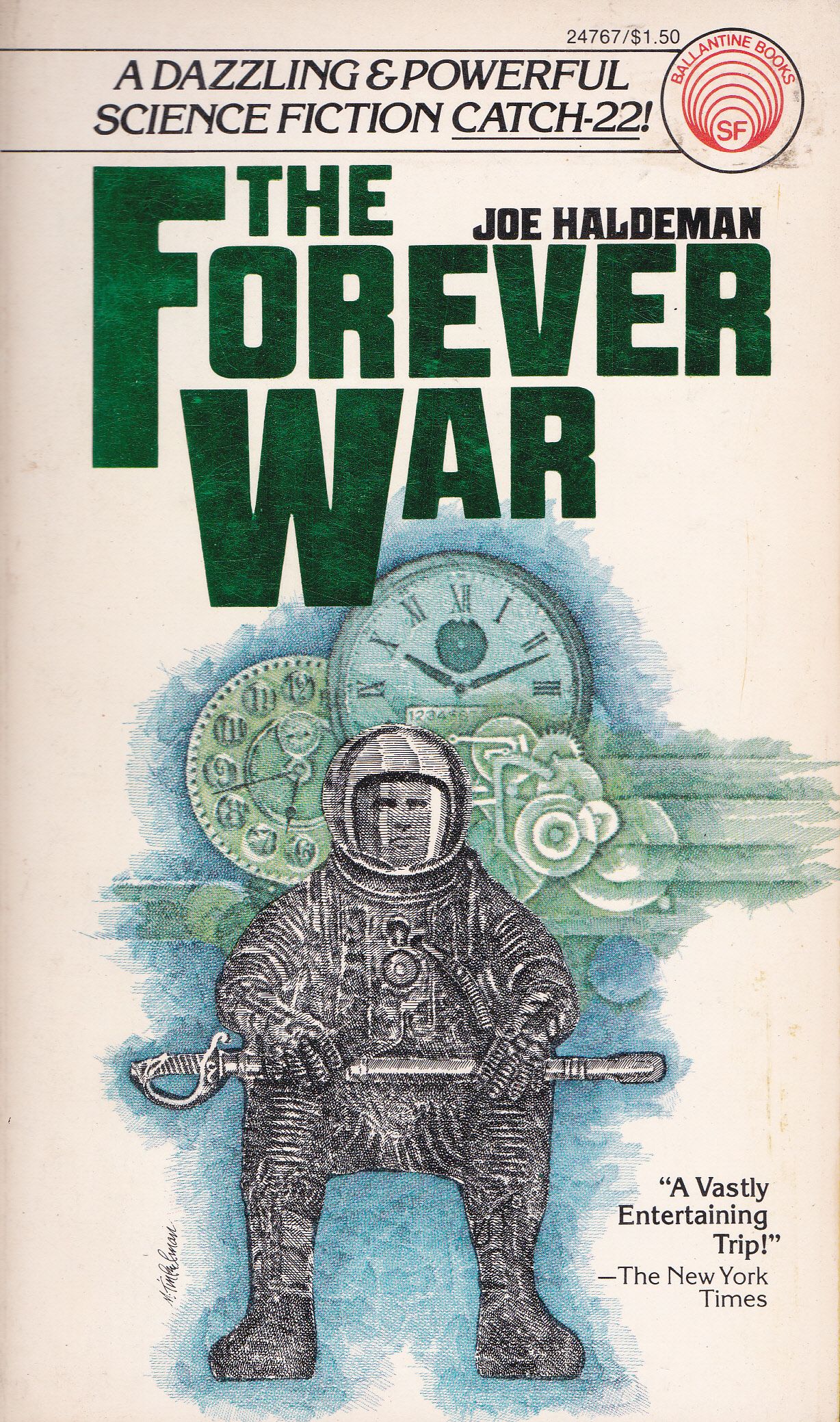
The Forever War

Author:  Joe Haldeman
Rating: 5/5
Last Read: November 2018
Who Should Read: Sci-fi fans, fans of military fiction, fans of Old Man’s War

I’ve been told that I should read The Forever War at least three times a year for the past ten years. I finally got around to reading it, like John Scalzi in the book’s introduction, and all I really have to say is: everyone was absolutely right. The Forever War is a wonderful book.

The novel is set in a future (circa 1996) where Earth is engaged in a war in the far-out reaches of space with another sentient race. Earth conscripts the best of humanity for soldiering and trains them to fight in laser-equipped battle suits. The novel follows the soldiering career of William Mandella, starting with his “boot camp” experiences and moving through various interstellar battles. Each battle involves a large relative time shift for Mandella, so on each return trip to our solar system he experiences “future” shock due to societal changes that happened in the hundreds of years he was away.

This book is an award-winning sci-fi classic for a good reason. There’s plenty of action, interesting future scenarios, and commentary on society and humanity.

To my mind, there are two things that make a novel a “classic”—a genuine classic, as opposed to merely “old and continuing to sell.” The first is that it speaks to the time in which the novel first appeared. There is no doubt The Forever War did this; its awards and acclaim are signifiers of that fact. The second thing is tougher, and that is that it keeps speaking to readers outside its time, because what’s in the book touches on something that never goes away, or at the very least keeps coming around.

I stopped at the first book (I tend to avoid series), but if you are interested in continuing there is another book in the series.

If you enjoy The Forever War, you will also enjoy John Scalzi’s Old Man’s War. (The same applies if you loved Old Man’s War – read this book!)

My Highlights

‘Man was born into barbarism, when killing his fellow man was a normal condition of existence. He became endowed with a conscience. And he has now reached the day when violence toward another human being must become as abhorrent as eating another’s flesh.’ — Martin Luther King, Jr.

Relativity propped it up, at least gave it the illusion of being there … the way all reality becomes illusory and observer-oriented when you study general relativity. Or Buddhism. Or get drafted.

Since the planet rotated rather slowly — once every ten and one-half days — a ‘stationary’ orbit for the ship had to be 150,000 klicks out. This made the people in the ship feel quite secure, with 6,000 miles of rock and 90,000 miles of space between them and the enemy. But it meant a whole second’s time lag in communication between us on the ground and the ship’s battle computer. A person could get awful dead while that neutrino pulse crawled up and back.

‘Sarge, tell that computer to do something! We’re gonna get—’
‘Oh, shut up, Mandella. Trust in th’ lord.’
‘Lord’ was definitely lower-case when Cortez said it.

… I felt my gorge rising and knew that all the lurid training tapes, all the horrible deaths in training accidents, hadn’t prepared me for this sudden reality … that I had a magic wand that I could point at a life and make it a smoking piece of half-raw meat; I wasn’t a soldier nor ever wanted to be one nor ever would want—

‘Night.’ It’s almost impossible to get sexually excited inside a suit, with the relief tube and all the silver chloride sensors poking you, but somehow this was my body’s response to the emotional impotence, maybe remembering more pleasant sleeps with Marygay, maybe feeling that in the midst of all this death, personal death could be very soon, cranking up the procreative derrick for one last try … lovely thoughts like this.

I fell asleep and dreamed that I was a machine, mimicking the functions of life, creaking and clanking my clumsy way through a world, people too polite to say anything but giggling behind my back, and the little man who sat inside my head pulling the levers and clutches and watching the dials, he was hopelessly mad and was storing up hurts for the day—

I hardly heard him for trying to keep track of what was going on in my skull. I knew it was just post-hypnotic suggestion, even remembered the session in Missouri when they’d implanted it, but that didn’t make it any less compelling. My mind reeled under the strong pseudo-memories: shaggy hulks that were Taurans (not at all what we now knew they looked like) boarding a colonists’ vessel, eating babies while mothers watched in screaming terror (the colonists never took babies; they wouldn’t stand the acceleration), then raping the women to death with huge veined purple members (ridiculous that they would feel desire for humans), holding the men down while they plucked flesh from their living bodies and gobbled it (as if they could assimilate the alien protein) … a hundred grisly details as sharply remembered as the events of a minute ago, ridiculously overdone and logically absurd. But while my conscious mind was rejecting the silliness, somewhere much deeper, down in that sleeping animal where we keep our real motives and morals, something was thirsting for alien blood, secure in the conviction that the noblest thing a man could do would be to die killing one of those horrible monsters

I spent a long time after that telling myself over and over that it hadn’t been me who so gleefully carved up those frightened, stampeding creatures. Back in the twentieth century, they had established to everybody’s satisfaction that ‘I was just following orders’ was an inadequate excuse for inhuman contact … but what can you do when the orders come from deep down in that puppet master of the unconscious?

While I was lying there being squeezed, a silly thought took hold of my brain and went round and round like a charge in a superconductor: according to military formalism, the conduct of war divides neatly into two categories, tactics and logistics. Logistics has to do with moving troops and feeding them and just about everything except the actual fighting, which is tactics. And now we’re fighting, but we don’t have a tactical computer to guide us through attack and defense, just a huge, super-efficient pacifistic cybernetic grocery clerk of a logistic, mark that word, logistic computer. The other side of my brain, perhaps not quite as pinched, would argue that it doesn’t matter what name you give to a computer, it’s a pile of memory crystals, logic banks, nuts and bolts … If you program it to be Genghis Khan, it is a tactical computer, even if its usual function is to monitor the stock market or control sewage conversion. But the other voice was obdurate and said by that kind of reasoning, a man is only a hank of hair and a piece of bone and some stringy meat; and no matter what kind of a man he is, if you teach him well, you can take a Zen monk and turn him into a slavering bloodthirsty warrior.

‘She’s very pretty.’ A remarkable observation, her body torn and caked with crusting blood, her face smeared where I had tried to wipe away the tears. I suppose a doctor or a woman or a lover can look beneath that and see beauty.

‘One cannot make command decisions simply by assessing the tactical situation and going ahead with whatever course of action will do the most harm to the enemy with a minimum of death and damage to your own men and material. Modern warfare has become very complex, especially during the last century. Wars are won not by a simple series of battles won, but by a complex interrelationship among military victory, economic pressures, logistic maneuvering, access to the enemy’s information, political postures — dozens, literally dozens of factors.’

‘I hope none of you ever has to face such a decision. When we get back to Stargate, I will in all probability be court-martialed for cowardice under fire. But I honestly believe that the information that may be gained from analysis of the damage to the Anniversary is more important than the destruction of this one Tauran base.’ He sat up straight. ‘More important than one soldier’s career.’

‘William, face it. It’s a miracle she survived to get into surgery. So there’s a big chance she won’t make it back to Earth. It’s sad; she’s a special person, the special person to you, maybe. But we’ve had so much death … you ought to be getting used to it, come to terms with it.’
I took a long pull at my drink, identical to hers except for the citric acid. ‘You’re getting pretty hard-boiled.’
‘Maybe … no. Just realistic. I have a feeling we’re headed for a lot more death and sorrow.’

‘I don’t know. If they could condition us to kill on cue, they can condition us to do almost anything. Re-enlist.’

‘I’m twenty-three, so I was still in diapers when you people left for Aleph … to begin with, how many of you are homosexual?’
Nobody.
‘That doesn’t really surprise me. I am, of course. I guess about a third of everybody in Europe and America is. ‘Most governments encourage homosexuality — the United Nations is neutral, leaves it up to the individual countries — they encourage homolife mainly because it’s the one sure method of birth control.’
That seemed specious to me. Our method of birth control in the army is pretty foolproof: all men making a deposit in the sperm bank, and then vasectomy.

‘Of course, an illegal market developed, and soon there was great inequality in the amount of food people in various strata of society consumed. A vengeance group in Ecuador, the Imparciales, systematically began to assassinate people who appeared to be well-fed. The idea caught on pretty quickly, and in a few months there was a full-scale, undeclared class war going on all over the world. The United Nations managed to get things back under control in a year or so, by which time the population was down to four billion, crops were more or less recovered, and the food crisis was over.

‘Incidentally, the General translated the money coming to you into dollars just for your own convenience. The world has only one currency now, calories. Your thirty-two thousand dollars comes to about three thousand million calories. Or three million k’s, kilocalories.

‘Also, we no longer have the abundance of electrical power I remember from boyhood … probably a good deal less than you remember. There are only a few places in the world where you can have power all day and night. They keep saying it’s a temporary situation, but it’s been going on for over a decade.’

Wars in the past often accelerated social reform, provided technological benefits, even sparked artistic activity. This one, however, seemed tailor-made to provide none of these positive by-products.

And in the past, people whose country was at war were constantly in contact with the war. The newspapers would be full of reports, veterans would return from the front; sometimes the front would move right into town, invaders marching down Main Street or bombs whistling through the night air — but always the sense of either working toward victory or at least delaying defeat. The enemy was a tangible thing, a propagandist’s monster whom you could understand, whom you could hate. But this war … the enemy was a curious organism only vaguely understood, more often the subject of cartoons than nightmares. The main effect of the war on the home front was economic, unemotional — more taxes but more jobs as well. After twenty-two years, only twenty-seven returned veterans; not enough to make a decent parade. The most important fact about the war to most people was that if it ended suddenly, Earth’s economy would collapse.

We got into a discussion about the war, with a bunch of people who knew Marygay and I were veterans. It’s hard to describe their attitude, which was pretty uniform. They were angry in an abstract way that it took so much tax money to support; they were convinced that the Taurans would never be any danger to Earth; but they all knew that nearly half the jobs in the world were associated with the war, and if it stopped, everything would fall apart.

Every time I’ve come down to Earth the past ten years, I’ve wondered whether she’d still be there. Neither of us had enough money to keep in very close touch.’ He had told us in Geneva that a letter from Luna to Earth cost $100 postage — plus $5,000 tax. It discouraged communication with what the UN considered to be a bunch of regrettably necessary anarchists.

Desperate fun, as I said. Unless the war changed radically, our chances of surviving the next three years were microscopic. We were remarkably healthy victims of a terminal disease, trying to cram a lifetime of sensation into a half of a year.

‘It doesn’t add up, though. Why would they haul me all the way from Heaven to take a chance on my “shaping up,” when probably a third of the people here on Stargate are better officer material? God, the military mind!’ ‘I suspect the bureaucratic mind, at least, had something to do with it. You have an embarrassing amount of seniority to be a footsoldier.’

Perhaps this statement is true of any hierarchical structure, but certainly of businesses:

A good sign that an army has been around too long is that it starts getting top-heavy with officers.

One thing we didn’t have to worry about in this war was enemy agents. With a good coat of paint, a Tauran might be able to disguise himself as an ambulatory mushroom. Bound to raise suspicions.

Hilleboe had called them to attention and was dutifully telling them what a good commander I was going to be; that I’d been in the war from the beginning, and if they intended to survive through their enlistment they had better follow my example. She didn’t mention that I was a mediocre soldier with a talent for getting missed.

‘Part of UNEF. Only has authority on Earth.’ She took a deep sniff at the empty capsule. ‘The idea was to keep people from making babies the biological way. Because, A, people showed a regrettable lack of sense in choosing their genetic partner. And B, the Council saw that racial differences had an unnecessarily divisive effect on humanity; with total control over births, they could make everybody the same race in a few generations.’

The art of chastising subordinates is a delicate art. I could see that I’d have to keep reminding Hilleboe that she wasn’t in charge.

‘As you will read in this book, the war ended 221 years ago. Accordingly, this is the year 220. Old style, of course, it is 3138 ad ‘You are the last group of soldiers to return. When you leave here, I will leave as well. And destroy Stargate. It exists only as a rendezvous point for returnees and as a monument to human stupidity. And shame. As you will read. Destroying it will be a cleansing.’ He stopped speaking and the woman started without a pause. ‘I am sorry for what you’ve been through and wish I could say that it was for good cause, but as you will read, it was not.

The 1143-year-long war had been begun on false pretenses and only because the two races were unable to communicate. Once they could talk, the first question was ‘Why did you start this thing?’ and the answer was ‘Me?’

‘Say, bartender.’
‘Yes, Major?’ ‘Do you know of a place called Middle Finger? Is it still there?’
‘Of course it is. Where else would it be?’ Reasonable question. ‘A very nice place. Garden planet. Some people don’t think it’s exciting enough.’

Summary

Major Characters

  • William Mandella
  • Marygay Potter
  • Sgt Cortes

Most other characters appear and die quickly.

Outline

When I read fiction, I make an outline as a memory aide. If you don’t want to see any spoilers, skip this section.

  1. Boot camp – elite conscripts w/ IQ over 150
  2. Sent to Charon – dark + cold – for training in battle suits
  3. Training + Deaths + Graduation
  4. Sent to Starbase for construction
  5. Sent to first battle against the Taurans – massive slaughter – one escapes
  6. Second battle – advanced weapons used, kill 1/3 of crew, abort attacks
  7. Leave army, return to Earth – Potter + Mandella experience future shock
  8. Mandella stays with Marygay’s family; family gets attacked and killed
  9. Return to Mandella’s mom – she does of illness
  10. Rejoin army as instructors on Luna. They immediately get transferred to a strick force
  11. Attack goes poorly; Potter + Mandella are amputees and sent to Heaven to regrow limbs and recover
  12. Marygay + Mandella are separated on separate strike forces
  13. Travel to the farthest known gate
  14. Set up base + wait for Taurans to attack
  15. Outlast Tauren attack, return to Starbase
  16. Meets “Man”, learns the war is over and was a big mistake
  17. Reunited with Marygay on Middle Finger

My Highlights

‘Man was born into barbarism, when killing his fellow man was a normal condition of existence. He became endowed with a conscience. And he has now reached the day when violence toward another human being must become as abhorrent as eating another’s flesh.’ — Martin Luther King, Jr.

Relativity propped it up, at least gave it the illusion of being there … the way all reality becomes illusory and observer-oriented when you study general relativity. Or Buddhism. Or get drafted.

Since the planet rotated rather slowly — once every ten and one-half days — a ‘stationary’ orbit for the ship had to be 150,000 klicks out. This made the people in the ship feel quite secure, with 6,000 miles of rock and 90,000 miles of space between them and the enemy. But it meant a whole second’s time lag in communication between us on the ground and the ship’s battle computer. A person could get awful dead while that neutrino pulse crawled up and back.

‘Sarge, tell that computer to do something! We’re gonna get—’
‘Oh, shut up, Mandella. Trust in th’ lord.’
‘Lord’ was definitely lower-case when Cortez said it.

… I felt my gorge rising and knew that all the lurid training tapes, all the horrible deaths in training accidents, hadn’t prepared me for this sudden reality … that I had a magic wand that I could point at a life and make it a smoking piece of half-raw meat; I wasn’t a soldier nor ever wanted to be one nor ever would want—

‘Night.’ It’s almost impossible to get sexually excited inside a suit, with the relief tube and all the silver chloride sensors poking you, but somehow this was my body’s response to the emotional impotence, maybe remembering more pleasant sleeps with Marygay, maybe feeling that in the midst of all this death, personal death could be very soon, cranking up the procreative derrick for one last try … lovely thoughts like this.

I fell asleep and dreamed that I was a machine, mimicking the functions of life, creaking and clanking my clumsy way through a world, people too polite to say anything but giggling behind my back, and the little man who sat inside my head pulling the levers and clutches and watching the dials, he was hopelessly mad and was storing up hurts for the day—

I hardly heard him for trying to keep track of what was going on in my skull. I knew it was just post-hypnotic suggestion, even remembered the session in Missouri when they’d implanted it, but that didn’t make it any less compelling. My mind reeled under the strong pseudo-memories: shaggy hulks that were Taurans (not at all what we now knew they looked like) boarding a colonists’ vessel, eating babies while mothers watched in screaming terror (the colonists never took babies; they wouldn’t stand the acceleration), then raping the women to death with huge veined purple members (ridiculous that they would feel desire for humans), holding the men down while they plucked flesh from their living bodies and gobbled it (as if they could assimilate the alien protein) … a hundred grisly details as sharply remembered as the events of a minute ago, ridiculously overdone and logically absurd. But while my conscious mind was rejecting the silliness, somewhere much deeper, down in that sleeping animal where we keep our real motives and morals, something was thirsting for alien blood, secure in the conviction that the noblest thing a man could do would be to die killing one of those horrible monsters

I spent a long time after that telling myself over and over that it hadn’t been me who so gleefully carved up those frightened, stampeding creatures. Back in the twentieth century, they had established to everybody’s satisfaction that ‘I was just following orders’ was an inadequate excuse for inhuman contact … but what can you do when the orders come from deep down in that puppet master of the unconscious?

While I was lying there being squeezed, a silly thought took hold of my brain and went round and round like a charge in a superconductor: according to military formalism, the conduct of war divides neatly into two categories, tactics and logistics. Logistics has to do with moving troops and feeding them and just about everything except the actual fighting, which is tactics. And now we’re fighting, but we don’t have a tactical computer to guide us through attack and defense, just a huge, super-efficient pacifistic cybernetic grocery clerk of a logistic, mark that word, logistic computer. The other side of my brain, perhaps not quite as pinched, would argue that it doesn’t matter what name you give to a computer, it’s a pile of memory crystals, logic banks, nuts and bolts … If you program it to be Genghis Khan, it is a tactical computer, even if its usual function is to monitor the stock market or control sewage conversion. But the other voice was obdurate and said by that kind of reasoning, a man is only a hank of hair and a piece of bone and some stringy meat; and no matter what kind of a man he is, if you teach him well, you can take a Zen monk and turn him into a slavering bloodthirsty warrior.

‘She’s very pretty.’ A remarkable observation, her body torn and caked with crusting blood, her face smeared where I had tried to wipe away the tears. I suppose a doctor or a woman or a lover can look beneath that and see beauty.

‘One cannot make command decisions simply by assessing the tactical situation and going ahead with whatever course of action will do the most harm to the enemy with a minimum of death and damage to your own men and material. Modern warfare has become very complex, especially during the last century. Wars are won not by a simple series of battles won, but by a complex interrelationship among military victory, economic pressures, logistic maneuvering, access to the enemy’s information, political postures — dozens, literally dozens of factors.’

‘I hope none of you ever has to face such a decision. When we get back to Stargate, I will in all probability be court-martialed for cowardice under fire. But I honestly believe that the information that may be gained from analysis of the damage to the Anniversary is more important than the destruction of this one Tauran base.’ He sat up straight. ‘More important than one soldier’s career.’

‘William, face it. It’s a miracle she survived to get into surgery. So there’s a big chance she won’t make it back to Earth. It’s sad; she’s a special person, the special person to you, maybe. But we’ve had so much death … you ought to be getting used to it, come to terms with it.’
I took a long pull at my drink, identical to hers except for the citric acid. ‘You’re getting pretty hard-boiled.’
‘Maybe … no. Just realistic. I have a feeling we’re headed for a lot more death and sorrow.’

‘I don’t know. If they could condition us to kill on cue, they can condition us to do almost anything. Re-enlist.’

‘I’m twenty-three, so I was still in diapers when you people left for Aleph … to begin with, how many of you are homosexual?’
Nobody.
‘That doesn’t really surprise me. I am, of course. I guess about a third of everybody in Europe and America is. ‘Most governments encourage homosexuality — the United Nations is neutral, leaves it up to the individual countries — they encourage homolife mainly because it’s the one sure method of birth control.’
That seemed specious to me. Our method of birth control in the army is pretty foolproof: all men making a deposit in the sperm bank, and then vasectomy.

‘Of course, an illegal market developed, and soon there was great inequality in the amount of food people in various strata of society consumed. A vengeance group in Ecuador, the Imparciales, systematically began to assassinate people who appeared to be well-fed. The idea caught on pretty quickly, and in a few months there was a full-scale, undeclared class war going on all over the world. The United Nations managed to get things back under control in a year or so, by which time the population was down to four billion, crops were more or less recovered, and the food crisis was over.

‘Incidentally, the General translated the money coming to you into dollars just for your own convenience. The world has only one currency now, calories. Your thirty-two thousand dollars comes to about three thousand million calories. Or three million k’s, kilocalories.

‘Also, we no longer have the abundance of electrical power I remember from boyhood … probably a good deal less than you remember. There are only a few places in the world where you can have power all day and night. They keep saying it’s a temporary situation, but it’s been going on for over a decade.’

> Wars in the past often accelerated social reform, provided technological benefits, even sparked artistic activity. This one, however, seemed tailor-made to provide none of these positive by-products.

And in the past, people whose country was at war were constantly in contact with the war. The newspapers would be full of reports, veterans would return from the front; sometimes the front would move right into town, invaders marching down Main Street or bombs whistling through the night air — but always the sense of either working toward victory or at least delaying defeat. The enemy was a tangible thing, a propagandist’s monster whom you could understand, whom you could hate. But this war … the enemy was a curious organism only vaguely understood, more often the subject of cartoons than nightmares. The main effect of the war on the home front was economic, unemotional — more taxes but more jobs as well. After twenty-two years, only twenty-seven returned veterans; not enough to make a decent parade. The most important fact about the war to most people was that if it ended suddenly, Earth’s economy would collapse.

We got into a discussion about the war, with a bunch of people who knew Marygay and I were veterans. It’s hard to describe their attitude, which was pretty uniform. They were angry in an abstract way that it took so much tax money to support; they were convinced that the Taurans would never be any danger to Earth; but they all knew that nearly half the jobs in the world were associated with the war, and if it stopped, everything would fall apart.

Every time I’ve come down to Earth the past ten years, I’ve wondered whether she’d still be there. Neither of us had enough money to keep in very close touch.’ He had told us in Geneva that a letter from Luna to Earth cost $100 postage — plus $5,000 tax. It discouraged communication with what the UN considered to be a bunch of regrettably necessary anarchists.

Desperate fun, as I said. Unless the war changed radically, our chances of surviving the next three years were microscopic. We were remarkably healthy victims of a terminal disease, trying to cram a lifetime of sensation into a half of a year.

‘It doesn’t add up, though. Why would they haul me all the way from Heaven to take a chance on my “shaping up,” when probably a third of the people here on Stargate are better officer material? God, the military mind!’ ‘I suspect the bureaucratic mind, at least, had something to do with it. You have an embarrassing amount of seniority to be a footsoldier.’

Perhaps this statement is true of any hierarchical structure, but certainly of businesses:

> A good sign that an army has been around too long is that it starts getting top-heavy with officers.

One thing we didn’t have to worry about in this war was enemy agents. With a good coat of paint, a Tauran might be able to disguise himself as an ambulatory mushroom. Bound to raise suspicions.

Hilleboe had called them to attention and was dutifully telling them what a good commander I was going to be; that I’d been in the war from the beginning, and if they intended to survive through their enlistment they had better follow my example. She didn’t mention that I was a mediocre soldier with a talent for getting missed.

‘Part of UNEF. Only has authority on Earth.’ She took a deep sniff at the empty capsule. ‘The idea was to keep people from making babies the biological way. Because, A, people showed a regrettable lack of sense in choosing their genetic partner. And B, the Council saw that racial differences had an unnecessarily divisive effect on humanity; with total control over births, they could make everybody the same race in a few generations.’

The art of chastising subordinates is a delicate art. I could see that I’d have to keep reminding Hilleboe that she wasn’t in charge.

‘As you will read in this book, the war ended 221 years ago. Accordingly, this is the year 220. Old style, of course, it is 3138 ad ‘You are the last group of soldiers to return. When you leave here, I will leave as well. And destroy Stargate. It exists only as a rendezvous point for returnees and as a monument to human stupidity. And shame. As you will read. Destroying it will be a cleansing.’ He stopped speaking and the woman started without a pause. ‘I am sorry for what you’ve been through and wish I could say that it was for good cause, but as you will read, it was not.

The 1143-year-long war had been begun on false pretenses and only because the two races were unable to communicate. Once they could talk, the first question was ‘Why did you start this thing?’ and the answer was ‘Me?’

‘Say, bartender.’
‘Yes, Major?’ ‘Do you know of a place called Middle Finger? Is it still there?’
‘Of course it is. Where else would it be?’ Reasonable question. ‘A very nice place. Garden planet. Some people don’t think it’s exciting enough.’

Summary

Major Characters

  • William Mandella
  • Marygay Potter
  • Sgt Cortes

Most other characters appear and die quickly.

Outline

When I read fiction, I make an outline as a memory aide. If you don’t want to see any spoilers, skip this section.

  1. Boot camp – elite conscripts w/ IQ over 150
  2. Sent to Charon – dark + cold – for training in battle suits
  3. Training + Deaths + Graduation
  4. Sent to Starbase for construction
  5. Sent to first battle against the Taurans – massive slaughter – one escapes
  6. Second battle – advanced weapons used, kill 1/3 of crew, abort attacks
  7. Leave army, return to Earth – Potter + Mandella experience future shock
  8. Mandella stays with Marygay’s family; family gets attacked and killed
  9. Return to Mandella’s mom – she does of illness
  10. Rejoin army as instructors on Luna. They immediately get transferred to a strick force
  11. Attack goes poorly; Potter + Mandella are amputees and sent to Heaven to regrow limbs and recover
  12. Marygay + Mandella are separated on separate strike forces
  13. Travel to the farthest known gate
  14. Set up base + wait for Taurans to attack
  15. Outlast Tauren attack, return to Starbase
  16. Meets “Man”, learns the war is over and was a big mistake
  17. Reunited with Marygay on Middle Finger

Buy the Book

If you are interested in purchasing this book, you can support the website by using our Amazon affiliate link.


The Forever War

By Joe Haldeman


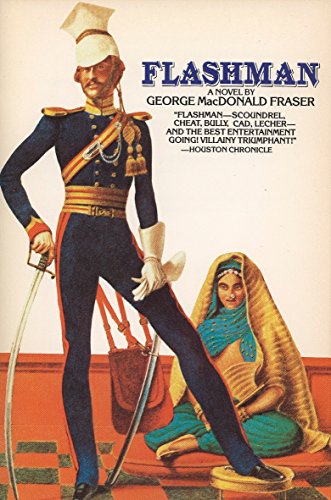
Flashman

Author: George MacDonald Fraser
Rating: 4/5
Last Read: November 2018
Who Should Read: People who like to laugh, those interested in military fiction or historical fiction

Flashman is the first book in a long series of novels about the life and exploits of Harry Flashman, an entirely unlikeable anti-hero.

Flashman describes himself openly as a coward, cheat, and a bully, and yet somehow he makes his way to the top of every situation and encounter he’s in. Flashman’s star rises throughout the novel, and everyone who recognizes him for who he is somehow ends up dead or pushed by the wayside.

It details his life from 1839 to 1842 and his travels to Scotland, India, and Afghanistan. It also contains a number of notes by the author, in the guise of a fictional editor, providing additional historical glosses on the events described. The history in these books is largely accurate; most of the prominent figures Flashman meets were real people.

I highly recommend Flashman to anyone who enjoys fiction. The book is fast-paced and full of amusing antics. I found myself laughing and cursing Flashman on every page. Those interested in military fiction or historical fiction will also enjoy the novel, as it covers the terrible defeat of the British in Afghanistan under General Elphinstone.

I stopped at the first book (I tend to avoid series), but if you are interested in continuing there are eleven more books in the series.

My Highlights

Anyway, he gave me a fine holy harangue, about how through repentance I might be saved—which I’ve never believed, by the way. I’ve repented a good deal in my time, and had good cause, but I was never ass enough to suppose it mended anything. But I’ve learned to swim with the tide when I have to, so I let him pray over me, and when he had finished I left his study a good deal happier than when I went in.

Anyway, I was content to let the matter rest just now; I have always believed in one thing at a time, and the thing that was occupying my mind was Miss Judy Parsons.

A lot has been said about the purchase of commissions—how the rich and incompetent can buy ahead of better men, how the poor and efficient are passed over—and most of it, in my experience, is rubbish. Even with purchase abolished, the rich rise faster in the Service than the poor, and they’re both inefficient anyway, as a rule. I’ve seen ten men’s share of service, through no fault of my own, and can say that most officers are bad, and the higher you go, the worse they get, myself included.

Some human faults are military virtues, like stupidity, and arrogance, and narrow-mindedness.

Of course if he had thought at all he would have sniffed something fishy about a ten thousand bribe in the first place. But he was greedy, and I’ve lived long enough to discover that there isn’t any folly a man won’t contemplate if there’s money or a woman at stake.

In her, ignorance and stupidity formed a perfect shield against the world: this, I suppose, is innocence.

“Not fair! Well, well, this is one lesson you’re learning. Nothing’s fair, you young fool.”

if the day comes, don’t wait to die on the field of honour.” He said it without a sneer. “Heroes draw no higher wages than the others, boy. Sleep well.”

But looking back I can say that, all unwittingly, Kabul and the army were right to regard Elphy’s arrival as an incident of the greatest significance. It opened a new chapter: it was a prelude to events that rang round the world. Elphy, ably assisted by McNaghten, was about to reach the peak of his career; he was going to produce the most shameful, ridiculous disaster in British military history.

Think of all the conceivable misfortunes that can arise from combinations of folly, cowardice, and sheer bad luck, and I’ll give you chapter and verse. But I still state unhesitatingly, that for pure, vacillating stupidity, for superb incompetence to command, for ignorance combined with bad judgement—in short, for the true talent for catastrophe—Elphy Bey stood alone.

Only he could have permitted the First Afghan War and let it develop to such a ruinous defeat. It was not easy: he started with a good army, a secure position, some excellent officers, a disorganised enemy, and repeated opportunities to save the situation. But Elphy, with the touch of true genius, swept aside these obstacles with unerring precision, and out of order wrought complete chaos. We shall not, with luck, look upon his like again.

So it always goes with dissension at the top:

And neither of them got on with Shelton, a rude boor of a man who was Elphy’s second-in-command, and this dissension at the top made for uneasiness and mistrust farther down.

I don’t pretend that I became an expert in a few weeks, or that I ever “knew” Afghanistan, but I picked up a little here and there, and began to realise that those who studied the country only from the cantonment at Kabul knew no more about it than you would learn about a strange house if you stayed in one room of it all the time.

It was unfortunate that he happened, about this time, to be awaiting his promotion and transfer to the Governorship of Bombay; I think the knowledge that he was leaving may have made him careless.

Ask him,” I shouted, “how I came here! Ask the lying, treacherous bastard!”
“Never try to flatter Gul Shah,” said the stout man cheerfully. “He’ll believe every word of it. No, there has been a mistake, regrettably, but it has not been irreparable. For which God be thanked—and my timely arrival, to be sure.” And he smiled at me again. “But you must not blame Gul Shah, or his people: they did not know you for what you were.”
Now, as he said those words, he ceased to be a waggish madman; his voice was as gentle as ever, but there was no mistaking the steel underneath. Suddenly things became real again, and I understood that the kindly smiling man before me was strong in a way that folk like Gul Shah could never be: strong and dangerous.

You have to manage morale:

“First, my dear friend Flashman,” says he, all charm, “I must tell you that you have been kept here not only for your own good but for your people’s. Their situation is now bad. Why, I do not know, but Elfistan Sahib has behaved like a weak old woman. He has allowed the mobs to rage where they will, he has left the deaths of his servants unavenged, he has exposed his soldiers to the worst fate of all—humiliation—by keeping them shut up in cantonments while the Afghan rabble mock at them. Now his own troops are sick at heart; they have no fight in them.”

“The British cannot stay here now,” he went on. “They have lost their power, and we Afghans wish to be rid of them. There are those who say we should slaughter them all—needless to say, I do not agree.” And he smiled. “For one thing, it might not be so easy—”
“It is never easy,” said old Muhammed Din. “These same feringhees took Ghuznee Fort; I saw them, by God.”
“—and for another, what would the harvest be?” went on Akbar. “The White Queen avenges her children. No, there must be a peaceful withdrawal to India; this is what I would prefer myself. I am no enemy of the British, but they have been guests in my country too long.”

I have observed, in the course of a dishonest life, that when a rogue is outlining a treacherous plan, he works harder to convince himself than to move his hearers. Akbar wanted to cook his Afghan enemies’ goose, that was all, and perfectly understandable, but he wanted to look like a gentleman still—to himself.

“Now,” went on Akbar, “you must deliver my proposals to McLoten Sahib personally, and in the presence of Muhammed Din and Khan Hamet here, who will accompany you. If it seems”—he flashed his smile—“that I don’t trust you, my friend, let me say that I trust no one. The reflection is not personal.”

You don’t know one of the first rules of politics: that a man can be trusted to follow his own interest. I see perfectly well that Akbar is after undisputed power among his own people; well, who’s to blame him? And I tell you, I believe you wrong Akbar Khan; in our meetings he has impressed me more than any other Afghan I have met. I judge him to be a man of his word.”

“To my most beloved Hector,” and I thought, by God, she’s cheating on me, and has sent me the wrong letter by mistake. But in the second line was a reference to Achilles, and another to Ajax, so I understood she was just addressing me in terms which she accounted fitting for a martial paladin; she knew no better. It was a common custom at that time, in the more romantic females, to see their soldier husbands and sweethearts as Greek heroes, instead of the whoremongering, drunken clowns most of them were. However, the Greek heroes were probably no better, so it was not so far off the mark.

But chance helped me, as she always does if you keep your wits about you

“Why should you want to preserve my life?” says I. “What do you owe me?”
“We have been friends,” says he, grinning that sudden grin of his. “Also I admired the compliments you paid me as you rode away from Mohammed Khan’s fort the other day.”
“They weren’t meant to flatter you,” says I.
The insults of an enemy are a tribute to the brave,” laughs he.

When I woke it was broad day, and Sergeant Hudson had a little fire going and was brewing coffee. It was the first hot drink I had tasted in days; he even had a little sugar for it.
“Where the devil did you come by this, Hudson?” says I, for there had been nothing but dried mutton and a few scraps of biscuit on the last few days of the march.
“Foraged, sir,” says he, cool as you please, so I asked no more questions, but sipped contentedly as I lay in my blankets.

He’s a pretty a terrible leader:

So I agreed, and found myself considering this Sergeant Hudson for the first time, for beyond noting that he was a steady man I had given him not much notice before. After all, why should one notice one’s men very much?

There is a painting of the scene at Gandamack, which I saw a few years ago, and it is like enough the real thing as I remember it. No doubt it is very fine and stirs martial thoughts in the gloryblown asses who look at it; my only thought when I saw it was, “You poor bloody fools!” and I said so, to the disgust of other viewers. But I was there, you see, shivering with horror as I watched, unlike the good Londoners, who let the roughnecks and jailbirds keep their empire for them; they are good enough for getting cut up at the Gandamacks which fools like Elphy and McNaghten bring ’em to, and no great loss to anybody.

So we were safe, and to come safe out of a disaster is more gratifying than to come safe out of none at all.

There is great pleasure in catastrophe that doesn’t touch you, and anyone who says there isn’t is a liar. Haven’t you seen it in the face of a bearer of bad news, and heard it in the unctuous phrases at the church gate after a funeral?

Hudson, of course, didn’t understand why I should be so horrified at this, until I told him the whole story—about Narreeman, and how Akbar had rescued me from Gul’s snakes in Kabul. Heavens, how I must have talked, but when I tell you that we were in the cellar a week together, without ever so much as seeing beyond the door, and myself in a sweat of anxiety about what our fate might be, you will understand that I needed an audience. Your real coward always does, and the worse his fear the more he blabs.

God, how I called; I roared like a bull calf, and got nothing back, not even echoes. I would do it again, too, in the same position, for all that I don’t believe in God and never have. But I blubbered like an infant, calling on Christ to save me, swearing to reform and crying gentle Jesus meek and mild over and over again. It’s a great thing, prayer. Nobody answers, but at least it stops you from thinking.

God alone knew what I was supposed to have done that was so brave, but doubtless I should learn in time. All I could see was that somehow appearances were heavily on my side—and who needs more than that? Give me the shadow every time, and you can keep the substance—it’s a principle I’ve followed all my life, and it works, if you know how to act on it.

It calls for nice judgement, this art of bragging; you must be plain, but not too plain, and you must smile only rarely. Letting them guess more than you say is the kernel of it, and looking uncomfortable when they compliment you.

But you will have noticed, no doubt, that when a man has a reputation good or bad, folk will always delight in adding to it; there wasn’t a man in Afghanistan who knew me but who wanted to recall having seen me doing something desperate, and Broadfoot, quite sincerely, was like all the rest.

I forgot the incident at once. I remember it now, for it was that same day that everything happened all at once. There are days like that; a chapter in your life ends and another one begins, and nothing is the same afterwards.

This myth called bravery, which is half-panic, half-lunacy (in my case, all panic), pays for all; in England you can’t be a hero and bad. There’s practically a law against it.

We shook hands, and he drove off. I never spoke to him again. Years later, though, I told the American general, Robert Lee, of the incident, and he said Wellington was right—I had received the highest honour any soldier could hope for. But it wasn’t the medal; for Lee’s money it was Wellington’s hand. Neither, I may point out, had any intrinsic value.

Pride is a hellish thing; without it there isn’t any jealousy or ambition. And I was proud of the figure I cut—in bed and in barracks. And here was I, the lion of the hour, medal and all, the Duke’s handshake and the Queen’s regard still fresh—and I was gnawing my innards out about a gold-headed filly without a brain to her name.

Flashman shows his true character when finding out he’s been cheated on:

I looked, and seeing myself so damned dashing, and her radiant and fair beside me, I fought down the wretchedness and rage. No, it couldn’t be true….
“Susan, you have not put away my coat, silly girl. Take it at once, before it creases.”
By God, though, I knew it was. Or I thought I knew. To the devil with the consequences, no little ninny in petticoats was going to do this to me.
“Elspeth,” says I, turning.
“Hang it carefully, now, when you’ve brushed it. There. Yes, my love?”
“Elspeth….”
“Oh, Harry, you look so strong and fierce, on my word. I don’t think I shall feel easy in my mind when I see all these fancy London ladies making eyes at you.” And she pouted very pretty and touched her finger on my lips.
“Elspeth, I—”
“Oh, I had nearly forgot—you had better take some money with you. Susan, bring me my purse. In case of any need that may arise, you know. Twenty guineas, my love.”
“Much obliged,” says I. What the devil, you have to make do as best you can; if the tide’s there, swim with it and catch on to whatever offers. You only go by once.
“Will twenty be sufficient, do you think?”
“Better make it forty.”

Summary

Major Characters

  • Flashman
  • Earl of Cardigan
  • Bernier
  • Elspeth
  • Gul Shah
  • Burnes
  • Elby Bey (Elphinstone)
  • Akbar Khan
  • Sgt Hudson

Outline

When I read fiction, I make an outline as a memory aide. If you don’t want to see any spoilers, skip this section.

  1. Flashman is expelled from school
  2. Flashman joins the 11th Light Dragoons as an officer
  3. Flashman “wins” duel with Bernier after rigging it
  4. Flashman gets reassigned to Glasgow, marries Elspeth (Forced)
  5. Flashman gets transferred to India for marrying down
  6. Flashman learns Hindi, goes to a party with the governor, gets sent to Afghanistan
  7. Flashman learns Pashtu, gets sent as an emissary to the Gulzai
  8. Flashman rapes the dancer, makes an enemy of Gul Shah – ambushed while hunting
  9. The complacent garrison is attacked. Burnes dies.
  10. Flashman is captured by Gul Shah, then saved by Akbar Khan
  11. Flashman is sent to make a deal: British help double-cross a tribe, get safe retreat out of Afghanistan.
  12. British get double-crossed; still retreat out of Afghanistan
  13. Backstabbing by Akbar Khan – most of the force is wiped out in the Kabul pass (terrible decisions by Elphinstone)
  14. Flashman separates from the army with Sgt Hudson
  15. They see the massacre @ Gandamack, and are captured by Afghans
  16. Flashman is tortured by Gul Shah, he escapes with Sgt Hudson after they kill Gul Shah
  17. They make it to a fort outside of Jalalabad
  18. The fort is overrun, the only survivor is Flashman
  19. Flashman is sent to England as a hero – meets the Queen, Duke of Wellington, gets a medal
  20. Finds out his wife is cheating on him – fine with it because he wants money.

Buy the Book

If you are interested in purchasing this book, you can support the website by using our Amazon affiliate link.


Flashman: A Novel

By George MacDonald Fraser


The Fall

Author: Albert Camus
Rating: 4/5
Last Read: August 2018
Who Should Read: Anyone interested in The Mind, philosophy, psychology, or religion

I’ve read a few of Camus’s essays, but The Fall was my first major foray into his work.

The Fall is a short novel. The book is presented as a confessional monologue given by a lawyer to a compatriot in a bar. The lawyer, Jean-Baptiste Clamence, recounts the events of his life which led to his fall from a fully-absorbed and selfish love of life to one of dark depression and guilt. Clamence’s evolution in The Fall seems to purposefully mirror the themes presented in the book of Genesis, where man is kicked out of the garden of Eden and Wakes Up to a world of work, pain, and knowledge of evil.

How does Clamence’s Fall occur? While walking through Paris one night, Clamence fails to save a woman whom (he assumes) is pushed into in the river and drowns. His inaction that night drives him further and further into madness and guilt. Camus seems to emphasize a point frequently repeated by Jordan Peterson throughout his biblical lecture series: Nobody gets away with anything, ever.

Clamence’s self-judgment leads him down the road to an existential nightmare. He’s quite an interesting and disturbing character, especially for someone so introspective. He posits that we can never improve ourselves, because our own consciences will eternally condemn us as guilty. This is an amusing stance for a character who admits that he is morally bankrupt, but continues to act the same way that he did before “The Fall”. He seems to think that his admission of guilt and cowardice makes him noble, or at least no longer a hypocritical liar. Even after the self-torment, he says that given a second chance to save the woman, he knows that he would still fail to act.

It is this final admission of Clamence’s that leaves me the most disturbed – his attitude feels evil and sickening to me. Perhaps I find myself so disturbed because this attitude is more common than I would like to think.

If you are a student of the human condition, The Fall is a book for you. This novel is extremely philosophical and touches on many points which are still relevant in our society today. Perhaps the points discussed in the novel have always been relevant to humanity. I’m still chewing on many internal questions and uncomfortable Truths raised by this book.

This is so true that we rarely confide in those who are better than we. Rather, we are more inclined to flee their society. Most often, on the other hand, we confess to those who are like us and who share our weaknesses. Hence we don’t want to improve ourselves or be bettered, for we should first have to be judged in default. We merely wish to be pitied and encouraged in the course we have chosen. In short, we should like, at the same time, to cease being guilty and yet not to make the effort of cleansing ourselves. Not enough cynicism and not enough virtue.

My Highlights

I enjoyed my own nature to the fullest, and we all know that there lies happiness, although, to soothe one another mutually, we occasionally pretend to condemn such joys as selfishness.

I could readily understand why sermons, decisive preachings, and fire miracles took place on accessible heights. In my opinion no one meditated in cellars or prison cells (unless they were situated in a tower with a broad view); one just became moldy.

After all, living aloft is still the only way of being seen and hailed by the largest number.

Indeed, wasn’t that Eden, cher monsieur: no intermediary between life and me? Such was my life. I never had to learn how to live. In that regard, I already knew everything at birth. Some people’s problem is to protect themselves from men or at least to come to terms with them. In my case, the understanding was already established. Familiar when it was appropriate, silent when necessary, capable of a free and easy manner as readily as of dignity, I was always in harmony. Hence my popularity was great and my successes in society innumerable.

Yes, few creatures were more natural than I. I was altogether in harmony with life, fitting into it from top to bottom without rejecting any of its ironies, its grandeur, or its servitude. In particular the flesh, matter, the physical in short, which disconcerts or discourages so many men in love or in solitude, without enslaving me, brought me steady joys. I was made to have a body. Whence that harmony in me, that relaxed mastery that people felt, even to telling me sometimes that it helped them in life. Hence my company was in demand. Often, for instance, people thought they had met me before. Life, its creatures and its gifts, offered themselves to me, and I accepted such marks of homage with a kindly pride. To tell the truth, just from being so fully and simply a man, I looked upon myself as something of a superman.

Have you never suddenly needed understanding, help, friendship? Yes, of course. I have learned to be satisfied with understanding. It is found more readily and, besides, it’s not binding. “I beg you to believe in my sympathetic understanding” in the inner discourse always precedes immediately “and now, let’s turn to other matters.”

Friendship is less simple. It is long and hard to obtain, but when one has it there’s no getting rid of it; one simply has to cope with it. Don’t think for a minute that your friends will telephone you every evening, as they ought to, in order to find out if this doesn’t happen to be the evening when you are deciding to commit suicide, or simply whether you don’t need company, whether you are not in a mood to go out. No, don’t worry, they’ll ring up the evening you are not alone, when life is beautiful.

May heaven protect us, cher monsieur, from being set on a pedestal by our friends!

But it’s not easy, for friendship is absent-minded or at least unavailing. It is incapable of achieving what it wants. Maybe, after all, it doesn’t want it enough? Maybe we don’t love life enough? Have you noticed that death alone awakens our feelings? How we love the friends who have just left us? How we admire those of our teachers who have ceased to speak, their mouths filled with earth! Then the expression of admiration springs forth naturally, that admiration they were perhaps expecting from us all their lives.

But do you know why we are always more just and more generous toward the dead? The reason is simple. With them there is no obligation. They leave us free and we can take our time, fit the testimonial in between a cocktail party and a nice little mistress, in our spare time, in short. If they forced us to anything, it would be to remembering, and we have a short memory. No, it is the recently dead we love among our friends, the painful dead, our emotion, ourselves after all!

That’s the way man is, cher monsieur. He has two faces: he can’t love without self-love.

Death certainly has this affect on me:

Notice your neighbors if perchance a death takes place in the building. They were asleep in their little routine and suddenly, for example, the concierge dies. At once they awake, bestir themselves, get the details, commiserate. A newly dead man and the show begins at last. They need tragedy, don’t you know; it’s their little transcendence, their apéritif.

Camus isn’t pulling any punches, and he hits the nail on the head:

I knew a man who gave twenty years of his life to a scatterbrained woman, sacrificing everything to her, his friendships, his work, the very respectability of his life, and who one evening recognized that he had never loved her. He had been bored, that’s all, bored like most people. Hence he had made himself out of whole cloth a life full of complications and drama. Something must happen—and that explains most human commitments. Something must happen, even loveless slavery, even war or death. Hurray then for funerals!

Life became less easy for me: when the body is sad the heart languishes.

Humans need slaves (or at least domination), Clamence says:

I am well aware that one can’t get along without domineering or being served. Every man needs slaves as he needs fresh air. Commanding is breathing—you agree with me? And even the most destitute manage to breathe. The lowest man in the social scale still has his wife or his child. If he’s unmarried, a dog. The essential thing, after all, is being able to get angry with someone who has no right to talk back.

Still happening:

Power, on the other hand, settles everything. It took time, but we finally realized that. For instance, you must have noticed that our old Europe at last philosophizes in the right way. We no longer say as in simple times: “This is the way I think. What are your objections?” We have become lucid. For the dialogue we have substituted the communiqué: “This is the truth,” we say. “You can discuss it as much as you want; we aren’t interested. But in a few years there’ll be the police who will show you we are right.”

To me, this seems to be how the rich currently think of the masses:

Just between us, slavery, preferably with a smile, is inevitable then. But we must not admit it. Isn’t it better that whoever cannot do without having slaves should call them free men? For the principle to begin with, and, secondly, not to drive them to despair. We owe them that compensation, don’t we? In that way, they will continue to smile and we shall maintain our good conscience.

I have to admit it humbly, mon cher compatriote, I was always bursting with vanity. I, I, I is the refrain of my whole life, which could be heard in everything I said. I could never talk without boasting, especially if I did so with that shattering discretion that was my specialty. It is quite true that I always lived free and powerful. I simply felt released in regard to all for the excellent reason that I recognized no equals. I always considered myself more intelligent than everyone else, as I’ve told you, but also more sensitive and more skillful, a crack shot, an incomparable driver, a better lover. Even in the fields in which it was easy for me to verify my inferiority—like tennis, for instance, in which I was but a passable partner—it was hard for me not to think that, with a little time for practice, I would surpass the best players. I admitted only superiorities in me and this explained my good will and serenity. When I was concerned with others, I was so out of pure condescension, in utter freedom, and all the credit went to me: my self-esteem would go up a degree.

By gradual degrees I saw more clearly, I learned a little of what I knew. Until then I had always been aided by an extraordinary ability to forget. I used to forget everything, beginning with my resolutions. Fundamentally, nothing mattered.

Thus I progressed on the surface of life, in the realm of words as it were, never in reality. All those books barely read, those friends barely loved, those cities barely visited, those women barely possessed! I went through the gestures out of boredom or absent-mindedness. Then came human beings; they wanted to cling, but there was nothing to cling to, and that was unfortunate—for them. As for me, I forgot. I never remembered anything but myself.

As I passed, the idiot greeted me with a “poor dope” that I still recall. A totally insignificant story, in your opinion? Probably. Still it took me some time to forget it, and that’s what counts.

I am guilty of this – the monkey mind at play.

As an afterthought I clearly saw what I should have done. I saw myself felling d’Artagnan with a good hook to the jaw, getting back into my car, pursuing the monkey who had struck me, overtaking him, jamming his machine against the curb, taking him aside, and giving him the licking he had fully deserved. With a few variants, I ran off this little film a hundred times in my imagination. But it was too late, and for several days I chewed a bitter resentment.

Is this how my own anger serves me – simply wanting to dominate and have others listen?

I had dreamed—this was now clear—of being a complete man who managed to make himself respected in his person as well as in his profession. Half Cerdan, half de Gaulle, if you will. In short, I wanted to dominate in all things. This is why I assumed the manner, made a particular point of displaying my physical skill rather than my intellectual gifts. But after having been struck in public without reacting, it was no longer possible for me to cherish that fine picture of myself. If I had been the friend of truth and intelligence I claimed to be, what would that episode have mattered to me? It was already forgotten by those who had witnessed it. I’d have barely accused myself of having got angry over nothing and also, having got angry, of not having managed to face up to the consequences of my anger, for want of presence of mind. Instead of that, I was eager to get my revenge, to strike and conquer. As if my true desire were not to be the most intelligent or most generous creature on earth, but only to beat anyone I wanted, to be the stronger, in short, and in the most elementary way.

The truth is that every intelligent man, as you know, dreams of being a gangster and of ruling over society by force alone.

What does it matter, after all, if by humiliating one’s mind one succeeds in dominating everyone?

Everyone has a shadow. Is yours properly integrated, or do you let it run free?

When I was threatened, I became not only a judge in turn but even more: an irascible master who wanted, regardless of all laws, to strike down the offender and get him on his knees. After that, mon cher compatriote, it is very hard to continue seriously believing one has a vocation for justice and is the predestined defender of the widow and orphan.

You know what charm is: a way of getting the answer yes without having asked any clear question.

Of course, true love is exceptional—two or three times a century, more or less. The rest of the time there is vanity or boredom.

The mind’s scheming, exposed by Camus:

I had principles, to be sure, such as that the wife of a friend is sacred. But I simply ceased quite sincerely, a few days before, to feel any friendship for the husband.

Our feminine friends have in common with Bonaparte the belief that they can succeed where everyone else has failed.

How many people must this way:

I was never concerned with the major problems except in the intervals between my little excesses.

In short, for me to live happily it was essential for the creatures I chose not to live at all. They must receive their life, sporadically, only at my bidding.

How do I know I have no friends? It’s very easy: I discovered it the day I thought of killing myself to play a trick on them, to punish them, in a way. But punish whom? Some would be surprised, and no one would feel punished. I realized I had no friends. Besides, even if I had had, I shouldn’t be any better off. If I had been able to commit suicide and then see their reaction, why, then the game would have been worth the candle. But the earth is dark, cher ami, the coffin thick, and the shroud opaque.

Men are never convinced of your reasons, of your sincerity, of the seriousness of your sufferings, except by your death. So long as you are alive, your case is doubtful; you have a right only to their skepticism.

In order to cease being a doubtful case, one has to cease being, that’s all.

You think you are dying to punish your wife and actually you are freeing her. It’s better not to see that.

So what’s the good of dying intentionally, of sacrificing yourself to the idea you want people to have of you? Once you are dead, they will take advantage of it to attribute idiotic or vulgar motives to your action. Martyrs, cher ami, must choose between being forgotten, mocked, or made use of. As for being understood—never!

I’m not saying to avoid punishment, for punishment without judgment is bearable. It has a name, besides, that guarantees our innocence: it is called misfortune.

Today we are always ready to judge as we are to fornicate. With this difference, that there are no inadequacies to fear. If you doubt this, just listen to the table conversation during August in those summer hotels where our charitable fellow citizens take the boredom cure. If you still hesitate to conclude, read the writings of our great men of the moment. Or else observe your own family and you will be edified. Mon cher ami, let’s not give them any pretext, no matter how small, for judging us! Otherwise, we’ll be left in shreds.

In short, the moment I grasped that there was something to judge in me, I realized that there was in them an irresistible vocation for judgment.

Your successes and happiness are forgiven you only if you generously consent to share them. But to be happy it is essential not to be too concerned with others. Consequently, there is no escape. Happy and judged, or absolved and wretched.

As for me, the injustice was even greater: I was condemned for past successes.

People hasten to judge in order not to be judged themselves. What do you expect? The idea that comes most naturally to man, as if from his very nature, is the idea of his innocence.

We are all exceptional cases. We all want to appeal against something! Each of us insists on being innocent at all cost, even if he has to accuse the whole human race and heaven itself.

You won’t delight a man by complimenting him on the efforts by which he has become intelligent or generous. On the other hand, he will beam if you admire his natural generosity. Inversely, if you tell a criminal that his crime is not due to his nature or his character but to unfortunate circumstances, he will be extravagantly grateful to you.

But those rascals want grace, that is irresponsibility, and they shamelessly allege the justifications of nature or the excuses of circumstances, even if they are contradictory. The essential thing is that they should be innocent, that their virtues, by grace of birth, should not be questioned and that their misdeeds, born of a momentary misfortune, should never be more than provisional.

As I told you, it’s a matter of dodging judgment. Since it is hard to dodge it, tricky to get one’s nature simultaneously admired and excused, they all strive to be rich. Why? Did you ever ask yourself? For power, of course. But especially because wealth shields from immediate judgment, takes you out of the subway crowd to enclose you in a chromium-plated automobile, isolates you in huge protected lawns, Pullmans, first-class cabins. Wealth, cher ami, is not quite acquittal, but reprieve, and that’s always worth taking.

Above all, don’t believe your friends when they ask you to be sincere with them. They merely hope you will encourage them in the good opinion they have of themselves by providing them with the additional assurance they will find in your promise of sincerity. How could sincerity be a condition of friendship? A liking for truth at any cost is a passion that spares nothing and that nothing resists. It’s a vice, at times a comfort, or a selfishness. Therefore, if you are in that situation, don’t hesitate: promise to tell the truth and then lie as best you can. You will satisfy their hidden desire and doubly prove your affection.

This is so true that we rarely confide in those who are better than we. Rather, we are more inclined to flee their society. Most often, on the other hand, we confess to those who are like us and who share our weaknesses. Hence we don’t want to improve ourselves or be bettered, for we should first have to be judged in default. We merely wish to be pitied and encouraged in the course we have chosen. In short, we should like, at the same time, to cease being guilty and yet not to make the effort of cleansing ourselves. Not enough cynicism and not enough virtue.

Don’t smile; that truth is not so basic as it seems. What we call basic truths are simply the ones we discover after all the others.

However that may be, after prolonged research on myself, I brought out the fundamental duplicity of the human being. Then I realized, as a result of delving in my memory, that modesty helped me to shine, humility to conquer, and virtue to oppress. I used to wage war by peaceful means and eventually used to achieve, through disinterested means, everything I desired.

For instance, I never complained that my birthday was overlooked; people were even surprised, with a touch of admiration, by my discretion on this subject. But the reason for my disinterestedness was even more discreet: I longed to be forgotten in order to be able to complain to myself. Several days before the famous date (which I knew very well) I was on the alert, eager to let nothing slip that might arouse the attention and memory of those on whose lapse I was counting (didn’t I once go so far as to contemplate falsifying a friend’s calendar?). Once my solitude was thoroughly proved, I could surrender to the charms of a virile self-pity.

I have never been really able to believe that human affairs were serious matters. I had no idea where the serious might lie, except that it was not in all this I saw around me—which seemed to me merely an amusing game, or tiresome. There are really efforts and convictions I have never been able to understand. I always looked with amazement, and a certain suspicion, on those strange creatures who died for money, fell into despair over the loss of a “position,” or sacrificed themselves with a high and mighty manner for the prosperity of their family. I could better understand that friend who had made up his mind to stop smoking and through sheer will power had succeeded. One morning he opened the paper, read that the first H-bomb had been exploded, learned about its wonderful effects, and hastened to a tobacco shop.

You remember the remark: “Woe to you when all men speak well of you!” Ah, the one who said that spoke words of wisdom!

Then it was that the thought of death burst into my daily life. I would measure the years separating me from my end. I would look for examples of men of my age who were already dead. And I was tormented by the thought that I might not have time to accomplish my task. What task? I had no idea. Frankly, was what I was doing worth continuing?

You see, it is not enough to accuse yourself in order to clear yourself; otherwise, I’d be as innocent as a lamb. One must accuse oneself in a certain way, which it took me considerable time to perfect.

The greater the threat to the feeling in which I had hoped to find calm, the more I demanded that feeling of my partner.

I tried accordingly to give up women, in a certain way, and to live in a state of chastity. After all, their friendship ought to satisfy me. But this was tantamount to giving up gambling. Without desire, women bored me beyond all expectation, and obviously I bored them too. No more gambling and no more theater—I was probably in the realm of truth. But truth, cher ami, is a colossal bore.

Despairing of love and of chastity, I at last bethought myself of debauchery, a substitute for love, which quiets the laughter, restores silence, and above all, confers immortality.

One plays at being immortal and after a few weeks one doesn’t even know whether or not one can hang on till the next day.

There is nothing frenzied about debauchery, contrary to what is thought. It is but a long sleep.

Physical jealousy is a result of the imagination at the same time that it is a self-judgment.

Believe me, religions are on the wrong track the moment they moralize and fulminate commandments. God is not needed to create guilt or to punish. Our fellow men suffice, aided by ourselves.

Hell is a real place, and I see people living there every day:

I’ll tell you a big secret, mon cher. Don’t wait for the Last Judgment. It takes place every day.

Say, do you know why he was crucified—the one you are perhaps thinking of at this moment? Well, there were heaps of reasons for that. There are always reasons for murdering a man. On the contrary, it is impossible to justify his living. That’s why crime always finds lawyers, and innocence only rarely. But, beside the reasons that have been very well explained to us for the past two thousand years, there was a major one for that terrible agony, and I don’t know why it has been so carefully hidden. The real reason is that he knew he was not altogether innocent. If he did not bear the weight of the crime he was accused of, he had committed others—even though he didn’t know which ones.

There was a time when I didn’t at any minute have the slightest idea how I could reach the next one. Yes, one can wage war in this world, ape love, torture one’s fellow man, or merely say evil of one’s neighbor while knitting. But, in certain cases, carrying on, merely continuing, is superhuman.

In solitude and when fatigued, one is after all inclined to take oneself for a prophet.

You see, a person I knew used to divide human beings into three categories: those who prefer having nothing to hide rather than being obliged to lie, those who prefer lying to having nothing to hide, and finally those who like both lying and the hidden.

I didn’t know that freedom is not a reward or a decoration that is celebrated with champagne. Nor yet a gift, a box of dainties designed to make you lick your chops. Oh, no! It’s a chore, on the contrary, and a long-distance race, quite solitary and very exhausting. No champagne, no friends raising their glasses as they look at you affectionately. Alone in a forbidding room, alone in the prisoner’s box before the judges, and alone to decide in face of oneself or in the face of others’ judgment. At the end of all freedom is a court sentence; that’s why freedom is too heavy to bear, especially when you’re down with a fever, or are distressed, or love nobody.

Ah, mon cher, for anyone who is alone, without God and without a master, the weight of days is dreadful. Hence one must choose a master, God being out of style.

However, I have a superiority in that I know it and this gives me the right to speak. You see the advantage, I am sure. The more I accuse myself, the more I have a right to judge you. Even better, I provoke you into judging yourself, and this relieves me of that much of the burden. Ah, mon cher, we are odd, wretched creatures, and if we merely look back over our lives, there’s no lack of occasions to amaze and horrify ourselves.

Buy the Book

If you are interested in purchasing this book, you can support the website by using our Amazon affiliate link.


The Fall

By Albert Camus


The Martian

Author: Andy Weir
Rating: 7/10
Last Read: October 2015

The Martian is a relatively well-known book about an astronaut who is abandoned on Mars after his companions thought he was dead. He tries to stay alive and establish contact with Earth, hoping they can figure out how to get him back home. The novel is told from the point of view of multiple characters, but focuses primarily on the astronaut and his struggle to live.

I enjoyed The Martian and thought it was a decent sci-fi novel. The book is clearly targeted at engineers, so the details and explanations and jokes are perhaps nerdier than other sci-fi novels.

My Highlights

Chuck shrugged. “Never occurred to us. We never thought someone would be on Mars without an MAV.”
“I mean, come on!” Morris said. “What are the odds?”
Chuck turned to him. “One in three, based on empirical data. That’s pretty bad if you think about it.”

“How’d I do today?” Venkat asked.
“Eeeh,” Annie said, putting her phone away. “You shouldn’t say things like ‘bring him home alive.’ It reminds people he might die.”
“Think they’re going to forget that?”
“You asked my opinion. Don’t like it? Go fuck yourself.”
“You’re such a delicate flower, Annie. How’d you end up NASA’s director of media relations?”
“Beats the fuck out of me,” Annie said.

Irene carefully formed her answer before speaking. “When facing death, people want to be heard. They don’t want to die alone. He might just want the MAV radio so he can talk to another soul before he dies.”

“Jesus, what a complicated process,” Venkat said.
“Try updating a Linux server sometime,” Jack said.
After a moment of silence, Tim said, “You know he was telling a joke, right? That was supposed to be funny.”
“Oh,” said Venkat. “I’m a physics guy, not a computer guy.”
“He’s not funny to computer guys, either.”

I started the day with some nothin’ tea. Nothin’ tea is easy to make. First, get some hot water, then add nothin’. I experimented with potato skin tea a few weeks ago. The less said about that the better.

Buy the Book

If you are interested in purchasing this book, you can support the website by using our Amazon affiliate link:


The Martian

By Andy Weir


The Revenant: A Novel of Revenge

Author: Michael Punke
Rating: 8/10
Last Read: March 2018

I purchased The Revenant a few months ago and experienced a few false starts with it. For some reason, I was never able to make it past the first few pages before deciding to pick another book. During this past attempt, I ended up being engrossed in the book and finished it in two sittings.

The Revenant is set in the 1820s and takes place in the expanding western frontier. The book is based on the life of Hugh Glass, a fur trapper who was mauled by a grizzly and abandoned to die by his companions. He makes his way 200-300 miles back to the nearest settlement to restock so he can get revenge on his former companions who abandoned him to die. Along the way he faces death due to injuries, illness, starvation, predators, and hostile Native Americans.

I recommend The Revenant for those who love the wilderness. It’s also a great read for students of the human soul, as revenge is an interesting and powerful motivation for accomplishing crazy feats. Not a great selection for pre-bed reading, however – there are intense scenes throughout the book.

He vowed to survive, if for no other reason than to visit vengeance on the men who betrayed him.

My Highlights

God had placed him in a garden of infinite bounty, a Land of Goshen in which any man could prosper if only he had the courage and the fortitude to try. Ashley’s weaknesses, which he confessed forthrightly, were simply barriers to be overcome by some creative combination of his strengths. Ashley expected setbacks, but he would not tolerate failure.

In truth, Glass had developed significant doubts about the captain. Misfortune seemed to hang on him like day-before smoke.

I’m glad I don’t have to worry about enemies when I make a fire:

They bled the game, gathered wood, and set two or three small fires in narrow, rectangular pits. Smaller fires produced less smoke than a single conflagration, while also offering more surface for smoking meat and more sources of heat. If enemies did spot them at night, more fires gave the illusion of more men.

He knew that leadership required him to make tough decisions for the good of the brigade. He knew that the frontier respected—required—independence and self-sufficiency above all else. There were no entitlements west of St. Louis. Yet the fierce individuals who comprised his frontier community were bound together by the tight weave of collective responsibility. Though no law was written, there was a crude rule of law, adherence to a covenant that transcended their selfish interests. It was biblical in its depth, and its importance grew with each step into wilderness. When the need arose, a man extended a helping hand to his friends, to his partners, to strangers. In so doing, each knew that his own survival might one day depend upon the reaching grasp of another.

The utility of his code seemed diminished as the captain struggled to apply it to Glass. Haven’t I done my best for him? Tending his wounds, portaging him, waiting respectfully so that he might at least have a civilized burial. Through Henry’s decisions, they had subordinated their collective needs to the needs of one man. It was the right thing to do, but it could not be sustained. Not here.

The human soul can be dark:

Wasn’t that why he was there in the clearing—to salve his wounded pride? Not to take care of another man, but to take care of himself? Wasn’t he just like Fitzgerald, profiting from another man’s misfortune? Say what you would about Fitzgerald, at least he was honest about why he stayed.

The boy came to believe that going west was more than just a fancy for someplace new. He came to see it as a part of his soul, a missing piece that could only be made whole on some far-off mountain or plain.

There is a tide in the affairs of men, Which, taken at the flood, leads on to fortune.

Once focused, it was clear that the eyes stared back with complete lucidity, clear that Glass, like Bridger, had calculated the full meaning of the Indians on the river. Every pore in Bridger’s body seemed to pound with the intensity of the moment, yet to Bridger it seemed that Glass’s eyes conveyed a serene calmness. Understanding? Forgiveness? Or is that just what I want to believe? As the boy stared at Glass, guilt seized him like clenched fangs. What does Glass think? What will the captain think?

The human/snake relationship has always been an interesting one:

Glass wanted to roll away, but there was something inevitable about the way the snake moved. Some part of Glass remembered an admonishment to hold still in the presence of a snake. He froze, as much from hypnosis as from choice. The snake moved to within a few feet of his face and stopped. Glass stared, trying to mimic the serpent’s unblinking stare. He was no match. The snake’s black eyes were as unforgiving as the plague. He watched, mesmerized, as the snake wrapped itself slowly into a perfect coil, its entire body made for the sole purpose of launching forward in attack.

He would crawl until his body could support a crutch. If he only made three miles a day, so be it. Better to have those three miles behind him than ahead. Besides, moving would increase his odds of finding food.

At thirty-six, Glass no longer considered himself a young man. And unlike young men, Glass did not consider himself as someone with nothing to lose. His decision to go west was not rash or forced, but as fully deliberate as any choice in his life. At the same time, he could not explain or articulate his reasons. It was something that he felt more than understood.

In the last moments of daylight he examined the rattles at the tip of the tail. There were ten, one added in each year of the snake’s life. Glass had never seen a snake with ten rattles. A long time, ten years. Glass thought about the snake, surviving, thriving for a decade on the strength of its brutal attributes. And then a single mistake, a moment of exposure in an environment without tolerance, dead and devoured almost before its blood ceased to pump. He cut the rattles from the remains of the snake and fingered them like a rosary. After a while he dropped them into his possibles bag. When he looked at them, he wanted to remember.

The frustrating necessity of delay was like water on the hot iron of his determination—hardening it, making it unmalleable. He vowed to survive, if for no other reason than to visit vengeance on the men who betrayed him.

Still, he thought, there was no luck at all in standing still.

Glass came to visualize his strength as the sand in an hourglass. Minute by minute he felt his vitality ebbing away. Like an hourglass, he knew, a moment would arrive when the last grain of sand would tumble down the aperture, leaving the upper chamber void.

He resolved to stop earlier the next day. Perhaps dig pits in two locations. The thought of slower progress irritated him. How long could he avoid Arikara on the banks of the well-traveled Grand? Don’t do that. Don’t look too far ahead. The goal each day is tomorrow morning.

The wolf waits patiently for a mistake and then strikes. How often do you wait for the right moment before leaping into action?

A hundred yards downstream from Glass, a pack of eight wolves also watched the great bull and the outliers he guarded. The alpha male sat on his haunches near a clump of sage. All afternoon he had waited patiently for the moment that just arrived, the moment when a gap emerged between the outliers and the rest of the herd. A gap. A fatal weakness. The big wolf raised himself suddenly to all fours.

It wasn’t until the wolves began to move that their lethal strength became obvious. The strength was not derivative of muscularity or grace. Rather it flowed from a single-minded intelligence that made their movements deliberate, relentless. The individual animals converged into a lethal unit, cohering in the collective strength of the pack.

The white wolf crouched, poised, it seemed, to attack again. But suddenly the wolf with one ear turned and ran after the pack. The white wolf stopped to contemplate the changing odds. He knew well his place in the pack: Others led and he followed. Others picked out the game to be killed, he helped to run it down. Others ate first, he contented himself with the remainder. The wolf had never seen an animal like the one that appeared today, but he understood precisely where it fit in the pecking order. Another clap of thunder erupted overhead, and the rain began to pour down. The white wolf took one last look at the buffalo, the man, and the smoking sage, then he turned and loped after the others.

The notion of burial had always struck him as stifling and cold. He liked the Indian way better, setting the bodies up high, as if passing them to the heavens.

The Indian accomplished effortlessly what Glass was compelled to pretend—an air of complete confidence. His name was Yellow Horse. He was tall, over six feet, with square shoulders and perfect posture that accentuated a powerful neck and chest. In his tightly braided hair he wore three eagle feathers, notched to signify enemies killed in battle. Two decorative bands ran down the doeskin tunic on his chest. Glass noticed the intricacy of the work, hundreds of interwoven porcupine quills dyed brilliantly in vermillion and indigo.

Lies tend to compound:

“We buried him deep … covered him with enough rock to keep him protected. Truth is, Captain, I wanted to get moving right away—but Bridger said we ought to make a cross for the grave.” Bridger looked up, horrified at this last bit of embellishment. Twenty admiring faces stared back at him, a few nodding in solemn approval. God—not respect! What he had craved was now his, and it was more than he could bear. Whatever the consequences, he had to purge the awful burden of their lie—his lie. He felt Fitzgerald’s icy stare from the corner of his eye. I don’t care. He opened his mouth to speak, but before he could find the right words, Captain Henry said, “I knew you’d pull your weight, Bridger.” More approving nods from the men of the brigade. What have I done? He cast his eyes to the ground.

He felt disdain and even shame for the filthy Indians who camped around the fort, prostituting their wives and daughters for the next drink of whiskey. There was something to fear in an evil that could make men leave their old lives behind and live in such disgrace.

Beyond Fort Brazeau’s effect on the resident Indians, other aspects of the post left him profoundly disquieted. He marveled at the intricacy and quality of the goods produced by the whites, from their guns and axes to their fine cloth and needles. Yet he also felt a lurking trepidation about a people who could make such things, harnessing powers that he did not understand. And what about the stories of the whites’ great villages in the East, villages with people as numerous as the buffalo. He doubted these stories could be true, though each year the trickle of traders increased.

Standing to greet another, a sign of respect:

Yellow Horse stood when Glass walked into the camp, a low fire illuminating their faces.

Again, standing to greet:

Dominique rose, shook Glass’s hand and said, “Enchanté.”

My kit doesn’t look anything like this:

They returned to the cabin and Glass picked out the rest of his supplies. He chose a .53 pistol to complement the rifle. A ball mold, lead, powder, and flints. A tomahawk and a large skinning knife. A thick leather belt to hold his weapons. Two red cotton shirts to wear beneath the doeskin tunic. A large Hudson’s Bay capote. A wool cap and mittens. Five pounds of salt and three pigtails of tobacco. Needle and thread. Cordage. To carry his newfound bounty, he picked a fringed leather possibles bag with intricate quill beading. He noticed that the voyageurs all wore small sacks at the waist for their pipe and tobacco. He took one of those too, a handy spot for his new flint and steel.

Kiowa laughed too, then said: “With all due respect, mon ami, your face tells a story by itself—but we’d like to hear the particulars.

Kiowa understood early in his career that his trade dealt not only in goods, but also in information. People came to his trading post not just for the things they could buy, but also for the things they could learn.

Glass shook his head again, more firmly this time. “I have my own affairs to attend.” m
“Bit of a silly venture, isn’t it? For a man of your skills? Traipsing across Louisiana in the dead of winter. Chase down your betrayers in the spring, if you’re still inclined.”
The warmth of the earlier conversation seemed to drain from the room, as if a door had been opened on a frigid winter day. Glass’s eyes flashed and Kiowa regretted immediately his comment. “It’s not an issue on which I asked your counsel.”
“No, monsieur. No, it was not.”

The colder weather settled into Glass’s wounds the way a storm creeps its way up a mountain valley.

With the exception of Charbonneau, who was gloomy as January rain, the voyageurs approached each waking moment with an infallibly cloudless optimism. They laughed at the slimmest opportunity. They showed little tolerance for silence, filling the day with unceasing and passionate discussion of women, water, and wild Indians. They fired constant insults back and forth. Indeed, to pass up an opportunity for a good joke was viewed as a character flaw, a sign of weakness. Glass wished he understood more French, if only for the entertainment value of following the banter that kept them all so jolly.

In the rare moments when conversation lagged, someone would break out in zestful song, an instant cue for the others to join in. What they lacked in musical ability, they compensated in unbridled enthusiasm. All in all, thought Glass, an agreeable way of life.

Like many of the things he encountered each day, Professeur was confused by what happened next. He felt an odd sensation and looked down to find the shaft of an arrow protruding from his stomach. For a moment he wondered if La Vierge had played some kind of joke. Then a second arrow appeared, then a third. Professeur stared in horrified fascination at the feathers on the slender shafts. Suddenly he could not feel his legs and he realized he was falling backward. He heard his body make heavy contact with the frozen ground. In the brief moments before he died, he wondered, Why doesn’t it hurt?

His awe of the mountains grew in the days that followed, as the Yellowstone River led him nearer and nearer. Their great mass was a marker, a benchmark fixed against time itself. Others might feel disquiet at the notion of something so much larger than themselves. But for Glass, there was a sense of sacrament that flowed from the mountains like a font, an immortality that made his quotidian pains seem inconsequential. And so he walked, day after day, toward the mountains at the end of the plain.

Henry was a failure at many things, but he understood the power of incentives.

Stunned silence filled the room as the men struggled to comprehend the vision before them. Unlike the others, Bridger understood instantly. In his mind he had seen this vision before. His guilt swelled up, churning like a paddle wheel in his stomach. He wanted desperately to flee. How do you escape something that comes from inside? The revenant, he knew, searched for him.

Glass reached down and removed the small pouch that Pig wore around his throat. He dumped the contents onto the ground. A flint and steel tumbled out, along with several musket balls, patches—and a delicate pewter bracelet. It struck Glass as an odd possession for the giant man. What story connected the dainty trinket to Pig? A dead mother? A sweetheart left behind? They would never know, and the finality of the mystery filled Glass with melancholy thoughts of his own souvenirs.

I also dislike someone who complains about problems but offers no solutions:

Glass shot an irritated glance at Red, who had an uncanny knack for spotting problems and an utter inability for crafting solutions. That said, he was probably right. The few creeks they’d passed had been small. Any Indians in the area would hug tight to the Platte, directly in their path. But what choice do we have?

Kiowa said, “I’m sorry that you never had a proper rendezvous with Fitzgerald. But you should have figured out by now that things aren’t always so tidy.”
They stood there for a while, with no sound but the flapping of the flag. “It’s not that simple, Kiowa.”
Of course it’s not simple. Who said it was simple? But you know what? Lots of loose ends don’t ever get tied up. Play the hand you’re dealt. Move on.

Glass said nothing more. Kiowa too was silent for a long time. Finally he said quietly, “Il n’est pire sourd que celui qui ne veut pas entendre. Do you know what that means?”
Glass shook his head.
It means there are none so deaf as those that will not hear. Why did you come to the frontier?” demanded Kiowa. “To track down a common thief? To revel in a moment’s revenge? I thought there was more to you than that.”

He stood there on the high rampart for a long time that night, listening to the Missouri and staring at the stars. He wondered at the source of the waters, of the mighty Big Horns whose tops he had seen but never touched. He wondered at the stars and the heavens, comforted by their vastness against his own small place in the world. Finally he climbed down from the ramparts and went inside, quickly finding the sleep that had eluded him before.

Buy the Book

If you are interested in purchasing this book, you can support the website by using our Amazon affiliate link:
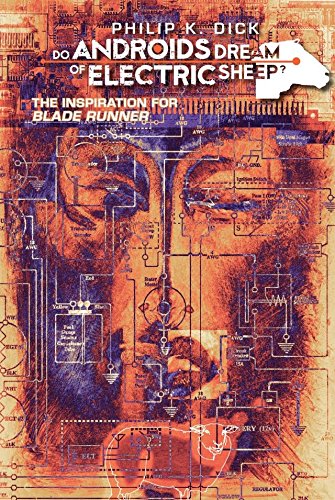


Zorba the Greek

Author: Nikos Kazantzakis and Peter Bien
Rating: 10/10
Last Read: September 2017

Zorba the Greek sat on my reading list for many years. It came highly recommended from sources I trusted, but I never quite took the bait. I went into the book knowing nothing about it, other than hearing from Rozi that it was a wonderful read and that Zorba presents a most interesting character.

I love this book and cannot recommend it enough. It is very similar in theme to Herman Hesse’s Narcissus and Goldmund, but I find the characters much more interesting and lovable.

If you need some fiction that will move your spirit, Zorba the Greek is for you. Even if you think you don’t need moving function, read the book anyway. You won’t regret it.

Look, I was passing through a small village one day. An old fogey ninety years old was planting an almond tree. ‘Hey, grandpa,’ I say to him, ‘are you really planting an almond tree?’ And he, all bent over as he was, he turns and says to me, ‘My boy, I act as though I’m never going to die.’ I answered him in my turn, ‘I act as though I’m going to die at any moment.’ Which of the two of us was right, Boss?”

My Highlights

Zorba taught me to love life and not to fear death.

“Forgive me for saying this, Boss, but you are a pen pusher. You poor creep, you had the chance of a lifetime to see a beautiful green stone, and you didn’t see it. By God, sometimes when I have no work to do, I sit down and ask myself, ‘Is there a hell or isn’t there?’ But yesterday, when I received your letter, I said to myself, ‘There sure is a hell for certain pen pushers!’

To prolong one’s parting from a beloved friend is poison. To leave with a knife stroke is better, for it allows one to return to humanity’s natural climate: solitude.

“Emotion?” he inquired, attempting to smile.
“Yes,” I calmly replied.
“Why? Didn’t we agree? Haven’t we agreed for years now? The Japanese you love, how do they say it? Fudōoshin. Equanimity; imperturbability; one’s features an unmoving, smiling mask. Whatever happens behind the mask is one’s own business.”

How was it that I, who loved life so much, had been involved with paper and ink for so many years?

“Why! Why!” he said disdainfully. “Good God, can’t anyone do something without asking why? Just like that! Because you feel like it! So take me as a cook, let’s say. I make amazing soup.”

“Are you married?”
“I’m human, am I not? To be human means to be blind. I fell face-first into the same pothole that those before me fell into. I got married, went to the dogs, down the steep slope. I became middle class, built a home, produced children. Nothing but trouble! But thank God for the santouri.”

Where was some brain to get to the bottom of things? Accurate, honorable thoughts require tranquility, old age, a mouth full of false teeth. When you’ve got dentures it’s easy to say, ‘For shame, boys, no biting!’ But when you’ve got all thirty-two of your own teeth . . . A man in his youth is a wild animal, a ferocious beast who eats other men!”

Consequently, are so many murders and dirty tricks required in this world for people to gain freedom? Because, if I sat here and ticked off for you what outrages we committed and what murders, it would make your hair stand on end. Yet what was the result? Freedom! God, instead of hurling his thunderbolt to incinerate us, gives us freedom. I don’t understand anything.”

“Look here, what I’m telling you is that this world is a mystery and every human being is a great brute—a great brute and a great god.

“Yes, that’s what freedom means,” I was thinking. “To have a passion, to amass golden pounds, and suddenly to conquer your passion and throw away everything you possess—toss it into the air. Or to free yourself from one passion by obeying another that is higher. But isn’t that just a different form of slavery: sacrificing yourself for an idea, for your nationality, your God? Or could it be that the higher one’s master stands, the rope tying one to slavery is lengthened by the same amount? In that case, if we jump and frolic in a much wider domain, we die without ever discovering its boundaries. Is that what freedom means?”

I felt that this Cretan scene resembled good prose: well-worked, reticent, liberated from superfluous wealth, strong, restrained, formulating the essence by the simplest of means, refusing to play games, not deigning to employ tricks or grandiloquence, but saying what it wants to say with virile simplicity.

“You’re not hungry!” exclaimed Zorba, slapping his thigh. “But you haven’t eaten anything since morning. The body, too, has a soul. Take pity on it; give it something to eat, Boss. Give it something to eat; it’s our donkey, you know. If you don’t feed your donkey, it will abandon you halfway to your destination.”

Look, I was passing through a small village one day. An old fogey ninety years old was planting an almond tree. ‘Hey, grandpa,’ I say to him, ‘are you really planting an almond tree?’ And he, all bent over as he was, he turns and says to me, ‘My boy, I act as though I’m never going to die.’ I answered him in my turn, ‘I act as though I’m going to die at any moment.’ Which of the two of us was right, Boss?”

Those two paths are equally uplifting and rugged; both can lead to the summit. To act as though death does not exist and to act with death in mind at every moment—perhaps both paths are the same.

One thing at a time in proper order. Right now we’ve got pilaf in front of us; let our minds be pilaf. Tomorrow we’ll have lignite in front of us, so let our minds, then, be lignite. No half measures—understand?”

The entire world—earth, water, thoughts, people—was flowing toward a distant sea, and Zorba was flowing happily with it, offering no resistance, asking no questions.

Youth is fierce and inhuman because it doesn’t understand.

Workers fear a hard boss, respect him, and do good work for him; they take control of a soft boss as though he were a horse meant for them to saddle and mount, and they start loafing. Understand?”

Angered, I dug in my heels: “You have no faith, then, in human nature?”
“Don’t get angry, Boss. I have no faith in anything. If I believed in human nature, I would believe in God as well, also in the Devil. It’s a big problem. Things get all mixed up, Boss, and cause me trouble.”

“Human beings are brutes!” he shouted angrily, banging his staff on the stones. “Great big brutes. The likes of you doesn’t know this; everything came to you too easily. But ask me. Brutes, I’m telling you. If you treat them badly, they respect and dread you; if you treat them well, they cause your ruin. Keep your distance, Boss. Don’t embolden people, don’t tell them that we are all one and the same, all have the same rights, because immediately they’ll trample your rights, snatch away your bread, and leave you to croak from hunger. Keep your distance, Boss, for your own good!”

“I believe in nothing and no one, only in Zorba. Not because Zorba is better than others, not at all—no, not at all! He, too, is a brute. But I believe in Zorba because he is the only person I have under my power, the only one I know. All the others are ghosts. I see him with my eyes, hear him with my ears, digest him with my guts. All the others, I tell you, are ghosts. When I die, everything dies; the entire Zorba-world hits rock bottom.”

“Remember what we were saying the other day, Boss? Apparently you wanted to enlighten the masses, to open their eyes. All right, go and open Uncle Anagnostis’s eyes for him. Did you notice how his wife stood there cringing and awaiting orders? Well, Your Highness, how about going now and teaching them something about women, that they have the same rights as men and that it’s truly a mean thing to eat a piece of a hog’s flesh with the hog, alive, bellowing in front of you, and that it’s hugely stupid to be tickled because God has everything while you’re starving! What will that miserable abomination, Uncle Anagnostis, profit from all this enlightening gobbledygook of yours? You’ll only cause him a mess of trouble. And what will Mrs. Anagnosti profit? Arguments will start; the hen will yearn to become the rooster, and the couple will do nothing but fight each other and suck dry each other’s blood. Let people stay placid, Boss; don’t open their eyes. If you do open them, you know what they will see: their malice and cold unsociability. So, leave their eyes closed; that way they can keep on dreaming!”

Are they going to see new forms of darkness? Let them stay where they were, with their former habits. Can’t you realize that they’ve done well enough until now? They manage—manage quite nicely. They give birth to children, have grandchildren, God makes them deaf or blind and they shout ‘Glory be to God!’ They’re at home with misfortune. So leave them where they are and shut your trap.”

I was happy; I knew that I was happy. We sense happiness with difficulty while experiencing it. Only when it has passed and we look back do we suddenly comprehend, sometimes with astonishment, how happy we have been. I, however, on this Cretan shore, was experiencing happiness while being simultaneously aware of my happiness.

“What can you expect from women? To have children by whoever happens to be available. What can you expect from men? To fall into the trap. No time to fiddle-faddle about any of that, Boss.”

“I’ve got some gray hair, Boss, and my teeth are working loose; I don’t have time to spare. You’re young. You can be patient; I can’t. As I get older I become wilder, by God. Why do people sit there and keep telling me that old age tames a person, makes him lose his zest, stretch out his neck when he sees death and say, ‘Slaughter me, please, dear agha, so that I may become a saint’? As for me, as I get older I become wilder. I don’t quit. I want to eat up the whole wide world.”

Once again I assured myself that happiness is something simple and self-restrained—a glass of wine, a chestnut, a paltry brazier, the sea’s rumble, nothing else. The only requirement for one to sense that all this is happiness is to possess a heart that is also simple and self-restrained.

Confucius says: “Many seek a happiness higher than the human being; others seek one lower. But happiness is the same height as the human being.”

“Life is trouble; death isn’t,” Zorba continued. “Do you know the definition of being alive? To undo your belt and look for trouble.”

“There are none so deaf as those who refuse to hear!”

“What’s going on, Zorba?”
“Nothing. Haven’t a single idea. I ran into a priest early this morning. Get going!”
“If there’s some danger, wouldn’t it be shameful for me to leave?”
“Yes,” Zorba answered.
“Would you leave?”
“No.”
“Well, then?”
“I have different standards for Zorba than I have for other people,” he stated with annoyance. “But since you understand that it would be shameful to leave, do not leave. Stay.”

I feel this way when I am interrupted:

He had work to do; he did not condescend to converse. “Don’t talk to me when I’m working,” he said to me one evening; “I might break in two.”
“Break in two, Zorba?” I replied. “Why?”
“There you go asking ‘Why?’ again, like a small child,” he said. “How could I explain this to you? I give myself over to my work; I stretch from toenail to scalp, extend myself to overcome the stone or coal I’m wrestling with—or the santouri. If you touch me all of a sudden, if you talk to me and make me turn, I might break in two—but how could you understand!”

The world is simple, Boss—how many times do I need to tell you that? Don’t make it complicated.

What I understood deeply on that day was this: to hasten eternal rules is a mortal sin. One’s duty is confidently to follow nature’s everlasting rhythm.

Great visionaries and poets see everything in the same way—for the first time.

They see a new world before them each morning. No, they do not see this new world; they create it.

It wasn’t my destiny that brought me here (a person does whatever he wishes) but I who brought my destiny here and who worked like a dog and still works.

Dear teacher, I hope that you receive this letter of mine, which perhaps will be my last. No one knows. I have no faith in the mystical forces that supposedly protect us humans. I believe in the blind power that strikes to the right and left without malice or purpose, and that kills whoever happens to be near it.

I believe that you will understand from my letter what an unfortunate man I am. It’s only when I am with you and I talk to you that I have some hope of being relieved of my hypochondria, because Your Excellency is just like me, only you don’t know this. You, too, have a devil inside you but you still don’t know his name and because you don’t know his name, you suffocate. Baptize him, Boss, and you’ll find relief.

It’s true that you are still young, Boss, but you’ve read the wisdom of old and have become, if you’ll excuse my saying so, a bit old yourself.

I stared at her with goggle eyes. “You’re not going? Why? Don’t you want to?”
“I want to go if you come, too. If you don’t come, I don’t want to go.”
“But why? Aren’t you a free human being?”
“No, I’m not.”
“Don’t you want to be free?”
“No.”
What can I say to you, Boss? I felt I was going to have a fit. “You don’t want to be free?” I shouted. “No, I don’t! I don’t! I don’t!” Boss, I’m writing you from Lola’s room, on her paper. Pay attention, please. I believe that a human being is a person who wants to be free. Women don’t want to be free. So are women human beings? Please answer me at once.

“Good God, people are wild beasts,” Zorba said suddenly, aroused by so much singing. “Boss, abandon your books! Aren’t you ashamed? People are wild beasts, and wild beasts do not read books.”

“Don’t say those words, Uncle Anagnostis. You scare a person to death.”
“Bah, never fear. Who listens to my words? And if a few do listen, who believes them? Consider: was there ever a more fortunate person? I had fields, vineyards, olive groves, and a two-story house. I was a respected man of property. My wife turned out fine—obedient, gave birth only to sons, never lifted her eyes to look me in the face. And my children also turned out well. I have no complaints. I made grandchildren, too. What more could I want? I’ve put down deep roots. Yet if I were to be born again, I’d tie a stone around my neck, like Pavlis, and fall into the sea. Life is really harsh; even the most fortunate life is harsh, blast it!”

“You are young,” he said to me, smiling. “Don’t listen to old folks. If everyone listened to the aged, they’d all be quickly ruined. If a widow happens to cross your path, pounce on her! Get married, have children, don’t hesitate. Troubles are made especially for fine young stalwarts.”

The voice of those cranes, echoing once again within me, was the terrible forewarning that this life is unique for each human being, that no other life exists, that we may enjoy it, enjoy it here, that it passes quickly, and that no other opportunity will be given us in the whole of eternity.

one’s mind vows to conquer its own degradation and weakness, to conquer laziness and great futile hopes in order to catch full hold of every split second that is departing forever.

“What’s your favorite dish, granddad?”
“Everything, everything, my son. It’s a great sin to say that this food is good, that food not good.”
“Why? Can’t we choose?”
“No, we really cannot.”
“Why?”
“Because there are people who are hungry.” I fell silent out of shame. My heart had never been able to achieve such nobility and compassion.

“What are ten or fifteen years?” asserted the abbess, sternly. “You fail to consider eternity?” I did not speak. I knew that eternity is each moment that passes.

Earth engenders children and feasts on them, engenders children anew, feasts on them anew—a perfect circle.

As a small child, I was in danger of falling into the well; when I grew older I was in danger of falling into the word “eternity” and also into quite a few other words: “love,” “hope,” “fatherland,” “God.” It seemed to me that I kept escaping year by year, making progress. But I was not making progress. I was merely changing one word for another and calling that liberation. Most recently, for two entire years, I had been suspended above the word “Buddha.”

Since the day I dyed my hair I’ve become another person. You may wonder, but I myself believe it, believe that I have black hair. You see, people easily forget what’s not to their advantage. And, by God, my strength increased. Lola, she, too, understood. That stitch I had in my side—here, remember it?—that’s gone, too. Unbelievable!

The great ascetic, gathering his disciples around him, cries out: “Woe to whoever does not have within him the source of happiness! Woe to whoever wishes to please others! Woe to whoever does not sense that this life and the other life are the same!”

“You laugh, Boss, and can continue if you wish. But that’s how people liberate themselves. Listen to me: they liberate themselves by being rakes, not monks.” And you: how will you get free of the Devil if you don’t become Devil and a half?”

“This is my second theory: Every idea that has real influence also has real substance. It exists. It is not a bodiless phantom wandering in the air. It has a veritable body—eyes, mouth, feet, belly. It is a man or a woman and pursues either men or women. That’s why the Gospel says, ‘The Word became flesh.’

Eternity exists even in one’s ephemeral life, but it is very difficult for us to find it on our own. Ephemeral concerns mislead us. Only very few people, the most select, manage to experience eternity in this ephemeral life. The others would be lost if God had not felt pity for them on this account and sent them religion, which enables the multitude to experience eternity.”

“Zorba, why don’t you write something that explains to us all the world’s mysteries?”
“Why don’t I? Obviously because I live all the mysteries you mention and don’t have time. Sometimes it’s people in general, sometimes women, sometimes wine, sometimes the santouri, so I don’t have a moment to grab hold of that blathering dame, the pen. So the world falls into the hands of pen pushers. Those who live the mysteries lack time and those who don’t lack time don’t live the mysteries. Got it?”

Zorba, satisfied, rubbed his hands together. “This was a good day, Boss,” he said. “You’ll ask me what ‘good’ means. It means ‘full.’

“Saved from my country, saved from priests, saved from money. No more sifting. I’m increasingly finished with sifting things out; I’m simplifying. How can I express it to you? I am freeing myself, becoming a human being.”

Well, I’ve really learned something. Now I look at people and say, ‘This one is a good person, that one a bad person. It doesn’t matter whether he’s a Bulgarian or a Greek. To me they’re both the same. The only thing I ask now is whether he’s good or bad. And the older I get, yes, by the bread I eat, it seems to me that I’ll begin not to ask that either. Bah, who cares if they’re good or bad? I pity them all. When I see someone, my guts split apart even if I pretend not to give a damn. Look here, I say: this poor devil eats, drinks, loves, fears, has his God and his Devil; he, too, will kick the bucket and be laid out dead as a doornail underground to be eaten by worms. Poor miserable devil! We’re brothers, all of us. Food for worms!

‘My country,’ you keep telling me. You ought to listen to me, not to the twaddle your papers say. As long as countries exist, the human being will remain a beast, a ferocious beast. But I escaped, glory be to God, escaped. What about you?”

He once said to me, “Half-finished jobs, conversations, sins, and virtues are what have brought the world to its present mess. Reach the end, everyone! Strike; win the fight! God detests the half-Devil more than the Devil-in-chief.”

I eat larger, more delicious portions, and they don’t all become manure. Something remains, something is saved, turning into merriment, dance, song, or a slight argument. That something is what I call resurrection.”

“Damn it, my friend, Christ is risen! Oh, if only I was as young as you! Women and wine galore, sea and work galore! Full blast no matter what! Work on full blast. Wine, sex, all on full blast. No fear of God; no fear of the Devil. That’s the meaning of youth and strength.”

I don’t know how to tell you all of this to make you understand, but in my opinion none of it has any meaning.

He jumped up; his eyes misted with tears. “I can’t stay, Boss,” he said. “I’ve got to walk, to go up and down the mountain two or three times tonight, to tire myself out, so my mind can settle down. Hey you, you widow, I feel I’m going to burst if I don’t chant a dirge for you!”

Zorba went out into the yard. He was overcome by weeping, ashamed to be seen in front of women. I remember one day he said to me, “I’m not ashamed of crying in front of men. I’m a man; we’re all the same tribe and it’s not shameful for us. But in front of women we always need to appear brave. Why? Because if we started weeping in our turn, what would happen to those poor creatures? It would be the end of everything.”

turned to me again. “I want you to tell me where we come from and where we are going. You’ve been wasting away for so many years with your black magic and must have squeezed the sap out of ten or eleven thousand pounds of paper. So, what juice did you find?” Zorba’s voice was so agonized that his breath broke.

“I look down at death continually,” he said at last. “I look at it and am not afraid. Never, however, do I say, ‘I like it.’ No, I do not like it, not at all. I am free, am I not?

“Boss,” he said, as though wishing to justify himself, “every sorrow breaks my heart in two. But that organ of a thousand wounds heals immediately and the wound does not show. I am full of healed wounds; that is why I bear up.”

“New road, new plans. I’ve stopped remembering bygones, stopped seeking future prospects. What matters to me is whatever is happening right now, at this very moment. I ask myself, ‘What are you doing now, Zorba?’ ‘I’m sleeping.’ ‘All right, sleep well!’ ‘What are you doing now, Zorba?’ ‘I’m working.’ ‘All right, work well!’ ‘What are you doing now, Zorba?’ ‘I’m embracing a woman.’ ‘All right, embrace her well!’ Forget all the rest. Nothing else exists in the world except you and that woman. Shake a leg!”

“I believe, Zorba, but can be wrong, that human beings are of three kinds: those whose purpose, as they say, is to live their own lives—to eat, drink, kiss, grow rich, become famous; next are those whose purpose is to live not their own lives but the life of humanity as a whole, since they feel that all human beings are one and the same in their struggle to enlighten, to love, and benefit others; finally there are those whose purpose is to live the life of the entire universe, since all people, animals, vegetables, and stars are one and the same, one essence engaged in the same struggle—namely, to transubstantiate matter into spirit.”

“That’s difficult, Boss, very difficult. What’s needed in this instance is folly. Do you hear? Folly! You need to go the whole hog. But you’ve got intelligence, and that will eat you up. Intelligence is a grocer. It keeps accounts, writes ‘I gave this amount, got that amount, this amount the loss, that amount the gain.’ Intelligence is a good manager, you know, never putting everything on the line, always holding something back. It doesn’t break the string, oh no! That louse holds it tightly in its hands; if the string slips away, intelligence is finished, done for, the bum! But tell me, for as long as it fails to break the string, what solid basis does life have? Chamomile, diluted chamomile. What’s needed to turn the world upside down is rum!”

“You understand, and that’s what will eat you up! If you did not understand, you would be happy. What do you lack? You’re young, you have money, intelligence, you’re healthy, a fine person—you lack nothing. Nothing, blast it! Just one thing, as we said: folly. And when that’s missing, Boss—”

Little did Yorgis know that he would eventually become the protagonist of one of the greatest novels of world literature, and his character would become an ecumenical figure that set a new literary archetype: the Lover of Life, the authentic, primordial, all-embracing Dancer, a man renowned for his robust exuberance, his vigor and vitality.

With this freshness of heart, he had “a bravery to mock his very own soul, as though he possessed in him a power superior than the soul.”

But Kazantzakis takes this idea further; he proposes that even if Sisyphus succeeds in pushing the rock all the way to the top of the hill, he would then seek a higher hill, start a new ascent, for the ascent itself is the enlightenment. It is the pushing, the sweat, the struggle that transubstantiates flesh into spirit, darkness into light, mud, blood, desires, and visions into enlightenment.

Buy the Book

If you are interested in purchasing this book, you can support the website by using our Amazon affiliate link:

 

Zorba the Greek

By Nikos Kazantzakis


Gone Girl

Author: Gillian Flynn
Rating: 8/10
Last Read: January 2015

I read Gone Girl after watching the movie, which was probably a mistake. The book was very similar to the movie, so the plot twists were already spoiled. However, that’s not to say the book was ruined – the book was still a very enjoyable read. I certainly felt frustrated by the situation of the two main characters, so the book gets bonus points for evoking real feelings from me.

Watch out for those crazy relationships, folks! And perhaps don’t read this one right before bed…

My Highlights

There’s something disturbing about recalling a warm memory and feeling utterly cold.

But there’s no app for a bourbon buzz on a warm day in a cool, dark bar. The world will always want a drink.

Give me a man with a little fight in him, a man who calls me on my bullshit. (But who also kind of likes my bullshit.)

It’s a very difficult era in which to be a person, just a real, actual person, instead of a collection of personality traits selected from an endless Automat of characters.

Shawna said. “I mentioned it to Detective Boney, but I get the feeling she doesn’t like me very much.”
“Why do you say that?”
I already knew what she was going to say, the mantra of all attractive women. “Women don’t like me all that much.”

I was embarrassed, I snarled at her, she snapped at me, and … the usual. I should add, in Amy’s defense, that she’d asked me twice if I wanted to talk, if I was sure I wanted to do this. I sometimes leave out details like that. It’s more convenient for me. In truth, I wanted her to read my mind so I didn’t have to stoop to the womanly art of articulation. I was sometimes as guilty of playing the figure-me-out game as Amy was. I’ve left that bit of information out too.

My mother had always told her kids: If you’re about to do something, and you want to know if it’s a bad idea, imagine seeing it printed in the paper for all the world to see.

Love makes you want to be a better man—right, right. But maybe love, real love, also gives you permission to just be the man you are.

I could feel her girl-brain buzzing, turning Amy’s disappearance into a frothy, scandalous romance, ignoring any reality that didn’t suit the narrative.

“And, I mean, it’s fun to be hero for a while, be the white knight, but it doesn’t really work for long. I couldn’t make her be happy. She didn’t want to be happy. So I thought if she started taking charge of a few practical things—”

I’d always heard the phrase: At forty, a man wears the face he’s earned. Bolt’s fortyish face was well tended, almost wrinkle-free, pleasantly plump with ego. Here was a confident man, the best in his field, a man who liked his life.

That whore, he picked that little whore over me. He killed my soul, which should be a crime. Actually, it is a crime. According to me, at least.

He was inspecting the neighborhood, eyeing the cars in the driveways, assessing the houses. He reminded me of the Elliotts, in a way—examining and analyzing at all times. A brain with no off switch.

If it’s not good TV, believe me, it’s not for a jury. We’d go with more of an O.J. thing. A simple story line: The cops are incompetent and out to get you, it’s all circumstantial, if the glove doesn’t fit, blah blah, blah.”

“Blah blah blah, that gives me a lot of confidence,” I said.
Tanner flashed a smile. “Juries love me, Nick. I’m one of them.”
“You’re the opposite of one of them, Tanner.”
“Reverse that: They’d like to think they’re one of me.”

This one always makes me chuckle:

We just need to sustain it. Nick doesn’t have it down perfect. This morning he was stroking my hair and asking what else he could do for me, and I said: “My gosh, Nick, why are you so wonderful to me?”
He was supposed to say: You deserve it. I love you. But he said, “Because I feel sorry for you.”
“Why?”
“Because every morning you have to wake up and be you.”

Buy the Book

If you are interested in purchasing this book, you can support the website by using our Amazon affiliate link:


Gone Girl

By Gillian Flynn