The True Believer: Thoughts on the Nature of Mass Movements

Author: Eric Hoffer
Rating: 10/10
Last Read: August 2015

Quick Summary:  Wow.  This 1951 book on the psychology of mass movements is just stunning and terrifying.  Even reviewing the notes brings me a sense of awe and a tinge of fear as you make associations with the world we live in today.

Hoffer explains what kind of people and attitudes give rise to mass movements and analyses the life cycle from start to end.  His gaze shifts from the factors that motivate individuals to join mass movements to the societal forces that support and resist this force of change.  He also compares mass movements to each other, including religious, political, or radical movements that we are familiar with throughout our history.

This is an excellent book that I will revisit again and again.  

I recommend reading this book along with Why Don’t We Learn From History?

J. B. S. Haldane counts fanaticism among the only four really important inventions made between 3000 B.C. and 1400 A.D. It was a Judaic-Christian invention. And it is strange to think that in receiving this malady of the soul the world also received a miraculous instrument for raising societies and nations from the dead—an instrument of resurrection.

My Highlights

All mass movements generate in their adherents a readiness to die and a proclivity for united action; all of them, irrespective of the doctrine they preach and the program they project, breed fanaticism, enthusiasm, fervent hope, hatred and intolerance; all of them are capable of releasing a powerful flow of activity in certain departments of life; all of them demand blind faith and singlehearted allegiance. –loc 77

Though there are obvious differences between the fanatical Christian, the fanatical Mohammedan, the fanatical nationalist, the fanatical Communist and the fanatical Nazi, it is yet true that the fanaticism which animates them may be viewed and treated as one. –loc 82

Starting out from the fact that the frustrated predominate among the early adherents of all mass movements and that they usually join of their own accord, it is assumed: 1) that frustration of itself, without any proselytizing prompting from the outside, can generate most of the peculiar characteristics of the true believer; 2) that an effective technique of conversion consists basically in the inculcation and fixation of proclivities and responses indigenous to the frustrated mind. –loc 91

Montaigne: “All I say is by way of discourse, and nothing by way of advice. I should not speak so boldly if it were my due to be believed.” –loc 109

Some kind of widespread enthusiasm or excitement is apparently needed for the realization of vast and rapid change, and it does not seem to matter whether the exhilaration is derived from an expectation of untold riches or is generated by an active mass movement. –loc 117

Success and failure are unavoidably related in our minds with the state of things around us. –loc 160

Hence it is that people with a sense of fulfillment think it a good world and would like to conserve it as it is, while the frustrated favor radical change. –loc 161

that the successful, too, however much they pride themselves on their foresight, fortitude, thrift and other “sterling qualities,” are at bottom convinced that their success is the result of a fortuitous combination of circumstances. The self-confidence of even the consistently successful is never absolute. –loc 166

The powerful can be as timid as the weak. What seems to count more than possession of instruments of power is faith in the future. –loc 194

Where power is not joined with faith in the future, it is used mainly to ward off the new and preserve the status quo. On the other hand, extravagant hope, even when not backed by actual power, is likely to generate a most reckless daring. For the hopeful can draw strength from the most ridiculous sources of power—a slogan, a word, a button. –loc 195

Those who would transform a nation or the world cannot do so by breeding and captaining discontent or by demonstrating the reasonableness and desirability of the intended changes or by coercing people into a new way of life. They must know how to kindle and fan an extravagant hope. –loc 200

Hence men of outstanding achievement and those who live full, happy lives usually set their faces against drastic innovation. The conservatism of invalids and people past middle age stems, too, from fear of the future. –loc 208

When hopes and dreams are loose in the streets, it is well for the timid to lock doors, shutter windows and lie low until the wrath has passed. For there is often a monstrous incongruity between the hopes, however noble and tender, and the action which follows them. It is as if ivied maidens and garlanded youths were to herald the four horsemen of the apocalypse. –loc 224

For men to plunge headlong into an undertaking of vast change, they must be intensely discontented yet not destitute, and they must have the feeling that by the possession of some potent doctrine, infallible leader or some new technique they have access to a source of irresistible power. They must also have an extravagant conception of the prospects and potentialities of the future. Finally, they must be wholly ignorant of the difficulties involved in their vast undertaking. Experience is a handicap. –loc 227

When a mass movement begins to attract people who are interested in their individual careers, it is a sign that it has passed its vigorous stage; that it is no longer engaged in molding a new world but in possessing and preserving the present. –loc 253

Faith in a holy cause is to a considerable extent a substitute for the lost faith in ourselves. –loc 261

The less justified a man is in claiming excellence for his own self, the more ready is he to claim all excellence for his nation, his religion, his race or his holy cause. –loc 262

A man is likely to mind his own business when it is worth minding. When it is not, he takes his mind off his own meaningless affairs by minding other people’s business. –loc 264

The burning conviction that we have a holy duty toward others is often a way of attaching our drowning selves to a passing raft. What looks like giving a hand is often a holding on for dear life. Take away our holy duties and you leave our lives puny and meaningless. There is no doubt that in exchanging a self-centered for a selfless life we gain enormously in self-esteem. The vanity of the selfless, even those who practice utmost humility, is boundless. –loc 269

In a modern society people can live without hope only when kept dazed and out of breath by incessant hustling. –loc 277

Yet to the frustrated the present is irremediably spoiled. Comforts and pleasures cannot make it whole. No real content or comfort can ever arise in their minds but from hope. –loc 281

Every mass movement is in a sense a migration—a movement toward a promised land; and, when feasible and expedient, an actual migration takes place. –loc 351

Migration, in the mass, strengthens the spirit and unity of a movement; and whether in the form of foreign conquest, crusade, pilgrimage or settlement of new land it is practiced by most active mass movements. –loc 353

The game of history is usually played by the best and the worst over the heads of the majority in the middle. –loc 365

The reason that the inferior elements of a nation can exert a marked influence on its course is that they are wholly without reverence toward the present. They see their lives and the present as spoiled beyond remedy and they are ready to waste and wreck both: hence their recklessness and their will to chaos and anarchy. –loc 366

Though the disaffected are found in all walks of life, they are most frequent in the following categories: (a) the poor, (b) misfits, (c) outcasts, (d) minorities, (e) adolescent youth, (f) the ambitious (whether facing insurmountable obstacles or unlimited opportunities), (g) those in the grip of some vice or obsession, (h) the impotent (in body or mind), (i) the inordinately selfish, (j) the bored, (k) the sinners. –loc 376

The poor on the borderline of starvation live purposeful lives. To be engaged in a desperate struggle for food and shelter is to be wholly free from a sense of futility. The goals are concrete and immediate. –loc 404

Where people toil from sunrise to sunset for a bare living, they nurse no grievances and dream no dreams. –loc 412

One of the reasons for the unrebelliousness of the masses in China is the inordinate effort required there to scrape together the means of the scantiest subsistence. –loc 412

Discontent is likely to be highest when misery is bearable; when conditions have so improved that an ideal state seems almost within reach. –loc 417

A grievance is most poignant when almost redressed. –loc 418

It is not actual suffering but the taste of better things which excites people to revolt. –loc 424

The intensity of discontent seems to be in inverse proportion to the distance from the object fervently desired. –loc 429

Our frustration is greater when we have much and want more than when we have nothing and want some. We are less dissatisfied when we lack many things than when we seem to lack but one thing. –loc 433

We dare more when striving for superfluities than for necessities. Often when we renounce superfluities we end up lacking in necessities. –loc 435

Every established mass movement has its distant hope, its brand of dope to dull the impatience of the masses and reconcile them with their lot in life. Stalinism is as much an opium of the people as are the established religions. –loc 445

Where freedom is real, equality is the passion of the masses. Where equality is real, freedom is the passion of a small minority. –loc 487

Equality without freedom creates a more stable social pattern than freedom without equality. –loc 489

Unlimited opportunities can be as potent a cause of frustration as a paucity or lack of opportunities. –loc 700

The attitude is: “All that I am doing or possibly can do is chicken feed compared with what is left undone.” Such is the frustration which broods over gold camps and haunts taut minds in boom times. –loc 701

Patriotism, racial solidarity, and even the preaching of revolution find a more ready response among people who see limitless opportunities spread out before them than among those who move within the fixed limits of a familiar, orderly and predictable pattern of existence. –loc 704

When people are bored, it is primarily with their own selves that they are bored. –loc 729

The consciousness of a barren, meaningless existence is the main fountainhead of boredom. –loc 730

The differentiated individual is free of boredom only when he is engaged either in creative work or some absorbing occupation or when he is wholly engrossed in the struggle for existence. –loc 731

With few exceptions, any group or organization which tries, for one reason or another, to create and maintain compact unity and a constant readiness for self-sacrifice usually manifests the peculiarities—both noble and base—of a mass movement. –loc 778

“To illustrate a principle,” says Bagehot, “you must exaggerate much and you must omit much.” –loc 805

The fully assimilated individual does not see himself and others as human beings. –loc 826

Dying and killing seem easy when they are part of a ritual, ceremonial, dramatic performance or game. –loc 884

There is need for some kind of make-believe in order to face death unflinchingly. To our real, naked selves there is not a thing on earth or in heaven worth dying for. –loc 884

It is only when we see ourselves as actors in a staged (and therefore unreal) performance that death loses its frightfulness and finality and becomes an act of make-believe and a theatrical gesture. –loc 886

It is one of the main tasks of a real leader to mask the grim reality of dying and killing by evoking in his followers the illusion that they are participating in a grandiose spectacle, a solemn or light-hearted dramatic performance. –loc 887

The indispensability of play-acting in the grim business of dying and killing is particularly evident in the case of armies. Their uniforms, flags, emblems, parades, music, and elaborate etiquette and ritual are designed to separate the soldier from his flesh-and-blood self and mask the overwhelming reality of life and death. –loc 898

Glory is largely a theatrical concept. There is no striving for glory without a vivid awareness of an audience—the knowledge that our mighty deeds will come to the ears of our contemporaries or “of those who are to be.” We are ready to sacrifice our true, transitory self for the imaginary eternal self we are building up, by our heroic deeds, in the opinion and imagination of others. –loc 903

To lose one’s life is but to lose the present; and, clearly, to lose a defiled, worthless present is not to lose much. –loc 921

When today is all there is, we grab all we can and hold on. We are afloat in an ocean of nothingness and we hang on to any miserable piece of wreckage as if it were the tree of life. On the other hand, when everything is ahead and yet to come, we find it easy to share all we have and to forego advantages within our grasp. –loc 944

Common suffering by itself, when not joined with hope, does not unite nor does it evoke mutual generosity. –loc 948

We cling to what we call our common sense, our practical point of view. Actually, these are but names for an all-absorbing familiarity with things as they are. The tangibility of a pleasant and secure existence is such that it makes other realities, however imminent, seem vague and visionary. Thus it happens that when the times become unhinged, it is the practical people who are caught unaware and are made to look like visionaries who cling to things that do not exist. –loc 972

“for a living dog is better than a dead lion. For the living know that they shall die: but the dead know not any thing … neither have they any more a portion for ever in any thing that is done under the sun.” –loc 992

Craving, not having, is the mother of a reckless giving of oneself. –loc 1030

All active mass movements strive, therefore, to interpose a fact-proof screen between the faithful and the realities of the world. They do this by claiming that the ultimate and absolute truth is already embodied in their doctrine and that there is no truth nor certitude outside –loc 1063

It is the true believer’s ability to “shut his eyes and stop his ears” to facts that do not deserve to be either seen or heard which is the source of his unequaled fortitude and constancy. He cannot be frightened by danger nor disheartened by obstacles nor baffled by contradictions because he denies their existence. Strength of faith, as Bergson pointed out, manifests itself not in moving mountains but in not seeing mountains to move. And it is the certitude of his infallible doctrine that renders the true believer impervious to the uncertainties, surprises and the unpleasant realities of the world around him. –loc 1072

The devout are always urged to seek the absolute truth with their hearts and not their minds. “It is the heart which is conscious of God, not the reason.” –loc 1090

Being an instrument of the present, an army deals mainly with the possible. Its leaders do not rely on miracles. Even when animated by fervent faith, they are open to compromise. They reckon with the possibility of defeat and know how to surrender. On the other hand, the leader of a mass movement has an overwhelming contempt for the present—for all its stubborn facts and perplexities, even those of geography and the weather. He relies on miracles. His hatred of the present (his nihilism) comes to the fore when the situation becomes desperate. He destroys his country and his people rather than surrender. –loc 1205

Sarpedon spoke to Glaucus as they stormed the Grecian wall: “O my friend, if we, leaving this war, could escape from age and death, I should not here be fighting in the van; but now, since many are the modes of death impending over us which no man can hope to shun, let us press on and give renown to other men, or win it for ourselves.” –loc 1213

The face of the mass is as “the face of the deep” out of which, like God on the day of creation, he will bring forth a new world. –loc 1224

Heine suggests that what Christian love cannot do is effected by a common hatred. –loc 1230

F. A. Voigt tells of a Japanese mission that arrived in Berlin in 1932 to study the National Socialist movement. Voigt asked a member of the mission what he thought of the movement. He replied: “It is magnificent. I wish we could have something like it in Japan, only we can’t, because we haven’t got any Jews.” –loc 1235

We do not usually look for allies when we love. Indeed, we often look on those who love with us as rivals and trespassers. But we always look for allies when we hate. –loc 1267

There is a guilty conscience behind every brazen word and act and behind every manifestation of self-righteousness. –loc 1292

It is of interest that the backward South shows more xenophobia than the rest of the country. Should Americans begin to hate foreigners wholeheartedly, it will be an indication that they have lost confidence in their own way of life. –loc 1306

It seems that when we are oppressed by the knowledge of our worthlessness we do not see ourselves as lower than some and higher than others, but as lower than the lowest of mankind. We hate then the whole world, and we would pour our wrath upon the whole of creation. –loc 1325

The act of self-denial seems to confer on us the right to be harsh and merciless toward others. The impression somehow prevails that the true believer, particularly the religious individual, is a humble person. The truth is that the surrendering and humbling of the self breed pride and arrogance. The true believer is apt to see himself as one of the chosen, the salt of the earth, the light of the world, a prince disguised in meekness, who is destined to inherit this earth and the kingdom of heaven, too.18 He who is not of his faith is evil; he who will not listen shall perish. –loc 1349

The deindividualization which is a prerequisite for thorough integration and selfless dedication is also, to a considerable extent, a process of dehumanization. The torture chamber is a corporate institution. –loc 1369

Imitation is often a shortcut to a solution. We copy when we lack the inclination, the ability or the time to work out an independent solution. People in a hurry will imitate more readily than people at leisure. Hustling thus tends to produce uniformity. And in the deliberate fusing of individuals into a compact group, incessant action will play a considerable role.22 –loc 1399

Proselytizing is more a passionate search for something not yet found than a desire to bestow upon the world something we already have. It is a search for a final and irrefutable demonstration that our absolute truth is indeed the one and only truth. –loc 1512

There is a period of waiting in the wings—often a very long period—for all the great leaders whose entrance on the scene seems to us a most crucial point in the course of a mass movement. Accidents and the activities of other men have to set the stage for them before they can enter and start their performance. “The commanding man in a momentous day seems only to be the last accident in a series.” –loc 1539

People whose lives are barren and insecure seem to show a greater willingness to obey than people who are self-sufficient and self-confident. –loc 1616

To the frustrated, freedom from responsibility is more attractive than freedom from restraint. They are eager to barter their independence for relief from the burdens of willing, deciding and being responsible for inevitable failure. –loc 1618

Action is a unifier. There is less individual distinctness in the genuine man of action—the builder, soldier, sportsman and even the scientist—than in the thinker or in one whose creativeness flows from communion with the self. –loc 1641

The true believer is eternally incomplete, eternally insecure. –loc 1748

What de Rémusat said of Thiers is perhaps true of most men of words: “he has much more vanity than ambition; and he prefers consideration to obedience, and the appearance of power to power itself. Consult him constantly, and then do just as you please. He will take more notice of your deference to him than of your actions.” –loc 1799

Luther, who, when first defying the established church, spoke feelingly of “the poor, simple, common folk,”7 proclaimed later, when allied with the German princelings, that “God would prefer to suffer the government to exist no matter how evil, rather than to allow the rabble to riot, no matter how justified they are in doing so.”8 A –loc 1817

Jesus was not a Christian, nor was Marx a Marxist. –loc 1909

However, the freedom the masses crave is not freedom of self-expression and self-realization, but freedom from the intolerable burden of an autonomous existence. They want freedom from “the fearful burden of free choice,”19 freedom from the arduous responsibility of realizing their ineffectual selves and shouldering the blame for the blemished product. –loc 1930

They believe in the possibility of individual happiness and the validity of individual opinion and initiative. But once a movement gets rolling, power falls into the hands of those who have neither faith in, nor respect for, the individual. And the reason they prevail is not so much that their disregard of the individual gives them a capacity for ruthlessness, but that their attitude is in full accord with the ruling passion of the masses. –loc 1940

The most significant division between men of words is between those who can find fulfillment in creative work and those who cannot. –loc 1960

Said Oliver Cromwell: “A man never goes so far as when he does not know whither he is going.” –loc 2138

But in a traditionally free country the individual who pits himself against coercion does not feel an isolated human atom but one of a mighty race—his rebellious ancestors. –loc 2180

J. B. S. Haldane counts fanaticism among the only four really important inventions made between 3000 B.C. and 1400 A.D. It was a Judaic-Christian invention. And it is strange to think that in receiving this malady of the soul the world also received a miraculous instrument for raising societies and nations from the dead—an instrument of resurrection. –loc 2284

First Grade

Until then, every forest
had wolves in it, we thought
it would be fun to wear snowshoes
all the time, and we could talk to water.

So who is this woman with the gray
breath calling out names and pointing
to the little desks we will occupy
for the rest of our lives?

Ron Koertge

Walking

Author: Henry David Thoreau
Rating: 8/10
Last Read: August 2016

Quick Summary:  Thoreau’s essay on the joys and virtues of the walking man is an enjoyable read if you like to walk (as I do).   Your head will become inflated and you will feel better than all those around you who are in their cars or at their homes sitting idly.  The real crown jewel of the essay, however, is his departure into discussion of the wild.   It is true, still in this day, that the wild calls to us. 

I did not expect to find a timeless piece like this one calling through the ages. Take Thoreau’s advice.  Go outside.  Turn off your phone.  Be in the world with body and spirit.  Find something wild.

Nowadays almost all man’s improvements, so called, as the building of houses and the cutting down of the forest and of all large trees, simply deform the landscape, and make it more and more tame and cheap.

My Highlights

For this is the secret of successful sauntering. He who sits still in a house all the time may be the greatest vagrant of all; but the saunterer, in the good sense, is no more vagrant than the meandering river, which is all the while sedulously seeking the shortest course to the sea. –loc 11

It is true, we are but faint-hearted crusaders, even the walkers, nowadays, who undertake no persevering, never-ending enterprises. Our expeditions are but tours, and come round again at evening to the old hearth-side from which we set out. Half the walk is but retracing our steps. –loc 15

No wealth can buy the requisite leisure, freedom, and independence which are the capital in this profession. –loc 25

Ambulator nascitur, non fit. –loc 27

I think that I cannot preserve my health and spirits, unless I spend four hours a day at least—and it is commonly more than that—sauntering through the woods and over the hills and fields, absolutely free from all worldly engagements. –loc 33

When sometimes I am reminded that the mechanics and shopkeepers stay in their shops not only all the forenoon, but all the afternoon too, sitting with crossed legs, so many of them—as if the legs were made to sit upon, and not to stand or walk upon—I think that they deserve some credit for not having all committed suicide long ago. –loc 35

When a traveler asked Wordsworth’s servant to show him her master’s study, she answered, “Here is his library, but his study is out of doors.” –loc 57

Living much out of doors, in the sun and wind, will no doubt produce a certain roughness of character—will cause a thicker cuticle to grow over some of the finer qualities of our nature, as on the face and hands, or as severe manual labor robs the hands of some of their delicacy of touch. –loc 58

I am alarmed when it happens that I have walked a mile into the woods bodily, without getting there in spirit. –loc 70

In my afternoon walk I would fain forget all my morning occupations and my obligations to Society. But it sometimes happens that I cannot easily shake off the village. The thought of some work will run in my head and I am not where my body is—I am out of my senses. In my walks I would fain return to my senses. What business have I in the woods, if I am thinking of something out of the woods? –loc 71

Nowadays almost all man’s improvements, so called, as the building of houses and the cutting down of the forest and of all large trees, simply deform the landscape, and make it more and more tame and cheap. –loc 79

To enjoy a thing exclusively is commonly to exclude yourself from the true enjoyment of it. Let us improve our opportunities, then, before the evil days come. –loc 129

Every sunset which I witness inspires me with the desire to go to a West as distant and as fair as that into which the sun goes down. –loc 162

Every tree sends its fibers forth in search of the Wild. The cities import it at any price. Men plow and sail for it. From the forest and wilderness come the tonics and barks which brace mankind. Our ancestors were savages. The story of Romulus and Remus being suckled by a wolf is not a meaningless fable. The founders of every state which has risen to eminence have drawn their nourishment and vigor from a similar wild source. –loc 220

Life consists with wildness. The most alive is the wildest. Not yet subdued to man, its presence refreshes him. –loc 242

In literature it is only the wild that attracts us. Dullness is but another name for tameness. It is the uncivilized free and wild thinking in Hamlet and the Iliad, in all the scriptures and mythologies, not learned in the schools, that delights us. –loc 290

In short, all good things are wild and free. There is something in a strain of music, whether produced by an instrument or by the human voice—take the sound of a bugle in a summer night, for instance—which by its wildness, to speak without satire, reminds me of the cries emitted by wild beasts in their native forests. It is so much of their wildness as I can understand. Give me for my friends and neighbors wild men, not tame ones. The wildness of the savage is but a faint symbol of the awful ferity with which good men and lovers meet. –loc 325

By long years of patient industry and reading of the newspapers—for what are the libraries of science but files of newspapers—a man accumulates a myriad facts, lays them up in his memory, and then when in some spring of his life he saunters abroad into the Great Fields of thought, he, as it were, goes to grass like a horse and leaves all his harness behind in the stable. –loc 382

My desire for knowledge is intermittent, but my desire to bathe my head in atmospheres unknown to my feet is perennial and constant. The highest that we can attain to is not Knowledge, but Sympathy with Intelligence. –loc 390

There is something servile in the habit of seeking after a law which we may obey. We may study the laws of matter at and for our convenience, but a successful life knows no law. –loc 395

It is an unfortunate discovery certainly, that of a law which binds us where we did not know before that we were bound. –loc 396

Above all, we cannot afford not to live in the present. He is blessed over all mortals who loses no moment of the passing life in remembering the past. –loc 452

The Lion’s Gate: On the Front Lines of the Six Day War

Author: Steven Pressfield
Rating: 8/10
Last Read: September 2016

Quick Summary:  I would classify this book as a “written oral history”.  Pressfield interviewed many participants of Israel’s Six Day War, putting together a compelling picture of the state of Israel and the mindset of its inhabitants and warriors during this challenging time.  From the interweaving of the various narratives, one gets a sense of the fog of war, the pain of combat, and the heartbreak of losing friends.  And even with all the talk of war, I learned much about the early history of Israel, a region I have not spent much time focusing on.  

My Highlights

Memory, we know, is notoriously unreliable. Memory can be self-serving, self-glorifying, self-exonerating. Memory fades. People forget. Memory contains gaps and blank spots. –loc 73

We are being bullied, my father said, and the only way to handle a bully is to punch him in the face. –loc 291

Second: Whatever you do, do it to your utmost. The way you tie your shoes. The way you navigate at night. Nothing is academic. –loc 335

If you had screwed up, you admitted it and took your medicine. Ego meant nothing. Improvement was everything. –loc 345

Voice is everything when you command. As a company commander in a tank battalion, you have fourteen four-man crews listening to you through their headsets. Many times in combat, when I have been frightened or unsure, I have deliberately paused to be certain that I had my voice under control. You don’t want your men to hear that chicken voice. –loc 633

I could see the sergeant’s eyes settle on the line on the enlistment form that said, “Religion.” On it, I had written, “Jewish.” All of a sudden the sergeant looked up. He hadn’t looked up for any of these Catholics, but he looked up for me. He eyed me up and down. “The Marine Corps is a tough outfit,” he said. “Are you sure you can make it?” I was so furious I wanted to tear this sergeant’s throat out. I knew the only reason he would ask that question was because my enlistment form said I was a Jew. But I also knew that I couldn’t get mad or shoot my mouth off or he might not let me join. So I stared him in the eye, as directly and as hard as I could. “If you made it, I can make it.” That was it. He stamped my form and I moved on. –loc 741

“Complexity at the top, simplicity at the bottom,” Arik declares, defining in a nutshell his philosophy of command. “A commander,” Sharon says, “may keep complicated schemes of battle in his head and among his staff, but when the orders reach the operational units, they must be so simple that a child can understand them. ‘Go here, do this.’ Nothing more complex.” –loc 1016

came to despise the idea of parade ground order. Wingate felt the same. “Keep your rifle clean and kill your man before he kills you.” That was all he wanted of discipline. –loc 1235

The principles Wingate espoused—fighting at night, the employment of stealth and surprise, taking the battle to the enemy, the use of unconventional tactics, timing, and weaponry—became the core precepts of the Haganah and later the IDF. –loc 1246

It is a terrible thing to shoot a man and see him die. A pilot does most of his killing at altitude; he can report later in the briefing room that he destroyed this many tanks or that many trucks. But down at eye level it’s another story. I did not feel so sure, anymore, about my resolve to slay the enemy without conscience. No one who has killed face-to-face will ever sleep the same again. –loc 1364

It is an inviolable principle in the Israel Air Force that one must speak the truth in a debriefing session, even if—particularly if—it reflects negatively on himself. –loc 1383

Dayan reserved time to think, and he did his thinking alone. When he had arrived at a plan or an idea, the door to his office would open. “What do you think of this?” –loc 1544

Once he asked my opinion and I hesitated. “The moment you think twice before answering,” he said, “our work together is over.” He liked it when people contested him. He listened. “Only a donkey,” he would say, “never changes his mind.” –loc 1546

Why do we train? To perfect our flying skills, yes. But far more important, we practice to elevate our threshold of emotional detachment, to inculcate that state of preparedness and equilibrium that enables a pilot to function effectively under conditions of peril, urgency, and confusion. –loc 2080

pull the crew out of a burning tank, a man must go in face-first. He reaches in with his hands and arms. The tank crewmen are screaming in pain and out of their minds with fear. The interior burns like a furnace. High-explosive shells are cooking, half a meter from their face. When you witness this, when you do it yourself, you cannot believe it. In war soldiers perform feats of valor of which they never, before they do them, believed themselves capable. –loc 3265

Improvisation is not a wild scramble at the last minute. You are not pulling plans out of thin air. Improvisation is the payoff of scrupulous preparation and drill. –loc 3302

Why am I still above the earth when so many friends, who are better men than I, have been taken beneath it? Why them? Why not me? I am not religious. I don’t think the way a religious person thinks. But now, driving across these ten kilometers of hell, I feel the presence of the Angel of Death. “You,” he says to one man. “I shall take you now.” To another: “You wait. I will come for you later.” It is a terrible feeling. –loc 3512

In the academies of war, students are instructed in the tactical level, the operational level, and the strategic level. Beyond these, ministers manipulate the political level, the diplomatic level, the international level. –loc 3849

In combat there is no time for grief. A commander must act. He must project decisiveness and certainty. No matter how grim the situation, he must act as if it is under control. If your soldiers read fear on your face or discern irresolution in your posture, you have failed them. –loc 4097

Time always works against the defender. The enemy is waiting to be killed and he knows it. –loc 4114

I have learned one thing from this, my first experience of war: Leaders are everything. Individually, we soldiers may be brave. Collectively, we may make up a skilled, well-trained unit. But without a strong hand to guide us, we balk and freeze. We become confused and surrender initiative. –loc 4198

I believe in being stupid. You have to be stupid in war because if you were smart you would never do what you need to do to survive. That’s why being young is so important in soldiers. When you’re young, you don’t know the horrible things that can happen to the human body and the human mind. –loc 4226

In war, the wish to believe the best can be overwhelming. –loc 4851

you. Why? Because you cannot let them. I ask myself sometimes, “Ori, are you afraid?” The answer is, “I have no time to be afraid.” The commander bears responsibility not just for the completion of the mission, but also for the lives of his men. A military unit, particularly a reconnaissance company, is like a street gang. You are closer than brothers. Each life is precious to you. For every man under my responsibility, I see in my mind’s eye his mother and father, his girlfriend or wife, his children, even if he has none yet—his children-to-be, and their children as well. All will suffer if he dies. Such a weight makes concerns such as personal fear, loss, even one’s own death seem trivial. War –loc 5004

My position denies me the luxury of doubt or hesitation or fear. –loc 5011

If there is a universal disease of the modern era, I believe it is the malady of exile. This affliction is experienced on the individual level as well as on the national and the racial—the agony of feeling that one is a part of nothing, that he belongs nowhere and to no one. –loc 5445

The primal Jewish issue is justice. Judaism is a religion of the law, and the seminal concept of the law is that the minority must be protected. –loc 5584

In the Jewish faith, you study. You wrestle with issues. You are a scholar. You deliberate, you dispute. A Jew asks over and over, “What is fair? What is just? Who is a good man, and why?” –loc 5585

Who among us is not in exile? Is not exile the spiritual condition of the human race? Isn’t that what we share, when all differences of language, tribe, and history have been stripped away: the sense that we are estranged at our core from—what? From God? From our higher nature? From who we might be or become, from who we truly are? What, then, does the exile desire beyond all other boons? Home. To come home. To set his feet upon those stones that are his, which belong to him and to which he belongs. –loc 5616

English soldiers captured this first Dov Gruner and put him on trial for participating in an assault on the police station at Ramat Gan. He was sentenced to death by hanging. At the final hour he was offered a reprieve, if he would admit his guilt. Dov Gruner would not. He refused to defend himself, standing upon the principle that to do so would be to acknowledge the legitimacy of the British court. –loc 5627

Excuses

once again
I hear of somebody who is going to
settle down and
do their work,
painting or writing or whatever,
as soon as they get a better light
installed,
or as soon as they move to a new
city,
or as soon as they come back from the trip they
have been planning,
or as soon as…
it’s simple; they just don’t want
to do it,
or they can’t do it,
otherwise they’d feel a burning
itch from hell
they could not ignore
and “soon”
would turn quickly into
“now.”

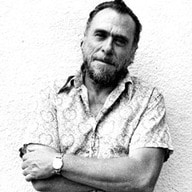
Charles Bukowski

Source


Rules for a Knight

Author: Ethan Hawke (yes, the actor)
Rating: 7/10
Last Read: September 2016

Quick Summary:  Rules for a Knight is a short book is a collection of “knightly wisdom” told in short stories.  The overall book is framed as a letter from a knight to his children, sent on the eve of a battle from which he expects not to return.  The book is full of lessons from the Buddhist cannon – if you are familiar with other philosophical works, the stories will likely be very familiar to you.

When I re-read the passages I have highlighted, I realize that Rules for a Knight repeatedly speaks to the very things I am seeking.  There is much wisdom contained in these pages – it is a shame to realize I have blown through this book and have not spent time to reflect upon it.  How many other lessons have been ignored?

Pay attention: what you need to know is usually in front of you. There are no secrets, just things people choose not to notice.

My Highlights

For this I am most sad, but none of you children yet know me as anything but the tall person who scolds or encourages you, or as a voice talking to your mother as you fall asleep. I have worked too hard in the last ten years and traveled too much, and now it seems I may miss your childhoods entirely. This comes as a blow. I have been looking forward to your growing up and hoped that we could, over time, know one another in a more meaningful way. –loc 100

My grandfather set down two blue cups and poured some tea into the first, but he did not stop when the cup was full. He kept pouring and pouring until the hot tea spilled all over the table and splattered onto the floor.
“What are you doing?” I shouted, jumping up, hot tea scalding my legs.
“You are like that cup spilling over,” said my grandfather. “You cannot retain anything. There is too much going on and you are splashing everywhere, burning what you touch.”
–loc 125

Answers to your questions will come, but if you are not still and empty, you will never be able to retain anything. –loc 132

But the first thing you must understand is that you need not have gone anywhere. You are always in the right place at exactly the right time, and you always have been.” –loc 138

CREATE time alone with yourself. When seeking the wisdom and clarity of your own mind, silence is a helpful tool. The voice of our spirit is gentle and cannot be heard when it has to compete with others. Just as it is impossible to see your reflection in troubled water, so too is it with the soul. In silence, we can sense eternity sleeping inside us. –loc 151

Humility is the ability to see yourself in the context of a much larger world. –loc 184

The stars are magnificent. They are always there whether you see them or not. –loc 185

Aspire to be like the soil after the March rains, wet, open, and receptive. –loc 185

“When people speak, listen.” This was a point he would consistently stress. “As much as you like to be heard and understood, so does everyone else.” –loc 188

THE only intelligent response to the ongoing gift of life is gratitude. For all that has been, a knight says, “Thank you.” For all that is to come, a knight says, “Yes!” –loc 229

The quiet of each morning, the tangible bond of friendship, a snowball fight, warm water on your skin, laughing until your stomach hurts, a job well done, a shooting star that you witness alone; the simple joys are the great ones. Pleasure is not complicated. –loc 243

Constant awareness of even the smallest detail trains your mind to be observant and conscientious. –loc 264

Responsibility, awareness, and self-knowledge are his allies. Forgetfulness is his enemy. His mind is not in the future. He is fully engaged in what he is doing. –loc 265

I learned that evening that rain falls equally on all things. Jealousy, fear, and anger are obstacles to a knight’s first goal: a clear mind. Through his practice a knight should cultivate an open, unclouded mind, so that his instincts will guide him and he is free to act spontaneously. Understanding that our “talents” are simply gifts we have received brings humility to our actions. It also allows us to appreciate the “talents” we see in others as expressions from the same universal source. There are only two possible outcomes whenever you compare yourself to another, vanity or bitterness, and both are without value. –loc 310

THE quality of your life will, to a large extent, be decided by with whom you elect to spend your time. –loc 330

The skeptic shouted out, mocking the knight for believing that his ancient whispers and primitive style of healing could have any power. In front of all the townspeople, Sir Richard answered, “You are an ignorant fool.” The skeptic’s derision became angry. His face reddened, and his hands began to shake with humiliation and rage. Before the skeptic could gather himself to shout back or raise his fist in violence, Sir Richard spoke again. “When a few words have the power to make you so angry, why would others not have the power to heal?” –loc 342

Remember, a friend does not need you to impress him. A friend loves you because you are true to yourself, not because you agree with him. Beware of grand gestures; the real mettle of friendship is forged in life’s daily workings. –loc 350

A DISHONEST tongue and a dishonest mind waste time, and therefore waste our lives. We are here to grow, and the truth is the water, the light, and the soil from which we rise. The armor of falsehood is subtly wrought out of the darkness and hides us not only from others but from our own soul. –loc 389

Don’t fear suffering. The strongest steel is forged in the hottest fire. The facts are always friendly. Without a little agony, none of us would bother to learn a thing. The earth has to be tilled before the seeds can be planted. In much the same way, sometimes we have to be stirred and ripped apart so that the seeds of compassion, wisdom, and understanding can be firmly planted in us. –loc 407

Pay attention: what you need to know is usually in front of you. There are no secrets, just things people choose not to notice. –loc 427

Later he told me when he was younger he learned the secret to performing under pressure: don’t do it for yourself. Do it for someone else. “I know your grandfather always tells us to think of nothing. But when I get scared I just think of someone I love.” –loc 460

GRACE is the ability to accept change. Be open and supple; the brittle break. –loc 482

Young people, women and men, often use the possession of beauty or wealth as permission to be uninteresting, undisciplined, and ill-informed. If they are fortunate enough to reach the age of twenty-eight or so, they become like coddled coyotes. Cute when little, but, upon adulthood, nasty, fearful, and living off the scraps of others. –loc 497

All of us are asked to surrender the superficial beauty of youth and step towards something greater. We are being made ready for the spirit world. Each wrinkle is a crack in the shell of our conceit. Our conceit must be pulverized for the soul to fly. –loc 511

YOU were born owning nothing and with nothing you will pass out of this life. Be frugal and you can be generous. –loc 586

There have always been two ways to be rich: by accumulating vast sums or by needing very little. –loc 591

Often we imagine that we will work hard until we arrive at some distant goal, and then we will be happy. This is a delusion. Happiness is the result of a life lived with purpose. Happiness is not an objective. It is the movement of life itself, a process, and an activity. It arises from curiosity and discovery. Seek pleasure and you will quickly discover the shortest path to suffering. Other people, friends, brothers, sisters, neighbors, spouses, even your mother and I are not responsible for your happiness. Your life is your responsibility, and you always have the choice to do your best. Doing your best will bring happiness. Do not be overconcerned with avoiding pain or seeking pleasure. If you are concentrating on the results of your actions, you are not dedicated to your task. –loc 645

Be resolute in your beliefs, my children. Your friendship cannot be bought. –loc 673

Be cautious when anyone, even family, has too extreme an expectation from your behavior. Under the guise of love or loyalty, people can use guilt or fear to manipulate. A healthy conscience should be used like an internal compass: it is yours, not an instrument for others to play. –loc 673

A knight does not whine. He concerns himself with affecting change, not burdening the world with his grievances. –loc 716

In courtship, honesty is the first requisite. To achieve honesty, a knight must first be intimate with his own soul. This is difficult and takes time. Just as we all have secret thoughts and concerns inside ourselves, which we would share only with a person we value, respect, and trust, so too is it with the body. There are secret places that we need not share, which need not to be shared. –loc 866

Buy the Book

If you are interested in reading Rules for a Knight, you can support the website by using our Amazon affiliate link:


Rules for a Knight

By Ethan Hawke


Enchiridion

Author: Epictetus
Rating: 9/10
Last Read: August 2016

Quick Summary:  This book has been on my reading list for years – and I’m sorry that I put it off so long.  I love the stoics, and have read Meditations and Seneca multiple times.  The Enchiridion is a short work, mostly full of short precepts instructing readers in the stoic style.  This book contains lots of useful thoughts to mull over and revisit throughout your life.

No man is free who is not master of himself.


Fortify yourself with contentment, for this is an impregnable fortress.

My Highlights

In the Stoic view, our capacity to be happy is completely dependent on ourselves—how we treat ourselves, how we relate to others, and how we react to events in general. Events are good or bad only in terms of our reaction to them. –loc 30

The only thing we control is our will, and God has given us a will that cannot be influenced or thwarted by external events—unless we allow it. We are not responsible for the ideas or events that present themselves to us, but only for the ways in which we act on them. –loc 32

Of things some are in our power, and others are not. In our power are opinion, movement toward a thing, desire, aversion (turning from a thing); and in a word, whatever are our own acts: not in our power are the body, property, reputation, offices (magisterial power), and in a word, whatever are not our own acts. –loc 45

Straightway then practice saying to every harsh appearance,1 You are an appearance, and in no manner what you appear to be. –loc 56

But destroy desire completely for the present. For if you desire anything which is not in our power, you must be unfortunate: but of the things in our power, and which it would be good to desire, nothing yet is before you. –loc 64

Men are disturbed not by the things which happen, but by the opinions about the things –loc 77

When then we are impeded or disturbed or grieved, let us never blame others, but ourselves, that is, our opinions. –loc 78

It is the act of an ill-instructed man to blame others for his own bad condition; it is the act of one who has begun to be instructed, to lay the blame on himself; and of one whose instruction is completed, neither to blame another, nor himself. –loc 79

Seek not that the things which happen should happen as you wish; but wish the things which happen to be as they are, and you will have a tranquil flow of life. –loc 91

Disease is an impediment to the body, but not to the will, unless the will itself chooses. Lameness is an impediment to the leg, but not to the will. And add this reflection on the occasion of everything that happens; for you will find it an impediment to something else, but not to yourself. –loc 93

On the occasion of every accident (event) that befalls you, remember to turn to yourself and inquire what power you have for turning it to use. –loc 95

For it is better to die of hunger and so to be released from grief and fear than to live in abundance with perturbation; and it is better for your slave to be bad than for you to be unhappy. –loc 104

If you would have your children and your wife and your friends to live forever, you are silly; for you would have the things which are not in your power to be in your power, and the things which belong to others to be yours. –loc 114

He is the master of every man who has the power over the things, which another person wishes or does not wish, the power to confer them on him or to take them away. Whoever then wishes to be free, let him neither wish for anything nor avoid anything which depends on others: if he does not observe this rule, he must be a slave. –loc 117

Remember that in life you ought to behave as at a banquet. Suppose that something is carried round and is opposite to you. Stretch out your hand and take a portion with decency. Suppose that it passes by you. Do not detain it. Suppose that it is not yet come to you. Do not send your desire forward to it, but wait till it is opposite to you. –loc 120

But you yourself will not wish to be a general or senator or consul, but a free man: and there is only one way to this, to despise (care not for) the things which are not in our power. –loc 141

Remember that it is not he who reviles you or strikes you, who insults you, but it is your opinion about these things as being insulting. When then a man irritates you, you must know that it is your own opinion which has irritated you. Therefore especially try not to be carried away by the appearance. For if you once gain time and delay, you will more easily master yourself. –loc 143

Let death and exile and every other thing which appears dreadful be daily before your eyes; but most of all death: and you will never think of anything mean nor will you desire anything extravagantly. –loc 147

If it should ever happen to you to be turned to externals in order to please some person, you must know that you have lost your purpose in life. Be satisfied then in everything with being a philosopher; and if you wish to seem also to any person to be a philosopher, appear so to yourself, and you will be able to do this. –loc 153

how will you be nobody nowhere, when you ought to be somebody in those things only which are in your power, in which indeed it is permitted to you to be a man of the greatest worth? –loc 159

If I can acquire money and also keep myself modest, and faithful and magnanimous, point out the way, and I will acquire it. But if you ask me to lose the things which are good and my own, in order that you may gain the things which are not good, see how unfair and silly you are. –loc 163

Besides, which would you rather have, money or a faithful and modest friend? For this end then rather help me to be such a man, and do not ask me to do this by which I shall lose that character. –loc 165

You must be one man, either good or bad. You must either cultivate your own ruling faculty, or external things; you must either exercise your skill on internal things or on external things; that is you must either maintain the position of a philosopher or that of a common person. –loc 213

Immediately prescribe some character and some form to yourself, which you shall observe both when you are alone and when you meet with –loc 250

And let silence be the general rule, or let only what is necessary be said, and in few words. And rarely and when the occasion calls we shall say something; but about none of the common subjects, nor about gladiators, nor horse-races, nor about athletes, nor about eating or drinking, which are the usual subjects; and especially not about men, as blaming them or praising them, or comparing them. If then you are able, bring over by your conversation the conversation of your associates to that which is proper; but if you should happen to be confined to the company of strangers, be silent. –loc 251

a man has reported to you, that a certain person speaks ill of you, do not make any defense (answer) to what has been told you: but reply, The man did not know the rest of my faults, for he would not have mentioned these only. –loc 263

When you have decided that a thing ought to be done and are doing it, never avoid being seen doing it, though the many shall form an unfavorable opinion about it. For if it is not right to do it, avoid doing the thing; but if it is right, why are you afraid of those who shall find fault wrongly? –loc 288

In walking about as you take care not to step on a nail or to sprain your foot, so take care not to damage your own ruling faculty: and if we observe this rule in every act, we shall undertake the act with more security. –loc 297

When any person treats you ill or speaks ill of you, remember that he does this or says this because he thinks that it is his duty. It is not possible then for him to follow that which seems right to you, but that which seems right to himself. Accordingly if he is wrong in his opinion, he is the person who is hurt, for he is the person who has been deceived; for if a man shall suppose the true conjunction to be false, it is not the conjunction which is hindered, but the man who has been deceived about it. If you proceed then from these opinions, you will be mild in temper to him who reviles you: for say on each occasion, It seemed so to him. –loc 309

These reasonings do not cohere: I am richer than you, therefore I am better than you; I am more eloquent than you, therefore I am better than you. On the contrary these rather cohere, I am richer than you, therefore my possessions are greater than yours: I am more eloquent than you, therefore my speech is superior to yours. But you are neither possession nor speech. –loc 317

For even sheep do not vomit up their grass and show to the shepherds how much they have eaten; but when they have internally digested the pasture, they produce externally wool and milk. Do you also show not your theorems to the uninstructed, but show the acts which come from their digestion. –loc 330

But when I shall have found the interpreter, the thing that remains is to use the precepts (the lessons). This itself is the only thing to be proud of. –loc 349

If you wish to be well spoken of, learn to speak well (of others): and when you have learned to speak well of them, try to act well, and so you will reap the fruit of being well spoken of. –loc 396

For no man is a slave who is free in his will. –loc 400

If you wish to live without perturbation and with pleasure, try to have all who dwell with you good. And you will have them good, if you instruct the willing, and dismiss those who are unwilling (to be taught): for there will fly away together with those who have fled away both wickedness and slavery; and there will be left with those who remain with you goodness and liberty. –loc 406

No man who loves money, and loves pleasure, and loves fame, also loves mankind, but only he who loves virtue. –loc 410

Examine yourself whether you wish to be rich or to be happy. If you wish to be rich, you should know that it is neither a good thing nor at all in your power: but if you wish to be happy, you should know that it is both a good thing and in your power, for the one is a temporary loan of fortune, and happiness comes from the will. –loc 427

It is not poverty which produces sorrow, but desire; nor does wealth release from fear, but reason (the power of reasoning). If then you acquire this power of reasoning, you will neither desire wealth nor complain of poverty. –loc 445

In banquets remember that you entertain two guests, body and soul: and whatever you shall have given to the body you soon eject: but what you shall have given to the soul, you keep always. –loc 463

It is better to live with one free man and to be without fear and free, than to be a slave with many. –loc 491

What you avoid suffering, do not attempt to make others suffer. You avoid slavery: take care that others are not your slaves. For if you endure to have a slave, you appear to be a slave yourself first. For vice has no community with virtue, nor freedom with slavery. –loc 492

As he who is in health would not choose to be served (ministered to) by the sick, nor for those who dwell with him to be sick, so neither would a free man endure to be served by slaves, or for those who live with him to be slaves. –loc 494

Instead of a herd of oxen, endeavor to assemble herds of friends in your house. –loc 506

As a wolf resembles a dog, so both a flatterer, and an adulterer and a parasite, resemble a friend. Take care then that instead of watch-dogs you do not without knowing it let in mischievous wolves. –loc 508

Do not give judgment in one court (of justice) before you have been tried yourself before justice. –loc 538

A man ought to know that it is not easy for him to have an opinion (or fixed principle), if he does not daily say the same things, and hear the same things, and at the same time apply them to life. –loc 562

Neither should a ship rely on one small anchor, nor should life rest on a single hope. –loc 601

When Thales was asked what is most universal, he answered, Hope, for hope stays with those who have nothing else. –loc 603

It is more necessary to heal the soul than the body, for to die is better than to live a bad life. –loc 605

When a man dies young, he blames the gods. When he is old and does not die, he blames the gods because he suffers when he ought to have already ceased from suffering. And nevertheless, when death approaches, he wishes to live, and sends to the physician and entreats him to omit no care or trouble. Wonderful, he said, are men, who are neither willing to live nor to die. –loc 616

Listen to those who wish to advise what is useful, but not to those who are eager to flatter on all occasions; for the first really see what is useful, but the second look to that which agrees with the opinion of those who possess power, and imitating the shadows of bodies they assent to what is said by the powerful. –loc 634

To admonish is better than to reproach: for admonition is mild and friendly, but reproach is harsh and insulting; and admonition corrects those who are doing wrong, but reproach only convicts them. –loc 639

A pirate had been cast on the land and was perishing through the tempest. A man took clothing and gave it to him, and brought the pirate into his house, and supplied him with everything else that was necessary. When the man was reproached by a person for doing kindness to the bad, he replied, I have shown this regard not to the man, but to mankind.43 –loc 642

No man is free who is not master of himself. –loc 651

As it is pleasant to see the sea from the land, so it is pleasant for him who has escaped from troubles to think of them. –loc 661

In prosperity it is very easy to find a friend; but in adversity it is most difficult of all things. –loc 669

Epictetus being asked how a man should give pain to his enemy answered, By preparing himself to live the best life that he can. –loc 673

Fortify yourself with contentment, for this is an impregnable fortress. –loc 699

Be careful to leave your sons well instructed rather than rich, for the hopes of the instructed are better than the wealth of the ignorant. –loc 710

You ought to choose both physician and friend not the most agreeable, but the most useful. –loc 725

If you wish to live a life free from sorrow, think of what is going to happen as if it had already happened. –loc 727

When a young man was boasting in the theater and saying, I am wise, for I have conversed with many wise men; Epictetus said, I also have conversed with many rich men, but I am not rich. –loc 749

Epictetus being asked, What man is rich, answered, He who is content (who has enough). –loc 753

Xanthippe was blaming Socrates, because he was making small preparation for receiving his friends: but Socrates said, If they are our friends, they will not care about it; and if they are not, we shall care nothing about them. –loc 754

air and light and time and space

“–you know, I’ve either had a family, a job,
something has always been in the
way
but now
I’ve sold my house, I’ve found this
place, a large studio, you should see the space and
the light.
for the first time in my life I’m going to have
a place and the time to
create.”

no baby, if you’re going to create
you’re going to create whether you work
16 hours a day in a coal mine
or
you’re going to create in a small room with 3 children
while you’re on
welfare,
you’re going to create with part of your mind and your body blown
away,
you’re going to create blind
crippled
demented,
you’re going to create with a cat crawling up your
back while
the whole city trembles in earthquake, bombardment,
flood and fire.

baby, air and light and time and space
have nothing to do with it
and don’t create anything
except maybe a longer life to find
new excuses
for.

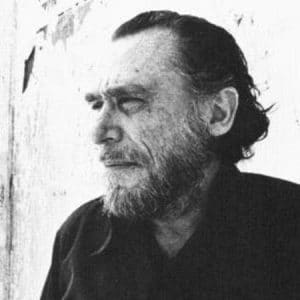
© Charles Bukowski, Black Sparrow Press

Source


How To Meditate (Kerouac Style)

HOW TO MEDITATE

— lights out —

fall, hands a-clasped, into instantaneous
ecstasy like a shot of heroin or morphine,
the gland inside of my brain discharging
the good glad fluid (Holy Fluid) as
I hap-down and hold all my body parts
down to a deadstop trance — Healing
all my sicknesses — erasing all — not
even the shred of a “I-hope-you” or a
Loony Balloon left in it, but the mind
blank, serene, thoughtless. When a thought
comes a-springing from afar with its held-
forth figure of image, you spoof it out,
you spuff it out, you fake it, and
it fades, and thought never comes — and
with joy you realize for the first time
“Thinking’s just like not thinking —
So I don’t have to think
any
more”

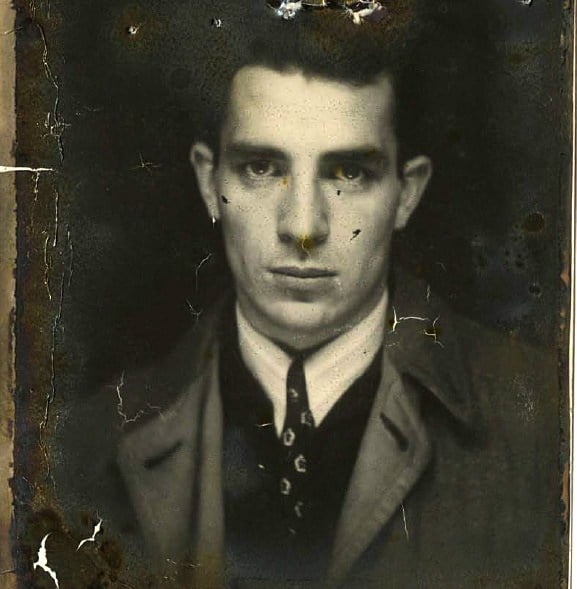
Jack Kerouac

Source


The Afghan Campaign: A Novel


Author: Steven Pressfield
Rating: 8/10
Last Read: August 2016

Quick Summary:  This novel lies in the same vein as Pressfield’s other historical novels – the narrator is a minor character following a famous historical figure.  The narrator joins up with a band of mercenaries who are leaving to fight alongside Alexander in Afghanistan.  However, this novel spends significantly more time focusing on the horror of war and the acts of atrocities enacted by Alexander’s troops.  It is a stark picture of human nature, but the descriptions ring true to the stories of war shared by my friends.  

I think it is an important thing to remember that war is not full of glory – only death, loss, and destruction.

“What’s wrong, you fuck,” answers Lucas, “is that words have meanings. People believe the bucketwash you put out. They think that’s how it is, particularly young men, who are suckers for tales of glamour and glory. You have an obligation to tell them the truth.”

My Highlights

Why do soldiers drink? To keep from thinking, says Flag. If you think, you start to fear. –loc 505

It is simultaneously extraordinary and appalling to see how efficiently our Macks work this. They slaughter an entire male household with barely a sound, so swiftly that the wives and infants are cast into dumbstruck shock. It is the kill of wolves or lions, the cold kill of predation. It is work. –loc 575

A soldier who cannot be counted on by his mates is more dangerous than an enemy. –loc 601

When a new man is initiated into the confederacy of murderers, his seniors make him commit the same crime they have. Now he is as guilty as they. He cannot turn on them. He is one of them. –loc 659

Fear, men say, is the most primal emotion. I don’t believe it. Shame is. My feeling as Tollo bolts past after the foe is one of joy and relief, that my senior sergeant has seen me take down my man, however clumsily, and profound release that my humiliation from the village has been at least partly effaced. –loc 687

“Perhaps, Matthias,” Stephanos says, “you and I might profit, in an alien land, by suspension of judgment.” –loc 1157

“Each precept of wisdom you gain,” says Ash, “bears you farther from God.” –loc 1163

“Take a war-name, Matthias. It solves a lot of problems.” –loc 1180

“You know,” Stephanos says, “I’ve taken to you from the start, Matthias. Shall I tell you why?”
“Because,” says Flag, “he never shuts up.”
“Because he asks questions.”
“That’s his problem.”
“And one day he might get answers.”
–loc 1203

The view of life is that of a noble resignation to fate. God determines all, the Afghan believes. One can do nothing except be a man and bear up. –loc 1354

Stephanos cheers the men by predicting victory in Bactria. We’ll catch Bessus and Spitamenes, he swears, with their bollocks in the breeze. Why? “Because they’re men of intelligence. It’s beyond their imagination to believe that anyone in their right salt-sucking mind would cross these mountains at this season.” –loc 1409

We hear no more talk of mutiny. Porters trek tight beside us. We will live or die together. This is the way peril overhauls you. One hand’s-breadth at a time. Suddenly you’re in it. –loc 1447

It takes Flag pummeling me with both elbows (he can no longer feel his hands) before I understand our Color Sergeant is dead. “He was croaked at the bottom,” Flag declares. I’m furious. Why didn’t Flag tell me? He has made us break our backs. But I am in awe of him too. My God, what a soldier! What a friend. –loc 1569

The crime I have committed, Elihu explains, is called in Dari al satwa. The Hebrews have a term for it, too—tol davi. It means to bring shame upon someone by performing an act of responsibility that they have failed to perform themselves. –loc 1703

“Why can’t you tell it straight?” Lucas demands.
Costas replies that the public only wants certain kinds of stories. There’s no demand for the other kind.
“You mean the true kind,” says Lucas.
–loc 1904

Costas defends himself. What does he, or any correspondent, want? “Just to acquire a modest name, sail home bearing tales of distant lands, and offer them for readings and recitals. What’s wrong with that?”
“What’s wrong, you fuck,” answers Lucas, “is that words have meanings. People believe the bucketwash you put out. They think that’s how it is, particularly young men, who are suckers for tales of glamour and glory. You have an obligation to tell them the truth.” –loc 1908

God, what a stench when a man’s guts are opened to the air. That doesn’t go into your dispatches, does it? We read nothing about the sound the ‘follow-on’ makes, going down the line of throat-slit men with a club, bashing skulls like walnuts, while the still-living men pray without voices or curse us in gurgling blood or plead for their lives. The silent ones are the scariest. Men with guts. Better men than we are.” –loc 1926

Can you defend the massacres we enact, Flag? Is this Macedonian honor?”
Our sergeant’s lips decline into a dark smile. “There is no honor in war, my friend. Only in poems of war.
–loc 1933

“Does a lion hesitate? Does an eagle hold back? What is the call of a gallant heart, except to aspire to mighty deeds? –loc 1946

The fellow possessed that quality, innate to all born commanders, of focused and dominating intention. –loc 2245

And, for both of us, the terror of death. “If I die,” he tells me when we stop the first night, “don’t let the army cook up some phony story. Tell my people what really happened.”
As for my own end, I make no such scruple. “Tell ’em the biggest-balled lie you can think of.”
–loc 2305

hear that the solitudes of the Scythians are made fun of in Greek proverbs, but we seek after places that are desert rather than cities and rich fields. Why? For freedom! Rather would we dine on coarse meal at liberty than feast on honeyed cakes in chains.” –loc 2457

“Great trees are long in growing but fall in a single hour. Even the lion has been made food for the smallest of birds, and rust consumes iron. Therefore tell your king to hold his fortune with tight hands; she is slippery and cannot be confined against her will. –loc 2469

But if he is a mortal man, let him remember his place in the scheme of the Almighty. For what indeed is madness, save to recall those things that make one forget himself?” –loc 2472

“I always imagined that hard experience would make you stronger and less afraid. But it’s the opposite. It undermines you because you know how vulnerable you are and how bad things can get.” –loc 2617

The instrument of counterguerrilla warfare is the massacre. Its object is terror, to make oneself an object of such dread that the foe fears to face you ever. This practice has worked for the army of Macedon across all Asia. It does not work here. The Afghan is so proud, so inured to privation, and so in love with liberty that he prefers death to capitulation. –loc 2943

“They say a man becomes old,” he says, “when more of his friends reside beneath the earth than above it.” –loc 3175

“To be a soldier,” he says, “is no lofty calling. Who acts as a brute is a brute.” –loc 3179

“This is what war is,” says Alexander. “Glory has fled. One searches in vain for honor. We’ve all done things we’re ashamed of. Even victory, as Aeschylus says, in whose august glow all felonies are effaced, is not the same in this war. What remains? To prevent the needless waste of lives. Too many good men have perished without cause. More will join them if we don’t make this peace now.” –loc 3661

“I know, dear child, that you believe heaven has turned its back on you. Perhaps that was so, once. But all things turn in their season. Not even as cruel a deity as that of this pitiless land can remain unmoved forever by his people’s affliction. The proof grows now in your belly. Your suffering has redeemed you, Shinar. God holds out his hand. Take it, I beg you. Can any act be more impious than to spurn the clemency of heaven?” –loc 3854

What is money for anyway? Only to get what you need—or keep away what you dread. –loc 4004