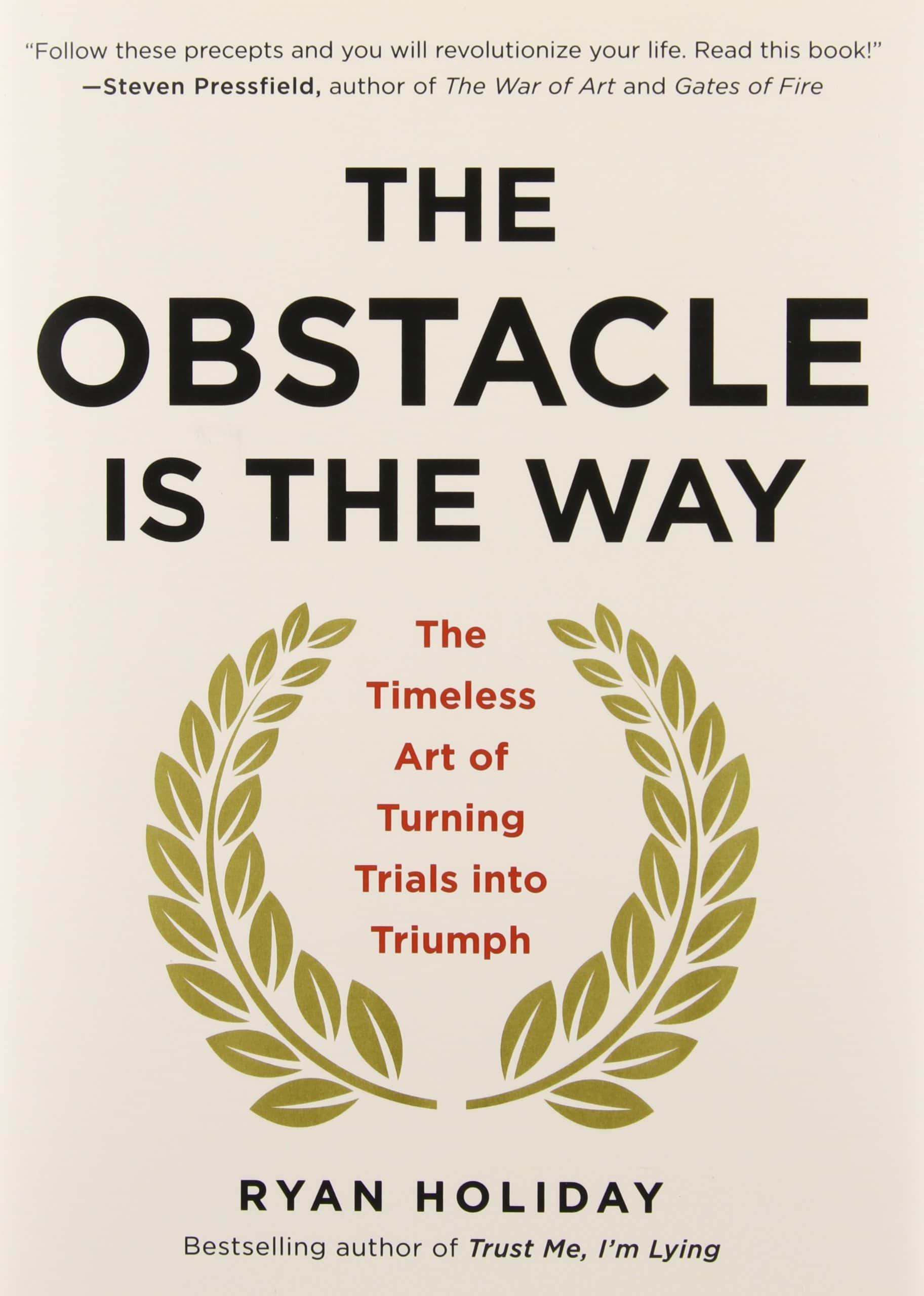
The Obstacle is the Way

Author: Ryan Holiday
Rating: 7/10
Last Read: September 2015

Quick Summary: The Obstacle is the Way is an accessible introductory book to the philosophy of stoicism.  Ryan Holiday draws from the stories of various historical figures and relates them to key principles of Stoic philosophy.  I find Stoicism to be a very helpful mindset to cultivate in my own life, and it is nice to see accessible books popularizing the wisdom of the Stoics.

If you like this book, I definitely recommend checking out the Meditations (Marcus Aurelius) and Enchiridon (Epictetus)

See things for what they are.
Do what we can.
Endure and bear what we must.
What blocked the path now is a path.
What once impeded action advances action.
The Obstacle is the Way.

My Highlights

Whatever we face, we have a choice: Will we be blocked by obstacles, or will we advance through and over them? –loc 113

Let’s be honest: Most of us are paralyzed. Whatever our individual goals, most of us sit frozen before the many obstacles that lie ahead of us. –loc 124

Objective judgment, now at this very moment. Unselfish action, now at this very moment. Willing acceptance—now at this very moment—of all external events. That’s all you need. –loc 223

“Oh, how blessed young men are who have to struggle for a foundation and beginning in life,” he once said. “I shall never cease to be grateful for the three and half years of apprenticeship and the difficulties to be overcome, all along the way.” –loc 279

You must realize: Nothing makes us feel this way; we choose to give in to such feelings. –loc 288

Seen properly, everything that happens—be it an economic crash or a personal tragedy—is a chance to move forward. Even if it is on a bearing that we did not anticipate. –loc 311

There are a few things to keep in mind when faced with a seemingly insurmountable obstacle. We must try:
To be objective
To control emotions and keep an even keel
To choose to see the good in a situation
To steady our nerves
To ignore what disturbs or limits others
To place things in perspective
To revert to the present moment
To focus on what can be controlled
–loc 313

Choose not to be harmed — and you won’t feel harmed. Don’t feel harmed — and you haven’t been. —MARCUS AURELIUS –loc 322

Nothing either good or bad, but thinking makes it so (Shakespeare) –loc 357

What such a man needs is not courage but nerve control, cool headedness. This he can get only by practice.
—THEODORE ROOSEVELT
–loc 377

During the Overland Campaign, Grant was surveying the scene through field glasses when an enemy shell exploded, killing the horse immediately next to him. Grant’s eyes stayed fixed on the front, never leaving the glasses. There’s another story about Grant at City Point, Union headquarters, near Richmond. Troops were unloading a steamboat and it suddenly exploded. Everyone hit the dirt except Grant, who was seen running toward the scene of the explosion as debris and shells and even bodies rained down. That’s a man who has steadied himself properly. That’s a man who has a job to do and would bear anything to get it done. That’s nerve. –loc 384

Don’t forget, there are always people out there looking to get you. They want to intimidate you. Rattle you. Pressure you into making a decision before you’ve gotten all the facts. They want you thinking and acting on their terms, not yours. So the question is, are you going to let them? –loc 395

We must possess, as Voltaire once explained about the secret to the great military success of the first Duke of Marlborough, that “tranquil courage in the midst of tumult and serenity of soul in danger, which the English call a cool head.” –loc 400

Defiance and acceptance come together well in the following principle: There is always a countermove, always an escape or a way through, so there is no reason to get worked up. –loc 408

Would you have a great empire? Rule over yourself.
—PUBLIUS SYRUS
–loc 416

America raced to send the first men into space, they trained the astronauts in one skill more than in any other: the art of not panicking. When people panic, they make mistakes. They override systems. They disregard procedures, ignore rules. They deviate from the plan. They become unresponsive and stop thinking clearly. They just react—not to what they need to react to, but to the survival hormones that are coursing through their veins. –loc 418

Uncertainty and fear are relieved by authority. Training is authority. It’s a release valve. With enough exposure, you can adapt out those perfectly ordinary, even innate, fears that are bred mostly from unfamiliarity. Fortunately, unfamiliarity is simple to fix (again, not easy), which makes it possible to increase our tolerance for stress and uncertainty. –loc 430

‘What am I choosing to not see right now?’ What important things are you missing because you chose worry over introspection, alertness or wisdom? –loc 450

If an emotion can’t change the condition or the situation you’re dealing with, it is likely an unhelpful emotion. Or, quite possibly, a destructive one. –loc 454

Real strength lies in the control or, as Nassim Taleb put it, the domestication of one’s emotions, not in pretending they don’t exist. –loc 456

We defeat emotions with logic, or at least that’s the idea. Logic is questions and statements. With enough of them, we get to root causes (which are always easier to deal with). –loc 460

It might help to say it over and over again whenever you feel the anxiety begin to come on: I am not going to die from this. I am not going to die from this. I am not going to die from this. Or try Marcus’s question: Does what happened keep you from acting with justice, generosity, self-control, sanity, prudence, honesty, humility, straightforwardness? –loc 472

Don’t let the force of an impression when it first hit you knock you off your feet; just say to it: Hold on a moment; let me see who you are and what you represent. Let me put you to the test. —EPICTETUS –loc 481

Perceptions are the problem. They give us the “information” that we don’t need, exactly at the moment when it would be far better to focus on what is immediately in front of us: the thrust of a sword, a crucial business negotiation, an opportunity, a flash of insight or anything else, for that matter. –loc 495

Epictetus told his students, when they’d quote some great thinker, to picture themselves observing the person having sex. It’s funny, you should try it the next time someone intimidates you or makes you feel insecure. See them in your mind, grunting, groaning, and awkward in their private life—just like the rest of us. –loc 505

Man does not simply exist but always decides what his existence will be, what he will become the next moment. By the same token, every human being has the freedom to change at any instant. —VIKTOR FRANKL –loc 523

Perspective has two definitions. Context: a sense of the larger picture of the world, not just what is immediately in front of us Framing: an individual’s unique way of looking at the world, a way that interprets its events Both matter, both can be effectively injected to change a situation that previously seemed intimidating or impossible. –loc 554

Perception precedes action. Right action follows the right perspective. –loc 571

In life our first job is this, to divide and distinguish things into two categories: externals I cannot control, but the choices I make with regard to them I do control. Where will I find good and bad? In me, in my choices. —EPICTETUS –loc 573

To argue, to complain, or worse, to just give up, these are choices. Choices that more often than not, do nothing to get us across the finish line. –loc 620

The trick to forgetting the big picture is to look at everything close up. —CHUCK PALAHNIUK –loc 633

Yet in our own lives, we aren’t content to deal with things as they happen. We have to dive endlessly into what everything “means,” whether something is “fair” or not, what’s “behind” this or that, and what everyone else is doing. Then we wonder why we don’t have the energy to actually deal with our problems. Or we get ourselves so worked up and intimidated because of the overthinking, that if we’d just gotten to work we’d probably be done already. –loc 651

For all species other than us humans, things just are what they are. Our problem is that we’re always trying to figure out what things mean—why things are the way they are. –loc 662

It doesn’t matter whether this is the worst time to be alive or the best, whether you’re in a good job market or a bad one, or that the obstacle you face is intimidating or burdensome. What matters is that right now is right now. –loc 665

You’ll find the method that works best for you, but there are many things that can pull you into the present moment: Strenuous exercise. Unplugging. A walk in the park. Meditation. Getting a dog—they’re a constant reminder of how pleasant the present is. –loc 671

It’s not simply a matter of saying: Oh, I’ll live in the present. You have to work at it. Catch your mind when it wanders—don’t let it get away from you. Discard distracting thoughts. Leave things well enough alone—no matter how much you feel like doing otherwise. –loc 673

This is why we shouldn’t listen too closely to what other people say (or to what the voice in our head says, either). We’ll find ourselves erring on the side of accomplishing nothing. Be open. Question. –loc 700

Now, how do you and I usually deal with an impossible deadline handed down from someone above us? We complain. We get angry. We question. How could they? What’s the point? Who do they think I am? We look for a way out and feel sorry for ourselves. –loc 708

Jobs refused to tolerate people who didn’t believe in their own abilities to succeed. Even if his demands were unfair, uncomfortable, or ambitious. –loc 711

Jobs learned to reject the first judgments and the objections that spring out of them because those objections are almost always rooted in fear. –loc 716

This is radically different from how we’ve been taught to act. Be realistic, we’re told. Listen to feedback. Play well with others. Compromise. Well, what if the “other” party is wrong? What if conventional wisdom is too conservative? It’s this all-too-common impulse to complain, defer, and then give up that holds us back. –loc 720

An entrepreneur is someone with faith in their ability to make something where there was nothing before. –loc 722

It’s our preconceptions that are the problem. They tell us that things should or need to be a certain way, so when they’re not, we naturally assume that we are at a disadvantage or that we’d be wasting our time to pursue an alternate course. When really, it’s all fair game, and every situation is an opportunity for us to act. –loc 757

How about that business decision that turned out to be a mistake? Well, you had a hypothesis and it turned out to be wrong. Why should that upset you? It wouldn’t piss off a scientist, it would help him. –loc 775

When people are:
—rude or disrespectful: They underestimate us. A huge advantage.
—conniving: We won’t have to apologize when we make an example out of them.
—critical or question our abilities: Lower expectations are easier to exceed.
—lazy: Makes whatever we accomplish seem all the more admirable.
–loc 792

It’s a huge step forward to realize that the worst thing to happen is never the event, but the event and losing your head. Because then you’ll have two problems (one of them unnecessary and post hoc). –loc 809

Once you see the world as it is, for what it is, you must act. The proper perception—objective, rational, ambitious, clean—isolates the obstacle and exposes it for what it is. –loc 811

We’ve all done it. Said: “I am so [overwhelmed, tired, stressed, busy, blocked, outmatched].” And then what do we do about it? Go out and party. Or treat ourselves. Or sleep in. Or wait. –loc 869

We forget: In life, it doesn’t matter what happens to you or where you came from. It matters what you do with what happens and what you’ve been given. –loc 872

Consider this mind-set.
never in a hurry
never worried
never desperate
never stopping short
–loc 1003

Remember and remind yourself of a phrase favored by Epictetus: “persist and resist.” Persist in your efforts. Resist giving in to distraction, discouragement, or disorder. –loc 1006

What is defeat? Nothing but education; nothing but the first steps to something better. —WENDELL PHILLIPS –loc 1025

Great entrepreneurs are:
never wedded to a position
never afraid to lose a little of their investment
never bitter or embarrassed
never out of the game for long
They slip many times, but they don’t fall.
–loc 1051

The one way to guarantee we don’t benefit from failure—to ensure it is a bad thing—is to not learn from it. To continue to try the same thing over and over –loc 1068

“Don’t think about winning the SEC Championship. Don’t think about the national championship. Think about what you needed to do in this drill, on this play, in this moment. That’s the process: Let’s think about what we can do today, the task at hand.” –loc 1086

The process is about finishing. Finishing games. Finishing workouts. Finishing film sessions. Finishing drives. Finishing reps. Finishing plays. Finishing blocks. Finishing the smallest task you have right in front of you and finishing it well. –loc 1094

Viktor Frankl, survivor of three concentration camps, found presumptuousness in the age-old question: “What is the meaning of life?” As though it is someone else’s responsibility to tell you. Instead, he said, the world is asking you that question. And it’s your job to answer with your actions. –loc 1188

A very Zen stance from our boy M. Aurelius:

The cucumber is bitter? Then throw it out. There are brambles in the path? Then go around. That’s all you need to know. —MARCUS AURELIUS –loc 1199

Whoever cannot seek the unforeseen sees nothing, for the known way is an impasse. —HERACLITUS –loc 1254

Take a step back, then go around the problem. Find some leverage. Approach from what is called the “line of least expectation.” –loc 1282

You’re acting like a real strategist. You aren’t just throwing your weight around and hoping it works. You’re not wasting your energy in battles driven by ego and pride rather than tactical advantage. –loc 1316

Wise men are able to make a fitting use even of their enmities. —PLUTARCH –loc 1320

The great strategist Saul Alinsky believed that if you “push a negative hard enough and deep enough it will break through into its counterside.” Every positive has its negative. Every negative has its positive. The action is in the pushing through—all the way through to the other side. Making a negative into a positive. –loc 1369

The best men are not those who have waited for chances but who have taken them; besieged chance, conquered the chance, and made chance the servitor. —E. H. CHAPIN –loc 1420

Great commanders look for decision points. For it is bursts of energy directed at decisive points that break things wide open. They press and press and press and then, exactly when the situation seems hopeless—or, more likely, hopelessly deadlocked—they press once more. –loc 1464

In the meantime, cling tooth and nail to the following rule: not to give in to adversity, not to trust prosperity, and always take full note of fortune’s habit of behaving just as she pleases. —SENECA –loc 1473

Nothing can ever prevent us from trying. Ever. –loc 1479

It’s an infinitely elastic formula: In every situation, that which blocks our path actually presents a new path with a new part of us. If someone you love hurts you, there is a chance to practice forgiveness. If your business fails, now you can practice acceptance. If there is nothing else you can do for yourself, at least you can try to help others. –loc 1483

Will is our internal power, which can never be affected by the outside world. It is our final trump card. If action is what we do when we still have some agency over our situation, the will is what we depend on when agency has all but disappeared. –loc 1494

True will is quiet humility, resilience, and flexibility; the other kind of will is weakness disguised by bluster and ambition. –loc 1500

It’s much easier to control our perceptions and emotions than it is to give up our desire to control other people and events. –loc 1571

These lessons come harder but are, in the end, the most critical to wresting advantage from adversity. In every situation, we can Always prepare ourselves for more difficult times. Always accept what we’re unable to change. Always manage our expectations. Always persevere. Always learn to love our fate and what happens to us. Always protect our inner self, retreat into ourselves. Always submit to a greater, larger cause. Always remind ourselves of our own mortality. –loc 1574

Nobody is born with a steel backbone. We have to forge that ourselves. –loc 1605

We craft our spiritual strength through physical exercise, and our physical hardiness through mental practice (mens sana in corpore sano—sound mind in a strong body). –loc 1606

During the good times, we strengthen ourselves and our bodies so that during the difficult times, we can depend on it. We protect our inner fortress so it may protect us. –loc 1620

Offer a guarantee and disaster threatens. —ANCIENT INSCRIPTION AT THE ORACLE OF DELPHI –loc 1639

A premortem is different. In it, we look to envision what could go wrong, what will go wrong, in advance, before we start. Far too many ambitious undertakings fail for preventable reasons. Far too many people don’t have a backup plan because they refuse to consider that something might not go exactly as they wish. –loc 1649

Mike Tyson, who, reflecting on the collapse of his fortune and fame, told a reporter, “If you’re not humble, life will visit humbleness upon you.” –loc 1654

“Nothing happens to the wise man against his expectation,” he wrote to a friend. “…nor do all things turn out for him as he wished but as he reckoned—and above all he reckoned that something could block his plans.” –loc 1662

The only guarantee, ever, is that things will go wrong. The only thing we can use to mitigate this is anticipation. –loc 1677

About the worst thing that can happen is not something going wrong, but something going wrong and catching you by surprise. Why? Because unexpected failure is discouraging and being beaten back hurts. –loc 1693

When the cause of our problem lies outside of us, we are better for accepting it and moving on. For ceasing to kick and fight against it, and coming to terms with it. The Stoics have a beautiful name for this attitude. They call it the Art of Acquiescence. –loc 1731

It is far easier to talk of the way things should be. It takes toughness, humility, and will to accept them for what they actually are. It takes a real man or woman to face necessity. –loc 1734

We don’t get to choose what happens to us, but we can always choose how we feel about it. And why on earth would you choose to feel anything but good? We can choose to render a good account of ourselves. If the event must occur, Amor fati (a love of fate) is the response. –loc 1829

Determination, if you think about it, is invincible. Nothing other than death can prevent us from following Churchill’s old acronym: KBO. Keep Buggering On. –loc 1895

Pride can be broken. Toughness has its limits. But a desire to help? No harshness, no deprivation, no toil should interfere with our empathy toward others. Compassion is always an option. Camaraderie as well. That’s a power of the will that can never be taken away, only relinquished. –loc 1958

Help your fellow humans thrive and survive, contribute your little bit to the universe before it swallows you up, and be happy with that. Lend a hand to others. Be strong for them, and it will make you stronger. –loc 1970

When a man knows he is to be hanged in a fortnight, it concentrates his mind wonderfully. —DR. JOHNSON –loc 1973

Memento mori, the Romans would remind themselves. Remember you are mortal. –loc 1994

We forget how light our grip on life really is. Otherwise, we wouldn’t spend so much time obsessing over trivialities, or trying to become famous, make more money than we could ever spend in our lifetime, or make plans far off in the future. –loc 1998

The paths of glory, Thomas Gray wrote, lead but to the grave. –loc 2001

Reminding ourselves each day that we will die helps us treat our time as a gift. Someone on a deadline doesn’t indulge himself with attempts at the impossible, he doesn’t waste time complaining about how he’d like things to be. –loc 2013

See things for what they are. Do what we can. Endure and bear what we must. What blocked the path now is a path. What once impeded action advances action. The Obstacle is the Way. –loc 2114

The Latin translation for the title of Enchiridion—Epictetus’s famous work—means “close at hand,” or as some have said, “in your hands.” That’s what the philosophy was meant for: to be in your hands, to be an extension of you. Not something you read once and put up on a shelf. It was meant, as Marcus once wrote, to make us boxers instead of fencers—to wield our weaponry, we simply need to close our fists. –loc 2161

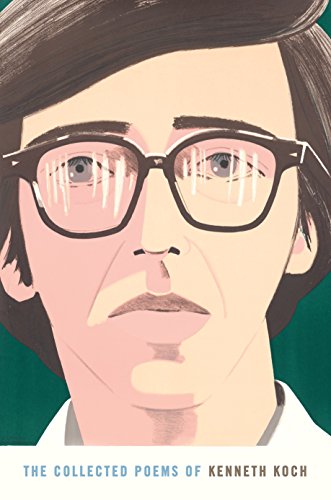
You Want a Social Life, With Friends

You want a social life, with friends.
A passionate love life and as well
To work hard every day. What’s true
Is of these three you may have two
And two can pay you dividends
But never may have three.

There isn’t time enough, my friends–
Though dawn begins, yet midnight ends–
To find the time to have love, work, and friends.
Michelangelo had feeling
For Vittoria and the Ceiling
But did he go to parties at day’s end?

Homer nightly went to banquets
Wrote all day but had no lockets
Bright with pictures of his Girl.
I know one who loves and parties
And has done so since his thirties
But writes hardly anything at all.

Kenneth Koch

More Poems by Kenneth


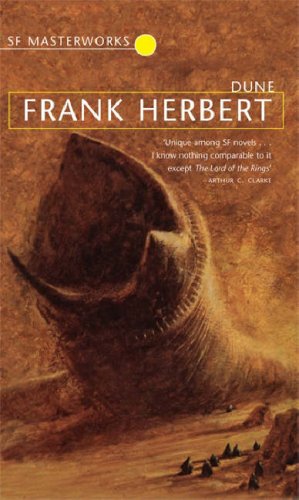
Dune

Author: Frank Herbert
Rating: 10/10
Last Read: November 2015, July 2018

Quick Summary: Dune is my favorite book.  I have read this book at least ten times, and I think I might be lowballing myself.  

Dune is a 1950s sci-fi epic set in the far future.  Man has given up his reliance on thinking machines, and various specialized schools of humanity have developed.  The story centers on Paul Atreides, a young noble whose family is given dominion over a desert planet whose primary resource (“the spice”) is used and coveted by the rest of the planets of man.  Traps and plans laid for generations come to fruition as many groups fight for control over the spice, the planet, and Paul himself. 

Frank Herbert weaves many political, religious, power, and ecological ideas into Dune.  There is much wisdom found buried inside an excellent story.

Greatness is a transitory experience. It is never consistent. It depends in part upon the myth-making imagination of humankind. The person who experiences greatness must have a feeling for the myth he is in. He must reflect what is projected upon him. And he must have a strong sense of the sardonic. This is what uncouples him from belief in his own pretensions. The sardonic is all that permits him to move within himself. Without this quality, even occasional greatness will destroy a man.

My Highlights

A beginning is the time for taking the most delicate care that the balances are correct. –loc 88

“A popular man arouses the jealousy of the powerful,” Hawat had said. –loc 118

“I must not fear. Fear is the mind-killer. Fear is the little-death that brings total obliteration. I will face my fear. I will permit it to pass over me and through me. And when it has gone past I will turn the inner eye to see its path. Where the fear has gone there will be nothing. Only I will remain.” –loc 202

The old woman said: “You’ve heard of animals chewing off a leg to escape a trap? There’s an animal kind of trick. A human would remain in the trap, endure the pain, feigning death that he might kill the trapper and remove a threat to his kind.” –loc 210

“Hope clouds observation.” –loc 239

He understood terrible purposes. They drove against all odds. They were their own necessity. –loc 254

“Why do you test for humans?” he asked.
“To set you free.”

–loc 259

“Once, men turned their thinking over to machines in the hope that this would set them free. But that only permitted other men with machines to enslave them.” –loc 260

“Listen to my nephew,” the Baron said. “He aspires to rule my Barony, yet he cannot rule himself.” –loc 367

However, as someone once observed, given the right lever you can move a planet. –loc 418

“I see in the future what I’ve seen in the past. You well know the pattern of our affairs, Jessica. The race knows its own mortality and fears stagnation of its heredity. It’s in the bloodstream—the urge to mingle genetic strains without plan. –loc 483

In politics, the tripod is the most unstable of all structures. –loc 492

“Jessica, girl, I wish I could stand in your place and take your sufferings. But each of us must make her own path.” –loc 506

In a low voice, she said: “I’ve been so lonely.”
“It should be one of the tests,” the old woman said. “Humans are almost always lonely.”
–loc 512

The willow submits to the wind and prospers until one day it is many willows—a wall against the wind. This is the willow’s purpose.” –loc 556

Parting with friends is a sadness. A place is only a place. –loc 596

“Grave this on your memory, lad: A world is supported by four things….” She held up four big-knuckled fingers. “…the learning of the wise, the justice of the great, the prayers of the righteous and the valor of the brave. But all of these are as nothing….” She closed her fingers into a fist. “…without a ruler who knows the art of ruling. Make that the science of your tradition!” –loc 625

“She asked me to tell her what it is to rule,” Paul said. “And I said that one commands. And she said I had some unlearning to do.” –loc 642

“She said a ruler must learn to persuade and not to compel. She said he must lay the best coffee hearth to attract the finest men.” –loc 644

the mystery of life isn’t a problem to solve, but a reality to experience. –loc 650

‘A process cannot be understood by stopping it. Understanding must move with the flow of the process, must join it and flow with it.’ –loc 651

“Mood?” Halleck’s voice betrayed his outrage even through the shield’s filtering. “What has mood to do with it? You fight when the necessity arises—no matter the mood! Mood’s a thing for cattle or making love or playing the baliset. It’s not for fighting.” –loc 714

“If wishes were fishes we’d all cast nets” –loc 766

Then, what deafness may we not all possess? What senses do we lack that we cannot see and cannot hear another world all around us? –loc 824

The truth could be worse than he imagines, but even dangerous facts are valuable if you’ve been trained to deal with them. –loc 868

“Knowing where the trap is—that’s the first step in evading it. –loc 886

“How could you win the loyalty of such men?” “There are proven ways: play on the certain knowledge of their superiority, the mystique of secret covenant, the esprit of shared suffering. It can be done. It has been done on many worlds in many times.” –loc 907

“The mind commands the body and it obeys. The mind orders itself and meets resistance.” –loc 1064

There are worse things than dying, you know—even for an entire people. –loc 1085

“Can you remember your first taste of spice?”
“It tasted like cinnamon.”
“But never twice the same,” he said. “It’s like life—it presents a different face each time you take it.
–loc 1287

For the others, we can say that Muad’Dib learned rapidly because his first training was in how to learn. And the first lesson of all was the basic trust that he could learn. It is shocking to find how many people do not believe they can learn, and how many more believe learning to be difficult. –loc 1314

“Any road followed precisely to its end leads precisely nowhere. Climb the mountain just a little bit to test that it’s a mountain. From the top of the mountain, you cannot see the mountain.” –loc 1380

Please permit the room to convey a lesson we learned from the same teachers: the proximity of a desirable thing tempts one to overindulgence. On that path lies danger. –loc 1435

Command must always look confident, he thought. All that faith riding on your shoulders while you sit in the critical seat and never show it. –loc 1619

There is probably no more terrible instant of enlightenment than the one in which you discover your father is a man—with human flesh. –loc 2013

“Nothing wins more loyalty for a leader than an air of bravura,” the Duke said. “I, therefore, cultivate an air of bravura.” –loc 2044

But the young body carried a sense of command, a poised assurance, as though he saw and knew things all around him that were not visible to others. –loc 2092

A gift is the blessing of the giver.’” –loc 2128

“What is money,” Kynes asked, “if it won’t buy the services you need?” –loc 2222

“When God hath ordained a creature to die in a particular place, He causeth that creature’s wants to direct him to that place.” –loc 2469

Greatness is a transitory experience. It is never consistent. It depends in part upon the myth-making imagination of humankind. The person who experiences greatness must have a feeling for the myth he is in. He must reflect what is projected upon him. And he must have a strong sense of the sardonic. This is what uncouples him from belief in his own pretensions. The sardonic is all that permits him to move within himself. Without this quality, even occasional greatness will destroy a man. –loc 2475

A thing to note about any espionage and/or counter-espionage school is the similar basic reaction pattern of all its graduates. Any enclosed discipline sets its stamp, its pattern, upon its students. That pattern is susceptible to analysis and prediction. –loc 2654

“It’s a rule of ecology,” Kynes said, “that the young Master appears to understand quite well. The struggle between life elements is the struggle for the free energy of a system. Blood’s an efficient energy source.” –loc 2685

“Freely given, freely accepted,” –loc 2703

“Growth is limited by that necessity which is present in the least amount. And, naturally, the least favorable condition controls the growth rate.” –loc 2717

“When strangers meet, great allowance should be made for differences of custom and training.” –loc 2816

There is no escape—we pay for the violence of our ancestors. –loc 2862

“Humans live best when each has his own place, when each knows where he belongs in the scheme of things. Destroy the place and destroy the person. –loc 3002

“Anything outside yourself, this you can see and apply your logic to it,” she said. “But it’s a human trait that when we encounter personal problems, those things most deeply personal are the most difficult to bring out for our logic to scan. We tend to flounder around, blaming everything but the actual, deep-seated thing that’s really chewing on us.” –loc 3014

There should be a science of discontent. People need hard times and oppression to develop psychic muscles. –loc 3169

Arrakis teaches the attitude of the knife—chopping off what’s incomplete and saying: “Now, it’s complete because it’s ended here.” –loc 3361

The mind goes on working no matter how we try to hold it back
–loc 3703

“A time to get and time to lose,” Jessica thought, quoting to herself from the O.C. Bible. “A time to keep and a time to cast away; a time for love and a time to hate; a time of war and a time of peace.” –loc 3766

“They say: ‘Be prepared to appreciate what you meet.’” –loc 3875

“Fate is the same for everyone,” the Fremen said. “Your Duke, it is said, has met his fate. –loc 4067

Superstitions sometimes have strange roots and stranger branchings.” –loc 4284

“Blackmail?”
“One of the tools of statecraft, as you’ve said yourself,” Paul said
–loc 4292

What do you despise? By this are you truly known. —FROM “MANUAL OF MUAD’DIB” –loc 4420

We came from Caladan—a paradise world for our form of life. There existed no need on Caladan to build a physical paradise or a paradise of the mind—we could see the actuality all around us. And the price we paid was the price men have always paid for achieving a paradise in this life—we went soft, we lost our edge. –loc 4892

Whether a thought is spoken or not it is a real thing and it has power –loc 4938

“You think that day will come?”
“I have little to do with how you’ll meet tomorrow, Gurney Halleck. I can only help you meet today.”
–loc 4944

“Fortune passes everywhere,” –loc 4986

Subtlety and self-control were, after all, the most deadly threats to us all. –loc 5018

Paul spoke without turning: “I find myself enjoying the quiet here.” How the mind gears itself for its environment, she thought. And she recalled a Bene Gesserit axiom: “The mind can go either direction under stress—toward positive or toward negative: on or off. Think of it as a spectrum whose extremes are unconsciousness at the negative end and hyperconsciousness at the positive end. The way the mind will lean under stress is strongly influenced by training.” –loc 5030

Science is made up of so many things that appear obvious after they are explained. –loc 5253

Then, as his planet killed him, it occurred to Kynes that his father and all the other scientists were wrong, that the most persistent principles of the universe were accident and error. –loc 5301

“To save one from a mistake is a gift of paradise,” –loc 5471

She knew what it was—she had succumbed to that profound drive shared by all creatures who are faced with death—the drive to seek immortality through progeny. The fertility drive of the species had overpowered them. –loc 5588

A leader, you see, is one of the things that distinguishes a mob from a people. He maintains the level of individuals. Too few individuals, and a people reverts to a mob.” –loc 5601

The young reed dies so easily. Beginnings are times of such great peril. –loc 5616

“Keep the mind on the knife and not on the hand that holds it,” Gurney Halleck had told him time and again. “The knife is more dangerous than the hand and the knife can be in either hand.” –loc 5835

“Survival is the ability to swim in strange water.” –loc 5950

“From water does all life begin.” –loc 5956

The concept of progress acts as a protective mechanism to shield us from the terrors of the future. –loc 6148

“It’s easier to be terrified by an enemy you admire.” –loc 6401

‘Do not count a human dead until you’ve seen his body. And even then you can make a mistake.’” –loc 6497

“To accept a little death is worse than death itself,” –loc 6763

“Usul, you’re crying,” Chani murmured. “Usul, my strength, do you give moisture to the dead? To whose dead?”
“To ones not yet dead,” he said.
“Then let them have their time of life,” she said.
–loc 6919

Else why bargain? One bargains with equals or near equals! –loc 7022

“Hawat’s a dangerous toy,” Feyd-Rautha said.
“Toy! Don’t be stupid. I know what I have in Hawat and how to control it. Hawat has deep emotions, Feyd. The man without emotions is the one to fear. But deep emotions… ah, now, those can be bent to your needs.” –loc 7050

Deep in the human unconscious is a pervasive need for a logical universe that makes sense. But the real universe is always one step beyond logic. –loc 7084

Yet, it is possible to see peril in the finding of ultimate perfection. It is clear that the ultimate pattern contains its own fixity. In such perfection, all things move toward death. –loc 7224

She had quoted a Bene Gesserit proverb to him: “When religion and politics travel in the same cart, the riders believe nothing can stand in their way. Their movement becomes headlong—faster and faster and faster. They put aside all thought of obstacles and forget that a precipice does not show itself to the man in a blind rush until it’s too late.” –loc 7270

“Give as few orders as possible,” his father had told him once long ago. “Once you’ve given orders on a subject, you must always give orders on that subject.” –loc 7371

“Control the coinage and the courts—let the rabble have the rest.” Thus the Padishah Emperor advised you. And he tells you: “If you want profits, you must rule.” There is truth in these words, but I ask myself: “Who are the rabble and who are the ruled?” –loc 7445

“All men beneath your position covet your station,” –loc 8094

“Prophets have a way of dying by violence.” –loc 8096

“My father had an instinct for his friends,” Paul said. “He gave his love sparingly, but with never an error. His weakness lay in misunderstanding hatred. –loc 8246

“One of the most terrible moments in a boy’s life,” Paul said, “is when he discovers his father and mother are human beings who share a love that he can never quite taste. It’s a loss, an awakening to the fact that the world is there and here and we are in it alone. The moment carries its own truth; you can’t evade it. I heard my father when he spoke of my mother.
–loc 8251

“There is in each of us an ancient force that takes and an ancient force that gives. A man finds little difficulty facing that place within himself where the taking force dwells, but it’s almost impossible for him to see into the giving force without changing into something other than man. For a woman, the situation is reversed.” –loc 8471

There should be a word-tension directly opposite to adab, the demanding memory, she thought. There should be a word for memories that deny themselves. –loc 8953

“How would you like to live billions upon billions of lives?” Paul asked. “There’s a fabric of legends for you! Think of all those experiences, the wisdom they’d bring. But wisdom tempers love, doesn’t it? And it puts a new shape on hate. How can you tell what’s ruthless unless you’ve plumbed the depths of both cruelty and kindness?
–loc 8962

The Guild navigators, gifted with limited prescience, had made the fatal decision: they’d chosen always the clear, safe course that leads ever downward into stagnation. –loc 8996

“Was that their plan?” Jessica said.
“Isn’t it obvious?” Paul asked.
“I see the signs!” Jessica snapped. “My question was meant to remind you that you should not try to teach me those matters in which I instructed you.”
–loc 9132

“Expect only what happens in the fight. That way you’ll never be surprised.”

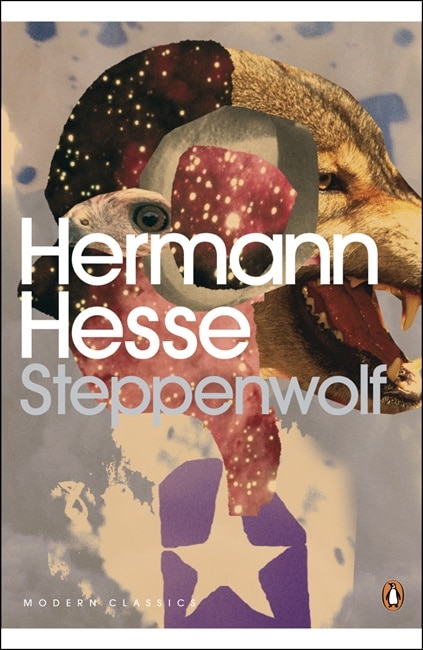
Steppenwolf

Author: Herman Hesse
Rating: 10/10
Last Read: October 2016

Quick Summary: 

I started this book three times, but always failed to get past the same spot every time (Magic theater – entrance not for everybody).  However, finally I managed to make it past that section to the treatise on the Steppenwolf, and holy shit. What a book.

In short summary, the book is simply about this:

There was once a man, Harry, called the Steppenwolf. He went on two legs, wore clothes and was a human being, but nevertheless he was in reality a wolf of the Steppes. He had learned a good deal of all that people of a good intelligence can, and was a fairly clever fellow. What he had not learned, however, was this: to find contentment in himself and his own life. The cause of this apparently was that at the bottom of his heart he knew all the time (or thought he knew) that he was in reality not a man, but a wolf of the Steppes.

This man is trapped between two ideals for what life entails.  But he learns that perhaps there are more aspects than the ones he understands.

Harry consists of a hundred or a thousand selves, not of two. His life oscillates, as everyone’s does, not merely between two poles, such as the body and the spirit, the saint and the sinner, but between thousand and thousands.

I hate to think that this is the book that makes me say, “Here I am! Here are the things I learned! Steppenwolf is about me!” I even only just learned to love dancing! What does that say? That I am just one of the many who belongs in the counterculture movement?  Perhaps my friends would not be so surprised, but I am!

For what I always hated and detested and cursed above all things was this contentment, this healthiness and comfort, this carefully preserved optimism of the middle classes, this fat and prosperous brood of mediocrity.

No prospect was more hateful and distasteful to him than that he should have to go to an office and conform to daily and yearly routine and obey others.

My Highlights

A wild longing for strong emotions and sensations seethes in me, a rage against this toneless, flat, normal and sterile life. –loc 37

For what I always hated and detested and cursed above all things was this contentment, this healthiness and comfort, this carefully preserved optimism of the middle classes, this fat and prosperous brood of mediocrity. –loc 40

At every other step were placards and posters with their various attractions, Ladies’ Orchestra, Variété, Cinema, Ball. But none of these was for me. They were for “everybody,” for those normal persons whom I saw crowding every entrance. –loc 130

It is remarkable, all that men can swallow. For a good ten minutes I read a newspaper. I allowed the spirit of an irresponsible man who chews and munches another’s words in his mouth, and gives them out again undigested, to enter into me through my eyes. I absorbed a whole column of it. And then I devoured a large piece cut from the liver of a slaughtered calf. Odd indeed! –loc 146

Who read by night above the Rhine the cloudscript of the drifting mists? It was the Steppenwolf. And who over the ruins of his life pursued its fleeting, fluttering significance, while he suffered its seeming meaninglessness and lived its seeming madness, and who hoped in secret at the last turn of the labyrinth of Chaos for revelation and God’s presence? –loc 173

How foolish to wear oneself out in vain longing for warmth! Solitude is independence. It had been my wish and with the years I had attained it. It was cold. Oh, cold enough! But it was also still, wonderfully still and vast like the cold stillness of space in which the stars revolve. –loc 192

There was once a man, Harry, called the Steppenwolf. He went on two legs, wore clothes and was a human being, but nevertheless he was in reality a wolf of the Steppes. He had learned a good deal of all that people of a good intelligence can, and was a fairly clever fellow. What he had not learned, however, was this: to find contentment in himself and his own life. The cause of this apparently was that at the bottom of his heart he knew all the time (or thought he knew) that he was in reality not a man, but a wolf of the Steppes. –loc 257

But it was exactly the same when Harry felt and behaved as a wolf and showed others his teeth and felt hatred and enmity against all human beings and their lying and degenerate manners and customs. For then the human part of him lay in ambush and watched the wolf, called him brute and beast, and spoiled and embittered for him all pleasure in his simple and healthy and wild wolf’s being. –loc 283

Thus it was then with the Steppenwolf, and one may well imagine that Harry did not have an exactly pleasant and happy life of it. This does not mean, however, that he was unhappy in any extraordinary degree (although it may have seemed so to himself all the same, inasmuch as every man takes the sufferings that fall to his share as the greatest). –loc 286

even the unhappiest life has its sunny moments and its little flowers of happiness between sand and stone. –loc 289

There are a good many people of the same kind as Harry. Many artists are of his kind. These persons all have two souls, two beings within them. There is God and the devil in them; the mother’s blood and the father’s; the capacity for happiness and the capacity for suffering; and in just such a state of enmity and entanglement towards and within each other as were the wolf and man in Harry. And these men, for whom life has no repose, live at times in their rare moments of happiness with such strength and indescribable beauty, the spray of their moment’s happiness is flung so high and dazzlingly over the wide sea of suffering, that the light of it, spreading its radiance, touches others too with its enchantment. –loc 310

All these men, whatever their deeds and works may be, have really no life; that is to say, their lives are not their own and have no form. They are not heroes, artists or thinkers in the same way that other men are judges, doctors, shoemakers, or schoolmasters. Their life consists of a perpetual tide, unhappy and torn with pain, terrible and meaningless, unless one is ready to see its meaning in just those rare experiences, acts, thoughts and works that shine out above the chaos of such a life. To such men the desperate and horrible thought has come that perhaps the whole of human life is but a bad joke, a violent and ill-fated abortion of the primal mother, a savage and dismal catastrophe of nature. To them, too, however, the other thought has come that man is perhaps not merely a half-rational animal but a child of the gods and destined to immortality. –loc 317

No prospect was more hateful and distasteful to him than that he should have to go to an office and conform to daily and yearly routine and obey others. –loc 332

In the beginning his dream and his happiness, in the end it was his bitter fate. The man of power is ruined by power, the man of money by money, the submissive man by subservience, the pleasure seeker by pleasure. He achieved his aim. He was ever more independent. He took orders from no man and ordered his ways to suit no man. –loc 337

“I am curious to see all the same just how much a man can endure. If the limit of what is bearable is reached, I have only to open the door to escape.” There are a great many suicides to whom this thought imparts an uncommon strength. –loc 378

Now what we call “bourgeois,” when regarded as an element always to be found in human life, is nothing else than the search for a balance. It is the striving after a mean between the countless extremes and opposites that arise in human conduct. –loc 419

Now it is between the two, in the middle of the road, that the bourgeois seeks to walk. He will never surrender himself either to lust or to asceticism. He will never be a martyr or agree to his own destruction. On the contrary, his ideal is not to give up but to maintain his own identity. –loc 425

In short, his aim is to make a home for himself between two extremes in a temperate zone without violent storms and tempests; and in this he succeeds though it be at the cost of that intensity of life and feeling which an extreme life affords. –loc 428

A man cannot live intensely except at the cost of the self. –loc 430

The bourgeois is consequently by nature a creature of weak impulses, anxious, fearful of giving himself away and easy to rule. Therefore, he has substituted majority for power, law for force, and the polling booth for responsibility. –loc 433

Neither the great numbers of the herd, nor virtue, nor common sense, nor organization could avail to save it from destruction. No medicine in the world can keep a pulse beating that from the outset was so weak. Nevertheless the bourgeoisie prospers. Why? –loc 438

There is always a large number of strong and wild natures who share the life of the fold. –loc 443

And so all through the mass of the real bourgeoisie are interposed numerous layers of humanity, many thousands of lives and minds, every one of whom, it is true, would have outgrown it and have obeyed the call to unconditioned life, were they not fastened to it by sentiments of their childhood and infected for the most part with its less intense life; and so they are kept lingering, obedient and bound by obligation and service. –loc 446

Most intellectuals and most artists belong to the same type. Only the strongest of them force their way through the atmosphere of the bourgeois earth and attain to the cosmic. The others all resign themselves or make compromises. Despising the bourgeoisie, and yet belonging to it, they add to its strength and glory; for in the last resort they have to share their beliefs in order to live. –loc 454

Humor alone, that magnificent discovery of those who are cut short in their calling to highest endeavor, those who falling short of tragedy are yet as rich in gifts as in affliction, humor alone (perhaps the most inborn and brilliant achievement of the spirit) attains to the impossible and brings every aspect of human existence within the rays of its prism. To live in the world as though it were not the world, to respect the law and yet to stand above it, to have possessions as though “one possessed nothing,” to renounce as though it were no renunciation, all these favorite and often formulated propositions of an exalted worldly wisdom, it is in the power of humor alone to make efficacious. –loc 467

So too, to come to the point, is the Steppenwolf a fiction. When Harry feels himself to be a were-wolf, and chooses to consist of two hostile and opposed beings, he is merely availing himself of a mythological simplification. –loc 500

Harry consists of a hundred or a thousand selves, not of two. His life oscillates, as everyone’s does, not merely between two poles, such as the body and the spirit, the saint and the sinner, but between thousand and thousands. –loc 515

Man is not capable of thought in any high degree, and even the most spiritual and highly cultivated of men habitually sees the world and himself through the lenses of delusive formulas and artless simplifications–and most of all himself. –loc 519

For it appears to be an inborn and imperative need of all men to regard the self as a unit. However often and however grievously this illusion is shattered, it always mends again. –loc 520

A man, therefore, who gets so far as making the supposed unity of the self two-fold is already almost a genius, in any case a most exceptional and interesting person. –loc 528

In reality, however, every ego, so far from being a unity is in the highest degree a manifold world, a constellated heaven, a chaos of forms, of states and stages, of inheritances and potentialities. It appears to be a necessity as imperative as eating and breathing for everyone to be forced to regard this chaos as a unity and to speak of his ego as though it were a one-fold and clearly detached and fixed phenomenon. Even the best of us shares the delusion. –loc 530

But things are not so simple in life as in our thoughts, nor so rough and ready as in our poor idiotic language –loc 561

That man is not yet a finished creation but rather a challenge of the spirit; a distant possibility dreaded as much as it is desired; that the way towards it has only been covered for a very short distance and with terrible agonies and ecstasies even by those few for whom it is the scaffold today and the monument tomorrow–all –loc 576

Even the wolf has two, and more than two, souls in his wolf’s breast, and he who desires to be a wolf falls into the same forgetfulness as the man who sings: “If I could be a child once more!” He who sentimentally sings of blessed childhood is thinking of the return to nature and innocence and the origin of things, and has quite forgotten that these blessed children are beset with conflict and complexities and capable of all suffering. –loc 599

Instead of narrowing your world and simplifying your soul, you will have to absorb more and more of the world and at last take all of it up in your painfully expanded soul, if you are ever to find peace. –loc 608

We are not dealing here with man as he is known to economics and statistics, as he is seen thronging the streets by the million, and of whom no more account can be made than of the sand of the sea or the spray of its waves. We are not concerned with the few millions less or more. They are a stock-in-trade, nothing else. No, we are speaking of man in the highest sense, of the end of the long road to true manhood, of kingly men, of the immortals. Genius is not so rare as we sometimes think; nor, certainly, so frequent as may appear from history books or, indeed, from the newspapers. –loc 614

A man who can understand Buddha and has an intuition of the heaven and hell of humanity ought not to live in a world ruled by “common sense” and democracy and bourgeois standards. –loc 621

It is true that every time my life was shattered in this way I had in the end gained something, some increase in liberty and in spiritual growth and depth, but with it went an increased loneliness, an increasing chill of severance and estrangement. –loc 693

so it is with the majority of men day by day and hour by hour in their daily lives and affairs. Without really wanting to at all, they pay calls and carry on conversations, sit out their hours at desks and on office chairs; and it is all compulsory, mechanical and against the grain, and it could all be done or left undone just as well by machines; and indeed it is this never-ceasing machinery that prevents their being, like me, the critics of their own lives and recognizing the stupidity and shallowness, the hopeless tragedy and waste of the lives they lead, and the awful ambiguity grinning over it all. –loc 837

Obeying is like eating and drinking. There’s nothing like it if you’ve been without it too long. Isn’t it so, you’re glad to do as I tell you?” –loc 985

How can you say that you’ve taken any trouble to live when you won’t even dance? –loc 1006

“Fine views of life, you have. You have always done the difficult and complicated things and the simple ones you haven’t even learned. No time, of course. More amusing things to do. Well, thank God, I’m not your mother. But to do as you do and then say you’ve tested life to the bottom and found nothing in it is going a bit too far.” –loc 1024

Seriousness, young man, is an accident of time. It consists, I don’t mind telling you in confidence, in putting too high a value on time. I, too, once put too high a value on time. For that reason I wished to be a hundred years old. In eternity, however, there is no time, you see. Eternity is a mere moment, just long enough for a joke.” –loc 1189

To be religious you must have time and, even more, independence of time. You can’t be religious in earnest and at the same time live in actual things and still take them seriously, time and money and the Odéon Bar and all that.” –loc 1252

But it’s a poor fellow who can’t take his pleasure without asking other people’s permission. –loc 1457

Any one could comprehend it and reach the same conclusion after a moment’s reflection. But nobody wants to. Nobody wants to avoid the next war, nobody wants to spare himself and his children the next holocaust if this be the cost. To reflect for one moment, to examine himself for a while and ask what share he has in the world’s confusion and wickedness–look you, nobody wants to do that. And so there’s no stopping it, and the next war is being pushed on with enthusiasm by thousands upon thousands day by day. –loc 1557

There are always a few such people who demand the utmost of life and yet cannot come to terms with its stupidity and crudeness.” –loc 1707

“In your case, for example, the spiritual part is very highly developed, and so you are very backward in all the little arts of living. Harry, the thinker, is a hundred years old, but Harry, the dancer, is scarcely half a day old. It’s he we want to bring on, and all his little brothers who are just as little and stupid and stunted as he is.” –loc 1723

“You’re a child. You were too lazy to learn to dance till it was nearly too late, and in the same way you were too lazy to learn to love. As for ideal and tragic love, that, I don’t doubt, you can do marvellously–and all honor to you. –loc 1749

“Well,” he said with equanimity, “you see, in my opinion there is no point at all in talking about music. I never talk about music. What reply, then, was I to make to your very able and just remarks? You were perfectly right in all you said. But, you see, I am a musician, not a professor, and I don’t believe that, as regards music, there is the least point in being right. Music does not depend on being right, on having good taste and education and all that.” –loc 1818

Then what does it depend on?”
“On making music, Herr Haller, on making music as well and as much as possible and with all the intensity of which one is capable. That is the point, Monsieur. Though I carried the complete works of Bach and Haydn in my head and could say the cleverest things about them, not a soul would be the better for it. But when I take hold of my mouthpiece and play a lively shimmy, whether the shimmy be good or bad, it will give people pleasure. It gets into their legs and into their blood. That’s the point and that alone. Look at the faces in a dance hall at the moment when the music strikes up after a longish pause, how eyes sparkle, legs twitch and faces begin to laugh. That is why one makes music.” –loc 1823

None of us intellectuals is at home in reality. We are strange to it and hostile. That is why the part played by intellect even in our own German reality, in our history and politics and public opinion, has been so lamentable a one. –loc 1878

The unhappiness that I need and long for is different. It is of the kind that will let me suffer with eagerness and lust after death. That is the unhappiness, or happiness, that I am waiting for.” –loc 2104

But sometimes when happiness leaves a moment’s leisure to look about me and long for things, the longing I have is not to keep this happiness forever, but to suffer once again, only more beautifully and less meanly than before. I long for the sufferings that make me ready and willing to die.” –loc 2114

You, Harry, have been an artist and a thinker, a man full of joy and faith, always on the track of what is great and eternal, never content with the trivial and petty. But the more life has awakened you and brought you back to yourself, the greater has your need been and the deeper the sufferings and dread and despair that have overtaken you, till you were up to your neck in them. And all that you once knew and loved and revered as beautiful and sacred, all the belief you once had in mankind and our high destiny, has been of no avail and has lost its worth and gone to pieces. Your faith found no more air to breathe. And suffocation is a hard death. –loc 2122

“You have a picture of life within you, a faith, a challenge, and you were ready for deeds and sufferings and sacrifices, and then you became aware by degrees that the world asked no deeds and no sacrifices of you whatever, and that life is no poem of heroism with heroic parts to play and so on, but a comfortable room where people are quite content with eating and drinking, coffee and knitting, cards and wireless. And whoever wants more and has got it in him–the heroic and the beautiful, and the reverence for the great poets or for the saints–is a fool and a Don Quixote. –loc 2129

And I knew that my dreams had been right a thousand times over, just as yours had been. It was life and reality that were wrong. –loc 2139

You are right, Steppenwolf, right a thousand times over, and yet you must go to the wall. You are much too exacting and hungry for this simple, easygoing and easily contented world of today. –loc 2146

You have a dimension too many. Whoever wants to live and enjoy his life today must not be like you and me. Whoever wants music instead of noise, joy instead of pleasure, soul instead of gold, creative work instead of business, passion instead of foolery, finds no home in this trivial world of ours–” –loc 2148

Time and the world, money and power belong to the small people and the shallow people. To the rest, to the real men belongs nothing. Nothing but death.” –loc 2167

“It is a pleasure to me, my dear Harry, to have the privilege of being your host in a small way on this occasion. You have often been sorely weary of your life. You were striving, were you not, for escape? You have a longing to forsake this world and its reality and to penetrate to a reality more native to you, to a world beyond time. You know, of course, where this other world lies hidden. It is the world of your own soul that you seek. Only within yourself exists that other reality for which you long. I can give you nothing that has not already its being within yourself. I can throw open to you no picture gallery but your own soul. All I can give you is the opportunity, the impulse, the key. I can help you to make your own world visible. That is all.” –loc 2570

true humor begins when a man ceases to take himself seriously. –loc 2618

“Yes, there are indeed too many men in the world. In earlier days it wasn’t so noticeable. But now that everyone wants air to breathe, and a car to drive as well, one does notice it. –loc 2827

It is not a good thing when man overstrains his reason and tries to reduce to rational order matters that are not susceptible of rational treatment. Then there arise ideals such as those of the Americans or of the Bolsheviks. Both are extraordinarily rational, and both lead to a frightful oppression and impoverishment of life, because they simplify it so crudely. The likeness of man, once a high ideal, is in process of becoming a machine-made article. It is for madmen like us, perhaps, to ennoble it again.” –loc 2832

“This is the art of life,” he said dreamily. “You may yourself as an artist develop the game of your life and lend it animation. You may complicate and enrich it as you please. It lies in your hands. Just as madness, in a higher sense, is the beginning of all wisdom, so is schizomania the beginning of all art and all fantasy. –loc 2946

Life is always frightful. We cannot help it and we are responsible all the same. One’s born and at once one is guilty. You must have had a remarkable sort of religious education if you did not know that.” –loc 3173

All life is so, my child, and we must let it be so; and, if we are not asses, laugh at it. It little becomes people like you to be critics of radio or of life either. Better learn to listen first! Learn what is to be taken seriously and laugh at the rest. Or is it that you have done better yourself, more nobly and fitly and with better taste? Oh, no, Mr. Harry, you have not. You have made a frightful history of disease out of your life, and a misfortune of your gifts. And you have, as I see, found no better use for so pretty, so enchanting a young lady than to stick a knife into her body and destroy her. Was that right, do you think?” –loc 3290

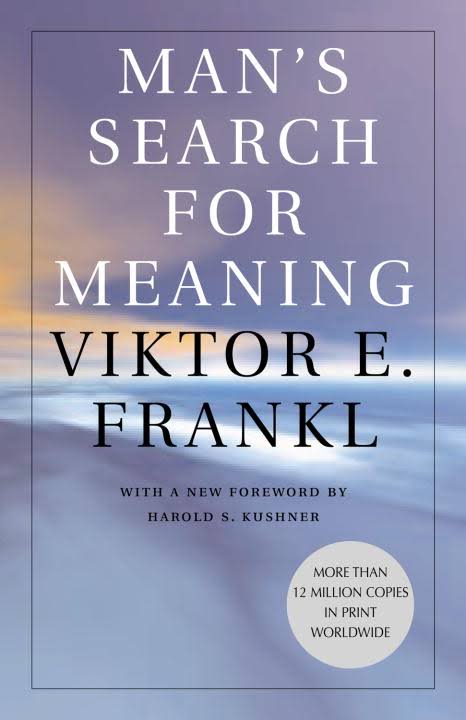
Man’s Search for Meaning

Author: Viktor E. Frankl
Rating: 9/10
Last Read: May 2014

Quick Summary: Viktor Frankl was sent to a concentration camp during WWII.  He discusses his own experiences and those of fellow prisoners, and tries to find the reason that some were able to survive the harsh concentration camps, while others simply gave up and died.  This book is an excellent read and will shift your perspective on the value of having a purpose and a good mental attitude.  

Terrible as it was, his experience in Auschwitz reinforced what was already one of his key ideas: Life is not primarily a quest for pleasure, as Freud believed, or a quest for power, as Alfred Adler taught, but a quest for meaning.

One thing to note: I remember reading this in China while riding on the bus to Foxconn.  It’s incredibly hard to do work after reading Frankl’s descriptions of being in concentration camps and differentiating those who survived and those who didn’t.  Be aware of the material, and perhaps find a suitable time to read.  This is not bedtime reading material.

There is value is looking into the dark parts of the human condition.  In those parts one can truly find the appreciation for the positive aspects of life, the strength of the will, and the generosity of those whose spirit will not be bent and broken by the dark aspects of the world.

We who lived in concentration camps can remember the men who walked through the huts comforting others, giving away their last piece of bread. They may have been few in number, but they offer sufficient proof that everything can be taken from a man but one thing: the last of the human freedoms—to choose one’s attitude in any given set of circumstances, to choose one’s own way.

My Highlights

The forward echoes my own sentiments on the value of a good book:

Typically, if a book has one passage, one idea with the power to change a person’s life, that alone justifies reading it, rereading it, and finding room for it on one’s shelves. –loc 16

Nietzsche: “He who has a Why to live for can bear almost any How.” –loc 21

Frankl saw three possible sources for meaning: in work (doing something significant), in love (caring for another person), and in courage during difficult times. –loc 29

Suffering in and of itself is meaningless; we give our suffering meaning by the way in which we respond to it. –loc 30

Forces beyond your control can take away everything you possess except one thing, your freedom to choose how you will respond to the situation. You cannot control what happens to you in life, but you can always control what you will feel and do about what happens to you. –loc 35

Frankl would have argued that we are never left with nothing as long as we retain the freedom to choose how we will respond. –loc 41

We have come to know Man as he really is. After all, man is that being who invented the gas chambers of Auschwitz; however, he is also that being who entered those gas chambers upright, with the Lord’s Prayer or the Shema Yisrael on his lips.
HAROLD S. KUSHNER
–loc 55

And now, to Frankl’s own words…

Whereupon I react by reporting that in the first place I do not at all see in the bestseller status of my book an achievement and accomplishment on my part but rather an expression of the misery of our time: if hundreds of thousands of people reach out for a book whose very title promises to deal with the question of a meaning to life, it must be a question that burns under their fingernails. –loc 65

“Don’t aim at success—the more you aim at it and make it a target, the more you are going to miss it. For success, like happiness, cannot be pursued; it must ensue, and it only does so as the unintended side-effect of one’s dedication to a cause greater than oneself or as the by-product of one’s surrender to a person other than oneself. Happiness must happen, and the same holds for success: you have to let it happen by not caring about it. I want you to listen to what your conscience commands you to do and go on to carry it out to the best of your knowledge. Then you will live to see that in the long run—in the long run, I say!—success will follow you precisely because you had forgotten to think of it.” –loc 81

it will try to answer this question: How was everyday life in a concentration camp reflected in the mind of the average prisoner? –loc 104

It is easy for the outsider to get the wrong conception of camp life, a conception mingled with sentiment and pity. Little does he know of the hard fight for existence which raged among the prisoners. This was an unrelenting struggle for daily bread and for life itself, for one’s own sake or for that of a good friend. –loc 114

Every man was controlled by one thought only: to keep himself alive for the family waiting for him at home, and to save his friends. With no hesitation, therefore, he would arrange for another prisoner, another “number,” to take his place in the transport. –loc 127

These former prisoners often say, “We dislike talking about our experiences. No explanations are needed for those who have been inside, and the others will understand neither how we felt then nor how we feel now.” –loc 139

In psychiatry there is a certain condition known as “delusion of reprieve.” The condemned man, immediately before his execution, gets the illusion that he might be reprieved at the very last minute. –loc 187

At that moment I saw the plain truth and did what marked the culminating point of the first phase of my psychological reaction: I struck out my whole former life. –loc 240

Apart from that strange kind of humor, another sensation seized us: curiosity. I have experienced this kind of curiosity before, as a fundamental reaction toward certain strange circumstances. When my life was once endangered by a climbing accident, I felt only one sensation at the critical moment: curiosity, curiosity as to whether I should come out of it alive or with a fractured skull or some other injuries. –loc 264

The prisoner of Auschwitz, in the first phase of shock, did not fear death. Even the gas chambers lost their horrors for him after the first few days—after all, they spared him the act of committing suicide. –loc 292

I grasped the meaning of the greatest secret that human poetry and human thought and belief have to impart: The salvation of man is through love and in love. I understood how a man who has nothing left in this world still may know bliss, be it only for a brief moment, in the contemplation of his beloved. In a position of utter desolation, when man cannot express himself in positive action, when his only achievement may consist in enduring his sufferings in the right way —an honorable way—in such a position man can, through loving contemplation of the image he carries of his beloved, achieve fulfillment. –loc 528

I knew only one thing—which I have learned well by now: Love goes very far beyond the physical person of the beloved. It finds its deepest meaning in his spiritual being, his inner self. Whether or not he is actually present, whether or not he is still alive at all, ceases somehow to be of importance. –loc 541

The attempt to develop a sense of humor and to see things in a humorous light is some kind of a trick learned while mastering the art of living. –loc 610

To draw an analogy: a man’s suffering is similar to the behavior of gas. If a certain quantity of gas is pumped into an empty chamber, it will fill the chamber completely and evenly, no matter how big the chamber. Thus suffering completely fills the human soul and conscious mind, no matter whether the suffering is great or little. Therefore the “size” of human suffering is absolutely relative. –loc 611

(The consciousness of one’s inner value is anchored in higher, more spiritual things, and cannot be shaken by camp life. But how many free men, let alone prisoners, possess it?) –loc 839

Man can preserve a vestige of spiritual freedom, of independence of mind, even in such terrible conditions of psychic and physical stress. –loc 874

We who lived in concentration camps can remember the men who walked through the huts comforting others, giving away their last piece of bread. They may have been few in number, but they offer sufficient proof that everything can be taken from a man but one thing: the last of the human freedoms—to choose one’s attitude in any given set of circumstances, to choose one’s own way. –loc 875

Dostoevski said once, “There is only one thing that I dread: not to be worthy of my sufferings.” –loc 886

It can be said that they were worthy of their sufferings; the way they bore their suffering was a genuine inner achievement. It is this spiritual freedom—which cannot be taken away—that makes life meaningful and purposeful. –loc 888

An active life serves the purpose of giving man the opportunity to realize values in creative work, while a passive life of enjoyment affords him the opportunity to obtain fulfillment in experiencing beauty, art, or nature. But there is also purpose in that life which is almost barren of both creation and enjoyment and which admits of but one possibility of high moral behavior: namely, in man’s attitude to his existence, an existence restricted by external forces. A creative life and a life of enjoyment are banned to him. But not only creativeness and enjoyment are meaningful. If there is a meaning in life at all, then there must be a meaning in suffering. Suffering is an ineradicable part of life, even as fate and death. Without suffering and death human life cannot be complete. –loc 889

Everywhere man is confronted with fate, with the chance of achieving something through his own suffering. –loc 902

Take the fate of the sick—especially those who are incurable. I once read a letter written by a young invalid, in which he told a friend that he had just found out he would not live for long, that even an operation would be of no help. He wrote further that he remembered a film he had seen in which a man was portrayed who waited for death in a courageous and dignified way. The boy had thought it a great accomplishment to meet death so well. Now—he wrote—fate was offering him a similar chance. –loc 903

This young woman knew that she would die in the next few days. But when I talked to her she was cheerful in spite of this knowledge. “I am grateful that fate has hit me so hard,” she told me. “In my former life I was spoiled and did not take spiritual accomplishments seriously.” Pointing through the window of the hut, she said, “This tree here is the only friend I have in my loneliness.” Through that window she could see just one branch of a chestnut tree, and on the branch were two blossoms. “I often talk to this tree,” she said to me. I was startled and didn’t quite know how to take her words. Was she delirious? Did she have occasional hallucinations? Anxiously I asked her if the tree replied. “Yes.” What did it say to her? She answered, “It said to me, ‘I am here—I am here—I am life, eternal life.’” –loc 916

The unemployed worker, for example, is in a similar position. His existence has become provisional and in a certain sense he cannot live for the future or aim at a goal. –loc 936

Instead of taking the camp’s difficulties as a test of their inner strength, they did not take their life seriously and despised it as something of no consequence. They preferred to close their eyes and to live in the past. Life for such people became meaningless. –loc 955

What does Spinoza say in his Ethics? —“Affectus, qui passio est, desinit esse passio simulatque eius claram et distinctam formamus ideam.” Emotion, which is suffering, ceases to be suffering as soon as we form a clear and precise picture of it. –loc 978

Life ultimately means taking the responsibility to find the right answer to its problems and to fulfill the tasks which it constantly sets for each individual. –loc 1018

When a man finds that it is his destiny to suffer, he will have to accept his suffering as his task; his single and unique task. He will have to acknowledge the fact that even in suffering he is unique and alone in the universe. No one can relieve him of his suffering or suffer in his place. His unique opportunity lies in the way in which he bears his burden. –loc 1026

Long ago we had passed the stage of asking what was the meaning of life, a naïve query which understands life as the attaining of some aim through the active creation of something of value. For us, the meaning of life embraced the wider cycles of life and death, of suffering and of dying. –loc 1031

“Was Du erlebst, kann keine Macht der Welt Dir rauben.” (What you have experienced, no power on earth can take from –loc 1086

The body has fewer inhibitions than the mind. –loc 1156

Logotherapy focuses rather on the future, that is to say, on the meanings to be fulfilled by the patient in his future. (Logotherapy, indeed, is a meaning-centered psychotherapy.) –loc 1236

According to logotherapy, this striving to find a meaning in one’s life is the primary motivational force in man. –loc 1244

Man’s search for meaning is the primary motivation in his life and not a “secondary rationalization” of instinctual drives. This meaning is unique and specific in that it must and can be fulfilled by him alone; only then does it achieve a significance which will satisfy his own will to meaning. –loc 1248

The term “existential” may be used in three ways: to refer to (1) existence itself, i.e., the specifically human mode of being; (2) the meaning of existence; and (3) the striving to find a concrete meaning in personal existence, that is to say, the will to meaning. –loc 1268

A man’s concern, even his despair, over the worthwhileness of life is an existential distress but by no means a mental disease. –loc 1292

Thus it can be seen that mental health is based on a certain degree of tension, the tension between what one has already achieved and what one still ought to accomplish, or the gap between what one is and what one should become. –loc 1315

No instinct tells him what he has to do, and no tradition tells him what he ought to do; sometimes he does not even know what he wishes to do. Instead, he either wishes to do what other people do (conformism) or he does what other people wish him to do (totalitarianism). –loc 1335

The existential vacuum manifests itself mainly in a state of boredom. Now we can understand Schopenhauer when he said that mankind was apparently doomed to vacillate eternally between the two extremes of distress and boredom. –loc 1339

Let us consider, for instance, “Sunday neurosis,” that kind of depression which afflicts people who become aware of the lack of content in their lives when the rush of the busy week is over and the void within themselves becomes manifest. –loc 1343

This emphasis on responsibleness is reflected in the categorical imperative of logotherapy, which is: “Live as if you were living already for the second time and as if you had acted the first time as wrongly as you are about to act now!” –loc 1371

Such a precept confronts him with life’s finiteness as well as the finality of what he makes out of both his life and himself. –loc 1374

By declaring that man is responsible and must actualize the potential meaning of his life, I wish to stress that the true meaning of life is to be discovered in the world rather than within man or his own psyche, as though it were a closed system. –loc 1385

It denotes the fact that being human always points, and is directed, to something, or someone, other than oneself—be it a meaning to fulfill or another human being to encounter. –loc 1387

The more one forgets himself—by giving himself to a cause to serve or another person to love—the more human he is and the more he actualizes himself. –loc 1388

Thus far we have shown that the meaning of life always changes, but that it never ceases to be. According to logotherapy, we can discover this meaning in life in three different ways: (1) by creating a work or doing a deed; (2) by experiencing something or encountering someone; and (3) by the attitude we take toward unavoidable suffering. –loc 1391

The second way of finding a meaning in life is by experiencing something—such as goodness, truth and beauty—by experiencing nature and culture or, last but not least, by experiencing another human being in his very uniqueness—by loving him. –loc 1394

Thus love is not understood as a mere side-effect of sex; rather, sex is a way of expressing the experience of that ultimate togetherness which is called love. –loc 1404

For what then matters is to bear witness to the uniquely human potential at its best, which is to transform a personal tragedy into a triumph, to turn one’s predicament into a human achievement. –loc 1408

When we are no longer able to change a situation—just think of an incurable disease such as inoperable cancer—we are challenged to change ourselves. –loc 1409

suffering ceases to be suffering at the moment it finds a meaning, such as the meaning of a sacrifice. –loc 1416

“our current mental-hygiene philosophy stresses the idea that people ought to be happy, that unhappiness is a symptom of maladjustment. Such a value system might be responsible for the fact that the burden of unavoidable unhappiness is increased by unhappiness about being unhappy.” –loc 1425

I observed that procreation is not the only meaning of life, for then life in itself would become meaningless, and something which in itself is meaningless cannot be rendered meaningful merely by its perpetuation. –loc 1491

Logotherapy bases its technique called “paradoxical intention” on the twofold fact that fear brings about that which one is afraid of, and that hyper-intention makes impossible what one wishes. –loc 1544

Our generation is realistic, for we have come to know man as he really is. After all, man is that being who invented the gas chambers of Auschwitz; however, he is also that being who entered those gas chambers upright, with the Lord’s Prayer or the Shema Yisrael on his lips. –loc 1664

To the European, it is a characteristic of the American culture that, again and again, one is commanded and ordered to “be happy.” –loc 1714

One must have a reason to “be happy.” Once the reason is found, however, one becomes happy automatically. –loc 1716

Once an individual’s search for a meaning is successful, it not only renders him happy but also gives him the capability to cope with suffering. –loc 1725

Live as if you were living for the second time and had acted as wrongly the first time as you are about to act now. –loc 1857

From this one may see that there is no reason to pity old people. Instead, young people should envy them. It is true that the old have no opportunities, no possibilities in the future. But they have more than that. Instead of possibilities in the future, they have realities in the past—the potentialities they have actualized, the meanings they have fulfilled, the values they have realized—and nothing and nobody can ever remove these assets from the past. –loc 1864

Frankl was once asked to express in one sentence the meaning of his own life. He wrote the response on paper and asked his students to guess what he had written. After some moments of quiet reflection, a student surprised Frankl by saying, “The meaning of your life is to help others find the meaning of theirs.”
“That was it, exactly,” Frankl said. “Those are the very words I had written.” –loc 2057