Do the Work

Author: Steven Pressfield
Recommended for: Anyone working on a creative or entrepreneurial endeavor
Last Read: June 2014, October 2019

Quick Summary:

I had ready many of Steven Pressfield’s novels before I had discovered his works  on the creative spirit.  Do the Work is a short read that discusses the role of Resistance in the projects that we tackle.  Pressfield shares anecdotes and provides motivation for pushing past resistance, doing the work, and shipping whatever you’re working on.

While a little woo-woo and out there, I must admit that Do the Work has opened my eyes to the role that Resistance plays in my life.  I have streamlined my processes, separated research and action, and committed doing the work. With results like that, I can’t knock the woo-woo side.

For those interested in creating or producing something, read this book. If you like the book, you can follow it up with The War of Art.

On the field of the Self stand a knight and a dragon.   You are the knight. Resistance is the dragon.

I was thirty years old before I had an actual thought. Everything up till then was either what Buddhists call “monkey-mind” chatter or the reflexive regurgitation of whatever my parents or teachers said, or whatever I saw on the news or read in a book, or heard somebody rap about, hanging around the street corner. 

Key Lessons:

  • The best way to combat Resistance is to commit yourself to doing your work without fail. Show up, every day, like a professional. 
  • Don’t let anything delay you from taking action, because that’s how Resistance creeps in. Act, then revise. Bias yourself toward action.

My Highlights

Italicized sub-bullet comments are mine.

  • On the field of the Self stand a knight and a dragon.   You are the knight. Resistance is the dragon. 
  • Resistance cannot be seen, heard, touched, or smelled. But it can be felt. We experience it as an energy field radiating from a work-in-potential. 
  • Rule of thumb: The more important a call or action is to our soul’s evolution, the more Resistance we will feel toward pursuing it. 
  • Bad things happen when we employ rational thought, because rational thought comes from the ego. Instead, we want to work from the Self, that is, from instinct and intuition, from the unconscious. 
  • The problem with friends and family is that they know us as we are. They are invested in maintaining us as we are. The last thing we want is to remain as we are. 
  • Ignorance and arrogance are the artist and entrepreneur’s indispensable allies. She must be clueless enough to have no idea how difficult her enterprise is going to be—and cocky enough to believe she can pull it off anyway. 
  • A child has no trouble believing the unbelievable, nor does the genius or the madman. It’s only you and I, with our big brains and our tiny hearts, who doubt and overthink and hesitate. 
  • Don’t think. Act. We can always revise and revisit once we’ve acted. But we can accomplish nothing until we act. 
  • Once we commit to action, the worst thing we can do is to stop. 
  • There’s an exercise that Patricia Ryan Madson describes in her wonderful book, Improv Wisdom. (Ms. Madson taught improvisational theater at Stanford to standing-room only classes for twenty years.) Here’s the exercise: Imagine a box with a lid. Hold the box in your hand. Now open it. What’s inside? It might be a frog, a silk scarf, a gold coin of Persia. But here’s the trick: no matter how many times you open the box, there is always something in it. Ask me my religion. That’s it. I believe with unshakeable faith that there will always be something in the box. 
  • Fear saps passion. When we conquer our fears, we discover a boundless, bottomless, inexhaustible well of passion.
  • When art and inspiration and success and fame and money have come and gone, who still loves us—and whom do we love? Only two things will remain with us across the river: our inhering genius and the hearts we love. 
  • Don’t prepare. Begin. Remember, our enemy is not lack of preparation; it’s not the difficulty of the project or the state of the marketplace or the emptiness of our bank account. The enemy is Resistance. 
  • Good things happen when we start before we’re ready. For one thing, we show huevos. Our blood heats up. Courage begets more courage. The gods, witnessing our boldness, look on in approval. 
  • Before we begin, you wanna do research? Uh-unh. I’m putting you on a diet. You’re allowed to read three books on your subject. No more. No underlining, no highlighting, no thinking or talking about the documents later. Let the ideas percolate. Let the unconscious do its work. 
  • Research can become Resistance. We want to work, not prepare to work. 
  • The creative act is primitive. Its principles are of birth and genesis. Babies are born in blood and chaos; stars and galaxies come into being amid the release of massive primordial cataclysms. Conception occurs at the primal level. I’m not being facetious when I stress, throughout this book, that it is better to be primitive than to be sophisticated, and better to be stupid than to be smart. 
  • If you and I want to do great stuff, we can’t let ourselves work small. A home-run swing that results in a strikeout is better than a successful bunt or even a line-drive single. 
  • Steve, God made a single sheet of yellow foolscap exactly the right length to hold the outline of an entire novel. 
  • He meant don’t overthink. Don’t overprepare. Don’t let research become Resistance. Don’t spend six months compiling a thousand-page tome detailing the emotional matrix and family history of every character in your book. Outline it fast. Now. On instinct. 
  • Discipline yourself to boil down your story/new business/philanthropic enterprise to a single page. 
  • Three-Act Structure Break the sheet of foolscap into three parts: beginning, middle, and end. This is how screenwriters and playwrights work. Act One, Act Two, Act Three. 
  • Here’s a trick that screenwriters use: work backwards. Begin at the finish. 
  • If you’re writing a movie, solve the climax first. If you’re opening a restaurant, begin with the experience you want the diner to have when she walks in and enjoys a meal. If you’re preparing a seduction, determine the state of mind you want the process of romancing to bring your lover to. Figure out where you want to go; then work backwards from there. 
  • Yes, you say. “But how do I know where I want to go?” Answer the Question “What Is This About?” Start with the theme. What is this project about? 
  • Have you ever meditated? Then you know what it feels like to shift your consciousness to a witnessing mode and to watch thoughts arise, float across your awareness, and then drift away, to be replaced by the next thought and the thought after that. These are not thoughts. They are chatter. 
  • I was thirty years old before I had an actual thought. Everything up till then was either what Buddhists call “monkey-mind” chatter or the reflexive regurgitation of whatever my parents or teachers said, or whatever I saw on the news or read in a book, or heard somebody rap about, hanging around the street corner. 
  • Pay no attention to those rambling, disjointed images and notions that drift across the movie screen of your mind. Those are not your thoughts. They are chatter. They are Resistance. 
  • Chatter is Resistance. Its aim is to reconcile you to “the way it is,” to make you exactly like everyone else, to render you amenable to societal order and discipline. 
  • Where do our own real thoughts come from? How can we access them? From what source does our true, authentic self speak? Answering that is the work you and I will do for the rest of our lives. 
    • This is a purpose to latch onto
  • We’ve got our concept, we’ve got our theme. We know our start. We know where we want to finish. We’ve got our project in three acts on a single sheet of foolscap. Ready to roll? We need only to remember our three mantras: Stay primitive. Trust the soup. Swing for the seats. And our final-final precept: 4. Be ready for Resistance.
  • David Lean famously declared that a feature film should have seven or eight major sequences. That’s a pretty good guideline for our play, our album, our State of the Union address. 
  • Do research early or late. Don’t stop working. Never do research in prime working time. 
  • One trick they use is to boil down their presentation to the following: A killer opening scene Two major set pieces in the middle A killer climax A concise statement of the theme In other words, they’re filling in the gaps. The major beats. 
  • One rule for first full working drafts: get them done ASAP. Don’t worry about quality. Act, don’t reflect. Momentum is everything. 
  • Unless you’re building a sailboat or the Taj Mahal, I give you a free pass to screw up as much as you like. The inner critic? His ass is not permitted in the building. Set forth without fear and without self-censorship. When you hear that voice in your head, blow it off. This draft is not being graded. There will be no pop quiz. Only one thing matters in this initial draft: get SOMETHING done, however flawed or imperfect. You are not allowed to judge yourself. 
  • Nothing is more fun than turning on the recorder and hearing your own voice telling you a fantastic idea that you had completely forgotten you had. 
  • Let’s talk about the actual process—the writing/composing/ idea generation process. It progresses in two stages: action and reflection. Act, reflect. Act, reflect. NEVER act and reflect at the same time. 
    • A principle of creation
  • Forget rational thought. Play. Play like a child. Why does this purely instinctive, intuitive method work? Because our idea (our song, our ballet, our new Tex-Mex restaurant) is smarter than we are. 
  • Our job is not to control our idea; our job is to figure out what our idea is (and wants to be)—and then bring it into being. 
  • When an idea pops into our head and we think, “No, this is too crazy,” … that’s the idea we want. When we think, “This notion is completely off the wall … should I even take the time to work on this?” … the answer is yes. Never doubt the soup. Never say no. The answer is always yes. 
  • At least twice a week, I pause in the rush of work and have a meeting with myself. (If I were part of a team, I’d call a team meeting.) I ask myself, again, of the project: “What is this damn thing about?” Keep refining your understanding of the theme; keep narrowing it down. 
  • Paddy Chayefsky famously said, “As soon as I figure out the theme of my play, I write it down on a thin strip of paper and Scotch-tape it to the front of my typewriter. After that, nothing goes into that play that isn’t on-theme.”
  • We have been conditioned to imagine that the darkness that we see in the world and feel in our own hearts is only an illusion, which can be dispelled by the proper care, the proper love, the proper education, and the proper funding. It can’t. There is an enemy. There is an intelligent, active, malign force working against us. Step one is to recognize this. This recognition alone is enormously powerful. It saved my life, and it will save yours.
  • Principle Number Two: This Enemy Is Implacable The hostile, malicious force that we’re experiencing now is not a joke. It is not to be trifled with or taken lightly. It is for real. In the words of my dear friend Rabbi Mordecai Finley: “It will kill you. It will kill you like cancer.” This enemy is intelligent, protean, implacable, inextinguishable, and utterly ruthless and destructive. 
  • Pat Riley, when he was coach of the Lakers, had a term for all those off-court forces, like fame and ego (not to mention crazed fans, the press, agents, sponsors, and ex-wives), that worked against the players’ chances for on-court success. He called these forces “peripheral opponents.”
  • Resistance is not a peripheral opponent. It does not arise from rivals, bosses, spouses, children, terrorists, lobbyists, or political adversaries. It comes from us. 
  • The fourth axiom of Resistance is that the enemy is inside you, but it is not you. 
  • The enemy is in you, but it is not you. No moral judgment attaches to the possession of it. You “have” Resistance the same way you “have” a heartbeat. You are blameless. You retain free will and the capacity to act. 
  • On the field of the Self stand a knight and a dragon. You are the knight. Resistance is the dragon. There is no way to be nice to the dragon, or to reason with it or negotiate with it or beam a white light around it and make it your friend. The dragon belches fire and lives only to block you from reaching the gold of wisdom and freedom, which it has been charged to guard to its final breath. The only intercourse possible between the knight and the dragon is battle. The contest is life-and-death, mano a mano. It asks no quarter and gives none. This is the fifth principle of Resistance. 
    • I know the truth of this, deep in my bones
  • The sixth principle of Resistance (and the key to overcoming it) is that Resistance arises second. What comes first is the idea, the passion, the dream of the work we are so excited to create that it scares the hell out of us. 
  • Resistance is the response of the frightened, petty, small-time ego to the brave, generous, magnificent impulse of the creative self. 
  • It means that before the dragon of Resistance reared its ugly head and breathed fire into our faces, there existed within us a force so potent and life-affirming that it summoned this beast into being, perversely, to combat it. 
  • In myths and legends, the knight is always aided in his quest to slay the dragon. Providence brings forth a champion whose role is to assist the hero. Theseus had Ariadne when he fought the Minotaur. Jason had Medea when he went after the Golden Fleece. Odysseus had the goddess Athena to guide him home. In Native American myths, our totemic ally is often an animal—a magic raven, say, or a talking coyote. In Norse myths, an old crone sometimes assists the hero; in African legends, it’s often a bird. The three Wise Men were guided by a star. All of these characters or forces represent Assistance. They are symbols for the unmanifested. They stand for a dream. The dream is your project, your vision, your symphony, your startup. The love is the passion and enthusiasm that fill your heart when you envision your project’s completion. 
  • Test Number One “How bad do you want it?” This is Resistance’s first question. The scale below will help you answer. Mark the selection that corresponds to how you feel about your book/movie/ballet/new business/whatever.   Dabbling • Interested • Intrigued but Uncertain • Passionate • Totally Committed   If your answer is not the one on the far right, put this book down and throw it away. 
  • Test Number Two “Why do you want it?” 
  • Because I have no choice 
  • Did you ever see Cool Hand Luke? Remember “the Box”? You don’t get to keep anything when you enter this space. You must check at the door: Your ego Your sense of entitlement Your impatience Your fear Your hope Your anger You must also leave behind:   All grievances related to aspects of yourself dependent on the accident of birth, e.g., how neglected/abused/ mistreated/unloved/poor/ill-favored etc. you were when you were born. All sense of personal exceptionalness dependent on the accident of birth, e.g., how rich/cute/tall/thin/smart/charming/loveable you were when you were born. All of the previous two, based on any subsequent (i.e., post-birth) acquisition of any of these qualities, however honorably or meritoriously earned. The only items you get to keep are love for the work, will to finish, and passion to serve the ethical, creative Muse. 
  • The Big Crash is so predictable, across all fields of enterprise, that we can practically set our watches by it. Bank on it. It’s gonna happen. 
    • The trough of sorrow in startup-speak
  • There’s a difference between Navy SEAL training and what you and I are facing now. Our ordeal is harder. Because we’re alone. We’ve got no trainers over us, shouting in our ears or kicking our butts to keep us going. We’ve got no friends, no fellow sufferers, no externally imposed structure. No one’s feeding us, housing us, or clothing us. We have no objective milestones or points of validation. We can’t tell whether we’re doing great or falling on our faces. When we finish, if we do, no one will be waiting to congratulate us. We’ll get no champagne, no beach party, no diploma, no insignia. The battle we’re fighting, we can’t explain to anybody or share with anybody or call in anybody to help. 
  • Crashes are hell, but in the end they’re good for us. A crash means we have failed. We gave it everything we had and we came up short. A crash does not mean we are losers. A crash means we have to grow. 
  • A crash means we’re at the threshold of learning something, which means we’re getting better, we’re acquiring the wisdom of our craft. A crash compels us to figure out what works and what doesn’t work—and to understand the difference. 
  • We got ourselves into this mess by mistakes we made at the start. How? Were we lazy? Inattentive? Did we mean well but forget to factor in human nature? Did we assess reality incorrectly? Whatever the cause, the Big Crash compels us to go back now and solve the problem that we either created directly or set into motion unwittingly at the outset. 
  • Creative panic is good. Here’s why: Our greatest fear is fear of success. 
  • When we experience panic, it means that we’re about to cross a threshold. We’re poised on the doorstep of a higher plane. 
  • In the belly of the beast, we remind ourselves of two axioms: The problem is not us. The problem is the problem. Work the problem. 
  • A professional does not take success or failure personally. That’s Priority Number One for us now. 
  • That our project has crashed is not a reflection of our worth as human beings. It’s just a mistake. It’s a problem—and a problem can be solved. 
  • I’m not trying to be cryptic or facetious. We went wrong at the start because the problem was so hard (and the act of solving it was so painful) that we ducked and dodged and bypassed. We hoped it would go away. We hoped it would solve itself. A little voice warned us then, but we were too smart to listen. The bad news is, the problem is hell. The good news is it’s just a problem. It’s not us. We are not worthless or evil or crazy. We’re just us, facing a problem. 
  • We ask our Big Question: “What’s missing?” 
  • No matter how great a writer, artist, or entrepreneur, he is a mortal, he is fallible. He is not proof against Resistance. He will drop the ball; he will crash. That’s why they call it rewriting. 
  • Why does Seth Godin place so much emphasis on “shipping”? Because finishing is the critical part of any project. If we can’t finish, all our work is for nothing. 
  • How hard is it to finish something? The greatest drama in the English language was written on this very subject. Hamlet knows he must kill his uncle for murdering his father. But then he starts to think—and the next thing you know, the poor prince is so self-befuddled, he’s ready to waste himself with a bare bodkin. 
  • When Michael Crichton approached the end of a novel (so I’ve read), he used to start getting up earlier and earlier in the morning. He was desperate to keep his mojo going. He’d get up at six, then five, then three-thirty and two-thirty, till he was driving his wife insane. Finally he had to move out of the house. He checked into a hotel (the Kona Village, which ain’t so bad) and worked around the clock till he’d finished the book. Michael Crichton was a pro. He knew that Resistance was strongest at the finish. He did what he had to do, no matter how nutty or unorthodox, to finish and be ready to ship. 
  • Marianne Williamson: Our deepest fear is not that we are inadequate. Our deepest fear is that we are powerful beyond measure. It is our light, not our darkness, that most frightens us. We ask ourselves, Who am I to be brilliant, gorgeous, talented, fabulous? Actually, who are you not to be? You are a child of God. Your playing small does not serve the world. There is nothing enlightened about shrinking so that other people won’t feel insecure around you. We are all meant to shine, as children do. We were born to make manifest the glory of God that is within us. It’s not just in some of us; it’s in everyone. And as we let our own light shine, we unconsciously give other people permission to do the same. As we are liberated from our own fear, our presence automatically liberates others. 
  • That’s why we’re so afraid of it. When we ship, we’ll be judged. The real world will pronounce upon our work and upon us. When we ship, we can fail. When we ship, we can be humiliated. 
  • “You’re where you wanted to be, aren’t you? So you’re taking a few blows. That’s the price for being in the arena and not on the sidelines. Stop complaining and be grateful.” 
  • When we ship, we open ourselves to judgment in the real world. Nothing is more empowering, because it plants us solidly on Planet Earth and gets us out of our self-devouring, navel-centered fantasies and self-delusions. 
  • Slay that dragon once, and he will never have power over you again. Yeah, he’ll still be there. Yeah, you’ll still have to duel him every morning. And yeah, he’ll still fight just as hard and use just as many nasty tricks as he ever did. But you will have beaten him once, and you’ll know you can beat him again. That’s a game-changer. That will transform your life. 
  • From the day I finally finished something, I’ve never had trouble finishing anything again. I always deliver. I always ship. 
    • A standard we should live by
  • I stand in awe of anyone who hatches a dream and who shows the guts to hang tough, all alone, and see it through to reality. 
  • I tip my hat to you for what you’ve done—for losing forty pounds, for kicking crack cocaine, for surviving the loss of someone you love, for facing any kind of adversity—internal or external—and slogging through. I come to attention when you walk past. I stand up for you like the spectators in the gallery stood up for Atticus Finch in To Kill A Mockingbird. 
  • You have joined an elite fraternity, whether you realize it or not. By dint of your efforts and your perseverance, you have initiated yourself into an invisible freemasonry whose members are awarded no badges or insignia, share no secret handshake, and wear no funny-looking hats. But the fellows of this society recognize one another. I recognize you. I salute you. You can be proud of yourself. You’ve done something that millions talk about but only a handful actually perform. And if you can do it once, you can do it again. I don’t care if you fail with this project. I don’t care if you fail a thousand times. You have done what only mothers and gods do: you have created new life. 
  • Then get back to work. Begin the next one tomorrow. Stay stupid. Trust the soup. Start before you’re ready.

Three Theban Plays (Oedipus Cycle)

Author: Sophocles, trans. Robert Fagles
Rating: 8/10
Last Read: December 2012

Quick Summary:  One of my favorite classes in college traced the development of knowledge from ancient Greece through the middle ages.  One of the books we read was Robert Fagles’s translation of the Three Theban Plays: Antigone, Oedipus the King, and Oedipus at Colonus.  Many are nominally familiar with the character of Oedipus, but the story is much more tragic than the “oedipal” nature that most of us recall.  Reading the plays firsthand was definitely enjoyable.  There are wise words and challenging thoughts about implicit rules, duty, and the hand of fate.

My Highlights

I mean you well. I give you sound advice. It’s best to learn from a good adviser when he speaks for your own good: it’s pure gain. –loc 1243

Believe me, when a man has squandered his true joys, he’s good as dead, I tell you, a living corpse. Pile up riches in your house, as much as you like— live like a king with a huge show of pomp, but if real delight is missing from the lot, I wouldn’t give you a wisp of smoke for it, not compared with joy. –loc 1318

Creon shows the world that of all the ills afflicting men the worst is lack of judgment. –loc 1356

That will come when it comes; we must deal with all that lies before us. The future rests with the ones who tend the future. –loc 1404

Wisdom is by far the greatest part of joy, and reverence toward the gods must be safeguarded. The mighty words of the proud are paid in full with mighty blows of fate, and at long last those blows will teach us wisdom. –loc 1413

Sophocles’ play has served modern man and his haunted sense of being caught in a trap not only as a base for a psychoanalytic theory which dooms the male infant to guilt and anxiety from his mother’s breast, but also as the model for a modern drama that presents to us, using the ancient figures, our own terror of the unknown future which we fear we cannot control—our deep fear that every step we take forward on what we think is the road of progress may really be a step toward a foreordained rendezvous with disaster. –loc 1451

So far as the action is concerned, it is the most relentlessly secular of the Sophoclean tragedies. Destiny, fate and the will of the gods do indeed loom ominously behind the human action, but that action, far from suggesting primeval rituals and satanic divinities, reflects, at every point, contemporary realities familiar to the audience that first saw the play. –loc 1476

Sophocles was dealing with matters that had urgent contemporary significance; prophecy was one of the great controversial questions of the day. It was in fact the key question, for the rationalist critique of the whole archaic religious tradition had concentrated its fire on this particular sector. Far more than prophecy was involved. For if the case for divine foreknowledge could be successfully demolished, the whole traditional religious edifice went down with it. If the gods did not know the future, they did not know any more than man. –loc 1512

The priest in the opening scene appeals to Oedipus as “the man of experience”; experience is the result of constant action and this too—especially their experience in naval warfare—is a quality celebrated by Athens’ orators and feared by her enemies. –loc 1537

Oedipus is courageous, and it was characteristic of Athenian courage that it rose to its greatest heights when the situation seemed most desperate. This is exactly what we see in the play—Oedipus’ most defiant and optimistic statement comes when Jocasta, knowing the truth, has gone off to hang herself, and the audience waits for the appearance of the shepherd who, under duress, will reluctantly supply the last piece of evidence that identifies Oedipus as the son of Laius and Jocasta. –loc 1539

The riddle has sinister verbal connections with his fate (his name in Greek is Oidipous and dipous is the Greek word for “two-footed” in the riddle, not to mention the later prophecy of Tiresias that he would leave Thebes as a blind man, “a stick tapping before him step by step,” 519), but the answer he proposed to the riddle—“Man”—is appropriate for the optimistic picture of man’s achievement and potential that the figure of Oedipus represents. –loc 1550

And all these images, like the plot, like the hero, have what Aristotle called their peripeteia, their reversal. The hunter catches a dreadful prey, the seaman steers his ship into an unspeakable harbor—“one and the same wide harbor served you / son and father both” (1335-36)—the plowman sows and reaps a fearful harvest, the investigator finds the criminal and the judge convicts him—they are all the same man—the revealer turns into the thing revealed, the finder into the thing found, the calculator finds he is himself the solution of the equation and the physician discovers that he is the disease. The catastrophe of the tragic hero thus becomes the catastrophe of fifth-century man; all his furious energy and intellectual daring drive him on to this terrible discovery of his fundamental ignorance—he is not the measure of all things but the thing measured and found wanting. –loc 1606

But the negative implication of this and many similar passages is clear: that a man is responsible for those actions which are not performed under constraint, which are the expression of his free will. The question of Oedipus’ responsibility for what happens (and what has happened) is, as we shall see, posed in the play; it is also discussed much later, in Oedipus at Colonus, which deals with Oedipus’ old age and death. –loc 1634

But it is the function of great art to purge and give meaning to human suffering, and so we expect that if the hero is indeed crushed by a bulldozer in Act II there will be some reason for it, and not just some reason but a good one, one which makes sense in terms of the hero’s personality and action. In fact, we expect to be shown that he is in some way responsible for what happens to him. –loc 1710

If so, the hero obviously cannot be “fated,” predestined or determined to act as he does. And, to get back finally to the Oedipus of Sophocles, Oedipus in the play is a free agent, and he is responsible for the catastrophe. For the plot of the play consists not of the actions which Oedipus was “fated” to perform, or rather, which were predicted; the plot of the play consists of his discovery that he has already fulfilled the prediction. And this discovery is entirely due to his action. –loc 1713

The existence of human freedom, dramatically represented in the action of Oedipus in the play, seems to be a mockery. The discovery to which it led is a catastrophe out of all proportion to the situation. –loc 1733

He chose to blind himself, he tells the chorus, because he could not bear to see the faces of his children and his fellow-citizens. But his action has, in the context of this play, an impressive rightness; the man who, proud of his far-seeing intelligence, taunted Tiresias with his blindness now realizes that all his life long he has himself been blind to the dreadful realities of his identity and action. –loc 1750

For a man to help others with all his gifts and native strength: that is the noblest work. –loc 1962

How terrible—to see the truth when the truth is only pain to him who sees! –loc 1963

TIRESIAS: I pity you, flinging at me the very insults each man here will fling at you so soon. –loc 2007

You are the king no doubt, but in one respect, at least, I am your equal: the right to reply. I claim that privilege too. I am not your slave. I serve Apollo. –loc 2027

TIRESIAS: I will go, once I have said what I came here to say. I will never shrink from the anger in your eyes— you can’t destroy me. Listen to me closely: the man you’ve sought so long, proclaiming, cursing up and down, the murderer of Laius— he is here. A stranger, you may think, who lives among you, he soon will be revealed a native Theban but he will take no joy in the revelation. Blind who now has eyes, beggar who now is rich, he will grope his way toward a foreign soil, a stick tapping before him step by step. OEDIPUS enters the palace. Revealed at last, brother and father both to the children he embraces, to his mother son and husband both—he sowed the loins his father sowed, he spilled his father’s blood! Go in and reflect on that, solve that. And if you find I’ve lied from this day onward call the prophet blind. TIRESIAS and the boy exit to the side. –loc 2054

CHORUS: My king, I’ve said it once, I’ll say it time and again— I’d be insane, you know it, senseless, ever to turn my back on you. You who set our beloved land-storm-tossed, shattered— straight on course. Now again, good helmsman, steer us through the storm! –loc 2206

JOCASTA: A prophet? Well then, free yourself of every charge! Listen to me and learn some peace of mind: no skill in the world, nothing human can penetrate the future. Here is proof, quick and to the point. An oracle came to Laius one fine day (I won’t say from Apollo himself but his underlings his priests) and it declared that doom would strike him down at the hands of a son, our son, to be born of our own flesh and blood. But Laius, so the report goes at least, was killed by strangers, thieves, at a place where three roads meet … my son— he wasn’t three days old and the boy’s father fastened his ankles, had a henchman fling him away on a barren, trackless mountain. There, you see? Apollo brought neither thing to pass. My baby no more murdered his father than Laius suffered— his wildest fear—death at his own son’s hands. That’s how the seers and all their revelations mapped out the future. Brush them from your mind. Whatever the god needs and seeks he’ll bring to light himself, with ease. –loc 2218

It is hard to recognize in this broken man the vigorous, confident figure of the earlier play, the man who answered the riddle of the Sphinx, who was “crowned … with honors … towering over all—/ mighty king of the seven gates of Thebes” (1329-30). But the news that he is in the grove of the Eumenides brings the old Oedipus to life in this tired old man: the same confident assertiveness—“I shall never leave my place in this new land” (53)—the same sense of his own worth—“whatever I say, there will be great vision / in every word I say” (89- 90). –loc 2840

Oh Theseus, dear friend, only the gods can never age, the gods can never die. All else in the world almighty Time obliterates, crushes all to nothing. (685-89) –loc 2927

Nothing mortal can resist the changes Time brings: not bodily strength, not friendship between man and man, still less between city and city. No man can be confident of the future; human confidence is based on total ignorance. It is the lesson Oedipus himself learned long ago in Thebes, and he reads it to Theseus now with all the authority of his empty eye sockets and dreadful name. –loc 2929

And the actions that were predicted were committed in ignorance; he killed his father “blind to whom I killed” (1115) and married his mother, both of them unwitting—“I knew nothing. she knew nothing” (1123). He places the responsibility squarely on the shoulders of the gods: “And the gods led me on” (1140). This defense is not contested, by Creon or anyone else; Oedipus stands cleared, in his own eyes and those of Athens, of any moral guilt. –loc 2996

the first two stanzas of the song with which they close this scene are a melancholy descant on the miseries of extreme old age. “Not to be born is best / when all is reckoned in …” (1388-89); this is a familiar Greek saying (it is found in almost this exact form in the sixth-century poet Theognis), –loc 3028

Acceptance—that is the great lesson suffering teaches, suffering and the long years, my close companions, yes, and nobility too, my royal birthright. –loc 3118

CHORUS: Fate will never punish a man for returning harm first done to him. Deceit matched by deceit, the tables turned: treachery pays you back in pain, not kindness. You—out of this place of rest, away, faster! Off and gone from the land—before you fix some greater penalty on our city. –loc 3277

Then what’s the good of glory, magnificent renown, if in its flow it streams away to nothing? –loc 3289

Tell me all. Your story, your fortunes would have to be grim indeed to make me turn my back on you. I too, I remember well, was reared in exile just like you, and in strange lands, like no man else on earth, I grappled dangers pressing for my life. Never, I tell you, I will never shrink from a stranger, lost as you are now, or fail to lend a hand and save a life. I am only a man, well I know, and I have no more power over tomorrow, Oedipus, than you. –loc 3509

Men have threatened for ages, blustered their threats to nothing in their rage. But once a man regains his self-control, all threats are gone. –loc 3587

LEADER: Nothing to fear, you have our promise. I may be old but the power of my country never ages. –loc 3616

Tell me, which of us suffers more from this tirade? Whom are you hurting more, me or you? –loc 3650

A man’s anger can never age and fade away, not until he dies. The dead alone feel no pain. –loc 3779

Come, tell me: if, by an oracle of the gods, some doom were hanging over my father’s head that he should die at the hands of his own son, how, with any justice, could you blame me? I wasn’t born yet, no father implanted me, no mother carried me in her womb— I didn’t even exist, not then! And if, once I’d come to the world of pain, as come I did, I fell to blows with my father, cut him down in blood— blind to what I was doing, blind to whom I killed— how could you condemn that involuntary act with any sense of justice? –loc 3785

It isn’t good for men with a decent cause to beg too long, or a man to receive help, then fail to treat a fellow-victim kindly. –loc 3913

Not to be born is best when all is reckoned in, but once a man has seen the light the next best thing, by far, is to go back back where he came from, quickly as he can. –loc 3925

The good leader repeats the good news, keeps the worst to himself. –loc 4024

0 light of the sun, no light to me! Once you were mine, I think… now for the last time I feel you warm my flesh, now I go to hide the last breath of life in the long house of Death. –loc 4105

Best of children, sisters arm-in-arm, we must bear what the gods give us to bear— don’t fire up your hearts with so much grief. No reason to blame the pass you’ve come to now. –loc 4176

J.S.Bach: F# Minor Toccata

This music weeps, not for sin
but rather for the black fact
that we must all die, but not one
of us knows what comes after.
This music leaps from key to key
as if it had no clear place to arrive,
making up its life, one bar at a time.
But when you come at last to the real theme,
strict, inexorable, and bleak,
you must play it slow and sad,
with melancholy dignity, or you miss
all its grim wisdom.
In three pages, it says, the universe collapses,
and you - still only halfway home.

Source

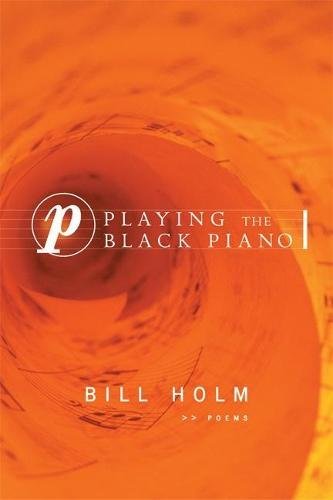
From Playing the Black Piano by Bill Holm.


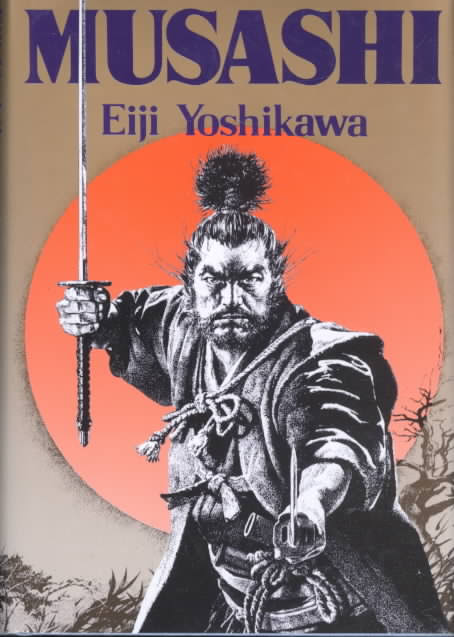
Musashi

Author: Eiji Yoshikawa
Rating: 9/10
Last Read: Nov 2017

Quick Summary: This novel is quite the epic read, in both length and enjoyment.  The book follows Miyamoto Musashi, a famous Japanese swordsman, across many journeys in the years of his life, culminating with his famous fight with Sasaki Kojiro.  The novel is divided up into different stages in Musashi’s life, also representing different stages in his growth and development. 

There are many philosophical and practical lessons to be gained from this book.  Zen themes permeate throughout, as can be expected in a book about a Japanese swordsman.  There is also much time to think of filial obligations, the path one has dedicated himself to in life, revenge, and other grandiose concepts that we all struggle with in our life’s journey.

I thoroughly enjoyed reading this book and look forward to my next reading.

My Highlights

Most important, he gradually transformed himself from an instinctive fighter into a man who fanatically pursued the goals of Zen-like self-discipline, complete inner mastery over oneself, and a sense of oneness with surrounding nature.
–loc 162

He called out, but there was no reply, nor did he expect one. A vacant house has an aura all its own.
–loc 743

After a while, Takuan grew reflective. “How peaceful it is here,” he sighed, sounding both religious and childlike. “Why, when we could live out our lives in a flower-filled paradise, do we all prefer to weep, suffer and get lost in a maelstrom of passion and fury, torturing ourselves in the flames of hell? I hope that you, at least, won’t have to go through all that.”
–loc 825

The captain, who was by now screaming, had his sheathed sword in hand. “I’ve taken all I can take. Now you’re going to get what’s coming to you!”
Takuan burst out laughing. “Does that mean you plan to cut off my head? If so, forget it. It would be a terrible bore.”
“Huh?”
“A bore. I can’t think of anything more boring than cutting off a monk’s head. It would just fall to the floor and lie there laughing up at you. Not a very grand accomplishment, and what good could it possibly do you?”
–loc 1377

“What are you saying, Otsū?” objected Takuan. “There’s nothing wrong with my mind, and I’m not joking. I’m only telling the truth, which no one seems to like to hear. He’s a dolt, so I called him a dolt. You want me to lie?”
–loc 1395

The captain was a man in his forties, ten years or so older than Takuan, but it was clear from their faces at this moment that strength of character is not a matter of age. Takuan’s tongue-lashing had humbled the older man and his bluster had evaporated.
–loc 1431

When word reached the temple priest, he nodded sagely and remarked that the human mouth is the gateway to catastrophe.
–loc 1472

“Listen, men and women of Miyamoto. I have something to say, something important.” The hue and cry died down. “It is not I who deserve the credit for capturing Takezō. It was not I who accomplished it, but the law of nature. Those who break it always lose in the end. It is the law that you should respect.”
–loc 1781

Loneliness, she mused, is like hunger; it isn’t outside but inside oneself. To be lonely, she thought, is to sense that one lacks something, something vitally necessary, but what she knew not.
–loc 1855

“That’s not the point, you imbecile! The trouble with you is that you don’t even know how to think. You seem to be under the misconception that if you perform one brave deed, that alone makes you a samurai. Well, it doesn’t! You let that one act of loyalty convince you of your righteousness. The more convinced you became, the more harm you caused yourself and everyone else. And now where are you? Caught in a trap you set for yourself, that’s where!” He paused. “By the way, how’s the view from up there, Takezō?” “You pig! I won’t forget this!” “You’ll forget everything soon. Before you turn into dried meat, Takezō, take a good look at the wide world around you. Gaze out onto the world of human beings, and change your selfish way of thinking. And then, when you arrive in that other world beyond and are reunited with your ancestors, tell them that just before you died a man named Takuan Sōhō told you this. They’ll be overjoyed to learn you had such excellent guidance, even if you did learn what life was all about too late to bring anything but shame to your family name.”
–loc 1968

Anger over petty emotional trifles is for women, not men.
–loc 2096

“Sorry, Takezō. It’s out of my hands. It’s the law of nature. You can’t do things over again. That’s life. Everything in it is for keeps. Everything! You can’t put your head back on after the enemy’s cut it off. That’s the way it is. Of course, I feel sorry for you, but I can’t undo that rope, because it wasn’t me who tied it. It was you. All I can do is give you some advice. Face death bravely and quietly. Say a prayer and hope someone bothers to listen. And for the sake of your ancestors, Takezō, have the decency to die with a peaceful look on your face!”
–loc 2136

The life that had been given to him was something to be treasured and cherished, polished and perfected.
–loc 2351

He who knows the art of the warrior is not confused in his movements. He acts and is not confined.
–loc 2479

“You may read as much as you want. A famous priest of ancient times once said, ‘I become immersed in the sacred scriptures and read thousands of volumes. When I come away, I find that my heart sees more than before.’
–loc 2485

He wondered if he’d ever again meet the man who’d saved his life. And again he was struck by Takuan’s concern for his fellow man, which seemed all-encompassing and completely devoid of selfishness. Musashi realized how narrow-minded he himself had been, how petty, to suppose that the monk felt a special compassion for him alone; his generosity encompassed Ogin, Otsū, anyone in need whom he thought he could help.
–loc 2616

These days he often felt deep admiration for other people’s work. He found he respected technique, art, even the ability to do a simple task well, particularly if it was a skill he himself had not mastered.
–loc 3240

He stopped along the way to look at several well-known temples, and at each of them he bowed and said two prayers. One was: “Please protect my sister from harm.” The other was: “Please test the lowly Musashi with hardship. Let him become the greatest swordsman in the land, or let him die.”
–loc 3262

If the young cannot harbor great dreams in their souls, who can? At the moment Musashi was imagining how he could create a place of his own in the world.
–loc 3271

It was odd that they should have thought of it that way. Having since learned from Takuan that life is a jewel to be treasured, Musashi knew that far from giving up nothing, he and Matahachi had unwittingly been offering their most precious possession. Each had literally wagered everything he had on the hope of receiving a paltry stipend as a samurai. In retrospect, he wondered how they could have been so foolish.
–loc 3498

True, you sensed belligerence in me, but it was only a reflection of your own.”
–loc 4055

“Don’t you understand yet?” he asked. “That you’re too strong is the only thing I have to teach you. If you continue to pride yourself on your strength, you won’t live to see thirty. Why, you might easily have been killed today. Think about that, and decide how to conduct yourself in the future.”
–loc 4540

“Fighting isn’t all there is to the Art of War. The men who think that way, and are satisfied to have food to eat and a place to sleep, are mere vagabonds. A serious student is much more concerned with training his mind and disciplining his spirit than with developing martial skills. He has to learn about all sorts of things—geography, irrigation, the people’s feelings, their manners and customs, their relationship with the lord of their territory. He wants to know what goes on inside the castle, not just what goes on outside it. He wants, essentially, to go everywhere he can and learn everything he can.”
–loc 4595

Sometimes, he was thinking, it works the other way around. These pampered young sons of Kyoto were in a position to see what was happening at the center of things and to know what was going on everywhere, but it would not have occurred to them that while they were watching the great open sea, somewhere else, at the bottom of a deep well, a frog was steadily growing larger and stronger. Here in Koyagyū, well away from the country’s political and economic center, sturdy samurai had for decades been leading a healthy rural life, preserving the ancient virtues, correcting their weak points and growing in stature.
–loc 4643

His perspicacity, which people admired, was one factor, but to survive in such turbulent times, Sekishūsai had to have an inner fortitude lacking in the ordinary samurai of his time; they were all too apt to side with a man one day and shamelessly desert him the next, to look after their own interests—with no thought to propriety or integrity—or even to slaughter their own kinsmen should they interfere with personal ambitions.
–loc 4701

In Sekishūsai’s view, the Art of War was certainly a means of governing the people, but it was also a means of controlling the self.
–loc 4715

To tell the truth, being from samurai families, we don’t know anything about tea. Our intention was to inquire personally after Sekishūsai’s health and persuade him to give us a lesson in swordsmanship.”
“He understands that perfectly, of course. But he’s spending his old age in retirement and has acquired the habit of expressing many of his thoughts in terms of tea.”
–loc 4843

The old man had not shut his gate merely to wandering students but to all the affairs of this world, to its honors as well as its tribulations. He had put behind him worldly desire, both his own and that of others.
–loc 5423

You should know that the path of darkness and desire leads only to frustration and misery—frustration and misery beyond salvation.”
–loc 5602

“Ah, even I’m beginning to think priests are crazy. Everywhere they go, they meet no one but people rushing toward hell.”
–loc 5625

Neither the townspeople nor the farmers nor the daimyō realized that they were being carefully fitted into a feudal system that would eventually bind them hand and foot. No one was thinking of what things might be like in another hundred years. No one, that is, except Ieyasu.
–loc 5672

It was not hard to find able swordsmen. What was hard to find was a real man. While the world was full of people, all too full, finding a genuine human being was not easy. In his travels, Musashi had come to believe this very deeply, to the point of pain, and it discouraged him. But then his mind always turned to Takuan, for there, without doubt, was an authentic, unique individual. “I guess I’m lucky,” thought Musashi. “At least I’ve had the good fortune to know one genuine man. I must make sure the experience of having known him bears fruit.
–loc 7251

Moreover, while not being thrown off balance by the prospect of death was a mental state of a higher order, it was not really so difficult to face death if one knew that one had to die.
–loc 7416

When I hear him talk, I wonder whether Nobunaga and Hideyoshi and Ieyasu are really such great men. I know they’re supposed to be important, but is it really so wonderful to take control of the country if you get the idea that you’re the only person in it who counts?”
–loc 7538

Takuan had taught him life’s first lesson, namely that there are a lot of people in the world who may very well be one’s betters.
–loc 7768

Before letting his pride and confidence betray him into underestimating an adversary, he wanted to size him up from every possible angle. While laying his groundwork, he would remain sociable, even if at times this might strike his opponent as being cowardly or subservient.
–loc 7771

Those who love seek a philosophy and, because of this, are fond of solitude.
–loc 8242

Musashi wondered how many people there were who on this night could say: “I was right. I did what I should have done. I have no regrets.” For him, each resounding knell evoked a tremor of remorse. He could conjure up nothing but the things he had done wrong during the last year. Nor was it only the last year—the year before, and the year before that, all the years that had gone by had brought regrets. There had not been a single year devoid of them. Indeed, there had hardly been one day. From his limited perspective of the world, it seemed that whatever people did they soon came to regret. Men, for example, took wives with the intention of living out their lives with them but often changed their minds later. One could readily forgive women for their afterthoughts, but then women rarely voiced their complaints, whereas men frequently did so. How many times had he heard men disparage their wives as if they were old discarded sandals?
–loc 8740

Satisfied with this third effort, he put his brush down. Although the three sentences had been written with the same intent, the first two could conceivably mean he would have no regrets whether he acted rightly or wrongly, whereas the third emphasized his determination to act in such a way as to make self-reproach unnecessary.
–loc 8759

Musashi repeated the resolution to himself, realizing it was an ideal he could not achieve unless he disciplined his heart and his mind to the utmost of his ability. Nevertheless, to strive for a state in which nothing he did would cause regrets was the path he must pursue. “Someday I will reach that state!” he vowed, driving the oath like a stake deep into his own heart.
–loc 8762

As soon as I laid eyes on him, I knew there was danger. To me, that sign you put up looks more like an announcement of mourning for the House of Yoshioka. It’s very sad, but it seems to be the way of the world that people never realize when they’re finished.
–loc 9344

Kojirō’s tone became snide. “It also seems to be typical of people on the way down that they won’t accept an act of kindness in the spirit in which it’s offered.
–loc 9347

Judging her in terms of swordsmanship, he thought to himself, “She’s perfect! She doesn’t leave herself open anywhere.” As she whisked the tea, he sensed in her the same unearthly proficiency that one might observe in a master swordsman poised to strike. “It’s the Way,” he thought, “the essence of art. One has to have it to be perfect at anything.”
–loc 9642

“If you become self-conscious about the proper way to drink, you won’t enjoy the tea. When you use a sword, you can’t let your body become too tense. That would break the harmony between the sword and your spirit. Isn’t that right?”
–loc 9656

“I want you to take a good look at that girl’s head. You’ll see then just how pretty she is. I want you to see with your own eyes what a woman is like after she dies. Nothing but bones. I want you to know the folly of passion.”
–loc 10664

“Takuan, you can carry a lantern through this life, but it won’t do you any good unless you open your eyes. What are they anyway? Just holes in your head, funny ornaments?”
–loc 10738

I think every man should have a place he can regard as home, even if it’s nothing more than a little shack. Without a house, a person gets lonely-feels lost somehow.
–loc 10827

Maybe I’m just a vagabond at heart.” “You’re not the only one, by any means. It’s only natural, but you should avoid the temptation of thinking that your dreams can be realized only in some far-off place. If you think that way, you’ll neglect the possibilities in your immediate surroundings. Most young people do, I fear, and become dissatisfied with their lives.” Kōetsu laughed. “But an idle old man like myself has no business preaching to the young.
–loc 10831

There was a difference between Musashi’s idea of preparation and his opponent’s. Denshichirō, though physically prepared, had only begun to pull himself together spiritually, whereas Musashi had started fighting long before he presented himself to his enemy. For him, the battle was now entering its second and central phase.
–loc 11228

His second opportunity came in the form of Denshichirō’s attempt to draw him out. One way of fighting would be to accept this; the other would be to ignore it and create an opening of his own. Caution was in order; in a case like this, victory is like the moon reflected on a lake. If one jumps for it impulsively, one can drown.
–loc 11235

It is said that one need not be young to enjoy playing games.
–loc 11326

The peony, remarked Yoshino, was the king of flowers. Perhaps it was only natural that its withered branches had a quality not to be found in ordinary wood, just as certain men had a worth not displayed by others. “How many men are there,” she mused, “whose merit endures after the blossoms have faded and died?” With a melancholy smile, she answered her own question. “We human beings blossom only during our youth, then become dry, odorless skeletons even before we die.”
–loc 11546

Why should I cling to A life so far removed from Beauty and passion? Peonies though lovely Shed their bright petals and die. Takuan’s poem was in the Japanese style. Mitsuhiro chose to write in the Chinese manner, setting down lines from a poem by Tsai Wen: When I am busy, the mountain looks at me. When I am at leisure, I look at the mountain. Though it seems the same, it is not the same, For busy-ness is inferior to leisure.
–loc 11559

Even as they bloom
A breath of sadness hangs
Over the flowers.
Do they think of the future,
When their petals will be gone?
–loc 11564

The servant returned in less than an hour with a note from Kōetsu: “When we have another chance, let us meet again. Life, though it may seem long, is in truth all too short. I beg you to take the best possible care of yourself. My regards from afar.”
–loc 11946

“You’ll be lucky if it doesn’t lead you straight to hell!” “This river, you know, may be the three-pronged river of hell; this road, the mile-long road to perdition; the hill I’ll soon climb, the mountain of needles on which the damned are impaled. Nevertheless, this is the only path toward true life.” “The way you talk, you may already be possessed by the god of death.” “Think what you like. *There are people who die by remaining alive and others who gain life by dying.
–loc 12561

It wasn’t that he had forgotten the lesson Takuan had taught him: the truly brave man is one who loves life, cherishing it as a treasure that once forfeited can never be recovered. He well knew that to live was more than merely to survive. The problem was how to imbue his life with meaning, how to ensure that his life would cast a bright ray of light into the future, even if it became necessary to give up that life for a cause. If he succeeded in doing this, the length of his life—twenty years or seventy—made little difference. A lifetime was only an insignificant interval in the endless flow of time.
–loc 12592

“I know myself better than anyone else does. I’m neither a genius nor a great man.”
–loc 12743

My dying will have a meaning to me, just as yours has to you. If you can face the end calmly, so can I. I won’t be trampled down like an insect, or drown in a moment of grief. I have to decide for myself. Nobody else can do it for me, not even you.”
–loc 12761

She felt her very soul had left her, but she did not think of this as a parting. It was more as though the two of them were being engulfed in a great wave of life and death.
–loc 12780

To the universe, the death of one man could hardly have any more significance than that of a butterfly, but in the realm of mankind, a single death could affect everything, for better or worse. Musashi’s only concern now was how to die a noble death.
–loc 12911

It’s because by painting a picture or carving an image of the Buddha, they draw closer to him. A swordsman can purify his spirit in the same way. We human beings all look up at the same moon, but there are many roads we may travel to reach the top of the peak nearest it. Sometimes, when we lose our way, we decide to try someone else’s, but the ultimate aim is to find fulfillment in life.”
–loc 13161

“Why, when you have a mother like yours, don’t you try to do something to make her happy? Having no parents, I can’t help feeling you’re not as grateful as you ought to be. It’s not that you don’t show her enough respect. But somehow, even though you’re blessed with the best thing a person can have, you seem to think no more of it than of so much dirt. If I had a mother like yours, I’d be much more eager to improve myself and do something really worthwhile simply because there’d be someone to share my happiness. Nobody rejoices over a person’s accomplishments as much as his parents.
–loc 13414

His hand glued to the underside of his sword hilt, Musashi’s eyes seemed to pierce Gonnosuke’s body. Inwardly, the battle had already begun, for the eye can damage a man more seriously than sword or staff. After the opening slice is made with the eye, the sword or staff slips in effortlessly.
–loc 14362

For the first time, he asked whether it was possible for an insignificant human being to become one with the universe.
–loc 14583

“Out with it. Speak. A man should state his thoughts simply and clearly.”
–loc 15275

When asked by one of his underlings why he displayed such deference toward a stranger, Yajibei confessed that he had acted very badly toward his own father and mother while they were still alive. “At my age,” he said, “I feel I have a filial duty to all older people.”
–loc 15429

Civilization, Musashi was thinking, does not flourish until men have learned to exercise control over the forces of nature. He wondered why the people here in the center of the Kanto Plain were so powerless, why they allowed themselves to be oppressed by nature. As the sun rose, Musashi caught glimpses of small animals and birds reveling in the riches that man had not yet learned to harvest. Or so it seemed.
–loc 16018

Still, Musashi thought, if a man dwells only on the dangers ahead, he cannot advance a single step, let alone make his way through life successfully.
–loc 16028

Furthermore, in the case of a child, no one, not even his parents, can actually guarantee his future. “Is it really possible to decide objectively what’s good for a child and what’s not?” he asked himself. “If it’s a matter of developing Sannosuke’s talents and guiding him in the right direction, I can do that. I guess that’s about as much as anyone can do.”
–loc 16029

He wanted to make a change, a radical one, since he’d long suspected that only those who had actually grown their own grain and vegetables really understood how sacred and valuable they were.
–loc 16096

A year or two earlier, he had wanted only to conquer all rivals, but now the idea that the sword existed for the purpose of giving him power over other people was unsatisfying. To cut people down, to triumph over them, to display the limits of one’s strength, seemed increasingly vain. He wanted to conquer himself, to make life itself submit to him, to cause people to live rather than die. The Way of the Sword should not be used merely for his own perfection. It should be a source of strength for governing people and leading them to peace and happiness.
–loc 16120

On the following day, it was still raining. Iori, delighted, took out the book again and said, “Shall we begin?” “Not today. You’ve had enough of reading for a while.” “Why?” “If you do nothing but read, you’ll lose sight of the reality around you. Why don’t you take the day off and play? I’m going to relax too.” “But I can’t go outside.” “Then just do like me,” said Musashi, sprawling on his back and crossing his arms under his head. “Do I have to lie down?” “Do what you want. Lie down, stand up, sit—whatever’s comfortable.”
–loc 16211

In his own way, he had submitted to the attitude of the peasants. On that day he became nature’s manservant. He ceased trying to impose his will on nature and let nature lead the way, while at the same time seeking out possibilities beyond the grasp of other inhabitants of the plain.
–loc 16252

“The same rules must apply to governing people,” he said to himself. In his notebook, he wrote: “Do not attempt to oppose the way of the universe. But first make sure you know the way of the universe.”
–loc 16256

A few minutes later, he reined up in front of the village headman’s gate. There, written in shiny ink on a fresh board, hung a sign: “Reminder for the People of the Village: Your plow is your sword. Your sword is your plow. Working in the fields, don’t forget the invasion. Thinking of the invasion, don’t forget your fields. All things must be balanced and integrated. Most important, do not oppose the Way of successive generations.”
–loc 16492

Musashi treated them all fairly and equally, first convincing them that it was pointless to live like animals. He then tried to impress upon them the importance of exerting a little extra effort so as to give their children a chance for a better life. To be real human beings, he told them, they must work for the sake of posterity.
–loc 16575

“He must be awfully important. That’s what I want to be when I grow up.” “Important?” “Umm.” “You shouldn’t aim so low.” “What do you mean?” “Look at Mount Fuji.” “I’ll never be like Mount Fuji.” “Instead of wanting to be like this or that, make yourself into a silent, immovable giant. That’s what the mountain is. Don’t waste your time trying to impress people. If you become the sort of man people can respect, they’ll respect you, without your doing anything.
–loc 16635

“When people live together in harmony, the earth is a paradise,” Musashi went on gravely. “But every man has a bad side as well as a good side. There are times when only the bad comes out. Then the world’s not paradise, but hell. Do you understand what I’m saying?” “Yes, I think so,” said Iori, more subdued now. “There’s a reason we have manners and etiquette. They keep us from letting the bad side take over. This promotes social order, which is the objective of the government’s laws.” Musashi paused. “The way you acted . . . It was a trivial matter, but your attitude couldn’t help but make the man angry. I’m not at all happy about it.”
–loc 16676

the lessons he teaches his disciples.” “As I’m sure you know, the Hon’ami family served the Ashikaga shōguns. From time to time they’ve also been called upon to polish the Emperor’s swords. Kōetsu was always saying that Japanese swords were created not to kill or injure people but to maintain the imperial rule and protect the nation, to subdue devils and drive out evil. The sword is the samurai’s soul; he carries it for no other purpose than to maintain his own integrity. It is an ever-present admonition to the man who rules over other men and seeks in doing so to follow the Way of Life. It’s only natural that the craftsman who polishes the sword must also polish the swordsman’s spirit.”
–loc 16860

“The owners are like parents who protect their children so jealously that the children grow up to be fools. In the case of children, more are being born all the time—doesn’t make any difference if a few are stupid. But swords .
–loc 16926

“What was it you noticed about him? You only saw him from a distance.”
“You wouldn’t understand. When you do, you’ll be old and withered like me.”
“But there must have been something.”
“I admired his alertness. He wasn’t taking any chances, even on a sick old man like me. When he came through the gate, he paused and looked around—at the layout of the house, at the windows, whether they were open or closed, at the path to the garden—everything. He took it all in at a single glance. There was nothing unnatural about it. Anyone would have assumed he was simply halting for a moment as a sign of deference. I was amazed.”
–loc 17779

Remember, when the cherry blossom falls, it must rely on the wind to spread its pollen.”
“You mustn’t fall, Father. You must try to live.”
The old man glared and raised his head. “Talk like that proves you’re still a child!
–loc 17798

It pleased him that today, as on other days, he had on spotless underwear, in the tradition of the good samurai, who started each day with a smile and an uncertainty: by evening he might be a corpse.
–loc 18262

When they finally reached a pine-covered knoll, Musashi made a quick survey of the terrain and said, “This’ll do fine.” To him, any place could serve as home—more than that: wherever he happened to be was the universe.
–loc 18475

An old saying came back to his mind: it is easy to surpass a predecessor, but difficult to avoid being surpassed by a successor.
–loc 19061

“In my opinion, this is something that happens to all men. Age creeps up on us while we’re not looking. Times change. The followers surpass their leaders. A younger generation opens up a new way. . . . This is the way it ought to be, for the world advances only through change. Yet this is inadmissible in the field of swordsmanship. The Way of the Sword must be a way that does not permit a man to age.
–loc 19074

Tadaaki stood up. “I, too, must take my leave of the world.” Suppressed sobs were audible. His final words were stern, yet full of affection. “Why mourn? Your day has come. It’s up to you to see that this school advances into a new age with honor. Beginning now, be humble, work hard and try with all your might to cultivate your spirit.”
–loc 19129

He felt he had arrived at an undeniable truth: custom had made the unnatural appear natural, and vice versa.
–loc 19319

While custom was bred by daily experience, being on the boundary between life and death was something that occurred only a few times during a lifetime. Yet the ultimate aim of the Way of the Sword was to be able to stand on the brink of death at any time: facing death squarely, unflinchingly, should be as familiar as all other daily experiences. And the process had to be a conscious one, though movement should be as free as if it were purely reflexive.
–loc 19320

“Well, young people do grow up. Old people just get older, no matter how hard they work at staying young.”
–loc 19610

It seemed to be the story of the man’s life, but then, Takuan reflected, that couldn’t have been too different from his own. Whether people were great or not, there was not much variety in their inner life experience. Any difference lay merely in how they dealt with common human weaknesses. To Takuan, both he and the other man were basically a bundle of illusions wrapped in human skin.
–loc 19756

To hear you tell it, you’re doing something grand for the sake of other people. In fact, you’re putting yourself before others. Has it not occurred to you that you leave quite a number of people unhappy?” “One can’t consider himself when one is working on behalf of society.” “Stupid fool!” He struck Jōtarō soundly on the cheek with his fist. “One’s self is the basis of everything. Every action is a manifestation of the self. A person who doesn’t know himself can do nothing for others.”
–loc 19832

It occurred to Musashi what an odd fact it was that most children could draw—and sing, for that matter—but that they forgot how to as they grew older. Perhaps the little bit of wisdom they acquired inhibited them. He himself was no exception.
–loc 20456

In some ways, Iori was too serious for his years. He paid close attention to his personal finances, never wasted a thing, was meticulously neat, and felt grateful for every bowl of rice, every fair day. He was, in short, fastidious, and he looked down on people who were not.
–loc 20942

“Don’t let it worry you. We don’t have anything worth stealing.”
“We have our lives! They’re not nothing.”
“Ha, ha. I keep my life locked up. Don’t you?”
–loc 21065

I tell you, Sado, there’s nothing worse than having people make you out to be more than you are.
–loc 21387

“If you can bear up under hardship, you can experience a pleasure greater than the pain,” Musashi said solemnly. “Day and night, hour by hour, people are buffeted by waves of pain and pleasure, one after the other. If they try to experience only pleasure, they cease to be truly alive. Then the pleasure evaporates.”
–loc 21733

An easy existence imposed restrictions; he could not submit to them.
–loc 21748

“To tell the truth, I myself have run up against a wall. There are times when I wonder if I have any future. I feel completely empty. It’s like being confined in a shell. I hate myself. I tell myself I’m no good. But by chastising myself and forcing myself to go on, I manage to kick through the shell. Then a new path opens up before me.
–loc 21757

Speculation wouldn’t get him very far. The Art of War demanded that he find out where he stood and act accordingly.
–loc 21864

“If I desert the Way, I fall into the depths. Yet when I try to pursue it to the peak, I find I’m not up to the task. I’m twisting in the wind halfway up, neither the swordsman nor the human being I want to be.” “That seems to sum it up.” “You can’t know how desperate I’ve been. What should I do? Tell me! How can I free myself from inaction and confusion?” “Why ask me? You can only rely on yourself.”
–loc 21931

Musashi reread the last two lines. Leaves and branches . . . How many people were thrown off course by irrelevant matters? Was he himself not an example? While the thought seemed to lighten his burden, his doubts would not go away. Why would his sword not obey him? Why did his eyes wander from his goal? What prevented him from achieving serenity?
–loc 21982

People had long since stopped talking about her great beauty. Flowers bloomed and flowers fell.
–loc 22471

Musashi resented being a public hero. In view of his exploits, it was inevitable that he would be made one, but he did not seek this. What he really wanted was more time to himself for meditation. He needed to develop harmony, to make sure his ideas did not outpace his ability to act.
–loc 22494

“I think this trip may be the decisive point in Musashi’s life. He disciplines himself constantly. He isn’t likely to lose to Kojirō. Still, in a fight like that, you never know. There’s a superhuman element involved. All warriors have to face it; winning or losing is partly a matter of luck.”
–loc 22525

“It’ll be a test of strength between a man who’s a genius, but really somewhat conceited, and an ordinary man who’s polished his talents to the utmost, won’t it?” “I wouldn’t call Musashi ordinary.” “But he is. That’s what’s extraordinary about him. He’s not content with relying on whatever natural gifts he may have. Knowing he’s ordinary, he’s always trying to improve himself. No one appreciates the agonizing effort he’s had to make. Now that his years of training have yielded such spectacular results, everybody’s talking about his ‘god-given talent.’ That’s how men who don’t try very hard comfort themselves.”
–loc 22530

Kōetsu looked like what he was, a man of leisure who had deliberately set himself apart from the rest of the world. At the moment, his eyes lacked that gleam that emanated from them when he concentrated on artistic creation. Now they were like a smooth sea, calm and unruffled, under a clear, bright sky.
–loc 22537

“He said you don’t have to be in a temple to practice religious discipline. It’s more difficult, but he said it’s more praiseworthy to be able to control yourself and keep your faith in the midst of lies and filth and conflict—all the ugly things in the outside world—than in the clean, pure surroundings of a temple.”
–loc 22583

Kojirō disagreed. “The whole point of the Art of War is to be quick to seize an opening. Even when a man takes precautions, it often happens that his opponent will have anticipated them and devised means of offsetting them. It’s much better to approach the situation with an open mind and move with perfect freedom.
–loc 22819

“You have to do more than just practice martial arts, you know. You have to learn from books. And although you should be the first to help when help is needed, you should try to be more modest than the other boys.”
–loc 22988

“You’re bright, Iori, but be careful. Don’t let your rough upbringing get the best of you. Keep yourself under tight rein. You’re still a child; you have a long life ahead of you. Guard it carefully. Save it until you can give it for a really good cause—for your country, your honor, the Way of the Samurai. Hold on to your life and make it honest and brave.”
–loc 22992

“You can win, though, can’t you, Sensei?” “I wouldn’t even waste my time thinking about it.” “You mean you’re sure you won’t lose?” “Even if I do lose, I promise to do it bravely.”
–loc 23004

“Everyone has a public and private life,” he thought. “Behind all that fanfare, a woman stands weeping her heart out.”
–loc 23246

He saw the white paper as the great universe of nonexistence. A single stroke would give rise to existence within it. He could evoke rain or wind at will, but whatever he drew, his heart would remain in the painting forever. If his heart was tainted, the picture would be tainted; if his heart was listless, so would the picture be. If he attempted to make a show of his craftsmanship, it could not be concealed. Men’s bodies fade away, but ink lives on. The image of his heart would continue to breathe after he himself was gone.
–loc 23312

A samurai’s wife must not weep and go to pieces when he goes off to war. Laugh for me, Otsū. Send me away with a smile. This may be your husband’s last departure.”
–loc 23405

Waiting just long enough for a wave to strike the reef and retreat, Musashi suddenly said in a quiet voice, “You’ve lost, Kojirō.” “What?” Ganryū was shaken to the core. “The fight’s been fought. I say you’ve been defeated.” “What are you talking about?” “If you were going to win, you wouldn’t throw your scabbard away. You’ve cast away your future, your life.”
–loc 23534

Their lives were totally absorbed in deadly combat, and both were free from conscious thought.
–loc 23551

Kojirō had put his confidence in the sword of strength and skill. Musashi trusted in the sword of the spirit. That was the only difference between them.
–loc 23598

A Man In His Life

A man doesn't have time in his life
to have time for everything.
He doesn't have seasons enough to have
a season for every purpose. Ecclesiastes
Was wrong about that.

A man needs to love and to hate at the same moment,
to laugh and cry with the same eyes,
with the same hands to throw stones and to gather them,
to make love in war and war in love.
And to hate and forgive and remember and forget,
to arrange and confuse, to eat and to digest
what history
takes years and years to do.

A man doesn't have time.
When he loses he seeks, when he finds
he forgets, when he forgets he loves, when he loves
he begins to forget.

And his soul is seasoned, his soul
is very professional.
Only his body remains forever
an amateur. It tries and it misses,
gets muddled, doesn't learn a thing,
drunk and blind in its pleasures
and its pains.

He will die as figs die in autumn,
Shriveled and full of himself and sweet,
the leaves growing dry on the ground,
the bare branches pointing to the place
where there's time for everything.

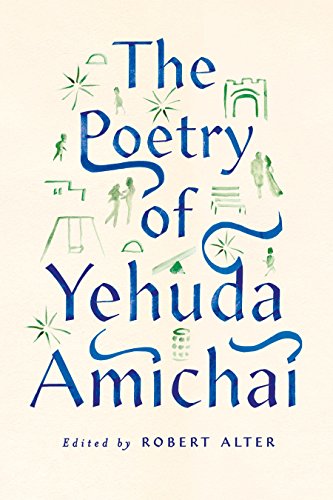
by Yehuda Amichai

More Poems by Yehuda


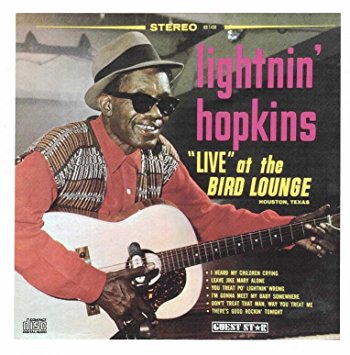
Lightnin’ Hopkins: Live at the Bird Lounge

If you know me, you know that I love the blues (and if you don’t know me, I suppose you know that now). One of my favorite blues artists is Lightnin’ Hopkins. He’s a country blues boy out of Texas, and he sure knows how to sing a good blues tune.

Live at the Bird Lounge is one of my prized vinyl records, purchased for me as a gift from Rozi. This album contains a set of recordings captured while Lightnin’ played (reportedly) all night at the Bird Lounge. Those recording the set selected their favorite songs and put out this album.

If you like the blues, I highly recommend adding this to your collection.

The Meaning of It All: Thoughts of a Citizen Scientist

Author: Richard Feynman
Rating: 7/10
Last Read: Jan 2017

Quick Summary: I love Richard Feynman, so I was especially glad to discover one of his books on my bookshelf that I hadn’t read before!  The Meaning of It All is a collection of three lectures musing on some of the more philosophical aspects of science.  Feynman examines religion, politics, science, and the unscientific trends of the modern age.  I must say – while I enjoyed reading the thoughts of this great man, I don’t know that this provided a novel view on any of these ideas to me. 

My Highlights

Is Science of any value? I think a power to do something is of value. Whether the result is a good thing or a bad thing depends on how it is used, but the power is a value.
–pg 6

Once in Hawaii I was taken to see a Buddhist temple. In the temple a man said, “I am going to tell you something that you will never forget.” And then he said, “To every man is given the key to the gates of heaven. The same key opens the gates of hell.”
And so it is with science.
–pg 6

Why do we grapple with problems? We are only in the beginning. We have plenty of time to solve the problems. THe only way that we will make a mistake is that in the impetuous youth of humanity we will decide we know the answer. This is it. No one else can think of anything else. And we will jam. We will confine man to the limited imagination of today’s human beings.
We are not so smart. We are dumb. We are ignorant. We must maintain an open channel.
–pg 57

The first one has to do with whether a man knows what he is talking about, whether what he says has some basis or not. And my trick that I use is very easy. If you ask him intelligent questiosn — that is, penetrating, interested, honest, frank, direct questions on the subject, and no trick questions — then he quickly gets stuck. It is like a child asking naive questions. If you ask naive but relevant questions, then almost immediately the person doesn’t know the answer, if he is an honest man. It is important to appreciate that.
— pg 65

I would like to remind you that you can be pretty sure of things even though you are uncertain, that you don’t have to be so in-the-middle, in fact not at all in-the-middle. People say to me, “Well, how can you teach your children what is right and wrong if you don’t know?” Because I’m pretty sure of what’s right and wrong. I’m not absolutely sure; some experiences may change my mind. But I know what I would expect to teach them. But, of course, a child won’t learn what you teach him.
–pg 67

What I’m asking for in many directions is abject honesty. I think that we should have a more abject honesty in political matters. And I think we’ll be freer that way.
I woudl like to point out that people are not honest. Scientists are not honest at all, either. It’s useless. Nobody’s honest. Scientists are not honest. And people usually believe that they are. That makes it worse. By honest I don’t mean that you only tell what’s true. But you make clear the entire situation. You make clear all the information that is required for somebody else who is intelligent to make up their mind.
–pg 106

Believe It

Believe It

Hard to believe that, after all of it,
in bed for good now, knowing you haven’t done
one thing of any lasting benefit
or grasped how to be happy, or had fun,

you must surrender everything
into a new condition that is not
night, or a country, or sleep, or peace,
but nothing, ever, anymore, for you.

Joshua Mehigan

More Poems by Joshua


Soul Brothers

Soul Brothers is an instrumental jazz album featuring Ray Charles and Milt Jackson. This combination is quite stellar and is a frequently showcased in my jazz playlists.

This album shows you Ray Charles in a different light: playing in jazz sets with Milt Jackson. Produced before he was widely known, he gets to showcase his bluesy/jazzy piano skills.

Soul Brothers is a definite must-listen-to classic for my jazz-loving friends.

Norse Mythology

Author: Neil Gaiman
Rating: 8/10
Last Read: Feb 2017

Quick Summary: While I vaguely know the characters and events in the Norse mythology, I actually hadn’t read any of the stories themselves. I was quite surprised to see that Neil Gaiman had taken a stab at rewriting some of the myths.  His retelling of the stories had me laughing regularly (unless I was cursing Loki for more of his dangerous antics).  I’m always in search of some good light reading before bed.  And I love mythology – the stories and the characters contain important insights and lessons to learn from.  The only disappointing part is that I was able to finish this book in two sittings!

My Highlights

Some norns give people good lives, and others give us hard lives, or short lives, or twisted lives. They will shape your fate, there at Urd’s well.
–loc 233

“One drink from the water of your well, Uncle Mimir,” said Odin. “That is all I ask for.” Mimir shook his head. Nobody drank from the well but Mimir himself. He said nothing: seldom do those who are silent make mistakes.
–loc 241

Hoenir was tall and good-looking, and he looked like a king. When Mimir was with him to advise him, Hoenir also spoke like a king and made wise decisions. But when Mimir was not with him, Hoenir seemed unable to come to a decision, and the Vanir soon tired of this. They took their revenge, not on Hoenir but on Mimir: they cut off Mimir’s head and sent it to Odin. Odin was not angry. He rubbed Mimir’s head with certain herbs to prevent it from rotting, and he chanted charms and incantations over it, for he did not wish Mimir’s knowledge to be lost. Soon enough Mimir opened his eyes and spoke to him. Mimir’s advice was good, as it was always good.
–loc 255

“Because,” said Thor, “when something goes wrong, the first thing I always think is, it is Loki’s fault. It saves a lot of time.”
–loc 274

It’s called Mjollnir, the lightning-maker. First of all, it’s unbreakable—doesn’t matter how hard you hit something with it, the hammer will always be undamaged.” Thor looked interested. He had already broken a great many weapons over the years, normally by hitting things with them. “If you throw the hammer, it will never miss what you throw it at.” Thor looked even more interested. He had lost a number of otherwise excellent weapons by throwing them at things that irritated him and missing, and he had watched too many weapons he had thrown disappear into the distance, never to be seen again. “No matter how hard or how far you throw it, it will always return to your hand.” Thor was now actually smiling. And the thunder god did not often smile.
–loc 402

“I . . . will ransom my head,” said Loki. “I have treasures I can give you.”
“Eitri and I already have all the treasure we need,” said Brokk. “We make treasures. No, Loki. I want your head.”
–loc 422

“You are fools,” she said. “Especially you, Loki, because you think yourself clever.”
–loc 482

“Loki son of Laufey,” said Odin, “this is the result of your poor counsel.”
“And it was as bad as all your other advice,” said Balder.
Loki shot him a resentful glance.
“We need the builder to lose his wager,” said Odin. “Without violating the oath. He must fail.”
“I don’t know what you expect me to do about it,” said Loki.
I do not expect anything from you,” said Odin. “But if this builder succeeds in finishing his wall by the end of tomorrow, then your death will be painful, and long, and a bad and shameful death at that.
–loc 569

The wolf cub ate its meat raw, but it spoke as a man would speak, in the language of men and the gods, and it was proud. The little beast was called Fenrir.
–loc 700

“You lie, All-father. You lie in the way that some folk breathe.
–loc 767

“Fair enough,” said Thor. “What’s the price?”
“Freya’s hand in marriage.”
“He just wants her hand?” asked Thor hopefully. She had two hands, after all, and might be persuaded to give up one of them without too much of an argument. Tyr had, after all.
“All of her,” said Loki. “He wants to marry her.”
–loc 852

Do you wonder where poetry comes from? Where we get the songs we sing and the tales we tell? Do you ever ask yourself how it is that some people can dream great, wise, beautiful dreams and pass those dreams on as poetry to the world, to be sung and retold as long as the sun rises and sets, as long as the moon will wax and wane? Have you ever wondered why some people make beautiful songs and poems and tales, and some of us do not? It is a long story, and it does no credit to anyone: there is murder in it, and trickery, lies and foolishness, seduction and pursuit. Listen.
–loc 972

No one, then or now, wanted to drink the mead that came out of Odin’s ass. But whenever you hear bad poets declaiming their bad poetry, filled with foolish similes and ugly rhymes, you will know which of the meads they have tasted.
–loc 1246

It is not the end. There is no end. It is simply the end of the old times, Loki, and the beginning of the new times. Rebirth always follows death.
–loc 2415