Into Africa: The Epic Adventures of Stanley and Livingstone

Author: Martin Dugard
Rating: 3/5 (Good and enjoyable book, but not life changing)
Last Read: November 2014
Who Should Read: Those who enjoy lightweight historical books; those interested in the 1800s age of exploration and the exploration of Africa by Europeans

I picked up Into Africa during an Amazon Kindle book sale. I didn’t really have any reason to read about Stanley and Livingstone, other than the fact that they were two famous names that I knew very little about. 

This book primarily covers the exploration for the source fo the Nile river. Great Britain asked Dr. Livingstone to explore and find the source. Only a few weeks after embarking, his expedition vanished without a trace. Stanley, a journalist, was sent into Africa in search of Livingstone as part of a plan to capitalize on the world’s obsession over Livingstone’s disappearance. The book’s chapters alternate between Stanley and Livingstone, and we see how the story unfolded for both.

Into Africa: The Epic Adventures of Stanley and Livingstone is an engrossing lightweight nonfiction read about two historic men. The author also does a great job at painting the scene and us a glimpse into the time period. I learned quite a bit while reading this book, especially about the Arab slave trade (something I had never heard about before).

My Highlights

“The effect of travel on a man whose heart is in the right place is that the mind is made more self-reliant: It becomes more confident of its own resources—there is greater presence of mind.

“No one,” he once wrote, “can truly appreciate the charm of repose unless he has undergone severe exertion.”

“We also rejoice in our sufferings,” Paul had written in his letter to the Romans in the middle of the first century, “because suffering produces perseverance; perseverance, character; and character hope. And hope does not disappoint us.”

Not only did Livingstone achieve more through kindness than Stanley had through rage, but by the time Livingstone had negotiated their way out of one problem or another, a hostile tribe or recalcitrant porter was often a new ally.

Buy the Book

If you are interested in purchasing this book, you can support the website by using our Amazon affiliate link.
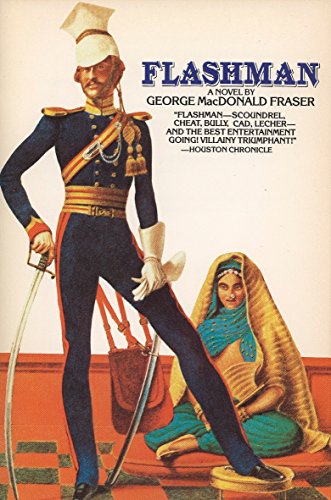


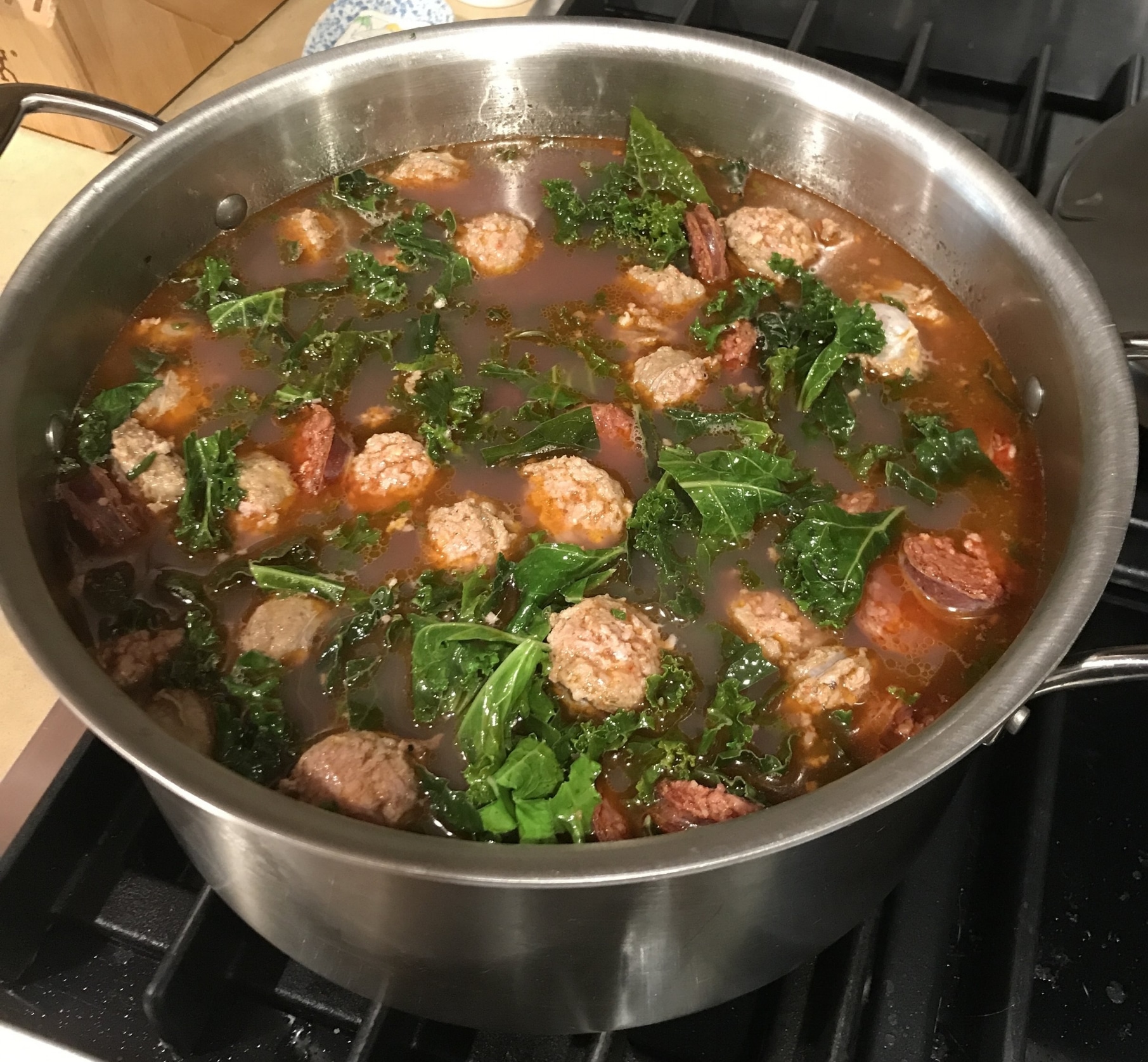
Kale and Sausage Soup

The day before you make this dish, soak in cold water:

1.5-2.5 cups dried beans (red beans and navy beans are good in this recipe)

In a clean stockpot, combine the soaked beans (drained of their soaking liquid) with:

1 large ham hock or comparable soup bone, cut into pieces to allow the marrow to escape
3-4 quarts stock
1 quart water (or more if you do not have sufficient stock)

Bring to a boil, then reduce to a simmer, using a slotted spoon or ladle to skim off and discard any scum that rises to the surface. After 1 hour of simmering, add:

0.5 pound dried chorizo sausage, cut into 1/4″ slices
1 pound linguiça (or other sausage, cooked or uncooked), cut into 1/4″ slices
2 bunches curly kale, center stem removed and discarded, leaves washed and coarsely chopped

Simmer for another hour, then add:

4-5 medium waxy potatoes, peeled and cut into large dice
Red pepper flakes to taste
1-2 T sherry vinegar
S+P to taste

Simmer for at least another hour, adding more stock or water as needed to keep all the ingredients submerged. The longer the soup simmers, the better the flavor; try to simmer the soup for a minimum of five hours. 

Before serving, remove the meat from the ham hock and shred it into the soup. Scoop out any marrow left in the bone.

Serves 8-10

This recipe is adapted from Anthony Bourdain’s Appetites: “Portuguese Kale and Sausage Soup”

An Experiment in Exploring the Unconscious

I’ve been increasingly interested in the power of the unconscious, especially with regards to creativity and insight. Creativity and self-knowledge seem to come from nowhere, and I can understand how people of all ages have felt like they had a divine connection or received inspiration from a muse. Certainly, I cannot create well with the cerebral part of my brain – it seems to flow from somewhere deeper and mostly inaccessible.

I’ve occasionally used the I Ching, an ancient Chinese divination manual, as a tool for both getting unstuck and gaining deeper insight into my thoughts on a question. The book can act as a mirror you hold up to yourself, enabling you to see your situation in a different light.

For the next month, I’ll be exploring my unconscious by consulting the I Ching every day. Perhaps having a trigger can help us access the deeper parts of our being, the parts so often inaccessible to us. What might be revealed to me that I’m not paying attention to? What might be revealed to me by simply asking myself (or “the universe”) to share some insight?

Many poo-poo the act of consulting an oracle, because the answers are vague and can apply to many situations. Certainly generating a random number, associating it with a reading in a book, and applying it to your situation is not “rational”. I am not seeking a rational method for self-knowledge I have my doubts that even the most “rational” thinkers can truly escape the irrational aspects of their own nature. Anyone who claims to be rational is ignoring the power that cognitive and emotional biases have over our minds – there is no escaping them.

The answers from the I Ching serve as a useful tool for analyzing our own minds and getting unstuck. No matter the situation, taking a different view is invaluable. And who can disregard the use of such a text by wise and capable men throughout history, including Confucius, Carl Jung, and Mao Zedong?

Astrophysics for People in a Hurry

Author: Neil de Grasse Tyson
Rating: 4/5
Last Read: November 2018
Who Should Read: Amateur physicists and people who are interested in the wonders of our universe

Last Updated: 2018-11-24

I’ve always been interested in physics, but I wasn’t able to keep up with the mathematics and crazy problems during college. Over the past two years I’ve started picking up friendlier physics books to try to catch up on modern developments (“modern” as in “after the 1920s”). Astrophysics for People in a Hurry falls into this category – something I can ready to learn more about our world without having to break my brain by learning crazy mathematics.

NDT starts the book off by exploring the formation of the universe after the big bang. He reaches far and wide in his astrophysics summary, teaching us about dark matter, Einstein’s “biggest blunder”, and how post-apocalyptic scientists won’t even be able to tell that there are other galaxies. His tour of astrophysics is fast-paced and dizzying, and he keeps the reader engaged throughout the book.

Astrophysics for People in a Hurry is excellent for a brief taste of cosmic perspective. The universe is a grand spectacle, and it is such a blessing to be a part of it. We are the universe figuring itself out in a distant corner of the universe. While highly educational, the book is worth reading just for that brief feeling of wonder and joy in being alive.

We are stardust brought to life, then empowered by the universe to figure itself out—and we have only just begun.

My Highlights

The universe is under no obligation to make sense to you. —NDT

The world has persisted many a long year, having once been set going in the appropriate motions. From these everything else follows. LUCRETIUS, C. 50 BC

One thing quarks do have going for them: all their names are simple—something chemists, biologists, and especially geologists seem incapable of achieving when naming their own stuff.

As the universe continued to cool, the amount of energy available for the spontaneous creation of basic particles dropped. During the hadron era, ambient photons could no longer invoke E = mc2 to manufacture quark–antiquark pairs. Not only that, the photons that emerged from all the remaining annihilations lost energy to the ever-expanding universe, dropping below the threshold required to create hadron–antihadron pairs. For every billion annihilations—leaving a billion photons in their wake—a single hadron survived. Those loners would ultimately get to have all the fun: serving as the ultimate source of matter to create galaxies, stars, planets, and petunias. Without the billion-and-one to a billion imbalance between matter and antimatter, all mass in the universe would have self-annihilated, leaving a cosmos made of photons and nothing else—the ultimate let-there-be-light scenario.

People who believe they are ignorant of nothing have neither looked for, nor stumbled upon, the boundary between what is known and unknown in the universe.

We are stardust brought to life, then empowered by the universe to figure itself out—and we have only just begun.

For household lamps that still use glowing metal filaments, the bulbs all peak in the infrared, which is the single greatest contributor to their inefficiency as a source of visible light. Our senses detect infrared only in the form of warmth on our skin. The LED revolution in advanced lighting technology creates pure visible light without wasting wattage on invisible parts of the spectrum. That’s how you can get crazy-sounding sentences like: “7 Watts LED replaces 60 Watts Incandescent” on the packaging.

Albert Einstein hardly ever set foot in the laboratory; he didn’t test phenomena or use elaborate equipment. He was a theorist who perfected the “thought experiment,” in which you engage nature through your imagination, by inventing a situation or model and then working out the consequences of some physical principle. In Germany before World War II, laboratory-based physics far outranked theoretical physics in the minds of most Aryan scientists. Jewish physicists were all relegated to the lowly theorists’ sandbox and left to fend for themselves. And what a sandbox that would become.

Copernicus’s basic idea was correct, and that’s what mattered most. It simply required some tweaking to make it more accurate. Yet, in the case of Einstein’s relativity, the founding principles of the entire theory require that everything must happen exactly as predicted. Einstein had, in effect, built what looks on the outside like a house of cards, with only two or three simple postulates holding up the entire structure. Indeed, upon learning of a 1931 book entitled One Hundred Authors Against Einstein, he responded that if he were wrong, then only one would have been enough.

GR regards gravity as the response of a mass to the local curvature of space and time caused by some other mass or field of energy. In other words, concentrations of mass cause distortions—dimples, really—in the fabric of space and time. These distortions guide the moving masses along straight-line geodesics, though they look to us like the curved trajectories we call orbits. The twentieth-century American theoretical physicist John Archibald Wheeler said it best, summing up Einstein’s concept as, “Matter tells space how to curve; space tells matter how to move.”

Lambda preserved what Einstein and every other physicist of his day had strongly presumed to be true: the status quo of a static universe—an unstable static universe. To invoke an unstable condition as the natural state of a physical system violates scientific credo. You cannot assert that the entire universe is a special case that happens to be balanced forever and ever. Nothing ever seen, measured, or imagined has behaved this way in the history of science, which makes for powerful precedent.

The most accurate measurements to date reveal dark energy as the most prominent thing in town, currently responsible for 68 percent of all the mass-energy in the universe; dark matter comprises 27 percent, with regular matter comprising a mere 5 percent.

Without a doubt, Einstein’s greatest blunder was having declared that lambda was his greatest blunder.

A remarkable feature of lambda and the accelerating universe is that the repulsive force arises from within the vacuum, not from anything material. As the vacuum grows, the density of matter and (familiar) energy within the universe diminishes, and the greater becomes lambda’s relative influence on the cosmic state of affairs. With greater repulsive pressure comes more vacuum, and with more vacuum comes greater repulsive pressure, forcing an endless and exponential acceleration of the cosmic expansion. As a consequence, anything not gravitationally bound to the neighborhood of the Milky Way galaxy will recede at ever-increasing speed, as part of the accelerating expansion of the fabric of space-time. Distant galaxies now visible in the night sky will ultimately disappear beyond an unreachable horizon, receding from us faster than the speed of light. A feat allowed, not because they’re moving through space at such speeds, but because the fabric of the universe itself carries them at such speeds. No law of physics prevents this. In a trillion or so years, anyone alive in our own galaxy may know nothing of other galaxies. Our observable universe will merely comprise a system of nearby, long-lived stars within the Milky Way. And beyond this starry night will lie an endless void—darkness in the face of the deep. Dark energy, a fundamental property of the cosmos, will, in the end, undermine the ability of future generations to comprehend the universe they’ve been dealt. Unless contemporary astrophysicists across the galaxy keep remarkable records and bury an awesome, trillion-year time capsule, postapocaplyptic scientists will know nothing of galaxies—the principal form of organization for matter in our cosmos—and will thus be denied access to key pages from the cosmic drama that is our universe. Behold my recurring nightmare: Are we, too, missing some basic pieces of the universe that once were? What part of the cosmic history book has been marked “access denied”? What remains absent from our theories and equations that ought to be there, leaving us groping for answers we may never find?

While many objects have peculiar shapes, the list of round things is practically endless and ranges from simple soap bubbles to the entire observable universe. Of all shapes, spheres are favored by the action of simple physical laws. So prevalent is this tendency that often we assume something is spherical in a mental experiment just to glean basic insight even when we know that the object is decidedly non-spherical. In short, if you do not understand the spherical case, then you cannot claim to understand the basic physics of the object.

Using freshman-level calculus you can show that the one and only shape that has the smallest surface area for an enclosed volume is a perfect sphere. In fact, billions of dollars could be saved annually on packaging materials if all shipping boxes and all packages of food in the supermarket were spheres.

the weaker the gravity on the surface of an object, the higher its mountains can reach. Mount Everest is about as tall as a mountain on Earth can grow before the lower rock layers succumb to their own plasticity under the mountain’s weight.

In space, surface tension always forces a small blob of liquid to form a sphere. Whenever you see a small solid object that is suspiciously spherical, you can assume it formed in a molten state. If the blob has very high mass, then it could be composed of almost anything and gravity will ensure that it forms a sphere.

The stars of the Milky Way galaxy trace a big, flat circle. With a diameter-to-thickness ratio of one hundred to one, our galaxy is flatter than the flattest flapjacks ever made. In fact, its proportions are better represented by a crépe or a tortilla. No, the Milky Way’s disk is not a sphere, but it probably began as one.

If we had eyes that could see magnetic fields, Jupiter would look five times larger than the full Moon in the sky.

Whether you prefer to sprint, swim, walk, or crawl from one place to another on Earth, you can enjoy close-up views of our planet’s unlimited supply of things to notice. You might see a vein of pink limestone on the wall of a canyon, a ladybug eating an aphid on the stem of a rose, a clamshell poking out from the sand. All you have to do is look.

Of all the sciences cultivated by mankind, Astronomy is acknowledged to be, and undoubtedly is, the most sublime, the most interesting, and the most useful. For, by knowledge derived from this science, not only the bulk of the Earth is discovered . . . ; but our very faculties are enlarged with the grandeur of the ideas it conveys, our minds exalted above [their] low contracted prejudices. JAMES FERGUSON, 1757

Yet the cosmic view comes with a hidden cost. When I travel thousands of miles to spend a few moments in the fast-moving shadow of the Moon during a total solar eclipse, sometimes I lose sight of Earth. When I pause and reflect on our expanding universe, with its galaxies hurtling away from one another, embedded within the ever-stretching, four-dimensional fabric of space and time, sometimes I forget that uncounted people walk this Earth without food or shelter, and that children are disproportionately represented among them.

If small genetic differences between us and our fellow apes account for what appears to be a vast difference in intelligence, then maybe that difference in intelligence is not so vast after all. Imagine a life-form whose brainpower is to ours as ours is to a chimpanzee’s. To such a species, our highest mental achievements would be trivial. Their toddlers, instead of learning their ABCs on Sesame Street, would learn multivariable calculus on Boolean Boulevard.††† Our most complex theorems, our deepest philosophies, the cherished works of our most creative artists, would be projects their schoolkids bring home for Mom and Dad to display on the refrigerator door with a magnet.

If a huge genetic gap separated us from our closest relative in the animal kingdom, we could justifiably celebrate our brilliance. We might be entitled to walk around thinking we’re distant and distinct from our fellow creatures. But no such gap exists. Instead, we are one with the rest of nature, fitting neither above nor below, but within.

We do not simply live in this universe. The universe lives within us.

The cosmic perspective enables us to grasp, in the same thought, the large and the small. The cosmic perspective opens our minds to extraordinary ideas but does not leave them so open that our brains spill out, making us susceptible to believing anything we’re told. The cosmic perspective opens our eyes to the universe, not as a benevolent cradle designed to nurture life but as a cold, lonely, hazardous place, forcing us to reassess the value of all humans to one another. The cosmic perspective shows Earth to be a mote. But it’s a precious mote and, for the moment, it’s the only home we have.

Buy the Book

If you are interested in purchasing this book, you can support the website by using our Amazon affiliate link.

 

Astrophysics for People in a Hurry

By Neil deGrasse Tyson


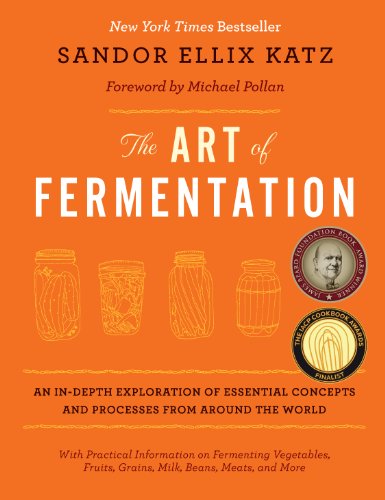
The Art of Fermentation

Author: Sandor Katz
Rating: 5/5
Last Read: September 2018
Who Should Read: Cooks, experimenters, and those interested in traditional food practices from around the world

Reading Deep Nutrition reinvigorated my interest in fermentation. I kept a sourdough starter alive for many years, but never branched out much beyond making my own bread. My starter died during one of my frequent trips to China while working at Apple, and I let the venture rest for a few years.

I searched around to find books about fermentation and came across the work of Sandor Katz. I started with The Art of Fermentation, his survey of fermentation techniques from around the world, rather than Wild Fermentation, his book of recipes.

If you are a creative cook or an experimentalist,The Art of Fermentation is definitely the place to start. Rather than provide recipes and proscriptions, Katz shares methods, guidelines, and inspiration. The central theme of the book is essentially, “you can’t go wrong” and “it’s all fine”. Got some mold on top of your vegetable ferment? Scrape it off, remove discolored layers, and keep going. Don’t like salty pickles? Scale it back. Ferment whatever vegetables you like. Mix and match flavors. Try new approaches and flavor combinations – the worst thing that could happen is some of your pickles are destined for the compost pile. Katz’s style is comforting and encouraging – it’s impossible to read the book without being inspired to start some fermentation experiments of your own.

Since reading The Art of Fermentation, we’ve been fermenting food on a regular basis. Every week I refresh two heirloom yogurt cultures (Bulgarian + Greek) and a cultured buttermilk. We have a beautiful German pickling crock on the counter which is kept full of Chinese pao cai. We finish breakfast and dinner with a small glass of beet kvass. I’ve always got a batch or two of sauerkraut in progress, along with other vegetable fermentation experiments: brussels sprouts, beet greens, carrot greens, cilantro stems, asparagus trimmings. My first batch of pickles for hot sauce is tucked away for the next three months. We have a home-style chili paste that tastes infinitely better than packaged pastes. Soon I’ll gather the courage to ferment my own fish sauce, which involves allowing whole fish with their organs intact to ferment and liquify over a few months.

The Art of Fermentation enabled me to be a more creative cook. And the best part of all is that it feels like I am always cooking while lovingly tending to my many projects.

“Between fresh and rotten, there is a creative space in which some of the most compelling flavors arise.”

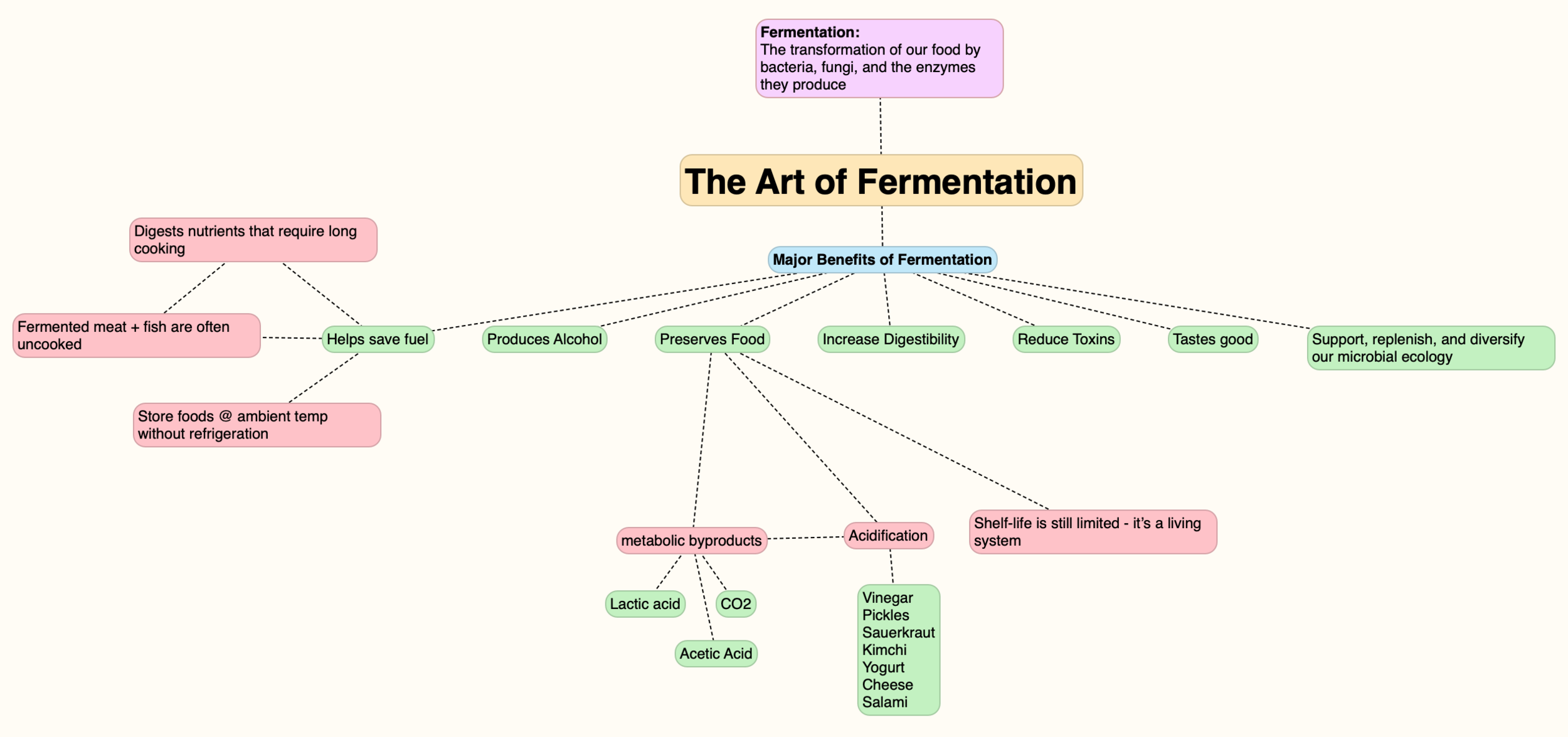
Mind Map

I didn’t end up making the mind map as I normally would… But I did capture these notes.

My Highlights

This is one of the few physical books I’ve purchased in the past few years, so this is a smaller set of quotes than usual. The majority of the highlights below come from the introduction, as the rest of the book is focused on methods for fermentation.

“Is it possible that, rather than humans “discovering” alcohol and mastering its production, we evolved always already knowing it? Anthropologist Mikal John Ansvel (check name) points out that “all vertebrate species are equipped with a hepatic enzyme system with which to metabolize alcohol.” Many animals have been documented consuming alcohol in their natural habitats.

[Food storage] primarily consists of keeping foods dry but not too dry, cold but not too cold, and dark. But it is not easy, with limited technology, to create ideal conditions for storage.

What is fascinating about the concept of coevolution is the recognition that the processes of becoming are infinitely interconnected.

One of the most interesting points raised early on by Katz is that refrigeration can be viewed as a historical bubble:

  • Has been available for only a few generations
  • Predominantly available in affluent regions of the world with readily available electricity
  • Has powerfully distorted our perspectives on food perishability
  • We fear the absence of refrigeration
  • High energy requirements – will it remain affordable + highly available in years to come?

We must safeguard the living legacy of traditional food preservation techniques.

Benefits of acid food fermentation:

  1. Render food resistant to microbial spoilage + development of food toxins
  2. Make food less likely to transfer pathogenic organisms
  3. Generally preserve food b/w harvest + consumption
  4. Modify flavor + improve nutritional value

Traditional preservation:

  • Keep food in cool and dry spot
  • Actively dry (microbial activity is suspended w/o adequate water) using sun, and/or gentle heat or smoke, and/or salt
  • Fermentation

Botulism is primarily associated with canning – a new technique (19th century, developed in Napoleonic France).

Live cultures from lactic acid fermentation are only viable in foods kept @ < 115F/47C

Eat a variety of fermented foods, some with live cultures, and while you’re at it, eat a variety of plants. Make sure that at least some of the plants and bacteria are wild.

The range of plants and microbes under active cultivation is really quite limited. More different interactions – with varied phytochemical bacteria – and the compounds bacteria produce – stimulate us in functional ways. Diversity is its own reward.

“Between fresh and rotten, there is a creative space in which some of the most compelling flavors arise.”

Buy the Book

If you are interested in purchasing this book, you can support the website by using our Amazon affiliate link.


The Paintings of Master Chao Shao-An

Over the past few years I’ve developed an appreciation for Chinese painting styles. Something about the strokes speaks to me: rough, dynamic, deliberate, and simplistic all at the same time. I love the focus on natural themes and the feelings that the scenes evoke.

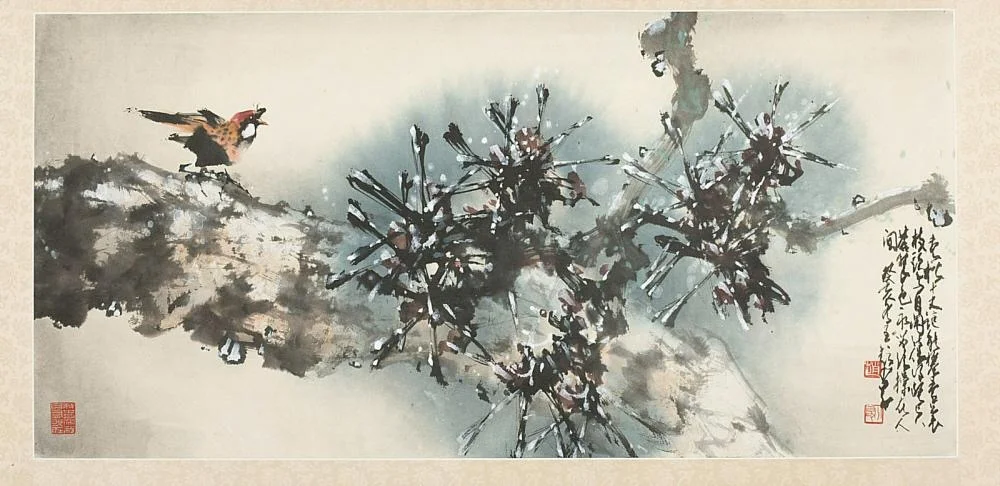
While wandering through San Francisco Asian Art Museum with Rozi, we came across a small room displaying the art of Master Chao Shao-An. His painting “Pine in Snow” captured me, and I noted down his name so I could explore more of his art.

I was quite disappointed by my initial internet forays – I couldn’t find too many examples of his work, other than a few repeated low-resolution images. Luckily I remembered that museums tend to make their collections publicly searchable on the web, and I discovered a treasure trove of his work. I feel grateful that an overwhelming number of great works of art are immediately available for us to see from our homes. What a time to be alive!

I want to share some of my favorite pieces from the collection with you. I hope that you get a chance to stumble upon of the master’s work in person on your adventure through this life.

Pine in Snow

  Pine in Snow ( 現代 趙少昂繪 永垂春色 紙本設色) Date: 1983 Materials: Ink and colors on paper
Pine in Snow ( 現代 趙少昂繪 永垂春色 紙本設色) Date: 1983 Materials: Ink and colors on paper

Label:

The rugged pine is a symbol of longevity, nobility, and venerability. Together with the plum and bamboo, it forms a grouping known as the Three Friends of Winter.

Inscribed:

Who can climb this lofty green pine?
A bird relaxes on its snow-covered branches.
Because it has kept its verdant green colors through great fortitude,
may its virtues and faith be remembered for generations to come.

—Guihai year [1983], winter solstice. Chao Shao-An.

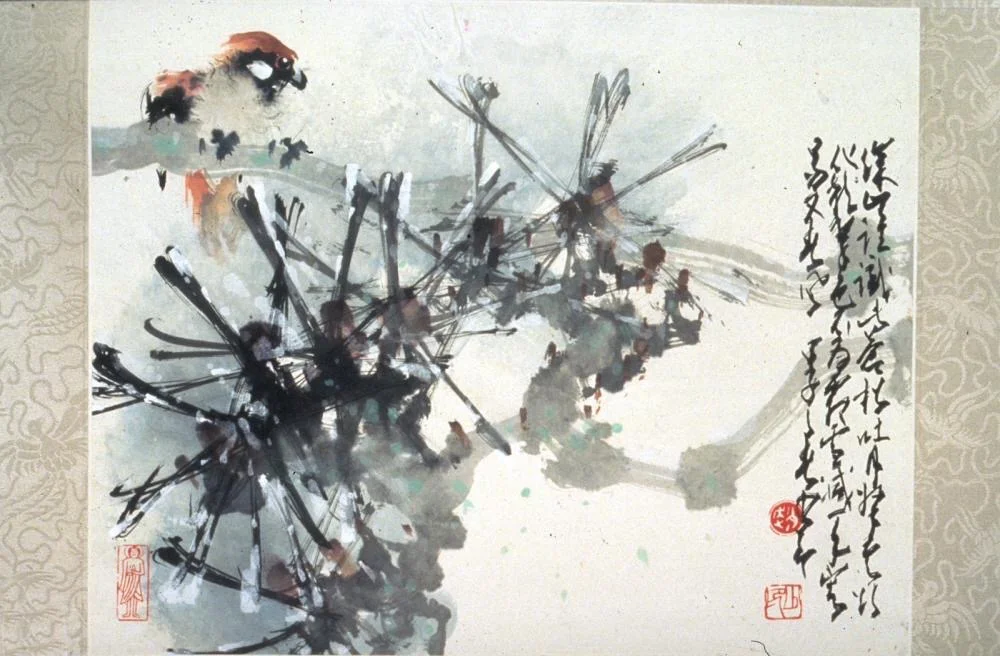
Pine and Snow

 Pine and Snow (現代1984年 趙少昂繪 寒林翠色圖 紙本設色) Date: 1984 Materials: Ink and colors on paper
Pine and Snow (現代1984年 趙少昂繪 寒林翠色圖 紙本設色) Date: 1984 Materials: Ink and colors on paper

Label:

The pine (song) is a symbol of longevity because it is an evergreen and lives for a long time. Such endurance also makes the pine a popular motif to represent a person who possesses nobility and venerability, as suggested by the painting’s inscription:

No one knows of this old pine in the deep mountain.
Grasping clouds and swallowing the moon, it desires to be a dragon.
Its green foliage diminishes not with frost and snow.
Another year passes so easily, the spring wind blows once more.

Jiazi year (1984), spring. Shao-an.

Sparrows and Bamboo

 Sparrows and Bamboo (現代 趙少昂繪 棲息無聲 紙本設色) Date: 1992 or earlier Materials: Ink and colors on paper
Sparrows and Bamboo (現代 趙少昂繪 棲息無聲 紙本設色) Date: 1992 or earlier Materials: Ink and colors on paper

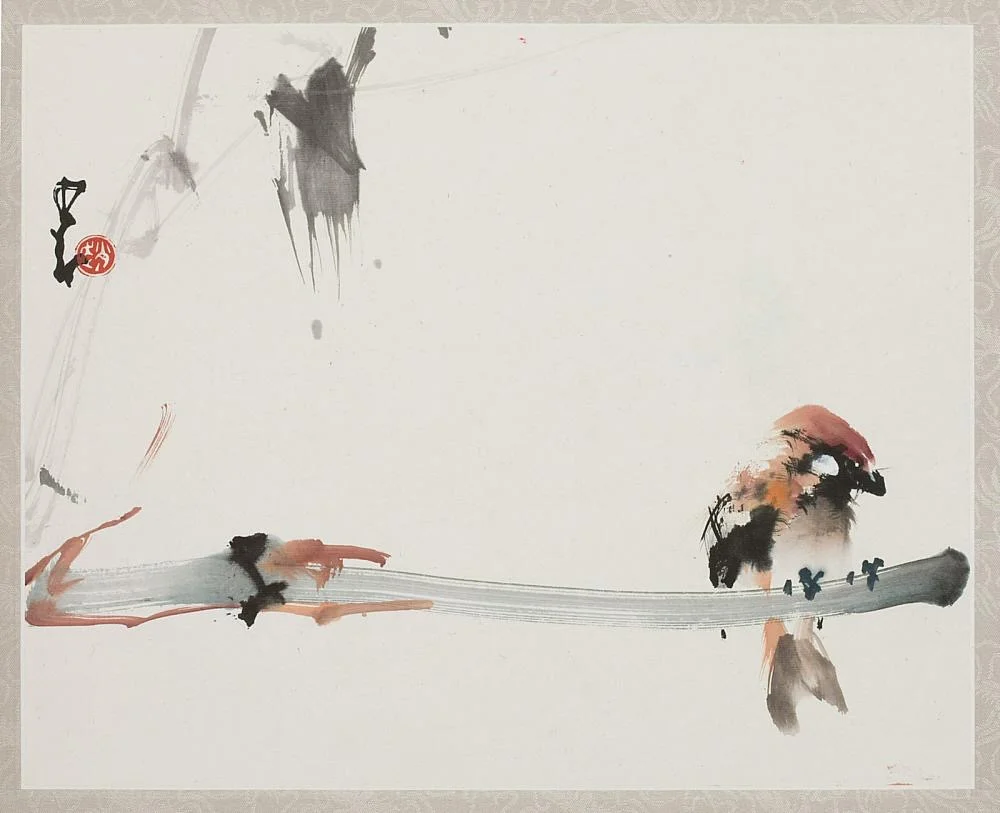
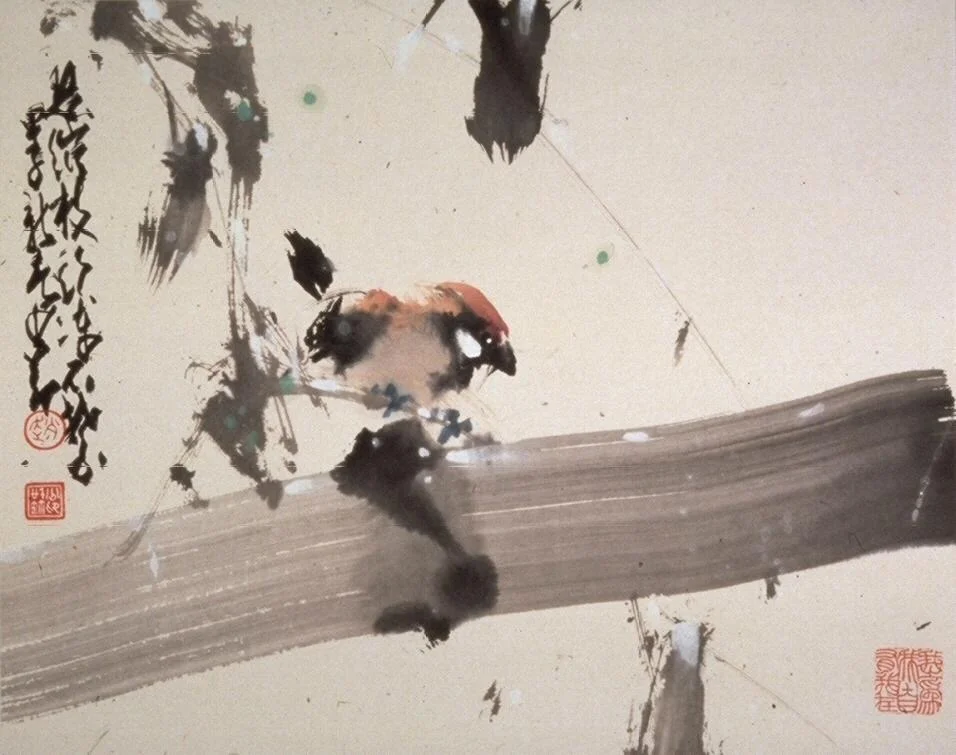
Bird in Snow

  Bird in Snow  Date: 1984 Materials: Ink and colors on paper
Bird in Snow Date: 1984 Materials: Ink and colors on paper

The inscription by the artist reads:

Shivering on the branches, unable to bear the chill.
Jiazi year (1984), early spring. Shao-an.

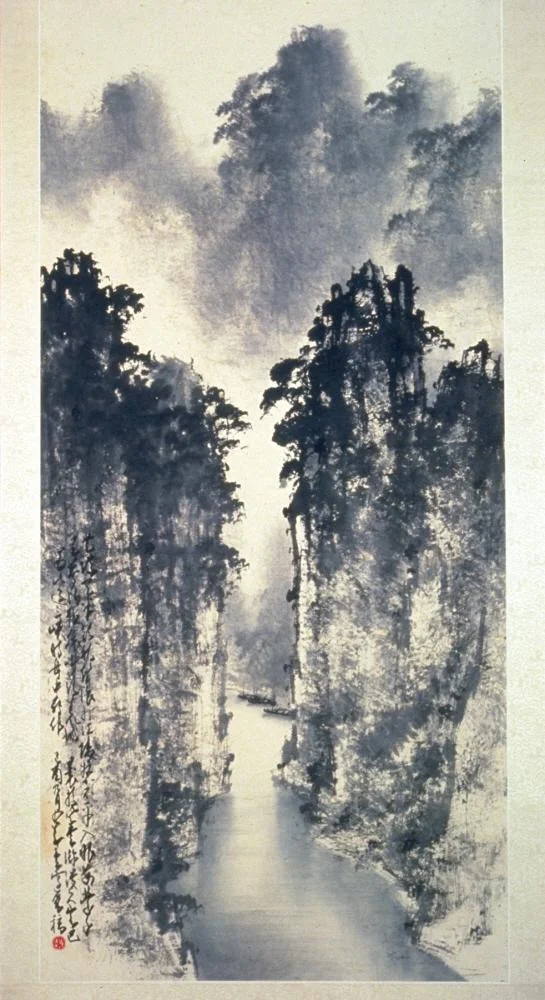
The Gorges

  The Gorges ( 現代 趙少昂繪 荒城煙雨 紙本設色) Date: 1969 Materials: Ink and colors on paper
The Gorges ( 現代 趙少昂繪 荒城煙雨 紙本設色) Date: 1969 Materials: Ink and colors on paper

Label:

The Three Gorges, making up one of the most famous scenic areas in China, are the subject of numerous poems and pictorial representations. As described in the painting’s inscription, the scenery as one sails up the Yangzi River is extremely dramatic. The narrow, often shallow waterway twists and turns through precipitous cliffs. Waves crash against the boats and shore with great force. In the past, colonies of gibbons lived on these cliffs; their eerie cries were a significant part of the experience along this waterway.

The construction of the Three Gorges Dam (completed in 2006*) compels us to ask to what extent the scenery depicted in this painting has been altered and to acknowledge that experiencing the site as it was before the dam was built is now possible only through artistic representations of it.

*That year, the Asian Art Museum mounted the exhibition The Three Gorges Project: Paintings by Liu Xiaodong (April 7–July 16).

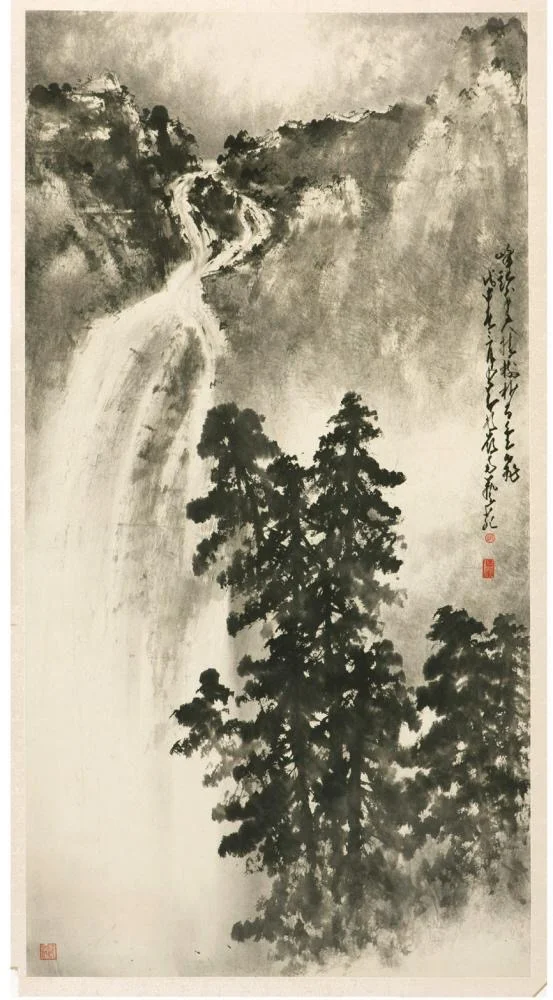
Waterfall

  Waterfall  Date: 1968 Materials: Ink on paper
Waterfall Date: 1968 Materials: Ink on paper

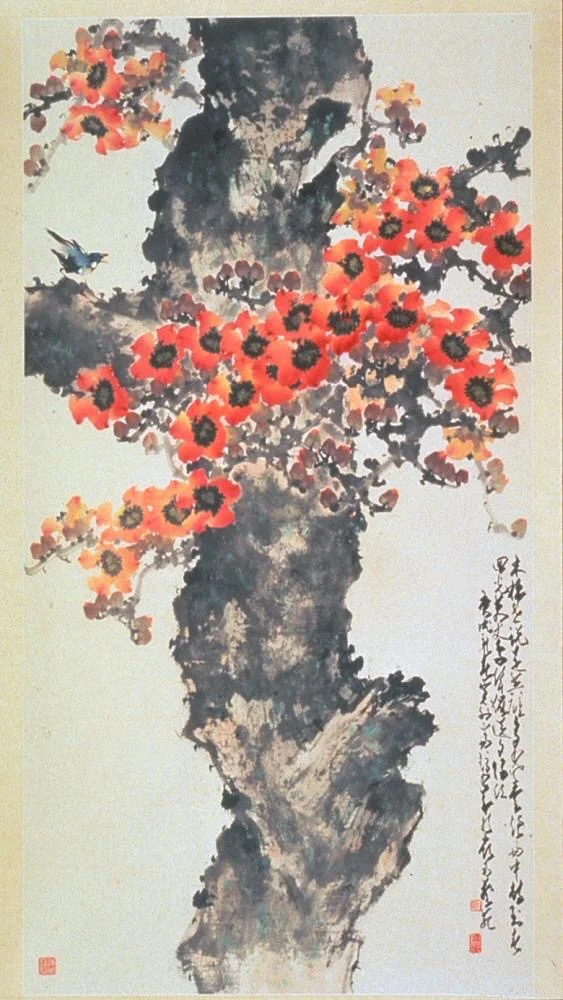
Red Kapok Blossoms

  Red Kapok Blossoms  Date: 1970 Materials: Ink and colors on paper
Red Kapok Blossoms Date: 1970 Materials: Ink and colors on paper

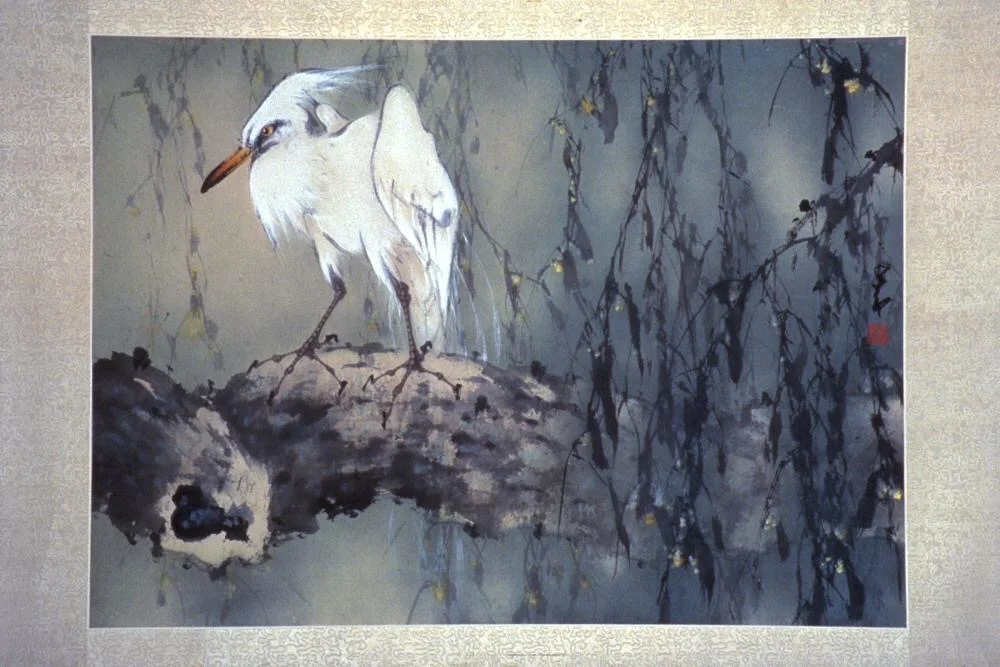
Egret

  Egret ( 現代 趙少昂繪 孤高閒暇 紙本設色) Date: approx. 1930-1992 Materials: Ink and colors on paper
Egret ( 現代 趙少昂繪 孤高閒暇 紙本設色) Date: approx. 1930-1992 Materials: Ink and colors on paper

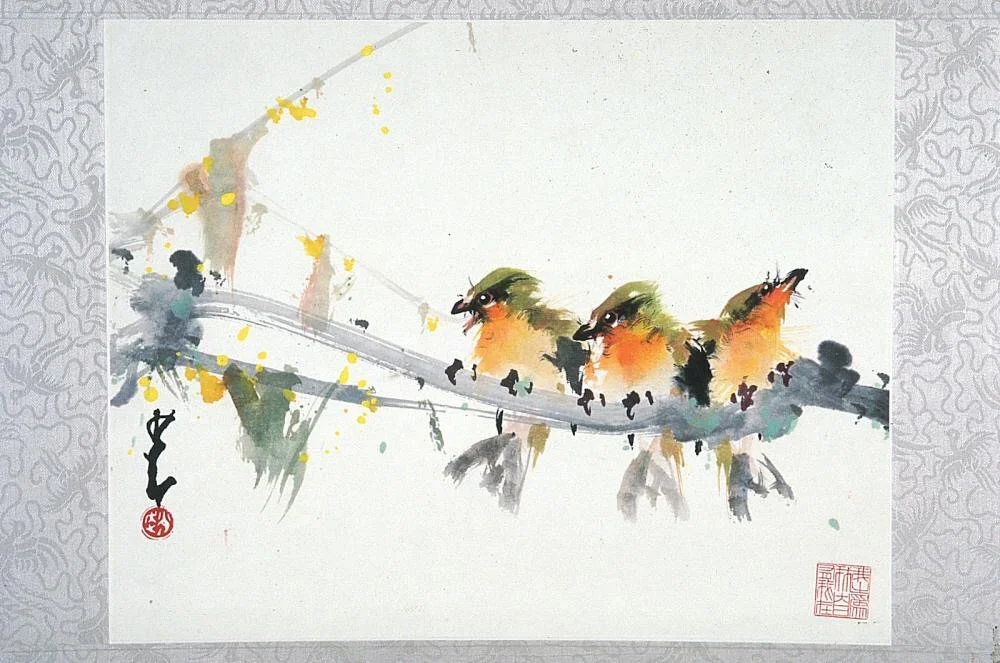
Birds in Spring

 Birds in spring (現代 趙少昂繪 群鳥迎春 紙本設色) Date: approx. 1980-1990 Materials: Ink and colors on paper
Birds in spring (現代 趙少昂繪 群鳥迎春 紙本設色) Date: approx. 1980-1990 Materials: Ink and colors on paper

Label:

In this painting, three small birds are struggling with thin claws to grasp a thick tree branch. The youngest fledgling, on the right, appears to be on the verge of falling. The work is created with swift brushwork and light touches of amber, orange, bluish, and black ink.

Sound of Autumn

  Sound of Autumn ( 現代 趙少昂繪 秋風聲咽 紙本設色) Date: approx. 1905-1992 Materials: Ink and colors on paper
Sound of Autumn ( 現代 趙少昂繪 秋風聲咽 紙本設色) Date: approx. 1905-1992 Materials: Ink and colors on paper

Label:

For Chao Shao-An, drawing from life (xiesheng) was an experience that involved all of the senses. The titles of his paintings often reflect the weather, the smells, or the sounds he associated with individual compositions—in this case, the rhythmic buzzing of katydids.

“All things in heaven and on earth represent an inexhaustible source of inspiration. Take for example the climatic changes of wind and rain, of sunshine and darkness; the seasonal growth and decay of flowers and trees; the swimming fish and the flying and chirping birds; the joys and sorrows of man; the insects extending their wings and animals roaring and wailing; the mountains in their full grandeur; water in its ebb and flow. All these are material for painting available for the good use of clever artists. There is really no need to depend on the ancient models.” —Chao Shao-An

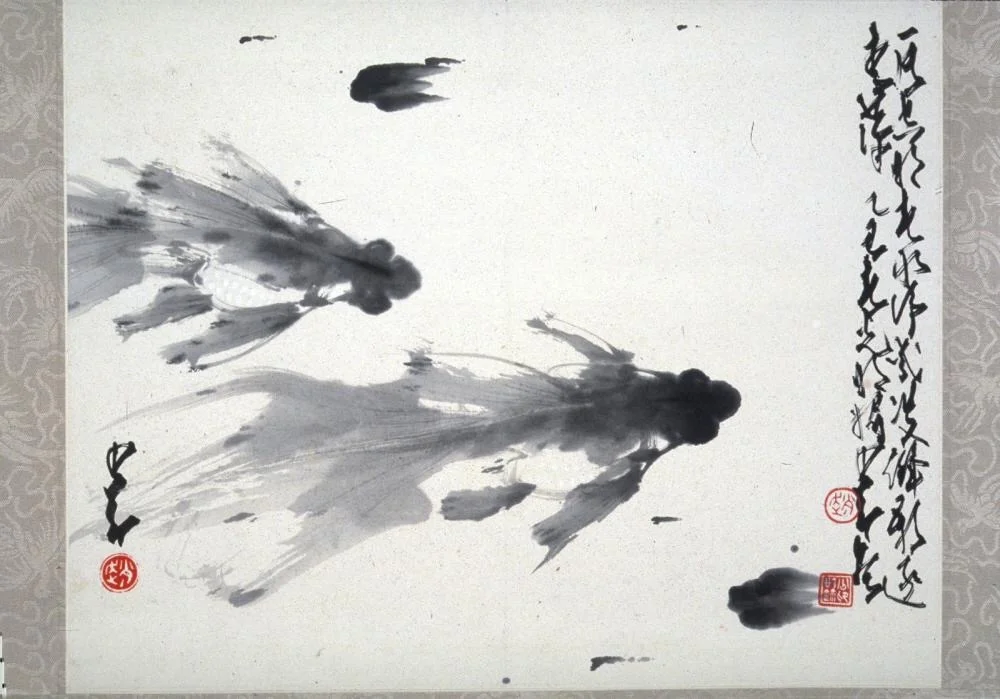
Fish

  Fish ( 現代 1985年 趙少昂繪 橫塘野趣 紙本水墨) Date: 1985 Materials: Ink on paper
Fish ( 現代 1985年 趙少昂繪 橫塘野趣 紙本水墨) Date: 1985 Materials: Ink on paper

Label:

Unlike the vertical compositions commonly used for paintings of fish, Chao presents this subject in a horizontal arrangement. Two big fish swimming toward the right dominate most of the composition. Approaching from the opposite direction are smaller fish. This directional effect contributes to the appearance of swift-flowing water. Sweeping, textured brushstrokes create a sense of movement in the underwater world, enhanced by moisture washes. The absence of background brushstrokes gives an impression of clarity in the water.

The artist’s inscription on the painting reveals his strategic scheme:

An empty expanse of bright, clear spring water,
Several paired couples pursue the floating weeds.

Yichou year [1985]. Shao-an painted this on a bright spring day.

The Fall

Author: Albert Camus
Rating: 4/5
Last Read: August 2018
Who Should Read: Anyone interested in The Mind, philosophy, psychology, or religion

I’ve read a few of Camus’s essays, but The Fall was my first major foray into his work.

The Fall is a short novel. The book is presented as a confessional monologue given by a lawyer to a compatriot in a bar. The lawyer, Jean-Baptiste Clamence, recounts the events of his life which led to his fall from a fully-absorbed and selfish love of life to one of dark depression and guilt. Clamence’s evolution in The Fall seems to purposefully mirror the themes presented in the book of Genesis, where man is kicked out of the garden of Eden and Wakes Up to a world of work, pain, and knowledge of evil.

How does Clamence’s Fall occur? While walking through Paris one night, Clamence fails to save a woman whom (he assumes) is pushed into in the river and drowns. His inaction that night drives him further and further into madness and guilt. Camus seems to emphasize a point frequently repeated by Jordan Peterson throughout his biblical lecture series: Nobody gets away with anything, ever.

Clamence’s self-judgment leads him down the road to an existential nightmare. He’s quite an interesting and disturbing character, especially for someone so introspective. He posits that we can never improve ourselves, because our own consciences will eternally condemn us as guilty. This is an amusing stance for a character who admits that he is morally bankrupt, but continues to act the same way that he did before “The Fall”. He seems to think that his admission of guilt and cowardice makes him noble, or at least no longer a hypocritical liar. Even after the self-torment, he says that given a second chance to save the woman, he knows that he would still fail to act.

It is this final admission of Clamence’s that leaves me the most disturbed – his attitude feels evil and sickening to me. Perhaps I find myself so disturbed because this attitude is more common than I would like to think.

If you are a student of the human condition, The Fall is a book for you. This novel is extremely philosophical and touches on many points which are still relevant in our society today. Perhaps the points discussed in the novel have always been relevant to humanity. I’m still chewing on many internal questions and uncomfortable Truths raised by this book.

This is so true that we rarely confide in those who are better than we. Rather, we are more inclined to flee their society. Most often, on the other hand, we confess to those who are like us and who share our weaknesses. Hence we don’t want to improve ourselves or be bettered, for we should first have to be judged in default. We merely wish to be pitied and encouraged in the course we have chosen. In short, we should like, at the same time, to cease being guilty and yet not to make the effort of cleansing ourselves. Not enough cynicism and not enough virtue.

My Highlights

I enjoyed my own nature to the fullest, and we all know that there lies happiness, although, to soothe one another mutually, we occasionally pretend to condemn such joys as selfishness.

I could readily understand why sermons, decisive preachings, and fire miracles took place on accessible heights. In my opinion no one meditated in cellars or prison cells (unless they were situated in a tower with a broad view); one just became moldy.

After all, living aloft is still the only way of being seen and hailed by the largest number.

Indeed, wasn’t that Eden, cher monsieur: no intermediary between life and me? Such was my life. I never had to learn how to live. In that regard, I already knew everything at birth. Some people’s problem is to protect themselves from men or at least to come to terms with them. In my case, the understanding was already established. Familiar when it was appropriate, silent when necessary, capable of a free and easy manner as readily as of dignity, I was always in harmony. Hence my popularity was great and my successes in society innumerable.

Yes, few creatures were more natural than I. I was altogether in harmony with life, fitting into it from top to bottom without rejecting any of its ironies, its grandeur, or its servitude. In particular the flesh, matter, the physical in short, which disconcerts or discourages so many men in love or in solitude, without enslaving me, brought me steady joys. I was made to have a body. Whence that harmony in me, that relaxed mastery that people felt, even to telling me sometimes that it helped them in life. Hence my company was in demand. Often, for instance, people thought they had met me before. Life, its creatures and its gifts, offered themselves to me, and I accepted such marks of homage with a kindly pride. To tell the truth, just from being so fully and simply a man, I looked upon myself as something of a superman.

Have you never suddenly needed understanding, help, friendship? Yes, of course. I have learned to be satisfied with understanding. It is found more readily and, besides, it’s not binding. “I beg you to believe in my sympathetic understanding” in the inner discourse always precedes immediately “and now, let’s turn to other matters.”

Friendship is less simple. It is long and hard to obtain, but when one has it there’s no getting rid of it; one simply has to cope with it. Don’t think for a minute that your friends will telephone you every evening, as they ought to, in order to find out if this doesn’t happen to be the evening when you are deciding to commit suicide, or simply whether you don’t need company, whether you are not in a mood to go out. No, don’t worry, they’ll ring up the evening you are not alone, when life is beautiful.

May heaven protect us, cher monsieur, from being set on a pedestal by our friends!

But it’s not easy, for friendship is absent-minded or at least unavailing. It is incapable of achieving what it wants. Maybe, after all, it doesn’t want it enough? Maybe we don’t love life enough? Have you noticed that death alone awakens our feelings? How we love the friends who have just left us? How we admire those of our teachers who have ceased to speak, their mouths filled with earth! Then the expression of admiration springs forth naturally, that admiration they were perhaps expecting from us all their lives.

But do you know why we are always more just and more generous toward the dead? The reason is simple. With them there is no obligation. They leave us free and we can take our time, fit the testimonial in between a cocktail party and a nice little mistress, in our spare time, in short. If they forced us to anything, it would be to remembering, and we have a short memory. No, it is the recently dead we love among our friends, the painful dead, our emotion, ourselves after all!

That’s the way man is, cher monsieur. He has two faces: he can’t love without self-love.

Death certainly has this affect on me:

Notice your neighbors if perchance a death takes place in the building. They were asleep in their little routine and suddenly, for example, the concierge dies. At once they awake, bestir themselves, get the details, commiserate. A newly dead man and the show begins at last. They need tragedy, don’t you know; it’s their little transcendence, their apéritif.

Camus isn’t pulling any punches, and he hits the nail on the head:

I knew a man who gave twenty years of his life to a scatterbrained woman, sacrificing everything to her, his friendships, his work, the very respectability of his life, and who one evening recognized that he had never loved her. He had been bored, that’s all, bored like most people. Hence he had made himself out of whole cloth a life full of complications and drama. Something must happen—and that explains most human commitments. Something must happen, even loveless slavery, even war or death. Hurray then for funerals!

Life became less easy for me: when the body is sad the heart languishes.

Humans need slaves (or at least domination), Clamence says:

I am well aware that one can’t get along without domineering or being served. Every man needs slaves as he needs fresh air. Commanding is breathing—you agree with me? And even the most destitute manage to breathe. The lowest man in the social scale still has his wife or his child. If he’s unmarried, a dog. The essential thing, after all, is being able to get angry with someone who has no right to talk back.

Still happening:

Power, on the other hand, settles everything. It took time, but we finally realized that. For instance, you must have noticed that our old Europe at last philosophizes in the right way. We no longer say as in simple times: “This is the way I think. What are your objections?” We have become lucid. For the dialogue we have substituted the communiqué: “This is the truth,” we say. “You can discuss it as much as you want; we aren’t interested. But in a few years there’ll be the police who will show you we are right.”

To me, this seems to be how the rich currently think of the masses:

Just between us, slavery, preferably with a smile, is inevitable then. But we must not admit it. Isn’t it better that whoever cannot do without having slaves should call them free men? For the principle to begin with, and, secondly, not to drive them to despair. We owe them that compensation, don’t we? In that way, they will continue to smile and we shall maintain our good conscience.

I have to admit it humbly, mon cher compatriote, I was always bursting with vanity. I, I, I is the refrain of my whole life, which could be heard in everything I said. I could never talk without boasting, especially if I did so with that shattering discretion that was my specialty. It is quite true that I always lived free and powerful. I simply felt released in regard to all for the excellent reason that I recognized no equals. I always considered myself more intelligent than everyone else, as I’ve told you, but also more sensitive and more skillful, a crack shot, an incomparable driver, a better lover. Even in the fields in which it was easy for me to verify my inferiority—like tennis, for instance, in which I was but a passable partner—it was hard for me not to think that, with a little time for practice, I would surpass the best players. I admitted only superiorities in me and this explained my good will and serenity. When I was concerned with others, I was so out of pure condescension, in utter freedom, and all the credit went to me: my self-esteem would go up a degree.

By gradual degrees I saw more clearly, I learned a little of what I knew. Until then I had always been aided by an extraordinary ability to forget. I used to forget everything, beginning with my resolutions. Fundamentally, nothing mattered.

Thus I progressed on the surface of life, in the realm of words as it were, never in reality. All those books barely read, those friends barely loved, those cities barely visited, those women barely possessed! I went through the gestures out of boredom or absent-mindedness. Then came human beings; they wanted to cling, but there was nothing to cling to, and that was unfortunate—for them. As for me, I forgot. I never remembered anything but myself.

As I passed, the idiot greeted me with a “poor dope” that I still recall. A totally insignificant story, in your opinion? Probably. Still it took me some time to forget it, and that’s what counts.

I am guilty of this – the monkey mind at play.

As an afterthought I clearly saw what I should have done. I saw myself felling d’Artagnan with a good hook to the jaw, getting back into my car, pursuing the monkey who had struck me, overtaking him, jamming his machine against the curb, taking him aside, and giving him the licking he had fully deserved. With a few variants, I ran off this little film a hundred times in my imagination. But it was too late, and for several days I chewed a bitter resentment.

Is this how my own anger serves me – simply wanting to dominate and have others listen?

I had dreamed—this was now clear—of being a complete man who managed to make himself respected in his person as well as in his profession. Half Cerdan, half de Gaulle, if you will. In short, I wanted to dominate in all things. This is why I assumed the manner, made a particular point of displaying my physical skill rather than my intellectual gifts. But after having been struck in public without reacting, it was no longer possible for me to cherish that fine picture of myself. If I had been the friend of truth and intelligence I claimed to be, what would that episode have mattered to me? It was already forgotten by those who had witnessed it. I’d have barely accused myself of having got angry over nothing and also, having got angry, of not having managed to face up to the consequences of my anger, for want of presence of mind. Instead of that, I was eager to get my revenge, to strike and conquer. As if my true desire were not to be the most intelligent or most generous creature on earth, but only to beat anyone I wanted, to be the stronger, in short, and in the most elementary way.

The truth is that every intelligent man, as you know, dreams of being a gangster and of ruling over society by force alone.

What does it matter, after all, if by humiliating one’s mind one succeeds in dominating everyone?

Everyone has a shadow. Is yours properly integrated, or do you let it run free?

When I was threatened, I became not only a judge in turn but even more: an irascible master who wanted, regardless of all laws, to strike down the offender and get him on his knees. After that, mon cher compatriote, it is very hard to continue seriously believing one has a vocation for justice and is the predestined defender of the widow and orphan.

You know what charm is: a way of getting the answer yes without having asked any clear question.

Of course, true love is exceptional—two or three times a century, more or less. The rest of the time there is vanity or boredom.

The mind’s scheming, exposed by Camus:

I had principles, to be sure, such as that the wife of a friend is sacred. But I simply ceased quite sincerely, a few days before, to feel any friendship for the husband.

Our feminine friends have in common with Bonaparte the belief that they can succeed where everyone else has failed.

How many people must this way:

I was never concerned with the major problems except in the intervals between my little excesses.

In short, for me to live happily it was essential for the creatures I chose not to live at all. They must receive their life, sporadically, only at my bidding.

How do I know I have no friends? It’s very easy: I discovered it the day I thought of killing myself to play a trick on them, to punish them, in a way. But punish whom? Some would be surprised, and no one would feel punished. I realized I had no friends. Besides, even if I had had, I shouldn’t be any better off. If I had been able to commit suicide and then see their reaction, why, then the game would have been worth the candle. But the earth is dark, cher ami, the coffin thick, and the shroud opaque.

Men are never convinced of your reasons, of your sincerity, of the seriousness of your sufferings, except by your death. So long as you are alive, your case is doubtful; you have a right only to their skepticism.

In order to cease being a doubtful case, one has to cease being, that’s all.

You think you are dying to punish your wife and actually you are freeing her. It’s better not to see that.

So what’s the good of dying intentionally, of sacrificing yourself to the idea you want people to have of you? Once you are dead, they will take advantage of it to attribute idiotic or vulgar motives to your action. Martyrs, cher ami, must choose between being forgotten, mocked, or made use of. As for being understood—never!

I’m not saying to avoid punishment, for punishment without judgment is bearable. It has a name, besides, that guarantees our innocence: it is called misfortune.

Today we are always ready to judge as we are to fornicate. With this difference, that there are no inadequacies to fear. If you doubt this, just listen to the table conversation during August in those summer hotels where our charitable fellow citizens take the boredom cure. If you still hesitate to conclude, read the writings of our great men of the moment. Or else observe your own family and you will be edified. Mon cher ami, let’s not give them any pretext, no matter how small, for judging us! Otherwise, we’ll be left in shreds.

In short, the moment I grasped that there was something to judge in me, I realized that there was in them an irresistible vocation for judgment.

Your successes and happiness are forgiven you only if you generously consent to share them. But to be happy it is essential not to be too concerned with others. Consequently, there is no escape. Happy and judged, or absolved and wretched.

As for me, the injustice was even greater: I was condemned for past successes.

People hasten to judge in order not to be judged themselves. What do you expect? The idea that comes most naturally to man, as if from his very nature, is the idea of his innocence.

We are all exceptional cases. We all want to appeal against something! Each of us insists on being innocent at all cost, even if he has to accuse the whole human race and heaven itself.

You won’t delight a man by complimenting him on the efforts by which he has become intelligent or generous. On the other hand, he will beam if you admire his natural generosity. Inversely, if you tell a criminal that his crime is not due to his nature or his character but to unfortunate circumstances, he will be extravagantly grateful to you.

But those rascals want grace, that is irresponsibility, and they shamelessly allege the justifications of nature or the excuses of circumstances, even if they are contradictory. The essential thing is that they should be innocent, that their virtues, by grace of birth, should not be questioned and that their misdeeds, born of a momentary misfortune, should never be more than provisional.

As I told you, it’s a matter of dodging judgment. Since it is hard to dodge it, tricky to get one’s nature simultaneously admired and excused, they all strive to be rich. Why? Did you ever ask yourself? For power, of course. But especially because wealth shields from immediate judgment, takes you out of the subway crowd to enclose you in a chromium-plated automobile, isolates you in huge protected lawns, Pullmans, first-class cabins. Wealth, cher ami, is not quite acquittal, but reprieve, and that’s always worth taking.

Above all, don’t believe your friends when they ask you to be sincere with them. They merely hope you will encourage them in the good opinion they have of themselves by providing them with the additional assurance they will find in your promise of sincerity. How could sincerity be a condition of friendship? A liking for truth at any cost is a passion that spares nothing and that nothing resists. It’s a vice, at times a comfort, or a selfishness. Therefore, if you are in that situation, don’t hesitate: promise to tell the truth and then lie as best you can. You will satisfy their hidden desire and doubly prove your affection.

This is so true that we rarely confide in those who are better than we. Rather, we are more inclined to flee their society. Most often, on the other hand, we confess to those who are like us and who share our weaknesses. Hence we don’t want to improve ourselves or be bettered, for we should first have to be judged in default. We merely wish to be pitied and encouraged in the course we have chosen. In short, we should like, at the same time, to cease being guilty and yet not to make the effort of cleansing ourselves. Not enough cynicism and not enough virtue.

Don’t smile; that truth is not so basic as it seems. What we call basic truths are simply the ones we discover after all the others.

However that may be, after prolonged research on myself, I brought out the fundamental duplicity of the human being. Then I realized, as a result of delving in my memory, that modesty helped me to shine, humility to conquer, and virtue to oppress. I used to wage war by peaceful means and eventually used to achieve, through disinterested means, everything I desired.

For instance, I never complained that my birthday was overlooked; people were even surprised, with a touch of admiration, by my discretion on this subject. But the reason for my disinterestedness was even more discreet: I longed to be forgotten in order to be able to complain to myself. Several days before the famous date (which I knew very well) I was on the alert, eager to let nothing slip that might arouse the attention and memory of those on whose lapse I was counting (didn’t I once go so far as to contemplate falsifying a friend’s calendar?). Once my solitude was thoroughly proved, I could surrender to the charms of a virile self-pity.

I have never been really able to believe that human affairs were serious matters. I had no idea where the serious might lie, except that it was not in all this I saw around me—which seemed to me merely an amusing game, or tiresome. There are really efforts and convictions I have never been able to understand. I always looked with amazement, and a certain suspicion, on those strange creatures who died for money, fell into despair over the loss of a “position,” or sacrificed themselves with a high and mighty manner for the prosperity of their family. I could better understand that friend who had made up his mind to stop smoking and through sheer will power had succeeded. One morning he opened the paper, read that the first H-bomb had been exploded, learned about its wonderful effects, and hastened to a tobacco shop.

You remember the remark: “Woe to you when all men speak well of you!” Ah, the one who said that spoke words of wisdom!

Then it was that the thought of death burst into my daily life. I would measure the years separating me from my end. I would look for examples of men of my age who were already dead. And I was tormented by the thought that I might not have time to accomplish my task. What task? I had no idea. Frankly, was what I was doing worth continuing?

You see, it is not enough to accuse yourself in order to clear yourself; otherwise, I’d be as innocent as a lamb. One must accuse oneself in a certain way, which it took me considerable time to perfect.

The greater the threat to the feeling in which I had hoped to find calm, the more I demanded that feeling of my partner.

I tried accordingly to give up women, in a certain way, and to live in a state of chastity. After all, their friendship ought to satisfy me. But this was tantamount to giving up gambling. Without desire, women bored me beyond all expectation, and obviously I bored them too. No more gambling and no more theater—I was probably in the realm of truth. But truth, cher ami, is a colossal bore.

Despairing of love and of chastity, I at last bethought myself of debauchery, a substitute for love, which quiets the laughter, restores silence, and above all, confers immortality.

One plays at being immortal and after a few weeks one doesn’t even know whether or not one can hang on till the next day.

There is nothing frenzied about debauchery, contrary to what is thought. It is but a long sleep.

Physical jealousy is a result of the imagination at the same time that it is a self-judgment.

Believe me, religions are on the wrong track the moment they moralize and fulminate commandments. God is not needed to create guilt or to punish. Our fellow men suffice, aided by ourselves.

Hell is a real place, and I see people living there every day:

I’ll tell you a big secret, mon cher. Don’t wait for the Last Judgment. It takes place every day.

Say, do you know why he was crucified—the one you are perhaps thinking of at this moment? Well, there were heaps of reasons for that. There are always reasons for murdering a man. On the contrary, it is impossible to justify his living. That’s why crime always finds lawyers, and innocence only rarely. But, beside the reasons that have been very well explained to us for the past two thousand years, there was a major one for that terrible agony, and I don’t know why it has been so carefully hidden. The real reason is that he knew he was not altogether innocent. If he did not bear the weight of the crime he was accused of, he had committed others—even though he didn’t know which ones.

There was a time when I didn’t at any minute have the slightest idea how I could reach the next one. Yes, one can wage war in this world, ape love, torture one’s fellow man, or merely say evil of one’s neighbor while knitting. But, in certain cases, carrying on, merely continuing, is superhuman.

In solitude and when fatigued, one is after all inclined to take oneself for a prophet.

You see, a person I knew used to divide human beings into three categories: those who prefer having nothing to hide rather than being obliged to lie, those who prefer lying to having nothing to hide, and finally those who like both lying and the hidden.

I didn’t know that freedom is not a reward or a decoration that is celebrated with champagne. Nor yet a gift, a box of dainties designed to make you lick your chops. Oh, no! It’s a chore, on the contrary, and a long-distance race, quite solitary and very exhausting. No champagne, no friends raising their glasses as they look at you affectionately. Alone in a forbidding room, alone in the prisoner’s box before the judges, and alone to decide in face of oneself or in the face of others’ judgment. At the end of all freedom is a court sentence; that’s why freedom is too heavy to bear, especially when you’re down with a fever, or are distressed, or love nobody.

Ah, mon cher, for anyone who is alone, without God and without a master, the weight of days is dreadful. Hence one must choose a master, God being out of style.

However, I have a superiority in that I know it and this gives me the right to speak. You see the advantage, I am sure. The more I accuse myself, the more I have a right to judge you. Even better, I provoke you into judging yourself, and this relieves me of that much of the burden. Ah, mon cher, we are odd, wretched creatures, and if we merely look back over our lives, there’s no lack of occasions to amaze and horrify ourselves.

Buy the Book

If you are interested in purchasing this book, you can support the website by using our Amazon affiliate link.
 

The Fall

By Albert Camus


Collected Musings, 9/14/18

On Wednesday, Rozi and I were on an errand downtown, and I decided we should abandon work to have a tea break at the Yerba Buena Gardens. We never noticed that behind the Yerba Buena Gardens waterfall is a civil rights monument dedicated to Dr. King. There are two iconic photographs, as well as a series of Dr. King’s quotes. Each quote is printed in English and translated into one additional language. Walking through the monument, I was awestruck by the unceasing power of Dr. King’s words.

I’ve had these two quotes in particular stuck in my mind since visiting the monument. They spoke to me in a way that still sends chills down my spine.

“There is nothing in all the world greater than freedom. It is worth paying for; it is worth going to jail for. I would rather die in abject poverty with my convictions than live in inordinate riches with the lack of self-respect.”

“We must rapidly begin to shift from a thing-oriented society to a person-oriented society. When machines and computers, profit motives and property rights are considered more important than people, the giant triplets of racism, materialism, and militarism are incapable of being conquered”

Our society is still trapped in the vice of our thing-oriented society. Perhaps we don’t really want to escape – we love our toys, alcohol, weed, and sugar.


I’ve been doing some heavy reading these past few months. I’ve recently finished reading The Fall by Albert Camus, The Dhammapada, Rites and Symbols of Initiation by Mercea Eliade and Anger: Wisdom for Cooling the Flames by Thich Nhat Hanh.

It’s telling that I’ve managed to read Anger twice now, but haven’t shared the book notes yet. I’ve decided to revisit Deep Nutrition while I work through my overwhelming book note backlog.

After reading so many books, it can be quite disturbing to look at a book which you’ve previously read and have no recollection of its thesis or plot. I originally started my highlighting and book review process to attempt to combat this memory loss, and reviewing my book nots at regular intervals has been quite helpful.

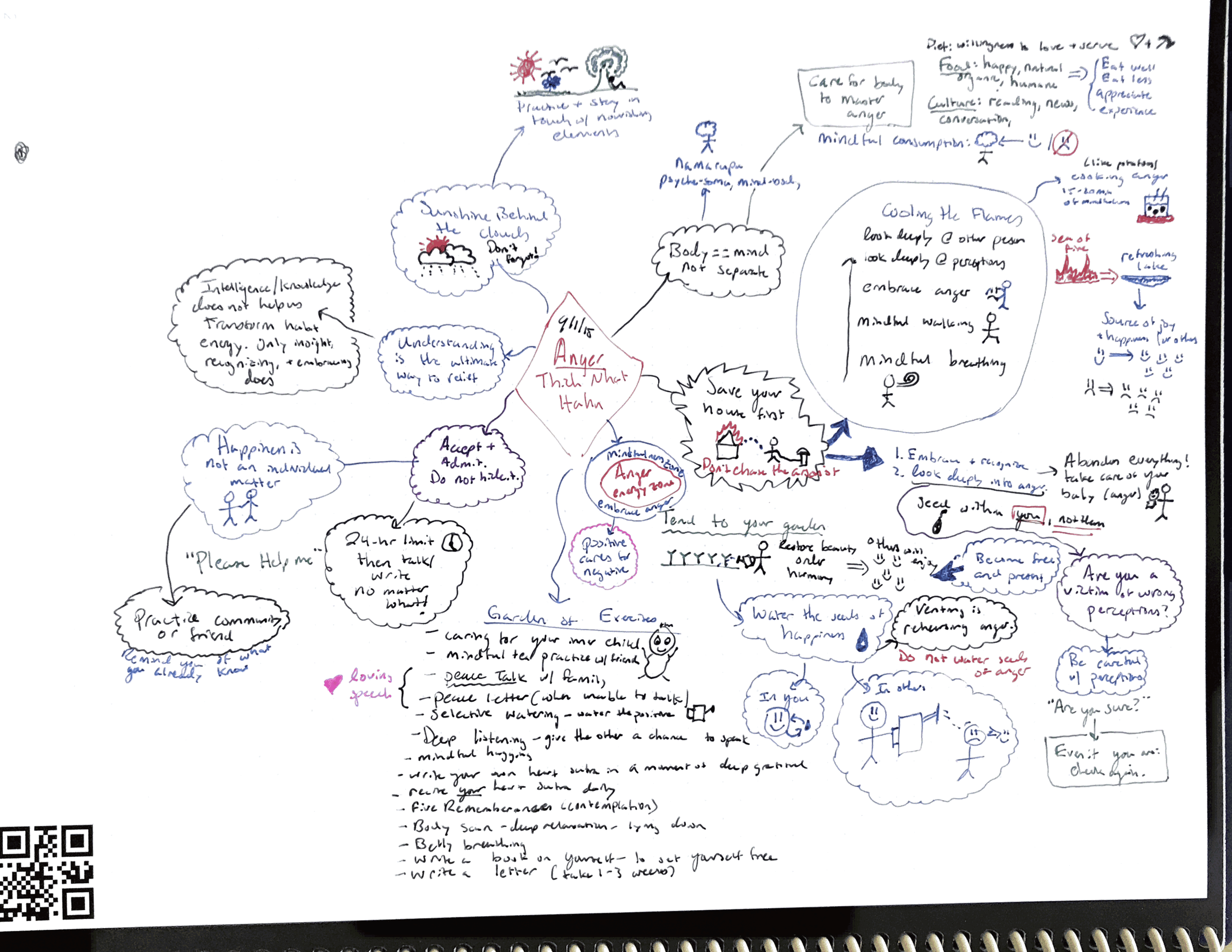
I recently started creating mind maps while I’m reading a book. After a reading session (usually the next day), I take a moment to draw out some of the points that stand out in my mind. Creating these maps helps me in many ways:

  • I can stretch my memory muscles, increasing recall
  • I am forced to distill complex ideas into single words and short phrases
  • I create visual connections between ideas
  • I create visual anchors to associate with words and ideas when possible

I’m still quite new at this practice and my mind maps are rough and cluttered. Plus, my drawing skills are greatly atrophied.

So far they’ve helped me cement the ideas from the two books in my mind, and I have a handy one-page cheat sheet whenever I need a refresher.

Here’s a mind map for Rites and Symbols of Initiation by Mercea Eliade:


And here’s my mind map for Anger: Wisdom for Cooling the Flames by Thich Nhat Hanh:


Seth Godin recently posted “Ignore the Questions”, which hit me right in the gut.

I was in great need of this reminder in particular:

Instead, consider using the question as a chance to see more deeply in what this interaction is for, where are you hoping to go? Focus on status roles, the creation and resolution of tension, and most of all, changing minds.

If you’re not working to change minds, why are you here again?


My Thursdays are dedicated to two purposes:

  1. Volunteering at the Japanese Tea Garden
  2. Working on my business (rather than in my business)

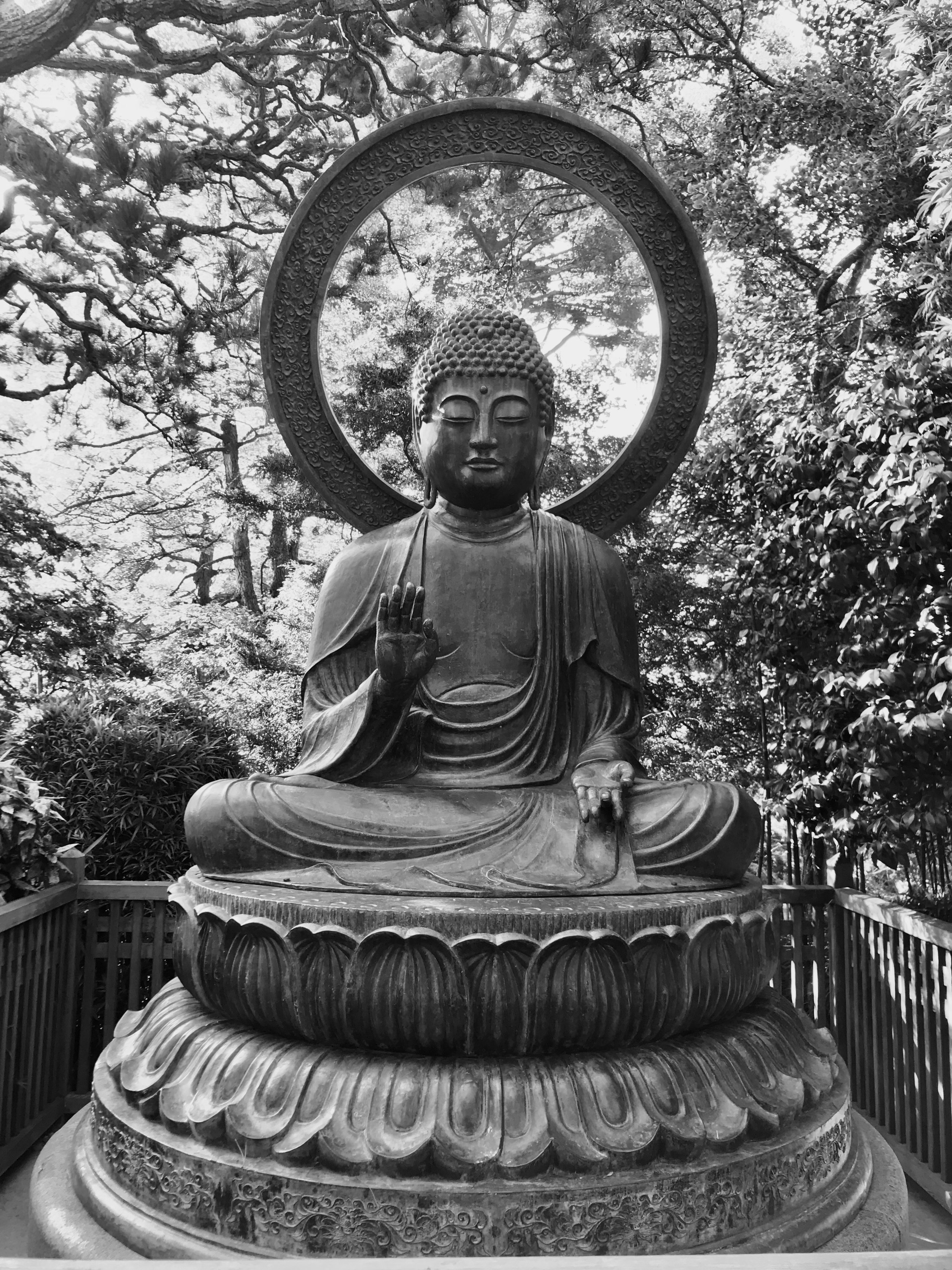
Gardening helps me turn off my thinking brain, focus on quality, and step away from my computer for a few hours. It’s practically impossible to step into the garden early in the morning without peace entering into your soul.

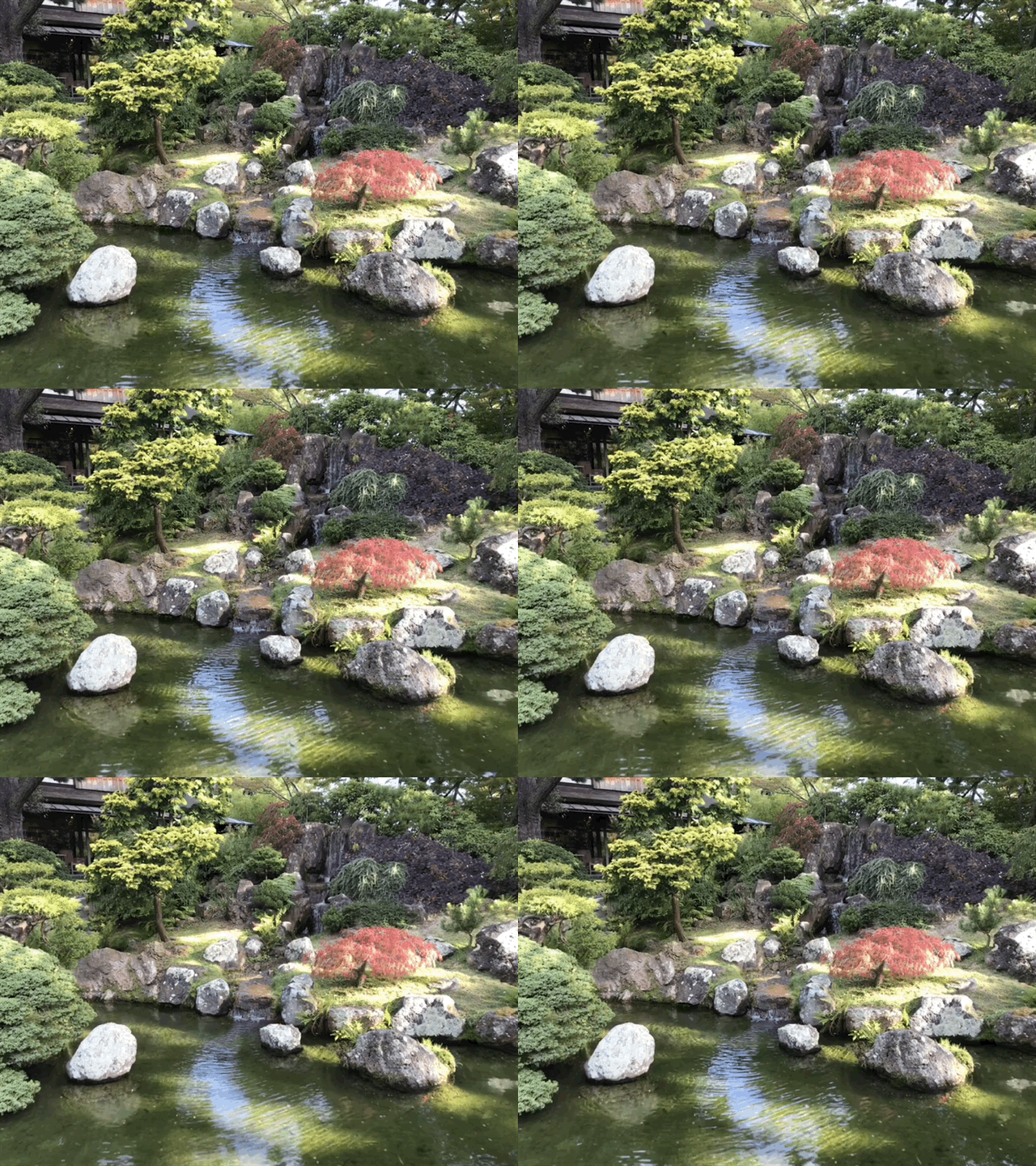
The past few months have been quite foggy, but we got some brilliant sunshine this Thursday, so I snapped a few photos.


I love playing with loops using Apple’s live images. Water is always a fun subject:

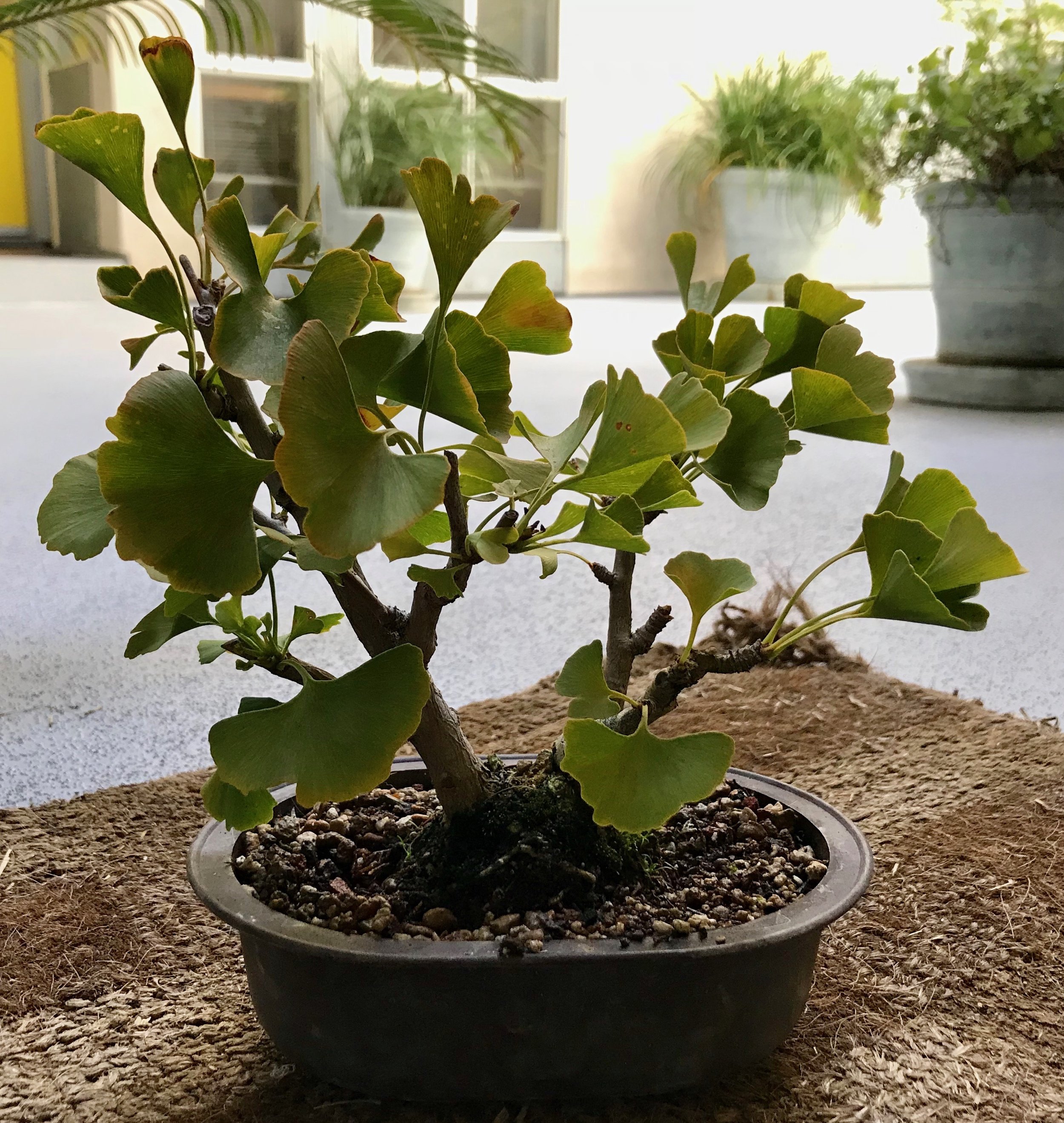
I was talked into attending a bonsai auction at the behest of my gardening friends. You can’t go to an auction without joining in on the fun, and picked up a (seemingly) lifetime supply of wire, some pots, a few tools, and this 10-yr old Ginkgo.


I have no idea what to do with it yet, other than prevent it from dying.

Since my mind is focused on plants, I’ll leave you with this quote on gardening which I lifted from Tim Ferris’s newsletter:

“Gardening is not outcome-oriented. A successful harvest is not the end of a gardener’s existence, but only a phase of it. As any gardener knows, the vitality of a garden does not end with a harvest. It simply takes another form. Gardens do not ‘die’ in the winter but quietly prepare for another season.”
James P. Carse, Finite and Infinite Games

Let it Enfold You

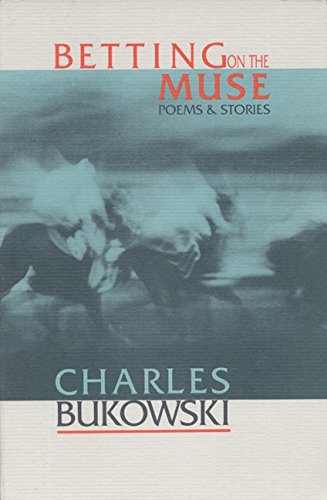
by Charles Bukowski
(Photograph by Mark Hanauer)

Either peace or happiness, 
let it enfold you

when I was a young man
I felt these things were
dumb, unsophisticated. 
I had bad blood, a twisted
mind, a precarious
upbringing. 

I was hard as granite, I
leered at the
sun. 
I trusted no man and
especially no
woman. 

I was living a hell in
small rooms, I broke
things, smashed things, 
walked through glass, 
cursed. 
I challenged everything, 
was continually being
evicted, jailed, in and
out of fights, in and out
of my mind. 
women were something
to screw and rail
at, I had no male
friends, 

I changed jobs and
cities, I hated holidays, 
babies, history, 
newspapers, museums, 
grandmothers, 
marriage, movies, 
spiders, garbagemen, 
english accents,spain, 
france,italy,walnuts and
the color
orange. 
algebra angred me, 
opera sickened me, 
charlie chaplin was a
fake
and flowers were for
pansies. 

peace and happiness to me
were signs of
inferiority, 
tenants of the weak
and
addled
mind. 

but as I went on with
my alley fights, 
my suicidal years, 
my passage through
any number of
women-it gradually
began to occur to
me
that I wasn’t different 

from the
others, I was the same, 

they were all fulsome
with hatred, 
glossed over with petty
grievances, 
the men I fought in
alleys had hearts of stone. 
everybody was nudging, 
inching, cheating for
some insignificant
advantage, 
the lie was the
weapon and the
plot was
empty, 
darkness was the
dictator. 

cautiously, I allowed
myself to feel good
at times. 
I found moments of
peace in cheap
rooms
just staring at the
knobs of some
dresser
or listening to the
rain in the
dark. 
the less I needed
the better I
felt. 

maybe the other life had worn me
down. 
I no longer found
glamour
in topping somebody
in conversation. 
or in mounting the
body of some poor
drunken female
whose life had
slipped away into
sorrow. 

I could never accept
life as it was, 
i could never gobble
down all its
poisons
but there were parts, 
tenuous magic parts
open for the
asking. 

I re formulated
I don’t know when, 
date, time, all
that
but the change
occurred. 
something in me
relaxed, smoothed
out. 
i no longer had to
prove that I was a
man, 

I didn’t have to prove
anything. 

I began to see things: 
coffee cups lined up
behind a counter in a
cafe. 
or a dog walking along
a sidewalk. 
or the way the mouse
on my dresser top
stopped there
with its body, 
its ears, 
its nose, 
it was fixed, 
a bit of life
caught within itself
and its eyes looked
at me
and they were
beautiful. 
then- it was
gone. 

I began to feel good, 
I began to feel good
in the worst situations
and there were plenty
of those. 
like say, the boss
behind his desk, 
he is going to have
to fire me. 

I’ve missed too many
days. 
he is dressed in a
suit, necktie, glasses, 
he says, ‘I am going
to have to let you go’ 

‘it’s all right’ I tell
him. 

He must do what he
must do, he has a
wife, a house, children, 
expenses, most probably
a girlfriend. 

I am sorry for him
he is caught. 

I walk onto the blazing
sunshine. 
the whole day is
mine
temporarily, 
anyhow. 

(the whole world is at the
throat of the world, 
everybody feels angry, 
short-changed, cheated, 
everybody is despondent, 
disillusioned) 

I welcomed shots of
peace, tattered shards of
happiness. 

I embraced that stuff
like the hottest number, 
like high heels, breasts, 
singing,the
works. 

(don’t get me wrong, 
there is such a thing as cockeyed optimism
that overlooks all
basic problems just for
the sake of
itself- 
this is a shield and a
sickness.) 

The knife got near my
throat again, 
I almost turned on the
gas
again
but when the good
moments arrived
again
I didn’t fight them off
like an alley
adversary. 
I let them take me, 
I luxuriated in them, 
I made them welcome
home. 
I even looked into
the mirror
once having thought
myself to be
ugly, 
I now liked what
I saw, almost
handsome, yes, 
a bit ripped and
ragged, 
scares, lumps, 
odd turns, 
but all in all, 
not too bad, 
almost handsome, 
better at least than
some of those movie
star faces
like the cheeks of
a baby’s
butt. 

and finally I discovered
real feelings of
others, 
unheralded, 
like lately, 
like this morning, 
as I was leaving, 
for the track, 
i saw my wife in bed, 
just the
shape of
her head there
(not forgetting
centuries of the living
and the dead and
the dying, 
the pyramids, 
Mozart dead
but his music still
there in the
room, weeds growing, 
the earth turning, 
the tote board waiting for
me) 
I saw the shape of my
wife’s head, 
she so still, 
I ached for her life, 
just being there
under the
covers. 

I kissed her in the
forehead, 
got down the stairway, 
got outside, 
got into my marvelous
car, 
fixed the seatbelt, 
backed out the
drive. 
feeling warm to
the fingertips, 
down to my
foot on the gas
pedal, 
I entered the world
once
more, 
drove down the
hill
past the houses
full and empty
of
people, 
I saw the mailman, 
honked, 
he waved
back
at me.

Source

“Let it Enfold You” is from Betting on the Muse, pg 378:


Betting on the Muse

By Charles Bukowski


Collected Musings, 8/25/18

I was inspired by Ruth Malan’s traces to gather my musings together in a single place and to share them regularly. Essentially, this is a public combination of my commonplace book and my journal. I intend for this to be mostly stream-of-consciousness, so my thoughts may be potentially disjointed. You have been warned.


Wisdom seems to be coming to grips with paradoxes. There also seems to be the ability to safely operating within the paradoxes without the feeling of “this isn’t logical!” or “this makes no sense!”. Such a definition of Wisdom confirms to me that our ability to perceive is limited – otherwise we might be able to more readily see and identify these “paradoxes”.


I watched an interview with Chamath Palihapitiya, CEO of Social Capital and a former exec at Facebook. The whole interview is worth watching. Rich capitalists are very rarely this forthcoming. Here are notes I jotted down:

  • Internet businesses are the primary target for the “fail fast” mindset, because they are trying to exploit the psychology of large populations. Failing fast is about exploiting a lot of people – if it doesn’t work you want to learn ASAP so you can adjust.
  • Moderate growth and moderate compounding is the goal for long-term businesses and long-term progress
  • Slow and steady when working hard problems
  • Turn off your social apps and give your brain a break.
    • Social media = short term thinking
    • You don’t want to be motivated by what everyone else is saying/thinking.
    • Acknowledge that the things you spend hours a day doing are rewiring your psychology and physiology. You now have to take that same brain and use it to be successful in the world. If your brain is wired toward short-term thinking and dopamine hits from social media, you’ve made your job much harder.
  • Proactively try to wire your brain chemistry to be long-term focused

It seems to me that it’s quite impossible to use social media and attention-based electronic device (phones, television, games – all reward us with dopamine) without becoming addicted and pulled into a state of distraction. At least, in the default state of their use.

Effects can be mitigated by reducing the systems which feed us dopamine hits: disable notifications, remove email & web browsers, block internet access, limit when and how you check, etc. But these strategies don’t eliminate the distraction or addiction mechanisms. We are always fighting against them.

My phone doesn’t have an email app or a web browser. I block email and social media access on my computer before 12pm. Social media is only available for a short 1-2 hour window, and then it’s off again. Even then, I feel so distracted and impulsive after checking it just once! I’ve also started using Tweetdeck, since I can filter out specific topics, hide all notifications except for direct comments, and avoid seeing what people “like”. Most of my social media posts are scheduled through third-party websites.

One goal I would like to work on: keeping my phone in airplane mode most of the time. I get so many spam calls, and why do people need instant access to me? The interruptions and the frustration from receiving spam calls all day also impacts my thought process.


I watched a Jordan Peterson lecture clip which ties into these thoughts on habit building: Don’t practice what you don’t want to be. Here are my notes:

  • Advice: do not practice things you do not want to become
  • Your brain makes it (whatever you practice) a part of your physical brain structure
  • As you practice the task and routinize it – the activation is easier.
    • You build a little machine – a habit – and it’s really there in your brain
  • If you want to change it, you can’t undo it – it’s there permanently
    • You have to build a machine that shuts it off, and then another machine to replace it
    • When you get stressed the old machine comes back!

Character is “how you build yourself across time”. It really matters. Only practice what you want to become.

I’ve also been listening to Jordan Peterson’s biblical lectures, which are quite fascinating. I just finished with the Cain and Abel lecture, a story I’ve found myself thinking about quite deeply since I finished reading East of Eden (a book that may have saved my life, in a few ways). Peterson talks quite a bit about the idea of the Sacrifice, and its importance in human affairs. After watching this lecture, I’ll be trying out a new morning reflection/journaling prompt:

Every morning, ask: what sacrifice do I have to make to make things better? Not just for me, but also for my family, friends, clients, the world.

Another way to put it:

What thing could I let go of that’s impeding my progress?


Back to programming our brains. We can help keep ourselves on track by intentionally creating momentum in our lives. Rather than create big goals, we can create a series of small goals reached continuously. We benefit from boosts in morale by regularly achieving our small goals. We also get to see much more frequent indications of progress than when we target giant goals.

Tiny Habits is a great (and free) 5-day email course which uses the idea of small goals and continual momentum for building habits.

I’ve used the Tiny Habits method to program many new habits. Today I’ve started intentionally crafting them again. Here are the three I’m currently working on:

  • After I sit down I will reset my shoulders
  • After I flush the toilet, I will do 3 squats
  • Every time my computer prompts me to take a break, I will take three deep breaths

I spent my morning creating a set of Oblique Strategy cards. Oblique Strategies are a creation of Brian Eno and Peter Schmidt, and are meant as a tool to get “unstuck” when working on a creative problem. I view it as almost an oracular method (à la the I Ching, which I consult to get unstuck in my life). The goal is to get unstuck by taking a different approach or viewing our problem from a different perspective.

I used two retired playing card decks to create my Oblique Strategies deck. The strategy list I consulted had more strategies than cards, so I doubled up some related or paradoxical items. You can also consult the Oblique Strategy Oracle online, if you don’t want to go through the work of making your own deck.

After creating the cards, I’m pondering their potential use in meetings with my clients. If they can help me get unstuck by creating a totally new view of the problem, can they also work with clients? The answer is “yes” – but I need to figure out how to deliver that message. “Oh, luckily I carry an oracle in my pocket that we can consult.”

It’s funny that we create and rely on such devices. As I write the cards out, I can picture my self interpreting them in different ways depending on the situation. We think we are rational creatures, but how wrong we are – we are ruled by the irrational. By latching onto irrationality, we can do amazing things. The irrational self is our source of creativity and new ideas.


I’ve been cleaning up some long-standing Evernote notes. These are some quotes that stood out to me.

Goldmund Unleashed (@GoldmundUnleash):

An effective artist is one who studies his own life, records experiences, and finds a medium to share so other lives can be enriched. You can do this at any age.

I’m trying to apply Goldmund’s advice via this ‘Collected Musings’ concept. This brings up another quote from Kapil Gupta:

Then what should you do with your life:
See. Create. Then see. Then create. The seeing is for Understanding. The creating is for immersion.

Confucius:

Everything flows on and on like this river, without pause, day and night.

A recent quotes from Kapil Gupta:

No human being can affect another
The one who is affected affects himself
(But exquisitely rare is the individual who is Truly interested in no longer affecting himself)

A quote from Zen Keys, by Thich Nhat Hanh, attributed to Buddha:

The self of which you speak, great self or small self, is only a concept that does not correspond to any reality.