

Over the past few years I’ve developed an appreciation for Chinese painting styles. Something about the strokes speaks to me: rough, dynamic, deliberate, and simplistic all at the same time. I love the focus on natural themes and the feelings that the scenes evoke.
While wandering through San Francisco Asian Art Museum with Rozi, we came across a small room displaying the art of Master Chao Shao-An. His painting “Pine in Snow” captured me, and I noted down his name so I could explore more of his art.
I was quite disappointed by my initial internet forays – I couldn’t find too many examples of his work, other than a few repeated low-resolution images. Luckily I remembered that museums tend to make their collections publicly searchable on the web, and I discovered a treasure trove of his work. I feel grateful that an overwhelming number of great works of art are immediately available for us to see from our homes. What a time to be alive!
I want to share some of my favorite pieces from the collection with you. I hope that you get a chance to stumble upon of the master’s work in person on your adventure through this life.
Pine in Snow
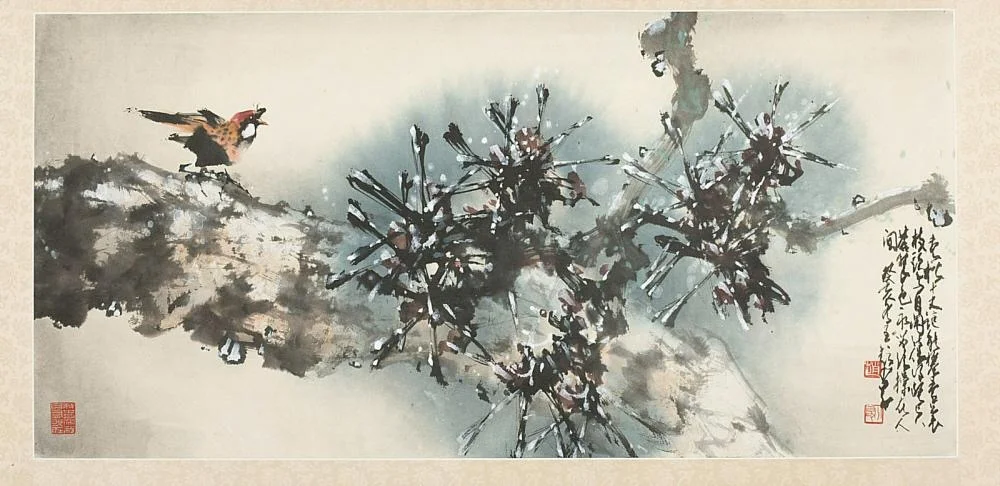
Label:
The rugged pine is a symbol of longevity, nobility, and venerability. Together with the plum and bamboo, it forms a grouping known as the Three Friends of Winter.
Inscribed:
Who can climb this lofty green pine?
A bird relaxes on its snow-covered branches.
Because it has kept its verdant green colors through great fortitude,
may its virtues and faith be remembered for generations to come.—Guihai year [1983], winter solstice. Chao Shao-An.
Pine and Snow
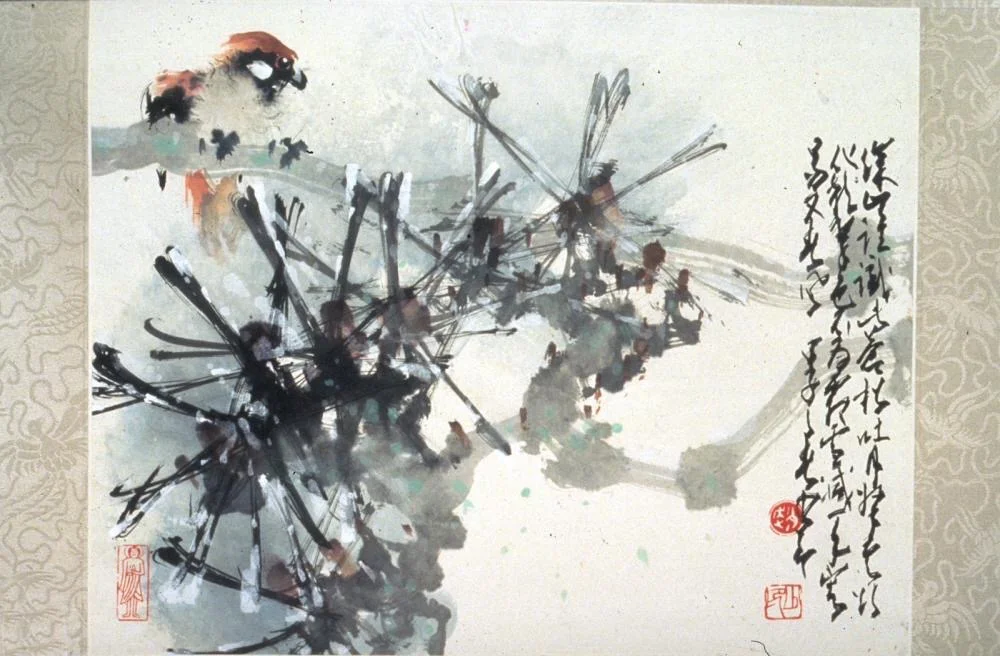
Label:
The pine (song) is a symbol of longevity because it is an evergreen and lives for a long time. Such endurance also makes the pine a popular motif to represent a person who possesses nobility and venerability, as suggested by the painting’s inscription:
No one knows of this old pine in the deep mountain.
Grasping clouds and swallowing the moon, it desires to be a dragon.
Its green foliage diminishes not with frost and snow.
Another year passes so easily, the spring wind blows once more.Jiazi year (1984), spring. Shao-an.
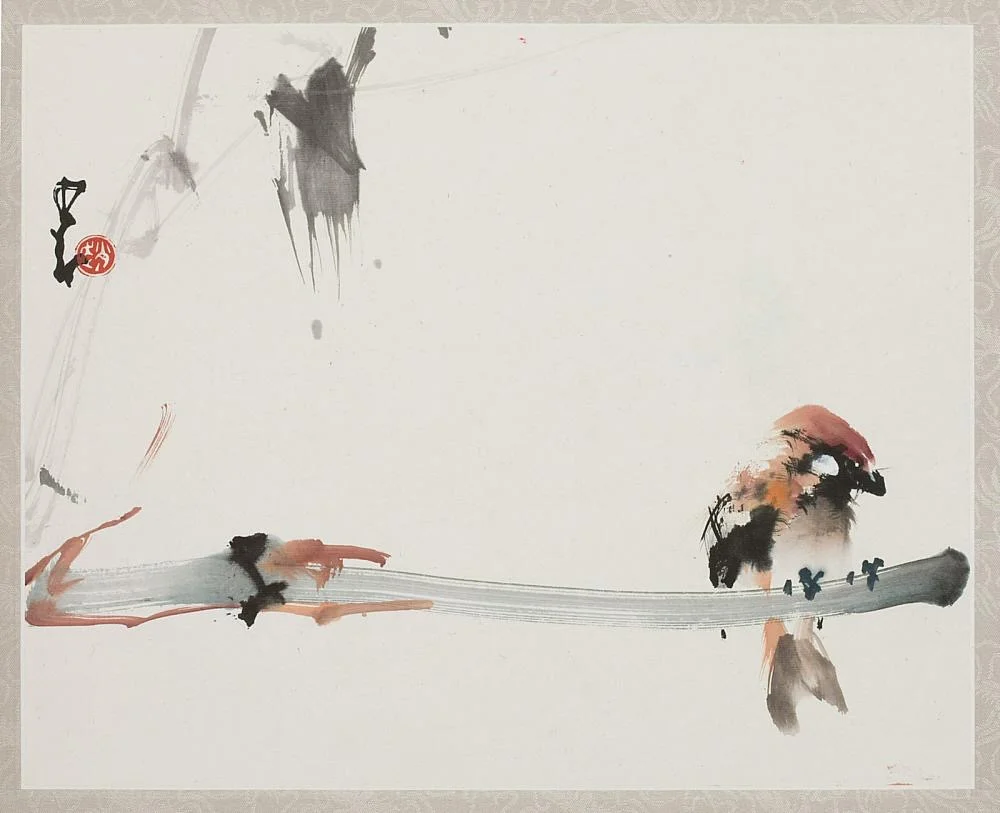
Sparrows and Bamboo
Bird in Snow
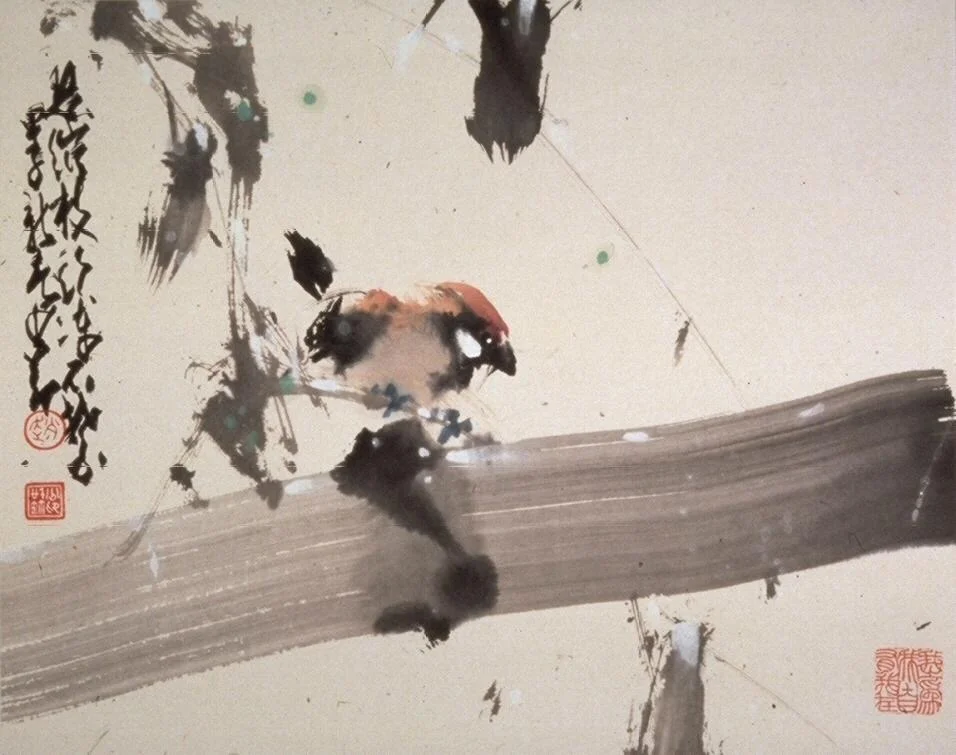
The inscription by the artist reads:
Shivering on the branches, unable to bear the chill.
Jiazi year (1984), early spring. Shao-an.
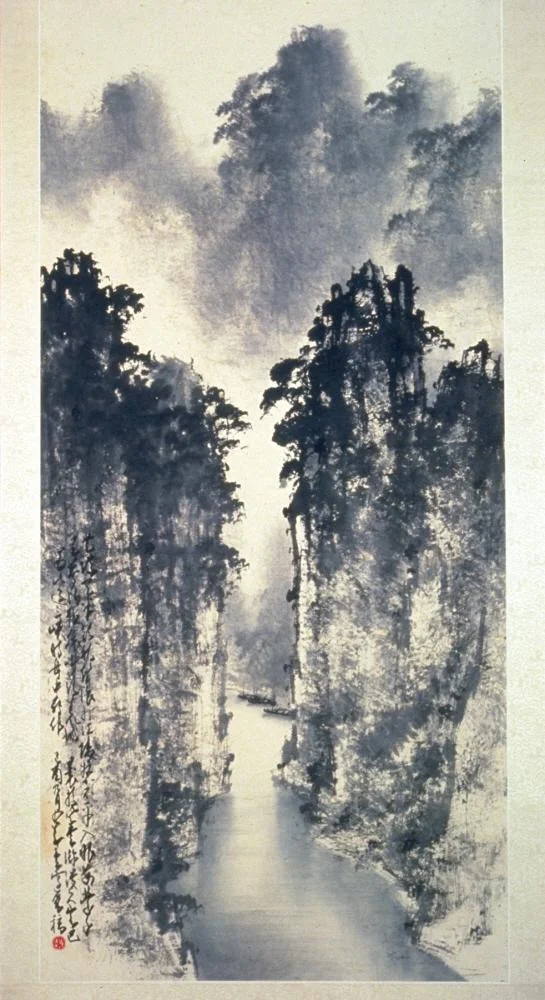
The Gorges
Label:
The Three Gorges, making up one of the most famous scenic areas in China, are the subject of numerous poems and pictorial representations. As described in the painting’s inscription, the scenery as one sails up the Yangzi River is extremely dramatic. The narrow, often shallow waterway twists and turns through precipitous cliffs. Waves crash against the boats and shore with great force. In the past, colonies of gibbons lived on these cliffs; their eerie cries were a significant part of the experience along this waterway.
The construction of the Three Gorges Dam (completed in 2006*) compels us to ask to what extent the scenery depicted in this painting has been altered and to acknowledge that experiencing the site as it was before the dam was built is now possible only through artistic representations of it.
*That year, the Asian Art Museum mounted the exhibition The Three Gorges Project: Paintings by Liu Xiaodong (April 7–July 16).
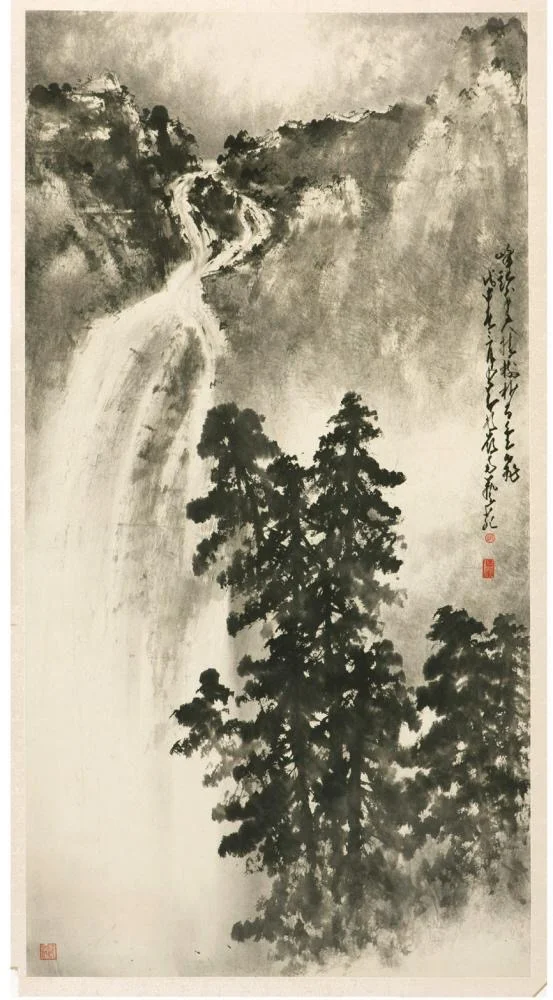
Waterfall
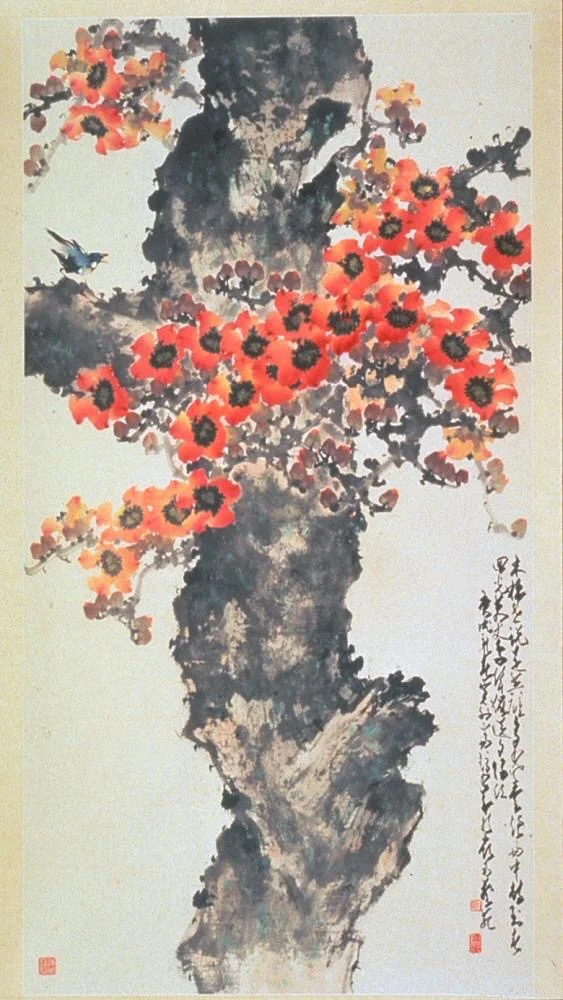
Red Kapok Blossoms
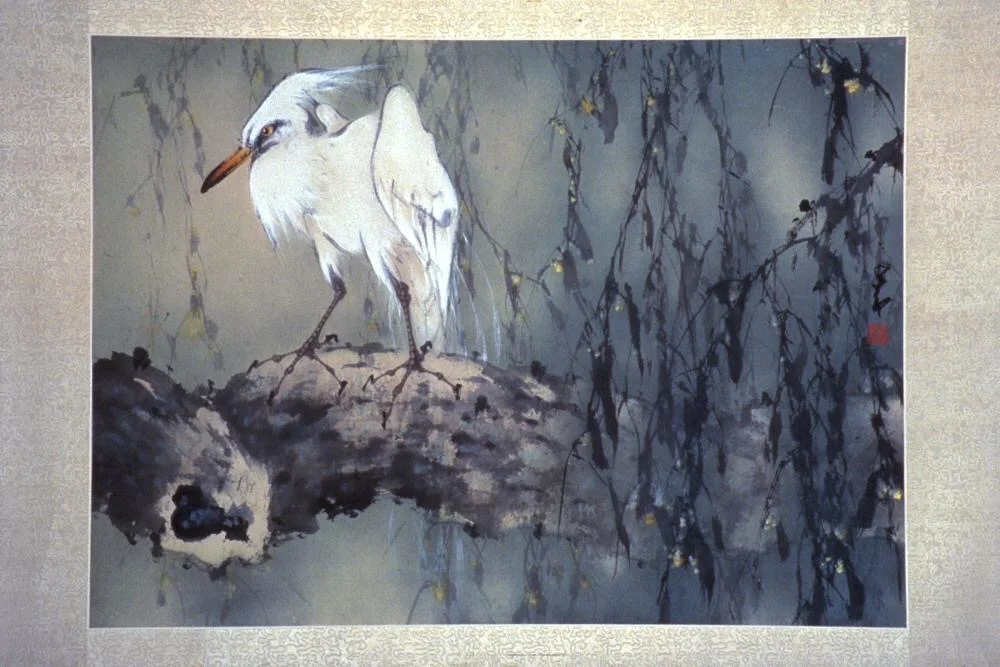
Egret
Birds in Spring
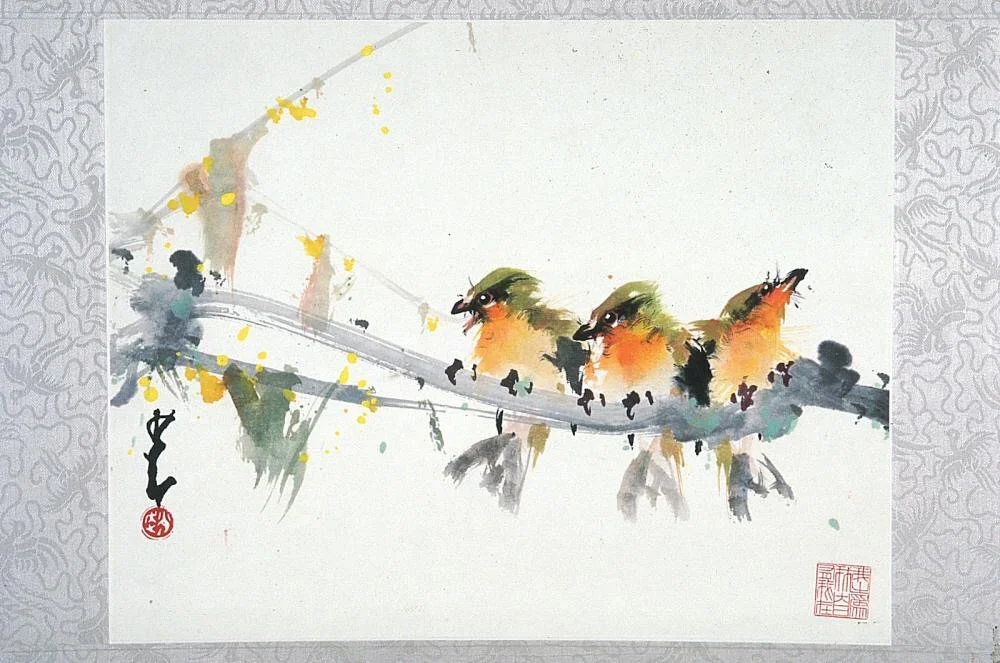
Label:
In this painting, three small birds are struggling with thin claws to grasp a thick tree branch. The youngest fledgling, on the right, appears to be on the verge of falling. The work is created with swift brushwork and light touches of amber, orange, bluish, and black ink.
Sound of Autumn

Label:
For Chao Shao-An, drawing from life (xiesheng) was an experience that involved all of the senses. The titles of his paintings often reflect the weather, the smells, or the sounds he associated with individual compositions—in this case, the rhythmic buzzing of katydids.
“All things in heaven and on earth represent an inexhaustible source of inspiration. Take for example the climatic changes of wind and rain, of sunshine and darkness; the seasonal growth and decay of flowers and trees; the swimming fish and the flying and chirping birds; the joys and sorrows of man; the insects extending their wings and animals roaring and wailing; the mountains in their full grandeur; water in its ebb and flow. All these are material for painting available for the good use of clever artists. There is really no need to depend on the ancient models.” —Chao Shao-An
Fish
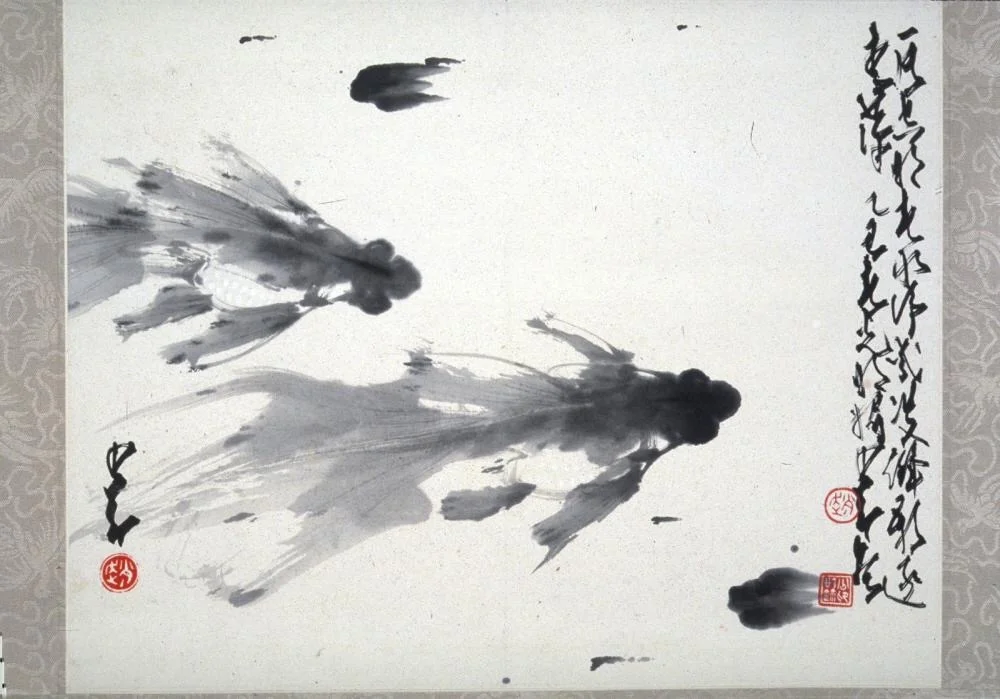
Label:
Unlike the vertical compositions commonly used for paintings of fish, Chao presents this subject in a horizontal arrangement. Two big fish swimming toward the right dominate most of the composition. Approaching from the opposite direction are smaller fish. This directional effect contributes to the appearance of swift-flowing water. Sweeping, textured brushstrokes create a sense of movement in the underwater world, enhanced by moisture washes. The absence of background brushstrokes gives an impression of clarity in the water.
The artist’s inscription on the painting reveals his strategic scheme:
An empty expanse of bright, clear spring water,
Several paired couples pursue the floating weeds.Yichou year [1985]. Shao-an painted this on a bright spring day.
Thank you Philip.
Such beautiful pairings….the paintings and poetry.
I enjoy this page very much.
I too, am infatuated by the work of Chao Shao-an. He has taken “capturing the essence” to the extreme and done so in vivid exciting color. Thank you for sharing his prose.
Thank you for this beautiful page!! I love your interpretation of the work – just beautiful. Thank you for sharing!
Hello. I can across this page while searching for this artist. My father just passed an original painting on his wall came up with this artist when I googled it. I can’t seem to upload to show you but was wondering if anyone knew how much the painting could be worth? It’s two birds and matches with what you’ve listed here and had the three Chinese seals on it. I can’t read what the calligraphy says. Thanks for any info or direction you may have!