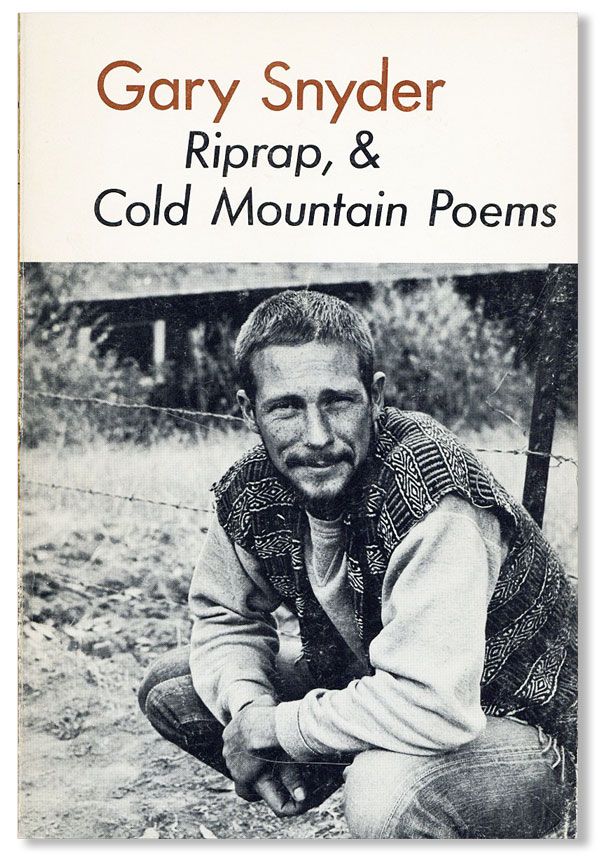
Gary Snyder’s Cold Mountain Poems

Author: Gary Snyder
Rating: 4/5
Read: 4/18, 2/19
Who Should Read: People interested in Zen, poetry, Chinese thought

Hanshan, or “Cold Mountain”, is one of my favorite Chinese poets (alongside Stonehouse). Hahshan was (supposedly) a Chinese Buddhist monk who lived in isolation in the wilderness. The poems attributed to him sparkle with a disdain for civilized life and carry a Zen and Taoist bent.

Cold Mountain Poems is a small collection poems translated by Gary Snyder, who does a wonderful job translating Hanshan’s words and feelings. Included are some of my favorite poems from this collection.

My Highlights

Gary Snyder on why he was qualified to translate Cold Mountain’s poems:

I had been a mountaineer and forestry laborer as well as a bookish scholar for several years already, and simply could draw on a wide experience of events and words and observations in finding ways to represent the Han-shan imagery. I also regularly made a practice of internalizing and visualizing the taste of the whole scene – cold, wet, rocky, lonely, or whatever was called for – to the point that I could write it out with some sense of presence. This doesn’t always work by any means, but it is exciting when it does. It reaches across time and space.

On the interest in such poetry:

At least for non–East Asians, they touch us not because of the invocation of a hermetic ideal or solitary asceticism, but because of the almost joyful rejection of materialism and the absolute pleasure in being in the great world “with a sky for a blanket,” aware of living a life apart from the value-assumptions of mainstream people.

There is a deep strain of non-ideological dubiousness about the large materialistic goals that are the official “dream” of developed-world people and certain others worldwide.

Selected Poems

Here are some of my favorite poems from this collection.

2

In a tangle of cliffs I chose a place –
Bird-paths, but no trails for men.
What’s beyond the yard?
White clouds clinging to vague rocks.
Now I’ve lived here – how many years –
Again and again, spring and winter pass.
Go tell families with silverware and cars
“What’s the use of all that noise and money?”

6

Men ask the way to Cold Mountain
Cold Mountain: There’s no through trail.
In summer, ice doesn’t melt
The rising sun blurs in swirling fog
How did I make it?
My heart’s not the same as yours.
If your heart was like mine
You’d get it and be right here.

Clambering up the Cold Mountain Path,
The Cold Mountain Trail goes on and on:
The long gorge choked with scree and boulders,
The wide cree, the mist-blurred grass.
The moss is slippery, though there’s been no rain.
The pine sings, but there’s no wind.
Who can leap the world’s ties
and sit with me among the white clouds?

11

Spring-water in the green creek is clear
Moonlight on Cold Mountain is white
Silent knowledge – the spirit is enlightened of itself
Contemplate the void: this world exceeds stillness

16

Cold Mountain is a house
Without beams or walls.
The six doors left and right are open
The hall is blue sky.
The rooms all vacant and vague
The east wall beats on the west wall
At the center nothing.
Borrowers don’t bother me
In the cold I build a little fire
When I’m hungry I boil up some greens.
I’ve got no use for the Kulak
With his big barn and pasture –
He just sets up a prison for himself.
Once in he can’t get out.
Think it over –
You know it might happen to you.

17

If I hide out at Cold Mountain
Living off mountain plants and berries – 
All my lifetime, why worry?
One follows his karma through.
Days and months slip by like water,
Time is like sparks knocked off flint.
Go ahead and let the world change –
I’m happy to sit among these cliffs.

20

Some critic tried to put me down –
“Your poems lack the basic truth of Tao”
And I recall the old-timers
Who were poor and didn’t care.
I have to laugh at him,
He misses the point entirely,
Men like that
Ought to stick to making money.

Buy the book

If you are interested in purchasing this book, you can support the website by using our Amazon affiliate link.

 

Cold Mountain Poems

By Gary Snyder


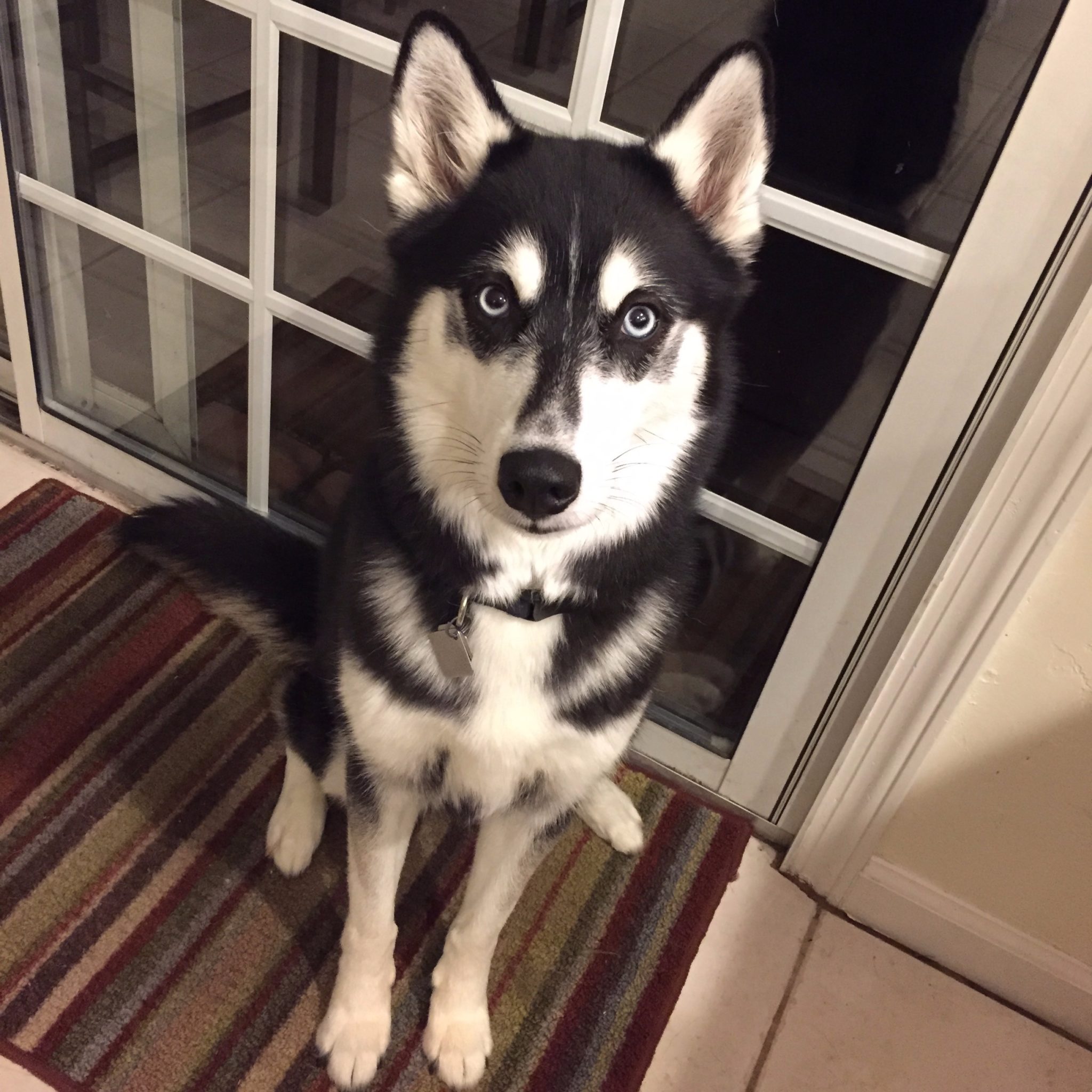
Dogs and Egos

It’s a Good Thing™
that dogs don’t have egos
I would have
created a monster by now

Complement a man too much
and his ego will teach him that
others are beneath him

Instead my dog adores me
who is obviously
the greatest master
he could ever have

What have your concepts done for you lately?

Let everything be simple again

Our drive for knowledge and understanding
only makes the world more complex

what does it matter if you know all the facts?
what does it matter if the taxonomy is correct?
what does it matter if you use the perfect word?
words are only approximations, 
they can never capture the essence

Intellectually understanding principles and truths
does not help you live them

all that matters is it
the whole of it
the living and breathing and doing
here in the present
crackling with the energy of life

Drop your concepts
your empty search for learning
give in fully to your own experience

A Quiet Morning Alone in the City

Observations During a Quiet Sunrise,
Alamo Square, San Francisco, February 2018

I see a man standing
silently
amongst the trees
all alone for just a moment.

His neighbors are still sleeping –
all except the birds –
chattering excitedly about
this stranger in their midst

I wonder what the man thinks about
from his high perch
as he watches the city
breathe into life
below him

Perhaps he contemplates
the ancient hills that backdrop
the city skyline.

Those hills once beckoned to man,
“Come and conquer me if you can!
We were here long before you
and we shall still be here
long after you depart.”

But the hills mock no longer.
Man has leveled,
scraped,
and straightened them,
planted his boxes of ticky-tacky,
strung congested highways
and piled towering landfills
wherever he pleases.

Standing there so still,
does he feel the weight of
the conquest, the pavement?
does he see the price of progress?

I turn away,
leaving a silent prayer
that this man
has conquered
his need to conquer
here
alone
on this quiet morning.

The Great Teacher

I fill my hours
searching for Wisdom,
seeking the Way,
busy
with books
and talks
and meditation,
constantly overlooking
the great Master
who shares my home –

My dog,
who flows with the Tao
so effortlessly

Sleeping when tired,
Playing when energetic,
no worries of the future,
no regrets of the past,
living only in the Now.

How wise and serene she looks
perched in silent meditation
beside me.

Chuang-tzu’s Parable of the Ox

Prince Wen Hui’s cook
Was cutting up an ox.
Out went a hand,
Down went a shoulder,
He planted a foot,
He pressed with a knee,
The ox fell apart
With a whisper;
The bright cleaver murmured
Like a gentle wind.
Rhythm! Timing!
Like a sacred dance,
Like “The Mulberry Grove,”
Like ancient harmonies!
“Good work!” the Prince exclaimed.
“Your method is faultless!”
“Method?” said the cook,
Laying aside his cleaver.
“What I follow is Tao,
Beyond all methods!

“When I first began
To cut up oxen
I would see before me
The whole ox,
All in one mass.

“After three years,
I no longer saw this mass.
I saw the distinctions.

“But now, I see nothing
With the eye. My whole being
Apprehends.
My senses are idle. The spirit,
Free to work without plan,
Follows its own instinct,
Guided by natural line.
By the secret opening, the hidden space,
My cleaver finds its own way.
I cut through no joint, chop no bone.

“A good cook needs a new chopper
Once a year – he cuts.
A poor cook needs a new one
Every month – he hacks!

“I have used this same cleaver
Nineteen years.
It has cut up
A thousand oxen.
Its edge is as keen
As if newly sharpened.

“There are spaces in the joints;
The blade is thin and keen.
When this thinness
Finds that space,
There is all the room you need!
It goes like a breeze!
Hence I have this cleaver nineteen years,
As if newly sharpened!

“True, there are sometimes
Tough joints, I feel them coming,
I slow down, I watch closely,
Hold back, barely move the blade,
And whump! The part falls away
Landing like a clod of earth.

“Then I withdraw the blade.
I stand still
And let the joy of the work
Sink in.
I clean the blade
And put it away.”

Prince Wen Hui said,
“This is it! My cook has shown me
How I ought to live
My own life!”

Translated by Thomas Merton

Who Can Hear the Buddha Sing?

Hafiz, Trans. Daniel Ladinsky

Hafiz,
Tonight as you sit with your
Young students
Who
Have eyes
Burning like coals for the truth,
Raise your glass in honour
Of The Old Great One from Asia.
Speak in the beautiful style
And precision wit of a
Japanese verse.
Say a profound truth about this path
With the edge of your sailor's tongue that
Has been honed on the finest sake.
Okay, dear ones, are you ready?
Are you braced?
Well then:
Who can hear the Buddha sing
If the dog between your legs is barking?
Who can hear the Buddha sing
If that canine between your
Thighs
Still
Wants to do circus
Tricks?

Haiku #2

Much disturbs water
Effects aren't always small, yet
Peace always returns

(circa 2012)

Haiku #1

You are beautiful.
I look at you, distracted.
I trip, falling hard.

(circa 2012)