J.S.Bach: F# Minor Toccata

This music weeps, not for sin
but rather for the black fact
that we must all die, but not one
of us knows what comes after.
This music leaps from key to key
as if it had no clear place to arrive,
making up its life, one bar at a time.
But when you come at last to the real theme,
strict, inexorable, and bleak,
you must play it slow and sad,
with melancholy dignity, or you miss
all its grim wisdom.
In three pages, it says, the universe collapses,
and you - still only halfway home.

Source

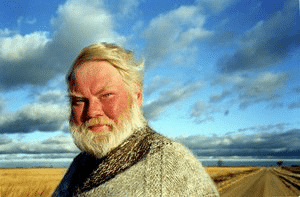
From Playing the Black Piano by Bill Holm.


A Man In His Life

A man doesn't have time in his life
to have time for everything.
He doesn't have seasons enough to have
a season for every purpose. Ecclesiastes
Was wrong about that.

A man needs to love and to hate at the same moment,
to laugh and cry with the same eyes,
with the same hands to throw stones and to gather them,
to make love in war and war in love.
And to hate and forgive and remember and forget,
to arrange and confuse, to eat and to digest
what history
takes years and years to do.

A man doesn't have time.
When he loses he seeks, when he finds
he forgets, when he forgets he loves, when he loves
he begins to forget.

And his soul is seasoned, his soul
is very professional.
Only his body remains forever
an amateur. It tries and it misses,
gets muddled, doesn't learn a thing,
drunk and blind in its pleasures
and its pains.

He will die as figs die in autumn,
Shriveled and full of himself and sweet,
the leaves growing dry on the ground,
the bare branches pointing to the place
where there's time for everything.

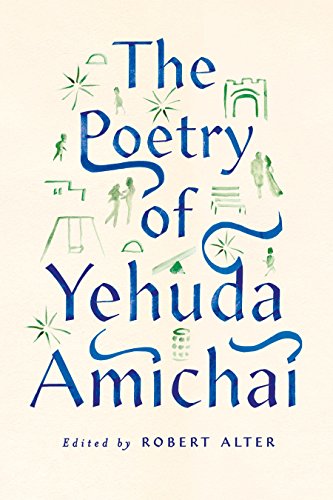
by Yehuda Amichai

More Poems by Yehuda


How To Meditate (Kerouac Style)

HOW TO MEDITATE

— lights out —

fall, hands a-clasped, into instantaneous
ecstasy like a shot of heroin or morphine,
the gland inside of my brain discharging
the good glad fluid (Holy Fluid) as
I hap-down and hold all my body parts
down to a deadstop trance — Healing
all my sicknesses — erasing all — not
even the shred of a “I-hope-you” or a
Loony Balloon left in it, but the mind
blank, serene, thoughtless. When a thought
comes a-springing from afar with its held-
forth figure of image, you spoof it out,
you spuff it out, you fake it, and
it fades, and thought never comes — and
with joy you realize for the first time
“Thinking’s just like not thinking —
So I don’t have to think
any
more”

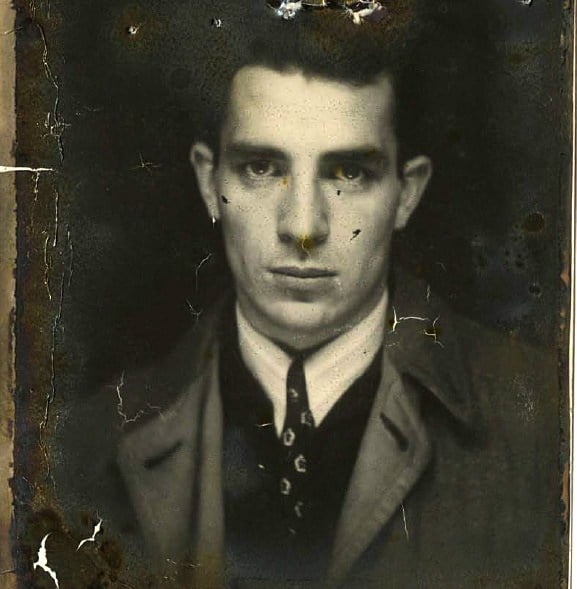
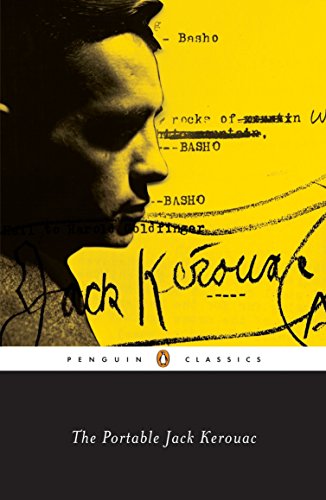
Jack Kerouac

Source


Ritual

Ritual is the only language we truly believe in:
tea steaming a glass mug on a table,
smoke from a cigarette filling the room with blue,
the way the sun falls across our face as we sleep.
These are our things, we say.

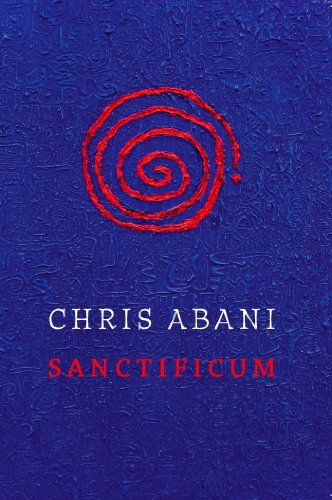
Abani, Chris (2013-06-07). Sanctificum (p. 46)

Source


Sanctificum

By Chris Abani


Sanctificum

Author: Chris Abani
Rating: 9/10
Last Read: February 2015

Quick Summary: Collected book of poems by one of my favorite poets – Chris Abani.  

Check out his two TED talks and fall in love with him.

My Highlights

A man once asked me in the street: Do you own your own bones?

The safety of doorways is an illusion. They lead nowhere. This is why we build houses.

Sometimes we find treasure. Sometimes something fills the mind, something at which we pause, stopped. The way a photograph cannot remember the living.

The more we promise to never leave our lovers, the faster the horizon arrives.

After six months in a hole in the ground, the prison is not the building, or the bars, or the beatings, or the denials, or the lies, or the forgetting, or the negotiating — It is the small door in your mind closing.

For fear of being loved we will kill the world

I drink tea in the shade and believe in poetry. –p. 60

If Zeno’s paradox reveals anything it is not that space and time can be divided into infinity infinitely, but simply this: That we can only approximate the object of our desire. That we are always on a train traveling to happiness. But what we do reach are coffee, biscotti, and Bob on the iPod.

It is easy to forget the decadence of glass. How some of us find it only in fragments. The glass between us and the world is often the measure of our wealth. Looking out at the world through it colors the hunger beyond.

This is a callout to Jack Gilbert’s “Forgotten Dialect of the Heart”:

Words mean only what you want them to.
You say sunshine and you mean hope.
You say food and you mean refuge.
You say sand and you mean play.
You say stone and you mean, I will never forget.
But you do, but you do and thank God, thank God.
–pp. 79-80

Your name is a hunger on my tongue.
Your eyes are the light that shelters me.
Your beauty makes me beautiful.
–p. 72

When we say love we mean, I want.
When we say sorry we mean, forgive me.
–p. 54

Ritual is the only language we truly believe in:
tea steaming a glass mug on a table,
smoke from a cigarette filling the room with blue,
the way the sun falls across our face as we sleep.
These are our things, we say.

–p. 46