The Revenant: A Novel of Revenge

Author: Michael Punke
Rating: 8/10
Last Read: March 2018

I purchased The Revenant a few months ago and experienced a few false starts with it. For some reason, I was never able to make it past the first few pages before deciding to pick another book. During this past attempt, I ended up being engrossed in the book and finished it in two sittings.

The Revenant is set in the 1820s and takes place in the expanding western frontier. The book is based on the life of Hugh Glass, a fur trapper who was mauled by a grizzly and abandoned to die by his companions. He makes his way 200-300 miles back to the nearest settlement to restock so he can get revenge on his former companions who abandoned him to die. Along the way he faces death due to injuries, illness, starvation, predators, and hostile Native Americans.

I recommend The Revenant for those who love the wilderness. It’s also a great read for students of the human soul, as revenge is an interesting and powerful motivation for accomplishing crazy feats. Not a great selection for pre-bed reading, however – there are intense scenes throughout the book.

He vowed to survive, if for no other reason than to visit vengeance on the men who betrayed him.

My Highlights

God had placed him in a garden of infinite bounty, a Land of Goshen in which any man could prosper if only he had the courage and the fortitude to try. Ashley’s weaknesses, which he confessed forthrightly, were simply barriers to be overcome by some creative combination of his strengths. Ashley expected setbacks, but he would not tolerate failure.

In truth, Glass had developed significant doubts about the captain. Misfortune seemed to hang on him like day-before smoke.

I’m glad I don’t have to worry about enemies when I make a fire:

They bled the game, gathered wood, and set two or three small fires in narrow, rectangular pits. Smaller fires produced less smoke than a single conflagration, while also offering more surface for smoking meat and more sources of heat. If enemies did spot them at night, more fires gave the illusion of more men.

He knew that leadership required him to make tough decisions for the good of the brigade. He knew that the frontier respected—required—independence and self-sufficiency above all else. There were no entitlements west of St. Louis. Yet the fierce individuals who comprised his frontier community were bound together by the tight weave of collective responsibility. Though no law was written, there was a crude rule of law, adherence to a covenant that transcended their selfish interests. It was biblical in its depth, and its importance grew with each step into wilderness. When the need arose, a man extended a helping hand to his friends, to his partners, to strangers. In so doing, each knew that his own survival might one day depend upon the reaching grasp of another.

The utility of his code seemed diminished as the captain struggled to apply it to Glass. Haven’t I done my best for him? Tending his wounds, portaging him, waiting respectfully so that he might at least have a civilized burial. Through Henry’s decisions, they had subordinated their collective needs to the needs of one man. It was the right thing to do, but it could not be sustained. Not here.

The human soul can be dark:

Wasn’t that why he was there in the clearing—to salve his wounded pride? Not to take care of another man, but to take care of himself? Wasn’t he just like Fitzgerald, profiting from another man’s misfortune? Say what you would about Fitzgerald, at least he was honest about why he stayed.

The boy came to believe that going west was more than just a fancy for someplace new. He came to see it as a part of his soul, a missing piece that could only be made whole on some far-off mountain or plain.

There is a tide in the affairs of men, Which, taken at the flood, leads on to fortune.

Once focused, it was clear that the eyes stared back with complete lucidity, clear that Glass, like Bridger, had calculated the full meaning of the Indians on the river. Every pore in Bridger’s body seemed to pound with the intensity of the moment, yet to Bridger it seemed that Glass’s eyes conveyed a serene calmness. Understanding? Forgiveness? Or is that just what I want to believe? As the boy stared at Glass, guilt seized him like clenched fangs. What does Glass think? What will the captain think?

The human/snake relationship has always been an interesting one:

Glass wanted to roll away, but there was something inevitable about the way the snake moved. Some part of Glass remembered an admonishment to hold still in the presence of a snake. He froze, as much from hypnosis as from choice. The snake moved to within a few feet of his face and stopped. Glass stared, trying to mimic the serpent’s unblinking stare. He was no match. The snake’s black eyes were as unforgiving as the plague. He watched, mesmerized, as the snake wrapped itself slowly into a perfect coil, its entire body made for the sole purpose of launching forward in attack.

He would crawl until his body could support a crutch. If he only made three miles a day, so be it. Better to have those three miles behind him than ahead. Besides, moving would increase his odds of finding food.

At thirty-six, Glass no longer considered himself a young man. And unlike young men, Glass did not consider himself as someone with nothing to lose. His decision to go west was not rash or forced, but as fully deliberate as any choice in his life. At the same time, he could not explain or articulate his reasons. It was something that he felt more than understood.

In the last moments of daylight he examined the rattles at the tip of the tail. There were ten, one added in each year of the snake’s life. Glass had never seen a snake with ten rattles. A long time, ten years. Glass thought about the snake, surviving, thriving for a decade on the strength of its brutal attributes. And then a single mistake, a moment of exposure in an environment without tolerance, dead and devoured almost before its blood ceased to pump. He cut the rattles from the remains of the snake and fingered them like a rosary. After a while he dropped them into his possibles bag. When he looked at them, he wanted to remember.

The frustrating necessity of delay was like water on the hot iron of his determination—hardening it, making it unmalleable. He vowed to survive, if for no other reason than to visit vengeance on the men who betrayed him.

Still, he thought, there was no luck at all in standing still.

Glass came to visualize his strength as the sand in an hourglass. Minute by minute he felt his vitality ebbing away. Like an hourglass, he knew, a moment would arrive when the last grain of sand would tumble down the aperture, leaving the upper chamber void.

He resolved to stop earlier the next day. Perhaps dig pits in two locations. The thought of slower progress irritated him. How long could he avoid Arikara on the banks of the well-traveled Grand? Don’t do that. Don’t look too far ahead. The goal each day is tomorrow morning.

The wolf waits patiently for a mistake and then strikes. How often do you wait for the right moment before leaping into action?

A hundred yards downstream from Glass, a pack of eight wolves also watched the great bull and the outliers he guarded. The alpha male sat on his haunches near a clump of sage. All afternoon he had waited patiently for the moment that just arrived, the moment when a gap emerged between the outliers and the rest of the herd. A gap. A fatal weakness. The big wolf raised himself suddenly to all fours.

It wasn’t until the wolves began to move that their lethal strength became obvious. The strength was not derivative of muscularity or grace. Rather it flowed from a single-minded intelligence that made their movements deliberate, relentless. The individual animals converged into a lethal unit, cohering in the collective strength of the pack.

The white wolf crouched, poised, it seemed, to attack again. But suddenly the wolf with one ear turned and ran after the pack. The white wolf stopped to contemplate the changing odds. He knew well his place in the pack: Others led and he followed. Others picked out the game to be killed, he helped to run it down. Others ate first, he contented himself with the remainder. The wolf had never seen an animal like the one that appeared today, but he understood precisely where it fit in the pecking order. Another clap of thunder erupted overhead, and the rain began to pour down. The white wolf took one last look at the buffalo, the man, and the smoking sage, then he turned and loped after the others.

The notion of burial had always struck him as stifling and cold. He liked the Indian way better, setting the bodies up high, as if passing them to the heavens.

The Indian accomplished effortlessly what Glass was compelled to pretend—an air of complete confidence. His name was Yellow Horse. He was tall, over six feet, with square shoulders and perfect posture that accentuated a powerful neck and chest. In his tightly braided hair he wore three eagle feathers, notched to signify enemies killed in battle. Two decorative bands ran down the doeskin tunic on his chest. Glass noticed the intricacy of the work, hundreds of interwoven porcupine quills dyed brilliantly in vermillion and indigo.

Lies tend to compound:

“We buried him deep … covered him with enough rock to keep him protected. Truth is, Captain, I wanted to get moving right away—but Bridger said we ought to make a cross for the grave.” Bridger looked up, horrified at this last bit of embellishment. Twenty admiring faces stared back at him, a few nodding in solemn approval. God—not respect! What he had craved was now his, and it was more than he could bear. Whatever the consequences, he had to purge the awful burden of their lie—his lie. He felt Fitzgerald’s icy stare from the corner of his eye. I don’t care. He opened his mouth to speak, but before he could find the right words, Captain Henry said, “I knew you’d pull your weight, Bridger.” More approving nods from the men of the brigade. What have I done? He cast his eyes to the ground.

He felt disdain and even shame for the filthy Indians who camped around the fort, prostituting their wives and daughters for the next drink of whiskey. There was something to fear in an evil that could make men leave their old lives behind and live in such disgrace.

Beyond Fort Brazeau’s effect on the resident Indians, other aspects of the post left him profoundly disquieted. He marveled at the intricacy and quality of the goods produced by the whites, from their guns and axes to their fine cloth and needles. Yet he also felt a lurking trepidation about a people who could make such things, harnessing powers that he did not understand. And what about the stories of the whites’ great villages in the East, villages with people as numerous as the buffalo. He doubted these stories could be true, though each year the trickle of traders increased.

Standing to greet another, a sign of respect:

Yellow Horse stood when Glass walked into the camp, a low fire illuminating their faces.

Again, standing to greet:

Dominique rose, shook Glass’s hand and said, “Enchanté.”

My kit doesn’t look anything like this:

They returned to the cabin and Glass picked out the rest of his supplies. He chose a .53 pistol to complement the rifle. A ball mold, lead, powder, and flints. A tomahawk and a large skinning knife. A thick leather belt to hold his weapons. Two red cotton shirts to wear beneath the doeskin tunic. A large Hudson’s Bay capote. A wool cap and mittens. Five pounds of salt and three pigtails of tobacco. Needle and thread. Cordage. To carry his newfound bounty, he picked a fringed leather possibles bag with intricate quill beading. He noticed that the voyageurs all wore small sacks at the waist for their pipe and tobacco. He took one of those too, a handy spot for his new flint and steel.

Kiowa laughed too, then said: “With all due respect, mon ami, your face tells a story by itself—but we’d like to hear the particulars.

Kiowa understood early in his career that his trade dealt not only in goods, but also in information. People came to his trading post not just for the things they could buy, but also for the things they could learn.

Glass shook his head again, more firmly this time. “I have my own affairs to attend.” m
“Bit of a silly venture, isn’t it? For a man of your skills? Traipsing across Louisiana in the dead of winter. Chase down your betrayers in the spring, if you’re still inclined.”
The warmth of the earlier conversation seemed to drain from the room, as if a door had been opened on a frigid winter day. Glass’s eyes flashed and Kiowa regretted immediately his comment. “It’s not an issue on which I asked your counsel.”
“No, monsieur. No, it was not.”

The colder weather settled into Glass’s wounds the way a storm creeps its way up a mountain valley.

With the exception of Charbonneau, who was gloomy as January rain, the voyageurs approached each waking moment with an infallibly cloudless optimism. They laughed at the slimmest opportunity. They showed little tolerance for silence, filling the day with unceasing and passionate discussion of women, water, and wild Indians. They fired constant insults back and forth. Indeed, to pass up an opportunity for a good joke was viewed as a character flaw, a sign of weakness. Glass wished he understood more French, if only for the entertainment value of following the banter that kept them all so jolly.

In the rare moments when conversation lagged, someone would break out in zestful song, an instant cue for the others to join in. What they lacked in musical ability, they compensated in unbridled enthusiasm. All in all, thought Glass, an agreeable way of life.

Like many of the things he encountered each day, Professeur was confused by what happened next. He felt an odd sensation and looked down to find the shaft of an arrow protruding from his stomach. For a moment he wondered if La Vierge had played some kind of joke. Then a second arrow appeared, then a third. Professeur stared in horrified fascination at the feathers on the slender shafts. Suddenly he could not feel his legs and he realized he was falling backward. He heard his body make heavy contact with the frozen ground. In the brief moments before he died, he wondered, Why doesn’t it hurt?

His awe of the mountains grew in the days that followed, as the Yellowstone River led him nearer and nearer. Their great mass was a marker, a benchmark fixed against time itself. Others might feel disquiet at the notion of something so much larger than themselves. But for Glass, there was a sense of sacrament that flowed from the mountains like a font, an immortality that made his quotidian pains seem inconsequential. And so he walked, day after day, toward the mountains at the end of the plain.

Henry was a failure at many things, but he understood the power of incentives.

Stunned silence filled the room as the men struggled to comprehend the vision before them. Unlike the others, Bridger understood instantly. In his mind he had seen this vision before. His guilt swelled up, churning like a paddle wheel in his stomach. He wanted desperately to flee. How do you escape something that comes from inside? The revenant, he knew, searched for him.

Glass reached down and removed the small pouch that Pig wore around his throat. He dumped the contents onto the ground. A flint and steel tumbled out, along with several musket balls, patches—and a delicate pewter bracelet. It struck Glass as an odd possession for the giant man. What story connected the dainty trinket to Pig? A dead mother? A sweetheart left behind? They would never know, and the finality of the mystery filled Glass with melancholy thoughts of his own souvenirs.

I also dislike someone who complains about problems but offers no solutions:

Glass shot an irritated glance at Red, who had an uncanny knack for spotting problems and an utter inability for crafting solutions. That said, he was probably right. The few creeks they’d passed had been small. Any Indians in the area would hug tight to the Platte, directly in their path. But what choice do we have?

Kiowa said, “I’m sorry that you never had a proper rendezvous with Fitzgerald. But you should have figured out by now that things aren’t always so tidy.”
They stood there for a while, with no sound but the flapping of the flag. “It’s not that simple, Kiowa.”
Of course it’s not simple. Who said it was simple? But you know what? Lots of loose ends don’t ever get tied up. Play the hand you’re dealt. Move on.

Glass said nothing more. Kiowa too was silent for a long time. Finally he said quietly, “Il n’est pire sourd que celui qui ne veut pas entendre. Do you know what that means?”
Glass shook his head.
It means there are none so deaf as those that will not hear. Why did you come to the frontier?” demanded Kiowa. “To track down a common thief? To revel in a moment’s revenge? I thought there was more to you than that.”

He stood there on the high rampart for a long time that night, listening to the Missouri and staring at the stars. He wondered at the source of the waters, of the mighty Big Horns whose tops he had seen but never touched. He wondered at the stars and the heavens, comforted by their vastness against his own small place in the world. Finally he climbed down from the ramparts and went inside, quickly finding the sleep that had eluded him before.

Buy the Book

If you are interested in purchasing this book, you can support the website by using our Amazon affiliate link:



Who Can Hear the Buddha Sing?

Hafiz, Trans. Daniel Ladinsky

Hafiz,
Tonight as you sit with your
Young students
Who
Have eyes
Burning like coals for the truth,
Raise your glass in honour
Of The Old Great One from Asia.
Speak in the beautiful style
And precision wit of a
Japanese verse.
Say a profound truth about this path
With the edge of your sailor's tongue that
Has been honed on the finest sake.
Okay, dear ones, are you ready?
Are you braced?
Well then:
Who can hear the Buddha sing
If the dog between your legs is barking?
Who can hear the Buddha sing
If that canine between your
Thighs
Still
Wants to do circus
Tricks?

Exercise

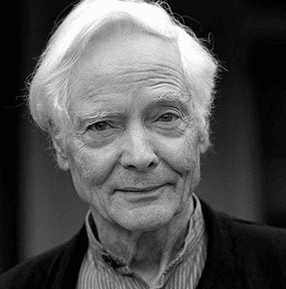
by W.S. Merwin

First forget what time it is
for an hour
do it regularly every day

then forget what day of the week it is
do this regularly for a week
then forget what country you are in
and practise doing it in company
for a week
then do them together
for a week
with as few breaks as possible

follow these by forgetting how to add
or to subtract
it makes no difference
you can change them around
after a week
both will help you later
to forget how to count

forget how to count
starting with your own age
starting with how to count backward
starting with even numbers
starting with Roman numerals
starting with fractions of Roman numerals
starting with the old calendar
going on to the old alphabet
going on to the alphabet
until everything is continuous again

go on to forgetting elements
starting with water
proceeding to earth
rising in fire

forget fire

Source

Poetry Foundation: Poetry, May 1972

More Poetry by W.S. Merwin


Zorba the Greek

Author: Nikos Kazantzakis and Peter Bien
Rating: 10/10
Last Read: September 2017

Zorba the Greek sat on my reading list for many years. It came highly recommended from sources I trusted, but I never quite took the bait. I went into the book knowing nothing about it, other than hearing from Rozi that it was a wonderful read and that Zorba presents a most interesting character.

I love this book and cannot recommend it enough. It is very similar in theme to Herman Hesse’s Narcissus and Goldmund, but I find the characters much more interesting and lovable.

If you need some fiction that will move your spirit, Zorba the Greek is for you. Even if you think you don’t need moving function, read the book anyway. You won’t regret it.

Look, I was passing through a small village one day. An old fogey ninety years old was planting an almond tree. ‘Hey, grandpa,’ I say to him, ‘are you really planting an almond tree?’ And he, all bent over as he was, he turns and says to me, ‘My boy, I act as though I’m never going to die.’ I answered him in my turn, ‘I act as though I’m going to die at any moment.’ Which of the two of us was right, Boss?”

My Highlights

Zorba taught me to love life and not to fear death.

“Forgive me for saying this, Boss, but you are a pen pusher. You poor creep, you had the chance of a lifetime to see a beautiful green stone, and you didn’t see it. By God, sometimes when I have no work to do, I sit down and ask myself, ‘Is there a hell or isn’t there?’ But yesterday, when I received your letter, I said to myself, ‘There sure is a hell for certain pen pushers!’

To prolong one’s parting from a beloved friend is poison. To leave with a knife stroke is better, for it allows one to return to humanity’s natural climate: solitude.

“Emotion?” he inquired, attempting to smile.
“Yes,” I calmly replied.
“Why? Didn’t we agree? Haven’t we agreed for years now? The Japanese you love, how do they say it? Fudōoshin. Equanimity; imperturbability; one’s features an unmoving, smiling mask. Whatever happens behind the mask is one’s own business.”

How was it that I, who loved life so much, had been involved with paper and ink for so many years?

“Why! Why!” he said disdainfully. “Good God, can’t anyone do something without asking why? Just like that! Because you feel like it! So take me as a cook, let’s say. I make amazing soup.”

“Are you married?”
“I’m human, am I not? To be human means to be blind. I fell face-first into the same pothole that those before me fell into. I got married, went to the dogs, down the steep slope. I became middle class, built a home, produced children. Nothing but trouble! But thank God for the santouri.”

Where was some brain to get to the bottom of things? Accurate, honorable thoughts require tranquility, old age, a mouth full of false teeth. When you’ve got dentures it’s easy to say, ‘For shame, boys, no biting!’ But when you’ve got all thirty-two of your own teeth . . . A man in his youth is a wild animal, a ferocious beast who eats other men!”

Consequently, are so many murders and dirty tricks required in this world for people to gain freedom? Because, if I sat here and ticked off for you what outrages we committed and what murders, it would make your hair stand on end. Yet what was the result? Freedom! God, instead of hurling his thunderbolt to incinerate us, gives us freedom. I don’t understand anything.”

“Look here, what I’m telling you is that this world is a mystery and every human being is a great brute—a great brute and a great god.

“Yes, that’s what freedom means,” I was thinking. “To have a passion, to amass golden pounds, and suddenly to conquer your passion and throw away everything you possess—toss it into the air. Or to free yourself from one passion by obeying another that is higher. But isn’t that just a different form of slavery: sacrificing yourself for an idea, for your nationality, your God? Or could it be that the higher one’s master stands, the rope tying one to slavery is lengthened by the same amount? In that case, if we jump and frolic in a much wider domain, we die without ever discovering its boundaries. Is that what freedom means?”

I felt that this Cretan scene resembled good prose: well-worked, reticent, liberated from superfluous wealth, strong, restrained, formulating the essence by the simplest of means, refusing to play games, not deigning to employ tricks or grandiloquence, but saying what it wants to say with virile simplicity.

“You’re not hungry!” exclaimed Zorba, slapping his thigh. “But you haven’t eaten anything since morning. The body, too, has a soul. Take pity on it; give it something to eat, Boss. Give it something to eat; it’s our donkey, you know. If you don’t feed your donkey, it will abandon you halfway to your destination.”

Look, I was passing through a small village one day. An old fogey ninety years old was planting an almond tree. ‘Hey, grandpa,’ I say to him, ‘are you really planting an almond tree?’ And he, all bent over as he was, he turns and says to me, ‘My boy, I act as though I’m never going to die.’ I answered him in my turn, ‘I act as though I’m going to die at any moment.’ Which of the two of us was right, Boss?”

Those two paths are equally uplifting and rugged; both can lead to the summit. To act as though death does not exist and to act with death in mind at every moment—perhaps both paths are the same.

One thing at a time in proper order. Right now we’ve got pilaf in front of us; let our minds be pilaf. Tomorrow we’ll have lignite in front of us, so let our minds, then, be lignite. No half measures—understand?”

The entire world—earth, water, thoughts, people—was flowing toward a distant sea, and Zorba was flowing happily with it, offering no resistance, asking no questions.

Youth is fierce and inhuman because it doesn’t understand.

Workers fear a hard boss, respect him, and do good work for him; they take control of a soft boss as though he were a horse meant for them to saddle and mount, and they start loafing. Understand?”

Angered, I dug in my heels: “You have no faith, then, in human nature?”
“Don’t get angry, Boss. I have no faith in anything. If I believed in human nature, I would believe in God as well, also in the Devil. It’s a big problem. Things get all mixed up, Boss, and cause me trouble.”

“Human beings are brutes!” he shouted angrily, banging his staff on the stones. “Great big brutes. The likes of you doesn’t know this; everything came to you too easily. But ask me. Brutes, I’m telling you. If you treat them badly, they respect and dread you; if you treat them well, they cause your ruin. Keep your distance, Boss. Don’t embolden people, don’t tell them that we are all one and the same, all have the same rights, because immediately they’ll trample your rights, snatch away your bread, and leave you to croak from hunger. Keep your distance, Boss, for your own good!”

“I believe in nothing and no one, only in Zorba. Not because Zorba is better than others, not at all—no, not at all! He, too, is a brute. But I believe in Zorba because he is the only person I have under my power, the only one I know. All the others are ghosts. I see him with my eyes, hear him with my ears, digest him with my guts. All the others, I tell you, are ghosts. When I die, everything dies; the entire Zorba-world hits rock bottom.”

“Remember what we were saying the other day, Boss? Apparently you wanted to enlighten the masses, to open their eyes. All right, go and open Uncle Anagnostis’s eyes for him. Did you notice how his wife stood there cringing and awaiting orders? Well, Your Highness, how about going now and teaching them something about women, that they have the same rights as men and that it’s truly a mean thing to eat a piece of a hog’s flesh with the hog, alive, bellowing in front of you, and that it’s hugely stupid to be tickled because God has everything while you’re starving! What will that miserable abomination, Uncle Anagnostis, profit from all this enlightening gobbledygook of yours? You’ll only cause him a mess of trouble. And what will Mrs. Anagnosti profit? Arguments will start; the hen will yearn to become the rooster, and the couple will do nothing but fight each other and suck dry each other’s blood. Let people stay placid, Boss; don’t open their eyes. If you do open them, you know what they will see: their malice and cold unsociability. So, leave their eyes closed; that way they can keep on dreaming!”

Are they going to see new forms of darkness? Let them stay where they were, with their former habits. Can’t you realize that they’ve done well enough until now? They manage—manage quite nicely. They give birth to children, have grandchildren, God makes them deaf or blind and they shout ‘Glory be to God!’ They’re at home with misfortune. So leave them where they are and shut your trap.”

I was happy; I knew that I was happy. We sense happiness with difficulty while experiencing it. Only when it has passed and we look back do we suddenly comprehend, sometimes with astonishment, how happy we have been. I, however, on this Cretan shore, was experiencing happiness while being simultaneously aware of my happiness.

“What can you expect from women? To have children by whoever happens to be available. What can you expect from men? To fall into the trap. No time to fiddle-faddle about any of that, Boss.”

“I’ve got some gray hair, Boss, and my teeth are working loose; I don’t have time to spare. You’re young. You can be patient; I can’t. As I get older I become wilder, by God. Why do people sit there and keep telling me that old age tames a person, makes him lose his zest, stretch out his neck when he sees death and say, ‘Slaughter me, please, dear agha, so that I may become a saint’? As for me, as I get older I become wilder. I don’t quit. I want to eat up the whole wide world.”

Once again I assured myself that happiness is something simple and self-restrained—a glass of wine, a chestnut, a paltry brazier, the sea’s rumble, nothing else. The only requirement for one to sense that all this is happiness is to possess a heart that is also simple and self-restrained.

Confucius says: “Many seek a happiness higher than the human being; others seek one lower. But happiness is the same height as the human being.”

“Life is trouble; death isn’t,” Zorba continued. “Do you know the definition of being alive? To undo your belt and look for trouble.”

“There are none so deaf as those who refuse to hear!”

“What’s going on, Zorba?”
“Nothing. Haven’t a single idea. I ran into a priest early this morning. Get going!”
“If there’s some danger, wouldn’t it be shameful for me to leave?”
“Yes,” Zorba answered.
“Would you leave?”
“No.”
“Well, then?”
“I have different standards for Zorba than I have for other people,” he stated with annoyance. “But since you understand that it would be shameful to leave, do not leave. Stay.”

I feel this way when I am interrupted:

He had work to do; he did not condescend to converse. “Don’t talk to me when I’m working,” he said to me one evening; “I might break in two.”
“Break in two, Zorba?” I replied. “Why?”
“There you go asking ‘Why?’ again, like a small child,” he said. “How could I explain this to you? I give myself over to my work; I stretch from toenail to scalp, extend myself to overcome the stone or coal I’m wrestling with—or the santouri. If you touch me all of a sudden, if you talk to me and make me turn, I might break in two—but how could you understand!”

The world is simple, Boss—how many times do I need to tell you that? Don’t make it complicated.

What I understood deeply on that day was this: to hasten eternal rules is a mortal sin. One’s duty is confidently to follow nature’s everlasting rhythm.

Great visionaries and poets see everything in the same way—for the first time.

They see a new world before them each morning. No, they do not see this new world; they create it.

It wasn’t my destiny that brought me here (a person does whatever he wishes) but I who brought my destiny here and who worked like a dog and still works.

Dear teacher, I hope that you receive this letter of mine, which perhaps will be my last. No one knows. I have no faith in the mystical forces that supposedly protect us humans. I believe in the blind power that strikes to the right and left without malice or purpose, and that kills whoever happens to be near it.

I believe that you will understand from my letter what an unfortunate man I am. It’s only when I am with you and I talk to you that I have some hope of being relieved of my hypochondria, because Your Excellency is just like me, only you don’t know this. You, too, have a devil inside you but you still don’t know his name and because you don’t know his name, you suffocate. Baptize him, Boss, and you’ll find relief.

It’s true that you are still young, Boss, but you’ve read the wisdom of old and have become, if you’ll excuse my saying so, a bit old yourself.

I stared at her with goggle eyes. “You’re not going? Why? Don’t you want to?”
“I want to go if you come, too. If you don’t come, I don’t want to go.”
“But why? Aren’t you a free human being?”
“No, I’m not.”
“Don’t you want to be free?”
“No.”
What can I say to you, Boss? I felt I was going to have a fit. “You don’t want to be free?” I shouted. “No, I don’t! I don’t! I don’t!” Boss, I’m writing you from Lola’s room, on her paper. Pay attention, please. I believe that a human being is a person who wants to be free. Women don’t want to be free. So are women human beings? Please answer me at once.

“Good God, people are wild beasts,” Zorba said suddenly, aroused by so much singing. “Boss, abandon your books! Aren’t you ashamed? People are wild beasts, and wild beasts do not read books.”

“Don’t say those words, Uncle Anagnostis. You scare a person to death.”
“Bah, never fear. Who listens to my words? And if a few do listen, who believes them? Consider: was there ever a more fortunate person? I had fields, vineyards, olive groves, and a two-story house. I was a respected man of property. My wife turned out fine—obedient, gave birth only to sons, never lifted her eyes to look me in the face. And my children also turned out well. I have no complaints. I made grandchildren, too. What more could I want? I’ve put down deep roots. Yet if I were to be born again, I’d tie a stone around my neck, like Pavlis, and fall into the sea. Life is really harsh; even the most fortunate life is harsh, blast it!”

“You are young,” he said to me, smiling. “Don’t listen to old folks. If everyone listened to the aged, they’d all be quickly ruined. If a widow happens to cross your path, pounce on her! Get married, have children, don’t hesitate. Troubles are made especially for fine young stalwarts.”

The voice of those cranes, echoing once again within me, was the terrible forewarning that this life is unique for each human being, that no other life exists, that we may enjoy it, enjoy it here, that it passes quickly, and that no other opportunity will be given us in the whole of eternity.

one’s mind vows to conquer its own degradation and weakness, to conquer laziness and great futile hopes in order to catch full hold of every split second that is departing forever.

“What’s your favorite dish, granddad?”
“Everything, everything, my son. It’s a great sin to say that this food is good, that food not good.”
“Why? Can’t we choose?”
“No, we really cannot.”
“Why?”
“Because there are people who are hungry.” I fell silent out of shame. My heart had never been able to achieve such nobility and compassion.

“What are ten or fifteen years?” asserted the abbess, sternly. “You fail to consider eternity?” I did not speak. I knew that eternity is each moment that passes.

Earth engenders children and feasts on them, engenders children anew, feasts on them anew—a perfect circle.

As a small child, I was in danger of falling into the well; when I grew older I was in danger of falling into the word “eternity” and also into quite a few other words: “love,” “hope,” “fatherland,” “God.” It seemed to me that I kept escaping year by year, making progress. But I was not making progress. I was merely changing one word for another and calling that liberation. Most recently, for two entire years, I had been suspended above the word “Buddha.”

Since the day I dyed my hair I’ve become another person. You may wonder, but I myself believe it, believe that I have black hair. You see, people easily forget what’s not to their advantage. And, by God, my strength increased. Lola, she, too, understood. That stitch I had in my side—here, remember it?—that’s gone, too. Unbelievable!

The great ascetic, gathering his disciples around him, cries out: “Woe to whoever does not have within him the source of happiness! Woe to whoever wishes to please others! Woe to whoever does not sense that this life and the other life are the same!”

“You laugh, Boss, and can continue if you wish. But that’s how people liberate themselves. Listen to me: they liberate themselves by being rakes, not monks.” And you: how will you get free of the Devil if you don’t become Devil and a half?”

“This is my second theory: Every idea that has real influence also has real substance. It exists. It is not a bodiless phantom wandering in the air. It has a veritable body—eyes, mouth, feet, belly. It is a man or a woman and pursues either men or women. That’s why the Gospel says, ‘The Word became flesh.’

Eternity exists even in one’s ephemeral life, but it is very difficult for us to find it on our own. Ephemeral concerns mislead us. Only very few people, the most select, manage to experience eternity in this ephemeral life. The others would be lost if God had not felt pity for them on this account and sent them religion, which enables the multitude to experience eternity.”

“Zorba, why don’t you write something that explains to us all the world’s mysteries?”
“Why don’t I? Obviously because I live all the mysteries you mention and don’t have time. Sometimes it’s people in general, sometimes women, sometimes wine, sometimes the santouri, so I don’t have a moment to grab hold of that blathering dame, the pen. So the world falls into the hands of pen pushers. Those who live the mysteries lack time and those who don’t lack time don’t live the mysteries. Got it?”

Zorba, satisfied, rubbed his hands together. “This was a good day, Boss,” he said. “You’ll ask me what ‘good’ means. It means ‘full.’

“Saved from my country, saved from priests, saved from money. No more sifting. I’m increasingly finished with sifting things out; I’m simplifying. How can I express it to you? I am freeing myself, becoming a human being.”

Well, I’ve really learned something. Now I look at people and say, ‘This one is a good person, that one a bad person. It doesn’t matter whether he’s a Bulgarian or a Greek. To me they’re both the same. The only thing I ask now is whether he’s good or bad. And the older I get, yes, by the bread I eat, it seems to me that I’ll begin not to ask that either. Bah, who cares if they’re good or bad? I pity them all. When I see someone, my guts split apart even if I pretend not to give a damn. Look here, I say: this poor devil eats, drinks, loves, fears, has his God and his Devil; he, too, will kick the bucket and be laid out dead as a doornail underground to be eaten by worms. Poor miserable devil! We’re brothers, all of us. Food for worms!

‘My country,’ you keep telling me. You ought to listen to me, not to the twaddle your papers say. As long as countries exist, the human being will remain a beast, a ferocious beast. But I escaped, glory be to God, escaped. What about you?”

He once said to me, “Half-finished jobs, conversations, sins, and virtues are what have brought the world to its present mess. Reach the end, everyone! Strike; win the fight! God detests the half-Devil more than the Devil-in-chief.”

I eat larger, more delicious portions, and they don’t all become manure. Something remains, something is saved, turning into merriment, dance, song, or a slight argument. That something is what I call resurrection.”

“Damn it, my friend, Christ is risen! Oh, if only I was as young as you! Women and wine galore, sea and work galore! Full blast no matter what! Work on full blast. Wine, sex, all on full blast. No fear of God; no fear of the Devil. That’s the meaning of youth and strength.”

I don’t know how to tell you all of this to make you understand, but in my opinion none of it has any meaning.

He jumped up; his eyes misted with tears. “I can’t stay, Boss,” he said. “I’ve got to walk, to go up and down the mountain two or three times tonight, to tire myself out, so my mind can settle down. Hey you, you widow, I feel I’m going to burst if I don’t chant a dirge for you!”

Zorba went out into the yard. He was overcome by weeping, ashamed to be seen in front of women. I remember one day he said to me, “I’m not ashamed of crying in front of men. I’m a man; we’re all the same tribe and it’s not shameful for us. But in front of women we always need to appear brave. Why? Because if we started weeping in our turn, what would happen to those poor creatures? It would be the end of everything.”

turned to me again. “I want you to tell me where we come from and where we are going. You’ve been wasting away for so many years with your black magic and must have squeezed the sap out of ten or eleven thousand pounds of paper. So, what juice did you find?” Zorba’s voice was so agonized that his breath broke.

“I look down at death continually,” he said at last. “I look at it and am not afraid. Never, however, do I say, ‘I like it.’ No, I do not like it, not at all. I am free, am I not?

“Boss,” he said, as though wishing to justify himself, “every sorrow breaks my heart in two. But that organ of a thousand wounds heals immediately and the wound does not show. I am full of healed wounds; that is why I bear up.”

“New road, new plans. I’ve stopped remembering bygones, stopped seeking future prospects. What matters to me is whatever is happening right now, at this very moment. I ask myself, ‘What are you doing now, Zorba?’ ‘I’m sleeping.’ ‘All right, sleep well!’ ‘What are you doing now, Zorba?’ ‘I’m working.’ ‘All right, work well!’ ‘What are you doing now, Zorba?’ ‘I’m embracing a woman.’ ‘All right, embrace her well!’ Forget all the rest. Nothing else exists in the world except you and that woman. Shake a leg!”

“I believe, Zorba, but can be wrong, that human beings are of three kinds: those whose purpose, as they say, is to live their own lives—to eat, drink, kiss, grow rich, become famous; next are those whose purpose is to live not their own lives but the life of humanity as a whole, since they feel that all human beings are one and the same in their struggle to enlighten, to love, and benefit others; finally there are those whose purpose is to live the life of the entire universe, since all people, animals, vegetables, and stars are one and the same, one essence engaged in the same struggle—namely, to transubstantiate matter into spirit.”

“That’s difficult, Boss, very difficult. What’s needed in this instance is folly. Do you hear? Folly! You need to go the whole hog. But you’ve got intelligence, and that will eat you up. Intelligence is a grocer. It keeps accounts, writes ‘I gave this amount, got that amount, this amount the loss, that amount the gain.’ Intelligence is a good manager, you know, never putting everything on the line, always holding something back. It doesn’t break the string, oh no! That louse holds it tightly in its hands; if the string slips away, intelligence is finished, done for, the bum! But tell me, for as long as it fails to break the string, what solid basis does life have? Chamomile, diluted chamomile. What’s needed to turn the world upside down is rum!”

“You understand, and that’s what will eat you up! If you did not understand, you would be happy. What do you lack? You’re young, you have money, intelligence, you’re healthy, a fine person—you lack nothing. Nothing, blast it! Just one thing, as we said: folly. And when that’s missing, Boss—”

Little did Yorgis know that he would eventually become the protagonist of one of the greatest novels of world literature, and his character would become an ecumenical figure that set a new literary archetype: the Lover of Life, the authentic, primordial, all-embracing Dancer, a man renowned for his robust exuberance, his vigor and vitality.

With this freshness of heart, he had “a bravery to mock his very own soul, as though he possessed in him a power superior than the soul.”

But Kazantzakis takes this idea further; he proposes that even if Sisyphus succeeds in pushing the rock all the way to the top of the hill, he would then seek a higher hill, start a new ascent, for the ascent itself is the enlightenment. It is the pushing, the sweat, the struggle that transubstantiates flesh into spirit, darkness into light, mud, blood, desires, and visions into enlightenment.

Buy the Book

If you are interested in purchasing this book, you can support the website by using our Amazon affiliate link:


Zorba the Greek

By Nikos Kazantzakis


Gone Girl

Author: Gillian Flynn
Rating: 8/10
Last Read: January 2015

I read Gone Girl after watching the movie, which was probably a mistake. The book was very similar to the movie, so the plot twists were already spoiled. However, that’s not to say the book was ruined – the book was still a very enjoyable read. I certainly felt frustrated by the situation of the two main characters, so the book gets bonus points for evoking real feelings from me.

Watch out for those crazy relationships, folks! And perhaps don’t read this one right before bed…

My Highlights

There’s something disturbing about recalling a warm memory and feeling utterly cold.

But there’s no app for a bourbon buzz on a warm day in a cool, dark bar. The world will always want a drink.

Give me a man with a little fight in him, a man who calls me on my bullshit. (But who also kind of likes my bullshit.)

It’s a very difficult era in which to be a person, just a real, actual person, instead of a collection of personality traits selected from an endless Automat of characters.

Shawna said. “I mentioned it to Detective Boney, but I get the feeling she doesn’t like me very much.”
“Why do you say that?”
I already knew what she was going to say, the mantra of all attractive women. “Women don’t like me all that much.”

I was embarrassed, I snarled at her, she snapped at me, and … the usual. I should add, in Amy’s defense, that she’d asked me twice if I wanted to talk, if I was sure I wanted to do this. I sometimes leave out details like that. It’s more convenient for me. In truth, I wanted her to read my mind so I didn’t have to stoop to the womanly art of articulation. I was sometimes as guilty of playing the figure-me-out game as Amy was. I’ve left that bit of information out too.

My mother had always told her kids: If you’re about to do something, and you want to know if it’s a bad idea, imagine seeing it printed in the paper for all the world to see.

Love makes you want to be a better man—right, right. But maybe love, real love, also gives you permission to just be the man you are.

I could feel her girl-brain buzzing, turning Amy’s disappearance into a frothy, scandalous romance, ignoring any reality that didn’t suit the narrative.

“And, I mean, it’s fun to be hero for a while, be the white knight, but it doesn’t really work for long. I couldn’t make her be happy. She didn’t want to be happy. So I thought if she started taking charge of a few practical things—”

I’d always heard the phrase: At forty, a man wears the face he’s earned. Bolt’s fortyish face was well tended, almost wrinkle-free, pleasantly plump with ego. Here was a confident man, the best in his field, a man who liked his life.

That whore, he picked that little whore over me. He killed my soul, which should be a crime. Actually, it is a crime. According to me, at least.

He was inspecting the neighborhood, eyeing the cars in the driveways, assessing the houses. He reminded me of the Elliotts, in a way—examining and analyzing at all times. A brain with no off switch.

If it’s not good TV, believe me, it’s not for a jury. We’d go with more of an O.J. thing. A simple story line: The cops are incompetent and out to get you, it’s all circumstantial, if the glove doesn’t fit, blah blah, blah.”

“Blah blah blah, that gives me a lot of confidence,” I said.
Tanner flashed a smile. “Juries love me, Nick. I’m one of them.”
“You’re the opposite of one of them, Tanner.”
“Reverse that: They’d like to think they’re one of me.”

This one always makes me chuckle:

We just need to sustain it. Nick doesn’t have it down perfect. This morning he was stroking my hair and asking what else he could do for me, and I said: “My gosh, Nick, why are you so wonderful to me?”
He was supposed to say: You deserve it. I love you. But he said, “Because I feel sorry for you.”
“Why?”
“Because every morning you have to wake up and be you.”

Buy the Book

If you are interested in purchasing this book, you can support the website by using our Amazon affiliate link:
 

Gone Girl

By Gillian Flynn


A Hunger Artist

Author: Franz Kafka
Rating: 8/10
Last Read: 7/2017

Kafka certainly is a strange one. A Hunger Artist is a short story about a man who travels from town to town while putting on fasting displays. The hunger artist becomes famous, though he remains eternally unhappy and dissatisfied. Eventually the masses lose interest in fasting feats and hunger artists. He manages to perform one last fasting feat as a circus act.

If you’re looking for an interesting short story with an interesting ending, check out A Hunger Artist.

My Highlights

It was, however, merely a formality, introduced to reassure the masses, for those who understood knew well enough that during the period of fasting the hunger artist would never, under any circumstances, have eaten the slightest thing, not even if compelled by force. The honour of his art forbade it. Naturally, none of the watchers understood that.

For, in fact, no one was in a position to spend time watching the hunger artist every day and night, so no one could know, on the basis of his own observation, whether this was a case of truly uninterrupted, flawless fasting. The hunger artist himself was the only one who could know that and, at the same time, the only spectator capable of being completely satisfied with his own fasting. But the reason he was never satisfied was something different. Perhaps it was not fasting at all which made him so very emaciated that many people, to their own regret, had to stay away from his performance, because they couldn’t bear to look at him. For he was also so skeletal out of dissatisfaction with himself, because he alone knew something that even initiates didn’t know — how easy it was to fast. It was the easiest thing in the world. About this he did not remain silent, but people did not believe him.

But this dissatisfaction kept gnawing at his insides all the time and never yet — and this one had to say to his credit — had he left the cage of his own free will after any period of fasting.

And he looked up into the eyes of these women, apparently so friendly but in reality so cruel, and shook his excessively heavy head on his feeble neck.

Then a toast was proposed to the public, which was supposedly whispered to the impresario by the hunger artist, the orchestra confirmed everything with a great fanfare, people dispersed, and no one had the right to be dissatisfied with the event, no one except the hunger artist — he was always the only one.

Buy the Book

If you are interested in purchasing this book, you can support the website by using our Amazon affiliate link:
 

A Hunger Artist

By Franz Kafka


A Beautiful Poem on Being Alone: CANTICLE 6

CANTICLE 6
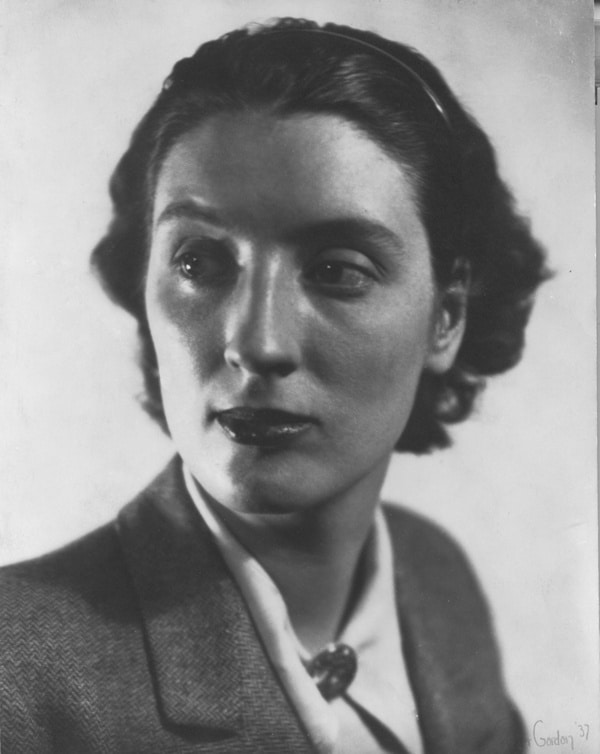
by May Sarton

Alone one is never lonely: the spirit
              adventures, waking
In a quiet garden, in a cool house, abiding single there;
The spirit adventures in sleep, the sweet thirst-slaking
When only the moon’s reflection touches the wild hair.
There is no place more intimate than the spirit alone:
It finds a lovely certainty in the evening and the morning.
It is only where two have come together bone against bone
That those alonenesses take place, when, without warning
The sky opens over their heads to an infinite hole in space;
It is only turning at night to a lover that one learns
He is set apart like a star forever and that sleeping face
(For whom the heart has cried, for whom the frail hand burns)
Is swung out in the night alone, so luminous and still,
The waking spirit attends, the loving spirit gazes
Without communion, without touch, and comes to know at last
Out of a silence only and never when the body blazes
That love is present, that always burns alone, however steadfast.

Source

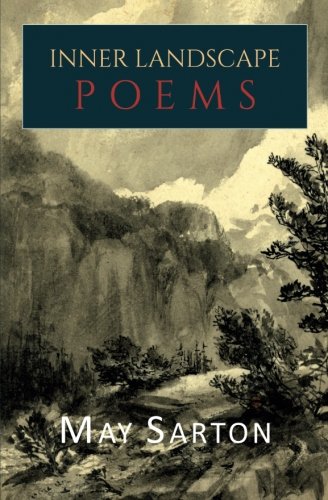
“Canticle 6” can be found in Inner Landscape.


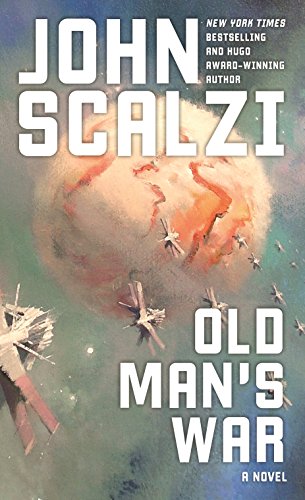
Old Man’s War

Author: John Scalzi
Rating: 8/10
Last Read: 12/2014

Old Man’s War is an excellent science fiction novel with some thought provoking aspects to it. The novel is set in man’s future, where we have expanded to the stars. The interesting twist of the book is that the Colonial Defense Force (CDF) recruits soldiers from the elderly population: 65 and up. Although they are not sure why old farts are wanted, they eventually find their minds transferred into genetically engineered super-soldier bodies. Their new lease on life comes at the cost of serving in the CDF’s ongoing wars, however.

The overall concept is interesting, and I certainly haven’t read another sci-fi book with this particular theme. I highly recommend Old Man’s War for sci-fi lovers.

P.S.: The first book is the best in the trilogy, but I also enjoyed the two novels that follow Old Man’s War.

My Highlights

Kathy’s marker has her name (Katherine Rebecca Perry), her dates, and the words: BELOVED WIFE AND MOTHER. I read those words over and over every time I visit. I can’t help it; they are four words that so inadequately and so perfectly sum up a life. The phrase tells you nothing about her, about how she met each day or how she worked, about what her interests were or where she liked to travel. You’d never know what her favorite color was, or how she liked to wear her hair, or how she voted, or what her sense of humor was. You’d know nothing about her except that she was loved. And she was. She’d think that was enough.

For as much as I hate the cemetery, I’ve been grateful it’s here, too. I miss my wife. It’s easier to miss her at a cemetery, where she’s never been anything but dead, than to miss her in all the places where she was alive.

The problem with aging is not that it’s one damn thing after another—it’s every damn thing, all at once, all the time.

“I didn’t mind getting old when I was young, either,” I said. “It’s the being old now that’s getting to me.”

“What is the weak point of the human body?” Ruiz asked as he circled around our platoon. “It’s not the heart, or the brain, or the feet, or anywhere you think it is. I’ll tell you what it is. It’s the blood, and that’s bad news because your blood is everywhere in your body. It carries oxygen, but it also carries disease. When you’re wounded, blood clots, but often not fast enough to keep you from dying of blood loss. Although when it comes down to it, what everyone really dies of is oxygen deprivation—from blood being unavailable because it’s spewed out on the fucking ground where it doesn’t do you a goddamned bit of good.

“What is it like when you lose someone you love?” Jane asked.
“You die, too,” I said. “And you wait around for your body to catch up.”

“Is that what you’re doing now?” Jane said. “Waiting for your body to catch up, I mean.”
“No, not anymore,” I said. “You eventually get to live again. You just live a different life, is all.

“I’m not insane, sir,” I said. “I have a finely calibrated sense of acceptable risk.”

Buy the Book

If you are interested in purchasing this book, you can support the website by using our Amazon affiliate link:

 

Old Man’s War

By John Scalzi


Wabi-Sabi: Further Thoughts

Author: Leonard Koren
Rating: 9/10
Last Read: 11/2017

Wabi-Sabi: Further Thoughts seeks to expand upon Koren’s previous work Wabi-Sabi: For Artists, Designers, Poets & Philosophers. Koren seeks to clarify some of the concepts that were introduced in his first work, and provide more context to the interested mind. He also discusses some interesting topics, such as whether digital art can ever express wabi-sabi.

If you liked the first book and want to further refine your understanding of wabi-sabi, read Wabi-Sabi: Further Thoughts.

My Highlights

wabi-sabi =

The aesthetic other.

  • a contrast/differentiation from the dominant aesthetic convention.
  • bulwark against sameness
  • rejection of the Chinese-derived taste for smooth, symmetrical perfection
  • Wabi taste: irregular and rough-textured objects, aka the aesthetic other in that historical context

The transfiguration of the commonplace.

  • Beauty of wabi-sabi is a perpetual event; it is not an inherent property of things
  • Wabi-sabi “happens” when conditioned and habituated ways of looking at things fall away, when things are defamiliarized
  • The beauty of wabi-sabi involves perceiving something extraordinary in something that might otherwise be regarded as quite ordinary, undistinguished or barely there.

Beauty at the edge of nothingness

  • Infinite potentiality of nothingness
  • Distinctiveness comes from something which is so faint, tentative, delicate, and subtle that it may be overlooked – or mistaken as trivial or insignificant.

Elegant Poverty

  • “Poverty” in this meaning as the mindset of non-attachment, I.e. not holding onto fixed ideas or material things.
  • “Elegant” refers to a graceful acceptance of restraint, inconvenience, and uncertainty.

Imperfection

  • Represented by entropic processes of nature made visible
  • Chaos and unpredictability, producing variety and interest
  • Under the right conditions, imperfection-embodied things can arouse a sense of empathy.

In the era of wabi-tea, the Japanese telling of the creation process: “things spontaneously appear beyond the technical and conceptual intervention” of artists or designers. An egoless point of view. wabi-sabi “occurs”, it is not “created” or “made”

Reluctance to make wabi-ness a mode of agency

Anonymously made objects taken from other contexts and used in new ways. Broken things, both common and special, are fixed, leaving scars of repair, and put back into service.

Never up to the fabricator to decide whether or not something is wabi: it’s up to the individual beholder.

“According to Rikyu, a preoccupation with things in and of themselves is tantamount to a spiritual failing”

“Sloppiness, whether by design or accident, is the result of thoughtlessness. Thoughtlessness has no place in the wabi-sabi concept.”

The modern project:

  • Reason is superior to all other forms of cognition
  • Science offers the ultimate solutions to mankind’s problems
  • The world is “broken”, but in the future things will be better.
  • It is necessary for humans to master nature
  • Look for universal solutions to fit all instances and circumstances

Wabi-sabi:

  • Reason is only one of many equally important modes of cognition
  • Science can only solve a limited range of mankind’s problems
  • The world simply “is”, and always will be so
  • Humans and nature are one; there is no master, there is no slave
  • Look for specific solutions for particular instances and circumstances

“Wabi-sabi is based on effortless, uninterrupted interactions with real (actual) things in the real (actual) world. The real world is dependent only on a consciousness to perceive it.”

“Digital reality, on the other hand, requires the effort of someone (the encoder, the device maker) to exist, and is dependent upon machinery and an external power source. When either the will of the maker, the machinery, or the power fails, digital reality ceases to be.”

Buy the Book

If you are interested in purchasing this book, you can support the website by using our Amazon affiliate link: