Man’s Search for Meaning

Author: Viktor E. Frankl
Rating: 9/10
Last Read: May 2014

Quick Summary: Viktor Frankl was sent to a concentration camp during WWII.  He discusses his own experiences and those of fellow prisoners, and tries to find the reason that some were able to survive the harsh concentration camps, while others simply gave up and died.  This book is an excellent read and will shift your perspective on the value of having a purpose and a good mental attitude.  

Terrible as it was, his experience in Auschwitz reinforced what was already one of his key ideas: Life is not primarily a quest for pleasure, as Freud believed, or a quest for power, as Alfred Adler taught, but a quest for meaning.

One thing to note: I remember reading this in China while riding on the bus to Foxconn.  It’s incredibly hard to do work after reading Frankl’s descriptions of being in concentration camps and differentiating those who survived and those who didn’t.  Be aware of the material, and perhaps find a suitable time to read.  This is not bedtime reading material.

There is value is looking into the dark parts of the human condition.  In those parts one can truly find the appreciation for the positive aspects of life, the strength of the will, and the generosity of those whose spirit will not be bent and broken by the dark aspects of the world.

We who lived in concentration camps can remember the men who walked through the huts comforting others, giving away their last piece of bread. They may have been few in number, but they offer sufficient proof that everything can be taken from a man but one thing: the last of the human freedoms—to choose one’s attitude in any given set of circumstances, to choose one’s own way.

My Highlights

The forward echoes my own sentiments on the value of a good book:

Typically, if a book has one passage, one idea with the power to change a person’s life, that alone justifies reading it, rereading it, and finding room for it on one’s shelves. –loc 16

Nietzsche: “He who has a Why to live for can bear almost any How.” –loc 21

Frankl saw three possible sources for meaning: in work (doing something significant), in love (caring for another person), and in courage during difficult times. –loc 29

Suffering in and of itself is meaningless; we give our suffering meaning by the way in which we respond to it. –loc 30

Forces beyond your control can take away everything you possess except one thing, your freedom to choose how you will respond to the situation. You cannot control what happens to you in life, but you can always control what you will feel and do about what happens to you. –loc 35

Frankl would have argued that we are never left with nothing as long as we retain the freedom to choose how we will respond. –loc 41

We have come to know Man as he really is. After all, man is that being who invented the gas chambers of Auschwitz; however, he is also that being who entered those gas chambers upright, with the Lord’s Prayer or the Shema Yisrael on his lips.
HAROLD S. KUSHNER
–loc 55

And now, to Frankl’s own words…

Whereupon I react by reporting that in the first place I do not at all see in the bestseller status of my book an achievement and accomplishment on my part but rather an expression of the misery of our time: if hundreds of thousands of people reach out for a book whose very title promises to deal with the question of a meaning to life, it must be a question that burns under their fingernails. –loc 65

“Don’t aim at success—the more you aim at it and make it a target, the more you are going to miss it. For success, like happiness, cannot be pursued; it must ensue, and it only does so as the unintended side-effect of one’s dedication to a cause greater than oneself or as the by-product of one’s surrender to a person other than oneself. Happiness must happen, and the same holds for success: you have to let it happen by not caring about it. I want you to listen to what your conscience commands you to do and go on to carry it out to the best of your knowledge. Then you will live to see that in the long run—in the long run, I say!—success will follow you precisely because you had forgotten to think of it.” –loc 81

it will try to answer this question: How was everyday life in a concentration camp reflected in the mind of the average prisoner? –loc 104

It is easy for the outsider to get the wrong conception of camp life, a conception mingled with sentiment and pity. Little does he know of the hard fight for existence which raged among the prisoners. This was an unrelenting struggle for daily bread and for life itself, for one’s own sake or for that of a good friend. –loc 114

Every man was controlled by one thought only: to keep himself alive for the family waiting for him at home, and to save his friends. With no hesitation, therefore, he would arrange for another prisoner, another “number,” to take his place in the transport. –loc 127

These former prisoners often say, “We dislike talking about our experiences. No explanations are needed for those who have been inside, and the others will understand neither how we felt then nor how we feel now.” –loc 139

In psychiatry there is a certain condition known as “delusion of reprieve.” The condemned man, immediately before his execution, gets the illusion that he might be reprieved at the very last minute. –loc 187

At that moment I saw the plain truth and did what marked the culminating point of the first phase of my psychological reaction: I struck out my whole former life. –loc 240

Apart from that strange kind of humor, another sensation seized us: curiosity. I have experienced this kind of curiosity before, as a fundamental reaction toward certain strange circumstances. When my life was once endangered by a climbing accident, I felt only one sensation at the critical moment: curiosity, curiosity as to whether I should come out of it alive or with a fractured skull or some other injuries. –loc 264

The prisoner of Auschwitz, in the first phase of shock, did not fear death. Even the gas chambers lost their horrors for him after the first few days—after all, they spared him the act of committing suicide. –loc 292

I grasped the meaning of the greatest secret that human poetry and human thought and belief have to impart: The salvation of man is through love and in love. I understood how a man who has nothing left in this world still may know bliss, be it only for a brief moment, in the contemplation of his beloved. In a position of utter desolation, when man cannot express himself in positive action, when his only achievement may consist in enduring his sufferings in the right way —an honorable way—in such a position man can, through loving contemplation of the image he carries of his beloved, achieve fulfillment. –loc 528

I knew only one thing—which I have learned well by now: Love goes very far beyond the physical person of the beloved. It finds its deepest meaning in his spiritual being, his inner self. Whether or not he is actually present, whether or not he is still alive at all, ceases somehow to be of importance. –loc 541

The attempt to develop a sense of humor and to see things in a humorous light is some kind of a trick learned while mastering the art of living. –loc 610

To draw an analogy: a man’s suffering is similar to the behavior of gas. If a certain quantity of gas is pumped into an empty chamber, it will fill the chamber completely and evenly, no matter how big the chamber. Thus suffering completely fills the human soul and conscious mind, no matter whether the suffering is great or little. Therefore the “size” of human suffering is absolutely relative. –loc 611

(The consciousness of one’s inner value is anchored in higher, more spiritual things, and cannot be shaken by camp life. But how many free men, let alone prisoners, possess it?) –loc 839

Man can preserve a vestige of spiritual freedom, of independence of mind, even in such terrible conditions of psychic and physical stress. –loc 874

We who lived in concentration camps can remember the men who walked through the huts comforting others, giving away their last piece of bread. They may have been few in number, but they offer sufficient proof that everything can be taken from a man but one thing: the last of the human freedoms—to choose one’s attitude in any given set of circumstances, to choose one’s own way. –loc 875

Dostoevski said once, “There is only one thing that I dread: not to be worthy of my sufferings.” –loc 886

It can be said that they were worthy of their sufferings; the way they bore their suffering was a genuine inner achievement. It is this spiritual freedom—which cannot be taken away—that makes life meaningful and purposeful. –loc 888

An active life serves the purpose of giving man the opportunity to realize values in creative work, while a passive life of enjoyment affords him the opportunity to obtain fulfillment in experiencing beauty, art, or nature. But there is also purpose in that life which is almost barren of both creation and enjoyment and which admits of but one possibility of high moral behavior: namely, in man’s attitude to his existence, an existence restricted by external forces. A creative life and a life of enjoyment are banned to him. But not only creativeness and enjoyment are meaningful. If there is a meaning in life at all, then there must be a meaning in suffering. Suffering is an ineradicable part of life, even as fate and death. Without suffering and death human life cannot be complete. –loc 889

Everywhere man is confronted with fate, with the chance of achieving something through his own suffering. –loc 902

Take the fate of the sick—especially those who are incurable. I once read a letter written by a young invalid, in which he told a friend that he had just found out he would not live for long, that even an operation would be of no help. He wrote further that he remembered a film he had seen in which a man was portrayed who waited for death in a courageous and dignified way. The boy had thought it a great accomplishment to meet death so well. Now—he wrote—fate was offering him a similar chance. –loc 903

This young woman knew that she would die in the next few days. But when I talked to her she was cheerful in spite of this knowledge. “I am grateful that fate has hit me so hard,” she told me. “In my former life I was spoiled and did not take spiritual accomplishments seriously.” Pointing through the window of the hut, she said, “This tree here is the only friend I have in my loneliness.” Through that window she could see just one branch of a chestnut tree, and on the branch were two blossoms. “I often talk to this tree,” she said to me. I was startled and didn’t quite know how to take her words. Was she delirious? Did she have occasional hallucinations? Anxiously I asked her if the tree replied. “Yes.” What did it say to her? She answered, “It said to me, ‘I am here—I am here—I am life, eternal life.’” –loc 916

The unemployed worker, for example, is in a similar position. His existence has become provisional and in a certain sense he cannot live for the future or aim at a goal. –loc 936

Instead of taking the camp’s difficulties as a test of their inner strength, they did not take their life seriously and despised it as something of no consequence. They preferred to close their eyes and to live in the past. Life for such people became meaningless. –loc 955

What does Spinoza say in his Ethics? —“Affectus, qui passio est, desinit esse passio simulatque eius claram et distinctam formamus ideam.” Emotion, which is suffering, ceases to be suffering as soon as we form a clear and precise picture of it. –loc 978

Life ultimately means taking the responsibility to find the right answer to its problems and to fulfill the tasks which it constantly sets for each individual. –loc 1018

When a man finds that it is his destiny to suffer, he will have to accept his suffering as his task; his single and unique task. He will have to acknowledge the fact that even in suffering he is unique and alone in the universe. No one can relieve him of his suffering or suffer in his place. His unique opportunity lies in the way in which he bears his burden. –loc 1026

Long ago we had passed the stage of asking what was the meaning of life, a naïve query which understands life as the attaining of some aim through the active creation of something of value. For us, the meaning of life embraced the wider cycles of life and death, of suffering and of dying. –loc 1031

“Was Du erlebst, kann keine Macht der Welt Dir rauben.” (What you have experienced, no power on earth can take from –loc 1086

The body has fewer inhibitions than the mind. –loc 1156

Logotherapy focuses rather on the future, that is to say, on the meanings to be fulfilled by the patient in his future. (Logotherapy, indeed, is a meaning-centered psychotherapy.) –loc 1236

According to logotherapy, this striving to find a meaning in one’s life is the primary motivational force in man. –loc 1244

Man’s search for meaning is the primary motivation in his life and not a “secondary rationalization” of instinctual drives. This meaning is unique and specific in that it must and can be fulfilled by him alone; only then does it achieve a significance which will satisfy his own will to meaning. –loc 1248

The term “existential” may be used in three ways: to refer to (1) existence itself, i.e., the specifically human mode of being; (2) the meaning of existence; and (3) the striving to find a concrete meaning in personal existence, that is to say, the will to meaning. –loc 1268

A man’s concern, even his despair, over the worthwhileness of life is an existential distress but by no means a mental disease. –loc 1292

Thus it can be seen that mental health is based on a certain degree of tension, the tension between what one has already achieved and what one still ought to accomplish, or the gap between what one is and what one should become. –loc 1315

No instinct tells him what he has to do, and no tradition tells him what he ought to do; sometimes he does not even know what he wishes to do. Instead, he either wishes to do what other people do (conformism) or he does what other people wish him to do (totalitarianism). –loc 1335

The existential vacuum manifests itself mainly in a state of boredom. Now we can understand Schopenhauer when he said that mankind was apparently doomed to vacillate eternally between the two extremes of distress and boredom. –loc 1339

Let us consider, for instance, “Sunday neurosis,” that kind of depression which afflicts people who become aware of the lack of content in their lives when the rush of the busy week is over and the void within themselves becomes manifest. –loc 1343

This emphasis on responsibleness is reflected in the categorical imperative of logotherapy, which is: “Live as if you were living already for the second time and as if you had acted the first time as wrongly as you are about to act now!” –loc 1371

Such a precept confronts him with life’s finiteness as well as the finality of what he makes out of both his life and himself. –loc 1374

By declaring that man is responsible and must actualize the potential meaning of his life, I wish to stress that the true meaning of life is to be discovered in the world rather than within man or his own psyche, as though it were a closed system. –loc 1385

It denotes the fact that being human always points, and is directed, to something, or someone, other than oneself—be it a meaning to fulfill or another human being to encounter. –loc 1387

The more one forgets himself—by giving himself to a cause to serve or another person to love—the more human he is and the more he actualizes himself. –loc 1388

Thus far we have shown that the meaning of life always changes, but that it never ceases to be. According to logotherapy, we can discover this meaning in life in three different ways: (1) by creating a work or doing a deed; (2) by experiencing something or encountering someone; and (3) by the attitude we take toward unavoidable suffering. –loc 1391

The second way of finding a meaning in life is by experiencing something—such as goodness, truth and beauty—by experiencing nature and culture or, last but not least, by experiencing another human being in his very uniqueness—by loving him. –loc 1394

Thus love is not understood as a mere side-effect of sex; rather, sex is a way of expressing the experience of that ultimate togetherness which is called love. –loc 1404

For what then matters is to bear witness to the uniquely human potential at its best, which is to transform a personal tragedy into a triumph, to turn one’s predicament into a human achievement. –loc 1408

When we are no longer able to change a situation—just think of an incurable disease such as inoperable cancer—we are challenged to change ourselves. –loc 1409

suffering ceases to be suffering at the moment it finds a meaning, such as the meaning of a sacrifice. –loc 1416

“our current mental-hygiene philosophy stresses the idea that people ought to be happy, that unhappiness is a symptom of maladjustment. Such a value system might be responsible for the fact that the burden of unavoidable unhappiness is increased by unhappiness about being unhappy.” –loc 1425

I observed that procreation is not the only meaning of life, for then life in itself would become meaningless, and something which in itself is meaningless cannot be rendered meaningful merely by its perpetuation. –loc 1491

Logotherapy bases its technique called “paradoxical intention” on the twofold fact that fear brings about that which one is afraid of, and that hyper-intention makes impossible what one wishes. –loc 1544

Our generation is realistic, for we have come to know man as he really is. After all, man is that being who invented the gas chambers of Auschwitz; however, he is also that being who entered those gas chambers upright, with the Lord’s Prayer or the Shema Yisrael on his lips. –loc 1664

To the European, it is a characteristic of the American culture that, again and again, one is commanded and ordered to “be happy.” –loc 1714

One must have a reason to “be happy.” Once the reason is found, however, one becomes happy automatically. –loc 1716

Once an individual’s search for a meaning is successful, it not only renders him happy but also gives him the capability to cope with suffering. –loc 1725

Live as if you were living for the second time and had acted as wrongly the first time as you are about to act now. –loc 1857

From this one may see that there is no reason to pity old people. Instead, young people should envy them. It is true that the old have no opportunities, no possibilities in the future. But they have more than that. Instead of possibilities in the future, they have realities in the past—the potentialities they have actualized, the meanings they have fulfilled, the values they have realized—and nothing and nobody can ever remove these assets from the past. –loc 1864

Frankl was once asked to express in one sentence the meaning of his own life. He wrote the response on paper and asked his students to guess what he had written. After some moments of quiet reflection, a student surprised Frankl by saying, “The meaning of your life is to help others find the meaning of theirs.”
“That was it, exactly,” Frankl said. “Those are the very words I had written.” –loc 2057


Advice

Someone dancing inside us
Learned only a few steps:
The “Do-Your-Work” in 4/4 time,
The “What-Do-You-Expect” waltz.
He hasn’t noticed yet the woman
Standing away from the lamp,
The one with black eyes
Who knows the rhumba,
And strange steps in jumpy rhythms
From the mountains in Bulgaria.
If they dance together,
Something unexpected will happen.
If they don’t, the next world
Will be a lot like this one.

Bill Holm

Source


style

style is the answer to everything —
a fresh way to approach a dull or a
dangerous thing.
to do a dull thing with style
is preferable to doing a dangerous thing
without it.

Joan of Arc had style
John the Baptist
Christ
Socrates
Caesar,
Garcia Lorca.

style is the difference,
a way of doing,
a way of being done.

6 herons standing quietly in a pool of water
or you walking out of the bathroom naked
without seeing
me.

Charles Bukowski

Source


Essential Bukowski: Poetry

By Charles Bukowski


since feeling is first

since feeling is first
who pays any attention
to the syntax of things
will never wholly kiss you;

wholly to be a fool
while Spring is in the world

my blood approves,
and kisses are better fate
than wisdom
lady i swear by all flowers. Don’t cry
—the best gesture of my brain is less than
your eyelids’ flutter which says

we are for each other: then
laugh, leaning back in my arms
for life’s not a paragraph

And death i think is no parenthesis

ee cummings

Source


E. E. Cummings: Collected Poems, 1922-1938

By e.e. (1894-1962.) cummings


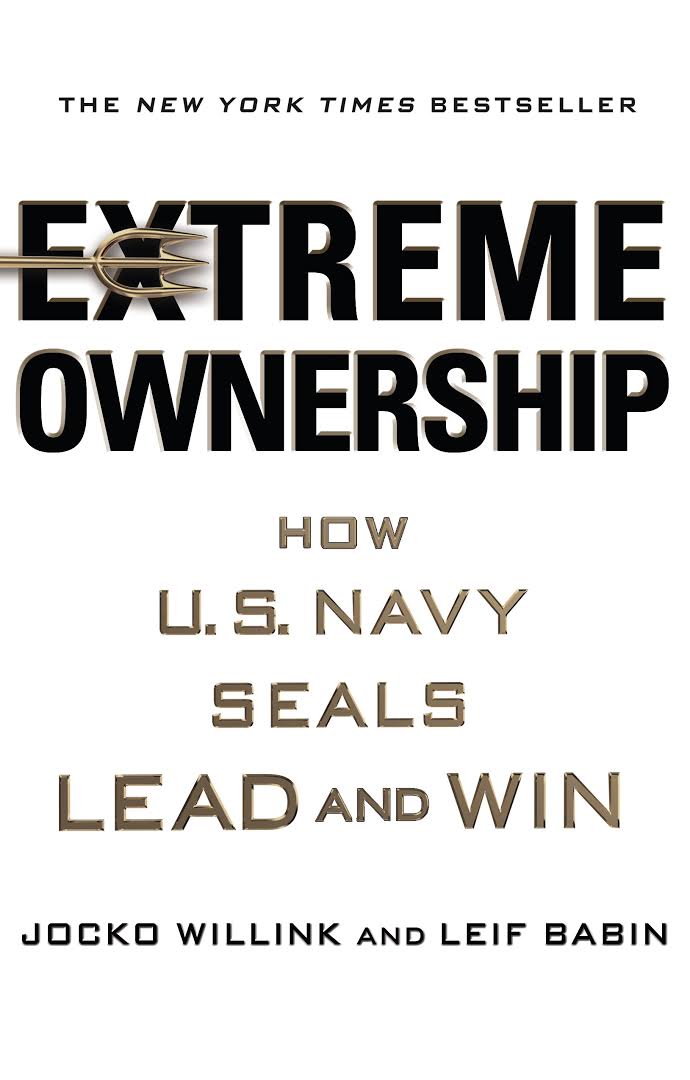
Extreme Ownership: How U.S. Navy SEALs Lead and Win

Author: Jocko Willink, Leif Babin
Rating: 9/10
Last Read: September 2016

Quick Summary:  This book is absolutely packed with actionable advice for leading teams and improving yourself.  While the book does include war stories to illustrate the authors’ points, the principles are timeless and worth reading even for those who aren’t interested in military subject matters.  

The core of the book: take ownership of yourself and the success of your team.  Detach, kill your ego, and don’t blame others for failure.  Instead, look at how you can improve the situation, communicate better, and clearly prioritize goals so your team members up and down the chain of command fully understand the situation.

This book made me take a hard look at myself and identified ways that I need to improve, especially in communicating up the chain to make sure my leaders understand the situation on the ground.  I will be revisiting this book again and again.

Also, I highly recommend checking out the Jocko Podcast, as well as the Tim Ferris Interview with Jocko.

Extreme Ownership. Leaders must own everything in their world. There is no one else to blame.

My Highlights

Who are we to write such a book? It may seem that anyone who believes they can write a book on leadership must think themselves the epitome of what every leader should aspire to be. But we are far from perfect. We continue to learn and grow as leaders every day, just as any leaders who are truly honest with themselves must. We were simply fortunate enough to experience an array of leadership challenges that taught us valuable lessons. This book is our best effort to pass those lessons on, not from a pedestal or a position of superiority, but from a humble place, where the scars of our failings still show. –loc 73

We learned that leadership requires belief in the mission and unyielding perseverance to achieve victory, particularly when doubters question whether victory is even possible. –loc 81

“Relax. Look around. Make a call.” –loc 164

Cover and Move, Simple, Prioritize and Execute, and Decentralized Command. –loc 166

The only meaningful measure for a leader is whether the team succeeds or fails. For all the definitions, descriptions, and characterizations of leaders, there are only two that matter: effective and ineffective. Effective leaders lead successful teams that accomplish their mission and win. Ineffective leaders do not. –loc 213

The best leaders are not driven by ego or personal agendas. They are simply focused on the mission and how best to accomplish it. –loc 220

The greatest of these was the recognition that leadership is the most important factor on the battlefield, the single greatest reason behind the success of any team. –loc 256

We encourage leaders to do the things they know they probably should be doing but aren’t. By not doing those things, they are failing as leaders and failing their teams. –loc 288

Extreme Ownership. Leaders must own everything in their world. There is no one else to blame. –loc 298

These weaker commanders would get a solid explanation about the burden of command and the deep meaning of responsibility: the leader is truly and ultimately responsible for everything. –loc 496

On any team, in any organization, all responsibility for success and failure rests with the leader. The leader must own everything in his or her world. There is no one else to blame. The leader must acknowledge mistakes and admit failures, take ownership of them, and develop a plan to win. –loc 499

When subordinates aren’t doing what they should, leaders that exercise Extreme Ownership cannot blame the subordinates. They must first look in the mirror at themselves. The leader bears full responsibility for explaining the strategic mission, developing the tactics, and securing the training and resources to enable the team to properly and successfully execute. –loc 505

If an individual on the team is not performing at the level required for the team to succeed, the leader must train and mentor that underperformer. But if the underperformer continually fails to meet standards, then a leader who exercises Extreme Ownership must be loyal to the team and the mission above any individual. If underperformers cannot improve, the leader must make the tough call to terminate them and hire others who can get the job done. It is all on the leader. –loc 508

Total responsibility for failure is a difficult thing to accept, and taking ownership when things go wrong requires extraordinary humility and courage. But doing just that is an absolute necessity to learning, growing as a leader, and improving a team’s performance. –loc 513

“So, you’re here to help me, right?” the VP inquired. Knowing that, due to ego, some people bristle at the idea of criticism and coaching no matter how constructive, I chose to take a more indirect approach. “Maybe not so much here to help you, but here to help the situation,” –loc 533

When a bad SEAL leader walked into a debrief and blamed everyone else, that attitude was picked up by subordinates and team members, who then followed suit. They all blamed everyone else, and inevitably the team was ineffective and unable to properly execute a plan. –loc 610

The answer: leadership is the single greatest factor in any team’s performance. Whether a team succeeds or fails is all up to the leader. The leader’s attitude sets the tone for the entire team. The leader drives performance—or doesn’t. And this applies not just to the most senior leader of an overall team, but to the junior leaders of teams within the team. –loc 758

When leaders who epitomize Extreme Ownership drive their teams to achieve a higher standard of performance, they must recognize that when it comes to standards, as a leader, it’s not what you preach, it’s what you tolerate. –loc 833

Leaders should never be satisfied. They must always strive to improve, and they must build that mind-set into the team. –loc 847

If I expressed doubts or openly questioned the wisdom of this plan in front of the troops, their derision toward the mission would increase exponentially. They would never believe in it. As a result, they would never commit to it, and it would fail. But once I understood and believed, I then passed that understanding and belief on, clearly and succinctly, to my troops so that they believed in it themselves. When they understood why, they would commit to the mission, persevere through the inevitable challenges in store, and accomplish the task set before us. –loc 1096

In order to convince and inspire others to follow and accomplish a mission, a leader must be a true believer in the mission. Even when others doubt and question the amount of risk, asking, “Is it worth it?” the leader must believe in the greater cause. If a leader does not believe, he or she will not take the risks required to overcome the inevitable challenges necessary to win. –loc 1127

Leaders must always operate with the understanding that they are part of something greater than themselves and their own personal interests. –loc 1131

Every leader must be able to detach from the immediate tactical mission and understand how it fits into strategic goals. –loc 1138

When leaders receive an order that they themselves question and do not understand, they must ask the question: why? Why are we being asked to do this? Those leaders must take a step back, deconstruct the situation, analyze the strategic picture, and then come to a conclusion. If they cannot determine a satisfactory answer themselves, they must ask questions up the chain of command until they understand why. –loc 1138

In business just as in the military, no senior executive team would knowingly choose a course of action or issue an order that would purposely result in failure. But a subordinate may not understand a certain strategy and thus not believe in it. Junior leaders must ask questions and also provide feedback up the chain so that senior leaders can fully understand the ramifications of how strategic plans affect execution on the ground. –loc 1147

A common misperception among military leaders or corporate senior executives, this was an example of a boss who didn’t fully comprehend the weight of her position. In her mind, she was fairly laid back, open to questions, comments, and suggestions from people. She talked about maintaining an “open-door policy.” But in the minds of her sales managers, she was still The Boss: experienced, smart, and most important, powerful. That position demanded a high level of reverence—so high, in fact, that for an employee to question her ideas seemed disrespectful. None of them were comfortable questioning her, even though none of the midlevel managers actually worried about losing their jobs because they asked a question. But they were certainly worried about looking bad in front of The Boss. –loc 1193

Often, my subordinate leadership would pick up the slack for me. And they wouldn’t hold it against me, nor did I think they were infringing on my ‘leadership turf.’ On the contrary, I would thank them for covering for me. Leadership isn’t one person leading a team. It is a group of leaders working together, up and down the chain of command, to lead. If you are on your own, I don’t care how good you are, you won’t be able to handle it.” –loc 1253

Ego clouds and disrupts everything: the planning process, the ability to take good advice, and the ability to accept constructive criticism. It can even stifle someone’s sense of self-preservation. Often, the most difficult ego to deal with is your own. –loc 1453

“If you approached it as he did something wrong, and he needs to fix something, and he is at fault, it becomes a clash of egos and you two will be at odds. That’s human nature. But, if you put your own ego in check, meaning you take the blame, that will allow him to actually see the problem without his vision clouded by ego. Then you both can make sure that your team’s standard operating procedures—when to communicate, what is and isn’t within his decision-making authority—are clearly understood. –loc 1520

We utilized the principle of Cover and Move on every operation: all teams working together in support of one another. –loc 1716

“The enemy is out there,” I said, pointing out the window to the world beyond. “The enemy is all the other competing companies in your industry that are vying for your customers. The enemy is not in here, inside the walls of this corporation. The departments within and the subsidiary companies that all fall under the same leadership structure—you are all on the same team. You have to overcome the ‘us versus them’ mentality and work together, mutually supporting one another. –loc 1761

Simplifying as much as possible is crucial to success. When plans and orders are too complicated, people may not understand them. And when things go wrong, and they inevitably do go wrong, complexity compounds issues that can spiral out of control into total disaster. Plans and orders must be communicated in a manner that is simple, clear, and concise. Everyone that is part of the mission must know and understand his or her role in the mission and what to do in the event of likely contingencies. As a leader, it doesn’t matter how well you feel you have presented the information or communicated an order, plan, tactic, or strategy. If your team doesn’t get it, you have not kept things simple and you have failed. You must brief to ensure the lowest common denominator on the team understands. –loc 1951

the enemy gets a vote.–loc 2033

“The enemy gets a vote?” the plant manager repeated, questioning what that meant. “Yes. Regardless of how you think an operation is going to unfold,” I answered, “the enemy gets their say as well—and they are going to do something to disrupt it. When something goes wrong—and it eventually does—complex plans add to confusion, which can compound into disaster. Almost no mission ever goes according to plan. There are simply too many variables to deal with. This is where simplicity is key. If the plan is simple enough, everyone understands it, which means each person can rapidly adjust and modify what he or she is doing. If the plan is too complex, the team can’t make rapid adjustments to it, because there is no baseline understanding of it.” –loc 2034

Prioritize and Execute. Even the greatest of battlefield leaders could not handle an array of challenges simultaneously without being overwhelmed. That risked failing at them all. I had to remain calm, step back from my immediate emotional reaction, and determine the greatest priority for the team. Then, rapidly direct the team to attack that priority. Once the wheels were in motion and the full resources of the team were engaged in that highest priority effort, I could then determine the next priority, focus the team’s effort there, and then move on to the next priority. I could not allow myself to be overwhelmed. I had to relax, look around, and make a call. –loc 2197

Even the most competent of leaders can be overwhelmed if they try to tackle multiple problems or a number of tasks simultaneously. The team will likely fail at each of those tasks. Instead, leaders must determine the highest priority task and execute. When overwhelmed, fall back upon this principle: Prioritize and Execute. –loc 2240

Just as in combat, priorities can rapidly shift and change. When this happens, communication of that shift to the rest of the team, both up and down the chain of command, is critical. Teams must be careful to avoid target fixation on a single issue. They cannot fail to recognize when the highest priority task shifts to something else. The team must maintain the ability to quickly reprioritize efforts and rapidly adapt to a constantly changing battlefield. –loc 2258

To implement Prioritize and Execute in any business, team, or organization, a leader must:
• evaluate the highest priority problem.
• lay out in simple, clear, and concise terms the highest priority effort for your team.
• develop and determine a solution, seek input from key leaders and from the team where possible.
• direct the execution of that solution, focusing all efforts and resources toward this priority task.
• move on to the next highest priority problem. Repeat.
• when priorities shift within the team, pass situational awareness both up and down the chain.
• don’t let the focus on one priority cause target fixation. Maintain the ability to see other problems developing and rapidly shift as needed. –loc 2261

Human beings are generally not capable of managing more than six to ten people, particularly when things go sideways and inevitable contingencies arise. No one senior leader can be expected to manage dozens of individuals, much less hundreds. –loc 2529

Decentralized Command does not mean junior leaders or team members operate on their own program; that results in chaos. Instead, junior leaders must fully understand what is within their decision-making authority—the “left and right limits” of their responsibility. Additionally, they must communicate with senior leaders to recommend decisions outside their authority and pass critical information up the chain so the senior leadership can make informed strategic decisions. –loc 2536

Junior leaders must be proactive rather than reactive. –loc 2540

Tactical leaders must be confident that they clearly understand the strategic mission and Commander’s Intent. They must have implicit trust that their senior leaders will back their decisions. Without this trust, junior leaders cannot confidently execute, which means they cannot exercise effective Decentralized Command. To ensure this is the case, senior leaders must constantly communicate and push information—what we call in the military “situational awareness”—to their subordinate leaders. Likewise, junior leaders must push situational awareness up the chain to their senior leaders to keep them informed, particularly of crucial information that affects strategic decision making. –loc 2542

Contrary to a common misconception, leaders are not stuck in any particular position. Leaders must be free to move to where they are most needed, which changes throughout the course of an operation. Understanding proper positioning as a leader is a key component of effective Decentralized Command, not just on the battlefield. –loc 2564

Junior leaders must know that the boss will back them up even if they make a decision that may not result in the best outcome, as long as the decision was made in an effort to achieve the strategic objective” –loc 2645

The mission must explain the overall purpose and desired result, or “end state,” of the operation. The frontline troops tasked with executing the mission must understand the deeper purpose behind the mission. –loc 2784

Leaders must delegate the planning process down the chain as much as possible to key subordinate leaders. Team leaders within the greater team and frontline, tactical-level leaders must have ownership of their tasks within the overall plan and mission. Team participation—even from the most junior personnel—is critical in developing bold, innovative solutions to problem sets. –loc 2791

The test for a successful brief is simple: Do the team and the supporting elements understand it? –loc 2807

The plan must mitigate identified risks where possible. SEALs are known for taking significant risk, but in reality SEALs calculate risk very carefully. A good plan must enable the highest chance of mission success while mitigating as much risk as possible. –loc 2808

The best teams employ constant analysis of their tactics and measure their effectiveness so that they can adapt their methods and implement lessons learned for future missions. Often business teams claim there isn’t time for such analysis. But one must make time. –loc 2815

A post-operational debrief examines all phases of an operation from planning through execution, in a concise format. It addresses the following for the combat mission just completed: What went right? What went wrong? How can we adapt our tactics to make us even more effective and increase our advantage over the enemy? –loc 2818

If your boss isn’t making a decision in a timely manner or providing necessary support for you and your team, don’t blame the boss. First, blame yourself. Examine what you can do to better convey the critical information for decisions to be made and support allocated. –loc 3226

Leading up the chain takes much more savvy and skill than leading down the chain. Leading up, the leader cannot fall back on his or her positional authority. Instead, the subordinate leader must use influence, experience, knowledge, communication, and maintain the highest professionalism. –loc 3230

While pushing to make your superior understand what you need, you must also realize that your boss must allocate limited assets and make decisions with the bigger picture in mind. You and your team may not represent the priority effort at that particular time. Or perhaps the senior leadership has chosen a different direction. Have the humility to understand and accept this. –loc 3233

A public display of discontent or disagreement with the chain of command undermines the authority of leaders at all levels. This is catastrophic to the performance of any organization. –loc 3237

But at the end of the day, once the debate on a particular course of action is over and the boss has made a decision—even if that decision is one you argued against—you must execute the plan as if it were your own. –loc 3240

The major factors to be aware of when leading up and down the chain of command are these:
• Take responsibility for leading everyone in your world, subordinates and superiors alike.
• If someone isn’t doing what you want or need them to do, look in the mirror first and determine what you can do to better enable this.
• Don’t ask your leader what you should do, tell them what you are going to do.
–loc 3244

They just don’t get what we are dealing with, and their questions and second-guessing prevents me and my team from getting the job done.” The infamous they. –loc 3251

Intelligence gathering and research are important, but they must be employed with realistic expectations and must not impede swift decision making that is often the difference between victory and defeat. Waiting for the 100 percent right and certain solution leads to delay, indecision, and an inability to execute. Leaders must be prepared to make an educated guess based on previous experience, knowledge of how the enemy operates, likely outcomes, and whatever intelligence is available in the immediate moment. –loc 3452

In the SEAL Teams, we taught our leaders to act decisively amid chaos. Jocko had taught me that, as a leader, my default setting should be aggressive—proactive rather than reactive. This was critical to the success of any team. Instead of letting the situation dictate our decisions, we must dictate the situation. But for many leaders, this mind-set was not intuitive. Many operated with a “wait and see” approach. But experience had taught me that the picture could never be complete. There was always some element of risk. There was no 100-percent right solution. –loc 3506

The moment the alarm goes off is the first test; it sets the tone for the rest of the day. The test is not a complex one: when the alarm goes off, do you get up out of bed, or do you lie there in comfort and fall back to sleep? If you have the discipline to get out of bed, you win—you pass the test. If you are mentally weak for that moment and you let that weakness keep you in bed, you fail. Though it seems small, that weakness translates to more significant decisions. But if you exercise discipline, that too translates to more substantial elements of your life. –loc 3648

The temptation to take the easy road is always there. It is as easy as staying in bed in the morning and sleeping in. But discipline is paramount to ultimate success and victory for any leader and any team. –loc 3668

Although discipline demands control and asceticism, it actually results in freedom. When you have the discipline to get up early, you are rewarded with more free time. When you have the discipline to keep your helmet and body armor on in the field, you become accustomed to it and can move freely in it. The more discipline you have to work out, train your body physically and become stronger, the lighter your gear feels and the easier you can move around in it. –loc 3669

A leader must be calm but not robotic. It is normal—and necessary—to show emotion. The team must understand that their leader cares about them and their well-being. But, a leader must control his or her emotions. If not, how can they expect to control anything else? Leaders who lose their temper also lose respect. But, at the same time, to never show any sense of anger, sadness, or frustration would make that leader appear void of any emotion at all—a robot. People do not follow robots. –loc 3714

a leader must be confident but never cocky. Confidence is contagious, a great attribute for a leader and a team. But when it goes too far, overconfidence causes complacency and arrogance, which ultimately set the team up for failure. –loc 3716

A leader must be brave but not foolhardy. He or she must be willing to accept risk and act courageously, but must never be reckless. It is a leader’s job to always mitigate as much as possible those risks that can be controlled to accomplish the mission without sacrificing the team or excessively expending critical resources. –loc 3718

Leaders must have a competitive spirit but also be gracious losers. They must drive competition and push themselves and their teams to perform at the highest level. But they must never put their own drive for personal success ahead of overall mission success for the greater team. Leaders must act with professionalism and recognize others for their contributions. –loc 3720

A leader must be attentive to details but not obsessed by them. A good leader does not get bogged down in the minutia of a tactical problem at the expense of strategic success. He or she must monitor and check the team’s progress in the most critical tasks. But that leader cannot get sucked into the details and lose track of the bigger picture. –loc 3723

A leader must be strong but likewise have endurance, not only physically but mentally. He or she must maintain the ability to perform at the highest level and sustain that level for the long term. Leaders must recognize limitations and know to pace themselves and their teams so that they can maintain a solid performance indefinitely. –loc 3725

Leaders must be humble but not passive; quiet but not silent. They must possess humility and the ability to control their ego and listen to others. They must admit mistakes and failures, take ownership of them, and figure out a way to prevent them from happening again. But a leader must be able to speak up when it matters. They must be able to stand up for the team and respectfully push back against a decision, order, or direction that could negatively impact overall mission success. –loc 3728

A leader must be close with subordinates but not too close. The best leaders understand the motivations of their team members and know their people—their lives and their families. But a leader must never grow so close to subordinates that one member of the team becomes more important than another, or more important than the mission itself. Leaders must never get so close that the team forgets who is in charge. –loc 3731

A good leader does not gloat or revel in his or her position. To take charge of minute details just to demonstrate and reinforce to the team a leader’s authority is the mark of poor, inexperienced leadership lacking in confidence. –loc 3737

Generally, when a leader struggles, the root cause behind the problem is that the leader has leaned too far in one direction and steered off course. Awareness of the dichotomies in leadership allows this discovery, and thereby enables the correction. –loc 3743

The New Religion

The body is a nation I have not known.
The pure joy of air: the moment between leaping
from a cliff into the wall of blue below. Like that.
Or to feel the rub of tired lungs against skin-
covered bone, like a hand against the rough of bark.
Like that. “The body is a savage,” I said.
For years I said that: the body is a savage.
As if this safety of the mind were virtue
not cowardice. For years I have snubbed
the dark rub of it, said, “I am better, Lord,
I am better,” but sometimes, in an unguarded
moment of sun, I remember the cowdung-scent
of my childhood skin thick with dirt and sweat
and the screaming grass.
But this distance I keep is not divine,
for what was Christ if not God’s desire
to smell his own armpit? And when I
see him, I know he will smile,
fingers glued to his nose, and say, “Next time
I will send you a down as a dog
to taste this pure hunger.”

Chris Abani, from Hands Washing Water

Source


Hands Washing Water

By Chris Abani


won’t you celebrate with me

won’t you celebrate with me
what i have shaped into
a kind of life? i had no model.
born in babylon
both nonwhite and woman
what did i see to be except myself?
i made it up
here on this bridge between
starshine and clay,
my one hand holding tight
my other hand; come celebrate
with me that everyday
something has tried to kill me
and has failed.

Lucille Clifton

Source


The Book of Light

By Lucille Clifton


The True Believer: Thoughts on the Nature of Mass Movements

Author: Eric Hoffer
Rating: 10/10
Last Read: August 2015

Quick Summary:  Wow.  This 1951 book on the psychology of mass movements is just stunning and terrifying.  Even reviewing the notes brings me a sense of awe and a tinge of fear as you make associations with the world we live in today.

Hoffer explains what kind of people and attitudes give rise to mass movements and analyses the life cycle from start to end.  His gaze shifts from the factors that motivate individuals to join mass movements to the societal forces that support and resist this force of change.  He also compares mass movements to each other, including religious, political, or radical movements that we are familiar with throughout our history.

This is an excellent book that I will revisit again and again.  

I recommend reading this book along with Why Don’t We Learn From History?

J. B. S. Haldane counts fanaticism among the only four really important inventions made between 3000 B.C. and 1400 A.D. It was a Judaic-Christian invention. And it is strange to think that in receiving this malady of the soul the world also received a miraculous instrument for raising societies and nations from the dead—an instrument of resurrection.

My Highlights

All mass movements generate in their adherents a readiness to die and a proclivity for united action; all of them, irrespective of the doctrine they preach and the program they project, breed fanaticism, enthusiasm, fervent hope, hatred and intolerance; all of them are capable of releasing a powerful flow of activity in certain departments of life; all of them demand blind faith and singlehearted allegiance. –loc 77

Though there are obvious differences between the fanatical Christian, the fanatical Mohammedan, the fanatical nationalist, the fanatical Communist and the fanatical Nazi, it is yet true that the fanaticism which animates them may be viewed and treated as one. –loc 82

Starting out from the fact that the frustrated predominate among the early adherents of all mass movements and that they usually join of their own accord, it is assumed: 1) that frustration of itself, without any proselytizing prompting from the outside, can generate most of the peculiar characteristics of the true believer; 2) that an effective technique of conversion consists basically in the inculcation and fixation of proclivities and responses indigenous to the frustrated mind. –loc 91

Montaigne: “All I say is by way of discourse, and nothing by way of advice. I should not speak so boldly if it were my due to be believed.” –loc 109

Some kind of widespread enthusiasm or excitement is apparently needed for the realization of vast and rapid change, and it does not seem to matter whether the exhilaration is derived from an expectation of untold riches or is generated by an active mass movement. –loc 117

Success and failure are unavoidably related in our minds with the state of things around us. –loc 160

Hence it is that people with a sense of fulfillment think it a good world and would like to conserve it as it is, while the frustrated favor radical change. –loc 161

that the successful, too, however much they pride themselves on their foresight, fortitude, thrift and other “sterling qualities,” are at bottom convinced that their success is the result of a fortuitous combination of circumstances. The self-confidence of even the consistently successful is never absolute. –loc 166

The powerful can be as timid as the weak. What seems to count more than possession of instruments of power is faith in the future. –loc 194

Where power is not joined with faith in the future, it is used mainly to ward off the new and preserve the status quo. On the other hand, extravagant hope, even when not backed by actual power, is likely to generate a most reckless daring. For the hopeful can draw strength from the most ridiculous sources of power—a slogan, a word, a button. –loc 195

Those who would transform a nation or the world cannot do so by breeding and captaining discontent or by demonstrating the reasonableness and desirability of the intended changes or by coercing people into a new way of life. They must know how to kindle and fan an extravagant hope. –loc 200

Hence men of outstanding achievement and those who live full, happy lives usually set their faces against drastic innovation. The conservatism of invalids and people past middle age stems, too, from fear of the future. –loc 208

When hopes and dreams are loose in the streets, it is well for the timid to lock doors, shutter windows and lie low until the wrath has passed. For there is often a monstrous incongruity between the hopes, however noble and tender, and the action which follows them. It is as if ivied maidens and garlanded youths were to herald the four horsemen of the apocalypse. –loc 224

For men to plunge headlong into an undertaking of vast change, they must be intensely discontented yet not destitute, and they must have the feeling that by the possession of some potent doctrine, infallible leader or some new technique they have access to a source of irresistible power. They must also have an extravagant conception of the prospects and potentialities of the future. Finally, they must be wholly ignorant of the difficulties involved in their vast undertaking. Experience is a handicap. –loc 227

When a mass movement begins to attract people who are interested in their individual careers, it is a sign that it has passed its vigorous stage; that it is no longer engaged in molding a new world but in possessing and preserving the present. –loc 253

Faith in a holy cause is to a considerable extent a substitute for the lost faith in ourselves. –loc 261

The less justified a man is in claiming excellence for his own self, the more ready is he to claim all excellence for his nation, his religion, his race or his holy cause. –loc 262

A man is likely to mind his own business when it is worth minding. When it is not, he takes his mind off his own meaningless affairs by minding other people’s business. –loc 264

The burning conviction that we have a holy duty toward others is often a way of attaching our drowning selves to a passing raft. What looks like giving a hand is often a holding on for dear life. Take away our holy duties and you leave our lives puny and meaningless. There is no doubt that in exchanging a self-centered for a selfless life we gain enormously in self-esteem. The vanity of the selfless, even those who practice utmost humility, is boundless. –loc 269

In a modern society people can live without hope only when kept dazed and out of breath by incessant hustling. –loc 277

Yet to the frustrated the present is irremediably spoiled. Comforts and pleasures cannot make it whole. No real content or comfort can ever arise in their minds but from hope. –loc 281

Every mass movement is in a sense a migration—a movement toward a promised land; and, when feasible and expedient, an actual migration takes place. –loc 351

Migration, in the mass, strengthens the spirit and unity of a movement; and whether in the form of foreign conquest, crusade, pilgrimage or settlement of new land it is practiced by most active mass movements. –loc 353

The game of history is usually played by the best and the worst over the heads of the majority in the middle. –loc 365

The reason that the inferior elements of a nation can exert a marked influence on its course is that they are wholly without reverence toward the present. They see their lives and the present as spoiled beyond remedy and they are ready to waste and wreck both: hence their recklessness and their will to chaos and anarchy. –loc 366

Though the disaffected are found in all walks of life, they are most frequent in the following categories: (a) the poor, (b) misfits, (c) outcasts, (d) minorities, (e) adolescent youth, (f) the ambitious (whether facing insurmountable obstacles or unlimited opportunities), (g) those in the grip of some vice or obsession, (h) the impotent (in body or mind), (i) the inordinately selfish, (j) the bored, (k) the sinners. –loc 376

The poor on the borderline of starvation live purposeful lives. To be engaged in a desperate struggle for food and shelter is to be wholly free from a sense of futility. The goals are concrete and immediate. –loc 404

Where people toil from sunrise to sunset for a bare living, they nurse no grievances and dream no dreams. –loc 412

One of the reasons for the unrebelliousness of the masses in China is the inordinate effort required there to scrape together the means of the scantiest subsistence. –loc 412

Discontent is likely to be highest when misery is bearable; when conditions have so improved that an ideal state seems almost within reach. –loc 417

A grievance is most poignant when almost redressed. –loc 418

It is not actual suffering but the taste of better things which excites people to revolt. –loc 424

The intensity of discontent seems to be in inverse proportion to the distance from the object fervently desired. –loc 429

Our frustration is greater when we have much and want more than when we have nothing and want some. We are less dissatisfied when we lack many things than when we seem to lack but one thing. –loc 433

We dare more when striving for superfluities than for necessities. Often when we renounce superfluities we end up lacking in necessities. –loc 435

Every established mass movement has its distant hope, its brand of dope to dull the impatience of the masses and reconcile them with their lot in life. Stalinism is as much an opium of the people as are the established religions. –loc 445

Where freedom is real, equality is the passion of the masses. Where equality is real, freedom is the passion of a small minority. –loc 487

Equality without freedom creates a more stable social pattern than freedom without equality. –loc 489

Unlimited opportunities can be as potent a cause of frustration as a paucity or lack of opportunities. –loc 700

The attitude is: “All that I am doing or possibly can do is chicken feed compared with what is left undone.” Such is the frustration which broods over gold camps and haunts taut minds in boom times. –loc 701

Patriotism, racial solidarity, and even the preaching of revolution find a more ready response among people who see limitless opportunities spread out before them than among those who move within the fixed limits of a familiar, orderly and predictable pattern of existence. –loc 704

When people are bored, it is primarily with their own selves that they are bored. –loc 729

The consciousness of a barren, meaningless existence is the main fountainhead of boredom. –loc 730

The differentiated individual is free of boredom only when he is engaged either in creative work or some absorbing occupation or when he is wholly engrossed in the struggle for existence. –loc 731

With few exceptions, any group or organization which tries, for one reason or another, to create and maintain compact unity and a constant readiness for self-sacrifice usually manifests the peculiarities—both noble and base—of a mass movement. –loc 778

“To illustrate a principle,” says Bagehot, “you must exaggerate much and you must omit much.” –loc 805

The fully assimilated individual does not see himself and others as human beings. –loc 826

Dying and killing seem easy when they are part of a ritual, ceremonial, dramatic performance or game. –loc 884

There is need for some kind of make-believe in order to face death unflinchingly. To our real, naked selves there is not a thing on earth or in heaven worth dying for. –loc 884

It is only when we see ourselves as actors in a staged (and therefore unreal) performance that death loses its frightfulness and finality and becomes an act of make-believe and a theatrical gesture. –loc 886

It is one of the main tasks of a real leader to mask the grim reality of dying and killing by evoking in his followers the illusion that they are participating in a grandiose spectacle, a solemn or light-hearted dramatic performance. –loc 887

The indispensability of play-acting in the grim business of dying and killing is particularly evident in the case of armies. Their uniforms, flags, emblems, parades, music, and elaborate etiquette and ritual are designed to separate the soldier from his flesh-and-blood self and mask the overwhelming reality of life and death. –loc 898

Glory is largely a theatrical concept. There is no striving for glory without a vivid awareness of an audience—the knowledge that our mighty deeds will come to the ears of our contemporaries or “of those who are to be.” We are ready to sacrifice our true, transitory self for the imaginary eternal self we are building up, by our heroic deeds, in the opinion and imagination of others. –loc 903

To lose one’s life is but to lose the present; and, clearly, to lose a defiled, worthless present is not to lose much. –loc 921

When today is all there is, we grab all we can and hold on. We are afloat in an ocean of nothingness and we hang on to any miserable piece of wreckage as if it were the tree of life. On the other hand, when everything is ahead and yet to come, we find it easy to share all we have and to forego advantages within our grasp. –loc 944

Common suffering by itself, when not joined with hope, does not unite nor does it evoke mutual generosity. –loc 948

We cling to what we call our common sense, our practical point of view. Actually, these are but names for an all-absorbing familiarity with things as they are. The tangibility of a pleasant and secure existence is such that it makes other realities, however imminent, seem vague and visionary. Thus it happens that when the times become unhinged, it is the practical people who are caught unaware and are made to look like visionaries who cling to things that do not exist. –loc 972

“for a living dog is better than a dead lion. For the living know that they shall die: but the dead know not any thing … neither have they any more a portion for ever in any thing that is done under the sun.” –loc 992

Craving, not having, is the mother of a reckless giving of oneself. –loc 1030

All active mass movements strive, therefore, to interpose a fact-proof screen between the faithful and the realities of the world. They do this by claiming that the ultimate and absolute truth is already embodied in their doctrine and that there is no truth nor certitude outside –loc 1063

It is the true believer’s ability to “shut his eyes and stop his ears” to facts that do not deserve to be either seen or heard which is the source of his unequaled fortitude and constancy. He cannot be frightened by danger nor disheartened by obstacles nor baffled by contradictions because he denies their existence. Strength of faith, as Bergson pointed out, manifests itself not in moving mountains but in not seeing mountains to move. And it is the certitude of his infallible doctrine that renders the true believer impervious to the uncertainties, surprises and the unpleasant realities of the world around him. –loc 1072

The devout are always urged to seek the absolute truth with their hearts and not their minds. “It is the heart which is conscious of God, not the reason.” –loc 1090

Being an instrument of the present, an army deals mainly with the possible. Its leaders do not rely on miracles. Even when animated by fervent faith, they are open to compromise. They reckon with the possibility of defeat and know how to surrender. On the other hand, the leader of a mass movement has an overwhelming contempt for the present—for all its stubborn facts and perplexities, even those of geography and the weather. He relies on miracles. His hatred of the present (his nihilism) comes to the fore when the situation becomes desperate. He destroys his country and his people rather than surrender. –loc 1205

Sarpedon spoke to Glaucus as they stormed the Grecian wall: “O my friend, if we, leaving this war, could escape from age and death, I should not here be fighting in the van; but now, since many are the modes of death impending over us which no man can hope to shun, let us press on and give renown to other men, or win it for ourselves.” –loc 1213

The face of the mass is as “the face of the deep” out of which, like God on the day of creation, he will bring forth a new world. –loc 1224

Heine suggests that what Christian love cannot do is effected by a common hatred. –loc 1230

F. A. Voigt tells of a Japanese mission that arrived in Berlin in 1932 to study the National Socialist movement. Voigt asked a member of the mission what he thought of the movement. He replied: “It is magnificent. I wish we could have something like it in Japan, only we can’t, because we haven’t got any Jews.” –loc 1235

We do not usually look for allies when we love. Indeed, we often look on those who love with us as rivals and trespassers. But we always look for allies when we hate. –loc 1267

There is a guilty conscience behind every brazen word and act and behind every manifestation of self-righteousness. –loc 1292

It is of interest that the backward South shows more xenophobia than the rest of the country. Should Americans begin to hate foreigners wholeheartedly, it will be an indication that they have lost confidence in their own way of life. –loc 1306

It seems that when we are oppressed by the knowledge of our worthlessness we do not see ourselves as lower than some and higher than others, but as lower than the lowest of mankind. We hate then the whole world, and we would pour our wrath upon the whole of creation. –loc 1325

The act of self-denial seems to confer on us the right to be harsh and merciless toward others. The impression somehow prevails that the true believer, particularly the religious individual, is a humble person. The truth is that the surrendering and humbling of the self breed pride and arrogance. The true believer is apt to see himself as one of the chosen, the salt of the earth, the light of the world, a prince disguised in meekness, who is destined to inherit this earth and the kingdom of heaven, too.18 He who is not of his faith is evil; he who will not listen shall perish. –loc 1349

The deindividualization which is a prerequisite for thorough integration and selfless dedication is also, to a considerable extent, a process of dehumanization. The torture chamber is a corporate institution. –loc 1369

Imitation is often a shortcut to a solution. We copy when we lack the inclination, the ability or the time to work out an independent solution. People in a hurry will imitate more readily than people at leisure. Hustling thus tends to produce uniformity. And in the deliberate fusing of individuals into a compact group, incessant action will play a considerable role.22 –loc 1399

Proselytizing is more a passionate search for something not yet found than a desire to bestow upon the world something we already have. It is a search for a final and irrefutable demonstration that our absolute truth is indeed the one and only truth. –loc 1512

There is a period of waiting in the wings—often a very long period—for all the great leaders whose entrance on the scene seems to us a most crucial point in the course of a mass movement. Accidents and the activities of other men have to set the stage for them before they can enter and start their performance. “The commanding man in a momentous day seems only to be the last accident in a series.” –loc 1539

People whose lives are barren and insecure seem to show a greater willingness to obey than people who are self-sufficient and self-confident. –loc 1616

To the frustrated, freedom from responsibility is more attractive than freedom from restraint. They are eager to barter their independence for relief from the burdens of willing, deciding and being responsible for inevitable failure. –loc 1618

Action is a unifier. There is less individual distinctness in the genuine man of action—the builder, soldier, sportsman and even the scientist—than in the thinker or in one whose creativeness flows from communion with the self. –loc 1641

The true believer is eternally incomplete, eternally insecure. –loc 1748

What de Rémusat said of Thiers is perhaps true of most men of words: “he has much more vanity than ambition; and he prefers consideration to obedience, and the appearance of power to power itself. Consult him constantly, and then do just as you please. He will take more notice of your deference to him than of your actions.” –loc 1799

Luther, who, when first defying the established church, spoke feelingly of “the poor, simple, common folk,”7 proclaimed later, when allied with the German princelings, that “God would prefer to suffer the government to exist no matter how evil, rather than to allow the rabble to riot, no matter how justified they are in doing so.”8 A –loc 1817

Jesus was not a Christian, nor was Marx a Marxist. –loc 1909

However, the freedom the masses crave is not freedom of self-expression and self-realization, but freedom from the intolerable burden of an autonomous existence. They want freedom from “the fearful burden of free choice,”19 freedom from the arduous responsibility of realizing their ineffectual selves and shouldering the blame for the blemished product. –loc 1930

They believe in the possibility of individual happiness and the validity of individual opinion and initiative. But once a movement gets rolling, power falls into the hands of those who have neither faith in, nor respect for, the individual. And the reason they prevail is not so much that their disregard of the individual gives them a capacity for ruthlessness, but that their attitude is in full accord with the ruling passion of the masses. –loc 1940

The most significant division between men of words is between those who can find fulfillment in creative work and those who cannot. –loc 1960

Said Oliver Cromwell: “A man never goes so far as when he does not know whither he is going.” –loc 2138

But in a traditionally free country the individual who pits himself against coercion does not feel an isolated human atom but one of a mighty race—his rebellious ancestors. –loc 2180

J. B. S. Haldane counts fanaticism among the only four really important inventions made between 3000 B.C. and 1400 A.D. It was a Judaic-Christian invention. And it is strange to think that in receiving this malady of the soul the world also received a miraculous instrument for raising societies and nations from the dead—an instrument of resurrection. –loc 2284

Excuses

once again
I hear of somebody who is going to
settle down and
do their work,
painting or writing or whatever,
as soon as they get a better light
installed,
or as soon as they move to a new
city,
or as soon as they come back from the trip they
have been planning,
or as soon as…
it’s simple; they just don’t want
to do it,
or they can’t do it,
otherwise they’d feel a burning
itch from hell
they could not ignore
and “soon”
would turn quickly into
“now.”

Charles Bukowski

Source


Rules for a Knight

Author: Ethan Hawke (yes, the actor)
Rating: 7/10
Last Read: September 2016

Quick Summary:  Rules for a Knight is a short book is a collection of “knightly wisdom” told in short stories.  The overall book is framed as a letter from a knight to his children, sent on the eve of a battle from which he expects not to return.  The book is full of lessons from the Buddhist cannon – if you are familiar with other philosophical works, the stories will likely be very familiar to you.

When I re-read the passages I have highlighted, I realize that Rules for a Knight repeatedly speaks to the very things I am seeking.  There is much wisdom contained in these pages – it is a shame to realize I have blown through this book and have not spent time to reflect upon it.  How many other lessons have been ignored?

Pay attention: what you need to know is usually in front of you. There are no secrets, just things people choose not to notice.

My Highlights

For this I am most sad, but none of you children yet know me as anything but the tall person who scolds or encourages you, or as a voice talking to your mother as you fall asleep. I have worked too hard in the last ten years and traveled too much, and now it seems I may miss your childhoods entirely. This comes as a blow. I have been looking forward to your growing up and hoped that we could, over time, know one another in a more meaningful way. –loc 100

My grandfather set down two blue cups and poured some tea into the first, but he did not stop when the cup was full. He kept pouring and pouring until the hot tea spilled all over the table and splattered onto the floor.
“What are you doing?” I shouted, jumping up, hot tea scalding my legs.
“You are like that cup spilling over,” said my grandfather. “You cannot retain anything. There is too much going on and you are splashing everywhere, burning what you touch.”
–loc 125

Answers to your questions will come, but if you are not still and empty, you will never be able to retain anything. –loc 132

But the first thing you must understand is that you need not have gone anywhere. You are always in the right place at exactly the right time, and you always have been.” –loc 138

CREATE time alone with yourself. When seeking the wisdom and clarity of your own mind, silence is a helpful tool. The voice of our spirit is gentle and cannot be heard when it has to compete with others. Just as it is impossible to see your reflection in troubled water, so too is it with the soul. In silence, we can sense eternity sleeping inside us. –loc 151

Humility is the ability to see yourself in the context of a much larger world. –loc 184

The stars are magnificent. They are always there whether you see them or not. –loc 185

Aspire to be like the soil after the March rains, wet, open, and receptive. –loc 185

“When people speak, listen.” This was a point he would consistently stress. “As much as you like to be heard and understood, so does everyone else.” –loc 188

THE only intelligent response to the ongoing gift of life is gratitude. For all that has been, a knight says, “Thank you.” For all that is to come, a knight says, “Yes!” –loc 229

The quiet of each morning, the tangible bond of friendship, a snowball fight, warm water on your skin, laughing until your stomach hurts, a job well done, a shooting star that you witness alone; the simple joys are the great ones. Pleasure is not complicated. –loc 243

Constant awareness of even the smallest detail trains your mind to be observant and conscientious. –loc 264

Responsibility, awareness, and self-knowledge are his allies. Forgetfulness is his enemy. His mind is not in the future. He is fully engaged in what he is doing. –loc 265

I learned that evening that rain falls equally on all things. Jealousy, fear, and anger are obstacles to a knight’s first goal: a clear mind. Through his practice a knight should cultivate an open, unclouded mind, so that his instincts will guide him and he is free to act spontaneously. Understanding that our “talents” are simply gifts we have received brings humility to our actions. It also allows us to appreciate the “talents” we see in others as expressions from the same universal source. There are only two possible outcomes whenever you compare yourself to another, vanity or bitterness, and both are without value. –loc 310

THE quality of your life will, to a large extent, be decided by with whom you elect to spend your time. –loc 330

The skeptic shouted out, mocking the knight for believing that his ancient whispers and primitive style of healing could have any power. In front of all the townspeople, Sir Richard answered, “You are an ignorant fool.” The skeptic’s derision became angry. His face reddened, and his hands began to shake with humiliation and rage. Before the skeptic could gather himself to shout back or raise his fist in violence, Sir Richard spoke again. “When a few words have the power to make you so angry, why would others not have the power to heal?” –loc 342

Remember, a friend does not need you to impress him. A friend loves you because you are true to yourself, not because you agree with him. Beware of grand gestures; the real mettle of friendship is forged in life’s daily workings. –loc 350

A DISHONEST tongue and a dishonest mind waste time, and therefore waste our lives. We are here to grow, and the truth is the water, the light, and the soil from which we rise. The armor of falsehood is subtly wrought out of the darkness and hides us not only from others but from our own soul. –loc 389

Don’t fear suffering. The strongest steel is forged in the hottest fire. The facts are always friendly. Without a little agony, none of us would bother to learn a thing. The earth has to be tilled before the seeds can be planted. In much the same way, sometimes we have to be stirred and ripped apart so that the seeds of compassion, wisdom, and understanding can be firmly planted in us. –loc 407

Pay attention: what you need to know is usually in front of you. There are no secrets, just things people choose not to notice. –loc 427

Later he told me when he was younger he learned the secret to performing under pressure: don’t do it for yourself. Do it for someone else. “I know your grandfather always tells us to think of nothing. But when I get scared I just think of someone I love.” –loc 460

GRACE is the ability to accept change. Be open and supple; the brittle break. –loc 482

Young people, women and men, often use the possession of beauty or wealth as permission to be uninteresting, undisciplined, and ill-informed. If they are fortunate enough to reach the age of twenty-eight or so, they become like coddled coyotes. Cute when little, but, upon adulthood, nasty, fearful, and living off the scraps of others. –loc 497

All of us are asked to surrender the superficial beauty of youth and step towards something greater. We are being made ready for the spirit world. Each wrinkle is a crack in the shell of our conceit. Our conceit must be pulverized for the soul to fly. –loc 511

YOU were born owning nothing and with nothing you will pass out of this life. Be frugal and you can be generous. –loc 586

There have always been two ways to be rich: by accumulating vast sums or by needing very little. –loc 591

Often we imagine that we will work hard until we arrive at some distant goal, and then we will be happy. This is a delusion. Happiness is the result of a life lived with purpose. Happiness is not an objective. It is the movement of life itself, a process, and an activity. It arises from curiosity and discovery. Seek pleasure and you will quickly discover the shortest path to suffering. Other people, friends, brothers, sisters, neighbors, spouses, even your mother and I are not responsible for your happiness. Your life is your responsibility, and you always have the choice to do your best. Doing your best will bring happiness. Do not be overconcerned with avoiding pain or seeking pleasure. If you are concentrating on the results of your actions, you are not dedicated to your task. –loc 645

Be resolute in your beliefs, my children. Your friendship cannot be bought. –loc 673

Be cautious when anyone, even family, has too extreme an expectation from your behavior. Under the guise of love or loyalty, people can use guilt or fear to manipulate. A healthy conscience should be used like an internal compass: it is yours, not an instrument for others to play. –loc 673

A knight does not whine. He concerns himself with affecting change, not burdening the world with his grievances. –loc 716

In courtship, honesty is the first requisite. To achieve honesty, a knight must first be intimate with his own soul. This is difficult and takes time. Just as we all have secret thoughts and concerns inside ourselves, which we would share only with a person we value, respect, and trust, so too is it with the body. There are secret places that we need not share, which need not to be shared. –loc 866

Buy the Book

If you are interested in reading Rules for a Knight, you can support the website by using our Amazon affiliate link:


Rules for a Knight

By Ethan Hawke