The Martian

Author: Andy Weir
Rating: 7/10
Last Read: October 2015

The Martian is a relatively well-known book about an astronaut who is abandoned on Mars after his companions thought he was dead. He tries to stay alive and establish contact with Earth, hoping they can figure out how to get him back home. The novel is told from the point of view of multiple characters, but focuses primarily on the astronaut and his struggle to live.

I enjoyed The Martian and thought it was a decent sci-fi novel. The book is clearly targeted at engineers, so the details and explanations and jokes are perhaps nerdier than other sci-fi novels.

My Highlights

Chuck shrugged. “Never occurred to us. We never thought someone would be on Mars without an MAV.”
“I mean, come on!” Morris said. “What are the odds?”
Chuck turned to him. “One in three, based on empirical data. That’s pretty bad if you think about it.”

“How’d I do today?” Venkat asked.
“Eeeh,” Annie said, putting her phone away. “You shouldn’t say things like ‘bring him home alive.’ It reminds people he might die.”
“Think they’re going to forget that?”
“You asked my opinion. Don’t like it? Go fuck yourself.”
“You’re such a delicate flower, Annie. How’d you end up NASA’s director of media relations?”
“Beats the fuck out of me,” Annie said.

Irene carefully formed her answer before speaking. “When facing death, people want to be heard. They don’t want to die alone. He might just want the MAV radio so he can talk to another soul before he dies.”

“Jesus, what a complicated process,” Venkat said.
“Try updating a Linux server sometime,” Jack said.
After a moment of silence, Tim said, “You know he was telling a joke, right? That was supposed to be funny.”
“Oh,” said Venkat. “I’m a physics guy, not a computer guy.”
“He’s not funny to computer guys, either.”

I started the day with some nothin’ tea. Nothin’ tea is easy to make. First, get some hot water, then add nothin’. I experimented with potato skin tea a few weeks ago. The less said about that the better.

Buy the Book

If you are interested in purchasing this book, you can support the website by using our Amazon affiliate link:


The Martian

By Andy Weir


Gone Girl

Author: Gillian Flynn
Rating: 8/10
Last Read: January 2015

I read Gone Girl after watching the movie, which was probably a mistake. The book was very similar to the movie, so the plot twists were already spoiled. However, that’s not to say the book was ruined – the book was still a very enjoyable read. I certainly felt frustrated by the situation of the two main characters, so the book gets bonus points for evoking real feelings from me.

Watch out for those crazy relationships, folks! And perhaps don’t read this one right before bed…

My Highlights

There’s something disturbing about recalling a warm memory and feeling utterly cold.

But there’s no app for a bourbon buzz on a warm day in a cool, dark bar. The world will always want a drink.

Give me a man with a little fight in him, a man who calls me on my bullshit. (But who also kind of likes my bullshit.)

It’s a very difficult era in which to be a person, just a real, actual person, instead of a collection of personality traits selected from an endless Automat of characters.

Shawna said. “I mentioned it to Detective Boney, but I get the feeling she doesn’t like me very much.”
“Why do you say that?”
I already knew what she was going to say, the mantra of all attractive women. “Women don’t like me all that much.”

I was embarrassed, I snarled at her, she snapped at me, and … the usual. I should add, in Amy’s defense, that she’d asked me twice if I wanted to talk, if I was sure I wanted to do this. I sometimes leave out details like that. It’s more convenient for me. In truth, I wanted her to read my mind so I didn’t have to stoop to the womanly art of articulation. I was sometimes as guilty of playing the figure-me-out game as Amy was. I’ve left that bit of information out too.

My mother had always told her kids: If you’re about to do something, and you want to know if it’s a bad idea, imagine seeing it printed in the paper for all the world to see.

Love makes you want to be a better man—right, right. But maybe love, real love, also gives you permission to just be the man you are.

I could feel her girl-brain buzzing, turning Amy’s disappearance into a frothy, scandalous romance, ignoring any reality that didn’t suit the narrative.

“And, I mean, it’s fun to be hero for a while, be the white knight, but it doesn’t really work for long. I couldn’t make her be happy. She didn’t want to be happy. So I thought if she started taking charge of a few practical things—”

I’d always heard the phrase: At forty, a man wears the face he’s earned. Bolt’s fortyish face was well tended, almost wrinkle-free, pleasantly plump with ego. Here was a confident man, the best in his field, a man who liked his life.

That whore, he picked that little whore over me. He killed my soul, which should be a crime. Actually, it is a crime. According to me, at least.

He was inspecting the neighborhood, eyeing the cars in the driveways, assessing the houses. He reminded me of the Elliotts, in a way—examining and analyzing at all times. A brain with no off switch.

If it’s not good TV, believe me, it’s not for a jury. We’d go with more of an O.J. thing. A simple story line: The cops are incompetent and out to get you, it’s all circumstantial, if the glove doesn’t fit, blah blah, blah.”

“Blah blah blah, that gives me a lot of confidence,” I said.
Tanner flashed a smile. “Juries love me, Nick. I’m one of them.”
“You’re the opposite of one of them, Tanner.”
“Reverse that: They’d like to think they’re one of me.”

This one always makes me chuckle:

We just need to sustain it. Nick doesn’t have it down perfect. This morning he was stroking my hair and asking what else he could do for me, and I said: “My gosh, Nick, why are you so wonderful to me?”
He was supposed to say: You deserve it. I love you. But he said, “Because I feel sorry for you.”
“Why?”
“Because every morning you have to wake up and be you.”

Buy the Book

If you are interested in purchasing this book, you can support the website by using our Amazon affiliate link:


Gone Girl

By Gillian Flynn


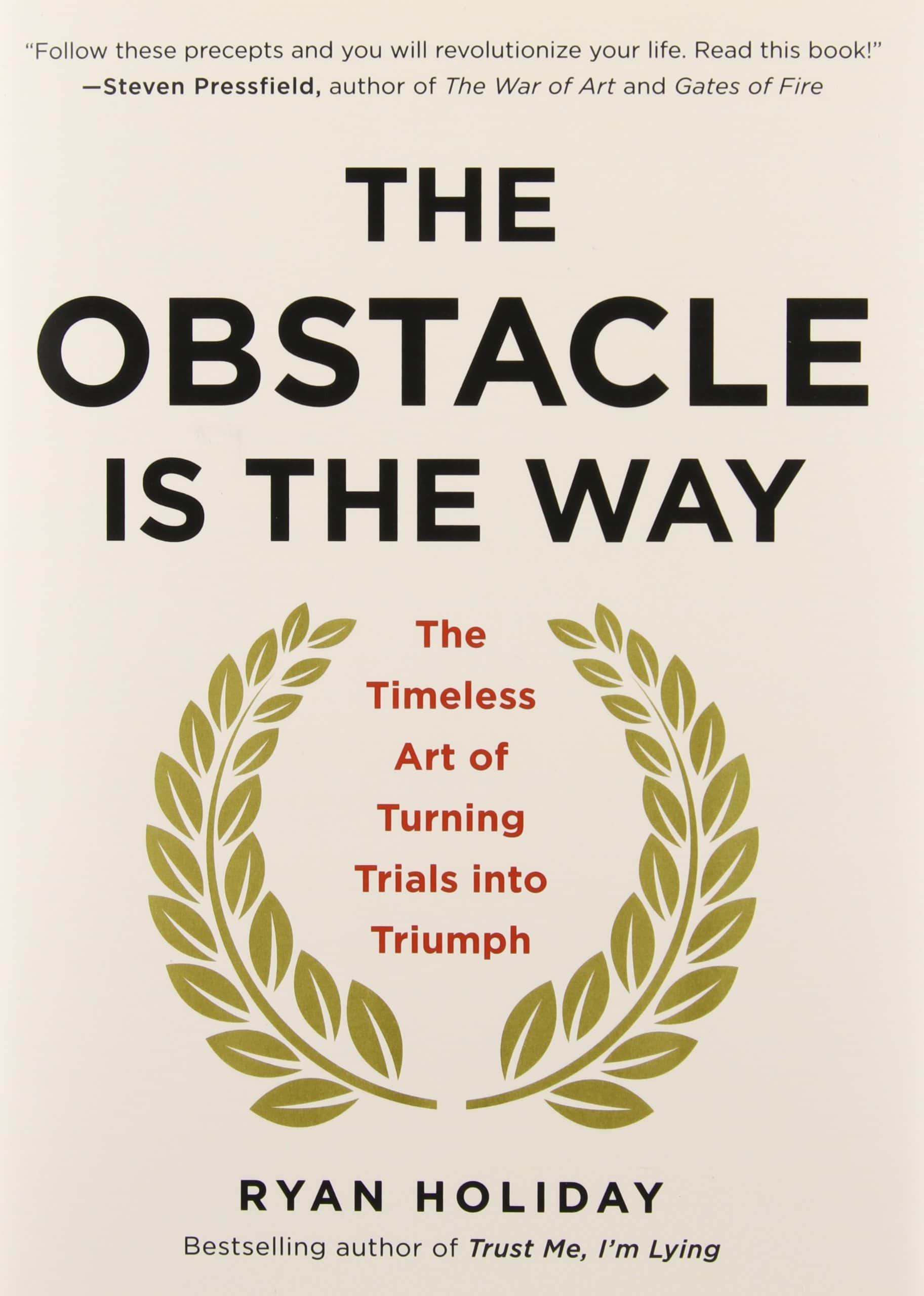
The Obstacle is the Way

Author: Ryan Holiday
Rating: 7/10
Last Read: September 2015

Quick Summary: The Obstacle is the Way is an accessible introductory book to the philosophy of stoicism.  Ryan Holiday draws from the stories of various historical figures and relates them to key principles of Stoic philosophy.  I find Stoicism to be a very helpful mindset to cultivate in my own life, and it is nice to see accessible books popularizing the wisdom of the Stoics.

If you like this book, I definitely recommend checking out the Meditations (Marcus Aurelius) and Enchiridon (Epictetus)

See things for what they are.
Do what we can.
Endure and bear what we must.
What blocked the path now is a path.
What once impeded action advances action.
The Obstacle is the Way.

My Highlights

Whatever we face, we have a choice: Will we be blocked by obstacles, or will we advance through and over them? –loc 113

Let’s be honest: Most of us are paralyzed. Whatever our individual goals, most of us sit frozen before the many obstacles that lie ahead of us. –loc 124

Objective judgment, now at this very moment. Unselfish action, now at this very moment. Willing acceptance—now at this very moment—of all external events. That’s all you need. –loc 223

“Oh, how blessed young men are who have to struggle for a foundation and beginning in life,” he once said. “I shall never cease to be grateful for the three and half years of apprenticeship and the difficulties to be overcome, all along the way.” –loc 279

You must realize: Nothing makes us feel this way; we choose to give in to such feelings. –loc 288

Seen properly, everything that happens—be it an economic crash or a personal tragedy—is a chance to move forward. Even if it is on a bearing that we did not anticipate. –loc 311

There are a few things to keep in mind when faced with a seemingly insurmountable obstacle. We must try:
To be objective
To control emotions and keep an even keel
To choose to see the good in a situation
To steady our nerves
To ignore what disturbs or limits others
To place things in perspective
To revert to the present moment
To focus on what can be controlled
–loc 313

Choose not to be harmed — and you won’t feel harmed. Don’t feel harmed — and you haven’t been. —MARCUS AURELIUS –loc 322

Nothing either good or bad, but thinking makes it so (Shakespeare) –loc 357

What such a man needs is not courage but nerve control, cool headedness. This he can get only by practice.
—THEODORE ROOSEVELT
–loc 377

During the Overland Campaign, Grant was surveying the scene through field glasses when an enemy shell exploded, killing the horse immediately next to him. Grant’s eyes stayed fixed on the front, never leaving the glasses. There’s another story about Grant at City Point, Union headquarters, near Richmond. Troops were unloading a steamboat and it suddenly exploded. Everyone hit the dirt except Grant, who was seen running toward the scene of the explosion as debris and shells and even bodies rained down. That’s a man who has steadied himself properly. That’s a man who has a job to do and would bear anything to get it done. That’s nerve. –loc 384

Don’t forget, there are always people out there looking to get you. They want to intimidate you. Rattle you. Pressure you into making a decision before you’ve gotten all the facts. They want you thinking and acting on their terms, not yours. So the question is, are you going to let them? –loc 395

We must possess, as Voltaire once explained about the secret to the great military success of the first Duke of Marlborough, that “tranquil courage in the midst of tumult and serenity of soul in danger, which the English call a cool head.” –loc 400

Defiance and acceptance come together well in the following principle: There is always a countermove, always an escape or a way through, so there is no reason to get worked up. –loc 408

Would you have a great empire? Rule over yourself.
—PUBLIUS SYRUS
–loc 416

America raced to send the first men into space, they trained the astronauts in one skill more than in any other: the art of not panicking. When people panic, they make mistakes. They override systems. They disregard procedures, ignore rules. They deviate from the plan. They become unresponsive and stop thinking clearly. They just react—not to what they need to react to, but to the survival hormones that are coursing through their veins. –loc 418

Uncertainty and fear are relieved by authority. Training is authority. It’s a release valve. With enough exposure, you can adapt out those perfectly ordinary, even innate, fears that are bred mostly from unfamiliarity. Fortunately, unfamiliarity is simple to fix (again, not easy), which makes it possible to increase our tolerance for stress and uncertainty. –loc 430

‘What am I choosing to not see right now?’ What important things are you missing because you chose worry over introspection, alertness or wisdom? –loc 450

If an emotion can’t change the condition or the situation you’re dealing with, it is likely an unhelpful emotion. Or, quite possibly, a destructive one. –loc 454

Real strength lies in the control or, as Nassim Taleb put it, the domestication of one’s emotions, not in pretending they don’t exist. –loc 456

We defeat emotions with logic, or at least that’s the idea. Logic is questions and statements. With enough of them, we get to root causes (which are always easier to deal with). –loc 460

It might help to say it over and over again whenever you feel the anxiety begin to come on: I am not going to die from this. I am not going to die from this. I am not going to die from this. Or try Marcus’s question: Does what happened keep you from acting with justice, generosity, self-control, sanity, prudence, honesty, humility, straightforwardness? –loc 472

Don’t let the force of an impression when it first hit you knock you off your feet; just say to it: Hold on a moment; let me see who you are and what you represent. Let me put you to the test. —EPICTETUS –loc 481

Perceptions are the problem. They give us the “information” that we don’t need, exactly at the moment when it would be far better to focus on what is immediately in front of us: the thrust of a sword, a crucial business negotiation, an opportunity, a flash of insight or anything else, for that matter. –loc 495

Epictetus told his students, when they’d quote some great thinker, to picture themselves observing the person having sex. It’s funny, you should try it the next time someone intimidates you or makes you feel insecure. See them in your mind, grunting, groaning, and awkward in their private life—just like the rest of us. –loc 505

Man does not simply exist but always decides what his existence will be, what he will become the next moment. By the same token, every human being has the freedom to change at any instant. —VIKTOR FRANKL –loc 523

Perspective has two definitions. Context: a sense of the larger picture of the world, not just what is immediately in front of us Framing: an individual’s unique way of looking at the world, a way that interprets its events Both matter, both can be effectively injected to change a situation that previously seemed intimidating or impossible. –loc 554

Perception precedes action. Right action follows the right perspective. –loc 571

In life our first job is this, to divide and distinguish things into two categories: externals I cannot control, but the choices I make with regard to them I do control. Where will I find good and bad? In me, in my choices. —EPICTETUS –loc 573

To argue, to complain, or worse, to just give up, these are choices. Choices that more often than not, do nothing to get us across the finish line. –loc 620

The trick to forgetting the big picture is to look at everything close up. —CHUCK PALAHNIUK –loc 633

Yet in our own lives, we aren’t content to deal with things as they happen. We have to dive endlessly into what everything “means,” whether something is “fair” or not, what’s “behind” this or that, and what everyone else is doing. Then we wonder why we don’t have the energy to actually deal with our problems. Or we get ourselves so worked up and intimidated because of the overthinking, that if we’d just gotten to work we’d probably be done already. –loc 651

For all species other than us humans, things just are what they are. Our problem is that we’re always trying to figure out what things mean—why things are the way they are. –loc 662

It doesn’t matter whether this is the worst time to be alive or the best, whether you’re in a good job market or a bad one, or that the obstacle you face is intimidating or burdensome. What matters is that right now is right now. –loc 665

You’ll find the method that works best for you, but there are many things that can pull you into the present moment: Strenuous exercise. Unplugging. A walk in the park. Meditation. Getting a dog—they’re a constant reminder of how pleasant the present is. –loc 671

It’s not simply a matter of saying: Oh, I’ll live in the present. You have to work at it. Catch your mind when it wanders—don’t let it get away from you. Discard distracting thoughts. Leave things well enough alone—no matter how much you feel like doing otherwise. –loc 673

This is why we shouldn’t listen too closely to what other people say (or to what the voice in our head says, either). We’ll find ourselves erring on the side of accomplishing nothing. Be open. Question. –loc 700

Now, how do you and I usually deal with an impossible deadline handed down from someone above us? We complain. We get angry. We question. How could they? What’s the point? Who do they think I am? We look for a way out and feel sorry for ourselves. –loc 708

Jobs refused to tolerate people who didn’t believe in their own abilities to succeed. Even if his demands were unfair, uncomfortable, or ambitious. –loc 711

Jobs learned to reject the first judgments and the objections that spring out of them because those objections are almost always rooted in fear. –loc 716

This is radically different from how we’ve been taught to act. Be realistic, we’re told. Listen to feedback. Play well with others. Compromise. Well, what if the “other” party is wrong? What if conventional wisdom is too conservative? It’s this all-too-common impulse to complain, defer, and then give up that holds us back. –loc 720

An entrepreneur is someone with faith in their ability to make something where there was nothing before. –loc 722

It’s our preconceptions that are the problem. They tell us that things should or need to be a certain way, so when they’re not, we naturally assume that we are at a disadvantage or that we’d be wasting our time to pursue an alternate course. When really, it’s all fair game, and every situation is an opportunity for us to act. –loc 757

How about that business decision that turned out to be a mistake? Well, you had a hypothesis and it turned out to be wrong. Why should that upset you? It wouldn’t piss off a scientist, it would help him. –loc 775

When people are:
—rude or disrespectful: They underestimate us. A huge advantage.
—conniving: We won’t have to apologize when we make an example out of them.
—critical or question our abilities: Lower expectations are easier to exceed.
—lazy: Makes whatever we accomplish seem all the more admirable.
–loc 792

It’s a huge step forward to realize that the worst thing to happen is never the event, but the event and losing your head. Because then you’ll have two problems (one of them unnecessary and post hoc). –loc 809

Once you see the world as it is, for what it is, you must act. The proper perception—objective, rational, ambitious, clean—isolates the obstacle and exposes it for what it is. –loc 811

We’ve all done it. Said: “I am so [overwhelmed, tired, stressed, busy, blocked, outmatched].” And then what do we do about it? Go out and party. Or treat ourselves. Or sleep in. Or wait. –loc 869

We forget: In life, it doesn’t matter what happens to you or where you came from. It matters what you do with what happens and what you’ve been given. –loc 872

Consider this mind-set.
never in a hurry
never worried
never desperate
never stopping short
–loc 1003

Remember and remind yourself of a phrase favored by Epictetus: “persist and resist.” Persist in your efforts. Resist giving in to distraction, discouragement, or disorder. –loc 1006

What is defeat? Nothing but education; nothing but the first steps to something better. —WENDELL PHILLIPS –loc 1025

Great entrepreneurs are:
never wedded to a position
never afraid to lose a little of their investment
never bitter or embarrassed
never out of the game for long
They slip many times, but they don’t fall.
–loc 1051

The one way to guarantee we don’t benefit from failure—to ensure it is a bad thing—is to not learn from it. To continue to try the same thing over and over –loc 1068

“Don’t think about winning the SEC Championship. Don’t think about the national championship. Think about what you needed to do in this drill, on this play, in this moment. That’s the process: Let’s think about what we can do today, the task at hand.” –loc 1086

The process is about finishing. Finishing games. Finishing workouts. Finishing film sessions. Finishing drives. Finishing reps. Finishing plays. Finishing blocks. Finishing the smallest task you have right in front of you and finishing it well. –loc 1094

Viktor Frankl, survivor of three concentration camps, found presumptuousness in the age-old question: “What is the meaning of life?” As though it is someone else’s responsibility to tell you. Instead, he said, the world is asking you that question. And it’s your job to answer with your actions. –loc 1188

A very Zen stance from our boy M. Aurelius:

The cucumber is bitter? Then throw it out. There are brambles in the path? Then go around. That’s all you need to know. —MARCUS AURELIUS –loc 1199

Whoever cannot seek the unforeseen sees nothing, for the known way is an impasse. —HERACLITUS –loc 1254

Take a step back, then go around the problem. Find some leverage. Approach from what is called the “line of least expectation.” –loc 1282

You’re acting like a real strategist. You aren’t just throwing your weight around and hoping it works. You’re not wasting your energy in battles driven by ego and pride rather than tactical advantage. –loc 1316

Wise men are able to make a fitting use even of their enmities. —PLUTARCH –loc 1320

The great strategist Saul Alinsky believed that if you “push a negative hard enough and deep enough it will break through into its counterside.” Every positive has its negative. Every negative has its positive. The action is in the pushing through—all the way through to the other side. Making a negative into a positive. –loc 1369

The best men are not those who have waited for chances but who have taken them; besieged chance, conquered the chance, and made chance the servitor. —E. H. CHAPIN –loc 1420

Great commanders look for decision points. For it is bursts of energy directed at decisive points that break things wide open. They press and press and press and then, exactly when the situation seems hopeless—or, more likely, hopelessly deadlocked—they press once more. –loc 1464

In the meantime, cling tooth and nail to the following rule: not to give in to adversity, not to trust prosperity, and always take full note of fortune’s habit of behaving just as she pleases. —SENECA –loc 1473

Nothing can ever prevent us from trying. Ever. –loc 1479

It’s an infinitely elastic formula: In every situation, that which blocks our path actually presents a new path with a new part of us. If someone you love hurts you, there is a chance to practice forgiveness. If your business fails, now you can practice acceptance. If there is nothing else you can do for yourself, at least you can try to help others. –loc 1483

Will is our internal power, which can never be affected by the outside world. It is our final trump card. If action is what we do when we still have some agency over our situation, the will is what we depend on when agency has all but disappeared. –loc 1494

True will is quiet humility, resilience, and flexibility; the other kind of will is weakness disguised by bluster and ambition. –loc 1500

It’s much easier to control our perceptions and emotions than it is to give up our desire to control other people and events. –loc 1571

These lessons come harder but are, in the end, the most critical to wresting advantage from adversity. In every situation, we can Always prepare ourselves for more difficult times. Always accept what we’re unable to change. Always manage our expectations. Always persevere. Always learn to love our fate and what happens to us. Always protect our inner self, retreat into ourselves. Always submit to a greater, larger cause. Always remind ourselves of our own mortality. –loc 1574

Nobody is born with a steel backbone. We have to forge that ourselves. –loc 1605

We craft our spiritual strength through physical exercise, and our physical hardiness through mental practice (mens sana in corpore sano—sound mind in a strong body). –loc 1606

During the good times, we strengthen ourselves and our bodies so that during the difficult times, we can depend on it. We protect our inner fortress so it may protect us. –loc 1620

Offer a guarantee and disaster threatens. —ANCIENT INSCRIPTION AT THE ORACLE OF DELPHI –loc 1639

A premortem is different. In it, we look to envision what could go wrong, what will go wrong, in advance, before we start. Far too many ambitious undertakings fail for preventable reasons. Far too many people don’t have a backup plan because they refuse to consider that something might not go exactly as they wish. –loc 1649

Mike Tyson, who, reflecting on the collapse of his fortune and fame, told a reporter, “If you’re not humble, life will visit humbleness upon you.” –loc 1654

“Nothing happens to the wise man against his expectation,” he wrote to a friend. “…nor do all things turn out for him as he wished but as he reckoned—and above all he reckoned that something could block his plans.” –loc 1662

The only guarantee, ever, is that things will go wrong. The only thing we can use to mitigate this is anticipation. –loc 1677

About the worst thing that can happen is not something going wrong, but something going wrong and catching you by surprise. Why? Because unexpected failure is discouraging and being beaten back hurts. –loc 1693

When the cause of our problem lies outside of us, we are better for accepting it and moving on. For ceasing to kick and fight against it, and coming to terms with it. The Stoics have a beautiful name for this attitude. They call it the Art of Acquiescence. –loc 1731

It is far easier to talk of the way things should be. It takes toughness, humility, and will to accept them for what they actually are. It takes a real man or woman to face necessity. –loc 1734

We don’t get to choose what happens to us, but we can always choose how we feel about it. And why on earth would you choose to feel anything but good? We can choose to render a good account of ourselves. If the event must occur, Amor fati (a love of fate) is the response. –loc 1829

Determination, if you think about it, is invincible. Nothing other than death can prevent us from following Churchill’s old acronym: KBO. Keep Buggering On. –loc 1895

Pride can be broken. Toughness has its limits. But a desire to help? No harshness, no deprivation, no toil should interfere with our empathy toward others. Compassion is always an option. Camaraderie as well. That’s a power of the will that can never be taken away, only relinquished. –loc 1958

Help your fellow humans thrive and survive, contribute your little bit to the universe before it swallows you up, and be happy with that. Lend a hand to others. Be strong for them, and it will make you stronger. –loc 1970

When a man knows he is to be hanged in a fortnight, it concentrates his mind wonderfully. —DR. JOHNSON –loc 1973

Memento mori, the Romans would remind themselves. Remember you are mortal. –loc 1994

We forget how light our grip on life really is. Otherwise, we wouldn’t spend so much time obsessing over trivialities, or trying to become famous, make more money than we could ever spend in our lifetime, or make plans far off in the future. –loc 1998

The paths of glory, Thomas Gray wrote, lead but to the grave. –loc 2001

Reminding ourselves each day that we will die helps us treat our time as a gift. Someone on a deadline doesn’t indulge himself with attempts at the impossible, he doesn’t waste time complaining about how he’d like things to be. –loc 2013

See things for what they are. Do what we can. Endure and bear what we must. What blocked the path now is a path. What once impeded action advances action. The Obstacle is the Way. –loc 2114

The Latin translation for the title of Enchiridion—Epictetus’s famous work—means “close at hand,” or as some have said, “in your hands.” That’s what the philosophy was meant for: to be in your hands, to be an extension of you. Not something you read once and put up on a shelf. It was meant, as Marcus once wrote, to make us boxers instead of fencers—to wield our weaponry, we simply need to close our fists. –loc 2161

Dune

Author: Frank Herbert
Rating: 10/10
Last Read: November 2015, July 2018

Quick Summary: Dune is my favorite book.  I have read this book at least ten times, and I think I might be lowballing myself.  

Dune is a 1950s sci-fi epic set in the far future.  Man has given up his reliance on thinking machines, and various specialized schools of humanity have developed.  The story centers on Paul Atreides, a young noble whose family is given dominion over a desert planet whose primary resource (“the spice”) is used and coveted by the rest of the planets of man.  Traps and plans laid for generations come to fruition as many groups fight for control over the spice, the planet, and Paul himself. 

Frank Herbert weaves many political, religious, power, and ecological ideas into Dune.  There is much wisdom found buried inside an excellent story.

Greatness is a transitory experience. It is never consistent. It depends in part upon the myth-making imagination of humankind. The person who experiences greatness must have a feeling for the myth he is in. He must reflect what is projected upon him. And he must have a strong sense of the sardonic. This is what uncouples him from belief in his own pretensions. The sardonic is all that permits him to move within himself. Without this quality, even occasional greatness will destroy a man.

My Highlights

A beginning is the time for taking the most delicate care that the balances are correct. –loc 88

“A popular man arouses the jealousy of the powerful,” Hawat had said. –loc 118

“I must not fear. Fear is the mind-killer. Fear is the little-death that brings total obliteration. I will face my fear. I will permit it to pass over me and through me. And when it has gone past I will turn the inner eye to see its path. Where the fear has gone there will be nothing. Only I will remain.” –loc 202

The old woman said: “You’ve heard of animals chewing off a leg to escape a trap? There’s an animal kind of trick. A human would remain in the trap, endure the pain, feigning death that he might kill the trapper and remove a threat to his kind.” –loc 210

“Hope clouds observation.” –loc 239

He understood terrible purposes. They drove against all odds. They were their own necessity. –loc 254

“Why do you test for humans?” he asked.
“To set you free.”

–loc 259

“Once, men turned their thinking over to machines in the hope that this would set them free. But that only permitted other men with machines to enslave them.” –loc 260

“Listen to my nephew,” the Baron said. “He aspires to rule my Barony, yet he cannot rule himself.” –loc 367

However, as someone once observed, given the right lever you can move a planet. –loc 418

“I see in the future what I’ve seen in the past. You well know the pattern of our affairs, Jessica. The race knows its own mortality and fears stagnation of its heredity. It’s in the bloodstream—the urge to mingle genetic strains without plan. –loc 483

In politics, the tripod is the most unstable of all structures. –loc 492

“Jessica, girl, I wish I could stand in your place and take your sufferings. But each of us must make her own path.” –loc 506

In a low voice, she said: “I’ve been so lonely.”
“It should be one of the tests,” the old woman said. “Humans are almost always lonely.”
–loc 512

The willow submits to the wind and prospers until one day it is many willows—a wall against the wind. This is the willow’s purpose.” –loc 556

Parting with friends is a sadness. A place is only a place. –loc 596

“Grave this on your memory, lad: A world is supported by four things….” She held up four big-knuckled fingers. “…the learning of the wise, the justice of the great, the prayers of the righteous and the valor of the brave. But all of these are as nothing….” She closed her fingers into a fist. “…without a ruler who knows the art of ruling. Make that the science of your tradition!” –loc 625

“She asked me to tell her what it is to rule,” Paul said. “And I said that one commands. And she said I had some unlearning to do.” –loc 642

“She said a ruler must learn to persuade and not to compel. She said he must lay the best coffee hearth to attract the finest men.” –loc 644

the mystery of life isn’t a problem to solve, but a reality to experience. –loc 650

‘A process cannot be understood by stopping it. Understanding must move with the flow of the process, must join it and flow with it.’ –loc 651

“Mood?” Halleck’s voice betrayed his outrage even through the shield’s filtering. “What has mood to do with it? You fight when the necessity arises—no matter the mood! Mood’s a thing for cattle or making love or playing the baliset. It’s not for fighting.” –loc 714

“If wishes were fishes we’d all cast nets” –loc 766

Then, what deafness may we not all possess? What senses do we lack that we cannot see and cannot hear another world all around us? –loc 824

The truth could be worse than he imagines, but even dangerous facts are valuable if you’ve been trained to deal with them. –loc 868

“Knowing where the trap is—that’s the first step in evading it. –loc 886

“How could you win the loyalty of such men?” “There are proven ways: play on the certain knowledge of their superiority, the mystique of secret covenant, the esprit of shared suffering. It can be done. It has been done on many worlds in many times.” –loc 907

“The mind commands the body and it obeys. The mind orders itself and meets resistance.” –loc 1064

There are worse things than dying, you know—even for an entire people. –loc 1085

“Can you remember your first taste of spice?”
“It tasted like cinnamon.”
“But never twice the same,” he said. “It’s like life—it presents a different face each time you take it.
–loc 1287

For the others, we can say that Muad’Dib learned rapidly because his first training was in how to learn. And the first lesson of all was the basic trust that he could learn. It is shocking to find how many people do not believe they can learn, and how many more believe learning to be difficult. –loc 1314

“Any road followed precisely to its end leads precisely nowhere. Climb the mountain just a little bit to test that it’s a mountain. From the top of the mountain, you cannot see the mountain.” –loc 1380

Please permit the room to convey a lesson we learned from the same teachers: the proximity of a desirable thing tempts one to overindulgence. On that path lies danger. –loc 1435

Command must always look confident, he thought. All that faith riding on your shoulders while you sit in the critical seat and never show it. –loc 1619

There is probably no more terrible instant of enlightenment than the one in which you discover your father is a man—with human flesh. –loc 2013

“Nothing wins more loyalty for a leader than an air of bravura,” the Duke said. “I, therefore, cultivate an air of bravura.” –loc 2044

But the young body carried a sense of command, a poised assurance, as though he saw and knew things all around him that were not visible to others. –loc 2092

A gift is the blessing of the giver.’” –loc 2128

“What is money,” Kynes asked, “if it won’t buy the services you need?” –loc 2222

“When God hath ordained a creature to die in a particular place, He causeth that creature’s wants to direct him to that place.” –loc 2469

Greatness is a transitory experience. It is never consistent. It depends in part upon the myth-making imagination of humankind. The person who experiences greatness must have a feeling for the myth he is in. He must reflect what is projected upon him. And he must have a strong sense of the sardonic. This is what uncouples him from belief in his own pretensions. The sardonic is all that permits him to move within himself. Without this quality, even occasional greatness will destroy a man. –loc 2475

A thing to note about any espionage and/or counter-espionage school is the similar basic reaction pattern of all its graduates. Any enclosed discipline sets its stamp, its pattern, upon its students. That pattern is susceptible to analysis and prediction. –loc 2654

“It’s a rule of ecology,” Kynes said, “that the young Master appears to understand quite well. The struggle between life elements is the struggle for the free energy of a system. Blood’s an efficient energy source.” –loc 2685

“Freely given, freely accepted,” –loc 2703

“Growth is limited by that necessity which is present in the least amount. And, naturally, the least favorable condition controls the growth rate.” –loc 2717

“When strangers meet, great allowance should be made for differences of custom and training.” –loc 2816

There is no escape—we pay for the violence of our ancestors. –loc 2862

“Humans live best when each has his own place, when each knows where he belongs in the scheme of things. Destroy the place and destroy the person. –loc 3002

“Anything outside yourself, this you can see and apply your logic to it,” she said. “But it’s a human trait that when we encounter personal problems, those things most deeply personal are the most difficult to bring out for our logic to scan. We tend to flounder around, blaming everything but the actual, deep-seated thing that’s really chewing on us.” –loc 3014

There should be a science of discontent. People need hard times and oppression to develop psychic muscles. –loc 3169

Arrakis teaches the attitude of the knife—chopping off what’s incomplete and saying: “Now, it’s complete because it’s ended here.” –loc 3361

The mind goes on working no matter how we try to hold it back
–loc 3703

“A time to get and time to lose,” Jessica thought, quoting to herself from the O.C. Bible. “A time to keep and a time to cast away; a time for love and a time to hate; a time of war and a time of peace.” –loc 3766

“They say: ‘Be prepared to appreciate what you meet.’” –loc 3875

“Fate is the same for everyone,” the Fremen said. “Your Duke, it is said, has met his fate. –loc 4067

Superstitions sometimes have strange roots and stranger branchings.” –loc 4284

“Blackmail?”
“One of the tools of statecraft, as you’ve said yourself,” Paul said
–loc 4292

What do you despise? By this are you truly known. —FROM “MANUAL OF MUAD’DIB” –loc 4420

We came from Caladan—a paradise world for our form of life. There existed no need on Caladan to build a physical paradise or a paradise of the mind—we could see the actuality all around us. And the price we paid was the price men have always paid for achieving a paradise in this life—we went soft, we lost our edge. –loc 4892

Whether a thought is spoken or not it is a real thing and it has power –loc 4938

“You think that day will come?”
“I have little to do with how you’ll meet tomorrow, Gurney Halleck. I can only help you meet today.”
–loc 4944

“Fortune passes everywhere,” –loc 4986

Subtlety and self-control were, after all, the most deadly threats to us all. –loc 5018

Paul spoke without turning: “I find myself enjoying the quiet here.” How the mind gears itself for its environment, she thought. And she recalled a Bene Gesserit axiom: “The mind can go either direction under stress—toward positive or toward negative: on or off. Think of it as a spectrum whose extremes are unconsciousness at the negative end and hyperconsciousness at the positive end. The way the mind will lean under stress is strongly influenced by training.” –loc 5030

Science is made up of so many things that appear obvious after they are explained. –loc 5253

Then, as his planet killed him, it occurred to Kynes that his father and all the other scientists were wrong, that the most persistent principles of the universe were accident and error. –loc 5301

“To save one from a mistake is a gift of paradise,” –loc 5471

She knew what it was—she had succumbed to that profound drive shared by all creatures who are faced with death—the drive to seek immortality through progeny. The fertility drive of the species had overpowered them. –loc 5588

A leader, you see, is one of the things that distinguishes a mob from a people. He maintains the level of individuals. Too few individuals, and a people reverts to a mob.” –loc 5601

The young reed dies so easily. Beginnings are times of such great peril. –loc 5616

“Keep the mind on the knife and not on the hand that holds it,” Gurney Halleck had told him time and again. “The knife is more dangerous than the hand and the knife can be in either hand.” –loc 5835

“Survival is the ability to swim in strange water.” –loc 5950

“From water does all life begin.” –loc 5956

The concept of progress acts as a protective mechanism to shield us from the terrors of the future. –loc 6148

“It’s easier to be terrified by an enemy you admire.” –loc 6401

‘Do not count a human dead until you’ve seen his body. And even then you can make a mistake.’” –loc 6497

“To accept a little death is worse than death itself,” –loc 6763

“Usul, you’re crying,” Chani murmured. “Usul, my strength, do you give moisture to the dead? To whose dead?”
“To ones not yet dead,” he said.
“Then let them have their time of life,” she said.
–loc 6919

Else why bargain? One bargains with equals or near equals! –loc 7022

“Hawat’s a dangerous toy,” Feyd-Rautha said.
“Toy! Don’t be stupid. I know what I have in Hawat and how to control it. Hawat has deep emotions, Feyd. The man without emotions is the one to fear. But deep emotions… ah, now, those can be bent to your needs.” –loc 7050

Deep in the human unconscious is a pervasive need for a logical universe that makes sense. But the real universe is always one step beyond logic. –loc 7084

Yet, it is possible to see peril in the finding of ultimate perfection. It is clear that the ultimate pattern contains its own fixity. In such perfection, all things move toward death. –loc 7224

She had quoted a Bene Gesserit proverb to him: “When religion and politics travel in the same cart, the riders believe nothing can stand in their way. Their movement becomes headlong—faster and faster and faster. They put aside all thought of obstacles and forget that a precipice does not show itself to the man in a blind rush until it’s too late.” –loc 7270

“Give as few orders as possible,” his father had told him once long ago. “Once you’ve given orders on a subject, you must always give orders on that subject.” –loc 7371

“Control the coinage and the courts—let the rabble have the rest.” Thus the Padishah Emperor advised you. And he tells you: “If you want profits, you must rule.” There is truth in these words, but I ask myself: “Who are the rabble and who are the ruled?” –loc 7445

“All men beneath your position covet your station,” –loc 8094

“Prophets have a way of dying by violence.” –loc 8096

“My father had an instinct for his friends,” Paul said. “He gave his love sparingly, but with never an error. His weakness lay in misunderstanding hatred. –loc 8246

“One of the most terrible moments in a boy’s life,” Paul said, “is when he discovers his father and mother are human beings who share a love that he can never quite taste. It’s a loss, an awakening to the fact that the world is there and here and we are in it alone. The moment carries its own truth; you can’t evade it. I heard my father when he spoke of my mother.
–loc 8251

“There is in each of us an ancient force that takes and an ancient force that gives. A man finds little difficulty facing that place within himself where the taking force dwells, but it’s almost impossible for him to see into the giving force without changing into something other than man. For a woman, the situation is reversed.” –loc 8471

There should be a word-tension directly opposite to adab, the demanding memory, she thought. There should be a word for memories that deny themselves. –loc 8953

“How would you like to live billions upon billions of lives?” Paul asked. “There’s a fabric of legends for you! Think of all those experiences, the wisdom they’d bring. But wisdom tempers love, doesn’t it? And it puts a new shape on hate. How can you tell what’s ruthless unless you’ve plumbed the depths of both cruelty and kindness?
–loc 8962

The Guild navigators, gifted with limited prescience, had made the fatal decision: they’d chosen always the clear, safe course that leads ever downward into stagnation. –loc 8996

“Was that their plan?” Jessica said.
“Isn’t it obvious?” Paul asked.
“I see the signs!” Jessica snapped. “My question was meant to remind you that you should not try to teach me those matters in which I instructed you.”
–loc 9132

“Expect only what happens in the fight. That way you’ll never be surprised.”

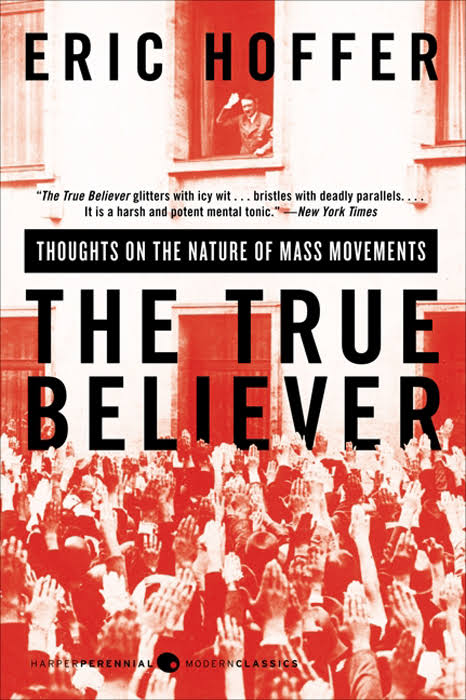
The True Believer: Thoughts on the Nature of Mass Movements

Author: Eric Hoffer
Rating: 10/10
Last Read: August 2015

Quick Summary:  Wow.  This 1951 book on the psychology of mass movements is just stunning and terrifying.  Even reviewing the notes brings me a sense of awe and a tinge of fear as you make associations with the world we live in today.

Hoffer explains what kind of people and attitudes give rise to mass movements and analyses the life cycle from start to end.  His gaze shifts from the factors that motivate individuals to join mass movements to the societal forces that support and resist this force of change.  He also compares mass movements to each other, including religious, political, or radical movements that we are familiar with throughout our history.

This is an excellent book that I will revisit again and again.  

I recommend reading this book along with Why Don’t We Learn From History?

J. B. S. Haldane counts fanaticism among the only four really important inventions made between 3000 B.C. and 1400 A.D. It was a Judaic-Christian invention. And it is strange to think that in receiving this malady of the soul the world also received a miraculous instrument for raising societies and nations from the dead—an instrument of resurrection.

My Highlights

All mass movements generate in their adherents a readiness to die and a proclivity for united action; all of them, irrespective of the doctrine they preach and the program they project, breed fanaticism, enthusiasm, fervent hope, hatred and intolerance; all of them are capable of releasing a powerful flow of activity in certain departments of life; all of them demand blind faith and singlehearted allegiance. –loc 77

Though there are obvious differences between the fanatical Christian, the fanatical Mohammedan, the fanatical nationalist, the fanatical Communist and the fanatical Nazi, it is yet true that the fanaticism which animates them may be viewed and treated as one. –loc 82

Starting out from the fact that the frustrated predominate among the early adherents of all mass movements and that they usually join of their own accord, it is assumed: 1) that frustration of itself, without any proselytizing prompting from the outside, can generate most of the peculiar characteristics of the true believer; 2) that an effective technique of conversion consists basically in the inculcation and fixation of proclivities and responses indigenous to the frustrated mind. –loc 91

Montaigne: “All I say is by way of discourse, and nothing by way of advice. I should not speak so boldly if it were my due to be believed.” –loc 109

Some kind of widespread enthusiasm or excitement is apparently needed for the realization of vast and rapid change, and it does not seem to matter whether the exhilaration is derived from an expectation of untold riches or is generated by an active mass movement. –loc 117

Success and failure are unavoidably related in our minds with the state of things around us. –loc 160

Hence it is that people with a sense of fulfillment think it a good world and would like to conserve it as it is, while the frustrated favor radical change. –loc 161

that the successful, too, however much they pride themselves on their foresight, fortitude, thrift and other “sterling qualities,” are at bottom convinced that their success is the result of a fortuitous combination of circumstances. The self-confidence of even the consistently successful is never absolute. –loc 166

The powerful can be as timid as the weak. What seems to count more than possession of instruments of power is faith in the future. –loc 194

Where power is not joined with faith in the future, it is used mainly to ward off the new and preserve the status quo. On the other hand, extravagant hope, even when not backed by actual power, is likely to generate a most reckless daring. For the hopeful can draw strength from the most ridiculous sources of power—a slogan, a word, a button. –loc 195

Those who would transform a nation or the world cannot do so by breeding and captaining discontent or by demonstrating the reasonableness and desirability of the intended changes or by coercing people into a new way of life. They must know how to kindle and fan an extravagant hope. –loc 200

Hence men of outstanding achievement and those who live full, happy lives usually set their faces against drastic innovation. The conservatism of invalids and people past middle age stems, too, from fear of the future. –loc 208

When hopes and dreams are loose in the streets, it is well for the timid to lock doors, shutter windows and lie low until the wrath has passed. For there is often a monstrous incongruity between the hopes, however noble and tender, and the action which follows them. It is as if ivied maidens and garlanded youths were to herald the four horsemen of the apocalypse. –loc 224

For men to plunge headlong into an undertaking of vast change, they must be intensely discontented yet not destitute, and they must have the feeling that by the possession of some potent doctrine, infallible leader or some new technique they have access to a source of irresistible power. They must also have an extravagant conception of the prospects and potentialities of the future. Finally, they must be wholly ignorant of the difficulties involved in their vast undertaking. Experience is a handicap. –loc 227

When a mass movement begins to attract people who are interested in their individual careers, it is a sign that it has passed its vigorous stage; that it is no longer engaged in molding a new world but in possessing and preserving the present. –loc 253

Faith in a holy cause is to a considerable extent a substitute for the lost faith in ourselves. –loc 261

The less justified a man is in claiming excellence for his own self, the more ready is he to claim all excellence for his nation, his religion, his race or his holy cause. –loc 262

A man is likely to mind his own business when it is worth minding. When it is not, he takes his mind off his own meaningless affairs by minding other people’s business. –loc 264

The burning conviction that we have a holy duty toward others is often a way of attaching our drowning selves to a passing raft. What looks like giving a hand is often a holding on for dear life. Take away our holy duties and you leave our lives puny and meaningless. There is no doubt that in exchanging a self-centered for a selfless life we gain enormously in self-esteem. The vanity of the selfless, even those who practice utmost humility, is boundless. –loc 269

In a modern society people can live without hope only when kept dazed and out of breath by incessant hustling. –loc 277

Yet to the frustrated the present is irremediably spoiled. Comforts and pleasures cannot make it whole. No real content or comfort can ever arise in their minds but from hope. –loc 281

Every mass movement is in a sense a migration—a movement toward a promised land; and, when feasible and expedient, an actual migration takes place. –loc 351

Migration, in the mass, strengthens the spirit and unity of a movement; and whether in the form of foreign conquest, crusade, pilgrimage or settlement of new land it is practiced by most active mass movements. –loc 353

The game of history is usually played by the best and the worst over the heads of the majority in the middle. –loc 365

The reason that the inferior elements of a nation can exert a marked influence on its course is that they are wholly without reverence toward the present. They see their lives and the present as spoiled beyond remedy and they are ready to waste and wreck both: hence their recklessness and their will to chaos and anarchy. –loc 366

Though the disaffected are found in all walks of life, they are most frequent in the following categories: (a) the poor, (b) misfits, (c) outcasts, (d) minorities, (e) adolescent youth, (f) the ambitious (whether facing insurmountable obstacles or unlimited opportunities), (g) those in the grip of some vice or obsession, (h) the impotent (in body or mind), (i) the inordinately selfish, (j) the bored, (k) the sinners. –loc 376

The poor on the borderline of starvation live purposeful lives. To be engaged in a desperate struggle for food and shelter is to be wholly free from a sense of futility. The goals are concrete and immediate. –loc 404

Where people toil from sunrise to sunset for a bare living, they nurse no grievances and dream no dreams. –loc 412

One of the reasons for the unrebelliousness of the masses in China is the inordinate effort required there to scrape together the means of the scantiest subsistence. –loc 412

Discontent is likely to be highest when misery is bearable; when conditions have so improved that an ideal state seems almost within reach. –loc 417

A grievance is most poignant when almost redressed. –loc 418

It is not actual suffering but the taste of better things which excites people to revolt. –loc 424

The intensity of discontent seems to be in inverse proportion to the distance from the object fervently desired. –loc 429

Our frustration is greater when we have much and want more than when we have nothing and want some. We are less dissatisfied when we lack many things than when we seem to lack but one thing. –loc 433

We dare more when striving for superfluities than for necessities. Often when we renounce superfluities we end up lacking in necessities. –loc 435

Every established mass movement has its distant hope, its brand of dope to dull the impatience of the masses and reconcile them with their lot in life. Stalinism is as much an opium of the people as are the established religions. –loc 445

Where freedom is real, equality is the passion of the masses. Where equality is real, freedom is the passion of a small minority. –loc 487

Equality without freedom creates a more stable social pattern than freedom without equality. –loc 489

Unlimited opportunities can be as potent a cause of frustration as a paucity or lack of opportunities. –loc 700

The attitude is: “All that I am doing or possibly can do is chicken feed compared with what is left undone.” Such is the frustration which broods over gold camps and haunts taut minds in boom times. –loc 701

Patriotism, racial solidarity, and even the preaching of revolution find a more ready response among people who see limitless opportunities spread out before them than among those who move within the fixed limits of a familiar, orderly and predictable pattern of existence. –loc 704

When people are bored, it is primarily with their own selves that they are bored. –loc 729

The consciousness of a barren, meaningless existence is the main fountainhead of boredom. –loc 730

The differentiated individual is free of boredom only when he is engaged either in creative work or some absorbing occupation or when he is wholly engrossed in the struggle for existence. –loc 731

With few exceptions, any group or organization which tries, for one reason or another, to create and maintain compact unity and a constant readiness for self-sacrifice usually manifests the peculiarities—both noble and base—of a mass movement. –loc 778

“To illustrate a principle,” says Bagehot, “you must exaggerate much and you must omit much.” –loc 805

The fully assimilated individual does not see himself and others as human beings. –loc 826

Dying and killing seem easy when they are part of a ritual, ceremonial, dramatic performance or game. –loc 884

There is need for some kind of make-believe in order to face death unflinchingly. To our real, naked selves there is not a thing on earth or in heaven worth dying for. –loc 884

It is only when we see ourselves as actors in a staged (and therefore unreal) performance that death loses its frightfulness and finality and becomes an act of make-believe and a theatrical gesture. –loc 886

It is one of the main tasks of a real leader to mask the grim reality of dying and killing by evoking in his followers the illusion that they are participating in a grandiose spectacle, a solemn or light-hearted dramatic performance. –loc 887

The indispensability of play-acting in the grim business of dying and killing is particularly evident in the case of armies. Their uniforms, flags, emblems, parades, music, and elaborate etiquette and ritual are designed to separate the soldier from his flesh-and-blood self and mask the overwhelming reality of life and death. –loc 898

Glory is largely a theatrical concept. There is no striving for glory without a vivid awareness of an audience—the knowledge that our mighty deeds will come to the ears of our contemporaries or “of those who are to be.” We are ready to sacrifice our true, transitory self for the imaginary eternal self we are building up, by our heroic deeds, in the opinion and imagination of others. –loc 903

To lose one’s life is but to lose the present; and, clearly, to lose a defiled, worthless present is not to lose much. –loc 921

When today is all there is, we grab all we can and hold on. We are afloat in an ocean of nothingness and we hang on to any miserable piece of wreckage as if it were the tree of life. On the other hand, when everything is ahead and yet to come, we find it easy to share all we have and to forego advantages within our grasp. –loc 944

Common suffering by itself, when not joined with hope, does not unite nor does it evoke mutual generosity. –loc 948

We cling to what we call our common sense, our practical point of view. Actually, these are but names for an all-absorbing familiarity with things as they are. The tangibility of a pleasant and secure existence is such that it makes other realities, however imminent, seem vague and visionary. Thus it happens that when the times become unhinged, it is the practical people who are caught unaware and are made to look like visionaries who cling to things that do not exist. –loc 972

“for a living dog is better than a dead lion. For the living know that they shall die: but the dead know not any thing … neither have they any more a portion for ever in any thing that is done under the sun.” –loc 992

Craving, not having, is the mother of a reckless giving of oneself. –loc 1030

All active mass movements strive, therefore, to interpose a fact-proof screen between the faithful and the realities of the world. They do this by claiming that the ultimate and absolute truth is already embodied in their doctrine and that there is no truth nor certitude outside –loc 1063

It is the true believer’s ability to “shut his eyes and stop his ears” to facts that do not deserve to be either seen or heard which is the source of his unequaled fortitude and constancy. He cannot be frightened by danger nor disheartened by obstacles nor baffled by contradictions because he denies their existence. Strength of faith, as Bergson pointed out, manifests itself not in moving mountains but in not seeing mountains to move. And it is the certitude of his infallible doctrine that renders the true believer impervious to the uncertainties, surprises and the unpleasant realities of the world around him. –loc 1072

The devout are always urged to seek the absolute truth with their hearts and not their minds. “It is the heart which is conscious of God, not the reason.” –loc 1090

Being an instrument of the present, an army deals mainly with the possible. Its leaders do not rely on miracles. Even when animated by fervent faith, they are open to compromise. They reckon with the possibility of defeat and know how to surrender. On the other hand, the leader of a mass movement has an overwhelming contempt for the present—for all its stubborn facts and perplexities, even those of geography and the weather. He relies on miracles. His hatred of the present (his nihilism) comes to the fore when the situation becomes desperate. He destroys his country and his people rather than surrender. –loc 1205

Sarpedon spoke to Glaucus as they stormed the Grecian wall: “O my friend, if we, leaving this war, could escape from age and death, I should not here be fighting in the van; but now, since many are the modes of death impending over us which no man can hope to shun, let us press on and give renown to other men, or win it for ourselves.” –loc 1213

The face of the mass is as “the face of the deep” out of which, like God on the day of creation, he will bring forth a new world. –loc 1224

Heine suggests that what Christian love cannot do is effected by a common hatred. –loc 1230

F. A. Voigt tells of a Japanese mission that arrived in Berlin in 1932 to study the National Socialist movement. Voigt asked a member of the mission what he thought of the movement. He replied: “It is magnificent. I wish we could have something like it in Japan, only we can’t, because we haven’t got any Jews.” –loc 1235

We do not usually look for allies when we love. Indeed, we often look on those who love with us as rivals and trespassers. But we always look for allies when we hate. –loc 1267

There is a guilty conscience behind every brazen word and act and behind every manifestation of self-righteousness. –loc 1292

It is of interest that the backward South shows more xenophobia than the rest of the country. Should Americans begin to hate foreigners wholeheartedly, it will be an indication that they have lost confidence in their own way of life. –loc 1306

It seems that when we are oppressed by the knowledge of our worthlessness we do not see ourselves as lower than some and higher than others, but as lower than the lowest of mankind. We hate then the whole world, and we would pour our wrath upon the whole of creation. –loc 1325

The act of self-denial seems to confer on us the right to be harsh and merciless toward others. The impression somehow prevails that the true believer, particularly the religious individual, is a humble person. The truth is that the surrendering and humbling of the self breed pride and arrogance. The true believer is apt to see himself as one of the chosen, the salt of the earth, the light of the world, a prince disguised in meekness, who is destined to inherit this earth and the kingdom of heaven, too.18 He who is not of his faith is evil; he who will not listen shall perish. –loc 1349

The deindividualization which is a prerequisite for thorough integration and selfless dedication is also, to a considerable extent, a process of dehumanization. The torture chamber is a corporate institution. –loc 1369

Imitation is often a shortcut to a solution. We copy when we lack the inclination, the ability or the time to work out an independent solution. People in a hurry will imitate more readily than people at leisure. Hustling thus tends to produce uniformity. And in the deliberate fusing of individuals into a compact group, incessant action will play a considerable role.22 –loc 1399

Proselytizing is more a passionate search for something not yet found than a desire to bestow upon the world something we already have. It is a search for a final and irrefutable demonstration that our absolute truth is indeed the one and only truth. –loc 1512

There is a period of waiting in the wings—often a very long period—for all the great leaders whose entrance on the scene seems to us a most crucial point in the course of a mass movement. Accidents and the activities of other men have to set the stage for them before they can enter and start their performance. “The commanding man in a momentous day seems only to be the last accident in a series.” –loc 1539

People whose lives are barren and insecure seem to show a greater willingness to obey than people who are self-sufficient and self-confident. –loc 1616

To the frustrated, freedom from responsibility is more attractive than freedom from restraint. They are eager to barter their independence for relief from the burdens of willing, deciding and being responsible for inevitable failure. –loc 1618

Action is a unifier. There is less individual distinctness in the genuine man of action—the builder, soldier, sportsman and even the scientist—than in the thinker or in one whose creativeness flows from communion with the self. –loc 1641

The true believer is eternally incomplete, eternally insecure. –loc 1748

What de Rémusat said of Thiers is perhaps true of most men of words: “he has much more vanity than ambition; and he prefers consideration to obedience, and the appearance of power to power itself. Consult him constantly, and then do just as you please. He will take more notice of your deference to him than of your actions.” –loc 1799

Luther, who, when first defying the established church, spoke feelingly of “the poor, simple, common folk,”7 proclaimed later, when allied with the German princelings, that “God would prefer to suffer the government to exist no matter how evil, rather than to allow the rabble to riot, no matter how justified they are in doing so.”8 A –loc 1817

Jesus was not a Christian, nor was Marx a Marxist. –loc 1909

However, the freedom the masses crave is not freedom of self-expression and self-realization, but freedom from the intolerable burden of an autonomous existence. They want freedom from “the fearful burden of free choice,”19 freedom from the arduous responsibility of realizing their ineffectual selves and shouldering the blame for the blemished product. –loc 1930

They believe in the possibility of individual happiness and the validity of individual opinion and initiative. But once a movement gets rolling, power falls into the hands of those who have neither faith in, nor respect for, the individual. And the reason they prevail is not so much that their disregard of the individual gives them a capacity for ruthlessness, but that their attitude is in full accord with the ruling passion of the masses. –loc 1940

The most significant division between men of words is between those who can find fulfillment in creative work and those who cannot. –loc 1960

Said Oliver Cromwell: “A man never goes so far as when he does not know whither he is going.” –loc 2138

But in a traditionally free country the individual who pits himself against coercion does not feel an isolated human atom but one of a mighty race—his rebellious ancestors. –loc 2180

J. B. S. Haldane counts fanaticism among the only four really important inventions made between 3000 B.C. and 1400 A.D. It was a Judaic-Christian invention. And it is strange to think that in receiving this malady of the soul the world also received a miraculous instrument for raising societies and nations from the dead—an instrument of resurrection. –loc 2284


Ready Player One

Author: Ernest Cline
Rating: 7/10
Last Read: August 2015

Quick Summary:  The book takes place in a dystopian future and follows a group of teens on their adventures through a virtual reality world (you see, there was a theme when I was reading Snow Crash). A gazillionaire dies and leaves his fortune to the person who can complete his crazy VR puzzle involving 80s games and other fun nerd-culture references.  The young mighty fat VR-addicted hero takes on a big corporation to win the prize.

My Highlights

To quote the Almanac: “People who live in glass houses should shut the fuck up.”

I’m not crazy about reality, but it’s still the only place to get a decent meal.
—Groucho Marx

No one in the world ever gets what they want and that is beautiful.

Snow Crash

Author: Cheryl Strayed
Rating: 7/10
Last Read: August 2015

Quick Summary:  The book takes place in a dystopian future and follows two hackers in their adventures in virtual reality and real life as they try to crack the mystery of “snow crash”, a new drug being sold in the virtual world.  Along the way, a variety of themes are hit upon: religion, memetics, linguistics, and computer sciencey stuff.  Definitely a good read for the tech crowd, even if it’s a bit long winded.

My Highlights

But if life were a mellow elementary school run by well-meaning education Ph.D.s, the Deliverator’s report card would say: “Hiro is so bright and creative but needs to work harder on his cooperation skills.”

Pooning a bimbo box takes more skill than a ped would ever imagine

I don’t know how my face conveyed that information, or what kind of internal wiring in my grandmother’s mind enabled her to accomplish this incredible feat. To condense fact from the vapor of nuance.”

class is more than income—it has to do with knowing where you stand in a web of social relationships.

They pay attention to the facial expressions and body language of the people they are talking to. And that’s how they know what’s going on inside a person’s head—by condensing fact from the vapor of nuance.

it’s the first function of any organization to control its own sphincters.

I used to read that story when I was a kid and wonder who the hell these guys were, on Crete, that everyone else was so scared of them that they would just meekly give up their children to be eaten, every year. They must have been some mean sons of bitches.

Besides, interesting things happen along borders—transitions—not in the middle where everything is the same.

“Ever think of introducing yourself?” Y.T. says.
“Nah,” he says, “people always forget names. You can just think of me as that one guy, y’know?”

“Wait a minute, Juanita. Make up your mind. This Snow Crash thing—is it a virus, a drug, or a religion?”
Juanita shrugs. “What’s the difference?”

In many Creation myths, to name a thing is to create it.

“See, the world is full of things more powerful than us. But if you know how to catch a ride, you can go places,” Raven says.

Tiny Beautiful Things

Author: Cheryl Strayed
Rating: 9/10
Last Read: January 2015

Quick Summary: Cheryl Strayed wrote for an anonymous advice column titled “Dear Sugar” for many years.  This is a collection of letters from that column – and in their pages are found many tales of human sadness, joy, love, and loss.  There are terribly tragic aspects of humanity revealed to you, and people write about their problems with honesty.  Dear Sugar seems to always have the magical words we need to hear, and many good life lessons can be pulled out of these works.

I never thought I would be calling a book of letters from an advice column one of my favorite books…

I think the answer to most problems is more often than not outside of the right/wrong binary that we tend to cling to when we’re angry or scared or in pain. We are complicated people. Our lives do not play out in absolutes.

My Highlights

Inexplicable sorrows await all of us. –loc 116

Life isn’t some narcissistic game you play online. It all matters—every sin, every regret, every affliction. –loc 116

I happen to believe that America is dying of loneliness, that we, as a people, have bought into the false dream of convenience, and turned away from a deep engagement with our internal lives—those fountains of inconvenient feeling—and toward the frantic enticements of what our friends in the Greed Business call the Free Market. –loc 122

We’re hurtling through time and space and information faster and faster, seeking that network connection. But at the same time we’re falling away from our families and our neighbors and ourselves. We ego-surf and update our status and brush up on which celebrities are ruining themselves, and how. But the cure won’t stick. –loc 125

With great patience, and eloquence, she assures her readers that within the chaos of our shame and disappointment and rage there is meaning, and within that meaning is the possibility of rescue. –loc 135

She understands that attention is the first and final act of love, and that the ultimate dwindling resource in the human arrangement isn’t cheap oil or potable water or even common sense, but mercy. –loc 144

She also recognizes that there’s another, truer story beneath the one we generally offer the world, the stuff we can’t or won’t see, the evasions and delusions, the places where we’re simply stuck. –loc 147

We are obligated to the people we care about and who we allow to care about us, whether we say we love them or not. Our main obligation is to be forthright—to elucidate the nature of our affection when such elucidation would be meaningful or clarifying. –loc 229

I encourage you to do more than throw up your hands in your examination of “whose fault” it was that your twenty-year marriage fell apart. It was no one’s fault, darling, but it’s still all on you. –loc 234

A proclamation of love is not inherently “loaded with promises and commitments that are highly fragile and easily broken.” The terms you agree to in any given relationship are connected to, but not defined by, whether you’ve said “I love you” or not. “I love you” can mean I think you’re groovy and beautiful and I’m going to do everything in my power to be your partner for the rest of my life. It can mean I think you’re groovy and beautiful but I’m in transition right now, so let’s go easy on the promises and take it as it comes. It can mean I think you’re groovy and beautiful but I’m not interested in a commitment with you, now or probably ever, no matter how groovy or beautiful you continue to be. –loc 245

Withholding distorts reality. It makes the people who do the withholding ugly and small-hearted. It makes the people from whom things are withheld crazy and desperate and incapable of knowing what they actually feel. –loc 252

We’re all going to die, Johnny. –loc 255

Though we live in a time and place and culture that tries to tell us otherwise, suffering is what happens when truly horrible things happen to us. –loc 285

I think I cry because it always strikes me as sacred, all those people going by. People who decided simply to live their truth, even when doing so wasn’t simple. Each and every one of them had the courage to say, This is who I am even if you’ll crucify me for it. –loc 489

Trust yourself. It’s Sugar’s golden rule. Trusting yourself means living out what you already know to be true. –loc 681

The unifying theme is resilience and faith. The unifying theme is being a warrior and a motherfucker. It is not fragility. It’s strength. It’s nerve. And “if your Nerve, deny you—,” as Emily Dickinson wrote, “go above your Nerve.” Writing is hard for every last one of us—straight white men included. Coal mining is harder. Do you think miners stand around all day talking about how hard it is to mine for coal? They do not. They simply dig. –loc 782

Good people do all sorts of idiotic stuff when it comes to sex and love. –loc 807

The story of human intimacy is one of constantly allowing ourselves to see those we love most deeply in a new, more fractured light. Look hard. Risk that. –loc 821

A healthy way is rooted in respect and love. In this case, we make critical assessments and uncomplimentary observations entirely within the context of our affection and concern for the individual in question. Sometimes we talk behind a friend’s back in order to grapple with our doubts about or disapproval of the choices he or she has made. Sometimes we do it because our friends possess qualities that confound, confuse, or annoy the shit out of us, though we love them anyway. Sometimes we discuss our friends with others because we had a weird or rude or dumb interaction with one of them and we simply need to blow off steam. The baseline of these discussions is a grounded knowledge that we love and care for the friend—regardless of the things that irk, confuse, or disappoint us about him or her. The negative thoughts we express about this friend are outweighed by the many positive thoughts we have. –loc 865

Who does what a friend tells her to do? I can’t say I ever have, even when later I fully recognized that I should have. –loc 910

There aren’t three options. There is only one. As Rilke says, “You must change your life.” –loc 1020

Our minds are small, but our hearts are big. –loc 1035

Humans are beautifully imperfect and complex. We’re horny, ass-saving, ego-driven drug fiends, among other, more noble things. –loc 1038

To hold the truth within me that some things are so sad and wrong and unanswerable that the question must simply stand alone like a spear in the mud. –loc 1134

Worry stones my mother had called them, the sort so pleasing against the palm she claimed they had the power to soothe the mind if you rubbed them right. –loc 1194

But compassion isn’t about solutions. It’s about giving all the love that you’ve got. –loc 1237

Jean-Paul Sartre famously said that “hell is other people,” which is true enough, but truer still is hell is other people’s boyfriends (or girlfriends, as the case may be). –loc 1261

cultivate an understanding of a bunch of the other things that the best, sanest people on the planet know: that life is long, that people both change and remain the same, that every last one of us will need to fuck up and be forgiven, that we’re all just walking and walking and walking and trying to find our way, that all roads lead eventually to the mountaintop. –loc 1288

I have breathed my way through so many people who I felt wronged by; through so many situations I couldn’t change. Sometimes while doing this I have breathed in acceptance and breathed out love. Sometimes I’ve breathed in gratitude and out forgiveness. Sometimes I haven’t been able to muster anything beyond the breath itself, my mind forced blank with nothing but the desire to be free of sorrow and rage. –loc 1418

There’s a line by the Italian writer Carlo Levi that I think is apt here: “The future has an ancient heart.” I love it because it expresses with such grace and economy what is certainly true—that who we become is born of who we most primitively are; that we both know and cannot possibly know what it is we’ve yet to make manifest in our lives. –loc 1595

You don’t have to get a job that makes others feel comfortable about what they perceive as your success. You don’t have to explain what you plan to do with your life. You don’t have to justify your education by demonstrating its financial rewards. You don’t have to maintain an impeccable credit score. Anyone who expects you to do any of those things has no sense of history or economics or science or the arts. –loc 1619

You have to pay your own electric bill. You have to be kind. You have to give it all you got. You have to find people who love you truly and love them back with the same truth. But that’s all. –loc 1622

Whatever happens to you belongs to you. Make it yours. Feed it to yourself even if it feels impossible to swallow. Let it nurture you, because it will. –loc 1648

I hope when people ask what you’re going to do with your English and/or creative writing degree you’ll say: Continue my bookish examination of the contradictions and complexities of human motivation and desire; or maybe just: Carry it with me, as I do everything that matters. –loc 1665

I’d revealed a truth they were ready to know. Not about Christianity, but about the human condition: that suffering is part of life. –loc 1775

What if you allowed your God to exist in the simple words of compassion others offer to you? What if faith is the way it feels to lay your hand on your daughter’s sacred body? What if the greatest beauty of the day is the shaft of sunlight through your window? What if the worst thing happened and you rose anyway? What if you trusted in the human scale? What if you listened harder to the story of the man on the cross who found a way to endure his suffering than to the one about the impossible magic of the Messiah? Would you see the miracle in that? –loc 1810

If you had to give one piece of advice to people in their twenties, what would it be? To go to a bookstore and buy ten books of poetry and read them each five times. Why? Because the truth is inside. –loc 1816

“Naked and smiling” is one male friend’s only requirement for a lover. –loc 2270

No is golden. No is the kind of power the good witch wields. It’s the way whole, healthy, emotionally evolved people manage to have relationships with jackasses while limiting the amount of jackass in their lives. –loc 2341

I’m going to address you bluntly, but it’s a directness that rises from my compassion for you, not my judgment of you. –loc 2480

So here’s the long and short of it, Wearing Thin: There is no why. You don’t have a right to the cards you believe you should have been dealt. You have an obligation to play the hell out of the ones you’re holding. And, dear one, you and I both were granted a mighty generous hand. –loc 2522

“Don’t get me wrong. I want to hear everything about your life. But I want you to know that you don’t need to tell me this to get me to love you. You don’t have to be broken for me.” –loc 2699

Boundaries teach people how to treat you, and they teach you how to respect yourself. –loc 2777

Would the temporary loss of a considerable portion of your personal freedom in middle age be significantly neutralized by the experience of loving someone more powerfully than you ever have? Would the achy uncertainty of never having been anyone’s father be defused by the glorious reality that you got to live your life relatively unconstrained by the needs of another? –loc 3003

What is a good life? Write “good life” and list everything that you associate with a good life, then rank that list in order of importance. Have the most meaningful things in your life come to you as a result of ease or struggle? What scares you about sacrifice? What scares you about not sacrificing? –loc 3005

Many days I have to silently say to myself: It’s okay. You are loved. You are loved even if some people don’t love you. Even if some people hate you. You are okay even if sometimes you feel slighted by your friends –loc 3056

Forgiveness doesn’t just sit there like a pretty boy in a bar. Forgiveness is the old fat guy you have to haul up the hill. –loc 3335

You don’t need me to tell you how to be human again. You are there, in all of your humanity, shining unimpeachably before every person reading these words right now. –loc 3408

You have the power to withstand this sorrow. We all do, though we all claim not to. We say, “I couldn’t go on,” instead of saying we hope we won’t have to. That’s what you’re saying in your letter to me, Living Dead Dad. You’ve made it so long without your sweet boy and now you can’t take it anymore. But you can. You must. –loc 3433

When my son was six he said, “We don’t know how many years we have for our lives. People die at all ages.” He said it without anguish or remorse, without fear or desire. It has been healing to me to accept in a very simple way that my mother’s life was forty-five years long, that there was nothing beyond that. There was only my expectation that there would be—my mother at eighty-nine, my mother at sixty-three, my mother at forty-six. Those things don’t exist. They never did. –loc 3439

Your grief has taught you too, Living Dead Dad. Your son was your greatest gift in his life and he is your greatest gift in his death too. Receive it. Let your dead boy be your most profound revelation. Create something of him. Make it beautiful. –loc 3458

Don’t do what you know on a gut level to be the wrong thing to do. Don’t stay when you know you should go or go when you know you should stay. Don’t fight when you should hold steady or hold steady when you should fight. Don’t focus on the short-term fun instead of the long-term fallout. Don’t surrender all your joy for an idea you used to have about yourself that isn’t true anymore. Don’t seek joy at all costs. I know it’s hard to know what to do when you have a conflicting set of emotions and desires, but it’s not as hard as we pretend it is. Saying it’s hard is ultimately a justification to do whatever seems like the easiest thing to do—have the affair, stay at that horrible job, end a friendship over a slight, keep loving someone who treats you terribly. –loc 3463

I think the answer to most problems is more often than not outside of the right/wrong binary that we tend to cling to when we’re angry or scared or in pain. We are complicated people. Our lives do not play out in absolutes. –loc 3478

I teach memoir writing occasionally. I always ask my students to answer two questions about the work they and their peers have written: What happened in this story? and What is this story about? It’s a useful way to see what’s there. A lot of times, it isn’t much. Or rather, it’s a bunch of what happened that ends up being about nothing at all. You get no points for the living, I tell my students. It isn’t enough to have had an interesting or hilarious or tragic life. Art isn’t anecdote. It’s the consciousness we bring to bear on our lives. For what happened in the story to transcend the limits of the personal, it must be driven by the engine of what the story means. –loc 3788

This is also true in life. Or at least it’s true when one wishes to live an ever-evolving life, such as you and I do, sweet pea. What this requires of us is that we don’t get tangled up in the living, even when we in fact feel woefully tangled up. It demands that we focus not only on what’s happening in our stories, but also what our stories are about. –loc 3795

It’s so simple it breaks my heart. How unspecial that fact is to so many, how ordinary for a child to wear a dress her grandmother bought her, but how very extraordinary it was to me. –loc 3909

Everything about that boy pacing the hallway tells me a story I need to know: that we do not have the right to feel helpless, Helpless Mom. That we must help ourselves. That after destiny has delivered what it delivers, we are responsible for our lives. –loc 4231

You are not a terrible person for wanting to break up with someone you love. You don’t need a reason to leave. Wanting to leave is enough. Leaving doesn’t mean you’re incapable of real love or that you’ll never love anyone else again. It doesn’t mean you’re morally bankrupt or psychologically demented or a nymphomaniac. It means you wish to change the terms of one particular relationship. That’s all. Be brave enough to break your own heart. –loc 4258

You cannot convince people to love you. This is an absolute rule. No one will ever give you love because you want him or her to give it. Real love moves freely in both directions. Don’t waste your time on anything else. –loc 4270

Your assumptions about the lives of others are in direct relation to your naïve pomposity. Many people you believe to be rich are not rich. Many people you think have it easy worked hard for what they got. Many people who seem to be gliding right along have suffered and are suffering. Many people who appear to you to be old and stupidly saddled down with kids and cars and houses were once every bit as hip and pompous as you. –loc 4277

Matterhorn

Author: Karl Marlantes
Rating: 8/10
Last Read: March 2015

Quick Summary: This book follows a young Marine officer and his platoon as they build a firebase and then get sent on various clusterfuck missions through the jungle of Vietnam.

This is called out as a novel, but the author is a decorated Marine officer whose commendation notes read very similarly to the story presented here.  This is a dark picture of what the war was like for many people – and how ego cost the lives of many young men.  The book also paints a stark picture of race relations at the time, and documents struggles between the black and white troops in Vietnam.

The book took a while to get rolling for me, but I think it was worth the read to get insight into this very dark time in our country’s history.

My Highlights

Just speaking about the recent near-encounter with an enemy Mellas had not yet seen started his insides humming again, the vibration of fear that was like a strong electric potential with no place to discharge. –loc 67

Hawke had learned long ago that what really mattered in combat was what people were like when they were exhausted. –loc 199

How could you get mad at someone who neither needed to attack nor was at all worried about being able to defend? –loc 955

“Hey, cool it down.” Hawke looked sideways at Mellas.
“You really do have a temper, don’t you?”
“I’m just tired. I usually don’t.”
“You mean you don’t usually show it.
–loc 1014

Shit, Mellas, drink this. It cures all ills, even vainglory and ambition. The only thing that hurts about a rebuke is the truth.” Mellas took the coffee and smiled. –loc 1599

“How much does it weigh?” Cortell, the leader of the second fire team, who was sitting next to his friend Williams, chuckled.
“Man,” Cortell said, “you can’t carry nothin’ lighter than music.”
–loc 2111

He knew he shouldn’t drink so much, especially alone. But he was alone a lot. After all, he was the battalion commander. It was supposed to be lonely at the top. –loc 3225

But he’s not a good company commander in this kind of war. He got on Simpson’s bad side because he got his picture in the paper too often and never gave Simpson credit, which by the way he doesn’t deserve, but that’s the point. The smart guy gives the guy with the power the credit, whether he deserves it or not. That way the smart guy is dangling something the boss wants. So the smart guy now has power over the boss.” –loc 3844

“Shit, Mellas, don’t get your feelings hurt. I didn’t say I didn’t like you, for Christ’s sake, or you’re some sort of bad person. Although I will grant you the company you’ll keep is going to be sleazier than average. Just accept that you’re a fucking politician. So was Abraham Lincoln, and Winston Churchill. So was Dwight Eisenhower.” He paused. “It ain’t like they’re bad people. And they all ran a pretty good war.” –loc 3855

Coates turned to Mellas, his eyes dancing with deep humor. “Cool down, Lieutenant Mellas. Colonel Mulvaney will never let him near the place. You don’t commit an entire battalion to an area covered by enemy artillery that we can’t go after because of political reasons. Add to that uncertain air support because of the weather. That’s why Mulvaney pulled us out in the first place. Return to Matterhorn? Nevah hoppin.”
Mellas was surprised. “Here I thought you were a lifer,” he said, smiling.
“I am, Lieutenant Mellas. But I ain’t stupid. And I also know how to keep my mouth shut.” –loc 4793

“May you be ten minutes in heaven before the devil knows you’re gone,” Simpson said, raising his glass and gulping a large swallow. Blakely was aware that Simpson prided himself on knowing many different toasts in different languages. He smiled appropriately and drank. Simpson drank some more. “Good fucking stuff,” he said. –loc 4915

Now, seeing the Marines run across the landing zone, Mellas knew he could never join that cynical laughter again. Something had changed. People he loved were going to die to give meaning and life to what he’d always thought of as meaningless words in a dead language. –loc 5160

“Does it mean Meaker will die?” Sheller looked over at the two kids he’d picked for death. He didn’t want to answer Merritt’s question. He wanted to lie, even to himself.
“I think you’ll all make it,” he said.
“Don’t fucking lie to me, Squid. I don’t have time for it.”
Again Merritt took a quivering breath, biting back the scream that wanted to erupt whenever he filled his lungs. “If I’m going to live because of Meaker, I want to know it. And I want to live.”
Sheller put his hand on Merritt’s uniform. “The thing is, we might be wasting plasma on Meaker. He keeps bleeding inside and I can’t stop it. You’re not bleeding as fast as he is.”
Merritt looked at Sheller. “I’ll never forget it, Squid. I fucking promise.” Then he turned his head toward Meaker’s unconscious body. “Meaker, you dumb son of a bitch,” he whispered. “I ain’t never going to forget it.”
Meaker died three hours later. Sheller and Fredrickson dragged him out of the bunker and stacked him on the foggy landing zone with the rest of the bodies. –loc 5783

He remembered a lecture about how mortars are fairly ineffective against troops that are dug in. But the lecturer hadn’t mentioned the psychological effect on the troops. –loc 6074

What bothered Mulvaney was that he knew the NVA felt they were buying something worth the price: their country. –loc 6161

And it was his worth that was the joke. He was nothing but a collection of empty events that would end as a faded photograph above his parents’ fireplace. They too would die, and relatives who didn’t know who was in the picture would throw it away. Mellas knew, in his rational mind, that if there was no afterlife, death was no different from sleep. But this cruel flood was not from his rational mind. It had none of the ephemerality of thought. It was as real as the mud he sat in. Thought was just more of the nothing that he had done all his life. The fact of his eventual death shook him like a terrier shaking a rat. He could only squeal in pain. –loc 6310

And then? A career in law? A little prestige? A little money? Perhaps a political office? And then, dead. Dead. The laughter turned him inside out, exposing his most secret parts. He lay before God as a woman opens herself to a man, with legs apart, stomach exposed, arms open. But unlike some women, he did not have the inner strength that allowed them to do such a thing without fear. There was no woman’s strength in Mellas at all. –loc 6317

Mellas’s new insight didn’t change anything, at least on the outside, but Mellas knew he wouldn’t play dead. He’d been playing dead all his life. He would not slip into the jungle and save himself, because that self didn’t look like anything worth saving. He’d choose to stay on the hill and do what he could to save those around him. The choice comforted him and calmed him down. –loc 6324

Dying this way was a better way to die because living this way was a better way to live. –loc 6327

Resting it against a log, he settled in to watch and wait. An hour passed. Goodwin had the patience of a born hunter. He lived in no-time, leaving it only briefly to shift his body. –loc 6346

The lecture from the Basic School floated into his memory. “A Marine never surrenders as long as he has the means to resist. And we teach you fucking numbies hand-to-hand combat. So if your hands are blown off, you can surrender—only you’ll have to raise your legs.” They had laughed. –loc 6668

“Next to Column in the Defense, the Funnel Breakaway could be my greatest contribution to military science yet,” –loc 6751

“I always thought deep down we were the same,” he said. “We are the same. Hell, I got two white great-grandpas, just like you. It’s just that we seen things differently so long we ain’t able to talk about it much.” –loc 6780

“You think someone’s going to understand how you feel about being in the bush? I mean even if they’re like you in every way, you really think they’re going to understand what it’s like out here? Really understand?” “Probably not.” “Well, it’s like that being black. Unless you’ve been there, ain’t no way.” –loc 6783

“Look. The colonel’s an asshole. The Three’s an asshole. Fine. I agree. All I’m saying, Mellas, is don’t you ever wonder why they’re assholes? Do you think they enjoy spending every minute of their tiny lives worried that someone’s going to shit on them because one of their companies didn’t make a checkpoint on time? I’m not saying to forget that they’re assholes. I’m just saying when you call someone a name, have some compassion. Label the shit out of them, but who they are and who you are is as much about luck as anything else.” –loc 7183

“You’ve got brains, you know where you’re going, how to get there. You call that nothing?” –loc 7192

Being human was the best he could do. Without man there would be no evil. But there was also no good, nothing moral built over the world of fact. Humans were responsible for it all. He laughed at the cosmic joke, but he felt heartsick. –loc 7900

There were white girls in Sydney. Round-eyes. Maybe he’d go to the outback. A quiet farm with sheep. Maybe he’d fall in love there. Maybe he’d save his eye. Everything seemed to be part of a cycle as he stared into the gray nothingness above him, hearing the wash of distant waves on a warm beach, feeling the sun pulling his body upward like evaporating rain. –loc 7920

“Between the emotion and the response, the desire and the spasm, falls the shadow,” –loc 8004

Emotion constricted Hawke’s throat. He suddenly understood why the victims of concentration camps had walked quietly to the gas chambers. In the face of horror and insanity, it was the one human thing to do. Not the noble thing, not the heroic thing—the human thing. To live, succumbing to the insanity, was the ultimate loss of pride. –loc 8285

Dead people ain’t worth shit. They just big nothins. –loc 8436

He also knew that although Henry’s image had taken a hit, power always trumped image—and, he was beginning to learn, ideology. Power was the ability to reward and punish. Henry could reward with money and drugs. He could punish by withholding money and drugs. A nice combination. Ultimately, however, Henry wielded the power of punishment held only by a self-selected few. He was willing to murder. China knew that if a man could kill someone, everyone knew that he could kill anyone. The only way to stand up to that kind of power was to be willing to –loc 8469

Revenge would heal nothing. Revenge had no past. It only started things. It only created more waste, more loss, and he knew that the waste and loss of this night could never be redeemed. There was no filling the holes of death. The emptiness might be filled up by other things over the years—new friends, children, new tasks—but the holes would remain. –loc 8875

He knew that there could be no meaning to someone who was dead. Meaning came out of living. Meaning could come only from his choices and actions. Meaning was made, not discovered. He saw that he alone could make Hawke’s death meaningful by choosing what Hawke had chosen, the company. The things he’d wanted before—power, prestige—now seemed empty, and their pursuit endless. What he did and thought in the present would give him the answer, so he would not look for answers in the past or future. Painful events would always be painful. The dead are dead, forever. –loc 8890

Each of the names evoked a remembered face, an outstretched hand reaching down from a rock or across a rushing stream—or a look of fear as a friend realized that death had come for him. –loc 8918

The chanting went on, the musicians giving in to the rhythm of their own being, finding healing in touching that rhythm, and healing in chanting about death, the only real god they knew. –loc 8921

He knew that all of them were shadows: the chanters, the dead, the living. All shadows, moving across this landscape of mountains and valleys, changing the pattern of things as they moved but leaving nothing changed when they left. Only the shadows themselves could change. –loc 8926

Hagakure

Author: Yamamoto Tsunetomo
Rating: 7/10
Last Read: August 2015

Quick Summary: A collection of notes from the early 1700s meant to serve as a guide for warriors.  The book summarizes the author’s view of the warrior code (in the context of bushido).  The book touches on many practical and spiritual points, as well as highlights many interesting facts of life for the time period.

There are many practical things that modern man can still draw from this historic work, assuming westerners can handle the fixation with death that flows through the work. (But really, you’re going to die too!)

My Highlights

To say that dying without reaching one’s aim is to die a dog’s death is the frivolous way of sophisticates. When pressed with the choice of life or death, it is not necessary to gain one’s aim. –loc 28

We all want to live. And in large part we make our logic according to what we like. But not having attained our aim and continuing to live is cowardice. –loc 29

If by setting one’s heart right every morning and evening, one is able to live as though his body were already dead, he pains freedom in the Way. His whole life will be without blame, and he will succeed in his calling. –loc 31

Having only wisdom and talent is the lowest tier of usefulness. –loc 37

According to their nature, there are both people who have quick intelligence, and those who must withdraw and take time to think things over. Looking into this thoroughly, if one thinks selflessly and adheres to the four vows of the Nabeshima samurai, surprising wisdom will occur regardless of the high or low points of one’s nature.’ People think that they can clear up profound matters if they consider them deeply, but they exercise perverse thoughts and come to no good because they do their reflecting with only self-interest at the center. –loc 38

Men of high position, low position, deep wisdom and artfulness all feel that they are the ones who are working righteously, but when it comes to the point of throwing away one’s life for his lord, all get weak in the knees. –loc 64

To discover the good and bad points of a person is an easy thing, and to give an opinion concerning them is easy, too. For the most part, people think that they are being kind by saying the things that others find distasteful or difficult to say. But if it is not received well, they think that there is nothing more to be done. This is completely worthless. It is the same as brining shame to a person by slandering him. It is nothing more than getting it off one’s chest. –loc 72

When I observed the application of men’s treatment to men, there was no result. Thus I knew that men’s spirit had weakened and that they had become the same as women, and the end of the world had come. –loc 101

The Way is in a higher place then righteousness. This is very difficult to discover, but it is the highest wisdom. When seen from this standpoint, things like righteousness are rather shallow. If one does not understand this on his own, it cannot be known. There is a method of getting to this Way, however, even if one cannot discover it by himself. This is found in consultation with others. Even a person who has not attained this Way sees others front the side. –loc 121

Listening to the old stories and reading books are for the purpose of sloughing off one’s own discrimination and attaching oneself to that of the ancients. –loc 126

Although all things are not to be judged in this manner, I mention it in the investigation of the Way of the Samurai. When the time comes, there is no moment for reasoning. And if you have not done your inquiring beforehand , there is most often shame. Reading books and listening to people’s talk are for the purpose of prior resolution. –loc 168

Above all, the Way of the Samurai should be in being aware that you do not know what is going to happen next, and in querying every item day and night. Victory and defeat are matters of the temporary force of circumstances. The way of avoiding shame is different. It is simply in death. –loc 171

Even if it seems certain that you will lose, retaliate. Neither wisdom nor technique has a place in this. A real man does not think of victory or defeat. He plunges recklessly towards an irrational death. By doing this, you will awaken from your dreams. –loc 173

It is not good to settle into a set of opinions. It is a mistake to put forth effort and obtain some understanding and then stop at that. –loc 184

Do not rely on following the degree of understanding that you have discovered, but simply think, “This is not enough.” –loc 186

How should a person respond when he is asked, “As a human being, what is essential in terms of purpose and discipline?” First, let us say, “It is to become of the mind that is right now pure and lacking complications.” People in general all seem to be dejected. When one has a pure and uncomplicated mind, his expression will be lively. When one is attending to matters, there is one thing that comes forth from his heart. That is, in terms of one’s lord, loyalty; in terms of one’s parents, filial piety; in martial affairs, bravery ; and apart from that, something that can be used by all the world. –loc 199

This is very difficult to discover. Once discovered, it is again difficult to keep in constant effect. There is nothing outside the thought of the immediate moment. –loc 203

Although it seems that taking special care of one’s appearance is similar to showiness, it is nothing akin to elegance. Even if you are aware that you may be struck down today and are firmly resolved to an inevitable death, if you are slain with an unseemly appearance, you will show your lack of previous resolve, will be despised by your enemy, and will appear unclean. For this reason it is said that both old and young should take care of their appearance. –loc 207

And if he thinks that this is not shameful, and feels that nothing else matters as long as he is comfortable, then his dissipate and discourteous actions will be repeatedly regrettable. –loc 214

What things a person should be able to accomplish if he had no haughtiness concerning his place in society! –loc 222

Look at the human condition. It is unseemly for a person to become prideful and extravagant when things are going well. Therefore, it is better to have some unhappiness while one is still young, for if a person does not experience some bitterness, his disposition will not settle down. –loc 241

There is surely nothing other than the single purpose of the present moment. A man’s whole life is a succession of moment after moment. If one fully understands the present moment, there will be nothing else to do, and nothing else to pursue. Live being true to the single purpose of the moment . –loc 267

Everyone lets the present moment slip by, then looks for it as though he thought it were somewhere else. No one seems to have noticed this fact. But grasping this firmly, one must pile experience upon experience. And once one has come to this understanding he will be a different person from that point on, though he may not always bear it in mind. –loc 270

As Yasuda Ukyo said about offering up the last wine cup, only the end of things is important. One’s whole life should be like this. When guests are leaving, the mood of being reluctant to say farewell is essential. If this mood is lacking, one will appear bored and the day and evening’s conversation will disappear. In all dealings with people it is essential to have a fresh approach. One should constantly give the impression that he is doing something exceptional. It is said that this is possible with but a little understanding. –loc 291

Whether people be of high or low birth, rich or poor, old or young, enlightened or confused, they are all alike in that they will one day die. It is not that we don’t know that we are going to die, but we grasp at straws. While knowing that we will die someday, we think that all the others will die before us and that we will be the last to go. Death seems a long way oft . –loc 343

insofar as death is always at one’s door, one should make sufficient effort and act quickly. –loc 347

One should think well and then speak. This is clear and firm, and one should learn it with no doubts. It is a matter of putting forth one’s whole effort and having the correct attitude previously. –loc 368

Human life is truly a short affair. It is better to live doing the things that you like. It is foolish to live within this dream of a world seeing unpleasantness and doing only things that you do not like. But it is important never to tell this to young people as it is something that would be harmful if incorrectly understood. –loc 371

What is done casually and freely will not work out well. It is a matter of attitude. –loc 399

People with intelligence will use it to fashion things both true and false and will try to push through whatever they want with their clever reasoning. This is injury from intelligence . Nothing you do will have effect if you do not use truth. –loc 418

To go without knowing whether the other party is busy, or when he has some particular anxiety, is awkward. There is nothing that surpasses not going where you have not been invited. –loc 427

The late Jin’emon said that it is better not to bring up daughters. They are a blemish to the family name and a shame to the parents. The eldest daughter is special, but it is better to disregard the others. –loc 432

The late Nakano Kazuma said that the original purpose of the Tea Ceremony is to cleanse the six senses. For the eyes there are the hanging scroll and flower arrangement. For the nose there is the incense. For the ears there is the sound of the hot water. For the mouth there is the taste of the tea. And for the hands and feet there is the correctness of term. When the five senses have thus been cleansed, the mind will of itself be purified. The Tea Ceremony will cleanse the mind when the mind is clogged up. –loc 436

A person who does not set himself in just one direction will be of no value at all. –loc 498

It is fine for retired old men to learn about Buddhism as a diversion, but if a warrior makes loyalty and filial piety one load, and courage and compassion another, and carries these twenty-four hours a day until his shoulders wear out, he will be a samurai. –loc 499

A man’s whole life should be like this. To exert oneself to a great extent when one is young and then to sleep when he is old or at the point of death is the way it should be. But to first sleep and then exert oneself . . . To exert oneself to the end, and to end one’s whole life in toil is regrettable.” –loc 629

“If a retainer will just think about what he is to do for the day at hand, he will be able to do anything. If it is a single day’s work, one should be able to put up with it. Tomorrow, too, is but a single day.” –loc 700

“To be prideful about your strength while your mettle is not yet established is likely to bring you shame in the midst of people. You are weaker than you look.” –loc 860

Everyone says that no masters of the arts will appear as the world comes to an end. This is something that I cannot claim to understand. Plants such as peonies, azaleas and camellias will be able to produce beautiful flowers, end of the world or not. If men would give some thought to this fact, they would understand. –loc 928

The basic meaning of etiquette is to be quick at both the beginning and end and tranquil in the middle. Mitani Chizaemon heard this and said, “That’s just like being a kaishaku. –loc 965

There was no goodness visible to Tesshu’s eyes. It is not a good idea to praise people carelessly. When praised, both wise and foolish become prideful. To praise is to do harm.” –loc 970

When there is something to be said, it is better if it is said right away. If it is said later, it will sound like an excuse. –loc 1098

How will a man who has doubts even in his own room achieve anything on the battlefield? There is a saying that goes, “No matter what the circumstances might be, one should be of the mind to win. One should be holding the first spear to strike.” –loc 1134

To ask when you already know is politeness. To ask when you don’t know is the rule. –loc 1156

The essentials of speaking are in not speaking at all. If you think that you can finish something without speaking, finish it without saying a single word. If there is something that cannot be accomplished without speaking, one should speak with few words, in a way that will accord well with reason –loc 1206

Meditation on inevitable death should be performed daily. Every day when one’s body and mind are at peace, one should meditate upon being ripped apart by arrows, rifles, spears and swords, being carried away by surging waves, being thrown into the midst of a great fire, being struck by lightning, being shaken to death by a great earthquake, falling from thousand-foot cliffs, dying of disease or committing seppuku at the death of one’s master. And every day without fail one should consider himself as dead. –loc 1226

People will become your enemies if you become eminent too quickly in life, and you will be ineffectual. Rising slowly in the world, people will be your allies and your happiness will he assured. –loc 1232