love is a place
& through this place of
love move
(with brightness of peace)
all places
yes is a world
& in this world of
yes live
(skilfully curled)
all worlds
e.e. cummings
Source
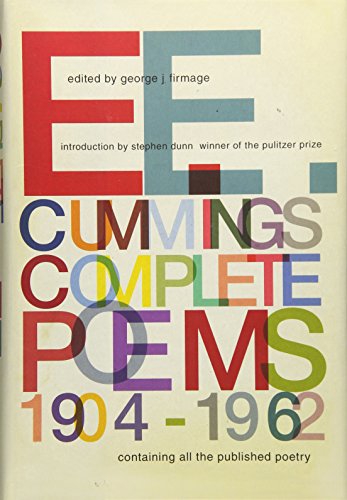
This poem was published in Complete Poems 1904-1962.

May you find something to help you on your journey.
love is a place
& through this place of
love move
(with brightness of peace)
all places
yes is a world
& in this world of
yes live
(skilfully curled)
all worlds
e.e. cummings
This poem was published in Complete Poems 1904-1962.

Once there was a man who filmed his vacation.
He went flying down the river in his boat
with his video camera to his eye, making
a moving picture of the moving river
upon which his sleek boat moved swiftly
toward the end of his vacation. He showed
his vacation to his camera, which pictured it,
preserving it forever: the river, the trees,
the sky, the light, the bow of his rushing boat
behind which he stood with his camera
preserving his vacation even as he was having it
so that after he had had it he would still
have it. It would be there. With a flick
of a switch, there it would be. But he
would not be in it. He would never be in it.
Wendell Berry
This poem is contained in New Collected Poems.
Drink your tea slowly and reverently,
as if it is the axis
on which the world earth revolves
– slowly, evenly, without
rushing toward the future;
Live the actual moment.
Only this moment is life.
Thich Nhat Hahn
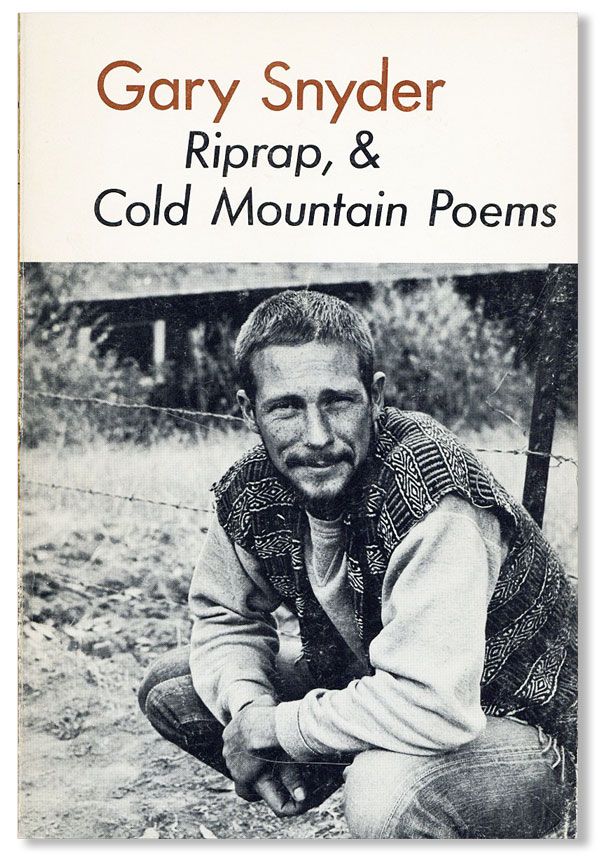
Author: Gary Snyder
Rating: 4/5
Read: 4/18, 2/19
Who Should Read: People interested in Zen, poetry, Chinese thought
Hanshan, or “Cold Mountain”, is one of my favorite Chinese poets (alongside Stonehouse). Hahshan was (supposedly) a Chinese Buddhist monk who lived in isolation in the wilderness. The poems attributed to him sparkle with a disdain for civilized life and carry a Zen and Taoist bent.
Cold Mountain Poems is a small collection poems translated by Gary Snyder, who does a wonderful job translating Hanshan’s words and feelings. Included are some of my favorite poems from this collection.
Gary Snyder on why he was qualified to translate Cold Mountain’s poems:
I had been a mountaineer and forestry laborer as well as a bookish scholar for several years already, and simply could draw on a wide experience of events and words and observations in finding ways to represent the Han-shan imagery. I also regularly made a practice of internalizing and visualizing the taste of the whole scene – cold, wet, rocky, lonely, or whatever was called for – to the point that I could write it out with some sense of presence. This doesn’t always work by any means, but it is exciting when it does. It reaches across time and space.
On the interest in such poetry:
At least for non–East Asians, they touch us not because of the invocation of a hermetic ideal or solitary asceticism, but because of the almost joyful rejection of materialism and the absolute pleasure in being in the great world “with a sky for a blanket,” aware of living a life apart from the value-assumptions of mainstream people.
There is a deep strain of non-ideological dubiousness about the large materialistic goals that are the official “dream” of developed-world people and certain others worldwide.
Here are some of my favorite poems from this collection.
In a tangle of cliffs I chose a place –
Bird-paths, but no trails for men.
What’s beyond the yard?
White clouds clinging to vague rocks.
Now I’ve lived here – how many years –
Again and again, spring and winter pass.
Go tell families with silverware and cars
“What’s the use of all that noise and money?”
Men ask the way to Cold Mountain
Cold Mountain: There’s no through trail.
In summer, ice doesn’t melt
The rising sun blurs in swirling fog
How did I make it?
My heart’s not the same as yours.
If your heart was like mine
You’d get it and be right here.
Clambering up the Cold Mountain Path,
The Cold Mountain Trail goes on and on:
The long gorge choked with scree and boulders,
The wide cree, the mist-blurred grass.
The moss is slippery, though there’s been no rain.
The pine sings, but there’s no wind.
Who can leap the world’s ties
and sit with me among the white clouds?
Spring-water in the green creek is clear
Moonlight on Cold Mountain is white
Silent knowledge – the spirit is enlightened of itself
Contemplate the void: this world exceeds stillness
Cold Mountain is a house
Without beams or walls.
The six doors left and right are open
The hall is blue sky.
The rooms all vacant and vague
The east wall beats on the west wall
At the center nothing.
Borrowers don’t bother me
In the cold I build a little fire
When I’m hungry I boil up some greens.
I’ve got no use for the Kulak
With his big barn and pasture –
He just sets up a prison for himself.
Once in he can’t get out.
Think it over –
You know it might happen to you.
If I hide out at Cold Mountain
Living off mountain plants and berries –
All my lifetime, why worry?
One follows his karma through.
Days and months slip by like water,
Time is like sparks knocked off flint.
Go ahead and let the world change –
I’m happy to sit among these cliffs.
Some critic tried to put me down –
“Your poems lack the basic truth of Tao”
And I recall the old-timers
Who were poor and didn’t care.
I have to laugh at him,
He misses the point entirely,
Men like that
Ought to stick to making money.
If you are interested in purchasing this book, you can support the website by using our Amazon affiliate link.
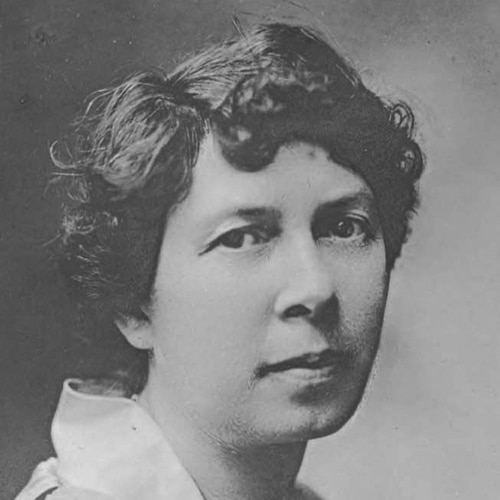
I bargained with Life for a penny,
And Life would pay no more,
However I begged at evening when
I counted my scanty store.
For Life is a just employer,
He gives you what you ask,
But once you have set the wages,
Why you must bear the task.
I worked for a menial’s hire,
Only to learn dismayed,
That any wage I had asked of Life,
Life would have willingly paid.
by J.B. Rittenhouse
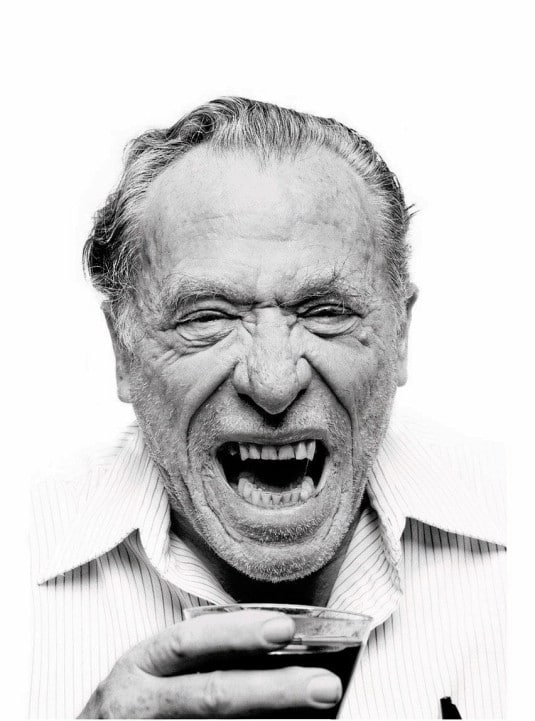
by Charles Bukowski
(Photograph by Mark Hanauer)
Either peace or happiness,
let it enfold you
when I was a young man
I felt these things were
dumb, unsophisticated.
I had bad blood, a twisted
mind, a precarious
upbringing.
I was hard as granite, I
leered at the
sun.
I trusted no man and
especially no
woman.
I was living a hell in
small rooms, I broke
things, smashed things,
walked through glass,
cursed.
I challenged everything,
was continually being
evicted, jailed, in and
out of fights, in and out
of my mind.
women were something
to screw and rail
at, I had no male
friends,
I changed jobs and
cities, I hated holidays,
babies, history,
newspapers, museums,
grandmothers,
marriage, movies,
spiders, garbagemen,
english accents,spain,
france,italy,walnuts and
the color
orange.
algebra angred me,
opera sickened me,
charlie chaplin was a
fake
and flowers were for
pansies.
peace and happiness to me
were signs of
inferiority,
tenants of the weak
and
addled
mind.
but as I went on with
my alley fights,
my suicidal years,
my passage through
any number of
women-it gradually
began to occur to
me
that I wasn’t different
from the
others, I was the same,
they were all fulsome
with hatred,
glossed over with petty
grievances,
the men I fought in
alleys had hearts of stone.
everybody was nudging,
inching, cheating for
some insignificant
advantage,
the lie was the
weapon and the
plot was
empty,
darkness was the
dictator.
cautiously, I allowed
myself to feel good
at times.
I found moments of
peace in cheap
rooms
just staring at the
knobs of some
dresser
or listening to the
rain in the
dark.
the less I needed
the better I
felt.
maybe the other life had worn me
down.
I no longer found
glamour
in topping somebody
in conversation.
or in mounting the
body of some poor
drunken female
whose life had
slipped away into
sorrow.
I could never accept
life as it was,
i could never gobble
down all its
poisons
but there were parts,
tenuous magic parts
open for the
asking.
I re formulated
I don’t know when,
date, time, all
that
but the change
occurred.
something in me
relaxed, smoothed
out.
i no longer had to
prove that I was a
man,
I didn’t have to prove
anything.
I began to see things:
coffee cups lined up
behind a counter in a
cafe.
or a dog walking along
a sidewalk.
or the way the mouse
on my dresser top
stopped there
with its body,
its ears,
its nose,
it was fixed,
a bit of life
caught within itself
and its eyes looked
at me
and they were
beautiful.
then- it was
gone.
I began to feel good,
I began to feel good
in the worst situations
and there were plenty
of those.
like say, the boss
behind his desk,
he is going to have
to fire me.
I’ve missed too many
days.
he is dressed in a
suit, necktie, glasses,
he says, ‘I am going
to have to let you go’
‘it’s all right’ I tell
him.
He must do what he
must do, he has a
wife, a house, children,
expenses, most probably
a girlfriend.
I am sorry for him
he is caught.
I walk onto the blazing
sunshine.
the whole day is
mine
temporarily,
anyhow.
(the whole world is at the
throat of the world,
everybody feels angry,
short-changed, cheated,
everybody is despondent,
disillusioned)
I welcomed shots of
peace, tattered shards of
happiness.
I embraced that stuff
like the hottest number,
like high heels, breasts,
singing,the
works.
(don’t get me wrong,
there is such a thing as cockeyed optimism
that overlooks all
basic problems just for
the sake of
itself-
this is a shield and a
sickness.)
The knife got near my
throat again,
I almost turned on the
gas
again
but when the good
moments arrived
again
I didn’t fight them off
like an alley
adversary.
I let them take me,
I luxuriated in them,
I made them welcome
home.
I even looked into
the mirror
once having thought
myself to be
ugly,
I now liked what
I saw, almost
handsome, yes,
a bit ripped and
ragged,
scares, lumps,
odd turns,
but all in all,
not too bad,
almost handsome,
better at least than
some of those movie
star faces
like the cheeks of
a baby’s
butt.
and finally I discovered
real feelings of
others,
unheralded,
like lately,
like this morning,
as I was leaving,
for the track,
i saw my wife in bed,
just the
shape of
her head there
(not forgetting
centuries of the living
and the dead and
the dying,
the pyramids,
Mozart dead
but his music still
there in the
room, weeds growing,
the earth turning,
the tote board waiting for
me)
I saw the shape of my
wife’s head,
she so still,
I ached for her life,
just being there
under the
covers.
I kissed her in the
forehead,
got down the stairway,
got outside,
got into my marvelous
car,
fixed the seatbelt,
backed out the
drive.
feeling warm to
the fingertips,
down to my
foot on the gas
pedal,
I entered the world
once
more,
drove down the
hill
past the houses
full and empty
of
people,
I saw the mailman,
honked,
he waved
back
at me.
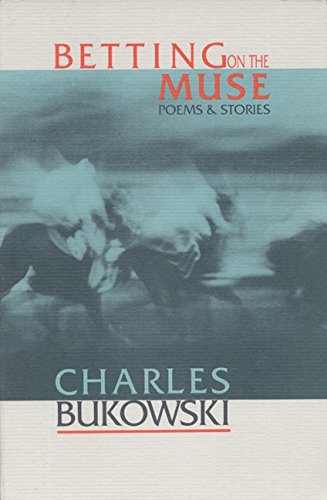
“Let it Enfold You” is from Betting on the Muse, pg 378:

Gazelle, I killed you
for your skin's exquisite
touch, for how easy it is
to be nailed to a board
weathered raw as white
butcher paper. Last night
I heard my daughter praying
for the meat here at my feet.
You know it wasn't anger
that made me stop my heart
till the hammer fell. Weeks
ago, I broke you as a woman
once shattered me into a song
beneath her weight, before
you slouched into that
grassy hush. But now
I'm tightening lashes,
shaping hide as if around
a ribcage, stretched
like five bowstrings.
Ghosts cannot slip back
inside the body's drum.
You've been seasoned
by wind, dusk & sunlight.
Pressure can make everything
whole again, brass nails
tacked into the ebony wood
your face has been carved
five times. I have to drive
trouble from the valley.
Trouble in the hills.
Trouble on the river
too. There's no kola nut,
palm wine, fish, salt,
or calabash. Kadoom.
Kadoom. Kadoom. Ka-
doooom. Kadoom. Now
I have beaten a song back into you,
rise & walk away like a panther.
by Yusef Komunyakaa
“Ode to the Drum” can be found in Thieves of Paradise.

Prince Wen Hui’s cook
Was cutting up an ox.
Out went a hand,
Down went a shoulder,
He planted a foot,
He pressed with a knee,
The ox fell apart
With a whisper;
The bright cleaver murmured
Like a gentle wind.
Rhythm! Timing!
Like a sacred dance,
Like “The Mulberry Grove,”
Like ancient harmonies!
“Good work!” the Prince exclaimed.
“Your method is faultless!”
“Method?” said the cook,
Laying aside his cleaver.
“What I follow is Tao,
Beyond all methods!

“When I first began
To cut up oxen
I would see before me
The whole ox,
All in one mass.

“After three years,
I no longer saw this mass.
I saw the distinctions.

“But now, I see nothing
With the eye. My whole being
Apprehends.
My senses are idle. The spirit,
Free to work without plan,
Follows its own instinct,
Guided by natural line.
By the secret opening, the hidden space,
My cleaver finds its own way.
I cut through no joint, chop no bone.

“A good cook needs a new chopper
Once a year – he cuts.
A poor cook needs a new one
Every month – he hacks!

“I have used this same cleaver
Nineteen years.
It has cut up
A thousand oxen.
Its edge is as keen
As if newly sharpened.

“There are spaces in the joints;
The blade is thin and keen.
When this thinness
Finds that space,
There is all the room you need!
It goes like a breeze!
Hence I have this cleaver nineteen years,
As if newly sharpened!

“True, there are sometimes
Tough joints, I feel them coming,
I slow down, I watch closely,
Hold back, barely move the blade,
And whump! The part falls away
Landing like a clod of earth.

“Then I withdraw the blade.
I stand still
And let the joy of the work
Sink in.
I clean the blade
And put it away.”

Prince Wen Hui said,
“This is it! My cook has shown me
How I ought to live
My own life!”
Translated by Thomas Merton
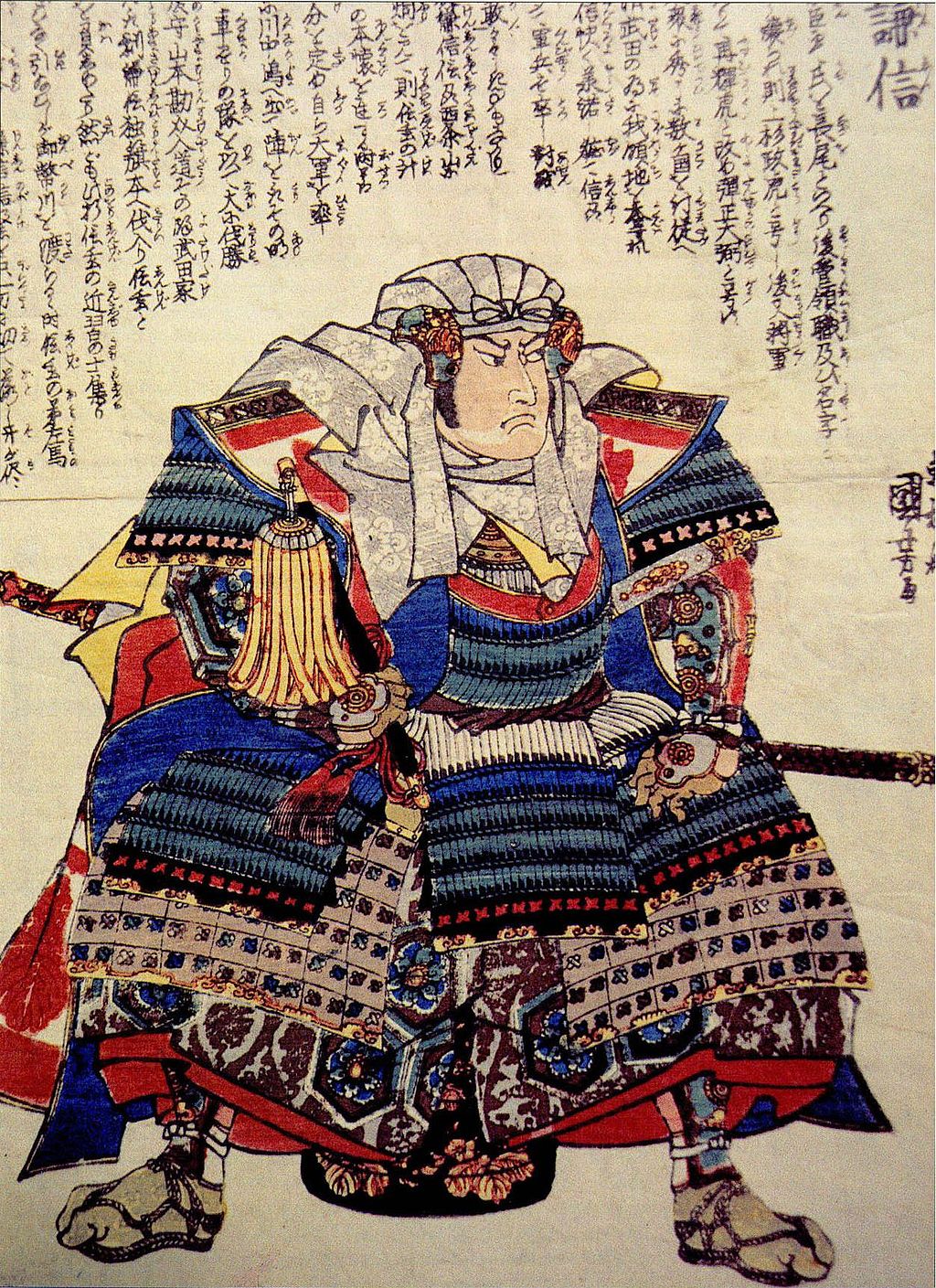
Even a life-long prosperity is but one cup of sake;
A life of forty-nine years is passed in a dream;
I know not what life is, nor death.
Year in year out-all but a dream.
Both Heaven and Hell are left behind;
I stand in the moonlit dawn,
Free from clouds of attachment.
Uesugi Kenshin
1530-1578
This poem comes from the Samurai Archives.
Interested in Japanese death poems? Check out Japanese Death Poems: Written by Zen Monks and Haiku Poets on the Verge of Death.
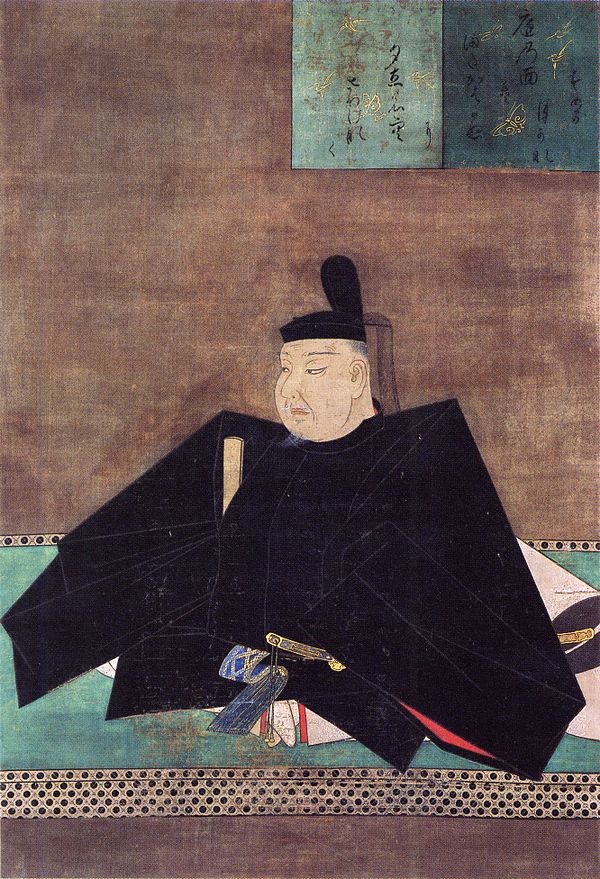
Like a rotten log
half buried in the ground –
my life, which
has not flowered, comes
to this sad end.
Minamoto Yorimasa
1104-1180
This translation comes from Japanese Death Poems: Written by Zen Monks and Haiku Poets on the Verge of Death.