The Warrior Ethos

Author: Steven Pressfield
Rating: 6/10
Last Read: June 2014

Quick Summary: This is a quick read.  Pressfield examines the warrior values and mindset in a variety of cultures throughout history. This book is pretty quick and segmented, structured as almost a series of thoughts on various topics related to the warrior ethos.  

Mostly it’s a collection of statements with some anecdotes – it could have been more fully fleshed out to be really something good. There are still interesting precepts to mull over – that provides value to me, even if the overall text is weak.

My Highlights

The Spartans do not ask how many are the enemy but where are they. —Plutarch –loc 15

At a deeper level, the Warrior Ethos recognizes that each of us, as well, has enemies inside himself. Vices and weaknesses like envy and greed, laziness, selfishness, the capacity to lie and cheat and do harm to our brothers. The tenets of the Warrior Ethos, directed inward, inspire us to contend against and defeat those enemies within our own hearts. –loc 106

Be brave, my heart [wrote the poet and mercenary Archilochus]. Plant your feet and square your shoulders to the enemy. Meet him among the man-killing spears. Hold your ground. In victory, do not brag; in defeat, do not weep. –loc 118

The god who ruled the battlefield was Phobos. Fear. –loc 123

The Spartan king Agesilaus was once asked what was the supreme warrior virtue, from which all other virtues derived. He replied, “Contempt for death.” –loc 139

Courage—in particular, stalwartness in the face of death—must be considered the foremost warrior virtue. –loc 141

The dictionary defines ethos as: The moral character, nature, disposition and customs of a people or culture. –loc 145

“You’ve got the watches,” say the Taliban, “but we’ve got the time.” –loc 171

Individuals in a guilt-based culture internalize their society’s conceptions of right and wrong. The sinner feels his crime in his guts. He doesn’t need anyone to convict him and sentence him; he convicts and sentences himself. –loc 204

The West is a guilt-based culture. Since the Judeo-Christian God sees and knows our private deeds and innermost thoughts, we are always guilty of something, with no way out save some form of divine absolution, forgiveness or grace. –loc 206

A shame-based culture is the opposite. In a shame-based culture, “face” is everything. All that matters is what the community believes of us. –loc 208

The Japanese warrior culture of Bushido is shame-based; it compels those it deems cowards or traitors to commit ritual suicide. The tribal cultures of Pashtunistan are shame-based. The Marine Corps is shame-based. So were the Romans, Alexander’s Macedonians and the ancient Spartans. –loc 213

There’s a well-known gunnery sergeant in the Marine Corps who explains to his young Marines, when they complain about pay, that they get two kinds of salary—a financial salary and a psychological salary. The financial salary is indeed meager. But the psychological salary? Pride, honor, integrity, the chance to be part of a corps with a history of service, valor, glory; to have friends who would sacrifice their lives for you, as you would for them—and to know that you remain a part of this brotherhood as long as you live. How much is that worth? –loc 285

This is another key element of the Warrior Ethos: the willing and eager embracing of adversity. –loc 413

The payoff for a life of adversity is freedom. –loc 419

“You may defeat us,” said the tribal elders, “but you will never defeat our poverty.” –loc 423

For warrior cultures—from the Sioux and the Comanche to the Zulu and the mountain Pashtun—honor is a man’s most prized possession. Without it, life is not worth living. –loc 439

The American brand of honor is inculcated on the football field, in the locker room and in the street. Back down to no one, avenge every insult, never show fear, never display weakness. Play hurt, never quit. –loc 446

Honor is the psychological salary of any elite unit. Pride is the possession of honor. –loc 457

Honor is connected to many things, but one thing it’s not connected to is happiness. In honor cultures, happiness as we think of it—“life, liberty and the pursuit of happiness”—is not a recognized good. Happiness in honor cultures is the possession of unsullied honor. Everything else is secondary. –loc 458

Patton said, “Americans play to win at all times. I wouldn’t give a hoot in hell for a man who lost and laughed. That’s why Americans have never lost a war and never will lose one.” –loc 478

The will to fight, the passion to be great, is an indispensable element of the Warrior Ethos. It is also a primary quality of leadership, because it inspires men and fires their hearts with ambition and the passion to go beyond their own limits. –loc 480

Second, they don’t solve the problem. Neither remark offers hope or promises a happy ending. They’re not inspirational. The deliverers of these quips don’t point to glory or triumph—or seek to allay their comrades’ anxiety by holding out the prospect of some rosy outcome. The remarks confront reality. They say, “Some heavy shit is coming down, brothers, and we’re going to go through it.” –loc 527

For the warrior, all choices have consequences. His decisions have meaning; every act he takes is significant. What he says and does can save (or cost) his own life or the lives of his brothers. –loc 545

Selflessness is a virtue in a warrior culture. Civilian society gives lip service to this, while frequently acting as selfishly as it possibly can. –loc 570

Cyrus of Persia believed that the spoils of his victories were meant for one purpose—so that he could surpass his enemies in generosity. I contend against my foes in this arena only: the capacity to be of greater service to them than they are to me. –loc 617

Let us conduct ourselves so that all men wish to be our friends and all fear to be our enemies. –loc 622

The Bhagavad-Gita changes this. It takes the Warrior Ethos and elevates it to a loftier and nobler plane—the plane of the individual’s inner life, to his struggle to align himself with his own higher nature. –loc 641

In other words, by the interior exercise of his exterior Warrior Ethos. Arjuna’s divine instructor (one of whose titles in Sanskrit is “Lord of Discipline”) charges his disciple to: Fix your mind upon its object. Hold to this, unswerving, Disowning fear and hope, Advance only upon this goal. –loc 648

Collective Unconscious, meaning that part of the psyche that is common to all cultures in all eras and at all times. –loc 675

The Collective Unconscious, Jung said, contains the stored wisdom of the human race, accumulated over thousands of generations. –loc 676

The lieutenant pointed to Alexander and said to the yogi, “This man has conquered the world! What have you accomplished?”
The yogi looked up calmly and replied, “I have conquered the need to conquer the world.” –loc 704

What Alexander was acknowledging was that the yogi was a warrior too. An inner warrior. Alexander looked at him and thought, “This man was a fighter when he was my age. He has taken the lessons he learned as a warrior dueling external enemies and is turning them to use now as he fights internal foes to achieve mastery over himself.” –loc 709

The hardest thing in the world is to be ourselves. –loc 714

Let us be, then, warriors of the heart, and enlist in our inner cause the virtues we have acquired through blood and sweat in the sphere of conflict—courage, patience, selflessness, loyalty, fidelity, self-command, respect for elders, love of our comrades (and of the enemy), perseverance, cheerfulness in adversity and a sense of humor, however terse or dark. –loc 726

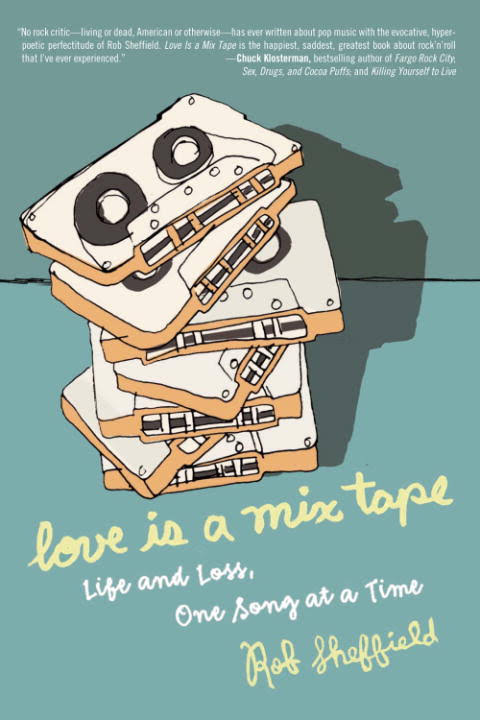
Love is a Mixtape

Author: Rob Sheffield
Rating: 10/10
Last Read: February 2015

Quick Summary:  A music journalist for the Rolling Stone writes a book about his relationship with the love of his life.  Each chapter has a playlist, and the songs that are picked are intertwined into his retelling of their life story.  

The book opens telling you that this is not a happy story – it’s the story of how he found love and then lost it due to a tragic death.  As he’s spinning the tale of their love, you manage to forget this fact – until the terrible event happens and you feel the deep pang of loss (“how could this happen to them?!”).

I have a deep appreciation for this book – music is equally important to me and equally intertwined in my life. Losing the music is a tragic thing.

My Highlights

It was a smashing time, and then it ended, because that’s what times do. –loc 141

Renée loved to do things. That was mysterious to me, since I was more comfortable talking about things and never doing them. –loc 149

Tonight, I feel like my whole body is made out of memories. I’m a mix tape, a cassette that’s been rewound so many times you can hear the fingerprints smudged on the tape. –loc 171

A song nobody likes is a sad thing. But a love song nobody likes is hardly a thing at all. –loc 188

There are millions of songs in the world, and millions of ways to connect them into mixes. Making the connections is part of the fun of being a fan. –loc 295

Walter Benjamin, in his prescient 1923 essay “One Way Street,” said a book was an outdated means of communication between two boxes of index cards. One professor goes through books, looking for tasty bits he can copy onto index cards. Then he types his index cards up into a book, so other professors can go through it and copy tasty bits onto their own index cards. Benjamin’s joke was: Why not just sell the index cards? –loc 301

I’d rather hear a Frank Sinatra song between Run-DMC and Bananarama than between two other Frank Sinatra songs. When you stick a song on a tape, you set it free. –loc 307

Every mix tape tells a story. Put them together, and they add up to the story of a life. –loc 335

It was a painful night, but I got the message: Let the dancing girls dance. That’s the one ironclad rule of pop muzik, whether in New York, London, Paris, or Munich, and I’m just lucky I learned it so early. I had always been taught to fear disco, and to fear the disco inside me. But by the second verse of “Bad Girls,” it was obvious everything I knew was wrong. “Toot toot, beep beep” was meaningful on a much deeper level than I could have fathomed. –loc 440

It’s this kind of syndrome—where if a guy sees his girlfriend likin’ somebody, that’s called ‘bitch power.’ Like Elvis Presley was hated by men, hated, ’cause he had bitch power. Teddy Pendergrass has bitch power. I just found out that I have a little bitch power. But beyond bitch power, I have something else, that men like—and that’s the truth, and the down-to-earth shit, OK? So men don’t mind bringin’ their women to see me, ’cause I have bitch power but it’s in another way. –loc 448

How do you turn down the volume on your personal-drama earphones and learn how to listen to other people? How do you jump off one moving train, marked Yourself, and jump onto a train moving in the opposite direction, marked Everybody Else? –loc 620

Sometimes you lie in a strange room, in a strange person’s home, and you feel yourself bending out of shape. –loc 765

Is there any scarier word than “irreversible”? It’s a hiss of a word, full of side effects and mutilations. Severe tire damage—no backing up. –loc 774

Girls take up a lot of room. –loc 792

I thought, There is nowhere else in the universe I would rather be at this moment. I could count the places I would not rather be. I’ve always wanted to see New Zealand, but I’d rather be here. The majestic ruins of Machu Picchu? I’d rather be here. A hillside in Cuenca, Spain, sipping coffee and watching leaves fall? Not even close. There is nowhere else I could imagine wanting to be besides here in this car, with this girl, on this road, listening to this song. If she breaks my heart, no matter what hell she puts me through, I can say it was worth it, just because of right now. Out the window is a blur and all I can really hear is this girl’s hair flapping in the wind, and maybe if we drive fast enough the universe will lose track of us and forget to stick us somewhere else. –loc 839

I kept thinking of an old Robert Mitchum cowboy movie where he goes back to see the farmhouse where he was born and finds the house falling apart and an old man living in it by himself. “Lonely place,” Robert Mitchum says. The old man says, “Nothing wrong with a lonely place as long as it’s private. That’s why I never married. Marriage is lonely, but it ain’t private.” –loc 946

Our lives were just beginning, our favorite moment was right now, our favorite songs were unwritten. –loc 1073

The songs were all either fast or sad, because all songs should be either fast or sad. Some of the fast ones were sad, too. –loc 1122

“Honey, is this song about us?” the strategic answer is, “Yes, but so is ‘Just Like Heaven.’” –loc 1250

“If it’s got tits or tires, it’s gonna cost you money.” –loc 1284

Chuck Berry the night he decided to mix country with the blues, –loc 1399

I suddenly realized how much being a husband was about fear: fear of not being able to keep somebody safe, of not being able to protect somebody from all the bad stuff you want to protect them from. Knowing they have more tears in them than you will be able to keep them from crying. –loc 1439

Every time I started to cry, I remembered how Renée used to say real life was a bad country song, except bad country songs are believable and real life isn’t. –loc 1747

I had no voice to talk with because she was my whole language. –loc 1825

You lose a certain kind of innocence when you experience this type of kindness. You lose your right to be a jaded cynic. You can no longer go back through the looking glass and pretend not to know what you know about kindness. It’s a defeat, in a way. –loc 1912

Human benevolence is totally unfair. We don’t live in a kind or generous world, yet we are kind and generous. We know the universe is out to burn us, and it gets us all the way it got Renée, but we don’t burn each other, not always. –loc 1944

One day, you’re in a physical landscape you share with this bizarre and fundamentally alien creature, not alien because she’s female but alien because you’re a fool in love and there’s nothing not alien about that. And then when she’s gone, you’re alone and all the strangeness and wonder have gone out of the landscape and you’re still a fool but now nobody notices how many days in a row you wear the same socks and cleaning the shower doesn’t make the girl smile anymore so everything smells a little worse and doesn’t get fixed when it breaks. –loc 2049

But all the things you want to learn from grief turn out to be the total opposite of what you actually learn. There are no revelations, no wisdoms as a trade-off for the things you have lost. You just get stupider, more selfish. Colder and grimmer. You forget your keys. You leave the house and panic that you won’t remember where you live. You know less than you ever did. You keep crossing thresholds of grief and you think, Maybe this one will unveil some sublime truth about life and death and pain. But on the other side, there’s just more grief. –loc 2181

It’s not human to let go of love, even when it’s dead. –loc 2187

Ralph Waldo Emerson knew the score: “I grieve that grief can teach me nothing.” That’s from “Experience,” his late essay about human loss and his son’s death. –loc 2195

It’s the same with people who say, “Whatever doesn’t kill you makes you stronger.” Even people who say this must realize that the exact opposite is true. What doesn’t kill you maims you, cripples you, leaves you weak, makes you whiny and full of yourself at the same time. The more pain, the more pompous you get. Whatever doesn’t kill you makes you incredibly annoying.

Sometimes great tunes happen to bad times, and when the bad time is over, not all the tunes get to move on with you. –loc 2294

It was strange to fall back in love with really old songs, or to hear them for the first time and not get to hear Renée sing along with them. –loc 2390

I realize that I will never fully understand the millions of bizarre ways that music brings people together. –loc 2438

After Renée died, I assumed the rest of my life would be just a consolation prize. I would keep living, and keep having new experiences, but none of them would compare to the old days. I would have to settle for a lonely life I didn’t want, which would always remind me of the life I couldn’t have anymore. But it didn’t turn out that way, and there’s something strange and upsetting about that. –loc 2450

sometimes I think, man, all the people I get to hear this song with, we’re going to miss each other when we die. When we die, we will turn into songs, and we will hear each other and remember each other. –loc 2504

But the rhythm of the mix tape is the rhythm of romance, the analog hum of a physical connection between two sloppy, human bodies. –loc 2511

The cassette is full of tape hiss and room tone; it’s full of wasted space, unnecessary noise. –loc 2511

But the answer is simple. Love is a mix tape. –loc 2533

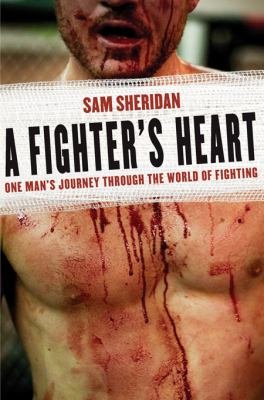
A Fighter’s Heart

Author: Sam Sheridan
Rating: 7/10
Last Read: April 2014

Quick Summary:  A guy who has found himself in possession of a bunch of cash and the intention to not work decides to dedicate himself to becoming a fighter.  The book covers his journey through different fights and training camps, and provides insight into the mind of a fighter and the athletes who participate in the sport.

My Takeaways

Fundamentals are important.

Fighting is not totally about violence – even if it is a violent activity.  There can be a sense of peace and satisfaction that arises out of the struggling with others and learning to master yourself.

It captured the idea that life is born of struggle and striving, that true joy and understanding do not come from comfort and safety; they come from epiphany born in exhaustion (and not exhaustion for its own sake). Safety and comfort are mortal danger to the soul.

My Highlights 

I learned one of the most important lessons in life: Keep your mouth shut. –loc 98

I was discovering the key to building endurance: Push on when you feel you can’t, and next time that moment will come later. I –loc 476

This is a guy who kicked so hard that if you blocked with your arm, he’d break it—and yet he had the utter control to not be baited. That’s what I admired, more than anything. Apidej is a devout Buddhist, and he meditated often, and I was curious about that. Something in that attitude seemed like the real warrior attitude, secure in self-knowledge, aware of things that don’t matter and untroubled by them. –loc 624

By doing something repeatedly, though, and understanding it, you can diffuse and defuse the fear. This is true for sailing, riding motorcycles, asking girls out—even getting hit in the face by a man who wants to kill you. –loc 656

It captured the idea that life is born of struggle and striving, that true joy and understanding do not come from comfort and safety; they come from epiphany born in exhaustion (and not exhaustion for its own sake). Safety and comfort are mortal danger to the soul. –loc 698

If only I could find a way to get it to pay for itself—that’s how I had done all my traveling before. It’s a part of my philosophy: You can always get it to pay for itself somehow. –loc 703

You have a specific responsibility to existence, to God if you like, to taste, touch, and smell what there is to experience. You have to do everything. If given an option between doing something and not doing it, you have to do it; because you’ve already done the “not do it” part. –loc 714

All of the old gods required sacrifice, forms of which exist today: Thus the ritual of sacrifice reveals an almost universal attribute of the archaic deity to whom sacrifices are offered: He or she is a carnivore. –loc 1156

“Truth in observation, that’ll win a fight,” he said. –loc 1335

But I fell back on those immortal words at the base of all good decision making: Fuck it. –loc 1448

I think I have a fatal flaw; when I get hit, I just want to hit back, without rhyme or reason. –loc 1555

“Do you ever watch animals, horses and cows and birds?” asked Darryl’s father, a tall, thick, distinguished man with an open, handsome face and gray hair. He made the motions of jostling his elbows for space, for position. “It’s natural, everything fights.” –loc 1807

“You have to learn from everybody, and stay open-minded, learn and watch carefully: Observation is critical. Watch how they grip. Guys who have been to a lot of different schools are very good because they learn so many different techniques. Now there is so much interchange that we have a lot of broad innovation and spreading ideas.” –loc 2105

Being willing to lose is important, to take risks, to find new ways of doing things; I’ve heard this again and again from different fighters. –loc 2108

You know only 5 percent of what there is to know. Fight your own pride and ego and be open-minded and always learning new techniques, new things from anyone. –loc 2231

Love has given him belief in himself. It’s what makes a dog fight past forty-five minutes. Love is what makes us great, and this display of strength, heart, and love is what brings us all to the fights. –loc 2644

I quickly came to understand one of Virgil’s governing precepts, which is fight when it’s good for you. Don’t stand and fight when your opponent wants to. Move around—fight only when it’s better for you. Muhammad Ali’s first fight with Floyd Patterson is a perfect example. Ali just kept moving and moving and moving, and every now and again paused to hit Floyd, and then moved some more. Boxing critics hated him for it, the “cowardice” of it, but it was unbeatable. Floyd didn’t have an answer. –loc 2936

Afterward, as I was taking off my wraps, Virgil said, “Fundamentals, Sam, fundamentals. If you don’t have them, you will run into somebody else’s.” –loc 2948

“Don’t let me rush you. Wait for things to be right, be deliberate. You don’t want to be flying down the freeway so fast you can’t see the scenery, because you’ll miss your exit. I’ll try and hurry you up, but don’t let me, stay within yourself, within what you want to do, and wait for the opening.” –loc 3187

Look strong when you are weak, Virgil would counsel. –loc 3421

After the fight, Mike said that his ferocity was all gone, he couldn’t even kill the bugs in his house. He had completely lost the killer instinct in the sixth round. “At one point, I thought life was about acquiring things,” he said. “Life is totally about losing everything.” –loc 3587

I was a big fan of something the English call the “wind-up.” You play someone very seriously with something you know will make them crazy, just to get them to lose composure. I’ve seen him do it to little boys who come into the gym. “Oh, I heard about you, you were the one crying when that Korean kid stole your bike,” and the little boy will be raging, “That wasn’t me!” Virgil used to do that at the juvenile hall with young toughs in front of their friends. The –loc 3877

A woman walked by, and Virgil talked about the sound of her footsteps. “I listen to people walk,” he said. “That can tell you a lot.” –loc 4126

“By becoming aware, you can understand that there is no ownership of body or mind, that thoughts are just illusions, and that suffering can be overcome.” –loc 4278

“Pain is a friend. It is a reminder to mindfulness, and it tells us in the end that it is only pain, another illusion, and this helps our understanding.” –loc 4311

“Mindfulness can be brought to bear on everything, can be a part of everything, of your training, and of your fighting,” Ajahn told me. The monks had no trouble at all with the fact that I was a sometime fighter. “If you are mindful in boxing, then you can be aware and not trapped in a same movement, you can be formless, and formless can not be beat—as long as you are strong inside and have your feet rooted,” Ajahn said. Virgil would have agreed with him. –loc 4462

“Mindfulness will help you see without illusion.” –loc 4467

I had a professor once tell me that man cannot view himself clearly; only less complicated organisms can be completely understood. –loc 4852

The appreciation of gameness, then, is probably both cultural and biological. The love of aggression, a willingness to fight regardless of safety or consequences, is a biological key to success, to domination. –loc 4864

There comes a moment when we stop creating ourselves. —John Updike –loc 5314

Michael Kimmel, in his book Manhood in America, talks about the “homosociality” of the manly arenas (sports, business); for a man, the most important thing is “his reputation as a man among men.” –loc 5342

Kimmel writes that for men, one of the deepest fears is that “others will see us as less than manly, as weak, timid, frightened.” –loc 5417

manhood, that endless test, is a sham, an illusion of sorts; because when you start fighting, you realize there’s never an end to it, there’s always somebody better—stronger, faster, bigger, younger, whatever, something. –loc 5441

Having a fighter’s heart, having gameness, is about knowing yourself and not being afraid of losing. You become a better version of yourself. Nobility is a by-product of that attitude, just like love is a byproduct of aggression. –loc 5498

Cormac McCarthy wrote a book called Blood Meridian in which the character of the judge makes an argument that war is the most essential of human activities. He starts by saying that men are born for games, and that everybody, even children, know that “play is nobler than work.” If that is true, says the judge, then what changes the quality of the game but the stakes? And what could be a more valuable stake than your life? So war, the game you play with your life, is the greatest of human endeavors. –loc 5508

I do not believe that men were meant for games, that that is their highest purpose. Work is nobler than play. I believe that men were meant for work, that their highest calling is to build, not destroy or even protect. Learning to fight, trying to embody the virtues of the hunter and warrior—these things are useful and important, even essential. But don’t be content with being a warrior, be a builder as well. Make something. The true calling of man, real manhood, is about creation, not destruction, and everyone secretly knows it. –loc 5516

Every love can be merciless. –loc 5566

Gratitude

Author: Oliver Sacks
Rating: 10/10
Last Read: July 2016

Quick Summary: A short selection of four essays written by Dr. Oliver Sacks.  These essays cover the end of his life, with reflections on old age, facing mortality, and the gratitude he has for being a sentient being on this planet.  

“Whatever must have a beginning must have an ending.”

Recommended Reads: On the Move (autobiography), On Death and Dying

My Takeaways

You never quite lose the sense of childish wonder if you keep that attitude about you as you grow older.

There really is an essential truth to the matter of dying: when it comes time for you to accept your fate, the nonessential falls away and you focus on the truly important things.  

It is possible to meet death with dignity and grace.

I cannot pretend I am without fear. But my predominant feeling is one of gratitude. I have loved and been loved; I have been given much and I have given something in return; I have read and traveled and thought and written. I have had an intercourse with the world, the special intercourse of writers and readers.

My Highlights

A few years ago, when I gave a friend a bottle of mercury for his eightieth birthday—a special bottle that could neither leak nor break—he gave me a peculiar look, but later sent me a charming letter in which he joked, “I take a little every morning for my health.” –loc 80

Eighty! I can hardly believe it. I often feel that life is about to begin, only to realize it is almost over. –loc 83

I thought I would die at forty-one, when I had a bad fall and broke a leg while mountaineering alone. I splinted the leg as best I could and started to lever myself down the mountain, clumsily, with my arms. In the long hours that followed, I was assailed by memories, both good and bad. Most were in a mode of gratitude—gratitude for what I had been given by others, gratitude too that I had been able to give something back. –loc 86

I am sorry I have wasted (and still waste) so much time; I am sorry to be as agonizingly shy at eighty as I was at twenty; I am sorry that I speak no languages but my mother tongue and that I have not traveled or experienced other cultures as widely as I should have done. –loc 96

At eighty, the specter of dementia or stroke looms. A third of one’s contemporaries are dead, and many more, with profound mental or physical damage, are trapped in a tragic and minimal existence. At eighty, the marks of decay are all too visible. One’s reactions are a little slower, names more frequently elude one, and one’s energies must be husbanded, but even so, one may often feel full of energy and life and not at all “old.” Perhaps, with luck, I will make it, more or less intact, for another few years and be granted the liberty to continue to love and work, the two most important things, Freud insisted, in life. –loc 105

When pressed about his diagnosis a few weeks later, he said, “Whatever has a beginning must have an ending.” When he died, at eighty-eight, he was still fully engaged in his most creative work. –loc 112

He felt, as I begin to feel, not a shrinking but an enlargement of mental life and perspective. One has had a long experience of life, not only one’s own life, but others’ too. One has seen triumphs and tragedies, booms and busts, revolutions and wars, great achievements and deep ambiguities. One has seen grand theories rise, only to be toppled by stubborn facts. One is more conscious of transience and, perhaps, of beauty. At eighty, one can take a long view and have a vivid, lived sense of history not possible at an earlier age. I can imagine, feel in my bones, what a century is like, which I could not do when I was forty or sixty. I do not think of old age as an ever grimmer time that one must somehow endure and make the best of, but as a time of leisure and freedom, freed from the factitious urgencies of earlier days, free to explore whatever I wish, and to bind the thoughts and feelings of a lifetime together. –loc 115

It is up to me now to choose how to live out the months that remain to me. I have to live in the richest, deepest, most productive way I can. –loc 134

And yet, one line from Hume’s essay strikes me as especially true: “It is difficult,” he wrote, “to be more detached from life than I am at present.” Over the last few days, I have been able to see my life as from a great altitude, as a sort of landscape, and with a deepening sense of the connection of all its parts. This does not mean I am finished with life. On the contrary, I feel intensely alive, and I want and hope in the time that remains to deepen my friendships, to say farewell to those I love, to write more, to travel if I have the strength, to achieve new levels of understanding and insight. –loc 147

I feel a sudden clear focus and perspective. There is no time for anything inessential. I must focus on myself, my work, and my friends. I shall no longer look at the NewsHour every night. I shall no longer pay any attention to politics or arguments about global warming. –loc 153

My generation is on the way out, and each death I have felt as an abruption, a tearing away of part of myself. There will be no one like us when we are gone, but then there is no one like anyone else, ever. When people die, they cannot be replaced. They leave holes that cannot be filled, for it is the fate—the genetic and neural fate—of every human being to be a unique individual, to find his own path, to live his own life, to die his own death. –loc 159

I cannot pretend I am without fear. But my predominant feeling is one of gratitude. I have loved and been loved; I have been given much and I have given something in return; I have read and traveled and thought and written. I have had an intercourse with the world, the special intercourse of writers and readers. –loc 163

Above all, I have been a sentient being, a thinking animal, on this beautiful planet, and that in itself has been an enormous privilege and adventure. –loc 165

It was this celestial splendor that suddenly made me realize how little time, how little life, I had left. My sense of the heavens’ beauty, of eternity, was inseparably mixed for me with a sense of transience—and death. –loc 191

(Auden used to say that one should always celebrate one’s birthday, no matter how one felt.) –loc 215

“The observance of the Sabbath is extremely beautiful,” he said, “and is impossible without being religious. It is not even a question of improving society—it is about improving one’s own quality of life.” –loc 301

Robert John visited. He was full of entertaining stories about the Nobel Prize and the ceremony in Stockholm, but made a point of saying that, had he been compelled to travel to Stockholm on a Saturday, he would have refused the prize. His commitment to the Sabbath, its utter peacefulness and remoteness from worldly concerns, would have trumped even a Nobel. –loc 307

The peace of the Sabbath, of a stopped world, a time outside time, was palpable, infused everything, and I found myself drenched with a wistfulness, something akin to nostalgia, wondering what if: What if A and B and C had been different? –loc 324

And now, weak, short of breath, my once-firm muscles melted away by cancer, I find my thoughts, increasingly, not on the supernatural or spiritual but on what is meant by living a good and worthwhile life—achieving a sense of peace within oneself. I find my thoughts drifting to the Sabbath, the day of rest, the seventh day of the week, and perhaps the seventh day of one’s life as well, when one can feel that one’s work is done, and one may, in good conscience, rest. –loc 333

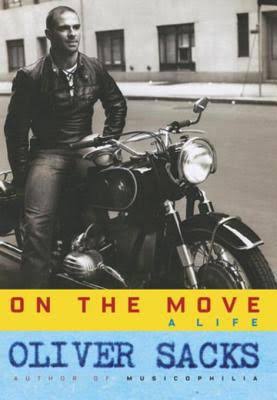
On the Move

Author: Oliver Sacks
Rating: 9/10
Last Read: September 2015

Quick Summary:  Autobiography of the late Dr. Oliver Sacks, writing about his career, growth, struggles, and thoughts as he revisited his life. Dr. Sacks is a wise man who has been through much in life – and there is much humanity to be gleaned from the pages of this book.

I recommend Maria Popova’s review.

Recommended Reads: Gratitude

My Takeaways

Life was (and probably still is) very difficult for LGBT individuals in ways that I have not considered.

The history of a thing is just as important as the recent developments.  It is hard to continue forward if you are not sure where you came from.

Everybody has their struggles, and even those who have achieved much in life struggle in ways you wouldn’t expect – such as being addicted to amphetamines.

As Dr. Sacks recounts a tale of Einstein and humanity, so to does he reveal his humanity by giving a frank and honest recounting of his life.

Aubrey recounted with a smile, he and a colleague from the Israeli consulate visited Einstein in his house in Princeton. Einstein invited them in and courteously asked if they would like coffee, and (thinking that an assistant or housekeeper would make it), Aubrey said yes. But he was “horrified,” as he put it, when Einstein trotted into the kitchen himself. They soon heard the clatter of cups and pots and an occasional piece of crockery falling, as the great man, in his friendly but slightly clumsy way, made the coffee for them. This, more than anything, Aubrey said, showed him the human and endearing side of the world’s greatest genius.

My Highlights

We think of science as discovery, art as invention, but is there a “third world” of mathematics, which is somehow, mysteriously, both? –loc 295

one day, with my heart in my mouth, I told Richard that I was in love with him, not knowing how he would react. He hugged me, gripped my shoulders, and said, “I know. I am not that way, but I appreciate your love and love you too, in my own way.” –loc 343

“Travel now by all means—if you have the time. But travel the right way, the way I travel. I am always reading and thinking of the history and geography of a place. I see its people in terms of these, placed in the social framework of time and space. Take the prairies, for example; you’re wasting your time visiting these unless you know the saga of the homesteaders, the influence of law and religion at different times, the economic problems, the difficulties of communication, and the effects of successive mineral finds. –loc 708

When you were born, people congratulated us on what they considered a wonderful family of four sons! Where are you all now? I feel lonely and bereft. Ghosts inhabit this house. When I go into the various rooms I feel overcome with a sense of loss. –loc 779

These and a host of other memories of your vital personality will always remain with us. When we contemplate this large empty house, we feel a wrench at our heart and a deep sense of loss. We realize nevertheless that you have to make your way in the world, and with you must rest the ultimate decision! –loc 786

I wondered whether systems in the brain concerned with the perception (or projection) of meaning, significance, and intentionality, systems underlying a sense of wonder and mysteriousness, systems for appreciation of the beauty of art and science, had lost their balance in schizophrenia, producing a mental world overcharged with intense emotion and distortions of reality. These systems had lost their middle ground, it seemed, so that any attempt to titrate them, damp them down, could tip the person from a pathologically heightened state to one of great dullness, a sort of mental death. –loc 884

It was at Mount Zion that Libet performed his astounding experiments showing that if subjects were asked to make a fist or perform another voluntary action, their brains would register a “decision” nearly half a second before there was any conscious decision to act. While his subjects felt that they had consciously and of their own free will made a movement, their brains had made a decision, seemingly, long before they did. –loc 1302

I sometimes annoyed the group, I think, by saying that we should also discuss the writings of our nineteenth-century forebears, relating what we were seeing in patients to their observations and thoughts. This was seen by the others as archaism; we were short of time, and we had better things to do than consider such “obsolete” matters. This attitude was reflected, implicitly, in many of the journal articles we read; they made little reference to anything more than five years old. It was as if neurology had no history. –loc 1379

I found this dismaying, for I think in narrative and historical terms. As a chemistry-mad boy, I devoured books on the history of chemistry, the evolution of its ideas, and the lives of my favorite chemists. Chemistry had, for me, a historical and human dimension too. –loc 1383

I was not a book collector myself, and when I bought books or articles, it was to read them, not to show them. –loc 1392

I felt that I was enjoying California too much, was getting addicted to an easy, sleazy life, to say nothing of a deepening drug addiction. I felt I needed to go to a hard, real place, a place where I could devote myself to work and perhaps discover or create a real identity, a voice of my own. –loc 1760

I sometimes wonder why I have spent more than fifty years in New York, when it was the West, and especially the Southwest, which so enthralled me. I now have many ties in New York—to my patients, my students, my friends, and my analyst—but I have never felt it move me the way California did. I suspect my nostalgia may be not only for the place itself but for youth, and a very different time, and being in love, and being able to say, “The future is before me.” –loc 1773

But then the feeling started to fade. We asked ourselves whether the experience we had shared was real, authentic, given the huge aphrodisiac thrust of the amphetamines. I found this question particularly humiliating—could so lofty a transport as falling in love be reduced to something purely physiological? –loc 1908

I asked Shengold if I too was schizophrenic. “No,” he answered. Was I then, I asked, “merely neurotic”? “No,” he answered. I left it there, we left it there, and there it has been left for the last forty-nine years. –loc 1982

I would continue to seek satisfaction in drugs, I felt, unless I had satisfying—and, hopefully, creative—work. It was crucial for me to find something with meaning, and this, for me, was seeing patients. –loc 1987

We maintain the proprieties—he is always “Dr. Shengold,” and I am always “Dr. Sacks”—but it is because the proprieties are there that there can be such freedom of communication. And this is something I also feel with my own patients. They can tell me things, and I can ask things, which would be impermissible in ordinary social intercourse. –loc 2000

Above all, Dr. Shengold has taught me about paying attention, listening to what lies beyond consciousness or words. –loc 2002

For me, this was an example of how unconscious motives may sometimes ally themselves to physiological propensities, of how one cannot abstract an ailment or its treatment from the whole pattern, the context, the economy of someone’s life. –loc 2028

This painful story—painful on both sides—is not an uncommon one: an older man, a father figure, and his youthful son-in-science find their roles reversed when the son starts to outshine the father. This happened with Humphry Davy and Michael Faraday—Davy first giving every encouragement to Faraday, then trying to block his career. I am no Faraday, and Friedman was no Davy, but I think the same deadly dynamic was at work, at a much humbler level. –loc 2143

I did not feel she used the word “Darling” lightly; I felt very loved by her, and I loved her intensely too, and this was a love without ambivalence, without conditionality. Nothing I could say could repel or shock her; there seemed no limit to her powers of sympathy and understanding, the generosity and spaciousness of her heart. –loc 2169

I mentioned to her, a couple of months later, that I had been in a depression. “I know we all suffer them at times,” Len wrote. “Well, don’t have any more. You’ve got so much in your favour—brains, charm, presentability, a sense of the ridiculous, and a whole gaggle of us who believe in you.” –loc 2220

“Your Dr. Friedman,” she wrote in October of 1967, “sounds a most unpleasant piece of work, but don’t let him get under your skin. Keep hold of your faith in yourself.” –loc 2255

As one grows older, the years seem to blur into one another, but 1972 remains sharply etched in my memory. –loc 2500

It seems to me that I discover my thoughts through the act of writing, in the act of writing. Occasionally, a piece comes out perfectly, but more often my writings need extensive pruning and editing, because I may express the same thought in many different ways. –loc 2581

As the decorous stranger discreetly retired, I asked Wystan how he experienced the world, whether he thought of it as being a very small or very large place. “Neither,” he replied. “Neither large nor small. Cozy, cozy.” He added in an undertone, “Like home.” –loc 2708

Informally (I sometimes think) I see and learn and do a great deal, with the extremely varied patients I see in various clinics and Homes, and every seeing-and-learning-and-doing situation is, eo ipso, a teaching situation. I find every patient I see, everywhere, vividly alive, interesting and rewarding; I have never seen a patient who didn’t teach me something new, or stir in me new feelings and new trains of thought; and I think that those who are with me in these situations share in, and contribute to, this sense of adventure. (I regard all neurology, everything, as a sort of adventure!) –loc 3130

“You care, you really care for me!” “Of course,” Eric said. “How could you doubt it?” But it was not easy to believe that anyone cared for me; I sometimes failed to realize, I think, how much my parents cared for me. It is only now, reading the letters they wrote to me when I came to America fifty years ago, that I see how deeply they did care. –loc 3232

And perhaps how deeply many others have cared for me—was the imagined lack of caring by others a projection of something deficient or inhibited in myself? –loc 3235

When Lennie learned of this, she felt that life with intravenous nourishment and a spreading cancer was not worthwhile. She resolved to stop eating, though she would take water. My father insisted she be seen by a psychiatrist, but the psychiatrist said, “She is the sanest person I have ever seen. You must respect her decision.” –loc 3246

Dearest Len, We have all of us been hoping so intensely that this month would see your return to health; but, alas! this was not to be. My heart is torn when I hear of your weakness, your misery—and, now, your longing to die. You, who have always loved life, and been such a source of strength and life to so many, can face death, even choose it, with serenity and courage, mixed, of course, with the grief of all passing. We, I, can much less bear the thought of losing you. You have been as dear to me as anyone in this world. I shall hope against hope that you may weather this misery, and be restored again to the joy of full living. But if this is not to be, I must thank you—thank you, once again, and for the last time, for living—for being you. Love, Oliver –loc 3254

When I visited Gallaudet University in Washington, D.C., (it is the only university in the world for deaf and hearing-impaired students) and talked about the “hearing impaired,” one of the deaf students signed, “Why don’t you look at yourself as sign impaired?” –loc 3605

He has one of the most spacious, thoughtful minds I have ever encountered, with a vast base of knowledge of every sort, but it is a base under continual questioning and scrutiny. (I have seen him suddenly stop in mid-sentence and say, “I no longer believe what I was about to say.”) –loc 3697

I think we all live in a swirl of anecdotes…. We (most of us) compose our lives into narratives…. I wonder what the origin is of the urge to “compose” oneself. –loc 3781

I found you so talented, but so deficient in one quality—just the most important quality—call it humanity, or sympathy, or something like that. And, frankly, I despaired of your ever becoming a good writer, because I didn’t see how one could be taught such a quality…. Your deficiency of sympathy made for a limitation of your observation…. What I didn’t know was that the growth of sympathies is something frequently delayed till one’s thirties. –loc 3826

I am however a rather derivative poet. I learn what I can from whom I can. I borrow heavily from my reading, because I take my reading seriously. It is part of my total experience and I base most of my poetry on my experience. –loc 3857

There is a danger, when old friends meet, that they will talk mostly of the past. –loc 3860

At worst, one is in motion; and at best, Reaching no absolute, in which to rest, One is always nearer by not keeping still. –loc 3866

Aubrey recounted with a smile, he and a colleague from the Israeli consulate visited Einstein in his house in Princeton. Einstein invited them in and courteously asked if they would like coffee, and (thinking that an assistant or housekeeper would make it), Aubrey said yes. But he was “horrified,” as he put it, when Einstein trotted into the kitchen himself. They soon heard the clatter of cups and pots and an occasional piece of crockery falling, as the great man, in his friendly but slightly clumsy way, made the coffee for them. This, more than anything, Aubrey said, showed him the human and endearing side of the world’s greatest genius. –loc 4090

And in its broadest sense, neural Darwinism implies that we are destined, whether we wish it or not, to a life of particularity and self-development, to make our own individual paths through life. –loc 5111

Into the Wild

Author: Jon Krakauer
Rating: 6/10
Last Read: August 2010

Quick Summary: A young man decides to give it all up and go wander the world.  He dies in the Alaskan wilderness.  

There have been lots of debates about the death of Chris McCandless, many complaining that the more likely case is starvation (rather than poisoning).  Krakauer recently commented on this as well.  Either way, people like to debate endlessly about whether McCandless is a falsely glorified idiot or not.  

The book is interesting – and if you have a soul full of wanderlust you can appreciate his drive.  But I wouldn’t call it a must-read.

My Highlights

I wanted movement and not a calm course of existence. I wanted excitement and danger and the chance to sacrifice myself for my love. I felt in myself a superabundance of energy which found no outlet in our quiet life. LEO TOLSTOY, “FAMILY HAPPINESS”

I’d like to repeat the advice I gave you before, in that I think you really should make a radical change in your lifestyle and begin to boldly do things which you may previously never have thought of doing, or been too hesitant to attempt. So many people live within unhappy circumstances and yet will not take the initiative to change their situation because they are conditioned to a life of security, conformity, and conservatism, all of which may appear to give one peace of mind, but in reality nothing is more damaging to the adventurous spirit within a man than a secure future. The very basic core of a man’s living spirit is his passion for adventure. The joy of life comes from our encounters with new experiences, and hence there is no greater joy than to have an endlessly changing horizon, for each day to have a new and different sun. If you want to get more out of life, Ron, you must lose your inclination for monotonous security and adopt a helter-skelter style of life that will at first appear to you to be crazy. But once you become accustomed to such a life you will see its full meaning and its incredible beauty.

“Chastity is the flowering of man; and what are called Genius, Heroism, Holiness, and the like, are but various fruits which succeed it.”

Rather than love, than money, than fame, give me truth. I sat at a table where were rich food and wine in abundance, an obsequious attendance, but sincerity and truth were not; and I went away hungry from the inhospitable board. The hospitality was as cold as the ices. HENRY DAVID THOREAU, WALDEN, OR LIFE IN THE WOODS

For children are innocent and love justice, while most of us are wicked and naturally prefer mercy. G. K. CHESTERTON

Children can be harsh judges when it comes to their parents,Read more

It is easy, when you are young, to believe that what you desire is no less than what you deserve, to assume that if you want something badly enough, it is your God-given right to have it.

Next to “And so it turned out that only a life similar to the life of those around us, merging with it without a ripple, is genuine life, and that an unshared happiness is not happiness…. And this was most vexing of all,” he noted, “HAPPINESS ONLY REAL WHEN SHARED.”

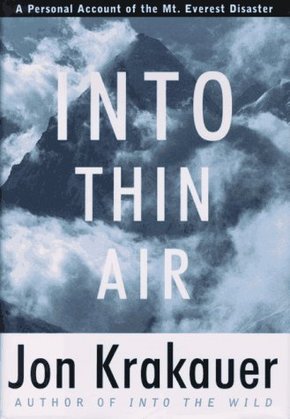
Into Thin Air

Author: Jon Krakauer
Rating: 8/10
Last Read: March 2016

Quick Summary: A retelling of a tragic Everest expedition which claimed the lives of multiple experienced mountaineers and clients.

Key Takeaways

Ego will get you killed.

Mountains are dangerous places.  Even experienced mountaineers make mistakes, which cost them their lives or the lives of others. Altitude does not make decision making easier.

Climbing at altitude is not fun, in the traditional sense.

There were many, many fine reasons not to go, but attempting to climb Everest is an intrinsically irrational act—a triumph of desire over sensibility. Any person who would seriously consider it is almost by definition beyond the sway of reasoned argument.

My Highlights

The staggering unreliability of the human mind at high altitude made the research problematic. –loc 146

There were many, many fine reasons not to go, but attempting to climb Everest is an intrinsically irrational act—a triumph of desire over sensibility. Any person who would seriously consider it is almost by definition beyond the sway of reasoned argument. –loc 158

The plain truth is that I knew better but went to Everest anyway. And in doing so I was a party to the death of good people, which is something that is apt to remain on my conscience for a very long time. –loc 160

As I gazed across the sky at this contrail, it occurred to me that the top of Everest was precisely the same height as the pressurized jet bearing me through the heavens. That I proposed to climb to the cruising altitude of an Airbus 300 jetliner struck me, at that moment, as preposterous, or worse. My palms felt clammy. –loc 622

There was loneliness, too, as the sun set, but only rarely now did doubts return. Then I felt sinkingly as if my whole life lay behind me. Once on the mountain I knew (or trusted) that this would give way to total absorption with the task at hand. But at times I wondered if I had not come a long way only to find that what I really sought was something I had left behind. –loc 763

The more improbable the situation and the greater the demands made on [the climber], the more sweetly the blood flows later in release from all that tension. The possibility of danger serves merely to sharpen his awareness and control. And perhaps this is the rationale of all risky sports: You deliberately raise the ante of effort and concentration in order, as it were, to clear your mind of trivialities. It’s a small scale model for living, but with a difference: Unlike your routine life, where mistakes can usually be recouped and some kind of compromise patched up, your actions, for however brief a period, are deadly serious. A. Alvarez The Savage God: A Study of Suicide –loc 1221

Eighteen days earlier she’d broken into tears when she’d taken me to the plane to Nepal. “Driving home from the airport,” she confessed, “I couldn’t stop crying. Saying good-bye to you was one of the saddest things I’ve ever done. I guess I knew on some level that you might not be coming back, and it seemed like such a waste. It seemed so fucking stupid and pointless.” –loc 1373

Ms. O’Dowd walked to the team’s Sherpa leader, Ang Dorje, and said audibly: “This is Ken Vernon, one of the ones we told you about. He is to be given no assistance whatsoever.” Ang Dorje is a tough, nuggety rock of a man and we had already shared several glasses of Chang, the fiery local brew. I looked at him and said, “Not even a cup of tea?” To his credit, and in the best tradition of Sherpa hospitality, he looked at Ms. O’Dowd and said: “Bullshit.” He grabbed me by the arm, dragged me into the mess tent and served up a mug of steaming tea and a plate of biscuits. –loc 1605

I doubt if anyone would claim to enjoy life at high altitudes—enjoy, that is, in the ordinary sense of the word. There is a certain grim satisfaction to be derived from struggling upwards, however slowly; but the bulk of one’s time is necessarily spent in the extreme squalor of a high camp, when even this solace is lacking. –loc 1636

worst of all is the feeling of complete helplessness and inability to deal with any emergency that might arise. I used to try to console myself with the thought that a year ago I would have been thrilled by the very idea of taking part in our present adventure, a prospect that had then seemed like an impossible dream; but altitude has the same effect on the mind as upon the body, one’s intellect becomes dull and unresponsive, and my only desire was to finish the wretched job and to get down to a more reasonable clime. –loc 1642

We tell ourselves stories in order to live. We look for the sermon in the suicide, for the social or moral lesson in the murder of five. We interpret what we see, select the most workable of the multiple choices. We live entirely, especially if we are writers, by the imposition of a narrative line upon disparate images, by the “ideas” with which we have learned to freeze the shifting phantasmagoria which is our actual experience. Joan Didion –loc 1933

Now I dream of the soft touch of women, the songs of birds, the smell of soil crumbling between my fingers, and the brilliant green of plants that I diligently nurture. I am looking for land to buy and I will sow it with deer and wild pigs and birds and cottonwoods and sycamores and build a pond and the ducks will come and fish will rise in the early evening light and take the insects into their jaws. There will be paths through this forest and you and I will lose ourselves in the soft curves and folds of the ground. We will come to the water’s edge and lie on the grass and there will be a small, unobtrusive sign that says, THIS IS THE REAL WORLD, MUCHACHOS, AND WE ARE ALL IN IT. –loc 4074

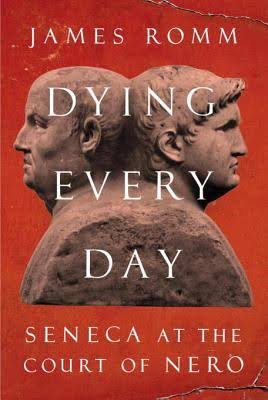
Dying Every Day: Seneca at the Court of Nero

Author: James Romm
Rating: 9/10
Last Read: January 2016

Quick Summary: An overview of the life of Seneca, putting his philosophical works into context with his life and surroundings.  Discusses palace intrigues with the emperor Nero.

If you like history or philosophy, it is an excellent read.

Life, properly regarded, is only a journey toward death. We wrongly say that the old and sick are “dying,” when infants and youths are doing so just as certainly. We are dying every day, all of us

Key Takeaways

Nothing is created in a vacuum.  Seneca’s letters are a source of immense wisdom still today… but when added into the context of his life, his goals, and his aspirations they can take on a totally different slant.

Nothing can be proven, but the theory fits with a pattern of opportunism in much of Seneca’s work. His command of the written word was so deft, his rhetorical skills so subtle, that it was easy for him to help himself while also helping others.

History is super fucking interesting and way better than anything we can make up.  

Elsewhere in De Ira Seneca calls to mind the sufferings of Asian viziers in old Greek legends. Harpagus served as chief minister to a Persian king but offended his master by disregarding an order. The king took a gory revenge: he served Harpagus a stew of his own children’s flesh, then showed him the severed heads to reveal what he had eaten. How did Harpagus like his dinner? the king asked, with Caligulan cruelty. Harpagus’ choking reply was “At a king’s table, every meal is pleasant.” The flattery at least gained him this, Seneca says grimly: he did not have to finish his meal.

My Highlights

Amici vitia si feras, facias tua. If you put up with the crimes of a friend, you make them your own. —ROMAN PROVERB –loc 47

Consolation to Marcia, written about A.D. 40, takes the form of a letter addressed to a mother grieving for a dead son, but it was meant to be read widely. Seneca would play the same rhetorical trick his entire life, allowing his readers to listen in on what seemed to be an intimate exchange. –loc 306

Nothing can be proven, but the theory fits with a pattern of opportunism in much of Seneca’s work. His command of the written word was so deft, his rhetorical skills so subtle, that it was easy for him to help himself while also helping others. –loc 324

Marcia’s grief, for Seneca, exemplifies a universal human blindness. We assume that we own things—family, wealth, position—whereas we have only borrowed them from Fortune. We take for granted that they will be with us forever, and we grieve at their loss; but loss is the more normal event—it is what we should have expected all along. –loc 336

life, properly regarded, is only a journey toward death. We wrongly say that the old and sick are “dying,” when infants and youths are doing so just as certainly. We are dying every day, all of us. –loc 343

Not only in Rome, but everywhere and in all times, good men have knuckled under to despots. –loc 410

Elsewhere in De Ira Seneca calls to mind the sufferings of Asian viziers in old Greek legends. Harpagus served as chief minister to a Persian king but offended his master by disregarding an order. The king took a gory revenge: he served Harpagus a stew of his own children’s flesh, then showed him the severed heads to reveal what he had eaten. How did Harpagus like his dinner? the king asked, with Caligulan cruelty. Harpagus’ choking reply was “At a king’s table, every meal is pleasant.” The flattery at least gained him this, Seneca says grimly: he did not have to finish his meal. –loc 411

Seneca’s hymn to suicide is thus very much of its time. By his day, suicide had come to signify, for aristocratic victims of the emperors, an inability to fight back; the best one could hope for was to embarrass the princeps by a highly public exit. –loc 459

Prexaspes was another vizier like Harpagus, a right-hand man to a Persian monarch. His master, Cambyses, a notorious drunk, set out one day to prove to his court that wine did not affect him. He set up an archery course, with Prexaspes’ son as the target; then, good as his word, he shot the boy through the heart. The story is related in De Ira just before the hymn to suicide above (in which Prexaspes is recalled as “the man whom it befell to have a king shoot arrows at his dear ones”). But Seneca leaves the sequel to the story curiously untold. Years later Prexaspes found himself in possession of dangerous information. He knew that a group of plotters had murdered Cambyses’ heir and put an impostor on the throne. He had colluded with the plot’s leaders, who valued his high standing among the Persian people. When the people became uneasy about their king’s legitimacy, the plotters asked Prexaspes to reassure them. Prexaspes climbed a high tower in a central square of the capital. From a window at the top, he called out to the populace below—but not as instructed. He denounced the impostor and revealed the plot, confessing that he himself had killed the true heir to the throne, on Cambyses’ orders. Then he launched himself off the tower and fell to his death. Inspired by his deed, the Persians rallied against the conspirators and soon overthrew them and their false king. –loc 463

Was life under such arbitrary power worth living? It was the question Seneca had posed in De Ira and, in a different way, in Consolation to Marcia. For Lucius Junius Silanus, the answer—no—was clear enough. Three days after his dismissal, on the same day Claudius wed Agrippina, he took his own life. –loc 618

As in the biblical tale of the Tower of Babel, the very complexity of civilization seemed to carry the seeds of its own destruction—or at least to have a fixed terminus, reached at a regular point every few thousand years. To Seneca, who lived in a city that had reached unimagined levels of sophistication, that terminus seemed not far off. –loc 633

By a curious coincidence, the careers of these two brothers—Seneca’s older brother Novatus, and Pallas’ brother Antonius Felix—are bound together by an unlikely thread: the travels of the apostle Paul. –loc 843

Only philosophic contemplation, he argues, can fulfill that quest. Only those who study philosophy are truly alive, in that they move outside the prison of time into the realm of eternals. All others, those who follow worldly pursuits, are squandering their time, merely running out the ever-ticking clock of mortality. –loc 972

“To fight against an equal is risky; against a higher-up, insane; against someone beneath you, degrading,” –loc 1202

But De Clementia is more emphatic on this point. “We have all of us done wrong,” Seneca intones here, in words that would not be out of place in a modern Christian sermon, “some seriously, some lightly, some intentionally, some pushed into it by accident or carried away by the wrongdoing of others; some have stood by our good designs not firmly enough and have lost our guiltlessness, unwillingly, while trying to keep our grasp on –loc 1563

Seneca had made the bargain that many good men have made when agreeing to aid bad regimes. On the one hand, their presence strengthens the regime and helps it endure. But their moral influence may also improve the regime’s behavior or save the lives of its enemies. For many, this has been a bargain worth making, even if it has cost them—as it may have cost Seneca—their immortal soul. –loc 2088

According to Seneca’s definition in the treatise, Nero’s giving had been not a beneficium, an act of generosity, but a means of asserting power and imposing obligation. –loc 2200

In the fog-bound glens of eastern England, Boudicca, warrior-queen of the Iceni, was gathering a mighty host determined to end Roman rule. At her hands, more than 80,000 Romans and their allies would soon be killed, and the Roman army would come within a hairsbreadth of an epic disaster. –loc 2206

According to Dio’s account, before the rebellion began, Seneca had called in his loans to British tribal leaders, abruptly and on harsh terms. That put many Britons into bankruptcy, while others were broken by the corrupt finance officer in charge of the region, Decianus Catus. Together, Dio suggests, Catus and Seneca forced Britons into a corner where they had nothing to lose by revolt. Tacitus, by contrast, says nothing of Seneca’s moneylending in Britain, though he confirms that Catus had made enemies there by rapacity. For Tacitus, the principal spark of the conflict was the flogging of Boudicca and the rape of her daughters, committed by arrogant Roman troops grown scornful of British tribesmen. –loc 2246

Then Nero turned to a more salient point. “If you return money to me, it won’t be your moderation spoken of by every mouth, but my greed; if you leave your princeps, it will be chalked up to fear of my cruelty. Your self-restraint would earn great praise; but it doesn’t befit a wise man to get glory for himself while bringing ill repute on a friend.” –loc 2329

The most consequential departure was that of Burrus, the stalwart Praetorian prefect, recently dead. The gruff old soldier had been one of few who stood up to Nero, speaking his mind and then, if asked to reconsider, saying to the princeps: “I’ve told you already, don’t question me twice.” –loc 2452

Discomforts overwhelm the body, Seneca muses, in the same way that vice and ignorance overwhelm the soul. The sufferer may not even know he is suffering, just as a deep sleeper does not know he is asleep. Only philosophy can rouse souls from such comas. –loc 2563

By insisting that death is everywhere and cannot be escaped, Seneca seems to relieve himself of the burden of action. For indeed, Seneca was taking very little action in these years to help himself or others. –loc 2672

The will to power, Atreus implies, lurks in even the most detached, self-contented sage. –loc 2945

Seneca’s prose works offer forgiveness, but in the bleak world of the tragedies, the sin of weakness comes back on the sinner’s head a thousandfold. In a gruesome messenger speech, we hear how Atreus butchered, fileted, and stewed Thyestes’ children. Then we watch as Thyestes unknowingly consumes the horrid casserole. –loc 2964

A great stream of manacled men surged toward Nero’s residence, so many that the suspects had to be detained outside, near the gates, for lack of rooms to torture them in. –loc 3167

Seneca allegedly once told Nero—the occasion of the remark is not known—“No matter how many you kill, you can’t kill your successor.” But in this case, as in many others, Nero proved his teacher wrong. He had indeed eliminated all possible successors, men belonging to the Julian line, by the end of 65. –loc 3376

The power to die, Seneca had promised, was present at every moment and transcended every oppression. –loc 3430

Domitian again, as his father had done, banished the Stoics from Rome, including Epictetus, whose magnetic personality had by now become a phenomenon. Epictetus landed in Nicopolis, in the Greek East, and began attracting new followers. His conversations and quips were written down by one of them, young Arrian of Nicomedia (later a famous historian), and began circulating as the Discourses and Encheiridion (“Handbook”). In time these writings, in Greek, filtered back to Rome, where they came under the eyes of an aristocratic youth named Marcus Aurelius Antoninus. One day, after his elevation to princeps, this Marcus would quote the sayings of Epictetus in his own writings—bringing Stoic philosophy back into the palace from which it had been exiled since the death of Seneca. –loc 3519

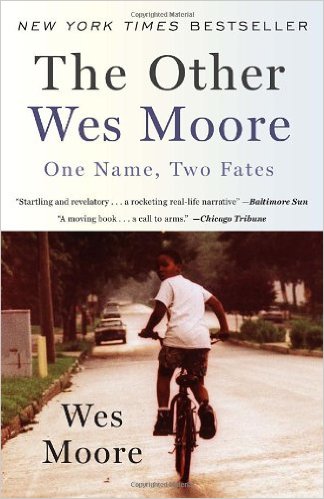
The Other Wes Moore

Author: Wes Moore
Rating: 7/10
Last Read: 2014

Quick Summary: A military officer analyzes the lives and actions of himself and an inmate sharing his name to try to determine what would have caused their lives to deviate in such a way.

Key Takeaways

Don’t forget how much of an effect environment, family, and birth lottery have on your life.

It made me think deeply about the way privilege and preference work in the world, and how many kids who didn’t have “luck” like mine in this instance would find themselves forever outside the ring of power and prestige. So many opportunities in this country are apportioned in this arbitrary and miserly way, distributed to those who already have the benefit of a privileged legacy.

My Highlights

But even the worst decisions we make don’t necessarily remove us from the circle of humanity.

life and death, freedom and bondage, hang in the balance of every action we take.

Watende, a Shona word that means “revenge will not be sought,”

“I guess it’s hard sometimes to distinguish between second chances and last chances.”

I decided not to respond directly to this latest protest of his innocence. Instead, I asked a question: “Do you think we’re all just products of our environments?” His smile dissolved into a smirk, with the left side of his face resting at ease. “I think so, or maybe products of our expectations.” “Others’ expectations of us or our expectations for ourselves?” “I mean others’ expectations that you take on as your own.” I realized then how difficult it is to separate the two. The expectations that others place on us help us form our expectations of ourselves.

He also taught me an important lesson about leadership: it always comes with having to make tough decisions.

They believed that excuses were tools of the incompetent and forced every cadet to believe the same.

“When it is time for you to leave this school, leave your job, or even leave this earth, you make sure you have worked hard to make sure it mattered you were ever here.”

Life’s impermanence, I realized, is what makes every single day so precious. It’s what shapes our time here. It’s what makes it so important that not a single moment be wasted.

It made me think deeply about the way privilege and preference work in the world, and how many kids who didn’t have “luck” like mine in this instance would find themselves forever outside the ring of power and prestige. So many opportunities in this country are apportioned in this arbitrary and miserly way, distributed to those who already have the benefit of a privileged legacy.

The common bond of humanity and decency that we share is stronger than any conflict, any adversity, any challenge. Fighting for your convictions is important. But finding peace is paramount. Knowing when to fight and when to seek peace is wisdom.

“I hear you, but it’s not the process you should focus on; it’s the joy you will feel after you go through the process.”

… the incredible power of stories to change people’s lives. By establishing himself as the protagonist of his own story, he inspired me and countless other young people to see ourselves as capable of taking control of our own destinies, and to realize how each decision we make determines the course of our life stories.

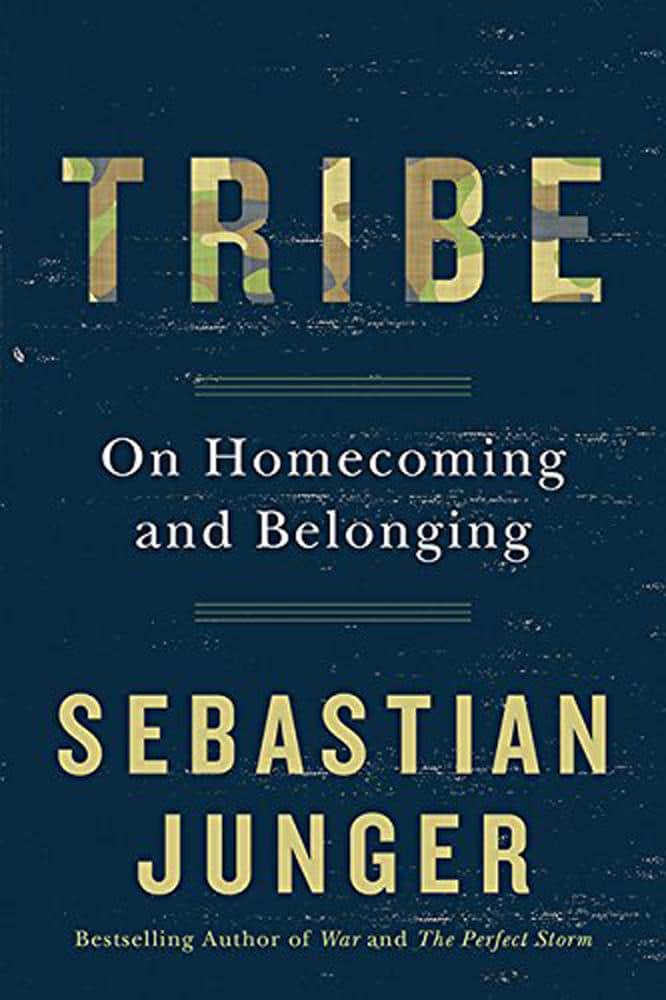
Tribe: On Homecoming and Belonging

Author: Sebastian Junger
Rating: 10/10
Last Read: June 2016
Recommended Reading? Yes!

Quick Summary: Our societal “advances” have been robbing us of the needs we have as social human animals, and this manifests many ways in our society today.  We all miss being part of a tribe.

Related Books: On Killing, Sapiens

Key Takeaways

That nagging feeling inside of you, saying that you feel lonely even surrounded by people constantly? That’s a real feeling – a product of the systems we have created and surround ourselves with.

Real human connection flourishes when there is a dependency and shared experience.

The modern world is a psychically dangerous place for us.

My Highlights

I wanted the chance to prove my worth to my community and my peers, but I lived in a time and a place where nothing dangerous ever really happened. Surely this was new in the human experience, I thought. How do you become an adult in a society that doesn’t ask for sacrifice? How do you become a man in a world that doesn’t require courage? –Loc 43

Humans don’t mind hardship, in fact they thrive on it; what they mind is not feeling necessary. Modern society has perfected the art of making people not feel necessary. –Loc 72

First agriculture, and then industry, changed two fundamental things about the human experience. The accumulation of personal property allowed people to make more and more individualistic choices about their lives, and those choices unavoidably diminished group efforts toward a common good. And as society modernized, people found themselves able to live independently from any communal group. A person living in a modern city or a suburb can, for the first time in history, go through an entire day—or an entire life—mostly encountering complete strangers. They can be surrounded by others and yet feel deeply, dangerously alone. –Loc 221

A wealthy person who has never had to rely on help and resources from his community is leading a privileged life that falls way outside more than a million years of human experience. –Loc 245

Financial independence can lead to isolation, and isolation can put people at a greatly increased risk of depression and suicide. This might be a fair trade for a generally wealthier society—but a trade it –Loc 247

self-determination theory, which holds that human beings need three basic things in order to be content: they need to feel competent at what they do; they need to feel authentic in their lives; and they need to feel connected to others. –Loc 252

Bluntly put, modern society seems to emphasize extrinsic values over intrinsic ones, and as a result, mental health issues refuse to decline with growing wealth. –Loc 255

“The economic and marketing forces of modern society have engineered an environment… that maximize[s] consumption at the long-term cost of well-being,” a study in the Journal of Affective Disorders concluded in 2012. “In effect, humans have dragged a body with a long hominid history into an overfed, malnourished, sedentary, sunlight-deficient, sleep-deprived, competitive, inequitable, and socially-isolating environment with dire consequences.” –Loc 261

Northern European societies, including America, are the only ones in history to make very young children sleep alone in such numbers. The isolation is thought to make many children bond intensely with stuffed animals for reassurance. –Loc 274
In 2007, anthropologist Christopher Boehm published an analysis of 154 foraging societies that were deemed to be representative of our ancestral past, and one of their most common traits was the absence of major wealth disparities between individuals. Another was the absence of arbitrary authority. “Social life is politically egalitarian in that there is always a low tolerance by a group’s mature males for one of their number dominating, bossing, or denigrating the others,” Boehm observed. –Loc 286

Modern society, on the other hand, is a sprawling and anonymous mess where people can get away with incredible levels of dishonesty without getting caught. What tribal people would consider a profound betrayal of the group, modern society simply dismisses as fraud. –Loc 308

Fraud in the insurance industry is calculated to be $100 billion to $300 billion a year, a cost that gets passed directly to consumers in the form of higher premiums. All told, combined public- and private-sector fraud costs every household in the United States probably around $5,000 a year—or roughly the equivalent of working four months at a minimum-wage job. –Loc 314
The FBI reports that since the economic recession of 2008, securities and commodities fraud in the United States has gone up by more than 50 percent. In the decade prior, almost 90 percent of corporate fraud cases—insider trading, kickbacks and bribes, false accounting—implicated the company’s chief executive officer and/or chief financial officer. –Loc 321

Dishonest bankers and welfare or insurance cheats are the modern equivalent of tribe members who quietly steal more than their fair share of meat or other resources. That is very different from alpha males who bully others and openly steal resources. –Loc 331

That is ironic, because the political origins of the United States lay in confronting precisely this kind of resource seizure by people in power. –Loc 347

“An earthquake achieves what the law promises but does not in practice maintain,” one of the survivors wrote. “The equality of all men.” –Loc 434

Communities that have been devastated by natural or man-made disasters almost never lapse into chaos and disorder; if anything, they become more just, more egalitarian, and more deliberately fair to individuals. –Loc 437

He was unable to find a single instance where communities that had been hit by catastrophic events lapsed into sustained panic, much less anything approaching anarchy. If anything, he found that social bonds were reinforced during disasters, and that people overwhelmingly devoted their energies toward the good of the community rather than just themselves. –Loc 509

Men perform the vast majority of bystander rescues, and children, the elderly, and women are the most common recipients of them. Children are helped regardless of gender, as are the elderly, but women of reproductive age are twice as likely to be helped by a stranger than men are. Men have to wait, on average, until age seventy-five before they can expect the same kind of assistance in a life-threatening situation that women get their whole lives. –Loc 539

The beauty and the tragedy of the modern world is that it eliminates many situations that require people to demonstrate a commitment to the collective good. Protected by police and fire departments and relieved of most of the challenges of survival, an urban man might go through his entire life without having to come to the aid of someone in danger—or even give up his dinner. Likewise, a woman in a society that has codified its moral behavior into a set of laws and penalties might never have to make a choice that puts her very life at risk. What would you risk dying for—and for whom—is perhaps the most profound question a person can ask themselves. The vast majority of people in modern society are able to pass their whole lives without ever having to answer that question, which is both an enormous blessing and a significant loss. It is a loss because having to face that question has, for tens of millennia, been one of the ways that we have defined ourselves as people. And it is a blessing because life has gotten far less difficult and traumatic than it was for most people even a century ago. –Loc 567

“The miners’ code of rescue meant that each trapped miner had the knowledge that he would never be buried alive if it were humanly possible for his friends to reach him,” a 1960 study called Individual and Group Behavior in a Coal Mine Disaster explained. “At the same time, the code was not rigid enough to ostracize those who could not face the rescue role.” –Loc 596

Canadian psychologists who interviewed the miners after their rescue determined that these early leaders tended to lack empathy and emotional control, that they were not concerned with the opinions of others, that they associated with only one or two other men in the group, and that their physical abilities far exceeded their verbal abilities. But all of these traits allowed them to take forceful, life-saving action where many other men might not. –Loc 608

Once the escape attempts failed, different kinds of leaders emerged. In what researchers termed the “survival period,” the ability to wait in complete darkness without giving up hope or succumbing to panic became crucial. Researchers determined that the leaders during this period were entirely focused on group morale and used skills that were diametrically opposed to those of the men who had led the escape attempts. They were highly sensitive to people’s moods, they intellectualized things in order to meet group needs, they reassured the men who were starting to give up hope, and they worked hard to be accepted by the entire group. –Loc 612

If women aren’t present to provide the empathic leadership that every group needs, certain men will do it. If men aren’t present to take immediate action in an emergency, women will step in. –Loc 619

To some degree the sexes are interchangeable—meaning they can easily be substituted for one another—but gender roles aren’t. Both are necessary for the healthy functioning of society, and those roles will always be filled regardless of whether both sexes are available to do it. –Loc 621

“In every upheaval we rediscover humanity and regain freedoms,” one sociologist wrote about England’s reaction to the war. “We relearn some old truths about the connection between happiness, unselfishness, and the simplification of living.” –Loc 628

Self-interest gets subsumed into group interest because there is no survival outside group survival, and that creates a social bond that many people sorely miss. –Loc 631

But I also believe that the world we are living in—and the peace that we have—is very fucked up if somebody is missing war. And many people do.” –Loc 638

What I had was classic short-term PTSD. From an evolutionary perspective, it’s exactly the response you want to have when your life is in danger: you want to be vigilant, you want to avoid situations where you are not in control, you want to react to strange noises, you want to sleep lightly and wake easily, you want to have flashbacks and nightmares that remind you of specific threats to your life, and you want to be, by turns, angry and depressed. Anger keeps you ready to fight, and depression keeps you from being too active and putting yourself in more danger. Flashbacks also serve to remind you of the danger that’s out there—a “highly efficient single-event survival-learning mechanism,” as one researcher termed it. All humans react to trauma in this way, and most mammals do as well. It may be unpleasant, but it’s preferable to getting killed. –Loc 694

I had a much older friend named Joanna who was very concerned about how I was faring psychologically after the wars I’d covered. Joanna died soon after I came back from one particularly long stint overseas, and I had almost no reaction to the news until I started talking to her nephew about the trips she’d taken during the early 1960s to register black voters in the South. People were getting killed for doing that, and I remember Joanna telling me that she and her husband, Ellis, never knew if she would make it back alive when she left on those trips. After a year of covering combat there was something about her willingness to die for others—for human dignity—that completely undid me. Stories about soldiers had the same effect on me: completely divorced from any sense of patriotism, accounts of great bravery could emotionally annihilate me. The human concern for others would seem to be the one story that, adequately told, no person can fully bear to hear. –Loc 707

Given the profound alienation of modern society, when combat vets say that they miss the war, they might be having an entirely healthy response to life back home. –Loc 734

Killing seems to traumatize people regardless of the danger they’re in or the perceived righteousness of their cause. –Loc 787

The discrepancy might be due to the fact that intensive training and danger create what is known as unit cohesion—strong emotional bonds within the company or the platoon—and high unit cohesion is correlated with lower rates of psychiatric breakdown. –Loc 793

Studies from around the world show that recovery from war—from any trauma—is heavily influenced by the society one belongs to, and there are societies that make that process relatively easy. Modern society does not seem to be one of them. Among American vets, if one weeds out obviously exaggerated trauma on the one hand and deep trauma on the other, there are still enormous numbers of people who had utterly ordinary wartime experiences and yet feel dangerously alienated back home. Clinically speaking, such alienation is not the same as PTSD—and maybe deserves its own diagnostic term—but both result from military service abroad, so it’s understandable that vets and clinicians alike are prone to conflating them. Either way, it makes one wonder exactly what it is about modern society that is so mortally dispiriting to come home to. –Loc 838

“For the first time in [our] lives… we were in a tribal sort of situation where we could help each other without fear,” a former gunner in the 62nd Coast Artillery –Loc 847

“There were fifteen men to a gun. You had fifteen guys who for the first time in their lives were not living in a competitive society. We had no hopes of becoming officers. I liked that feeling very much… It was the absence of competition and boundaries and all those phony standards that created the thing I loved about the Army.” –Loc 850

What people miss presumably isn’t danger or loss but the unity that these things often engender. There are obvious stresses on a person in a group, but there may be even greater stresses on a person in isolation, so during disasters there is a net gain in well-being. –Loc 858

Even if he or she is part of a family, that is not the same as belonging to a group that shares resources and experiences almost everything collectively. –Loc 863

“We are not good to each other. Our tribalism is to an extremely narrow group of people: our children, our spouse, maybe our parents. Our society is alienating, technical, cold, and mystifying. Our fundamental desire, as human beings, is to be close to others, and our society does not allow for that.” –Loc 868

First, cohesive and egalitarian tribal societies do a very good job at mitigating the effects of trauma, but by their very nature, many modern societies are exactly the opposite: hierarchical and alienating. –Loc 930

Secondly, ex-combatants shouldn’t be seen—or be encouraged to see themselves—as victims. One can be deeply traumatized, as firemen are by the deaths of both colleagues and civilians, without being viewed through the lens of victimhood. –Loc 933

The one way that soldiers are never allowed to see themselves during deployment is as victims, because the passivity of victimhood can get them killed. It’s yelled, beaten, and drilled out of them long before they get close to the battlefield. But when they come home they find themselves being viewed so sympathetically that they’re often excused from having to fully function in society. Some of them truly can’t function, and those people should be taken care of immediately; but imagine how confusing it must be to the rest of them. –Loc 937

What I liked about the encounter was that it showed how very close the energy of male conflict and male closeness can be. –Loc 982

There seemed to be a great human potential out there, organized around the idea of belonging, and the trick was to convince people that their interests had more in common than they had in conflict. I once asked a combat vet if he’d rather have an enemy in his life or another close friend. He looked at me like I was crazy. “Oh, an enemy, a hundred percent,” he said. “Not even close. I already got a lot of friends.” He thought about it a little longer. “Anyway, all my best friends I’ve gotten into fights with—knock-down, drag-out fights. Granted we were always drunk when it happened, but think about that.” –Loc 984

There are many costs to modern society, starting with its toll on the global ecosystem and working one’s way down to its toll on the human psyche, but the most dangerous loss may be to community. –Loc 995

If the human race is under threat in some way that we don’t yet understand, it will probably be at a community level that we either solve the problem or fail to. If the future of the planet depends on, say, rationing water, communities of neighbors will be able to enforce new rules far more effectively than even local government. It’s how we evolved to exist, and it obviously works. –Loc 997

The earliest and most basic definition of community—of tribe—would be the group of people that you would both help feed and help defend. –Loc 1001

A society that doesn’t offer its members the chance to act selflessly in these ways isn’t a society in any tribal sense of the word; it’s just a political entity that, lacking enemies, will probably fall apart on its own. –Loc 1002

The public is often accused of being disconnected from its military, but frankly it’s disconnected from just about everything. Farming, mineral extraction, gas and oil production, bulk cargo transport, logging, fishing, infrastructure construction—all the industries that keep the nation going are mostly unacknowledged by the people who depend on them most. –Loc 1012

This fundamental lack of connectedness allows people to act in trivial but incredibly selfish ways. Rachel Yehuda pointed to littering as the perfect example of an everyday symbol of disunity in society. “It’s a horrible thing to see because it sort of encapsulates this idea that you’re in it alone, that there isn’t a shared ethos of trying to protect something shared,” she told me. “It’s the embodiment of every man for himself. It’s the opposite of the military.” –Loc 1020

In this sense, littering is an exceedingly petty version of claiming a billion-dollar bank bailout or fraudulently claiming disability payments. When you throw trash on the ground, you apparently don’t see yourself as truly belonging to the world that you’re walking around in. And when you fraudulently claim money from the government, you are ultimately stealing from your friends, family, and neighbors—or somebody else’s friends, family, and neighbors. That diminishes you morally far more than it diminishes your country financially. –Loc 1023

The myth addresses a fundamental fear in human society: that you can defend against external enemies but still remain vulnerable to one lone madman in your midst. –Loc 1039

Contempt is one of four behaviors that, statistically, can predict divorce in married couples. People who speak with contempt for one another will probably not remain united for long. –Loc 1142

“If you want to make a society work, then you don’t keep underscoring the places where you’re different—you underscore your shared humanity,” she told me. “I’m appalled by how much people focus on differences. Why are you focusing on how different you are from one another, and not on the things that unite us?” –Loc 1154

Bauman obviously felt that true leadership—the kind that lives depend on—may require powerful people to put themselves last, and that he was one of those people. –Loc 1195

He didn’t understand the greed. He didn’t understand if you have a hundred million dollars, why do you need another million?” –Loc 1198

He clearly understood that belonging to society requires sacrifice, and that sacrifice gives back way more than it costs. –Loc 1200