Social Media Exhaustion

Today, I opened up Twitter and I felt disgusted.

For years I’ve been reducing slowly my social media presence. I do not like the weaponization of attention. I do not like the unending impulse to cultivate and display my “best self” just to impress people whose opinions I don’t actually care about. I do not like the fact that my own human psychology is being used to control my opinions and feelings for someone else’s benefit.

Twitter was my last holdout. I was able to interact with interesting people and to find countless new ideas. I had a pretty good set of filters which allowed me to avoid too much detritus.

But now everything I see is negative. No filtering can save me from the constant flow of verbal violence.

Virtue signaling. Direct attacks. Racism. Sexism. Pick any side, hate will spew from the fingers of its members. The platform force feeds us negativity, plays our emotions, and keeps us enthralled in its poisonous grasp.

I am exhausted. The question is: for what? Why am I tolerating any of this?

When I look around at my life in the real world, none of this outrage is manifested. There is joy and light and pleasurable interactions with random strangers.

I can’t stand the negativity anymore. It steals my life force away.

If you want to talk to me, write me a letter or send me an email.

On Concentration Camps, from Maps of Meaning

Here’s Jordan Peterson on concentration camps, from Maps of Meaning pg. 343-345:

The invention, establishment and perfection of the concentration camp, the efficient genocidal machine, might be regarded as the crowning achievement of human technological and cultural endeavor, motivated by resentment and loathing for life. Invented by the English, rendered efficient by the Germans, applied on a massive scale by the Soviets and the Chinese, revivified by the Balkan conflict – perfection of the factory whose sole product is death has required truly multinational enterprise. Such enterprise constitutes, perhaps, the prime accomplishment of the cooperative bureaucratization of hatred, cowardice and deceit. Tens of millions of innocent people have been dehumanized, enslaved and sacrificed in these efficient disassembly lines, in the course of the last century, to help their oppressors maintain pathological stability and consistency of moral presumption, enforced through terror, motivated by adherence to the lie.

The very name has an uncanny aspect: horrifying, ironical, allegorical. Camp – that is summer sun and holiday, satirical comedy and masquerade, military rule, obedience and efficiency; death camp – the very devil’s idea of a joke, of comp; black humor and vacation paradise; the dystopian state induced in reality by diligent pursuit of fantastic ideal, ideological purity, statist heaven on earth. Concentration camp – that is concentration of people in arbitrary association, restriction of movement and thought to a particular area; concentration of the processes of human life, distillation, reduction to essence, forcing attention to, concentration on, the central values underlying human endeavor.

The extreme nature of camp conditions appears merely to augment tendencies for behavior always present, under normal conditions; appears merely to exaggerate the expression of possibilities innately characteristic of the human soul.

Camp incarceration, in the typical case, begins with the fall, with arrest: unexpected, unjust, arbitrary, implacable and terrifying. The prisoner-to-be starts his involuntary descent into the underworld with his historically determined defenses intact, firmly embedded in his cultural context, entrenched in his persona – identified with his job, his social status, his view of the present, his hopes for the future. The initial intrusion of fate into this self-deceptive security occurs at night. Arrest takes place without warning, in the early hours of the morning, when people are easily frightened, dazed and less likely to offer resistance, more willing to cooperate, in their fear and naive hope – afraid for the security of their nervously gathered family, standing helpless in their household, at the mercy of state authority, in its most contemptible and repressive incarnation.

Arrest means instantaneous depersonalization, isolation from family, friends and social position. This forcibly induced shift of context removes, by design, all concrete reminders of group identity, all hallmarks of social hierarchy, destroys all previous ideals, undermines all goal-directed activity – exposes essential human vulnerability and subjects it to ruthless exploitation. The arrested individual is brutally stripped of every reminder of previous identity, his predictable environment, his conditional hope – left bereft even of his clothes and hair. He is treated with utmost contempt and derision, regardless of his previous social status. This complete destruction of social context, of social identity, heightens the newly arrested individual’s sense of self-consciousness, of nakedness and vulnerability. This leaves him unbearably anxious, tremendously uncertain, miserably subject to a new and uncertain world – or underworld.

Avoid the Gatekeepers

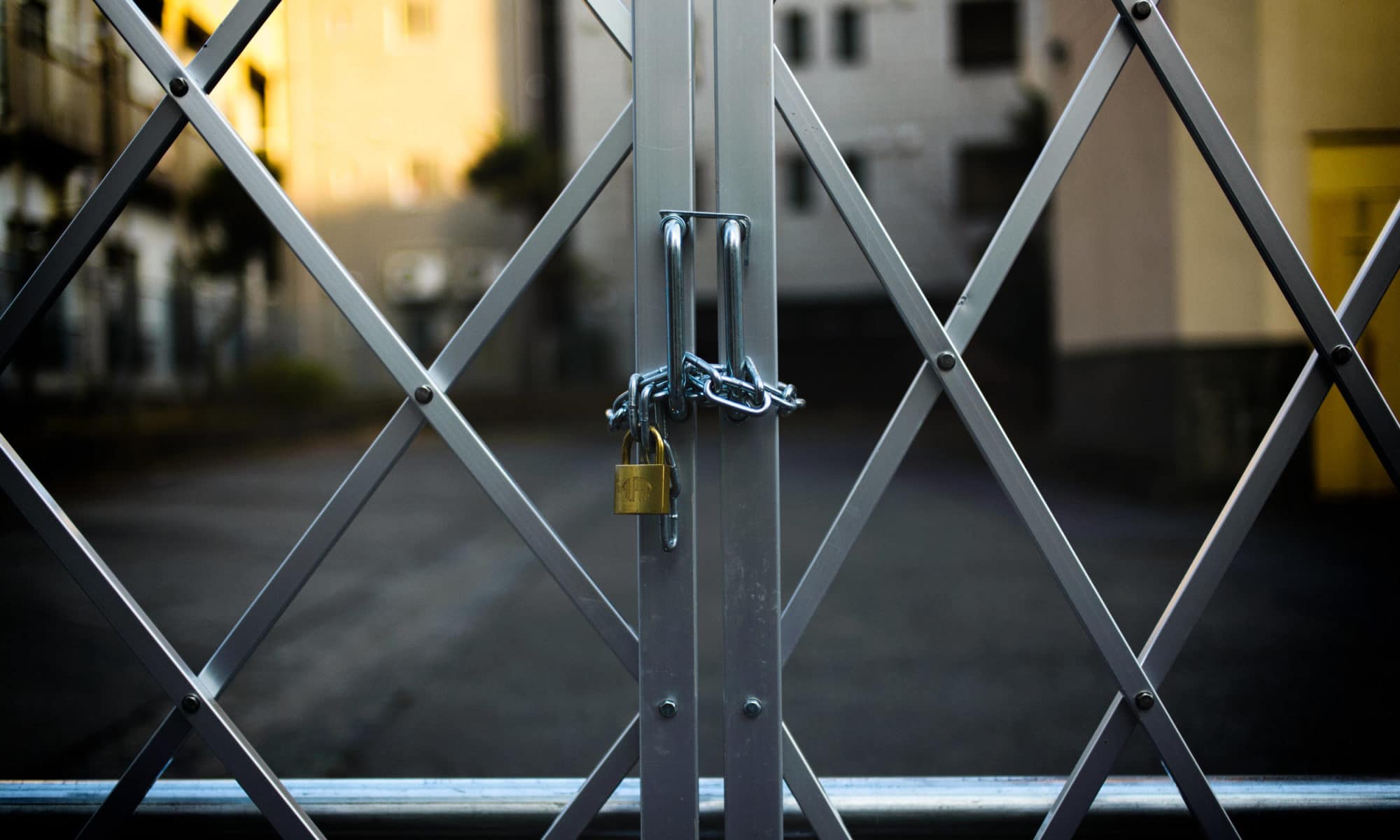
How many have set themselves up as gatekeepers over the years? They can be found blocking access wherever you turn: God, education, business, sports.

Beware of everything which puts an obstacle between you and God.
— Leo Tolstoy

The best approach is to avoid the gate altogether, if you can. There aren’t many truly fixed rules in this game of Life. Why go through the gatekeeper if you can just go around the gate?

You must remain alert as you tread this path. Gatekeeping is a form of power, and the gatekeepers are not keen on losing control.

Most importantly, make sure that you do not act as your own gatekeeper, blocking your own path to success. It’s easy to think that we are not ready, not worthy, not able. We easily hide from direct experience and attainment, preferring to read about what we want in a book instead.

Feel yourself talking to God. Don’t read the book – read your soul.
— Ralph Waldeo Emerson

Reflection from my last day as “not-a-father”

A reflection from my last day as “not-a-father”: It’s interesting that we have a word for “unmarried man” (bachelor), but no word for “a man without kids”.

Our languages are complex. We have been creating words for a long time. I am amazed that so many symbols and ideas have not yet been captured within our languages.

Silencing the Noise

Earlier this week, I deleted my personal Twitter account. This marks a further step on my fight to retrain my mind.

I’ve been without Facebook and Instagram for a few years now, and Twitter was the last major holdout. I justified keeping it because the quality of posts seemed to be higher than on the other platforms. I followed and interacted with interesting people and encountered plenty of new ideas.

But, there was still a cost. I noticed the addiction creeping in again. We cannot escape our programming – the red notification badges and slot machine effect will always capture us. The outrage that is so prevalent online creeped into my life. My mind and attention were being taken away from me.

Even the continual flow of ideas started getting to me. All Twitter thoughts are brief, without justification or explanation. Everything is spoken as a strong truth. There is no room for in depth discussion. For me, this is a non-starter: it’s just noise. I seek out quality information that I can dive into and incorporate into my life. I don’t need a sea of ideas from other people. I’d rather read a twenty-five page paper about a single point, rather than 180 characters which summarize a pithy complaint about human nature.

We take in too much information. We are always hungry for new ideas. But when I crowded my brain with everyone else’s ideas, I noticed that I no longer had room for my own.

So, I’m silencing the noise and continuing to reduce my media consumption. I need space for my own ideas to grow, develop, and integrate. I prefer the slow, high, winding mountain path to the veritable flood of never-ending information.

You will still find me in two places on the social interwebs: for now, I am keeping a LinkedIn Profile and Twitter account for my business. Both of those accounts are core marketing components. I feel much less temptation for checking these accounts, and much of my posting is automated through a third-party service.

But if these accounts continue to draw me away from useful work, they will have to go too. The best way to prevent addiction is to avoid the addictive substance entirely.

An Experiment in Exploring the Unconscious

I’ve been increasingly interested in the power of the unconscious, especially with regards to creativity and insight. Creativity and self-knowledge seem to come from nowhere, and I can understand how people of all ages have felt like they had a divine connection or received inspiration from a muse. Certainly, I cannot create well with the cerebral part of my brain – it seems to flow from somewhere deeper and mostly inaccessible.

I’ve occasionally used the I Ching, an ancient Chinese divination manual, as a tool for both getting unstuck and gaining deeper insight into my thoughts on a question. The book can act as a mirror you hold up to yourself, enabling you to see your situation in a different light.

For the next month, I’ll be exploring my unconscious by consulting the I Ching every day. Perhaps having a trigger can help us access the deeper parts of our being, the parts so often inaccessible to us. What might be revealed to me that I’m not paying attention to? What might be revealed to me by simply asking myself (or “the universe”) to share some insight?

Many poo-poo the act of consulting an oracle, because the answers are vague and can apply to many situations. Certainly generating a random number, associating it with a reading in a book, and applying it to your situation is not “rational”. I am not seeking a rational method for self-knowledge I have my doubts that even the most “rational” thinkers can truly escape the irrational aspects of their own nature. Anyone who claims to be rational is ignoring the power that cognitive and emotional biases have over our minds – there is no escaping them.

The answers from the I Ching serve as a useful tool for analyzing our own minds and getting unstuck. No matter the situation, taking a different view is invaluable. And who can disregard the use of such a text by wise and capable men throughout history, including Confucius, Carl Jung, and Mao Zedong?