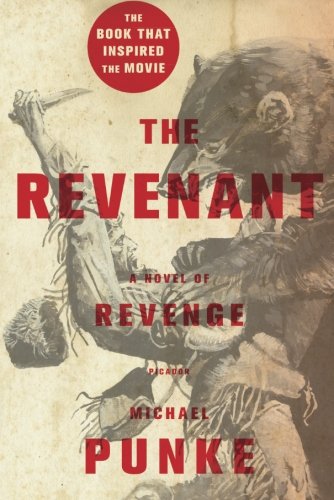
Flashman

Author: George MacDonald Fraser
Rating: 4/5
Last Read: November 2018
Who Should Read: People who like to laugh, those interested in military fiction or historical fiction

Flashman is the first book in a long series of novels about the life and exploits of Harry Flashman, an entirely unlikeable anti-hero.

Flashman describes himself openly as a coward, cheat, and a bully, and yet somehow he makes his way to the top of every situation and encounter he’s in. Flashman’s star rises throughout the novel, and everyone who recognizes him for who he is somehow ends up dead or pushed by the wayside.

It details his life from 1839 to 1842 and his travels to Scotland, India, and Afghanistan. It also contains a number of notes by the author, in the guise of a fictional editor, providing additional historical glosses on the events described. The history in these books is largely accurate; most of the prominent figures Flashman meets were real people.

I highly recommend Flashman to anyone who enjoys fiction. The book is fast-paced and full of amusing antics. I found myself laughing and cursing Flashman on every page. Those interested in military fiction or historical fiction will also enjoy the novel, as it covers the terrible defeat of the British in Afghanistan under General Elphinstone.

I stopped at the first book (I tend to avoid series), but if you are interested in continuing there are eleven more books in the series.

My Highlights

Anyway, he gave me a fine holy harangue, about how through repentance I might be saved—which I’ve never believed, by the way. I’ve repented a good deal in my time, and had good cause, but I was never ass enough to suppose it mended anything. But I’ve learned to swim with the tide when I have to, so I let him pray over me, and when he had finished I left his study a good deal happier than when I went in.

Anyway, I was content to let the matter rest just now; I have always believed in one thing at a time, and the thing that was occupying my mind was Miss Judy Parsons.

A lot has been said about the purchase of commissions—how the rich and incompetent can buy ahead of better men, how the poor and efficient are passed over—and most of it, in my experience, is rubbish. Even with purchase abolished, the rich rise faster in the Service than the poor, and they’re both inefficient anyway, as a rule. I’ve seen ten men’s share of service, through no fault of my own, and can say that most officers are bad, and the higher you go, the worse they get, myself included.

Some human faults are military virtues, like stupidity, and arrogance, and narrow-mindedness.

Of course if he had thought at all he would have sniffed something fishy about a ten thousand bribe in the first place. But he was greedy, and I’ve lived long enough to discover that there isn’t any folly a man won’t contemplate if there’s money or a woman at stake.

In her, ignorance and stupidity formed a perfect shield against the world: this, I suppose, is innocence.

“Not fair! Well, well, this is one lesson you’re learning. Nothing’s fair, you young fool.”

if the day comes, don’t wait to die on the field of honour.” He said it without a sneer. “Heroes draw no higher wages than the others, boy. Sleep well.”

But looking back I can say that, all unwittingly, Kabul and the army were right to regard Elphy’s arrival as an incident of the greatest significance. It opened a new chapter: it was a prelude to events that rang round the world. Elphy, ably assisted by McNaghten, was about to reach the peak of his career; he was going to produce the most shameful, ridiculous disaster in British military history.

Think of all the conceivable misfortunes that can arise from combinations of folly, cowardice, and sheer bad luck, and I’ll give you chapter and verse. But I still state unhesitatingly, that for pure, vacillating stupidity, for superb incompetence to command, for ignorance combined with bad judgement—in short, for the true talent for catastrophe—Elphy Bey stood alone.

Only he could have permitted the First Afghan War and let it develop to such a ruinous defeat. It was not easy: he started with a good army, a secure position, some excellent officers, a disorganised enemy, and repeated opportunities to save the situation. But Elphy, with the touch of true genius, swept aside these obstacles with unerring precision, and out of order wrought complete chaos. We shall not, with luck, look upon his like again.

So it always goes with dissension at the top:

And neither of them got on with Shelton, a rude boor of a man who was Elphy’s second-in-command, and this dissension at the top made for uneasiness and mistrust farther down.

I don’t pretend that I became an expert in a few weeks, or that I ever “knew” Afghanistan, but I picked up a little here and there, and began to realise that those who studied the country only from the cantonment at Kabul knew no more about it than you would learn about a strange house if you stayed in one room of it all the time.

It was unfortunate that he happened, about this time, to be awaiting his promotion and transfer to the Governorship of Bombay; I think the knowledge that he was leaving may have made him careless.

Ask him,” I shouted, “how I came here! Ask the lying, treacherous bastard!”
“Never try to flatter Gul Shah,” said the stout man cheerfully. “He’ll believe every word of it. No, there has been a mistake, regrettably, but it has not been irreparable. For which God be thanked—and my timely arrival, to be sure.” And he smiled at me again. “But you must not blame Gul Shah, or his people: they did not know you for what you were.”
Now, as he said those words, he ceased to be a waggish madman; his voice was as gentle as ever, but there was no mistaking the steel underneath. Suddenly things became real again, and I understood that the kindly smiling man before me was strong in a way that folk like Gul Shah could never be: strong and dangerous.

You have to manage morale:

“First, my dear friend Flashman,” says he, all charm, “I must tell you that you have been kept here not only for your own good but for your people’s. Their situation is now bad. Why, I do not know, but Elfistan Sahib has behaved like a weak old woman. He has allowed the mobs to rage where they will, he has left the deaths of his servants unavenged, he has exposed his soldiers to the worst fate of all—humiliation—by keeping them shut up in cantonments while the Afghan rabble mock at them. Now his own troops are sick at heart; they have no fight in them.”

“The British cannot stay here now,” he went on. “They have lost their power, and we Afghans wish to be rid of them. There are those who say we should slaughter them all—needless to say, I do not agree.” And he smiled. “For one thing, it might not be so easy—”
“It is never easy,” said old Muhammed Din. “These same feringhees took Ghuznee Fort; I saw them, by God.”
“—and for another, what would the harvest be?” went on Akbar. “The White Queen avenges her children. No, there must be a peaceful withdrawal to India; this is what I would prefer myself. I am no enemy of the British, but they have been guests in my country too long.”

I have observed, in the course of a dishonest life, that when a rogue is outlining a treacherous plan, he works harder to convince himself than to move his hearers. Akbar wanted to cook his Afghan enemies’ goose, that was all, and perfectly understandable, but he wanted to look like a gentleman still—to himself.

“Now,” went on Akbar, “you must deliver my proposals to McLoten Sahib personally, and in the presence of Muhammed Din and Khan Hamet here, who will accompany you. If it seems”—he flashed his smile—“that I don’t trust you, my friend, let me say that I trust no one. The reflection is not personal.”

You don’t know one of the first rules of politics: that a man can be trusted to follow his own interest. I see perfectly well that Akbar is after undisputed power among his own people; well, who’s to blame him? And I tell you, I believe you wrong Akbar Khan; in our meetings he has impressed me more than any other Afghan I have met. I judge him to be a man of his word.”

“To my most beloved Hector,” and I thought, by God, she’s cheating on me, and has sent me the wrong letter by mistake. But in the second line was a reference to Achilles, and another to Ajax, so I understood she was just addressing me in terms which she accounted fitting for a martial paladin; she knew no better. It was a common custom at that time, in the more romantic females, to see their soldier husbands and sweethearts as Greek heroes, instead of the whoremongering, drunken clowns most of them were. However, the Greek heroes were probably no better, so it was not so far off the mark.

But chance helped me, as she always does if you keep your wits about you

“Why should you want to preserve my life?” says I. “What do you owe me?”
“We have been friends,” says he, grinning that sudden grin of his. “Also I admired the compliments you paid me as you rode away from Mohammed Khan’s fort the other day.”
“They weren’t meant to flatter you,” says I.
The insults of an enemy are a tribute to the brave,” laughs he.

When I woke it was broad day, and Sergeant Hudson had a little fire going and was brewing coffee. It was the first hot drink I had tasted in days; he even had a little sugar for it.
“Where the devil did you come by this, Hudson?” says I, for there had been nothing but dried mutton and a few scraps of biscuit on the last few days of the march.
“Foraged, sir,” says he, cool as you please, so I asked no more questions, but sipped contentedly as I lay in my blankets.

He’s a pretty a terrible leader:

So I agreed, and found myself considering this Sergeant Hudson for the first time, for beyond noting that he was a steady man I had given him not much notice before. After all, why should one notice one’s men very much?

There is a painting of the scene at Gandamack, which I saw a few years ago, and it is like enough the real thing as I remember it. No doubt it is very fine and stirs martial thoughts in the gloryblown asses who look at it; my only thought when I saw it was, “You poor bloody fools!” and I said so, to the disgust of other viewers. But I was there, you see, shivering with horror as I watched, unlike the good Londoners, who let the roughnecks and jailbirds keep their empire for them; they are good enough for getting cut up at the Gandamacks which fools like Elphy and McNaghten bring ’em to, and no great loss to anybody.

So we were safe, and to come safe out of a disaster is more gratifying than to come safe out of none at all.

There is great pleasure in catastrophe that doesn’t touch you, and anyone who says there isn’t is a liar. Haven’t you seen it in the face of a bearer of bad news, and heard it in the unctuous phrases at the church gate after a funeral?

Hudson, of course, didn’t understand why I should be so horrified at this, until I told him the whole story—about Narreeman, and how Akbar had rescued me from Gul’s snakes in Kabul. Heavens, how I must have talked, but when I tell you that we were in the cellar a week together, without ever so much as seeing beyond the door, and myself in a sweat of anxiety about what our fate might be, you will understand that I needed an audience. Your real coward always does, and the worse his fear the more he blabs.

God, how I called; I roared like a bull calf, and got nothing back, not even echoes. I would do it again, too, in the same position, for all that I don’t believe in God and never have. But I blubbered like an infant, calling on Christ to save me, swearing to reform and crying gentle Jesus meek and mild over and over again. It’s a great thing, prayer. Nobody answers, but at least it stops you from thinking.

God alone knew what I was supposed to have done that was so brave, but doubtless I should learn in time. All I could see was that somehow appearances were heavily on my side—and who needs more than that? Give me the shadow every time, and you can keep the substance—it’s a principle I’ve followed all my life, and it works, if you know how to act on it.

It calls for nice judgement, this art of bragging; you must be plain, but not too plain, and you must smile only rarely. Letting them guess more than you say is the kernel of it, and looking uncomfortable when they compliment you.

But you will have noticed, no doubt, that when a man has a reputation good or bad, folk will always delight in adding to it; there wasn’t a man in Afghanistan who knew me but who wanted to recall having seen me doing something desperate, and Broadfoot, quite sincerely, was like all the rest.

I forgot the incident at once. I remember it now, for it was that same day that everything happened all at once. There are days like that; a chapter in your life ends and another one begins, and nothing is the same afterwards.

This myth called bravery, which is half-panic, half-lunacy (in my case, all panic), pays for all; in England you can’t be a hero and bad. There’s practically a law against it.

We shook hands, and he drove off. I never spoke to him again. Years later, though, I told the American general, Robert Lee, of the incident, and he said Wellington was right—I had received the highest honour any soldier could hope for. But it wasn’t the medal; for Lee’s money it was Wellington’s hand. Neither, I may point out, had any intrinsic value.

Pride is a hellish thing; without it there isn’t any jealousy or ambition. And I was proud of the figure I cut—in bed and in barracks. And here was I, the lion of the hour, medal and all, the Duke’s handshake and the Queen’s regard still fresh—and I was gnawing my innards out about a gold-headed filly without a brain to her name.

Flashman shows his true character when finding out he’s been cheated on:

I looked, and seeing myself so damned dashing, and her radiant and fair beside me, I fought down the wretchedness and rage. No, it couldn’t be true….
“Susan, you have not put away my coat, silly girl. Take it at once, before it creases.”
By God, though, I knew it was. Or I thought I knew. To the devil with the consequences, no little ninny in petticoats was going to do this to me.
“Elspeth,” says I, turning.
“Hang it carefully, now, when you’ve brushed it. There. Yes, my love?”
“Elspeth….”
“Oh, Harry, you look so strong and fierce, on my word. I don’t think I shall feel easy in my mind when I see all these fancy London ladies making eyes at you.” And she pouted very pretty and touched her finger on my lips.
“Elspeth, I—”
“Oh, I had nearly forgot—you had better take some money with you. Susan, bring me my purse. In case of any need that may arise, you know. Twenty guineas, my love.”
“Much obliged,” says I. What the devil, you have to make do as best you can; if the tide’s there, swim with it and catch on to whatever offers. You only go by once.
“Will twenty be sufficient, do you think?”
“Better make it forty.”

Summary

Major Characters

  • Flashman
  • Earl of Cardigan
  • Bernier
  • Elspeth
  • Gul Shah
  • Burnes
  • Elby Bey (Elphinstone)
  • Akbar Khan
  • Sgt Hudson

Outline

When I read fiction, I make an outline as a memory aide. If you don’t want to see any spoilers, skip this section.

  1. Flashman is expelled from school
  2. Flashman joins the 11th Light Dragoons as an officer
  3. Flashman “wins” duel with Bernier after rigging it
  4. Flashman gets reassigned to Glasgow, marries Elspeth (Forced)
  5. Flashman gets transferred to India for marrying down
  6. Flashman learns Hindi, goes to a party with the governor, gets sent to Afghanistan
  7. Flashman learns Pashtu, gets sent as an emissary to the Gulzai
  8. Flashman rapes the dancer, makes an enemy of Gul Shah – ambushed while hunting
  9. The complacent garrison is attacked. Burnes dies.
  10. Flashman is captured by Gul Shah, then saved by Akbar Khan
  11. Flashman is sent to make a deal: British help double-cross a tribe, get safe retreat out of Afghanistan.
  12. British get double-crossed; still retreat out of Afghanistan
  13. Backstabbing by Akbar Khan – most of the force is wiped out in the Kabul pass (terrible decisions by Elphinstone)
  14. Flashman separates from the army with Sgt Hudson
  15. They see the massacre @ Gandamack, and are captured by Afghans
  16. Flashman is tortured by Gul Shah, he escapes with Sgt Hudson after they kill Gul Shah
  17. They make it to a fort outside of Jalalabad
  18. The fort is overrun, the only survivor is Flashman
  19. Flashman is sent to England as a hero – meets the Queen, Duke of Wellington, gets a medal
  20. Finds out his wife is cheating on him – fine with it because he wants money.

Buy the Book

If you are interested in purchasing this book, you can support the website by using our Amazon affiliate link.
 

Flashman: A Novel

By George MacDonald Fraser


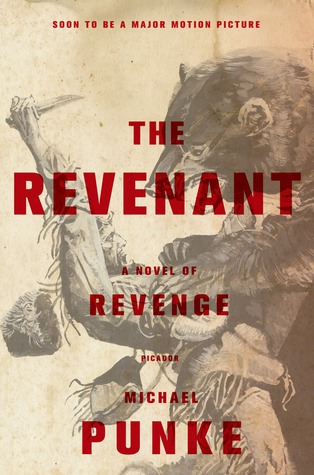
The Revenant: A Novel of Revenge

Author: Michael Punke
Rating: 8/10
Last Read: March 2018

I purchased The Revenant a few months ago and experienced a few false starts with it. For some reason, I was never able to make it past the first few pages before deciding to pick another book. During this past attempt, I ended up being engrossed in the book and finished it in two sittings.

The Revenant is set in the 1820s and takes place in the expanding western frontier. The book is based on the life of Hugh Glass, a fur trapper who was mauled by a grizzly and abandoned to die by his companions. He makes his way 200-300 miles back to the nearest settlement to restock so he can get revenge on his former companions who abandoned him to die. Along the way he faces death due to injuries, illness, starvation, predators, and hostile Native Americans.

I recommend The Revenant for those who love the wilderness. It’s also a great read for students of the human soul, as revenge is an interesting and powerful motivation for accomplishing crazy feats. Not a great selection for pre-bed reading, however – there are intense scenes throughout the book.

He vowed to survive, if for no other reason than to visit vengeance on the men who betrayed him.

My Highlights

God had placed him in a garden of infinite bounty, a Land of Goshen in which any man could prosper if only he had the courage and the fortitude to try. Ashley’s weaknesses, which he confessed forthrightly, were simply barriers to be overcome by some creative combination of his strengths. Ashley expected setbacks, but he would not tolerate failure.

In truth, Glass had developed significant doubts about the captain. Misfortune seemed to hang on him like day-before smoke.

I’m glad I don’t have to worry about enemies when I make a fire:

They bled the game, gathered wood, and set two or three small fires in narrow, rectangular pits. Smaller fires produced less smoke than a single conflagration, while also offering more surface for smoking meat and more sources of heat. If enemies did spot them at night, more fires gave the illusion of more men.

He knew that leadership required him to make tough decisions for the good of the brigade. He knew that the frontier respected—required—independence and self-sufficiency above all else. There were no entitlements west of St. Louis. Yet the fierce individuals who comprised his frontier community were bound together by the tight weave of collective responsibility. Though no law was written, there was a crude rule of law, adherence to a covenant that transcended their selfish interests. It was biblical in its depth, and its importance grew with each step into wilderness. When the need arose, a man extended a helping hand to his friends, to his partners, to strangers. In so doing, each knew that his own survival might one day depend upon the reaching grasp of another.

The utility of his code seemed diminished as the captain struggled to apply it to Glass. Haven’t I done my best for him? Tending his wounds, portaging him, waiting respectfully so that he might at least have a civilized burial. Through Henry’s decisions, they had subordinated their collective needs to the needs of one man. It was the right thing to do, but it could not be sustained. Not here.

The human soul can be dark:

Wasn’t that why he was there in the clearing—to salve his wounded pride? Not to take care of another man, but to take care of himself? Wasn’t he just like Fitzgerald, profiting from another man’s misfortune? Say what you would about Fitzgerald, at least he was honest about why he stayed.

The boy came to believe that going west was more than just a fancy for someplace new. He came to see it as a part of his soul, a missing piece that could only be made whole on some far-off mountain or plain.

There is a tide in the affairs of men, Which, taken at the flood, leads on to fortune.

Once focused, it was clear that the eyes stared back with complete lucidity, clear that Glass, like Bridger, had calculated the full meaning of the Indians on the river. Every pore in Bridger’s body seemed to pound with the intensity of the moment, yet to Bridger it seemed that Glass’s eyes conveyed a serene calmness. Understanding? Forgiveness? Or is that just what I want to believe? As the boy stared at Glass, guilt seized him like clenched fangs. What does Glass think? What will the captain think?

The human/snake relationship has always been an interesting one:

Glass wanted to roll away, but there was something inevitable about the way the snake moved. Some part of Glass remembered an admonishment to hold still in the presence of a snake. He froze, as much from hypnosis as from choice. The snake moved to within a few feet of his face and stopped. Glass stared, trying to mimic the serpent’s unblinking stare. He was no match. The snake’s black eyes were as unforgiving as the plague. He watched, mesmerized, as the snake wrapped itself slowly into a perfect coil, its entire body made for the sole purpose of launching forward in attack.

He would crawl until his body could support a crutch. If he only made three miles a day, so be it. Better to have those three miles behind him than ahead. Besides, moving would increase his odds of finding food.

At thirty-six, Glass no longer considered himself a young man. And unlike young men, Glass did not consider himself as someone with nothing to lose. His decision to go west was not rash or forced, but as fully deliberate as any choice in his life. At the same time, he could not explain or articulate his reasons. It was something that he felt more than understood.

In the last moments of daylight he examined the rattles at the tip of the tail. There were ten, one added in each year of the snake’s life. Glass had never seen a snake with ten rattles. A long time, ten years. Glass thought about the snake, surviving, thriving for a decade on the strength of its brutal attributes. And then a single mistake, a moment of exposure in an environment without tolerance, dead and devoured almost before its blood ceased to pump. He cut the rattles from the remains of the snake and fingered them like a rosary. After a while he dropped them into his possibles bag. When he looked at them, he wanted to remember.

The frustrating necessity of delay was like water on the hot iron of his determination—hardening it, making it unmalleable. He vowed to survive, if for no other reason than to visit vengeance on the men who betrayed him.

Still, he thought, there was no luck at all in standing still.

Glass came to visualize his strength as the sand in an hourglass. Minute by minute he felt his vitality ebbing away. Like an hourglass, he knew, a moment would arrive when the last grain of sand would tumble down the aperture, leaving the upper chamber void.

He resolved to stop earlier the next day. Perhaps dig pits in two locations. The thought of slower progress irritated him. How long could he avoid Arikara on the banks of the well-traveled Grand? Don’t do that. Don’t look too far ahead. The goal each day is tomorrow morning.

The wolf waits patiently for a mistake and then strikes. How often do you wait for the right moment before leaping into action?

A hundred yards downstream from Glass, a pack of eight wolves also watched the great bull and the outliers he guarded. The alpha male sat on his haunches near a clump of sage. All afternoon he had waited patiently for the moment that just arrived, the moment when a gap emerged between the outliers and the rest of the herd. A gap. A fatal weakness. The big wolf raised himself suddenly to all fours.

It wasn’t until the wolves began to move that their lethal strength became obvious. The strength was not derivative of muscularity or grace. Rather it flowed from a single-minded intelligence that made their movements deliberate, relentless. The individual animals converged into a lethal unit, cohering in the collective strength of the pack.

The white wolf crouched, poised, it seemed, to attack again. But suddenly the wolf with one ear turned and ran after the pack. The white wolf stopped to contemplate the changing odds. He knew well his place in the pack: Others led and he followed. Others picked out the game to be killed, he helped to run it down. Others ate first, he contented himself with the remainder. The wolf had never seen an animal like the one that appeared today, but he understood precisely where it fit in the pecking order. Another clap of thunder erupted overhead, and the rain began to pour down. The white wolf took one last look at the buffalo, the man, and the smoking sage, then he turned and loped after the others.

The notion of burial had always struck him as stifling and cold. He liked the Indian way better, setting the bodies up high, as if passing them to the heavens.

The Indian accomplished effortlessly what Glass was compelled to pretend—an air of complete confidence. His name was Yellow Horse. He was tall, over six feet, with square shoulders and perfect posture that accentuated a powerful neck and chest. In his tightly braided hair he wore three eagle feathers, notched to signify enemies killed in battle. Two decorative bands ran down the doeskin tunic on his chest. Glass noticed the intricacy of the work, hundreds of interwoven porcupine quills dyed brilliantly in vermillion and indigo.

Lies tend to compound:

“We buried him deep … covered him with enough rock to keep him protected. Truth is, Captain, I wanted to get moving right away—but Bridger said we ought to make a cross for the grave.” Bridger looked up, horrified at this last bit of embellishment. Twenty admiring faces stared back at him, a few nodding in solemn approval. God—not respect! What he had craved was now his, and it was more than he could bear. Whatever the consequences, he had to purge the awful burden of their lie—his lie. He felt Fitzgerald’s icy stare from the corner of his eye. I don’t care. He opened his mouth to speak, but before he could find the right words, Captain Henry said, “I knew you’d pull your weight, Bridger.” More approving nods from the men of the brigade. What have I done? He cast his eyes to the ground.

He felt disdain and even shame for the filthy Indians who camped around the fort, prostituting their wives and daughters for the next drink of whiskey. There was something to fear in an evil that could make men leave their old lives behind and live in such disgrace.

Beyond Fort Brazeau’s effect on the resident Indians, other aspects of the post left him profoundly disquieted. He marveled at the intricacy and quality of the goods produced by the whites, from their guns and axes to their fine cloth and needles. Yet he also felt a lurking trepidation about a people who could make such things, harnessing powers that he did not understand. And what about the stories of the whites’ great villages in the East, villages with people as numerous as the buffalo. He doubted these stories could be true, though each year the trickle of traders increased.

Standing to greet another, a sign of respect:

Yellow Horse stood when Glass walked into the camp, a low fire illuminating their faces.

Again, standing to greet:

Dominique rose, shook Glass’s hand and said, “Enchanté.”

My kit doesn’t look anything like this:

They returned to the cabin and Glass picked out the rest of his supplies. He chose a .53 pistol to complement the rifle. A ball mold, lead, powder, and flints. A tomahawk and a large skinning knife. A thick leather belt to hold his weapons. Two red cotton shirts to wear beneath the doeskin tunic. A large Hudson’s Bay capote. A wool cap and mittens. Five pounds of salt and three pigtails of tobacco. Needle and thread. Cordage. To carry his newfound bounty, he picked a fringed leather possibles bag with intricate quill beading. He noticed that the voyageurs all wore small sacks at the waist for their pipe and tobacco. He took one of those too, a handy spot for his new flint and steel.

Kiowa laughed too, then said: “With all due respect, mon ami, your face tells a story by itself—but we’d like to hear the particulars.

Kiowa understood early in his career that his trade dealt not only in goods, but also in information. People came to his trading post not just for the things they could buy, but also for the things they could learn.

Glass shook his head again, more firmly this time. “I have my own affairs to attend.” m
“Bit of a silly venture, isn’t it? For a man of your skills? Traipsing across Louisiana in the dead of winter. Chase down your betrayers in the spring, if you’re still inclined.”
The warmth of the earlier conversation seemed to drain from the room, as if a door had been opened on a frigid winter day. Glass’s eyes flashed and Kiowa regretted immediately his comment. “It’s not an issue on which I asked your counsel.”
“No, monsieur. No, it was not.”

The colder weather settled into Glass’s wounds the way a storm creeps its way up a mountain valley.

With the exception of Charbonneau, who was gloomy as January rain, the voyageurs approached each waking moment with an infallibly cloudless optimism. They laughed at the slimmest opportunity. They showed little tolerance for silence, filling the day with unceasing and passionate discussion of women, water, and wild Indians. They fired constant insults back and forth. Indeed, to pass up an opportunity for a good joke was viewed as a character flaw, a sign of weakness. Glass wished he understood more French, if only for the entertainment value of following the banter that kept them all so jolly.

In the rare moments when conversation lagged, someone would break out in zestful song, an instant cue for the others to join in. What they lacked in musical ability, they compensated in unbridled enthusiasm. All in all, thought Glass, an agreeable way of life.

Like many of the things he encountered each day, Professeur was confused by what happened next. He felt an odd sensation and looked down to find the shaft of an arrow protruding from his stomach. For a moment he wondered if La Vierge had played some kind of joke. Then a second arrow appeared, then a third. Professeur stared in horrified fascination at the feathers on the slender shafts. Suddenly he could not feel his legs and he realized he was falling backward. He heard his body make heavy contact with the frozen ground. In the brief moments before he died, he wondered, Why doesn’t it hurt?

His awe of the mountains grew in the days that followed, as the Yellowstone River led him nearer and nearer. Their great mass was a marker, a benchmark fixed against time itself. Others might feel disquiet at the notion of something so much larger than themselves. But for Glass, there was a sense of sacrament that flowed from the mountains like a font, an immortality that made his quotidian pains seem inconsequential. And so he walked, day after day, toward the mountains at the end of the plain.

Henry was a failure at many things, but he understood the power of incentives.

Stunned silence filled the room as the men struggled to comprehend the vision before them. Unlike the others, Bridger understood instantly. In his mind he had seen this vision before. His guilt swelled up, churning like a paddle wheel in his stomach. He wanted desperately to flee. How do you escape something that comes from inside? The revenant, he knew, searched for him.

Glass reached down and removed the small pouch that Pig wore around his throat. He dumped the contents onto the ground. A flint and steel tumbled out, along with several musket balls, patches—and a delicate pewter bracelet. It struck Glass as an odd possession for the giant man. What story connected the dainty trinket to Pig? A dead mother? A sweetheart left behind? They would never know, and the finality of the mystery filled Glass with melancholy thoughts of his own souvenirs.

I also dislike someone who complains about problems but offers no solutions:

Glass shot an irritated glance at Red, who had an uncanny knack for spotting problems and an utter inability for crafting solutions. That said, he was probably right. The few creeks they’d passed had been small. Any Indians in the area would hug tight to the Platte, directly in their path. But what choice do we have?

Kiowa said, “I’m sorry that you never had a proper rendezvous with Fitzgerald. But you should have figured out by now that things aren’t always so tidy.”
They stood there for a while, with no sound but the flapping of the flag. “It’s not that simple, Kiowa.”
Of course it’s not simple. Who said it was simple? But you know what? Lots of loose ends don’t ever get tied up. Play the hand you’re dealt. Move on.

Glass said nothing more. Kiowa too was silent for a long time. Finally he said quietly, “Il n’est pire sourd que celui qui ne veut pas entendre. Do you know what that means?”
Glass shook his head.
It means there are none so deaf as those that will not hear. Why did you come to the frontier?” demanded Kiowa. “To track down a common thief? To revel in a moment’s revenge? I thought there was more to you than that.”

He stood there on the high rampart for a long time that night, listening to the Missouri and staring at the stars. He wondered at the source of the waters, of the mighty Big Horns whose tops he had seen but never touched. He wondered at the stars and the heavens, comforted by their vastness against his own small place in the world. Finally he climbed down from the ramparts and went inside, quickly finding the sleep that had eluded him before.

Buy the Book

If you are interested in purchasing this book, you can support the website by using our Amazon affiliate link: