Ask the Dust

Author: John Fante
Rating: 6/10
Last Read: April 2014

Quick Summary: Arturo Bandini is a struggling writer in LA during the depression.  He’s convinced of his own greatness, but can’t seem to get the words onto the page correctly!  This follows his adventures (and madness) through the city, into love, and on a mad chase after his love into the desert.

I heard this book described as “The Great Gatsby of the West Coast.”  I’m not totally sure about that one – I like Gatsby much more.  I didn’t love the book, but it was still a decent read.  Perhaps I should give it a second chance one day.

I picked it up because one of my favorite poets – Charles Bukowski – loved this book.  One bonus for me was the fact that Bukowski wrote the foreword! What a surprise. 

My Takeaways

No matter how convinced you are of your own talent, if you cannot do the work and produce output, you are nothing.  Ego is your enemy.

My Highlights

But let me say that the way of his words and the way of his way are the same: strong and good and warm.

Almighty God, I am sorry I am now an atheist, but have You read Nietzsche? Ah, such a book!

“My advice to all young writers is quite simple. I would caution them never to evade a new experience. I would urge them to live life in the raw, to grapple with it bravely, to attack it with naked fists.”

every morning you’ll see the mighty sun, the eternal blue of the sky, and the streets will be full of sleek women you never will possess, and the hot semitropical nights will reek of romance you’ll never have, but you’ll still be in paradise, boys, in the land of sunshine.

You are nobody, and I might have been somebody, and the road to each of us is love.

God was such a dirty crook, such a contemptible skunk, that’s what he was for doing that thing to that woman. Come down out of the skies, you God, come on down and I’ll hammer your face all over the city of Los Angeles, you miserable unpardonable prankster. If it wasn’t for you, this woman would not be so maimed, and neither would the world

a Bandini with dynamite in his body and volcanic fire in his eyes, who goes to this Camilla Lopez and says: see here, young woman, I have been very patient with you, but now I have had enough of your impudence, and you will kindly oblige me by removing your clothes.

the world seemed a myth, a transparent plane, and all things upon it were here for only a little while; all of us, Bandini, and Hackmuth and Camilla and Vera, all of us were here for a little while, and then we were somewhere else; we were not alive at all; we approached living, but we never achieved it. We are going to die. Everybody was going to die.

The world was dust, and dust it would become.

What doth it profit a man if he gain the whole world and suffer the loss of his own soul?

“What’s the matter with him?”
“T. B.” she said.
“Tough.”
“He won’t live long.”
I didn’t give a damn. “We all have to die someday.”

He was going to die in a year, she said. He had left Los Angeles and gone to the edge of the Santa Ana desert. There he lived in a shack, writing feverishly. All his life he had wanted to write. Now, with such little time remaining, his chance had come.

There came over me a terrifying sense of understanding about the meaning and the pathetic destiny of men. The desert was always there, a patient white animal, waiting for men to die, for civilizations to flicker and pass into the darkness. Then men seemed brave to me, and I was proud to be numbered among them. All the evil of the world seemed not evil at all, but inevitable and good and part of that endless struggle to keep the desert down.

I looked southward in the direction of the big stars, and I knew that in that direction lay the Santa Ana desert, that under the big stars in a shack lay a man like myself, who would probably be swallowed by the desert sooner than I, and in my hand I held an effort of his, an expression of his struggle against the implacable silence toward which he was being hurled. Murderer or bartender or writer, it didn’t matter: his fate was the common fate of all, his finish my finish; and here tonight in this city of darkened windows were other millions like him and like me: as indistinguishable as dying blades of grass. Living was hard enough. Dying was a supreme task. And Sammy was soon to die.

To hell with that Hitler, this is more important than Hitler, this is about my book. It won’t shake the world, it won’t kill a soul, it won’t fire a gun, ah, but you’ll remember it to the day you die, you’ll lie there breathing your last, and you’ll smile as you remember the book.

This was the life for a man, to wander and stop and then go on, ever following the white line along the rambling coast, a time to relax at the wheel, light another cigaret, and grope stupidly for the meanings in that perplexing desert sky.
Alice’s Adventures in Wonderland

Author: Lewis Carroll
Rating: 8/10
Last Read: August 2010

Quick Summary: Truly a book of nonsense – Alice is a little girl who falls down a rabbit hole and wanders through a fantastic world.  Sometimes it feels like you’re in the middle of an acid trip, other times it just feels like weird nonsense. But there’s plenty of poetry, riddles, and interesting turns of language around.

My Highlights

‘How am I to get in?’ asked Alice again, in a louder tone. ‘Are you to get in at all?’ said the Footman. ‘That’s the first question, you know.’

And with that she began nursing her child again, singing a sort of lullaby to it as she did so, and giving it a violent shake at the end of every line: ‘Speak roughly to your little boy, And beat him when he sneezes: He only does it to annoy, Because he knows it teases.’

‘Would you tell me, please, which way I ought to go from here?’
‘That depends a good deal on where you want to get to,’ said the Cat.
‘I don’t much care where–‘ said Alice.
‘Then it doesn’t matter which way you go,’ said the Cat.
‘–so long as I get somewhere,’ Alice added as an explanation.
‘Oh, you’re sure to do that,’ said the Cat, ‘if you only walk long enough.’

She had quite forgotten the Duchess by this time, and was a little startled when she heard her voice close to her ear. ‘You’re thinking about something, my dear, and that makes you forget to talk. I can’t tell you just now what the moral of that is, but I shall remember it in a bit.’ ‘Perhaps it hasn’t one,’ Alice ventured to remark. ‘Tut, tut, child!’ said the Duchess. ‘Everything’s got a moral, if only you can find it.’

“Never imagine yourself not to be otherwise than what it might appear to others that what you were or might have been was not otherwise than what you had been would have appeared to them to be otherwise.”

‘That’s the reason they’re called lessons,’ the Gryphon remarked: ‘because they lessen from day to day.’

The White Rabbit put on his spectacles. ‘Where shall I begin, please your Majesty?’ he asked.
‘Begin at the beginning,’ the King said gravely, ‘and go on till you come to the end: then stop.

Now, here, you see, it takes all the running you can do, to keep in the same place. If you want to get somewhere else, you must run at least twice as fast as that!” ~ The Queen

The Postman

Author: David Brin
Rating: 8/10
Last Read: December 2012

Quick Summary:  In the post-apocalyptic wasteland of America, a man finds a postal worker’s uniform and uses it to spread the lie of restoring the United States – giving hope to people threatened with death and destruction, culminating in a struggle with the warlords around him.

My Highlights

“Short of Death itself, there is no such thing as a ‘total’ defeat.… There is never a disaster so devastating that a determined person cannot pull something out of the ashes—by risking all that he or she has left.… “Nothing in the world is more dangerous than a desperate man.”

The steely gray eyes were narrow and sad when next he looked up at Gordon. “I found out something, you know. I discovered that the big things don’t love you back. They take and take, and never give in return. They’ll drain your blood, your soul, if you let them, and never let go.

Men can be brilliant and strong, they whispered to one another. But men can be mad, as well. And the mad ones can ruin the world.

There is power there, slumbering below the surface. And there is magic.

“It’s said that ‘power corrupts,’ but actually it’s more true that power attracts the corruptible. The sane are usually attracted by other things than power. When they do act, they think of it as service, which has limits. The tyrant, though, seeks mastery, for which he is insatiable, implacable.

“The problem is one of balance,” the graying statesman-scientist said to his invention, ignoring Gordon as he contemplated the chessboard. “I’ve put some thought to it. How can we set up a system which encourages individuals to strive and excel, and yet which shows some compassion to the weak, and weeds out madmen and tyrants?”

Of course we can establish constitutional checks and balances, but those won’t mean a thing unless citizens make sure the safeguards are taken seriously. The greedy and the power-hungry will always look for ways to break the rules, or twist them to their advantage.

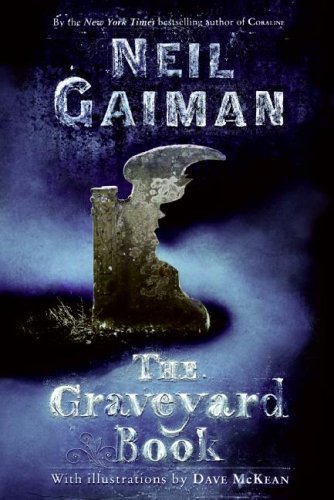
The Graveyard Book

Author: Neil Gaiman
Rating: 10/10
Last Read: July 2016

Quick Summary: A boy’s family is murdered, and he manages to escape to a graveyard.  The ghosts of the graveyard raise and protect the boy.  Many adventures and childish antics ensue.

I was looking for a book to read that would be relaxing before bed.  After reading the Amazon book summary, I was going to skip over it – the premise seemed cheesy.  I’m glad I decided to give it a whirl – I finished it within the next 24 hours.

My Highlights

A graveyard is not normally a democracy, and yet death is the great democracy, and each of the dead had a voice, and an opinion as to whether the living child should be allowed to stay, and they were each determined to be heard, that night. –loc 333

His guardian was unperturbed. “It is neither fair nor unfair, Nobody Owens. It simply is. –loc 743

“They kill themselves, you mean?” said Bod. He was about eight years old, wide-eyed and inquisitive, and he was not stupid. “Indeed.” “Does it work? Are they happier dead?” “Sometimes. Mostly, no. It’s like the people who believe they’ll be happy if they go and live somewhere else, but who learn it doesn’t work that way. Wherever you go, you take yourself with you. If you see what I mean.” –loc 1222

The dance sped up, and the dancers with it. Bod was breathless, but he could not imagine the dance ever stopping: the Macabray, the dance of the living and the dead, the dance with Death. –loc 1960

Fear is contagious. You can catch it. Sometimes all it takes is for someone to say that they’re scared for the fear to become real. Mo was terrified, and now Nick was too. –loc 2277

At the best of times his face was unreadable. Now his face was a book written in a language long forgotten, in an alphabet unimagined. Silas wrapped the shadows around him like a blanket, and stared after the way the boy had gone, and did not move to follow. –loc 2358

“The dead dun’t disappoint you. They’ve had their life, done what they’ve done. We dun’t change. The living, they always disappoint you, dun’t they? You meet a boy who’s all brave and noble, and he grows up to run away.” –loc 2403

Thackeray Porringer was Bod’s height and age, and seemed to be in much better temper with him; he would walk with Bod in the evenings, and tell stories of unfortunate things that had happened to his friends. Normally the stories would end in the friends being hanged until they were dead for no offense of theirs and by mistake, although sometimes they were simply transported to the American Colonies and they didn’t have to be hanged unless they came back. –loc 2809

And then, with a hopeful whine, WILL YOU BE OUR MASTER? “I’m afraid not.” IF YOU WERE OUR MASTER, WE COULD HOLD YOU IN OUR COILS FOREVER. IF YOU WERE OUR MASTER, WE WOULD KEEP YOU SAFE AND PROTECT YOU UNTIL THE END OF TIME AND NEVER LET YOU ENDURE THE DANGERS OF THE WORLD. “I am not your master.” NO. Bod felt the Sleer writhing through his mind. It said, THEN FIND YOUR NAME. –loc 3104

Jack nodded thoughtfully. “If this is true,” said Jack, “and if I am now a Jack-all-alone, then I have an excellent reason for killing you both.” Bod said nothing. “Pride,” said the man Jack. “Pride in my work. Pride in finishing what I began.” –loc 3503

“How could you make her forget me?” Silas said, “People want to forget the impossible. It makes their world safer.” –loc 3646

“I called you boy, didn’t I? But time passes in the blink of an eye, and it’s a young man you are now, isn’t it? How old are you?” “About fifteen, I think. Though I still feel the same as I always did,” Bod said, but Mother Slaughter interrupted, “And I still feels like I done when I was a tiny slip of a thing, making daisy chains in the old pasture. You’re always you, and that don’t change, and you’re always changing, and there’s nothing you can do about it.” –loc 3732

Bod said, “I want to see life. I want to hold it in my hands. I want to leave a footprint on the sand of a desert island. I want to play football with people. I want,” he said, and then he paused and he thought. “I want everything.” –loc 3828

“Sleep my little babby- / oh Sleep until you waken / When you wake you’ll see the world / If I’m not mistaken… / Kiss a lover / Dance a measure, / Find your name / And buried treasure…” Then the last lines of the song came back to Mistress Owens, and she sang them to her son. “Face your life / Its pain, its pleasure, / Leave no path untaken” –loc 3855

“Leave no path untaken,” repeated Bod. “A difficult challenge, but I can try my best.”

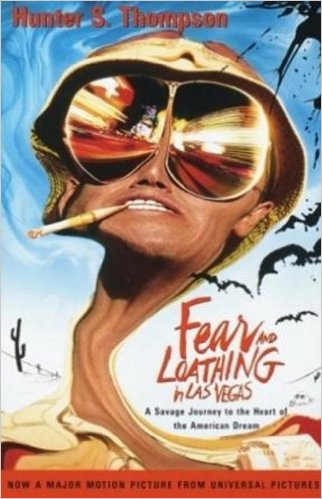
Fear and Loathing in Las Vegas

Author: Hunter S. Thompson
Rating: 7/10
Last Read: July 2016

Quick Summary: A journalist and his “lawyer” go on a five day drug binge and attempt to cover stories in Las Vegas.  Lots of “what the fuck” moments abound – you can’t take your eyes from the page. 

Quick read.  

The book is 70% descriptions of drug usage and effects of drugs.  If drugs aren’t your cup of tea… you should probably just skip over this one.

My Takeaways

Vegas is a very bad place to take hallucinogens.

Don’t mix your drugs.

My Highlights

In a closed society where everybody’s guilty, the only crime is getting caught. In a world of thieves, the only final sin is stupidity.

No, this is not a good town for psychedelic drugs. Reality itself is too twisted.

After a while you learn to cope with things like seeing your dead grandmother crawling up your leg with a knife in her teeth. Most acid fanciers can handle this sort of thing

So now, less than five years later, you can go up on a steep hill in Las Vegas and look West, and with the right kind of eyes you can almost see the high-water mark—that place where the wave finally broke and rolled back.

Maybe it meant something. Maybe not, in the long run … but no explanation, no mix of words or music or memories can touch that sense of knowing that you were there and alive in that corner of time and the world. Whatever it meant.…

The Book Thief

Author: Markus Zusak
Rating: 7/10
Last Read: January 2015

Quick Summary: The story of a small girl living in Germany during WWII.  Particularly interesting because the narrator is Death. She is taught to read by her foster father and steals books from the Nazi regime. Her family takes in a Jewish man.  Horror and sadness ensue all around.


I have hated the words and I have loved them, and I hope I have made them right.

My Highlights

He was the crazy one who had painted himself black and defeated the world. She was the book thief without the words. Trust me, though, the words were on their way, and when they arrived, Liesel would hold them in her hands like the clouds, and she would wring them out like the rain.

It’s very rare, don’t you think, for a statue to appear before its subject has become famous.

“After all,” he said, “you should know it yourself—a young man is still a boy, and a boy sometimes has the right to be stubborn.”

“The sky is blue today, Max, and there is a big long cloud, and it’s stretched out, like a rope. At the end of it, the sun is like a yellow hole ….” Max, at that moment, knew that only a child could have given him a weather report like that.

You might well ask just what the hell he was thinking. The answer is, probably nothing at all. He’d probably say that he was exercising his God-given right to stupidity.

When the elderly Jew climbed to his feet for the last time and continued on, he looked briefly back. He took a last sad glance at the man who was kneeling now himself, whose back was burning with four lines of fire, whose knees were aching on the road. If nothing else, the old man would die like a human. Or at least with the thought that he was a human.

Now more than ever, 33 Himmel Street was a place of silence, and it did not go unnoticed that the Duden Dictionary was completely and utterly mistaken, especially with its related words. Silence was not quiet or calm, and it was not peace.

The accordion remained strapped to her chest. When she bowed her head, it sank to her lap. Liesel watched. She knew that for the next few days, Mama would be walking around with the imprint of an accordion on her body. There was also an acknowledgment that there was great beauty in what she was currently witnessing, and she chose not to disturb it.

THE BEST word shakers were the ones who understood the true power of words. They were the ones who could climb the highest. One such word shaker was a small, skinny girl. She was renowned as the best word shaker of her region because she knew how powerless a person could be WITHOUT words.

I have hated the words and I have loved them, and I hope I have made them right.

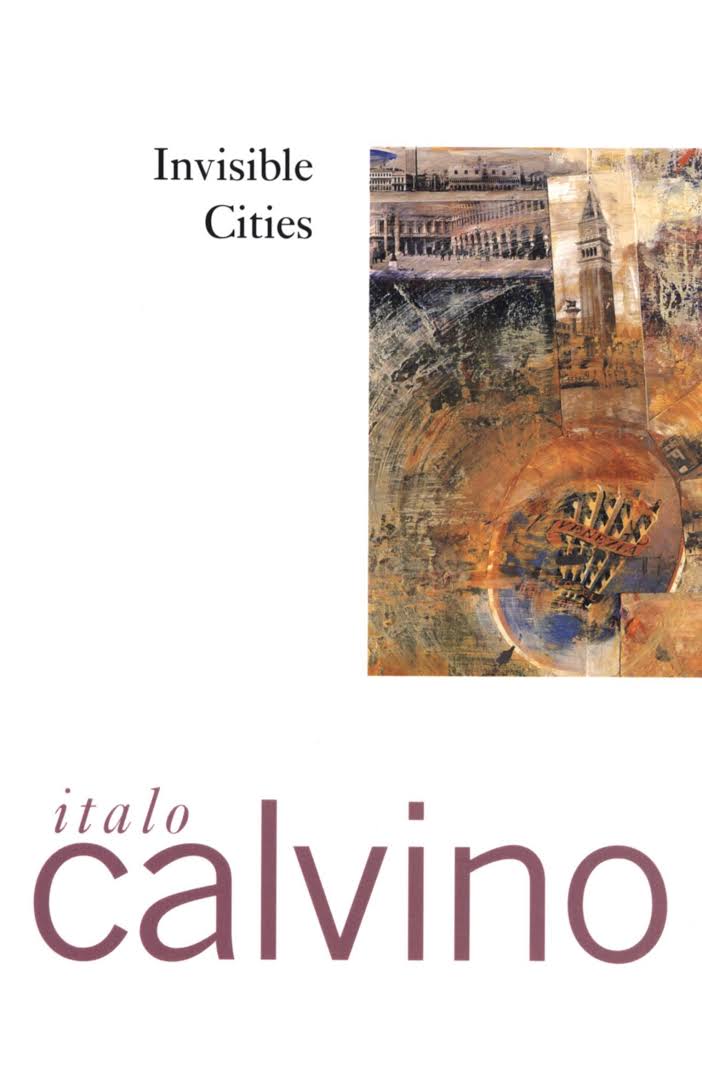
Invisible Cities

Author: Italo Calvino
Rating: 7/10
Last Read: May 2016

Quick Summary: A collection of short “stories” told by  Marco Polo about cities he has visited.  These are poetic, fantastical descriptions of unreal places, usually highlighting an individual aspect of life in a city.

The book is interesting, though it took me quite a while to get into it – there’s no easing you into the strangeness that you will encounter.

This is definitely a book you can revisit and appreciate further, I think.

My Highlights

In the lives of emperors there is a moment which follows pride in the boundless extension of the territories we have conquered, and the melancholy and relief of knowing we shall soon give up any thought of knowing and understanding them. –loc 67

As this wave from memories flows in, the city soaks it up like a sponge and expands. A description of Zaira as it is today should contain all Zaira’s past. The city, however, does not tell its past, but contains it like the lines of a hand, written in the corners of the streets, the gratings of the windows, the banisters of the steps, the antennae of the lightning rods, the poles of the flags, every segment marked in turn with scratches, indentations, scrolls. –loc 107

You walk for days among trees and among stones. Rarely does the eye light on a thing, and then only when it has recognized that thing as the sign of another thing: a print in the sand indicates the tiger’s passage; a marsh announces a vein of water; the hibiscus flower, the end of winter. All the rest is silent and interchangeable; trees and stones are only what they are. –loc 122

The eye does not see things but images of things that mean other things: –loc 125

But in vain I set out to visit the city: forced to remain motionless and always the same, in order to be more easily remembered, Zora has languished, disintegrated, disappeared. The earth has forgotten her. –loc 150

Each city receives its form from the desert it opposes; and so the camel driver and the sailor see Despina, a border city between two deserts. –loc 163

The city is redundant: it repeats itself so that something will stick in the mind. –loc 168

Perhaps, Kublai thought, the empire is nothing but a zodiac of the mind’s phantasms. –loc 203

the more one was lost in unfamiliar quarters of distant cities, the more one understood the other cities he had crossed to arrive there; –loc 222

At this point Kublai Khan interrupted him or imagined interrupting him, or Marco Polo imagined himself interrupted, with a question such as: “You advance always with your head turned back?” or “Is what you see always behind you?” or rather, “Does your journey take place only in the past?” –loc 225

traveler’s past changes according to the route he has followed: not the immediate past, that is, to which each day that goes by adds a day, but the more remote past. Arriving at each new city, the traveler finds again a past of his that he did not know he had: the foreignness of what you no longer are or no longer possess lies in wait for you in foreign, unpossessed places. –loc 230

And Marco’s answer was: “Elsewhere is a negative mirror. The traveler recognizes the little that is his, discovering the much he has not had and will never have.” –loc 240

It is pointless to ask whether the new ones are better or worse than the old, since there is no connection between them, just as the old post cards do not depict Maurilia as it was, but a different city which, by chance, was called Maurilia, like this one. –loc 253

It makes no sense to divide cities into these two species, but rather into another two: those that through the years and the changes continue to give their form to desires, and those in which desires either erase the city or are erased by it. –loc 285

“Signs form a language, but not the one you think you know.” –loc 368

In Chloe, a great city, the people who move through the streets are all strangers. At each encounter, they imagine a thousand things about one another; meetings which could take place between them, conversations, surprises, caresses, bites. But no one greets anyone; eyes lock for a second, then dart away, seeking other eyes, never stopping. –loc 392

“Memory’s images, once they are fixed in words, are erased,” –loc 639

“You reach a moment in life when, among the people you have known, the dead outnumber the living. And the mind refuses to accept more faces, more expressions: on every new face you encounter, it prints the old forms, for each one it finds the most suitable mask.” –loc 695

The Great Khan tried to concentrate on the game: but now it was the game’s reason that eluded him. The end of every game is a gain or a loss: but of what? What were the real stakes? At checkmate, beneath the foot of the king, knocked aside by the winner’s hand, nothingness remains: a black square, or a white one. By disembodying bis conquests to reduce them to the essential, Kublai had arrived at the extreme operation: the definitive conquest, of which the empire’s multiform treasures were only illusory envelopes; it was reduced to a square of planed wood. –loc 964

“I speak and speak,” Marco says, “but the listener retains only the words he is expecting. –loc 987

“Traveling, you realize that differences are lost: each city takes to resembling all cities, places exchange their form, order, distances, a shapeless dust cloud invades the continents. Your atlas preserves the differences intact: that assortment of qualities which are like the letters in a name.” –loc 1012

Cities have no name for me: they are places without leaves, separating one pasture from another, and where the goats are frightened at street corners and scatter. The dog and I run to keep the flock together.” –loc 1134

“The places have mingled,” the goatherd said. “Cecilia is everywhere. Here, once upon a time, there must have been the Meadow of the Low Sage. My goats recognize the grass on the traffic island.” –loc 1145

“The inferno of the living is not something that will be; if there is one, it is what is already here, the inferno where we live every day, that we form by being together. There are two ways to escape suffering it. The first is easy for many: accept the inferno and become such a part of it that you can no longer see it. The second is risky and demands constant vigilance and apprehension: seek and learn to recognize who and what, in the midst of the inferno, are not inferno, then make them endure, give them space.” –loc 1243

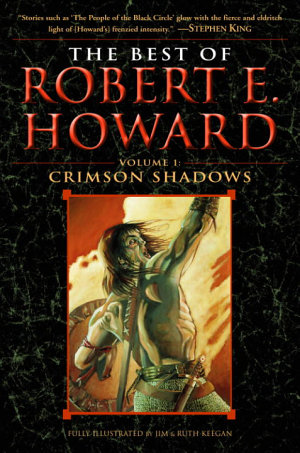
Best of Robert E. Howard, Vol 1

Author: Robert E Howard
Rating: 8/10
Last Read: March 2014

Quick Summary: Collection of short stories and poems by Robert E. Howard. He created many different characters, the most notable being Conan the Barbarian.  Much of his work is in the “pulp fiction” style, and he includes many elements of horror in his writings (think of Lovecraft).

Pick this up if you like quick fantasy reads – especially nice before bed.  He is one of my favorite fantasy & pulp writers.

My Highlights

“You are young,” said the palaces and the temples and the shrines, “but we are old. The world was wild with youth when we were reared. You and your tribe shall pass, but we are invincible, indestructible. We towered above a strange world, ere Atlantis and Lemuria rose from the sea; we still shall reign when the green waters sigh for many a restless fathom above the spires of Lemuria and the hills of Atlantis and when the isles of the Western Men are the mountains of a strange land. “How many kings have we watched ride down these streets before Kull of Atlantis was even a dream in the mind of Ka, bird of Creation? Ride on, Kull of Atlantis; greater shall follow you; greater came before you. They are dust; they are forgotten; we stand; we know; we are. Ride, –loc 473

and man, the jest of the gods, the blind, wisdomless striver from dust to dust, following the long bloody trail of his destiny, knowing not why, bestial, blundering, like a great murderous child, yet feeling somewhere a spark of divine fire…. –loc 657

Thus far I was prepared; from now on we must trust to our luck and our craft. –loc 688

And what, mused Kull, were the realities of life? Ambition, power, pride? The friendship of man, the love of women–which Kull had never known–battle, plunder, what? Was it the real Kull who sat upon the throne or was it the real Kull who had scaled the hills of Atlantis, harried the far isles of the sunset, and laughed upon the green roaring tides of the Atlantean sea? How could a man be so many different men in a lifetime? For Kull knew that there were many Kulls and he wondered which was the real Kull. –loc 742

“Man, are you mad?” she asked, “that in your madness you come seeking that from which strong men fled screaming in old times?” “I seek a vengeance,” he answered, “that can be accomplished only by Them I seek.” She shook her head. “You have listened to a bird singing; you have dreamed empty dreams.” “I have heard a viper hiss,” he growled, “and I do not dream. Enough of this weaving of words. –loc 4190

“Barbarism is the natural state of mankind,” the borderer said, still staring somberly at the Cimmerian. “Civilization is unnatural. It is a whim of circumstance. And barbarism must always ultimately triumph.” –loc 8337

“Nobody writes realistic realism, and if they did, nobody would read it. The writers that think they write it just give their own ideas about things they think they see. The sort of man who could write realism is the fellow who never reads or writes anything.” –loc 9766

He understood that selling window blinds, or drilling holes in sheet metal all week, or working at the rent-a-car counter at the airport is not enough to fill a man’s heart. –loc 9838

“There was pageantry and high illusion and vanity, and the beloved tinsel of glory without which life is not worth living,” wrote Howard concerning times gone by: “All empty show and the smoke of conceit and arrogance, but what a drab thing life would be without them.” For him, there is no meaning or beauty in life other than what we dream into it. –loc 9845

Wool (Silo Series)

Author: Hugh Howry
Rating: 8/10
Last Read: March 2016

Quick Summary: The world is in ruin.  Humanity is kept alive in a silo.  Punishment? People get sent to die in the harsh outer environment.  But the new sheriff senses there’s something fishy going on and investigates.

This is an excellent read.  The story ends on a solid note, if you are not interested in continuing the series (I haven’t).

My Highlights

“The days pile up and weigh small decisions down, don’t they? That decision not to visit. The first few days slide by easy enough; anger and youth power them along. But then they pile up like unrecycled trash. Isn’t that right?” –loc 1413

One of the last things Mayor Jahns had told her had proved truer than she could imagine: people were like machines. They broke down. They rattled. They could burn you or maim you if you weren’t careful. Her job was not only to figure out why this happened and who was to blame, but also to listen for the signs of it coming. Being sheriff, like being a mechanic, was as much the fine art of preventive maintenance as it was the cleaning up after a breakdown. –loc 1772

But then, the lowering of the body and the plucking of ripe fruit just above the graves was meant to hammer this home: the cycle of life is here; it is inescapable; it is to be embraced, cherished, appreciated. One departs and leaves behind the gift of sustenance, of life. They make room for the next generation. We are born, we are shadows, we cast shadows of our own, and then we are gone. All anyone can hope for is to be remembered two shadows deep. –loc 2209

Killing a man should be harder than waving a length of pipe in their direction. It should take long enough for one’s conscience to get in the way. –loc 4142

“What always happens. People go crazy. It only needs to happen once.” He smiled. “We get no credit for being sane, do we? I get no credit. Even from me. From myself. I hold it together and hold it together and I make it another day, another year, and there’s no reward. Nothing great about me being normal. About not being crazy.” He frowned. “Then you have one bad day, and you worry for yourself, you know? It only takes one.” –loc 4359

Once guns were made, who would unmake them? Barrels rested on shoulders and bristled like pincushions above the crowd. There were things, like spoken ideas, that were almost impossible to take back. –loc 4469

“None of us asked to be where we are,” she reminded him coolly. This gave Lukas pause, thinking of where she was, what she’d been through to get there. “What we control,” Juliette said, “is our actions once fate puts us there.” –loc 5417

“We can’t control where we are right now,” he mumbled, “just what we do going forward.” –loc 6297

The Trial

Author: Franz Kafka
Rating: 8/10
Last Read: January 2016

Quick Summary: A man is put on trial in a secret court and attempts to prove his innocence without knowing what the charges are.  As any of us would, he descends into madness. 

Key Takeaways

It turns out if you read old books, you can see the risks of your current situations quite clearly.  Secret trials?  Special courts?  Unable to fight the battles on your own, especially when you don’t have all of the information?  Yeah.  We live in that reality.

I, too, would go mad if I was on trial, didn’t know why, and couldn’t defend myself.

My Highlights

How are we to avoid those in office becoming deeply corrupt when everything is devoid of meaning? –loc 644

K.’s uncle was always in a hurry, as he suffered from the unfortunate belief that he had a number things to do while he was in the big city and had to settle all of them in one day –loc 1226

The only right thing to do is to learn how to deal with the situation as it is. –loc 1625

How is it even possible for someone to be guilty. We’re all human beings here, one like the other.” –loc 2853

“That is true,” said the priest, “but that is how the guilty speak.” –loc 2853