An Experiment in Exploring the Unconscious

I’ve been increasingly interested in the power of the unconscious, especially with regards to creativity and insight. Creativity and self-knowledge seem to come from nowhere, and I can understand how people of all ages have felt like they had a divine connection or received inspiration from a muse. Certainly, I cannot create well with the cerebral part of my brain – it seems to flow from somewhere deeper and mostly inaccessible.

I’ve occasionally used the I Ching, an ancient Chinese divination manual, as a tool for both getting unstuck and gaining deeper insight into my thoughts on a question. The book can act as a mirror you hold up to yourself, enabling you to see your situation in a different light.

For the next month, I’ll be exploring my unconscious by consulting the I Ching every day. Perhaps having a trigger can help us access the deeper parts of our being, the parts so often inaccessible to us. What might be revealed to me that I’m not paying attention to? What might be revealed to me by simply asking myself (or “the universe”) to share some insight?

Many poo-poo the act of consulting an oracle, because the answers are vague and can apply to many situations. Certainly generating a random number, associating it with a reading in a book, and applying it to your situation is not “rational”. I am not seeking a rational method for self-knowledge I have my doubts that even the most “rational” thinkers can truly escape the irrational aspects of their own nature. Anyone who claims to be rational is ignoring the power that cognitive and emotional biases have over our minds – there is no escaping them.

The answers from the I Ching serve as a useful tool for analyzing our own minds and getting unstuck. No matter the situation, taking a different view is invaluable. And who can disregard the use of such a text by wise and capable men throughout history, including Confucius, Carl Jung, and Mao Zedong?

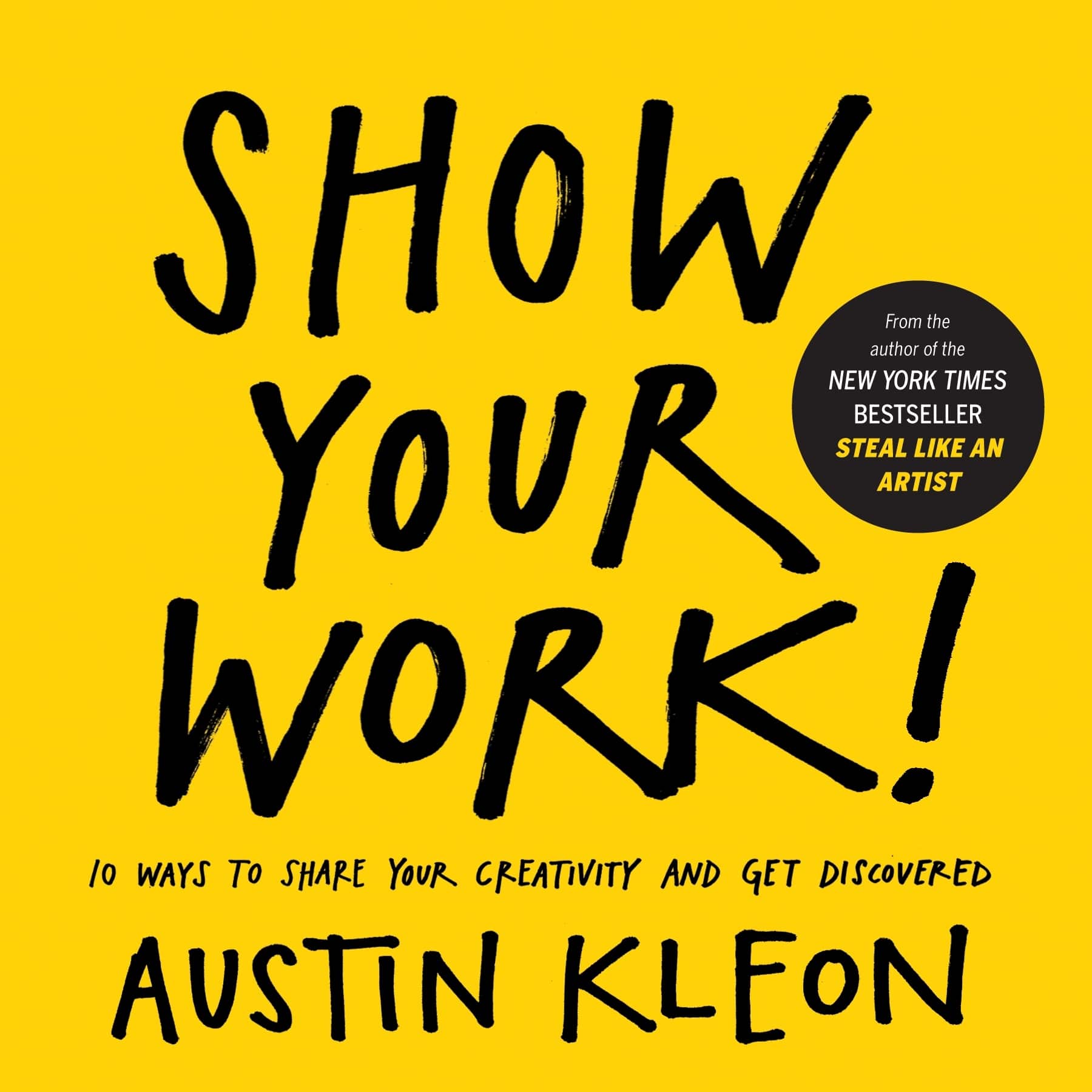
Show Your Work!


Author: Austin Kleon
Rating: 9/10
Last Read: December 2014

Quick Summary:  Show Your Work! is focused entirely on encouraging you to share your development process and work with your audience.  We are all supremely interested in what other people are doing and finding new tools and techniques to improve ourselves.  Kleon wants us to find holes in our communities and fill them, to share what we learn with others, and to document our own work processes.  When we share material and techniques, we can develop more of an audience and receive advice from our community in turn.  Give and people will give back.

This is another book that inspired me creatively in a major way.  Show Your Work! influenced me to start my own websites and to start sharing what I know about firmware development.  Even reviewing my notes to share with you inspires me to create and be more active in the world.

Once a day, after you’ve done your day’s work, go back to your documentation and find one little piece of your process that you can share. Where you are in your process will determine what that piece is. If you’re in the very early stages, share your influences and what’s inspiring you. If you’re in the middle of executing a project, write about your methods or share works in progress. If you’ve just completed a project, show the final product, share scraps from the cutting-room floor, or write about what you learned. If you have lots of projects out into the world, you can report on how they’re doing—you can tell stories about how people are interacting with your work.

My Highlights

Instead of wasting their time “networking,” they’re taking advantage of the network. By generously sharing their ideas and their knowledge, they often gain an audience that they can then leverage when they need it—for fellowship, feedback, or patronage. –loc 26

Imagine if your next boss didn’t have to read your résumé because he already reads your blog. Imagine being a student and getting your first gig based on a school project you posted online. Imagine losing your job but having a social network of people familiar with your work and ready to help you find a new one. Imagine turning a side project or a hobby into your profession because you had a following that could support you. –loc 34

The best way to get started on the path to sharing your work is to think about what you want to learn, and make a commitment to learning it in front of others. –loc 95

Find a scenius, pay attention to what others are sharing, and then start taking note of what they’re not sharing. Be on the lookout for voids that you can fill with your own efforts, no matter how bad they are at first. Don’t worry, for now, about how you’ll make money or a career off it. –loc 96

Share what you love, and the people who love the same things will find you. –loc 99

It sounds a little extreme, but in this day and age, if your work isn’t online, it doesn’t exist. –loc 117

Become a documentarian of what you do. Start a work journal: Write your thoughts down in a notebook, or speak them into an audio recorder. Keep a scrapbook. Take a lot of photographs of your work at different stages in your process. Shoot video of you working. This isn’t about making art, it’s about simply keeping track of what’s going on around you. Take advantage of all the cheap, easy tools at your disposal—these days, most of us carry a fully functional multimedia studio around in our smartphones. –loc 196

A daily dispatch is even better than a résumé or a portfolio, because it shows what we’re working on right now. –loc 217

The form of what you share doesn’t matter. Your daily dispatch can be anything you want—a blog post, an email, a tweet, a YouTube video, or some other little bit of media. There’s no one-size-fits-all plan for everybody. –loc 221

Don’t worry about everything you post being perfect. Science fiction writer Theodore Sturgeon once said that 90 percent of everything is crap. The same is true of our own work. The trouble is, we don’t always know what’s good and what sucks. That’s why it’s important to get things in front of others and see how they react. “Sometimes you don’t always know what you’ve got,” says artist Wayne White. “It really does need a little social chemistry to make it show itself to you sometimes.” –loc 235

Ideally, you want the work you post online to be copied and spread to every corner of the Internet, so don’t post things online that you’re not ready for everyone in the world to see. –loc 252

“Post as though everyone who can read it has the power to fire you.” –loc 253

The act of sharing is one of generosity—you’re putting something out there because you think it might be helpful or entertaining to someone on the other side of the screen. –loc 256

I had a professor in college who returned our graded essays, walked up to the chalkboard, and wrote in huge letters: “SO WHAT?” She threw the piece of chalk down and said, “Ask yourself that every time you turn in a piece of writing.” It’s a lesson I never forgot. –loc 257

Always be sure to run everything you share with others through The “So What?” Test. Don’t overthink it; just go with your gut. If you’re unsure about whether to share something, let it sit for 24 hours. Put it in a drawer and walk out the door. The next day, take it out and look at it with fresh eyes. Ask yourself, “Is this helpful? Is it entertaining? Is it something I’d be comfortable with my boss or my mother seeing?” There’s nothing wrong with saving things for later. The save as draft button is like a prophylactic—it might not feel as good in the moment, but you’ll be glad you used it in the morning. –loc 260

“Stock and flow” is an economic concept that writer Robin Sloan has adapted into a metaphor for media: “Flow is the feed. It’s the posts and the tweets. It’s the stream of daily and sub-daily updates that remind people you exist. Stock is the durable stuff. It’s the content you produce that’s as interesting in two months (or two years) as it is today. It’s what people discover via search. It’s what spreads slowly but surely, building fans over time.” Sloan says the magic formula is to maintain your flow while working on your stock in the background. –loc 268

In my experience, your stock is best made by collecting, organizing, and expanding upon your flow. Social media sites function a lot like public notebooks—they’re places where we think out loud, let other people think back at us, then hopefully think some more. But the thing about keeping notebooks is that you have to revisit them in order to make the most out of them. You have to flip back through old ideas to see what you’ve been thinking. Once you make sharing part of your daily routine, you’ll notice themes and trends emerging in what you share. You’ll find patterns in your flow. –loc 273

Don’t think of your website as a self-promotion machine, think of it as a self-invention machine. –loc 296

Your influences are all worth sharing because they clue people in to who you are and what you do—sometimes even more than your own work. –loc 333

Online, the most important form of attribution is a hyperlink pointing back to the website of the creator of the work. This sends people who come across the work back to the original source. The number one rule of the Internet: People are lazy. If you don’t include a link, no one can click it. Attribution without a link online borders on useless: 99.9 percent of people are not going to bother Googling someone’s name. –loc 372

What if you want to share something and you don’t know where it came from or who made it? The answer: Don’t share things you can’t properly credit. Find the right credit, or don’t share. –loc 376

Words matter. Artists love to trot out the tired line, “My work speaks for itself,” but the truth is, our work doesn’t speak for itself. Human beings want to know where things came from, how they were made, and who made them. –loc 401

The stories you tell about the work you do have a huge effect on how people feel and what they understand about your work, and how people feel and what they understand about your work effects how they value it. –loc 403

Your work doesn’t exist in a vacuum. Whether you realize it or not, you’re already telling a story about your work. Every email you send, every text, every conversation, every blog comment, every tweet, every photo, every video—they’re all bits and pieces of a multimedia narrative you’re constantly constructing. If you want to be more effective when sharing yourself and your work, you need to become a better storyteller. You need to know what a good story is and how to tell one. –loc 408

If you study the structure of stories, you start to see how they work, and once you know how they work, you can then start stealing story structures and filling them in with characters, situations, and settings from your own life. –loc 419

Every client presentation, every personal essay, every cover letter, every fund-raising request—they’re all pitches. They’re stories with the endings chopped off. A good pitch is set up in three acts: The first act is the past, the second act is the present, and the third act is the future. The first act is where you’ve been—what you want, how you came to want it, and what you’ve done so far to get it. The second act is where you are now in your work and how you’ve worked hard and used up most of your resources. The third act is where you’re going, and how exactly the person you’re pitching can help you get there. Like a Choose Your Own Adventure book, this story shape effectively turns your listener into the hero who gets to decide how it ends. –loc 434

Strike all the adjectives from your bio. If you take photos, you’re not an “aspiring” photographer, and you’re not an “amazing” photographer, either. You’re a photographer. Don’t get cute. Don’t brag. Just state the facts. –loc 468

If you want fans, you have to be a fan first. If you want to be accepted by a community, you have to first be a good citizen of that community. If you’re only pointing to your own stuff online, you’re doing it wrong. You have to be a connector. The writer Blake Butler calls this being an open node. If you want to get, you have to give. If you want to be noticed, you have to notice. Shut up and listen once in a while. Be thoughtful. Be considerate. –loc 538

If you want followers, be someone worth following. Donald Barthelme supposedly said to one of his students, “Have you tried making yourself a more interesting person?” This seems like a really mean thing to say, unless you think of the word interesting the way writer Lawrence Weschler does: For him, to be “interest-ing” is to be curious and attentive, and to practice “the continual projection of interest.” To put it more simply: If you want to be interesting, you have to be interested. –loc 548

Make stuff you love and talk about stuff you love and you’ll attract people who love that kind of stuff. It’s that simple. –loc 557

Brancusi practiced what I call The Vampire Test. It’s a simple way to know who you should let in and out of your life. If, after hanging out with someone you feel worn out and depleted, that person is a vampire. If, after hanging out with someone you still feel full of energy, that person is not a vampire. Of course, The Vampire Test works on many things in our lives, not just people—you can apply it to jobs, hobbies, places, etc. –loc 569

Keep your balance. You have to remember that your work is something you do, not who you are. This is especially hard for artists to accept, as so much of what they do is personal. Keep close to your family, friends, and the people who love you for you, not just the work. –loc 629

The first step in evaluating feedback is sizing up who it came from. You want feedback from people who care about you and what you do. Be extra wary of feedback from anybody who falls outside of that circle. –loc 634

At some point, you might consider turning off comments completely. Having a form for comments is the same as inviting comments. “There’s never a space under paintings in a gallery where someone writes their opinion,” says cartoonist Natalie Dee. “When you get to the end of a book, you don’t have to see what everyone else thought of it.” Let people contact you directly or let them copy your work over to their own spaces and talk about it all they want. –loc 650

Instead of having a donate now button on my website, I have buy now and hire me buttons. But even though I operate more like a traditional salesman, I do use some of the same tactics as crowdfunders: I try to be open about my process, connect with my audience, and ask them to support me by buying the things I’m selling. –loc 683

Even if you don’t have anything to sell right now, you should always be collecting email addresses from people who come across your work and want to stay in touch. –loc 694

Keep your own list, or get an account with an email newsletter company like MailChimp and put a little sign-up widget on every page of your website. Write a little bit of copy to encourage people to sign up. Be clear about what they can expect, whether you’ll be sending daily, monthly, or infrequent updates. Never ever add someone’s email address to your mailing list without her permission. –loc 701

Be ambitious. Keep yourself busy. Think bigger. Expand your audience. Don’t hobble yourself in the name of “keeping it real,” or “not selling out.” Try new things. If an opportunity comes along that will allow you to do more of the kind of work you want to do, say Yes. If an opportunity comes along that would mean more money, but less of the kind of work you want to do, say No. –loc 719

Add all this together and you get a way of working I call chain-smoking. You avoid stalling out in your career by never losing momentum. Here’s how you do it: Instead of taking a break in between projects, waiting for feedback, and worrying about what’s next, use the end of one project to light up the next one. Just do the work that’s in front of you, and when it’s finished, ask yourself what you missed, what you could’ve done better, or what you couldn’t get to, and jump right into the next project. –loc 771

His thinking is that we dedicate the first 25 years or so of our lives to learning, the next 40 to work, and the last 15 to retirement, so why not take 5 years off retirement and use them to break up the work years? He says the sabbatical has turned out to be invaluable to his work: “Everything that we designed in the seven years following the first sabbatical had its roots in thinking done during that sabbatical.” –loc 782

Do the Work

Author: Steven Pressfield
Recommended for: Anyone working on a creative or entrepreneurial endeavor
Last Read: June 2014, October 2019

Quick Summary:

I had ready many of Steven Pressfield’s novels before I had discovered his works  on the creative spirit.  Do the Work is a short read that discusses the role of Resistance in the projects that we tackle.  Pressfield shares anecdotes and provides motivation for pushing past resistance, doing the work, and shipping whatever you’re working on.

While a little woo-woo and out there, I must admit that Do the Work has opened my eyes to the role that Resistance plays in my life.  I have streamlined my processes, separated research and action, and committed doing the work. With results like that, I can’t knock the woo-woo side.

For those interested in creating or producing something, read this book. If you like the book, you can follow it up with The War of Art.

On the field of the Self stand a knight and a dragon.   You are the knight. Resistance is the dragon.

I was thirty years old before I had an actual thought. Everything up till then was either what Buddhists call “monkey-mind” chatter or the reflexive regurgitation of whatever my parents or teachers said, or whatever I saw on the news or read in a book, or heard somebody rap about, hanging around the street corner. 

Key Lessons:

  • The best way to combat Resistance is to commit yourself to doing your work without fail. Show up, every day, like a professional. 
  • Don’t let anything delay you from taking action, because that’s how Resistance creeps in. Act, then revise. Bias yourself toward action.

My Highlights

Italicized sub-bullet comments are mine.

  • On the field of the Self stand a knight and a dragon.   You are the knight. Resistance is the dragon. 
  • Resistance cannot be seen, heard, touched, or smelled. But it can be felt. We experience it as an energy field radiating from a work-in-potential. 
  • Rule of thumb: The more important a call or action is to our soul’s evolution, the more Resistance we will feel toward pursuing it. 
  • Bad things happen when we employ rational thought, because rational thought comes from the ego. Instead, we want to work from the Self, that is, from instinct and intuition, from the unconscious. 
  • The problem with friends and family is that they know us as we are. They are invested in maintaining us as we are. The last thing we want is to remain as we are. 
  • Ignorance and arrogance are the artist and entrepreneur’s indispensable allies. She must be clueless enough to have no idea how difficult her enterprise is going to be—and cocky enough to believe she can pull it off anyway. 
  • A child has no trouble believing the unbelievable, nor does the genius or the madman. It’s only you and I, with our big brains and our tiny hearts, who doubt and overthink and hesitate. 
  • Don’t think. Act. We can always revise and revisit once we’ve acted. But we can accomplish nothing until we act. 
  • Once we commit to action, the worst thing we can do is to stop. 
  • There’s an exercise that Patricia Ryan Madson describes in her wonderful book, Improv Wisdom. (Ms. Madson taught improvisational theater at Stanford to standing-room only classes for twenty years.) Here’s the exercise: Imagine a box with a lid. Hold the box in your hand. Now open it. What’s inside? It might be a frog, a silk scarf, a gold coin of Persia. But here’s the trick: no matter how many times you open the box, there is always something in it. Ask me my religion. That’s it. I believe with unshakeable faith that there will always be something in the box. 
  • Fear saps passion. When we conquer our fears, we discover a boundless, bottomless, inexhaustible well of passion.
  • When art and inspiration and success and fame and money have come and gone, who still loves us—and whom do we love? Only two things will remain with us across the river: our inhering genius and the hearts we love. 
  • Don’t prepare. Begin. Remember, our enemy is not lack of preparation; it’s not the difficulty of the project or the state of the marketplace or the emptiness of our bank account. The enemy is Resistance. 
  • Good things happen when we start before we’re ready. For one thing, we show huevos. Our blood heats up. Courage begets more courage. The gods, witnessing our boldness, look on in approval. 
  • Before we begin, you wanna do research? Uh-unh. I’m putting you on a diet. You’re allowed to read three books on your subject. No more. No underlining, no highlighting, no thinking or talking about the documents later. Let the ideas percolate. Let the unconscious do its work. 
  • Research can become Resistance. We want to work, not prepare to work. 
  • The creative act is primitive. Its principles are of birth and genesis. Babies are born in blood and chaos; stars and galaxies come into being amid the release of massive primordial cataclysms. Conception occurs at the primal level. I’m not being facetious when I stress, throughout this book, that it is better to be primitive than to be sophisticated, and better to be stupid than to be smart. 
  • If you and I want to do great stuff, we can’t let ourselves work small. A home-run swing that results in a strikeout is better than a successful bunt or even a line-drive single. 
  • Steve, God made a single sheet of yellow foolscap exactly the right length to hold the outline of an entire novel. 
  • He meant don’t overthink. Don’t overprepare. Don’t let research become Resistance. Don’t spend six months compiling a thousand-page tome detailing the emotional matrix and family history of every character in your book. Outline it fast. Now. On instinct. 
  • Discipline yourself to boil down your story/new business/philanthropic enterprise to a single page. 
  • Three-Act Structure Break the sheet of foolscap into three parts: beginning, middle, and end. This is how screenwriters and playwrights work. Act One, Act Two, Act Three. 
  • Here’s a trick that screenwriters use: work backwards. Begin at the finish. 
  • If you’re writing a movie, solve the climax first. If you’re opening a restaurant, begin with the experience you want the diner to have when she walks in and enjoys a meal. If you’re preparing a seduction, determine the state of mind you want the process of romancing to bring your lover to. Figure out where you want to go; then work backwards from there. 
  • Yes, you say. “But how do I know where I want to go?” Answer the Question “What Is This About?” Start with the theme. What is this project about? 
  • Have you ever meditated? Then you know what it feels like to shift your consciousness to a witnessing mode and to watch thoughts arise, float across your awareness, and then drift away, to be replaced by the next thought and the thought after that. These are not thoughts. They are chatter. 
  • I was thirty years old before I had an actual thought. Everything up till then was either what Buddhists call “monkey-mind” chatter or the reflexive regurgitation of whatever my parents or teachers said, or whatever I saw on the news or read in a book, or heard somebody rap about, hanging around the street corner. 
  • Pay no attention to those rambling, disjointed images and notions that drift across the movie screen of your mind. Those are not your thoughts. They are chatter. They are Resistance. 
  • Chatter is Resistance. Its aim is to reconcile you to “the way it is,” to make you exactly like everyone else, to render you amenable to societal order and discipline. 
  • Where do our own real thoughts come from? How can we access them? From what source does our true, authentic self speak? Answering that is the work you and I will do for the rest of our lives. 
    • This is a purpose to latch onto
  • We’ve got our concept, we’ve got our theme. We know our start. We know where we want to finish. We’ve got our project in three acts on a single sheet of foolscap. Ready to roll? We need only to remember our three mantras: Stay primitive. Trust the soup. Swing for the seats. And our final-final precept: 4. Be ready for Resistance.
  • David Lean famously declared that a feature film should have seven or eight major sequences. That’s a pretty good guideline for our play, our album, our State of the Union address. 
  • Do research early or late. Don’t stop working. Never do research in prime working time. 
  • One trick they use is to boil down their presentation to the following: A killer opening scene Two major set pieces in the middle A killer climax A concise statement of the theme In other words, they’re filling in the gaps. The major beats. 
  • One rule for first full working drafts: get them done ASAP. Don’t worry about quality. Act, don’t reflect. Momentum is everything. 
  • Unless you’re building a sailboat or the Taj Mahal, I give you a free pass to screw up as much as you like. The inner critic? His ass is not permitted in the building. Set forth without fear and without self-censorship. When you hear that voice in your head, blow it off. This draft is not being graded. There will be no pop quiz. Only one thing matters in this initial draft: get SOMETHING done, however flawed or imperfect. You are not allowed to judge yourself. 
  • Nothing is more fun than turning on the recorder and hearing your own voice telling you a fantastic idea that you had completely forgotten you had. 
  • Let’s talk about the actual process—the writing/composing/ idea generation process. It progresses in two stages: action and reflection. Act, reflect. Act, reflect. NEVER act and reflect at the same time. 
    • A principle of creation
  • Forget rational thought. Play. Play like a child. Why does this purely instinctive, intuitive method work? Because our idea (our song, our ballet, our new Tex-Mex restaurant) is smarter than we are. 
  • Our job is not to control our idea; our job is to figure out what our idea is (and wants to be)—and then bring it into being. 
  • When an idea pops into our head and we think, “No, this is too crazy,” … that’s the idea we want. When we think, “This notion is completely off the wall … should I even take the time to work on this?” … the answer is yes. Never doubt the soup. Never say no. The answer is always yes. 
  • At least twice a week, I pause in the rush of work and have a meeting with myself. (If I were part of a team, I’d call a team meeting.) I ask myself, again, of the project: “What is this damn thing about?” Keep refining your understanding of the theme; keep narrowing it down. 
  • Paddy Chayefsky famously said, “As soon as I figure out the theme of my play, I write it down on a thin strip of paper and Scotch-tape it to the front of my typewriter. After that, nothing goes into that play that isn’t on-theme.”
  • We have been conditioned to imagine that the darkness that we see in the world and feel in our own hearts is only an illusion, which can be dispelled by the proper care, the proper love, the proper education, and the proper funding. It can’t. There is an enemy. There is an intelligent, active, malign force working against us. Step one is to recognize this. This recognition alone is enormously powerful. It saved my life, and it will save yours.
  • Principle Number Two: This Enemy Is Implacable The hostile, malicious force that we’re experiencing now is not a joke. It is not to be trifled with or taken lightly. It is for real. In the words of my dear friend Rabbi Mordecai Finley: “It will kill you. It will kill you like cancer.” This enemy is intelligent, protean, implacable, inextinguishable, and utterly ruthless and destructive. 
  • Pat Riley, when he was coach of the Lakers, had a term for all those off-court forces, like fame and ego (not to mention crazed fans, the press, agents, sponsors, and ex-wives), that worked against the players’ chances for on-court success. He called these forces “peripheral opponents.”
  • Resistance is not a peripheral opponent. It does not arise from rivals, bosses, spouses, children, terrorists, lobbyists, or political adversaries. It comes from us. 
  • The fourth axiom of Resistance is that the enemy is inside you, but it is not you. 
  • The enemy is in you, but it is not you. No moral judgment attaches to the possession of it. You “have” Resistance the same way you “have” a heartbeat. You are blameless. You retain free will and the capacity to act. 
  • On the field of the Self stand a knight and a dragon. You are the knight. Resistance is the dragon. There is no way to be nice to the dragon, or to reason with it or negotiate with it or beam a white light around it and make it your friend. The dragon belches fire and lives only to block you from reaching the gold of wisdom and freedom, which it has been charged to guard to its final breath. The only intercourse possible between the knight and the dragon is battle. The contest is life-and-death, mano a mano. It asks no quarter and gives none. This is the fifth principle of Resistance. 
    • I know the truth of this, deep in my bones
  • The sixth principle of Resistance (and the key to overcoming it) is that Resistance arises second. What comes first is the idea, the passion, the dream of the work we are so excited to create that it scares the hell out of us. 
  • Resistance is the response of the frightened, petty, small-time ego to the brave, generous, magnificent impulse of the creative self. 
  • It means that before the dragon of Resistance reared its ugly head and breathed fire into our faces, there existed within us a force so potent and life-affirming that it summoned this beast into being, perversely, to combat it. 
  • In myths and legends, the knight is always aided in his quest to slay the dragon. Providence brings forth a champion whose role is to assist the hero. Theseus had Ariadne when he fought the Minotaur. Jason had Medea when he went after the Golden Fleece. Odysseus had the goddess Athena to guide him home. In Native American myths, our totemic ally is often an animal—a magic raven, say, or a talking coyote. In Norse myths, an old crone sometimes assists the hero; in African legends, it’s often a bird. The three Wise Men were guided by a star. All of these characters or forces represent Assistance. They are symbols for the unmanifested. They stand for a dream. The dream is your project, your vision, your symphony, your startup. The love is the passion and enthusiasm that fill your heart when you envision your project’s completion. 
  • Test Number One “How bad do you want it?” This is Resistance’s first question. The scale below will help you answer. Mark the selection that corresponds to how you feel about your book/movie/ballet/new business/whatever.   Dabbling • Interested • Intrigued but Uncertain • Passionate • Totally Committed   If your answer is not the one on the far right, put this book down and throw it away. 
  • Test Number Two “Why do you want it?” 
  • Because I have no choice 
  • Did you ever see Cool Hand Luke? Remember “the Box”? You don’t get to keep anything when you enter this space. You must check at the door: Your ego Your sense of entitlement Your impatience Your fear Your hope Your anger You must also leave behind:   All grievances related to aspects of yourself dependent on the accident of birth, e.g., how neglected/abused/ mistreated/unloved/poor/ill-favored etc. you were when you were born. All sense of personal exceptionalness dependent on the accident of birth, e.g., how rich/cute/tall/thin/smart/charming/loveable you were when you were born. All of the previous two, based on any subsequent (i.e., post-birth) acquisition of any of these qualities, however honorably or meritoriously earned. The only items you get to keep are love for the work, will to finish, and passion to serve the ethical, creative Muse. 
  • The Big Crash is so predictable, across all fields of enterprise, that we can practically set our watches by it. Bank on it. It’s gonna happen. 
    • The trough of sorrow in startup-speak
  • There’s a difference between Navy SEAL training and what you and I are facing now. Our ordeal is harder. Because we’re alone. We’ve got no trainers over us, shouting in our ears or kicking our butts to keep us going. We’ve got no friends, no fellow sufferers, no externally imposed structure. No one’s feeding us, housing us, or clothing us. We have no objective milestones or points of validation. We can’t tell whether we’re doing great or falling on our faces. When we finish, if we do, no one will be waiting to congratulate us. We’ll get no champagne, no beach party, no diploma, no insignia. The battle we’re fighting, we can’t explain to anybody or share with anybody or call in anybody to help. 
  • Crashes are hell, but in the end they’re good for us. A crash means we have failed. We gave it everything we had and we came up short. A crash does not mean we are losers. A crash means we have to grow. 
  • A crash means we’re at the threshold of learning something, which means we’re getting better, we’re acquiring the wisdom of our craft. A crash compels us to figure out what works and what doesn’t work—and to understand the difference. 
  • We got ourselves into this mess by mistakes we made at the start. How? Were we lazy? Inattentive? Did we mean well but forget to factor in human nature? Did we assess reality incorrectly? Whatever the cause, the Big Crash compels us to go back now and solve the problem that we either created directly or set into motion unwittingly at the outset. 
  • Creative panic is good. Here’s why: Our greatest fear is fear of success. 
  • When we experience panic, it means that we’re about to cross a threshold. We’re poised on the doorstep of a higher plane. 
  • In the belly of the beast, we remind ourselves of two axioms: The problem is not us. The problem is the problem. Work the problem. 
  • A professional does not take success or failure personally. That’s Priority Number One for us now. 
  • That our project has crashed is not a reflection of our worth as human beings. It’s just a mistake. It’s a problem—and a problem can be solved. 
  • I’m not trying to be cryptic or facetious. We went wrong at the start because the problem was so hard (and the act of solving it was so painful) that we ducked and dodged and bypassed. We hoped it would go away. We hoped it would solve itself. A little voice warned us then, but we were too smart to listen. The bad news is, the problem is hell. The good news is it’s just a problem. It’s not us. We are not worthless or evil or crazy. We’re just us, facing a problem. 
  • We ask our Big Question: “What’s missing?” 
  • No matter how great a writer, artist, or entrepreneur, he is a mortal, he is fallible. He is not proof against Resistance. He will drop the ball; he will crash. That’s why they call it rewriting. 
  • Why does Seth Godin place so much emphasis on “shipping”? Because finishing is the critical part of any project. If we can’t finish, all our work is for nothing. 
  • How hard is it to finish something? The greatest drama in the English language was written on this very subject. Hamlet knows he must kill his uncle for murdering his father. But then he starts to think—and the next thing you know, the poor prince is so self-befuddled, he’s ready to waste himself with a bare bodkin. 
  • When Michael Crichton approached the end of a novel (so I’ve read), he used to start getting up earlier and earlier in the morning. He was desperate to keep his mojo going. He’d get up at six, then five, then three-thirty and two-thirty, till he was driving his wife insane. Finally he had to move out of the house. He checked into a hotel (the Kona Village, which ain’t so bad) and worked around the clock till he’d finished the book. Michael Crichton was a pro. He knew that Resistance was strongest at the finish. He did what he had to do, no matter how nutty or unorthodox, to finish and be ready to ship. 
  • Marianne Williamson: Our deepest fear is not that we are inadequate. Our deepest fear is that we are powerful beyond measure. It is our light, not our darkness, that most frightens us. We ask ourselves, Who am I to be brilliant, gorgeous, talented, fabulous? Actually, who are you not to be? You are a child of God. Your playing small does not serve the world. There is nothing enlightened about shrinking so that other people won’t feel insecure around you. We are all meant to shine, as children do. We were born to make manifest the glory of God that is within us. It’s not just in some of us; it’s in everyone. And as we let our own light shine, we unconsciously give other people permission to do the same. As we are liberated from our own fear, our presence automatically liberates others. 
  • That’s why we’re so afraid of it. When we ship, we’ll be judged. The real world will pronounce upon our work and upon us. When we ship, we can fail. When we ship, we can be humiliated. 
  • “You’re where you wanted to be, aren’t you? So you’re taking a few blows. That’s the price for being in the arena and not on the sidelines. Stop complaining and be grateful.” 
  • When we ship, we open ourselves to judgment in the real world. Nothing is more empowering, because it plants us solidly on Planet Earth and gets us out of our self-devouring, navel-centered fantasies and self-delusions. 
  • Slay that dragon once, and he will never have power over you again. Yeah, he’ll still be there. Yeah, you’ll still have to duel him every morning. And yeah, he’ll still fight just as hard and use just as many nasty tricks as he ever did. But you will have beaten him once, and you’ll know you can beat him again. That’s a game-changer. That will transform your life. 
  • From the day I finally finished something, I’ve never had trouble finishing anything again. I always deliver. I always ship. 
    • A standard we should live by
  • I stand in awe of anyone who hatches a dream and who shows the guts to hang tough, all alone, and see it through to reality. 
  • I tip my hat to you for what you’ve done—for losing forty pounds, for kicking crack cocaine, for surviving the loss of someone you love, for facing any kind of adversity—internal or external—and slogging through. I come to attention when you walk past. I stand up for you like the spectators in the gallery stood up for Atticus Finch in To Kill A Mockingbird. 
  • You have joined an elite fraternity, whether you realize it or not. By dint of your efforts and your perseverance, you have initiated yourself into an invisible freemasonry whose members are awarded no badges or insignia, share no secret handshake, and wear no funny-looking hats. But the fellows of this society recognize one another. I recognize you. I salute you. You can be proud of yourself. You’ve done something that millions talk about but only a handful actually perform. And if you can do it once, you can do it again. I don’t care if you fail with this project. I don’t care if you fail a thousand times. You have done what only mothers and gods do: you have created new life. 
  • Then get back to work. Begin the next one tomorrow. Stay stupid. Trust the soup. Start before you’re ready.

Berryman

I will tell you what he told me
in the years just after the war
as we then called
the second world war
 
don’t lose your arrogance yet he said
you can do that when you’re older
lose it too soon and you may
merely replace it with vanity
 
just one time he suggested
changing the usual order
of the same words in a line of verse
why point out a thing twice
 
he suggested I pray to the Muse
get down on my knees and pray
right there in the corner and he
said he meant it literally
 
it was in the days before the beard
and the drink but he was deep
in tides of his own through which he sailed
chin sideways and head tilted like a tacking sloop
 
he was far older than the dates allowed for
much older than I was he was in his thirties
he snapped down his nose with an accent
I think he had affected in England
 
as for publishing he advised me
to paper my wall with rejection slips
his lips and the bones of his long fingers trembled
with the vehemence of his views about poetry
 
he said the great presence
that permitted everything and transmuted it
in poetry was passion
passion was genius and he praised movement and invention
 
I had hardly begun to read
I asked how can you ever be sure
that what you write is really
any good at all and he said you can’t
 
you can’t you can never be sure
you die without knowing
whether anything you wrote was any good
if you have to be sure don’t write

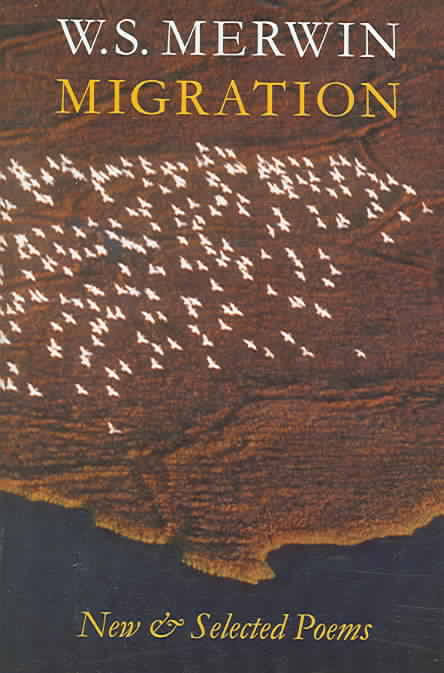
W.S. Merwin, from Migration.

Source


Excuses

once again
I hear of somebody who is going to
settle down and
do their work,
painting or writing or whatever,
as soon as they get a better light
installed,
or as soon as they move to a new
city,
or as soon as they come back from the trip they
have been planning,
or as soon as…
it’s simple; they just don’t want
to do it,
or they can’t do it,
otherwise they’d feel a burning
itch from hell
they could not ignore
and “soon”
would turn quickly into
“now.”

Charles Bukowski

Source


air and light and time and space

“–you know, I’ve either had a family, a job,
something has always been in the
way
but now
I’ve sold my house, I’ve found this
place, a large studio, you should see the space and
the light.
for the first time in my life I’m going to have
a place and the time to
create.”

no baby, if you’re going to create
you’re going to create whether you work
16 hours a day in a coal mine
or
you’re going to create in a small room with 3 children
while you’re on
welfare,
you’re going to create with part of your mind and your body blown
away,
you’re going to create blind
crippled
demented,
you’re going to create with a cat crawling up your
back while
the whole city trembles in earthquake, bombardment,
flood and fire.

baby, air and light and time and space
have nothing to do with it
and don’t create anything
except maybe a longer life to find
new excuses
for.

© Charles Bukowski, Black Sparrow Press

Source